Why We Buy: How Storytelling Drives the Purchase Process
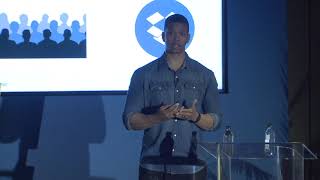
This is a YouTube video titled "Why We Buy: How Storytelling Drives the Purchase Process" recorded in October 2019. It features a presentation by Terry Rice, a digital marketing expert, who discusses the importance of storytelling in marketing and business development. He shares insights on empathy mapping, social listening, and how understanding customer motivations can improve marketing strategies and product development. The talk includes practical examples and encourages marketers to think beyond traditional marketing to focus on business growth through authentic storytelling.
Good morning, can you all hear me? Okay, great, great. So raise your hand if you purchase something after seeing a social media ad recently. All right, so we know it works, right? And my goal here today is to help you make it work better. So on my end, I recently brought something as well. I brought this Tracker for my 3 year old daughter just to keep track of what she's going throughout the day. Right? So it's more of a safety thing and I thought it was a good idea. Unfortunately, my wife accidentally left it in her jacket when she was dropping her off and I was like, why is my daughter in the Bronx? So I was righteously concerned. But fortunately we figured that out. But that's the power of social media. So we're telling these really good stories. With it, we can actually get people to want to be part of that story. And that's my goal today, is to help you all tell better stories. Here's another one. Artwork like this has recently been selling at auction for over $1,000. Now I'm not too artsy, but I would say this is okay. Ish. But here's the thing, here's the artist. Yeah, I did that on purpose. So here's the artist, right? It's this two year old girl who's making this amazing art for a two year old, I would say. And it's selling at auction for bank, right? And you can tell she's doing well because if you look, that brush is gold plated, right? So she's doing pretty well. And I imagine anyone who's buying this artwork, they're going to tell you why they bought it, right? You have to tell the story behind that. You can't just say, oh, here's that thing on the wall. Don't worry about it though, right? That's part of the story is this person who created it. So that's the power of stories. And that's what I want to talk about today. And we all want to be part of a good story. I'm sure you've had that before where a friend that you have is telling a story and you were loosely there like, yeah, here's the part I did which wasn't even that important. But you just want to jump in there one way or another and interject yourself. And often we'll pay to be part of a good story. So not that far from here, there's this restaurant where they sell donuts that have gold flakes on them. You guys heard of that before? Yeah, these donuts have gold flakes on them. You're not buying that because gold tastes good, right? There's a story behind it. So the complication is this. We're all competing to tell this story in a very noisy environment, right? We're seeing how loud can we yell to create what we call thumb stopping content. You heard that term before, thumb stopping content. How can we get people to stop scrolling and start engaging? So you yell louder and louder and louder and louder, which is, as you know, obnoxious, Right? So how do we tell this? How do we tell stories that consumers actually want to be a part of? That's the question. So, some background about myself. My name's Terry Rice. Hopefully that was clear by now. And I've been working in digital marketing for the past 12 years or so. That included roles at Facebook where I was helping brands such as Bonobo, Sports, Sparkbox, Gilt tell their stories on both Instagram and Facebook from a paid perspective. Beyond that, I also teach at NYU as well as a school called General Assembly. And recently I took on a role at Entrepreneurial magazine as a digital marketing expert in residence, assisting both internally and externally on best practices for various channels. And it's that role at Entrepreneur that really led me to to the topic of this discussion. Because in addition to consulting on digital marketing, I'm also building this new platform, this online community, just for entrepreneurs, which gives you access to the resources and networks needed to be successful. And if you look at this slide, you realize I have never done product development in my life. So what I had to do was I had to study best practices for product development innovation. And I read this really good book. It's called Competing Against Luck by Clayton Christensen of hbr. And he talks about how when we think about innovative products, we have to just think about the problem that we're trying to solve for our audience in the first place. And he says that as a brand or a service, your audience hires you for a job, and you are continually interviewing for that job the same way you would interview in person. And your job is to help them make progress towards a goal. So the better job you do at telling that story, the more you endear yourself to your audience and the better your results will be. But here's the thing. I've been doing this for a while, and I notice a lot of brands when they're trying to come up with a copy for their ads, they're just throwing stuff at the wall and seeing what sticks and view will kind of be the same here, you know, you're a consultant. What works better? Learn more or Shop now. And like, we just skipped over a whole lot of other stuff to arrive at that question. So there's no hacks, right? Something works sometimes it's not going to work the other time. But there are these principles that we can install in our work that are going to help us find better results in the long run. And my goal with this is to help you compete against luck by having the system in place. Because coming up with 50, 60, 70 different ads for one goal, that's exhausting. And it only works for as long as it works right? Then you're like, great, back to the drawing board. Learn more. Click here. I don't know. Let's see what happens. So I want to reinforce this. Your audience is hiring them to help them make progress towards a goal. And you need to tell the story of this journey and how you help along the way. So some of you might have heard of Donald Miller. He has this book called storybrand, Telling a story brand where he talks about something similar, right? You're not the star of this situation. And that's a challenge that often marketers have. For me, when I graduated business school back in 2005, marketing was all about features and benefits, features and benefits, features and benefits. And the challenge with that was, is the features were just about the product and the benefits were just for the company, right? We never thought about the consumer in this whole storytelling process. So let's stop that, first of all. Second of all, I'm going to ask you all to make a huge shift in the way you even approach your job as social media marketers or digital marketers. And it's this, you no longer work in marketing, okay? You work in business development with a focus in marketing. But overall, your goal is to grow your company. And that's the challenge I see, again, is so many marketers, they have their heads down reading all these blogs, listening to all these podcasts and everything. And I'm like, what are you gonna do with all that? I'm not trying to be the best at remembering stuff, to be honest. So I always say you should practice JIT learning just in time, right? You don't get points for being the best at remembering stuff, right? Like, oh, there's Kelly. She's really good at remembering stuff, right? It's how you apply it that really matters, because knowledge uninvested in labor is wasted. And I see a lot of that being wasted, unfortunately. So focus on the fact that you're in business development, not just marketing. So to focus on business development, there's two Things that you need to key on. One is your audience, the other is your business. Right. Two key aspects. And we have all this data about our audience. Who's buying, Is it men, is it women, Was it this ad, was it that ad? So on and so forth. And that's great. But data will tell you who bought something, but it won't tell you why they bought it. And if you can't figure out why someone bought something, you can't get them to do it again. And you can't find other people like them as well by telling the story of why they bought this. So with digital marketing we're like, oh, we're very data driven and it's important to remember that data is a proxy for people. So yes, you want to be data driven to an extent, but let's focus on being data informed instead. And that's where design thinking comes in. Right. So design thinking is often used for product innovation or for ux, but I want us to adopt this same strategy towards telling stories on social media. And the very first part is empathizing. And the word empathy is, I would say it's got like a year or two more before it gets played out because it's just being thrown around like a buzzword, which is almost like the worst word to hijack empathy. It's like, come on, empathy, bro, come on, what's wrong with you? It's like, all right dude, just chill. But empathy, I really want you to focus on the application of it and not the buzzword. So you have to decouple those two. But empathy is just taking the time to fully understand your audience. What challenges they have, what problems they have and how your brand can actually help them achieve this goal. And then defining the scope of those problems, saying, ok, well someone who buys Bose headphones, raise your hand if you have Bose headphones. Lot of you. Cool. Yeah. So for me, I use them when I'm at work often to have conference calls, but I also use them at home when I'm feeding my 9 month old son and I'm trying to drown out my three year old daughter, her mom's watching her. So don't like report me or anything. But to the point, let's say someone else is in a library, they're listening to like audible or something, they're using it for education. So we have to define why people are using our products or services in the first place, realizing there might be several different buckets and that's fine, that's okay. But we want to get to the true fact of why they're using our product in the first place and then ideate. Okay, so we're talking about innovation. What better products can we make? If we're talking about content, what better content can we make based on what we understand from there? And then, yes, launch something. That's the prototype stage. So we get some content out there, we get some data and that's how we test. And then from there we make some adjustments. So I think as marketers, we're really good at just ideating, having this prototype and then testing. But we need to go back to the beginning more often and think, why are we doing this in the first place? Why would somebody want to buy this? What are some competitors? And realize that the competitors aren't necessarily just a direct competitor. It could be someone buying nothing at all or finding an entirely different solution. And one great way to do this, to employ this empathy, is by creating what's called an empathy map. Raise your hand if you've heard of that before. An empathy map. Okay, how about this? Raise your hand if you've heard of a Persona before. So empathy maps are strongly related to Personas and that you're looking at your target audience and seeking to understand more about them. But unlike a Persona, which is going to be age, gender, maybe income, some information like that, an empathy map goes much deeper into who your audience is. What are they thinking, what are they feeling, what do they say and do, what are they hearing? And by here I don't just mean all audibly, I mean also their influencers, who are they following on social media, so on and so forth. And then what are the pains and gains associated with potentially buying your solution or your product or your service? A pain, Something that you know is really preventing them from doing that or a problem they have. A gain would be something that really puts it over the top and makes them want to align with you. This is hard, but I'm going to unpack this and show you how you can build an empathy map. And then from there you'll be able to tell better stories to your audience. We're going to start with Squarespace. Has anyone used Squarespace as their website? Yeah, Lottie. It's pretty cool, right? It's what I use for my website as well. It's great for entrepreneurs and small businesses because you can have a good looking site without knowing how to do any coding. If you want to get really complicated and go in with developer mobile and then I'm like, dude, I just would have done WordPress if I was going to do that. So, yeah, WordPress, sorry, Squarespace is a really great product and again, the goal is for small businesses and entrepreneurs to be able to have great looking websites. And I was really happy to see recently that they started doing email campaigns. I was like, oh, that's cool. Because I do email marketing for my company and if I can use the same platform for my website and my email, that's one less login because I'm always just forgetting my passwords. That's just like my life. So if I can have one platform to log in both my email and my website, I'm going to be in a good spot. So I saw this ad and what I want to do is show you how, just by using this, we can start building an empathy map. And we're going to do it by social listening, which I know came up last time as well. So you should all be pros on this. And here's one of the comments that I saw. Dee Dee said, can you create automated or drip campaigns with Squarespace email? So an automated or a drip campaign, it's gonna be triggered by some kind of action. Someone goes to your website, someone makes a purchase and you can send them a series of emails afterwards. And for someone like Didi or me who's short on time, that's great, right? We wanna save some time. So unpacking this, we can start making an empathy map. Just from Dee Dee's question, right? What does she hear? Work smarter, not harder. What does she think and feel? I cannot keep on trading time for money. Right. What does she say and do? She tries to automate as much as possible. And what does she see? Well, there's a bunch of new apps out there that help with process improvement. So you might be saying, Terry, that's a pretty big leap for one sentence. And you'd be right. So your goal with the social listing is not to see one person say something. Your goal is to find themes that you can cluster and say, look, a lot of people are saying this. It seems like this is relevant. So another platform that you want to rely on heavily outside of major social media platforms is Reddit. Use your hand if you use Reddit. Yeah. So with Reddit you can actually follow certain tribes of individuals. So. So entrepreneurs, moms, people who like CrossFit, whatever it may be. And in this slide I'm showing you that I went to the Reddit channel for entrepreneurs. And if you look, the very top comment is, if you're not using automation, you're wasting time and money. And this comment actually got 640 upvotes, meaning 640 people said, yes, this is relevant content to me. And it also got 232 comments. So that's a lot of information that you can mine in regards to what's inside the head of an entrepreneur when they're thinking about automation, first of all. But for Squarespace, great. Now we know that for our audience, automation is very important. This is not something you're going to do in 20 minutes, 30 minutes, 40 minutes. This takes time, but it's worth it. And here's an example of that outcome, right? We have this empathy map. So what are they thinking and feeling? I can't keep on trading for time for money. What do they see? Maybe there's an inbox full of common questions. And that gets me too. I'm like, you know, I've answered this question so many times. Copy and paste, right? You know what else? They hear positive feedback from their customers, which is great. They can keep on growing their brand. What do they say? And do they wear a lot of hats? So as an entrepreneur or small business, all of a sudden you're a developer, you're an accountant, you're a janitor, so on and so forth. You might be a lawyer, like kind of Google. Stuff like this sounds legal. Let's see what happens. What's a pain? Any challenges around onboarding a new system? Because that switching cost is real, we'll put up with stuff we don't even like, just not to have to onboard something else. Right. A gain would be having one login for multiple use cases. So what you're going to do with this is you're going to unpack that and start telling stories that relate directly to these pains or these issues or this information we've learned from our audience. So how does that look like time is money, we're going to say, hey, look, we understand your time is valuable. That's why we help you automate the lead nurturing process. Oh, wow. You actually get me and you respect the fact that I'm busy. Appreciate that. Cool story. Another thing, an inbox full of common questions like, right, we understand customer service is vital, but what if you could just trigger an email as soon as someone buys something that answers all those questions for them? We can do that. Positive feedback from customers. That's great. Well, let's amplify that message. After someone makes a purchase, let's send them an automated email asking them for a review. Right? Let's put that in place. And you wear many hats. And like I said, earlier, you know, like, you started this business and all of a sudden you're a developer, you're an accountant, so on and so forth. We get it. But that's why, you know, we understand you're like this accidental marketer. We want to make that as easy for you as possible. So these are all lines that we can just have in a social media post, but it resonates so much better in a storytelling format. So. So how do you do this? The first yes is social listening. And for some of you, that's going to be the easiest way to get started here because it doesn't involve any kind of cost or any kind of traveling, so on and so forth. That's step one. Another is surveys and focus groups. And that's what I was doing with Entrepreneur. And I'm glad I did, because through those focus groups, I determined that a lot of the things I thought about my audience and what they wanted, I was just fundamentally wrong about. And I think it's scary how often we do that where we'll have four people in a room where like, oh, what are 2.2 million people want? I got this. You don't. So ask questions. And people are sometimes afraid to do this surveying, and I understand why the hesitancy comes there. But the more information you have, the more you're going to understand your audience and the better results you can provide. Also, your sales or your customer service team, if you have that, they're on the front lines every day, they're hearing all this stuff because the sales reps are hearing the use cases, right? And then the customer service team, they're hearing the, you know, the positive or negative feedback. And then lastly, in person events, like right now, listening with intent to people as they're speaking. So that's your toolkit. And as a result of that, you're going to be able to tell better stories, right? So we say, hey, we know it's tough running a business. And when we first created Squarespace, we wanted you to have these beautiful websites that will make it easy for you to have an online presence. But you know what? We realized that wasn't enough because you also needed a way to keep on communicating with your audience going forward. So that's why we now have Squarespace email campaigns. So what are you going to do now? With one last task to complete, so we're empowering you and then saying, okay, great, what are you going to do with this extra time? So that's the outcome and one thing that's really important for us all to understand is this. People don't care how much you know until they know how much you care. And storytelling is the way for you to show people that you actually care through buzzword empathy, right? So keep that in mind. You can have the best product, best service in the world. But if people don't trust you and feel like you actually understand their problem, why would they trust you to solve it for them? So you do have to reiterate what you have in this empathy map in your content. So back to Didi, and let's go a step further, because again, we're not in the digital marketing industry anymore, right? We're focusing on business development. And social listening can lead to product development. Because in this case, when Didi asked, can you make automated campaigns? Squarespace said, no, but we'll take that under consideration for a future product update. Now, I used to be an account manager and that's code for buzz off normally. Great suggestion. Let me write that down right now. Right? So honestly, that's where I saw this going with Squarespace. But fast forward to today. You know what? They actually do automated campaigns now. So you, as this person who are doing this social listing with the intent of creating content, can also inform product and wow, you're so much more valuable to the company now, right? You're not just the person who decides learn more, shop now or comes up with really cool ads or knows all the latest Instagram updates. You're saying, here's how we can make the company better. Because I'm on the front lines hearing all this stuff. That's huge, that's empowering. Give you another example. This is a meal shake called Bear Power Foods. And as per the slogan, it's the world's most powerful meal shake. So it's keto friendly, it's dairy free, plenty of protein and healthy fats. And this is a company that I work with and we realize the power of storytelling in a few ways. And I want to unpack that for you. The first is getting inside the head of the target audience. And one thing I want to stop and say is this cost about $7 a bottle. I heard some groans, I heard some laughs. Okay? So I appreciate your honesty. Thank you. But here's the thing. Here's what goes on inside of the head of our audience. My health comes first. So they're not as concerned, to be honest, about the price. They just want to make sure they're eating healthy. What do they see? Nutrition labels, what do they do? They listen to podcasts by Tim Ferriss, right? Four hour work week and they say, I'll pay more for quality. And you probably all have that same experience. Like when you go to like Rite Aid or Duane Reade, there's a generic store version, like, you got a headache, there's a generic store version. And then there's Tylenol, you're like, no, I got to really get this. I don't trust Duane Reade. Right, so you will pay more for quality sometimes. That's what we realize with our audience. A pain is a time spent meal prepping. That is a pain in the ass. I don't do it. I watch my wife do it. But she looks busy. And I am taking strides to get more involved with that, by the way. But then beyond that, so what's a gain? Eating healthy on the run, which is super tough to do. So realizing that this is the content that they're saying, look, you know what, we get it. You're in a hurry in the morning, but you don't have to cut out breakfast just because you're on the run. Grab some Bear Power food and be on your merry way. Right? Empathy. Because we know that's what happens. You're like, I don't have time to eat healthy. I'm just gonna grab something and go. So here's the thing though. You cannot be the only one telling the story. We need social proof. You've heard of that, some kind of third party validation. And that's where user generated content comes in. And I really want to stress to you how important that is, because you can't just say, take it from me, the person who makes this stuff, it's great. You have to have someone else validate that. And that's exactly what we found with Bear Power Foods. So through our stories, literally our Instagram stories, all we started doing was just sharing feedback about the product, which has been great. If you look, one person said, it's a bit expensive, but totally worth it. Right? So just being honest, another person, a use case we never thought about, was saying, I started using this after I had a surgery because I needed something healthy that I can easily make and would be filling as well. And this other gentleman just stated how he uses it after he works out. What we found was our initial storytelling was great for awareness and consideration, but this is where the conversions came from. And sadly enough, or oddly enough, this free user generated content outperformed professionally developed content, which is insane, right? So you first create awareness with the story and then you're going to go ahead and retarget them with Someone else backing up the fact that you too are an expert. Last thing here. Sometimes when you're listening, the feedback you get might not be great. This guy Johnny is saying you guys went through all this, you know, trouble of like sourcing these really great ingredients that are super healthy, blah, blah, and then you have it packaged in a reusable. In a reusable plastic bottle. I'm sorry, a single use plastic bottle. So what we realized is our audience, what else did they think? Hey, you should probably recycle or reduce your carbon footprint so they're really woke, right? We were not ready for the double woke. So in response to this, we said, hey, what? You're right. And we have this initiative to actually reduce the amount of plastic that we're using going forward. In fact, we're now going to have it served out of a tube. So it's not just going to be a single use bottle anymore. And Johnny was cool with that. He said, hey man, thanks. You should put that on your website so other people know too. So now Johnny's helping us do our marketing for us, which is great. But you don't get those insights unless you listen. Because sometimes we just want to delete stuff like that, right? We're like, never happened. But you don't grow from that. So don't. And that's the cycle, right? You empathize, you put this content out there, you test it and then it loops back where you could learn more about your audience and then from there you could create even better content or better products. So that's my goal for all of you. And walking away from this, just remember, you no longer work in marketing, right? Don't silo yourself. Don't limit yourself or your career just to marketing. You work in business development with a focus in marketing. So how will you tell the stories that your audience wants to get involved in? Show that empathy and make them part of the story. So thank you very much for your time. Greatly appreciate it. Thank you. And if you have any questions, I'll be here all week. So looking forward to that. Thank you.
More from Terry







When you want to quit, don’t. #FitnessOver40 #MindsetShift #TiredIsNotAnExcuse #PersonalGrowth




You’re gonna want to give up. Don’t. #mindsetshift #motivationalquotes #motivation #dontgiveup