Your Biggest Losses Are Your Greatest Lessons
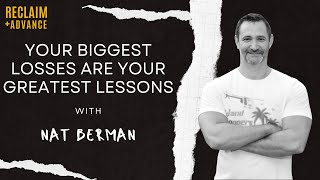
This is a YouTube video titled "Your Biggest Losses Are Your Greatest Lessons" containing an in-depth interview between Nat Berman and an unnamed speaker. The conversation explores the speaker's personal and professional journey, including overcoming anxiety, career transitions, and building an online business. They discuss themes of resilience, adversity, and coaching strategies, with a focus on life lessons learned from challenges. The content is reflective and motivational, aimed at entrepreneurs and individuals seeking personal growth.
Man, how's it going?
It's going well. How are you?
I'm doing well. I'm looking forward to our conversation because I've been following you on LinkedIn for a while, and what I appreciate about your content is you don't sidestep your goal. You're saying, hey, if you want to help me get off the bench, get in the game, I can, I can, I can help you. Right. As opposed to a lot of other creators where they're trying to, I don't, like, sidestep it and, like, build up this suspense and so on, so forth. You're like, look, I'm here to help you. No, I don't have a limited number of spots available. Like, just reach out to me. Let's make this happen. So I appreciate the. The boldness and the bluntness of your content.
Thanks. I appreciate it. Yeah, unfortunately, it doesn't seem as though there's enough of it out there, but I guess that's not really my problem.
Yeah, there you go. But let's get some background on you. So. So, Nat, who are you? What are you all about?
I guess from a, you know, career perspective or, you know, how I started my journey? I guess I was a recruiter by trade for a number of years in New York City. Never really liked it too much, so did a lot of work with investment banking and sales and trading and, you know, just one day out of The Blue in 2007, a buddy of mine, he emailed me this. This website called Blogspot, which I had never heard of, which is still Google's blogging platform. And I started writing on there, and I kind of got obsessed with just building traffic and seeing how well I could do. And eventually I started a website called Uncoached. And it grew pretty quickly. You know, I worked pretty hard at it, and eventually it got enough traffic where I was, you know, at a point where I could. I could take a risk. And I think I had six to nine months or so savings or whatever. I always tell people, hey, like, don't just quit unknowingly and not being prepared. So I was reasonably prepared to go for it, and thankfully I never turned back and, you know, ran a reasonably successful, you know, portfolio of websites for a number of years. I still own most of them. Sold a big one last year, so that was a good. A nice little, you know, win there. But. But it was really like 2020 or so. I started doing social media a little bit more and getting on LinkedIn and doing all those videos, and that's what helped me grow. And you know, from there till now, it's, it was really just iterating and kind of coming up with a very specific person that I'd be targeting and coaching, which is what I do now. It's, it's mostly around business and branding are probably the two biggest areas that I help people with and that's really where I, where I am. You know, LinkedIn is probably my main, my main home as far as social media goes and you know, I spread things out and distribute it across all channels. But yeah, as far as far as everything goes, that's, that's where I'm at and that's where I continue to stay for the time being.
I want to add a bit more context in regards to your business that you started. So you're essentially generating revenue online through a series of websites. And my guess is you're getting, you're generating revenue through affiliate marketing, is that correct?
Actually, I don't do any affiliate marketing. Very, very little. The affiliate marketing is a very small part of the business. So that would be really just Amazon revenue, which is very, very minimal. The majority of it actually comes from display advertising, so mostly banner ads and video ads and things like that. So it's, it's a traffic based model.
Okay, you, you sound rather humble, but would I be correct in saying you've made millions off this model?
Yes.
Okay, thanks for that now. So, I mean, how are things going these days? I mean, if you met up with one of your buddies from high school at an airport or a bar, just, you know, Rand, and he said, hey, how are things going? What would you say?
I would say things are going great. I would say I'm in a wonderful place that I have a ton of time that I can spend with my family. I generally don't, don't worry about a whole lot. And I'm definitely more present focused than I've ever been. And yeah, I think I'm in a unique and extremely lucky position to sort of be able to do what I want pretty much every day. And I think it's a blessing that everything I do is pretty much a choice. I think what everybody does is a choice, but I truly think I take that to heart or at least as best as I possibly can. So that's probably what I would say.
Yeah, I read Be your future self now by Dr. Ben Hardy over the, over the break and he said the goal should be to move from needing to wanting. Like, I don't want this, I don't need this big House. I just want it. Right. I don't need to get this, you know, next opportunity. I just want it. And doing so unapologetically. And that's what I feel from you, talking to you now and in your content, you're like, I just want it. Like, I don't need this stuff, I just want it. And I think there's a need for that boldness on the platform and in the world of entrepreneurship in general. But what I want to do now is go back. I want to go back to a time when things weren't so well, when you weren't so content. And whatever you feel comfortable sharing in regards to that, we're all ears. But I know that without even hearing your story, I know it's going to encourage a lot of us that are listening right now.
Sure, I appreciate it. I think something that maybe not a lot of folks know about me is I've always had a very, very high level of anxiety, you know, reasonably crippling at times. And so I've been probably in and out of therapy since I was 8 years old. So very, very long time. Probably because both my parents are therapists. So I don't know if that had anything to do with it. But in terms of when, you know, I. I think those first six, seven years out of college were very, very stressful for me because I was always trying to find, like, what did I want to do, like, what should I do with my life? I put a ton, a ton of pressure on myself with that stuff. And it led to just so many various places and decisions and things in my life that were just wild. I mean, I worked in the World Trade center and I was on the 82nd floor and I quit my job like four weeks prior to 9, 11. I mean, that was pretty eye opening and insane. You know, there were just a lot of things. And, you know, I wound up moving to California and I had a nervous breakdown out there because I was drinking and smoking all the time and didn't know what the hell I wanted to do. And this was a very, very young age, just too young, and didn't know what the hell I wanted. Spent the night in jail once. That was as. That was a result of having like a tiny bit of weed on me. So that one I kind of don't even, like, care about. But all things I could talk about now because I don't work for a corporation and who cares? And it was expunged. But no, I mean, this is literally 20 years ago. But fast forward to a little a Little bit more recent. I think what I've come to realize is that, you know, rather than focusing so much on the things that I either wanted or thought I wanted or put so much pressure on myself to want, I really developed a really good knack for avoiding the things I didn't want. And that has been an instrumental part in sort of moving forward. I went on medication as well, probably about 10, 12 years ago, which, if anyone's listening, I did not. I do not take that lightly. That's a very, very, you know, important decision that people have to make for themselves and likely their psychiatrist or something like that. But so. But I think every single time I got to the point of not wanting to do something and actually acting on it, things just got better and better and better. And then things took a really, really big turn when I quit my job. Scariest time in my life. Also the best time of my life. Like, something went off. It was just a switch. As soon as I didn't have that authority in my life anymore, I just went off the wall and went crazy. The funny thing is, is I ended up having a business partner for about 10 years. And there were some years that were literally the. Some of the best years of my life financially, and some of the worst. From a stress standpoint, one of the worst times was when my sights went down, which is a common thing, but they were down for, like, a week, which is not common. And today, looking back, I lost over £12 in a week because I didn't eat. So my way of dealing with stress was actually the opposite. I don't eat. I starve. And I will never forget that time in my life because I talk about it to this day where it's like, if that happened again, I would freak out. Of course I would freak out. You have every right to freak out when your whole business is sort of up in the air. But, man, I look back at that person, I'm like, there's so many tools and so many things you can do to. To mitigate that and not make it such a big deal. And your whole life. I would never, never downplay the importance of things that are legitimately scary, but just the way you go through them. And I just think that comes through time. And nowadays it's, you know, life ain't easy, right? We all. We all have to deal with. I'm, you know, plenty. And I'd be lying if it were any different for me, but I think the ability to let those things come in and pass is way easier every year. So hopefully that answers your question a little bit.
It does. And it reminds me of my own reactions to setbacks in life. Like when I why would get fired from a job like, oh, it's end of the world. I'm never going to work at this company called E Chalk again. Have you heard of each Hawk? Yeah, me neither. So. So, yeah, I mean it's like. But it feels like the end of the world, right? I mean, one time I got laid off, literally. The company was called E Chalk, which you guys can all Google. I was out of work for five months. I'm out of work for five months. I have no savings whatsoever. My electricity got turned off. So good luck trying to get a job when you can't. You don't even have Internet or electricity. But, but I eventually got a job. I got a job at Adobe and my income went up by like $60,000. But even then it was embarrassing because I had to fly out to Utah for like three weeks of training and my new manager's like, oh yeah, just put on your credit card. I'm like, about that. That is actually not an option. But I was able to let go of that guilt and shame so I could actually do a good job at my, at my job. But, but I want to go back. I want to go back to 911 because you said you had this moment when you left your job, but for me it seems like 911 when you realize, hey, I could have died if I didn't leave two weeks before. Did you feel like you had a new lease on life or anything? And if so, why did you not change that behavior sooner? That's what I'm curious about.
Yeah, it's interesting. I think I was probably too young to process that in that kind of mature way. I mean, I was only 22 years old. What I am grateful for is that it almost, it's funny, I almost am grateful for the anxiety that I had in that job because that anxiety would build up so much in every job that eventually I would leave. And so the initial job that I had was, you know, two plus hour commute each way. Lived on Long island with my folks, so I would commute all the way to World Trade center from Port Washington, which was, which was a pain in the ass. It was, you're basically going to Penn Station, taking two subways and you know, you're downtown and, you know, whatever, taking the elevator, you know, 80, 82 flights. 82 flights. But another moment that I'll never forget also was, and I've talked about that to this day as well is you feel cool wearing the suit, right? You're 22 years old and you feel like a badass and. But it was literally on that first week. I remember seeing this guy in a suit. He must have been in his 60s and he just looked miserable. He just looked so beaten down by life. I'll never forget that. And it didn't take me long to start sleeping on the train and like realizing, hey, this kind of, this kind of sucks. Not to mention I'm cold calling from 8am to 6pm every day, which absolutely was brutal. So it just got to me so much that eventually I just quit. With no job prospects, no nothing. I just, I just flat out said, you know, I can't, I can't do this anymore. I, I don't think it was probably until many, many years later that the, that the effects of a new lease on life or all that kind of stuff really took hold. Because the funny thing is, is after, after that happened, I, I wound up just like delivering pizza for a while and then I literally just drove out to California and lived with my friends and I, you know, I, I think the impetus to go out to California may have come from like some of that thought, right? Which, you know, the 9, 11 and the lease on life. But yeah, I mean, I, I'm curious if that even shaped anything. It's interesting. I just think at the time I wasn't mature enough to process it.
So then you eventually quit for real? For real. In 2007, I believe.
Yeah, 2008.
What was the catalyst for that? We just like, you know, I'm done with. Oh.
And yeah, well, what's interesting is I got as close as I possibly could within the recruiting world to the ideal situation that I always wanted. Right? So in the beginning it was like, crappy commute, crappy boss, terrible situation, awful. And then it was like three, four jobs later, it was basically 15 minute walk, two bosses and just me. Great situation, great guys, total autonomy, good money, like, you name it. It was like awesome. Still didn't want to have authority in my life, right. It was just, it was just a personal thing. And so, and actually the financial crisis was actually helpful for me technically because so what happened was, is I had been doing, like I said, my websites for about nine months. They were actually making some money. But when the financial crisis hit, my bosses sat me down. They're like, hey, we just need you to know, like, we might not be making money for a little while here. Right? Like, they literally said that to me. But they were also really cool in the sense that they said, you can come to the office every day and do whatever the hell you want. Like, it's cool. Like, you know it. We're still trying. We're still, you know, we're still business. We think we'll be fine. And, you know, six months to a year. And I had money to last me that long. But so what I wound up doing was I wound up working in the office, but I just did my websites all day in the office, and they didn't care. And it was like, yeah, if something came up for work, yeah, I would help them out. But like I said, it was. It was literally the first $2,000 month that I had is where I made the decision. And I went in and I shook their hand. I said, look, I really appreciate you let me come in all this time, but I think it's time for me to, you know, go off my own, give this a shot. And they respected it. And, you know, like I said, never, never look back. So it was not. I wasn't even in a bad situation. And by the way, to anyone out there who's thinking about, like, quitting or whatever, never quit when you're desperate. Never quit when you're miserable. Quit when things are all right, because that's when your brain is functioning at its best. That's when you are most clear and you can really define what you want and what's. What's great out there. Don't get me wrong. You gotta feed your family, put food on the table. And if you're. If you're not in position to do that, of course, do what you have to do. This is. This is life, right? But that was one of the best quitting moments I've ever had. It was like I knew, like, this is right for me, and let's give it a go. And if it works, it works. If it doesn't, I've got six years of recruiting, and I could go back and, you know, try and do that again.
It's funny, as you're talking, I was. I was down on Wall street around that time. I worked on Water and Fulton, so I'm guessing pretty close to you. And around that time, like, you know how it goes, you go to the deli, you know, grab your lunch or whatever. So long line, right? The line's out the door. And, like, as the months went by, the line kept on getting shorter and shorter and shorter and shorter as the economy declined. And I was like, whoa, this place, like a ghost town now. And then eventually I was the ghost because I got fired. So it's interesting that you took the correct approach where you're like, hey, let me save up some money and actually think about this. Whereas for me, I was like, all right, I'm just gonna stick around until somebody fires me. And that's what happened. But let's. Can we talk about ice?
Sure thing. What would you like to know?
Can you share that model with us?
Yeah, yeah, absolutely. So that's actually something that I. I adopted very early on but never really implemented. And for those listening, it's nothing new. I'm not going to sit here and take credit for some sort of, you know, amazing patented formula that I came up with. It's just I wanted an acronym that. That resonated, that made sense and was most importantly, very, very simple. So it's ise, everybody. I just say, hey, call it ice. It's easier. So that stands for identify, Strategize, and Execute. So it's my firm belief, especially for people who are starting out, trying to do something new, maybe start a business at any level, the most important thing is to identify, I always say, two to three needle movers that are really going to get the job done. And that usually does not involve a website or an email list. You know, people that think. Things that people get obsessed about very early on, like, oh, man, what are we going to do without a website? What are we doing? No, focus on the needle movers. The stuff that really is going to make an impact on the most important things, which in my opinion is growing a client base and growing your revenue. And so that's the identifying part. And that's something that I help people come up with in the process. And then there's the strategy, which is where it's like, I call the strategy. I've written on this before, I call them have to's. Right? So you know how everybody talks about core values? Everybody says, okay, I've got two or three core values in my life. And, you know, it's like family, health, you know, whatever it might be that's special to you, that you really. It's like your code, a have to, in my opinion, is anything that falls under your core values. So anything that supports your core value is what I call a have to. And that is what a strategy is. So let's say that you want to be in shape every day. What's underneath that? The strategy? The strategy could be, well, the needle movers for your health are usually nutrition and physical exercise, right? So what comes up what comes under nutrition and exercise? Well, possibly a meal plan, possibly a, you know, you're doing intermittent fasting from, from 12 to 8. And then look at the other one, right? Exercise, you're coming up with a specific routine, right? Monday, chest Tuesday, you know, buys and tries, you know, whatever. And so that's the strategy part of it. So once we identify the two or three needle movers, we then come up with a strategy which, what I tell people, my clients, that's your day to day. That's your, okay, man, I got to do this stuff every single day for the next two years and I'll get where I need to go. And then the execution part of it, that is essentially usually the number one reason people hire a coach. It's because they want an accountability partner, someone to push them along the way, remind them when things need to get done, but also encourage them as well. You know, I know sometimes I come off as a little gruff, and people may think that I work out of fear, but that's clearly not the case. You know, everybody is different. And some people need a hell of a lot of encouragement, and some people need to be told, hey, you're just not cutting it right now. And, you know, stop being such a lazy person and get your ass out there and do what you're supposed to do. I find that I excel pretty well in those areas. And that's, that's essentially what, what ise is.
I'm wondering in your coaching practice if you're, you're like me, where I want to help people who have also been through some shit, because I've been through some shit and I know what it's like to not have the support necessary. And sometimes when people come to me like they've never had a challenge in their life, I'm like, I don't really relate to you as much. And I'm also concerned that when I ask you to do something difficult, you won't do it because you're not used to being challenged. So I'm wondering if you have, like this, like a bias, more or less, in regards to who you work with based on your experiences.
That's a really, really good question. And the answer is, yeah, sure, I do. I absolutely have a bias because not every coach is for every client and not every client is for every coach. And that is absolutely true. And so, and you know this just like I do. You do the best you can to pre qualify them, right? You do the best you can by putting out the kind of content that resonates with people that are most likely to respond to your teachings or your, you know, advice or encouragement. So when it comes to. It's not even imagine. It's not even a matter of not relating to people who haven't been through shit. It's that if you haven't been through shit, it's very rare that you have the quality that one needs to possess to have a successful venture in wherever you want to go. It's very, very hard to just come right out of the gates and, like, work your ass off having not been through adversity before. So I would say it's almost impossible for me to deal with clients or to come across a person that I could work with who's like, I'm just always used to getting my way. And, you know, it's not going to be hard. I mean, the first damn thing I tell people is, hey, this is simple stuff, but it ain't easy. You know, it's. It's never, never easy. So to. To work with someone that doesn't have that attitude to begin with would be very, very challenging.
You know what's interesting, this was not the goal of my question, but you just empowered our listeners, saying, hey, if you've been through some shit, that adversity is actually an advantage because you. You're building up skills to take on more challenges going forward. So you should be proud of it, you know, not ashamed or try to hide it. And I wish that was my goal to question because it would have been a brilliant approach. But. But, yeah, and I think not to get dark, but I think about, like, the CEO of Enron. I can't remember his name right now. CEO of Enron. Obviously they were doing some shady stuff, and instead of taking accountability, the guy killed himself in front of his house where his family's living there. You know what I mean? So it's like, I can't rock with people like that, you know, because I've effed up plenty of times. I've never once, you know, considered ending myself. I considered ending the bad behavior. And I'm not saying there's anything wrong with anyone who did contemplate suicide, but it's like, I just think to myself, like, how many challenges have you not had if that was the thing that broke you? Like, I don't get it.
Yeah. One of the things I've written about before, and I really do believe it, is that as it may sound cliche, but I really don't care. It's, you know, I'm more proud of my losses than My wins. And the first thing I'll say is, no, you don't go out of your way to lose. Right? That. That's. That makes no sense. That's a little. That's a little ridiculous. But when you think about in your life, all the stuff that you've been through, good and bad, I mean, what have you truly learned more from? It's always the loss. And if you can look at life and losses and wins as merely events, it's a very, very different perspective. That's not to say that you don't celebrate your wins or get pissed off at your losses. You should be getting upset when you get. When you lose, and you should be happy when you win. But when you can step out of that, let's say a couple days after, a day after, whatever, and just realize that was just another event, what can I take out of that event? And you absolutely learn from your wins. No question about it. But I don't think there's as much learning and reflection, and there's just so much more from a loss. There's just so much more emotional, you know, impact from a loss. And if. If only we could. Like, the hardest thing to do is, like, smile when things are hard. You know what I mean? Like, it sucks when it's happening, but the people that can learn how to do that and recognize, like, hey, man, this is just part of it. This is just normal. It's like. It's like imposter syndrome. People talk about that all the time. And I've said before, many times, I'll say it again, I wear it as a badge of honor whenever I'm feeling imposter syndrome that I can't do something. It means I'm like, damn it, I'm uncomfortable. I got to do something, like, weird here or not out of the ordinary, or out of the ordinary, rather. Otherwise, I'm not going to excel. I'm not going to move. So when people feel that uncomfortable feeling that. That they want to, like, brush away, it's really the opposite. You embrace it and sort of understand, like, whoa, this is the stuff I'm actually breaking through. I'm growing here. And that's kind of how I perceive losses. It's. It's very, very similar.
I. I sometimes, like, romanticize the experiences I had when I was challenged, like, had various challenges, like when I was unemployed for five months. I look back at those times now, like, man, that was so incredible. I grew so much. I was so resourceful in how I got by. And at the same time, I I can't go through that again because I have four kids. But, but I'm glad I learned those lessons young. And I try not to be trite when younger people especially are going through some stuff. And even, even my age to an extent, because I'm like, I'm like, look, this can make you or break you, but you have a choice. And I'm sure someone told me that back then. I was like, buzz off. But it really does build you. It builds resilience, it builds strategy, it builds relationships, and it builds connections. When you talk about this stuff, like, I say this all the time, people give you opportunities because they feel connected to you. And I got that from. Was that Phil Stutz, the guy who did like the Netflix documentary with Jonah Hill. And the more that you share these experiences is, hey, I've been through some shit. People like, oh, wow, you're battle hardened and you're still here. Cool, I'll hire you. Right? But if you agree, you think that you might think it's like a, you know, a negative, then all of a. Then you don't get credit just for how amazing you are, just for freaking showing up right after everything you've been through. So that's why I love this, this, this podcast where we get to share these experiences. And I appreciate yours, but I'll, I'll leave everyone with this. Let me go back. But I do want to ask you one more question.
Sure.
What is one lesson about life or business that you wish you had learned sooner? And I know there's no regrets, but, like, it would have been nice to know a little sooner.
I'll give you a good one. That, that always resonates to me to this day. And I consider it unfinished business. And it's funny because I'm finishing this business in my own way today, but one of my first jobs. Well, I mentioned cold calling to you, right. About what I did in the Trade center. And at that time it was telecommunications and I was selling like T1 systems. And that, that dates me a little bit. But T1 was like the original, like high speed Internet stuff. And so I sat in a bullpen and outside the bullpen there was like a few offices. And I just. One thing I always saw a lot of were the bosses or the guys who had their own offices. They always seem to be like, casual and cool, like on the phone. They didn't seem to be like struggling like us young guys out there who had to cold call all day. And it didn't feel like they were cold calling at All. And then in another job that I had, I'll never forget this, I hated cold calling so much that I just, it got to the point where I would pretend to be on the phone and there'd be like a dial tone because our boss used to like record our phone time, but he didn't record the conversation. So that's how far I went just to not make calls. But there was this guy who sat next to me just on the phone all day, just smile and dial, right? Like that's all he did, was just be on the phone. And to this day, this is now close to 20 years later, he's the president of the same company still there. And I always had this, this hint of jealousy towards him. And of course I got, I got into those annoying, I got into those conversations, you know, with other people who, who were also lazy as shit and were just like, hey, you know, what's he doing on the phone all the time? You know what I mean? Like, but secretly you're a little jealous because, wow, look at that drive. Look at this guy. Like, he's really going far. And if I were to, you know, back to your question. You know, in terms of advice, I live by a couple of mottos. One of them is no excuses, get it done. And the other one is you got to do what you got to do. And the one thing that I take from that is everybody has a thing where like you have to break through. I call it cold calling is one of the best examples I know of where your life sucks for X amount of time until you break through. And breakthrough means can mean you finally get your first inbound call, you finally get a referral. All of a sudden all those cold calls are not so cold anymore, right? And I looked at my LinkedIn journey as a very similar thing. And I've said this before. I look at commenting and engaging with people as cold calling. It's just the modern day version of it. You're building relationships. So if anything, like I would say to people, whatever that thing is, to break through, no matter how painful it is, getting to the other side feels freaking awesome. And that's when your world basically opens up, but it never comes without it being like a serious pain in the ass at some point. And it's the people who sort of get past that. They're the ones who are going to do well.
This has been amazing, Nat. I appreciate it. And I know a lot of our listeners want to learn more about it as well. Sorry, let me go back, Nat. This has been amazing. I appreciate it. And I know a lot of our listeners are going to want to learn more about you as well. So what's the best way for them to do that?
I mean I have a website. It's my name N A T B E r m a n.com and so pretty much whatever you need to know about me is on there. But you know, like I said, LinkedIn is basically my social media home. So I think on there it's just Nathaniel Berman. If you type it in, I'll probably come up and you know, post every day on there. And yeah, that's, that's pretty much the best way to, to get in touch with me. I'm pretty responsive. I just noticed I have a little elephant behind me on that chair. I didn't even realize that.
Whatever. You forgot about the elephant.
Cool.
Awesome. Nat, this has been amazing. I appreciate your time. Thank you.
Sure. Thanks.
Appreciate it.
More from Terry







When you want to quit, don’t. #FitnessOver40 #MindsetShift #TiredIsNotAnExcuse #PersonalGrowth




You’re gonna want to give up. Don’t. #mindsetshift #motivationalquotes #motivation #dontgiveup