Your Life Is Not Linear with Jason Feifer
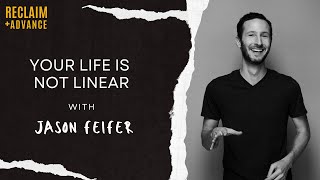
Terry Rice talks with Jason Feifer, editor in chief of Entrepreneur magazine, about navigating a major lawsuit, his career shifts, and why reacting well to adversity matters more than avoiding it. Feifer discusses storytelling as his core mission and how setbacks don't follow a straight line.
Jason. How are you today, Terry?
I'm doing well.
That's good. I remember the last time that I interviewed you for a podcast, I forgot to turn my camera on, and you were so polite. You didn't mention the whole time.
Oh, I don't remember that.
Yeah, well, I didn't remember to turn my camera on. A lot of laughs here. So I'm glad to be here in person with you today.
You know, I feel like you just work with what you've got. That's my general M.O. so if someone shows up, I take whatever they have shown up with.
Yeah, I dig that you're good at improvising and meeting people where they're at, so I appreciate that. But let's get some background on you. Like, I clearly know who you are. So who is Jason Pfeiffer?
Oh, who is Jason Pfeiffer? Well, Jason Pfeiffer, professionally, is the. I'm the editor in chief of Entrepreneur magazine, generally the thing people know me by. I have had a long career in media, and being at Entrepreneur was a real turning point in my life in that it gave me a new way to understand my work and who I could serve. I had always been. I had been a magazine editor. I started as a newspaper reporter, and then I became a magazine editor. I moved to New York. I'd always dreamed of living in New York. And when I got to Entrepreneur, which was in 2015, I really thought of it as a media project. And then in 2016, I became editor in chief, and people started inviting me onto podcasts like this. And at the time, I was so deeply uncomfortable with what people expected of me and the way that they saw me, which is to say they thought I was an authority, and they were treating me like an authority. Like I was going to show up and I was going to have ideas for them, and I had no ideas for them. I was a guy who made magazines, and I felt completely fraudulent being in front of people and proposing myself to be some expert in entrepreneurship. And I remember there were a lot of times where somebody would have me on their podcast and they would introduce me along the lines of, we've got Jason F. He's a thought leader in entrepreneurship. And I would. I would try to reel it back in. I. Well, I'm not really a thought leader, and I'm really more of a storyteller. I'm a media guy. And. And so I don't. I don't really have advice, but I can share advice that other people get. And it was awful. It was Just like falling downstairs, you know, Like, I just. I was. I was undercutting the reason that people had me there. And my. I was telling this to my wife, and she said. She said, well, you know, if they want you to be a thought leader, then be a thought leader, which is a stupid term. I hate thought leader, but I don't even think people use it anymore. But she was right. She was right in that if people expect me to be a thing, then why not rise up to that occasion? Why not fulfill the vision that others have of me and see what the opportunities are on the other side of that? It took me a long time to find the confidence to do it and to figure out, well, who am I to people? What do I have to say? What can I stand behind? That was a project years in the making, but going through it transformed the way that I think of myself. It created infinite new business opportunities. I mean, now I'm. I have two books, one of which I did with my wife, the other which is a business book called Built for Tomorrow. I travel around, I speak a lot. I advise startups, I'm building some companies of my own. I write a book newsletter and make podcasts and whatever. Anyway, I make a bunch of stuff, and I hope that some of it is useful and in service to people, but that was a thing I had to learn to do and that I was uncomfortable doing until I found my way to do it in a way that felt honest and that was at the right intersection of what I felt like I had to offer and what I felt like people needed from me. And that's a hard intersection to find.
Yeah. I think the benefit of you making so much stuff is something has to be useful.
Yeah, it's true.
I mean, despite the numbers, you throw.
It up against the wall, something sticks.
But last time we were chatting, you had me walk through an exercise which essentially helped me find my why to an extent, and you actually want to stop halfway through because I was being so sarcastic. But do you mind?
I don't remember that either, but. Okay.
Do you mind. Do you mind sharing your why? I mean, what is your North Star? What motivates you?
Sure. You know, it's funny. This isn't. There's an exercise that I do on stage, which. Which is kind of what you're prompting here, where I use the term why. And the reason I use the term why is actually because it was programmed into this animated slide that I don't know how to change on my own. And the company that made the slides has since gone out of business. So the word why is stuck on the thing, but I actually don't like the word why. And the reason is because it's. It's because kind of cliche. I feel like it's owned in some way by Simon Sinek, and that's not really what I'm doing anyway. I feel like really what I found really useful for me and what the purpose of this exercise is, which we can go through. But I guess I'll give you the punchline first, is I think of it more of a mission statement. And the idea is to craft a mission statement where it's a simple sentence, starts with I, the word I, and then after that, every word is carefully selected because it is not anchored to something that's easily changeable. So for me, it can't be I'm a magazine editor, because I'm a magazine editor is a very changeable sentence. All it takes is losing my job at a magazine, which could happen at any time. I mean, I have a very good relationship with Entrepreneur Media, the parent company of Entrepreneur Magazine. But, you know, it's not my company. They could decide to make a change and I could be part of that change, and then I'm gone. And then I am a magazine editor no longer is true. So what I found was useful for me was to think of this. I tell stories in my own voice. That's the way in which I have come to understand myself. I tell stories because stories happen anywhere. Stories happen right now, stories happen on stage. When I'm advising startup founders and they ask me a question, the first thing that I do is I match what they need to something that somebody else told me at some point. And then I tell them a story of the thing that I learned from that person. That is the thing that, that, that. That is. That is my core ability, I think, and the great recognition that I had through the work that I did to. To fulfill this vision that people have of me as my wife had driven me to. And the thing that was clarifying and coming up with that mission statement for myself, I tell stories in my own voice, was to realize the scalability of telling stories. I think people often think that they're stuck inside the small box of whatever their skill is, but their skill is actually very transferable once they recognize how useful it can be in different circumstances, if only they were to look at it in different ways. So that's now how I think of myself. Cool.
I'm joking.
Sorry.
All right, well, thank you for that. And that's Very aligned with the theme of this podcast, which is telling stories and in this case, challenging stories that you've had in your personal or professional life. So when you feel ready, we would love to hear that story.
Yeah, can I just sit in silence for 10 minutes first? So, yeah, so what you're prompting for here is just like, what was the, what was the big, hard defining moment? Right? So this is, this was it for me. The, the big, hard defining moment in, in my life was getting sued. I was sued in 2015. It was a totally frivolous, ridiculous lawsuit. I'm a really level headed guy. I don't get worked up about things very easily. I, you know, I, I, I, I, I, I can't think literally of the last time that I was mad. Like mad. I'm, you know, I, I don't generally feel much anxiety. I'm a really level headed person. And this, you know, this was like, can't sleep, can't eat. And it went on for years. It was, it was awful. So, so that, that, but, but so much came out of it and I, and I learned so much of it. So I don't know where you want to go from there. That's, that, that's what happened.
That's a lot. What I'm curious to know is that's five years is a long time. And often when we have these setbacks in life, we think, oh man, if it wasn't for this thing, I'd be so much further ahead. Do you think this held you back or propelled you forward in your career?
So interestingly, it propelled me forward. And that's because I have a theory of life that has come out of reflecting upon this moment, which is that life is not linear. Life is reactive. By which I mean the reason that we are worried when bad things happen is because we're worried about a linear progression. Something bad happens, therefore the next thing that is going to happen will also be bad. Therefore the next thing that will happen will be bad. Right. You know, I, I, I don't know. I can't even think of it. Well, I get sued. Let's just use the real example. I get sued. Because I get sued, my, my reputation is ruined and then my finances are ruined and everything is being this lawsuit and then that creates a financial strain on my marriage and then my marriage falls apart. And now I have, now my, my professional and my personal life are in ruins. And then what happens after that? And then, you know, and, but that's not actually how life works, right? Life is not linear. The Next thing that happens isn't always just the logical progression of whatever was set in motion. Life is reactive. You make decisions that might not have made sense for you before that now do make sense. In my case, for example, the moment when I got sued, I had actually just left magazines and I decided to try my hand at being a full time freelance writer. I'd lined up with some freelance editing work. I was, I was in contract to write a, like a ghostwriter celebrity memoir and, and I had a bunch of stuff I was really looking forward to and like, redefining my, my career. Yeah, and this was before Entrepreneur magazine. Entrepreneur magazine actually at the time was a freelance client of mine. I was going to. I was doing some freelance editing for Entrepreneur. And when I got sued, I became afraid of, well, of being financially ruined. And I felt like this was not the time to be without health insurance and without a steady salary. And also, our first son was five months old, so we were also now caring for an infant. And I thought, I need stability. I was, I was ready to embark upon a life of no stability, of freelancing and of trying and cobbling things together. I thought I need stability. And Entrepreneur had actually been asking me to join the staff and I had been saying no because I didn't want it. I didn't want this. I didn't want to be inside of one organization. I was ready to do something else. But when I got sued, I basically, I felt like I needed to run undercover somewhere. And so that's the reason I took the job at Entrepreneur. I, you know, I mean, I'd like to say that it was, it was because I was, you know, just excited by the mission. But like, that came later. Honestly, at the time I just needed a job and I was afraid. And that is the reactive moment. The first one at least. Right. Because the next one was that I took this job at a, at a, at a magazine. And, and what I could have done is I could have continued a linear path. Either just I could have taken that job and then taken another job at another magazine and taken another job out of another magazine, or I could have just thought about it in the narrow framework that I used to think of it. I'm there to do a media job and I will fix the magazine and then I will write stories. But at every juncture, there's an opportunity to react, to do something that is wholly different than what you would have planned to do, but in reaction to what just came before. And that is the thing. I think that that's the Thing that had propelled me was this constant reaction. I was talking to some friends about this recently, Kelly and Peter, and they were telling me that they have a. They have a phrase that they use every time something goes bad in their career, and that is. We don't know if this is good or bad because, you know, it seems bad now. And. And if the story ended at the. I get sued and. And I. And I die a week later. Well, the. The lawsuit was only a bad thing. There was no time for it to be anything else. But the thing is that if, you know, if you're fortunate, life is long there. There are. There are years and decades left to live. And if that's the case, that's a lot of time for the bad thing to cause a reaction which can create a good thing doesn't mean that the bad thing was good. The bad thing still sucks. Being sued sucks. We can curse on this show. I fucking hate everybody involved in that lawsuit. I fucking hate them. They are awful people. I will always be angry about that. But some really good stuff came from it because. Because I reacted.
I want to talk about reactions, and I'll tell a story.
Sure.
I was. I was here in Brooklyn, and there's, like, this car, like, flying down the road, almost hits somebody. Almost hits, like a. A pedestrian.
Yeah.
And the guy who almost got hit shoots back. It's okay, I've already forgiven you. And I was like, yo, that's like, the best, like, you ever. So this person was, like, programmed to have that reaction. Like, you don't just wake up necessarily having that in there. So I'm wondering, how have you been programmed to have, like, this more positive reaction to adversity? Does it go back to your childhood? Is it something you developed on the way? But, like, how does. How is this, like, this ingrained in you?
Oh, that's a good. You know, I mean, to me, it's. I'm trying to think of whether there's, like, a real answer to that question. I mean. Okay, well, first, like, why do I react that way? I react that way because what else are you going to do? I mean, my general attitude is doing something is better than doing nothing. You got to do something. I remember when the pandemic began. And so here I am, I'm the editor in chief of this national business media title. And we had a decision that we had to make internally of how do we talk about this? Who are we to our audience right now? And we all agreed, talked about it internally, but I felt very strongly, certainly a driver of this conversation was we go positive. This is a moment of sheer terror. And when you read the news, it is nothing but awful. We're going to go positive. Which is not to say we're going to say like, the pandemic is good, right? But instead we're going to do is we're going to focus on, on positive things that people are doing, how entrepreneurs are, are discovering new opportunities. What can you do now? You know, I mean, I remember saying, look, when lots of people are in need, that means that they're in need of solutions. So, yes, you are being impacted, but also people need you and they need you to come up with things. And that was the message that we took. And a lot of people were really appreciative of that. But I remember seeing comments when I would do a Instagram Live or I'd get emails from readers occasionally they would say, well, you know, how could you be, how could you be talking about what, you know, what, what, what, what people could do at a time like this? Or, you know, how could you, how could you be be saying that positive things can come from this? And the answer that I had was, well, what the hell else is the other option to just sit around and just give up? To just say, well, things are bad? So I guess that's. It doesn't make sense to me. It just fundamentally doesn't make sense to me. There's always something next unless. Unless we are at the, the true end of the world, right? Unless we've reached an apocalyptic scenario and the whole world is going to end. Then no matter what happens, something happens next, something you're not. At the end of the book, there's another chapter. So what's in the chapter? Like, what happens next? Something has to. And you can take control of it. And I don't know, that's just always been my attitude. Where does it come from? You know, I mean, I guess probably where it comes from for me. And look, I'm going to say this, but it's like the exact opposite could also be true for people, right? Like for me, I came from a very. This is the other option to just sit around and just give up. Like to just say, well, things are bad. So I guess that's it. Like, it doesn't make sense to me. It just fundamentally doesn't make sense to me. The only, like, there's always something next unless we are at the, the true end of the world, right? Unless we've reached an apocalyptic scenario and the whole world is going to end, then no matter what happens? Something happens next, something you're not. At the end of the book, there's another chapter. So what's in the chapter? Like, what happens next? Something has to. And you can take control of it. And I don't know, that's just always been my attitude. Where does it come from? You know, I mean, I guess probably where it comes from for me. And look, I'm going to say this, but it's like the exact opposite could also be true for people, right? Like, for me, I came from a very stable home, great parents, very stable family, and, and my parents are really supportive of me. And as a result, I was able to take risks. Two of my defining moments in the earlier part of my career are both quitting jobs with an idea of what I wanted to happen, but no guarantee it would happen. So why was I able to do that? I look back on it now, and I think the reason I was able to do that is because I knew that I had a. A support system underneath me, that if I, if I needed some help making rent, that my parents were going to help. Not that I, not that I wanted to freeload off of them, but like, I wanted to quit this newspaper job and see if I can make it as a freelancer. That was the first time I did it. Or I want to quit this newspaper job and move to Boston and convince Boston magazine to hire me because I've been freelancing for them for years and there's a job opening and they're, they're, they're dilly dallying on who they're going to hire, and I want it to be me. These are the reasons I quit these jobs. And in both cases it worked out. But also I knew that in both cases, if it, if it didn't work out, while I figured out what my next move would be, I, you know, I had a supportive family and that would, that was helpful and that enabled me to take risks. And, you know, I think the same has basically gone on throughout my career. I mean, not that I rely on my parents now for I can pay my own mortgage, but. But in that I just know I can take a risk. And I have a support system which now includes my wife, who's incredibly supportive, and my friends, who are incredibly supportive. And that emboldens me. But now it could be the opposite, right? It could be that I grew up in a totally different family, and by, by surviving some awful experience, I taught myself something about resilience that I then write like, you don't need to come from some one background to learn this, but it's certainly what I learned.
Yeah. So it's funny because listening or it's funny because through this podcast, I realize how much of our behaviors actually do go back to our childhood. And then I'm like, I got to be a better dad. And it's funny because even looking at you on social media, the way that you. You raise your boys, I'm inspired by it. Like, I remember at one point I saw, like, I saw like, you had like, one of your sons was like, like, had a cell phone charger, like, plugged in and it was like, in his mouth.
Oh, yeah.
And I was like, okay, that's. That's hands off parenting. And you also mentioned, like, on the.
Week, I posted a photo of that on, on LinkedIn, and a lot of people told me that was dangerous.
I know. I, I was thinking it. I was like, I'll just text him. But, but, but also, like, you let your kids, like, I think you said, like, if they wake up before you, they can grab their tablets and like, whatever snacks they want.
Yeah.
So I tried that too. And I'm like, the world didn't end.
The world's fine.
I can now sleep in on the weekends.
Yeah.
Like, things are just going better. So I think sometimes, you know, we have like, these things stuck in our heads, like, it has to be this way, so on, so forth. But there is a benefit to taking risks, and sometimes you're forced to take a risk. I mean, you got sued. That worked out very well for you. I got fired. That worked out very well for me, too. So to your point, it's the reaction that really matters because the thing happened, whatever it was, it happened. You can't do anything about that whatsoever, but you have full control over your reaction, and that's going to impact everything that comes next.
Yeah, that's right. And oftentimes the thing that's going to come next is better in some way than what might have come, because it's going to be informed by more life and because it's going to be the result of harder choices and closer looks. My wife just went through this in a much smaller way, but she's been working on this project for years, years and years. I'm so excited for it to come out, which is. Is nowhere near right now. But anyway, whatever. It's a. Just to be vague about it for now, she's working on a. It would be categorized as a true crime podcast, and she spent years developing these sources. It's just an incredible Crazy story. And she's working with this very accomplished production company, and it's going to be distributed by a giant company anyway. It's great. And a couple weeks ago, some key people who she needed to talk to for the story got spooked and pulled out, and they wouldn't talk to her. And they were key to the way that she was thinking about telling this story. And so she was freaking out. And we talked about it and we said, well, okay. I said to her, well, what? They're gone. So the question is, what is the best version of this story that you can make with what you have? Which is a version of this mantra that I have for myself, which is, I will do the best work with the resources available. I love that phrase. I will do the best work with the resources available. I don't have all the resources. You don't have all the resources at Entrepreneur, I'm very proud of the magazine we make. It's a really small staff. Could it be a. Could it be a more robust magazine? Could there be, however you want to define it, more ambitious reporting? Could it be more complex design or whatever? If we had more people, yeah, but you know what? We don't have more people. We have the people we have. And so let's make the best version that we can make with that and not sit around and try to compare what we do to what we could do if we had double the budget. Because we don't have double the budget, so why even think about it? And that was basically what I was telling her. I was like, look, okay, so they're gone. So what's the thing that you can do with what you have? Because you have a lot. You don't have that over there anymore. Those people are gone. They're not going to talk to you. What do you have? And it took her some time to think through it, and she talked to her team. She's got this team of producers. And then she realized, wait a second, there's like a whole other area of this story that they hadn't been thinking about because they were so distracted with the stuff over here that they no longer can do, and they think it's a much better story. You know, I mean, basically, it's like there was a crime, and they were going to focus a lot on, like, the lead into the crime, but. But they realized that there's actually like a fascinating, wonderful story to tell after the crime and that is more available to them than the stuff before the crime. All the people who don't want to talk is like before the crime. And, and now she's really excited and now she feels like it's actually a better project because this thing had happened. And one other thing to say on this is, is I had a conversation a while ago with Ryan Reynolds for the magazine, for Entrepreneur magazine. And one of the things I really love that he told me was he.
Really loves a very casual name drop. Yeah. So, all right, so the rock calls. I'm like, hold on. Talking to Ryan Reynolds.
You know, it's, it's a, it's a perk of the job to be able to just chat with these folks. So Ryan was telling me about how he loves, he loves budget restrictions. And the reason he loves budget restrictions is because it always forces a focusing on the thing that actually matters in a project. The way he said it to me is like, he's like, look, if you have a movie with an infinite budget, how are you going to spend that money? You're going to spend it on like explosions and aliens coming down from the sky, right? Like, just like the biggest stuff that you can think of. But why do people like a movie? It's not really for that stuff. They've seen that stuff. The reason they like a movie is because of the characters and the dialogue and the story. And you don't need budget for that. You just need to be smart. I mean, you know that was Deadpool for Ryan, right? I mean, they kept cutting the budget for Deadpool. Like Fox or whoever it was, the studio did not at all believe in that movie. And they, they just kept cutting the budget for Deadpool, which just forced Ryan to be, and his team to be smarter and smarter about how they were doing that story. Of course, they created something that was a massive hit. And I found that to be true in basically every way myself, that when you cut down what I have available to me, it doesn't, it doesn't stop things. It just forces me to be smarter about the decisions that I make and that ultimately can lead to good.
I like the way you're framing this because a lot of our listeners, they've had some challenges in their life. And basically what you're saying is, okay, what can you do with the resources you have left to tell the best possible story of your life or create the best possible story of your life? And, and I appreciate that, but you and I are very solutions oriented and we're talking about wives. So I'll talk about my wife often when she's upset about something. Nothing huge. You know, it could be something about work, I just hop right into. Into solutions. And that's not always helpful because often people aren't ready for solutions. They want to be, you know, seen, heard, recognized, so and so forth. So I think a lot of our listeners are thinking, okay, this all sounds great, but I'm stuck somewhere, and these guys are on the other side of it already. What would you say to them? Instead of just solutions, which we've talked about already, to get them out of that place where they're stuck and then guide them towards a solution that we're itching to tell them.
So I think that you. Look, part of the reason that you're stuck is because you look at every option. Every option is problematic, right? I mean, like, when you're feeling stuck and I felt stuck. I mean, look, when I got sued, it's not like, don't get me wrong, it's not like I got sued and then woke up the next day and said, I know what I'm gonna do, and I know how it's all gonna work. I had no idea. It took years. It was terrifying. I mean, the amount of money that I. That I. And my. It was just. And it didn't all work out on the lawsuit side. Like, you know, in the end. I mean, in the end, it, like, went away. There was a. There was a great ruling that. From an appellate court because we had to appeal things over and over and over again. Where. Where they said that. They said that I was owed all my legal fees. I mean, frankly, we thought that they wrote that. That I was owed double my legal fees. It's kind of a confusingly written judgment. I'm at a loss for legal terms. But. But. But, you know, that was. I mean, it was incredible pain. Financial and personal pain. I mean, pain. Financial and personal pain. I mean, you know, it's like we had a lawyer friend tell my wife and I that we should seriously consider getting divorced so that she can house all of our assets. You know, it's like we had a lawyer friend tell my wife and I, in case I get completely destroyed by this. I mean, you know, these are like. These are hard things to contemplate. So I didn't know how it was going to work out, but I knew. I just knew I had to make a decision, I had to do something, and that we should. I, you know, and. And the first. The first seriously consider getting divorced so that she can house all of our assets. Of. Of those decisions was go get a job at Entrepreneur. Well, I mean, you know, some of the first decisions Were legal decisions like, you know, how do we fight this? But. And where does the money come from? But then I took this job at Entrepreneur and then I was at the job at Entrepreneur and now it's like, okay, well, what's the next decision that I have to make? And make some other decision. But let me go back to what I had said. If you're feeling stuck, and I certainly did at that time, I felt stuck in case I get completely destroyed by this many times you see options. You don't see no options. Something you could do, right? I mean, if you're feeling stuck about something right now. And I said to you, well, what can you do? Which is a great Kara golden from Hint Water question. I mean, you know, these are like, these are hard things to contemplate. What can we do? Right? Like, don't tell me what I can't do. Tell me what I can do. Can do something. Something is available. It might not be the option you want. Something is available. I love that question. What can we do? Instead of what can we do? But if I ask you that question, you will have some answers in your head. So I didn't know how it was going to work out, but. And then you will probably. And the reason you're feeling stuck is because you will then instantly start thinking about the problems that all of those different directions create. Well, I can't do this because it'll create that problem. I can't do that because that's going to be a problem. So that's fine. That's fine. Because I just knew I had to make a decision. I had to do something. And the question isn't, is this perfect? Nothing's perfect. The question is, is my new problem better than my old problem? And how I like to structure decision making is I. Then, you know, and the first, the first to realistically identify problems and then compare the solutions for those problems against each other. Like which. Which are the harder solutions? I'll give you an example. So I was of those decisions was go get a job at Entrepreneur. Well, I mean, you know, some of the first decisions were standing on a, at the swing set at a playground in Brooklyn a couple maybe about a year ago. And you know, as, as I'm sure you know, you know, go to a playground in Brooklyn and you're pushing your kid on a swing and then there's like some other bored parent next to you pushing go decisions. You know, how do we fight this? But. And we're their kid on a swing and sometimes you get to chatting and So I get to chatting with this guy whose name I don't remember. So we'll just call him Roberto. And so Roberto starts telling me that he's going through the classic Brooklyn dilemma. Classic Brooklyn dilemma for anyone who doesn't live in Brooklyn is the money come from. But. But then I took this job at Entrepreneur is, do I stay here? That's the dilemma. Because it's expensive. And then. And then I was at the job at Entrepreneur, and now it's like, okay, well, what's the next decision? If you have kids, it only gets more expensive. And you. You are increasingly running out of space, because wherever you are, your kids are getting bigger. Everything feels smaller. It was already small to begin with, right? You're, like, either paying an absurd amount of money in rent or you just spent, like, north of $1 million for 750 square feet of real estate. Like, it's just crazy. So. So he's trying to figure this out. His wife, that I have to make and make some other decision, but let me go back. Really wants to move upstate, and there's like, some school that she really wants her kids to go to up there. And he really wants to stay here to let me go back to what I had said, if you're fair, because that's where his friends and his network is. But also it's because it's where his business is. He's. He's like a contractor or something, and it's all word of mouth, and he's established himself here. And. And so I said, you know, and they're stuck, and they're stuck, and they're stuck because they just keep speaking the problems, feeling stuck. And. And I. I certainly did at that time. I felt stuck at each other, right? Like, she's like, if we stay here, then it's too expensive and the schools are, you know, are bad and etc. And he's like, yes, but if we go, then I lose my business. And I, you know, and so. And you're just speaking problems at each other. That's not useful because there's no way to measure those against each other. So I said to him many times, okay, do this first, list out all the problems. What are all the problems for each of these decisions? So if you stay here, what are the problems? Too expensive school. If you go there, what are the problems? You see options. You don't see no options. Something you could do. I mean, could feel isolated, starting over socially. Business has to start over. Okay, now tell me what it would take to solve each of Those problems. Okay, right. You can think your way through that. What would it take to. If you're feeling stuck about something right now, and I said to you, we'll solve each of those problems. All right, well, if we're staying and it's too expensive here, then to solve that problem, I need to make more money. And if I need to make more money, then I need to either rethink the work that I do or I need to something change about the what can you do? Which is a great Kara golden from Hint Water question business. Okay. You know, if I'm going there, if I'm moving there, then. Okay, well, one of the problems is that I'm going to feel very isolated because I don't know people. So what would I have to do? All right, well, I guess I would have to join some clubs and I have, and you know, like just go through that. Now, which are the better problems? Now you have something to measure against. You're not just speaking problems at each other. You have laid out the problems, you've acknowledged the problems. They're all real problems and they all have solutions. They're not easy solutions, they're not fun solutions, could be huge pain in the ass solutions, but the solutions, something solves the problem, right? So now that you see what it would take to solve all of these problems, you and your wife can sit down. I'm speaking now to Roberto on the playground. I'm like, you and your wife can sit down and say, what can we do? Right? Like, don't tell me what I can't do. Tell me what I can do. Can do something. Something is available, might not be the option you want. Something is available. Which is the better set of problems? Which is the better one? I love that question. What can we do instead of what can we do? No matter what we choose, it comes with problems. So which is the better problem? That's the only way to make a decision. That's it. Right? That's it. You acknowledge that problems exist. You can track your progress through problems you don't look for. But if I ask you that question, you will have some answers in your head. A ideal solution, because one doesn't exist. You just decide which is the problem that we would rather solve and then you do it. And in doing it, guess what, it's going to create more problems and you're going to have to solve those problems too. But if you've just, if you've made an intentional decision about which problems to solve, which are the better set of problems for you? Then you're on the path to creating something that you. You want.
It's funny because. It's funny because I'm listening to you as a podcast host, but now I think I want to move to Westchester County. You wouldn't be the first, because that is a problem that my wife.
And then you will probably. And the reason you're feeling stuck is because you will then instantly start thinking about the problem. Problems that all of those different directions create. Well, I can't.
Jeff and I are going through right now, but I think about you and how we met about six years ago, just a few blocks away from here.
Yeah. Do this because it'll create that problem. I can't do that because that's going to be a problem. Yeah. We're recording here in Park Slope, Brooklyn, right now. And.
Yeah. And when I met you, I was like, holy cow, that's Jason. And, you know, still do hold you in such high regard.
I appreciate that.
But had no idea what you were going through.
So that's fine. That's fine.
Because in regards to this lawsuit, you just carried yourself so well.
Oh, yeah. And, yeah, that would have been. Yes, the lawsuit would have been going on.
Yeah. And that's what this podcast is about. Just showing our listeners, like, hey, you see this person who's, like, crushing it online, they're doing very well, but they went through some shit, too, and if they made it through it, you can as well. So thanks so much for sharing your story of the shit you went through and inspiring our audience. And I know a lot of them are going to want to learn more from you, so what's the best way for them to do so?
Yeah, well, I really appreciate that. And, you know, I have to say, the question isn't, is this perfect? Nothing's perfect. The question is, is my new problem? Before I answer that question, just. It's an interesting point that you made, that when we met, I was going through that lawsuit. And, you know, probably by the time we met, I had done a halfway decent job of separating these things in my head, one better than my old problem, and where I would go about my life as if I wasn't being sued. And then there would be these moments that would come roaring back where I would have to be in how I like to structure decision making is. Or, you know, and I. I have to. I keep. I have to keep going back and forth from being editor in chief of Entrepreneur magazine, being invited to these things and being treated as important to then.
You know, like, defend defendant walks in.
Putting on, yes, exactly. Like putting on a nice shirt and going into court and being just the smallest, smallest, most insignificant creature in this fucking hellhole of a place, you know, where like, I mean my experience of it was that literally zero people in that building care about you. The judges definitely don't care about you. I think the judges kind of loathe you, to be honest with you. The lawyers definitely loathe you. But you're stuck. You're stuck. You can't opt out. It's scary to realistically identify problems and then compare the solutions for those problems against each other, which it's scary to have a system that just sucks you in and you can't, you can't do anything about it. Your literal liberty is just gone. It was awful. As you can tell, it informed a way in which I think about which are the harder solutions. Understand the world now. And that is one in which I generally don't trust large systems anymore because of it. It left an imprint I certainly don't trust. I'll give you an example. So I was justice system at all. But I figured out a way over time to just move through the day, focus on the things that I could control and leave the stuff that I couldn't control to the times when I needed to engage with them. And that wasn't easy. But again, it's just like, what's the other option? You know, like you don't have another option, you have to do that. And by the time it ended I felt like I had like ingested it. Just standing on a, at the swing set at a playground in Brooklyn a couple maybe about a year ago, just moved through my system and I learned a lot about my own resilience, about my family's resilience, about my wife's incredible support. My wife is generally an anxious person. And as I'm sure you know, I go to a playground oftentimes the dynamic is that I'm dealing with a lot of her anxiety. But, but like she, you know, we just like switched roles. We just switched roles and like then she was like the stable non anxious person who could just see clearly. And so, so anyway, when you're in Brooklyn and you're pushing your kid on a swing and then there's like some other bored parent next to you pushing, you know, when you met me, I, I was, I was going through some, some version of separating those things out and becoming ever more clear eyed about the things that I can control in my life and how important it is to just focus on that and to Throw all the rest of it out into the ocean. Just out there in the ocean with all the shit. You don't see it. Did you know you were trying to wrap this podcast up? But I'm just going to say this one other thing. Their kid on a swing. And sometimes you get to chatting and so I get to. Did you know, chatting with this guy whose name I don't remember. So we'll just call him Roberto. And have you seen, you've seen movies with. You see movies that take place on a boat and then like a giant wave crashes into the boat, right? Like this is like a common. And so Roberto starts telling me the huge movie thing. So those waves, I looked this up. Those waves are called rogue waves. A rogue wave is a wave that's over 100ft high and going through the classic Brooklyn dilemma. The classic Brooklyn dilemma for anyone who doesn't live in Brooklyn is do I stay here? That's the dilemma. Because it's expensive. And here is the craziest fact about rogue waves. This is a true thing. At any one time, including right now as you and I are talking and right now, at whatever time people are listening to this, whoever's listening to this right now, like at this moment, there are 10 of those around the world that crazy. There are 10 of those around the world right now. These heaving and angry, loud, vicious acts of nature. And they are, they are there and nobody sees them, right? The only witness is a fish. And, and like they, they're huge. Especially if you have kids. It only gets more expensive. And, and they come and they go and, and, and, and it's like the thing that I really like about thinking about that is like these are. When one crashes into a boat, there's a story to tell. But they happen all the time. You are increasingly running out of space because wherever you are, your kids are getting bigger. Giant things happen all the time and they don't always require our attention. They're not always things that we need to pay attention to. Doesn't mean that they're not big. They're big. But sometimes it just, it doesn't require our attention. There's nothing that we could do by paying attention to it. So sometimes the big things, they just belong out in the ocean. The big thing in your life that you can't control, just throw it out into the ocean along with those hundred foot rogue. Where everything feels smaller. It was already small to begin with, Maves. And at some point, at some point they will, it'll come in, it'll come into Shore and you have to deal with it. But. But right. You're like either paying an absurd amount of money in rent or you just spent like north of a million dollars. Then is the time to deal with it. So then you can set aside whatever else you're working on and devote your energy towards dealing with it. Because it's here now for 750 square feet of real estate. Like it's just cream and it. And it requires dealing with. But what you don't want to do is spend all of this time and energy dealing with it when you don't have to deal with it. I mean, this is the crazy thing about the lawsuit, right? Like the lawsuit was a. Was a hellish five. So he's trying to figure this out. His wife, five year experience. But I didn't have to deal with it every day. You know, we would go, we'd file a motion and it would be very expensive. This file a motion that cost me tens of thousands of dollars. And then nothing for months. And then I'm just waiting for a judge to. To make a dumb ruling on it. And what am I supposed to do in the meantime? I got to move on, do something with my life. So that has to go out into the ocean and it'll come back. But for now, it's gone. It's going to be over there with the rogue waves, and that's where it belongs. And I'm going to focus on the things that are on shore because that's where I really wants to move upstate I stand. So that's what I learned. And so that's. That's the moment that you met me in.
It's amazing just hearing you unpack that. And I know we're gonna have another conversation about it. I want to.
And there's like some school that she really wants her kids to go to up there. And he really wants to stay here.
I do want to wrap this one up, but thank you.
Because that's where his friends and his network is. But also it's because it's where his business for this. Yeah.
Thank you for your transparency. Thanks for your guidance. Thanks for your wisdom. And I'll ask again.
Yeah, yeah.
Can.
Can you self promote? Self promote so we can be done with this?
So I'm paying by. That.
Is. He's. He's like a contractor or something and it's all word of mouth. And he's established himself here. Yeah, sure is. Look, it's real simple. I write a newsletter. It's called One thing Better each week One way To be more successful and satisfied and build a career or company that you love. I love it because it helps me formulate ideas. Some of the things that I said during this time together were things that crystallized while I was writing the newsletter. So I would suggest that you go check the newsletter out. It's called. Well, I just said what it's called already. Here's how you can find it, which is to just go to one thingbetter email. And. And so I said, you know, and they're stuck. And they're stuck. They're stuck because they just keep speaking the problems. One thing, better email. That's a. That is a web address. You just plug it into a browser. One thing, better email. And. And you can sign up and, you know, whatever. I have a whole bunch of other stuff like a book, but you can just learn about it all through there. I'd rather you just go to the newsletter anyway. Thanks, Terry.
Thank you, Jason. It's been great. I appreciate it.
Met each other. We. Right. Like, she's like, if we stay here, then it's too expensive and the schools are, you know, are. Are bad and etc. And he's like, yes, but if we go, then I lose my business and I, you know, and so. And you're just speaking problems at each other. And that's not useful because there's no way to measure those against each other. So I said to him, okay, do this first list out all the problems. What are all the problems for each of these decisions? So if you stay here, what are the problems? Too expensive. School. If you go there, what are the problems? Could feel isolated. Starting over socially. Business has to start over. Okay, now tell me what it would take to solve each of those problems. Okay, Right. You can think your way through that. What would it take to solve each of those problems? All right, well, if we're staying and it's too expensive here, then to solve that problem, I need to make more money. And if I need to make more money, then I need to either rethink the work that I do or I need to something change about the business. Okay. You know, if I'm going there, if I'm moving there, then. Okay, well, one of the problems is that I'm going to feel very isolated because I don't know people. So what would I have to do? All right, well, I guess I would have to join some clubs and I have. And, you know, like, just go through that. Now, which are the better problems? Now you have something to measure against. You're not Just speaking problems at each other. You have laid out the problems, you've acknowledged the problems. They're all real problems and they all have solutions. They're not easy solutions, they're not fun solutions could be huge pain in the ass solutions. Solutions. Something solves the problem, right? Um, so now that you see what it would take to solve all of these problems, you and your wife can sit down. I'm speaking now to Roberto on the playground. I'm like, you and your wife can sit down and say, which is the better set of problems? Which is the better one? There, no matter what we choose, it comes with problems. So which is the better problem? That's the only way to make a decision. That's it. Right? That's it. You acknowledge that problems exist. You can track your progress through problems. You don't look for a ideal solution because one doesn't exist. You just decide which is the problem that we would rather solve, and then you do it. And in doing it, guess what? It's going to create more problems, and you're going to have to solve those problems too. But if you've made an intentional decision about which problems to solve, which are the better set of problems for you, then you're on the path to creating something that you. You want.
It's funny because. It's funny because I'm listening to you as a podcast host, but now I think I want to move to one.
More from Terry







When you want to quit, don’t. #FitnessOver40 #MindsetShift #TiredIsNotAnExcuse #PersonalGrowth




You’re gonna want to give up. Don’t. #mindsetshift #motivationalquotes #motivation #dontgiveup