
Ep 29: Inside the Panel’s Mind When You Talk About CQC, Safety and Speaking Up
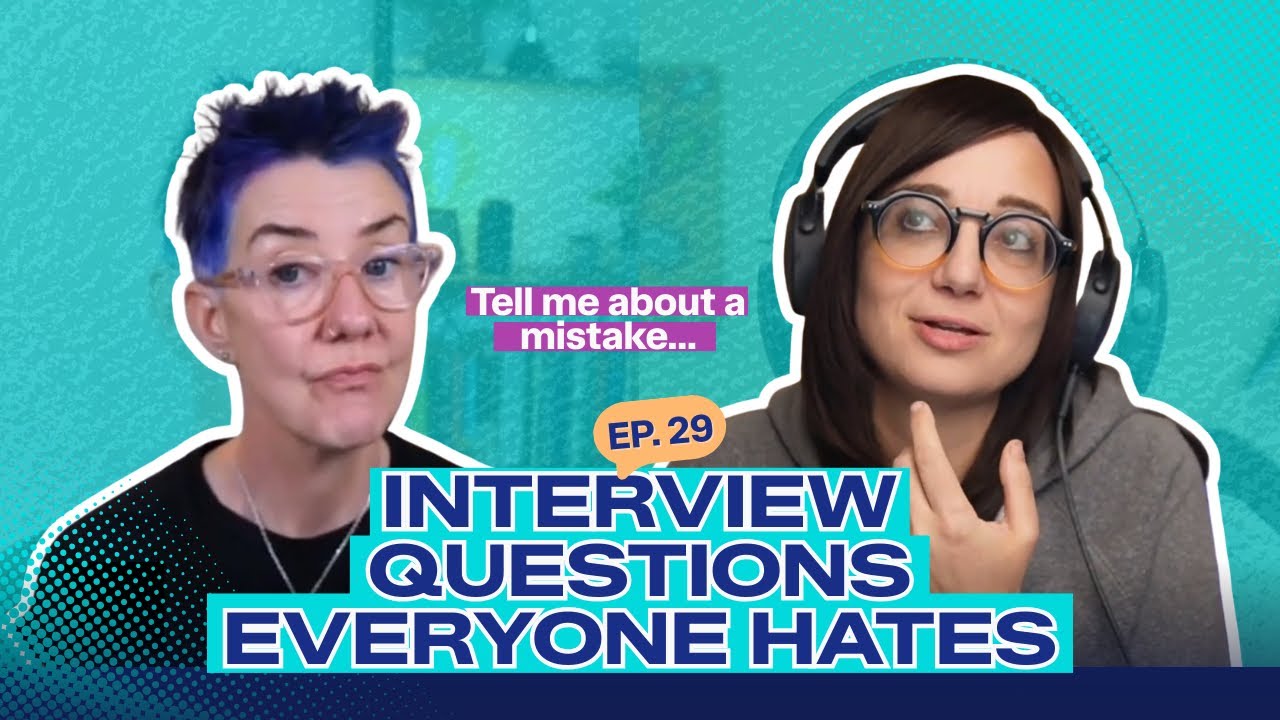
Tessa Davis and Becky coach clinicians on interview questions about CQC feedback, safety incidents, and speaking up. They walk through a duty-of-candour example involving an empty oxygen cylinder, and explain how to own mistakes without over-explaining excuses. The key: acknowledge the issue plainly, show what you learned, and focus on system improvement.
Chapters
Welcome back to the Is Your Consultant Interview podcast. Very happy to be here. Hello, Becky, how are you?
I'm great. Always happy to be here.
Great. You got your cup of tea?
Always. Always got a cup of tea.
Okay, let's do it. So, we're going to start this week with a question of the week from one of our students. And the question is that the trust they're applying to has had some negative CQC feedback. And they're wondering how honest should they be about this in their interview? So great question. I think it is a bit of a minefield. What would you advise here?
I think it depends how— if they specifically ask you about the CQC feedback, you know, how would you help us to address our recent CQC feedback? Then I think you can, you know, pull out a few points around that that are relevant to the service that you're going to be working in, um, and, you know, align your skill set and your USPs to how you're going to manage that. If they don't ask you about it and there's something really, really damning in there, um, and particularly if it's about their service, I think you've got to recognise that there may be people in the room that feel quite wounded about that, who may feel that the whole thing was quite personal to them, um, and it's still quite a new thing. So you need to tread quite carefully around on that. And I think maybe don't necessarily bring it up unless it feels like it's actually being asked for. And if you do, I think you've just got to frame it very sensitively. What do you think? Because I think this is a really difficult area to navigate.
Yeah, there's some things that are sort of political hot potatoes that you just need to steer clear of. A CQC thing is a bit, I suppose, a bit different from some sort of news item or something like that, because everyone will know it's public and they will have to deal with it. So it will have to be addressed and it's formally documented. So I think, yeah, like you say, you have to have read it. So there's no point pretending that it wasn't there. It's good if you've read it and you need to say that there were some things highlighted, but ultimately you're doing it with a view to being sensitive to the service and the team. And ultimately you're going to be in the team. So how would you feel if you're in the team and someone's talking about you in this way And so, it's just thinking about understanding the impact that the CQC's had, how they're addressing the issues, because they'll be doing stuff about it already for sure. And if you found out about that in your pre-interview meetings, that's the kind of stuff I think you can bring in. So, you should be open. I'm not sure, I don't know if honesty, the question is, should I be, how honest should I be? Well, you're not going for brutal honesty. honesty here, because you want them to like you and give you a job, but you do want to show that you know them and you understand the challenges they're facing. So it is a tricky balance, but if you've got all these things in mind when you say it, you're going to be able to come up with a better way to address it.
Yeah, I think it's key what you said about the pre-interview meetings. Um, actually, when you go to those, presumably the CQC stuff will have come up, or they'll be referencing in some way what they're working on at moment, what their particular challenges are. Um, and, and then you can just kind of take a bit of a steer from them, you know. How are they talking about this? You know, do they, you know, are they welling up every time they talk about it?
I'm joking, but, you know, actually, if they're crying in the pre-interview meeting, don't raise it. It's not good.
Not with the bargepole. No. Um, um, but I think just, yeah, just, just take the lead from them. If, you know, see how they are, you know, kind of describing that and discussing it, and you can kind of take the same sort of tone. But I think just do be sensitive about it because having a CQC inspection is incredibly stressful, as we know, and the outcome doesn't always feel fair, and people are quite vulnerable around it. So I think just be sensitive about it.
Yep. But you definitely need to have read it. So this is—
Read it?
Yes, the basis of this question means that this student knows it and has read about it, and all of our Academy students should have read their CQC. And if you're listening, read the CQC for the place you're applying for. There's nothing that's going to be more embarrassing than they ask you a question about their CQC report and you have not read it. You're going to look very silly. So definitely make sure you look it up.
Yeah, you can't blag it.
Cannot blag that one. Okay, so we're going to go on to a golden example. This is an example that one of our Academy students has suggested they might use. We have a mistake example this week. What is it, mistake or it's a duty of candour?
Actually, it's a duty of candour example.
Duty of candour example. So do you want to tell us what the example is this week?
Yeah, so the patient desaturated because they were connected to an oxygen cylinder that ran out during transfer, and the candidate Is the person who did the duty of candour. What do we think?
Is that a good one? I think this is a good example. And actually, it is important that it's duty of candour rather than a mistake example. Because actually, if this was your mistake, and you didn't deliver oxygen to a patient who was then desaturating and whatever else happened, that's quite a big deal. Whereas, so with a mistake example, like we've talked about in the previous weeks, you want it to have not a massive impact, but you want to be able to then talk about how you dealt with it. is the duty of candor example ideally has nothing to do with you. So in this example, assuming they were not involved in the oxygen connection or the transfer or anything like that, then you separated yourself from the mistake. You don't feel guilty about it. You're not trying to overexplain it in your interview. And actually, you can focus on the duty of candor. And in many ways, the worse the mistake was by someone else, the better your duty of candor example's going to be, because you're going to have to have a more difficult conversation breaking difficult news the family. So this is— it doesn't say, you know, what happened. Obviously there was a desaturation, but it may have been a minor thing, but it's still a good conversation to have had from duty of candor. So I think it's a good example. I think it's a good example to use, and it would allow you to really focus on the steps, remembering the focus is on the process of duty of candor, what steps you needed to go through, and how that process went, how the conversation went.
Yeah, I really like it. Um, I think the, the other thing that this example allows you to do is to, um, describe, you know, the duty of candour conversation, um, and then also to describe, you know, the, the next steps as well, you know, the day text, the investigation, the system, um, change, um, the learning from that. So that, you know, you can talk about departmental and system learning as a result, and then, you know, feed that back to the patient.
Mm-hmm.
So, actually, it's got everything in it that you need, and a nice opportunity to have probably a fairly difficult conversation with the patient and/or their family, and then to reflect on that conversation and what it feels like to be the person who does the duty of candour.
Yeah, and one other bit that I do think people often miss in the duty of candor is that they rattle through like, this is what I did, this was a mistake, and then my job was to do duty of candor. We told them this, this, and this, explained to the family, and then we did the governance and we gave them a house leaflet. But you don't actually pause to say, well, what did the family say when you told them this? 'Cause imagine you're being told this, your relative, like they just, you know, the oxygen wasn't going and they desatted. You know, you need to, you want to hear like, how did they respond? Were they furious? Were they happy you'd been open with them? that you have a good relationship with them and they said it was okay. Adding in, and it's only a small bit, but just saying 20 seconds, 30 seconds on what they said back to you, I think adds a really nice element of showing your understanding of the relationships you have with your patients and your families and how you reflect on that. So it's an easy thing to include, but very frequently missed. So if you can, I would definitely just have a moment to say what happened when you told them this information. Yeah.
One of our students earlier on this week, she did a great duty of candour answer, and at the end she said, one of the things that I've really learned is that patients have a huge capacity for allowing us to make mistakes and accepting that we don't get things right, as long as we're honest and open with them.
Yeah.
It was such a great reflection, and I think it really adds something to that duty of candour example.
Yeah, agree. So we think this is a good duty of candour example. Solid example.
I really like it.
Yeah.
Yeah.
Great. Now we're going to look at an interview question that someone's been asked and think about how to answer it. The question this week is, what would you do if you had concerns about the quality or safety of care that we're delivering in our service? Thoughts on this?
I like it as an interview question.
Mm-hmm.
I think on the face of it, it feels quite tough, but actually you will have prepared for this because you will have thought about what quality and safety means to you in your own personal practice and, you know, more widely in the system, hopefully. So you can answer this in multiple different ways. I always think that when we talk about quality, we should be thinking about things like, you know, the patients and their feedback. What does it mean to be a patient in your service? So if we've got, you know, how do we know? So you might be able to talk about patient feedback. Maybe you'll talk about, you know, safety, given opportunity to talk about risk. And then importantly, what are you going to do? So you need to demonstrate what the steps of escalation are around that. What is the reporting process in your department, your division, if you come up with these concerns? So it's, it's an absolute gift in terms of being able to show senior-level thinking.
Yeah, I think so. And I think sometimes, because we've had quite a few people going for interviews where in the last few months where there's been stuff going on in the department. So sometimes there's been like a news story about your department or like some kind of sort of semi-scandal, and there's an issue around speaking up or a culture of speaking up. And so when you know— this is also why doing your due diligence before you go to your interview makes a massive difference, because you can find out stuff from your pre-interview meetings, from a bit of Googling about your department, you will find stuff that you maybe didn't know about. And you can use that to prepare answers for questions that you think they might ask you. So, if there was an issue recently in a service where there was a problem with safety standards, and they were worried about, you know, there was a comment about this culture of speaking up, this is exactly the sort of question you would ask. And you could word it in different ways. How would you create a culture where people could speak up? Have you ever Had experience whistleblowing. You know, there are lots, but once you start to realize that this is a touchpoint for that service, you can actually practice these questions beforehand, so it'll be much less of a surprise. They could ask you it if there's not been a major problem as well, because it's generally just about how to build a good culture. But definitely, if you know that it's going to be relevant, there's no excuse not to be practicing this or thinking about it before.
Yeah. I think on that note, just thinking about safety as well, one of the things that is really good for you to know about is the risk register for the department that you're hoping to go and work in. That, you know, just at your— if you're already working there, even better, just ask, you know, one of the normally senior nurses or service managers, what are the top 3 items on our risk register? And, you know, if you're not already working there, that may be in their recent CQC report, or you can ask them at your pre-interview meetings. Yeah. And just think about how you would help them to mitigate those risks, because that helps you to frame an answer in a way that's directly relevant to that department.
Yep. So there's lots— I agree, this is worded in quite a broad way because it's got the element of quality and safety, and then thinking about Speaking up or whistleblowing. And, um, so there's quite a lot you could go where you could go here, and probably you're going to tailor it based on what you know is relevant to the department because that's where you're going to get the best answer, is something that's sensitive to what's going on, whatever is going on, shows that you've done some digging and discussion and understanding of them before and bringing in your, your experience. This is a good question.
Yeah, it's good. I like it.
Okay, we're gonna go in onto the tip and trick. And I think this tip and trick is something that we talk about a lot in the Academy, and it can be quite hard to achieve, quite hard to do. So, this tip is about owning your mistake. So, what do you think about this, Becky? What do you see happening here?
This is key. I think when we're talking about mistakes that we've made, we need to demonstrate that we can own it, that we can hold our hands up to it, that we can show a bit of vulnerability around it, and that we can rectify it. And what I commonly see happening is people doing a whole load of explanation about stuff that happened around it that sort of takes the pressure off them a little bit.
Yeah.
It was a really busy shift. Somebody else told me this, and then I acted on it. Or, you know, it was, you know, somebody else made this mistake, but it should have been, you know, but really it's my responsibility because I was the person in charge. You know, all of this kind of stuff. We, we don't want to hear anything like that. What, what we want to hear about is something that, that you did, an error that you made, and that you're just holding your hands up to.
Yeah, that moment. And, and some of the explanation can come later in your answer, but I think like that first bit of your answer, tell me about a time you made a mistake, is just literally saying this was the mistake, it was me. I made it. And it's really, it sounds simple, but it's really hard to do that, especially in your interview where your whole thing is that you want them to love you and you want them to see how great you are and you want them to give you a job. And so your natural instinct is to say, well, actually, it was fine. And the patient was okay anyway. And I realized straight away. But all of that needs to be held. And you can use it later on in your answer if you want. But you need to be able to say, this happened, This was the consequence. I realized I made a mistake, and just own it.
Yeah.
Once you can do that, your answer is much more impactful, and you won't be getting the feedback that, oh, that wasn't a big deal, or that wasn't a big mistake. Sometimes when we listen to people doing their first version of this answer, you wonder what the mistake is. You can't quite follow what the mistake is because there's so much explanation as to why it's okay. You're like, well, what was the mistake? So you have to be clear and be able to say, this is what happened and I made a mistake.
Yeah. I think it's the difference between something like, I was in ED, it was a really busy shift, there were like 25 patients waiting for me, somebody else had gone home, and there was a patient waiting and they hadn't given me a proper handover, but I knew that I needed to see this patient. And somebody else asked me to read an ECG on the way. And so when I went to see this patient, I didn't realise that they'd had an X-ray done already. And so I thought they were absolutely fine. And so I just sent them home. And then afterwards, I realised that they'd had an X-ray done and there was a small fracture on— right, just stop.
Because it's already like, you're already well into your answer before you've even got to the point of the question.
Exactly. So the mistake is, an example of a time I made a mistake was when I was seeing a child in ED. and I missed a fracture on X-ray.
Yep.
That is the mistake. And then you can give some of the mitigating factors. Unfortunately, on reflection, I realised that actually didn't even know they'd been for an X-ray. On my examination, I wouldn't have ordered one. But, you know, then you can talk about, you know, get into the Swiss cheese model if you want to. And, you know, then it gives you an opportunity to talk about the factors that you now change before, you know, now every single time I see a patient, I just check all of the investigations that they've had before I see them.
Yeah. You ask everyone when they come in, have you had an X-ray? Have you had an X-ray?
I've got a sore throat. What are you talking about?
Yes.
Yeah. So, but I think cut the waffle. The problem is it's a natural human thing. You want to get all the mitigations in first so that people don't think badly of you. But this, this one is not, not the time for that.
No, you've got to sit with the discomfort, own it, and then you will explain. And, and of course, the important part is the goal of the question is to show them how good you are at dealing with a mistake, at reflecting on it, at owning it, at understanding how to rectify it. That's the bulk of your answer. And if you spend 2 minutes building up to the explanation, the story, all the things, and then finally at 2 minutes or 2 and a half minutes you get to the mistake, you actually don't have time to focus on the main part of why they're asking you the question. So, keep the mistake to the first part, get it done, tell them, own it, and then focus on, okay, this is what happened, this is how I reflect on it, this is how I dealt with it, this is how I make sure it doesn't happen again.
Exactly.
Okay, we shall wrap up there. Another wonderful episode with you, Becky. We will be back next week looking at some other examples and thinking about what happens when you've had career gaps and how to address them in your interview, and plenty more. See you there. See you later.










