In this instructional video, The Art of Crypto delivers eleven concise, actionable trading tips aimed at dramatically increasing a trader’s profitability. The presenter explains that large price moves are triggered by sweeps of counter‑party liquidity and that the most rewarding trades occur at the extremes of price ranges. He stresses the importance of aligning entries with higher‑timeframe key levels such as swing highs/lows, Fibonacci pockets, order blocks, and fair‑value gaps. Time‑and‑price theory is introduced, highlighting four daily “kill zones” (London open, New York open, New York afternoon, and Asia) where market‑making algorithms are most active. A “surprise factor” rule advises traders to avoid setups that would not surprise them if stopped out. Patience is championed, with the claim that 90 % of a trader’s time should be spent waiting for high‑quality setups. The video then details the power of confluence—multiple timeframe key levels plus a short‑term liquidity pool—using a EUR/USD example. Psychological and risk‑management tips follow: add to winning positions, cut losing ones; think first about potential loss rather than reward; treat winning and losing streaks as temporary, maintaining a “bot‑like” consistency. Finally, a bonus tip recommends finding a mentor and promotes a paid “Trading Ascension” program. Throughout, the presenter shares personal anecdotes (e.g., a $4,000 profit from a liquidity sweep) and encourages viewers to join a free newsletter for daily tips.
Chapters
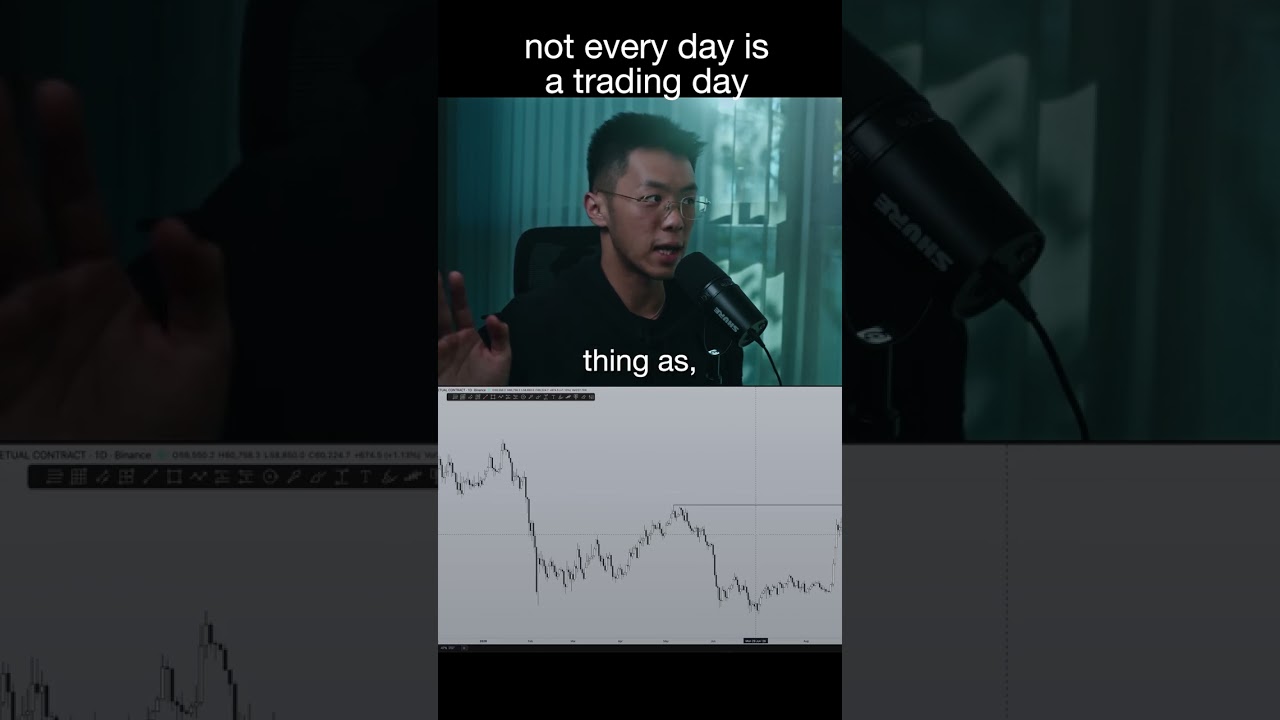
What's up everybody? In this video, I am going to be giving you 10 quick trading tips to help you 10x your profits, and you can apply them right after you finish watching the video. There are going to be some tips that you'll hear that sound so obvious, and you're going to be thinking, wow, that's so simple. But in reality, trading is simple, and all you need is a couple of simple changes and you'll see a huge shift in your profitability. But without any further ado, let's dive right into it. Number 1, every large expansion in price always follows a sweep of counterparty liquidity. Now I want you to imagine the market as a car. In order to get anywhere, you need fuel. Well, where do you That fuel by stopping out other traders. This means that if you are bullish, you want to look for sell-side liquidity to get taken out. What is sell-side liquidity? Essentially, look at previous swing lows. This is an area where a lot of traders would place their stop loss right underneath. And you can see that the moment that gets taken out, you know, immediately you get some kind of reversal. Vice versa, if you are bearish, you want to look for buy-side liquidity to get swept before you enter. For example, over here, right? Every large expansion move, right? Every large expansion in price follows a sweep of counterparty liquidity. For example, if you're bearish, what is the counterparty? Bulls, right? Where are they going to set their stop loss above this area? Once this gets swept, boom, large expansion. Similarly, that to a previous swing low right there. Once that gets swept, boom, explosive price movement. And using this exact technique, I was able to make about $4,000 yesterday by essentially just following this tip. Whenever you look to go long or to go short, always look to see if you have had some kind of liquidity sweep before you go in. It'll increase your success rate by so much, and you will be able to skip those periods where you're just holding price and it's doing absolutely nothing, and you know price is actually moving. Rather aggressively. Tip number 2, asymmetric reward exists in the extremes and nowhere else. What does that mean? Well, most traders get too caught up trading in the middle of the range, but they fail to realize that the largest potential rewards only come after a sweep of the extremes of a range. When you are bearish, you want to look for range highs to be swept before entering, and vice versa when you're bullish. Then you simply ride it all the way to the other side. Very small risk, very big potential reward. How does that look like? Well, let's take a look over here. Whenever Price is moving. All you have to remember is that price is either always in a range, or it's going up, or it's coming down. There are only 3 states that the market can have at any moment. And whenever you manage to identify a range, take advantage of it, because that's where the most money can be made. Now, even within this larger range here and here, there are a lot of mini ranges. For example, over here where you have a range, right? To a certain extent, you can also say that this is also a range. You can also say that this is also a range, and this right here. Within every range, there are always mini ranges that you can work off of. But I want you to realize what happens when you try to take trades exactly in the middle of the For example, you start going short here, you get blown up because the best trades are going to exist outside of the extremes of any range. Which means if you're bullish, you wanna look for the range low to get swept and then you ride it all the way to the other side. When I say small potential risk to very large potential reward, this is what I'm talking about. That's an 8R trade, which means if you risked $100 in that trade, you would've made $800 back in a matter of a couple of days. And you can apply this to literally any timeframe. Only take trades once a range high or a range low has been swept. This ties into tip number 1, but doing this alone is going to up your success rate by a ton. Tip number three: Key levels. The highest probability trades only come within a higher time frame key level. One of the other things that most beginners struggle with is figuring out where are the best areas to take trades from. And other than identifying range highs, range lows, and other than identifying the liquidity levels that I talked about before in tip number one, the other thing you want to keep in mind is whether or not the area that you are looking at exists as a higher time frame key level. Now, this can be a higher time frame swing high or swing low. This can be a higher time frame Fibonacci golden pocket. This could be a higher time frame equal high equal low. This could be a higher time. Frame fair value gap or even an order block. The list goes on, but those are my favorites. Now, what do I mean by that? Well, let's take a look at this example over here where I bought, I bought, and I sold. So how did I know to buy at this area? Now, this green line here is known as the previous day's high. And the reason why this matters is because during the next day, price actually breaks above the previous day's high and it comes to find support at the previous day's high. Now, the reason why this matters is because this is a higher time frame key level. Because even though I'm trading on the 5-minute chart, I'm using this key level as a reference point For where I should be looking to place high probability trades. And when that level gets hit and I see that an order block forms, I'm like, all right, let's do it. And it just happens that it also lines up with a 3 AM trading window. But just to give you an action item for this tip, before you take any trades, ensure that it is within a higher timeframe key level. If you're trading on 15 minutes, your higher timeframe could be the 1 hour. If you're trading on 5 minutes, your higher timeframe could be the 15 minutes. If you're trading on a 1 hourly chart, maybe your higher timeframe is the daily chart. Whatever it is, make sure that you are trading from higher timeframe key levels. Just like how you want to trade from liquidity sweeps and also sweeps of range high, you also want to ideally make sure that this aligns with a higher timeframe key level and you are going to have an A+ setup on your hands. And now this leads me on to my 5th tip and that's going to be time and price. Now, if you've watched my channel for any amount of time, you know that I talk a lot about smart money concepts and I talk a lot about market maker trading concepts. But one thing that most people fail to realize that will immediately increase your win rate is that the algorithms that deliver price are not programmed purely based on price. They are also programmed based on time, which means time plays a huge factor in when market moves happen. As a guideline, you want to look for your trades to happen within these 4 trading windows, because these 4 trading windows, as long as you're trading within them, you are going to have your highest probability setups. That's going to be in New York time, 2 AM to 5 AM, that is the London open kill zone. 7 AM to 10 AM, that's your New York open kill zone. 1:30 PM to 4 PM, that is your New York afternoon kill zone. And lastly but not least, 8 PM to 11 PM, that is your Asia kill zone. Whenever you're looking for any sort of support resistance breakout, liquidity sweeps, whatever it is, look for it to happen around those times. 3 AM is personally one of my favorite times to trade because it's really clean and super aggressive, very explosive. It could just go straight up and it hits a level immediately and you're out of the trade within a couple of minutes. But just remember that the markets are programmed based on time and price, not just price. If you're enjoying this video so far, you'll be happy to know I send actionable tips just like the ones that you're hearing on this video to the Wins in Cash newsletter every weekday for absolutely free. You can use those tips immediately and apply them into your trading to start making more money trading. Click the link in the description box below to join. The best part is it's free and it's all value. I'll speak to you inside. Now back to the video. This, this tip I like to call the surprise factor. This is a really, really simple tip to help you prevent yourself from taking bad setups, and it goes like this. Before taking any trade, simply ask yourself this: if this trade ends up stopping me out, how surprised will I be? And if the answer is anything less than very freaking surprised, Don't take that trade. Why would you willingly take a trade knowing that you'll lose? And now we move on to tip number 6, which is patience pays. And this will also help you prevent yourself from taking bad setups and only take the good ones. There are only 3 things that you can do in the markets at any given point, which is to buy, sell, or wait. And 90% of your time should be spent waiting. But sadly, most people do the opposite, which is they spend 90% of their time trading and wonder why they're losing money. Well, that's because you're overtrading. You're taking every trade that comes your way. You're supposed to wait for the A+ quality setups. Those are going to be your big money makers. Now let's move on to tip number seven: confluence is king. This is going to be one more tip to help you identify quality setups. Other than what I've mentioned above, how do you actually identify quality setups? And a simple rule to remember is this: high probability trades will always have multiple confluences of key levels with a combination of a short-term liquidity pool. Now liquidity pool simply means the liquidity points that I was talking about, right? Trader stop losses. For example, there are traders placing. Placing the stop loss here and above this level. And that's why when the market sweeps this level, it retraces a little bit before, you know, continuing upwards. But let's go back to that phrase. The simple rule to remember is just this: high probability trades will always have multiple confluences of key levels with a combination of a short-term liquidity pool. Now let's define what that means. Your best trades are going to be when you have multiple key levels lining up at the same time This means that if you just so happen to have, for example, a 5-minute key level that also lines up with a 15-minute key level, which also lines up with a 4-hourly key level, which also lines up with a 1-day key level, then all of these timeframes lining up together at the exact same area means that this level is going to be super high probability. And the more confluence you can have in terms of key levels, the higher probability your trade is going to be. But how do you actually ensure that you have even higher probability? Is to look for a short-term liquidity pool at that level. Now let's put this into a practical example. On this day was a super explosive move for the EUR/USD. Now let's break this down a little bit more. Remember, 3 things that will help you increase your probability by a ton is number one, multiple confluences of key levels. Number 2, a short-term liquidity pool. And 3, timing has to add up. So on this day, on 8:30, you have news, which is the CPI. You have key levels, which is over here, this green line here. That's the previous daily high. That is, in my book, a key level. And you also have a short-term liquidity pool where you have a swing low over there And you also have a swing low over there. What happens when swing low gets taken out? Remember, every expansion in price always follows a run of counterparty liquidity. Means if you want to go up, you always sweep the sell side. And the best part is you also have a fair value gap over here, right? This is where time and price theory comes into play. Most of you understand what is a fair value gap. Most of you understand what is a swing low. But most of you do not realize that the markets move based on time. And this is exactly what happens at 8:30. You sweep counterparty liquidity. You fill a key level, you fill another key level right here. That's a confluence that I'm talking about. Happens at exactly 8:30, and you also have short-term liquidity pool. This fulfills all the criteria, and then this is your A+ setup. Now we move on to tip number 8, which is adding to your trades. Now, this is going to sound very simple, but most people do this wrong, and most likely including yourself. You only add to your trades when you're right. You don't add to your trades when you're wrong. Sounds simple, right? Yet most people do this the other way. When your position is in the green— now I want you to imagine this. When your position is in the green, The markets are literally telling you that you are right. Yet at this point, what you mostly think of is where should I take partial profits? Like that doesn't make sense. If the markets are telling you that you're right, you should be adding to your trades, right? Adding to your winner because you're right and you want to get a big win, right? You don't want to. It's like being fearful when the market is telling you that you're right. And then the opposite is true. When your position is in the red, the markets are literally telling you that you are wrong. But instead of cutting your losses early, you. Add to your position, hoping that it'll come back to break even. The irony. Do the opposite instead. When the market is telling you that you're wrong, when your position is in the red, just cut your losses early. But when you are in the green, be aggressive and add to your position. And over time, you will realize that having really big wins and really small losses is just the perfect formula for making money trading. Number 9, this is going to be a quick one. This will help with your risk management. Number 9 is to invert your thought process. Instead of always thinking, how much will I win on a trade? You know you've done this before. Think, how much will I lose? As long as you keep that amount in your head, it'll always be on the back of your mind. Oh, am I willing to take this loss? Am I able to take this loss? And if the answer is no, you're probably not gonna take it. This simple tip will ensure proper risk management for life. And number 10, short-term memory. Losing streaks do not mean you suck as a trader or that your system sucks or that your strategy sucks. Similarly, winning streaks do not mean that you suddenly just ascended to godhood in the markets. They are both simply temporary states. The nature of trends is that they will eventually change. Just follow your system and keep doing what you're doing, and it'll all average out. Losing streaks will always average back into wins, and winning streaks will always change. It'll bring you back down to earth, maybe with a losing streak. Remember that the nature of trends is that they will change, but nothing should change about you. Now I want you to picture a trading bot that you programmed yourself. Sure, it's going to go through multiple phases of, you know, 4, 5, 6, 7 losing streaks, and it's also going to go through multiple phases of 4, 5, 6, 7 winning streaks. Are you going to tweak the bot every single time it goes through a losing streak? Probably not, because in your backtesting you already realized that even through these losing streaks, as long as the bot keeps doing what it's doing, it is going to come out overall profitable. Trade like a bot. And this is a bonus point, which is number 11: get a mentor. Now, I don't tell you this because I sell trading education, but because in life you can either make the mistakes yourself or you can invest into a mentor that'll help you avoid the mistakes and help you make progress faster. You save time, money, and a lot of pain this way. If you'd like to join a step If you want a step-by-step program where we get you from where you are right now to making about $10K per month within the next 4 to 6 months, then click the link in the description box below to join Trading Ascension. We only take in 8 students per month. And if you're finally ready to take the leap to becoming a really profitable trader, the time is right now. Speak to you soon. Bye-bye. Bye-bye.