Has The 2021 Crypto Bull Run ENDED Already? These Macroeconomic Factors Seem To Say Yes
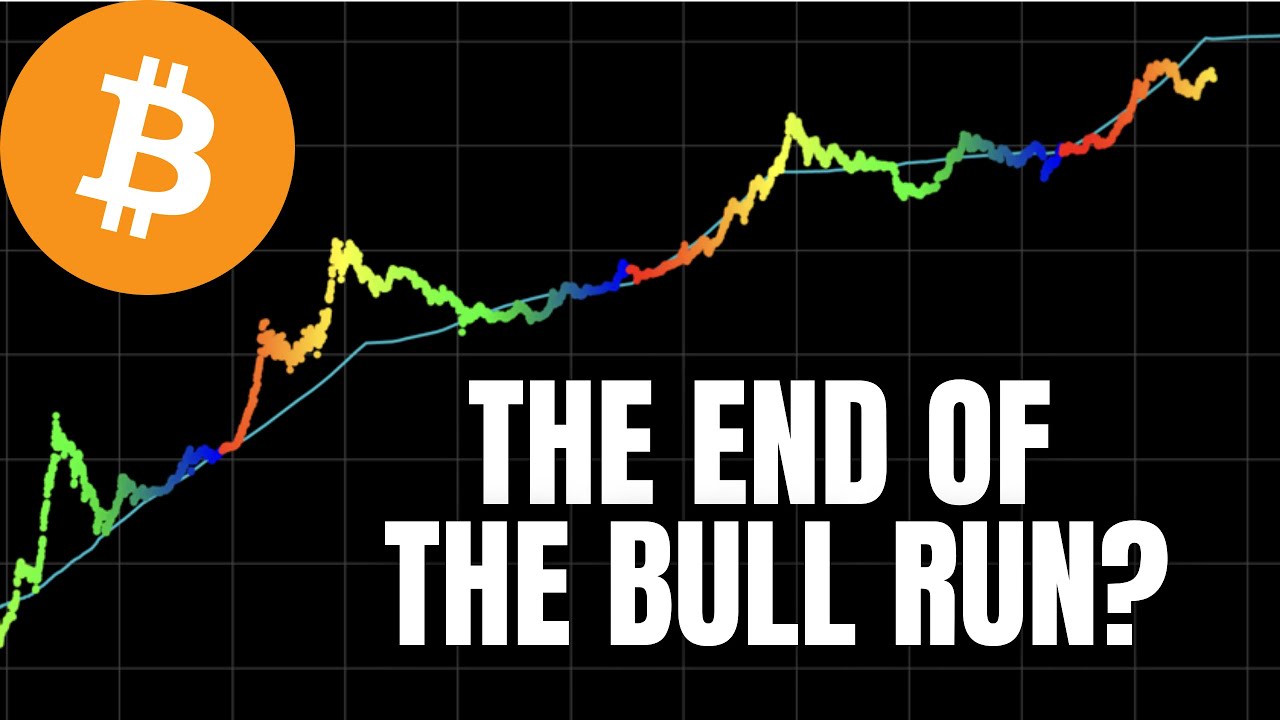
In this YouTube video, The Art of Crypto explains why the spectacular rally that lifted Bitcoin and other crypto assets in 2021 may be winding down. The host deliberately avoids detailed technical charting and instead builds a macro‑economic case that a recession and a bear market for crypto are plausible in the near term. He walks through the Federal Reserve’s quantitative easing (QE) program, the massive expansion of the U.S. M2 money supply, and the resulting high inflation (citing ShadowStats) as a “ticking time bomb.” He then links rising interest‑rate expectations to reduced market participation and explains why such policy shifts historically trigger sell‑offs. The video critiques the popular stock‑to‑flow (S2F) model, arguing that it ignores macro‑economic headwinds and that Bitcoin’s price may not follow the S2F curve during a recession. On‑chain data—low exchange reserves, miner net‑accumulation, and Bitcoin dominance near its historical low—are presented as short‑term bullish signals, but the host cautions they may be outweighed by broader economic forces. He advises viewers to view bear markets as buying opportunities, to accumulate when the market is “boring,” and to avoid panic‑selling. Throughout, he promotes his own Twitter, a private Discord community, and a companion technical‑analysis video, encouraging engagement and offering additional market‑update content. The overall tone is conversational yet analytical, with a measured optimism that a bear market will ultimately present profit‑making chances for disciplined investors.
Chapters
What's up everybody, welcome back to The Art Of Crypto, the birthplace of absolutely legendary gains. Now this video is not going to involve any technical analysis, okay, maybe just a little bit, but today we are mainly going to be focused on fundamental aspects of whether or not right now Bitcoin is entering into a bear market. Is crypto going into a bear market? Is an economic recession coming? Now, I am not someone to try to time the markets, but I believe this is information that you should really, really understand. And this could affect crypto, not just crypto, but the entire markets as a whole. And this video is going to be primarily focused on macroeconomic factors rather than technical analysis. So if you want the first part, honestly, I wasn't planning on making this into a series, but since I was already on the topic during the first video, I'm just going to link it in the top right. That will get into the technical aspects of it and Especially by comparing Bitcoin to Wyckoff, right? And at the moment, like, if you watch that previous video, then you would understand exactly what I'm talking about. So you could choose to watch that video after you're done with this one, it doesn't really matter. But at the moment, if you haven't already followed me on Twitter at _TheArtOfCrypto, this is where I'm sharing the latest market updates, stuff that I wouldn't otherwise be able to share on YouTube because of time constraints. So make sure you follow me there. And without any further ado, let's dive right into it. So before I get into the video itself, I have to first explain why am I making this video and why you should be watching this. So this video matters because crypto is considered, widely considered to be the most risky asset class, right? You look at crypto and you look at, you know, it's very speculative. And this is why this matters. So because the premise of this video is going to be based on the fact that an economic recession is probably gonna come, as well as potentially a market crash, then it would be safe to assume that those are times of what you would call uncertainty or very high risk. And usually investors during those times would like to de-risk some of their positions, right? And now by investors, I'm talking about just the regular Joe, I'm talking about hedge funds, I'm talking about, you know, Wall Street, you know, the banks, whatever, right? Anyone that is involved in the market, or rather investing in the market, they will want to de-risk their positions somewhat, and they will very likely, right, move positions away from stocks and especially crypto, because crypto is like super risky during times of market uncertainty. Risky asset classes are always going to be the first to bloop. They're just gonna hit the deck, right, real quick. So this is why this matters, right? They'll move money out of crypto and put it into safer investment options, right? Stuff like bonds, gold, you know, to name a couple. So only when you understand that part will the next, like the upcoming couple of things, like make sense to you. And the first thing that we're gonna talk about is quantitative easing, right? And this is exactly, you know, what the Federal Reserve has been doing for quite a while, pretty much since the March 2020 crash. So quantitative easing is basically, you know, let's just take it from Investopedia. It's when a central bank purchases longer-term securities from the open market in order to increase the money supply and encourage lending and investment. Now, the reason why they would do this is because they want to remain like— they want to keep interest rates low. And this is right now, this is the interest rate, and it's very, very, very close to zero right now. In fact, it's like 0.25. And the reason why this matters, right, is twofold. First off, anytime, anytime you make just an announcement that you are going to raise interest rates, right, just the mere announcement that you're going to raise interest rates is going to cause the market to plummet. When interest rates are low, it encourages, you know, market participation. Right, it encourages people to borrow money, to buy assets, to buy real estate, to buy equities, right, anything, right, to get involved, to put risk out, right, to take on risk so that you can make money, right? It promotes, you know, a healthy sort of market economy. And whenever interest rates go up, that means that lending money suddenly becomes way more expensive. So it becomes more expensive to buy real estate, it becomes more expensive to keep, for example, stock positions open, just to give a couple of examples. So whenever, right, whenever there is any, even a hint that interest rates are going to go up, the market always reacts in a very panicky fashion and they will sell off, right? People are going to sell off their positions causing, you know, pretty much a market-wide sort of dump, just a mini dump, right? And the higher the interest rates go, then, you know, it really takes away the money out of the markets because everyone's like way too scared, right, to invest. So now that you understand why the Fed wants to keep interest rates low, it goes back to quantitative easing. And the reason why I bring up quantitative easing is the fact that it's not sustainable, right? This is what you call a short-term measure, right? This is what you call a band-aid. You can't do this forever. Like, sure, you can do it during times of market uncertainty. You can do it during like hard times such as March 2020, such as the 2008 financial crisis where, you know, pretty much central banks all over the world did like a massive amount of quantitative easing. But it's not something that can be sustained. Eventually, you need the market to pick up the slack and to grow, you know, just grow on its own. So what I'm trying to say is, like, I don't need to be the one to tell you that pretty much most of, like, a very good amount of the world's money supply was printed just in, I'm on a logarithmic chart right now, so if I go onto a normal chart, you can see this is the total money supply in the US federal, just, you know, the M2 money supply. And I don't need to be the one to tell you that most, a very good chunk of money has been printed over the last one year, probably one year and a half at this point. And at the end of the day, what am I trying to say? I'm just trying to say that this thing that the Federal Reserve is currently doing, it's, it's not something that can be sustainable, especially not over the long run. So basically, the market is in just a bubble right now. I know that is not something that people want to hear, but this is the truth. I'm just giving you the facts right now that I do think that some form of market correction is going to come probably sometime during 2022. And I'm not trying to time the markets here, and I'm not telling you to sell off all your positions right now and, you know, just stay safe. That's not— that's absolutely not what I'm trying to say. Because if there's one thing that I cannot predict about the markets, right, I can tell you, hey, Ethereum is going to go— like, for example, I took a short on Ethereum yesterday. Hey, I can tell you Ethereum is going to dump from there, but I cannot tell you when it will dump, right? Timing the markets is something that if people claim to be able to do, they're probably lying. So please do not believe them. And right now I am saying just straight up, I do not know how to time the markets. So I'm just presenting you with the facts right now. So the second thing that you're going to want to pay attention to, and it adds to this argument that we could potentially be seeing a bear market very, very soon, is again, um, before I actually get into that though, right now I'm just presenting you facts, right? We're just trying to piece together like multiple pieces of a puzzle, right? At the end of the day, what we're discussing right now is macroeconomics. There are people who get paid really, really good amounts of money to literally just read through and come up with macroeconomic theories all day, and even they cannot figure things out. So what I'm trying to do right now is just enlightening you to, you know, just a few factors that you might want to pay attention to. Am I saying that I am like the god of the market and that what I'm saying is absolute gospel? Absolutely not. Right now I'm just giving you the data. I'm just giving you what I've understood so far, and hopefully it will shine a light in your head. Maybe it will go make a light bulb go off, and you know, let's work together, right? There are things that I don't know about. Currently these are the things that I know. So if you do know anything else other than what I'm about to discuss, then please feel free to leave it in the comment section and I will look into it, right? Because Here's the thing about macroeconomics. There is 100, 500, 1,000 moving parts just to solve you know one equation. Just because like just because I say inflation is getting high, so money is about to lose its value. It's not exactly a linear relationship, right? You have inflation and then you have unemployment. You have quantitative easing. You have inflation. I mean you have interest rates. You have blah blah blah blah. Like everything adds into it's one big piece of the pie, right? So with that said, let's get into the second fact that I want to talk about and that is inflation. Now, because I've already talked about M2 money supply being printed, right, most of the money, like a very good chunk of the money in the whole world, right, in the history of the US has been printed over the last year and a half, then it makes sense that inflation is actually, you know, should be pretty high. And right now, this website that I'm on is a website called shadowstats.com. I will link this and I will link all the data that I've gathered in this video. I'm gonna link it in the description below so that you can go check it out yourself. But what ShadowStats tell us is what I like to call the real inflation stats. So what do I mean by that? So I'm gonna go on to, like, I'm gonna link this in the description below for sure. But basically, this is Jerome Powell, right? He is, I'm sure all of you know who he is. But I want all of you guys to skip to about 40 seconds, right? This, the link, I'm not gonna play it here because we're probably gonna run into some copyright issues. But I will link it in the description below. And I want you to go to 40 seconds and start playing this video. And basically the interviewer was asking Jerome about what's up with unemployment, right? What's the unemployment numbers for the US? And what Jerome Powell said was very, it was very eye-opening in a sense because he said that officially, right, I quote, I'm quoting this right now, officially the unemployment rate for the US is about 5.9%. But here's the kicker, but the real numbers are actually much worse. Now you don't have to, you don't have to hear it from me. Go to the link in the description below, check out this video, right? Just, just play back what he says. And basically that tells you all you need to know that the numbers that the Federal Reserve and, you know, basically the authorities are giving out to you guys is probably not, you know, it's, it's a number that's sort of made up, right? It's a number that is made purposely very low so that it doesn't cause any market panic. But in reality, It could be much higher. And that's when ShadowStats come into play because this website shows you, like they've done the calculation themselves and they found out that these are in fact the real inflation numbers. And this blue line right here, that is the SGS, right? SGS is Shadow Government Statistics, right? That's the real inflation numbers. And you can see currently we are hovering between 9% to 10%, which is ridiculous. I don't need to be the one to tell you how ridiculous that is. And if you look at, you know, down here, it's even higher, right? Currently, the Fed is projecting about 5.9%, right? That's the red line right here. And, you know, in fact, it's actually much higher than it is. So you pair together quantitative easing plus really high inflation, and it's sort of like a recipe for disaster, right? It's a ticking time bomb, basically. You can't— you cannot keep this Band-Aid on like forever. Again, it's just a Band-Aid solution. It does not tackle the root cause of the problem. And in my sincere belief, this ticking time bomb will go off probably sometime next year. I'm not trying to time the markets, but just giving you the data, just telling you what you need to be paying attention to. So basically, like these, these couple of factors, and I'm also going to link a video on the top right talking about interest rates in particular and a few other things that the central banks are doing. And I do believe that video did not get too many views. It's quite a long video, just like this one, but it gets really in-depth into some other data that If you feel like this kind of data is new to you, right, go watch that video. I'm gonna link it on this. All right, I'm not gonna try to repeat the things that said in that video, but it does get into a lot of interesting data as well that shows, you know, what's the state of the markets right now. Not just crypto, but the markets. And again, the reason why I'm talking about the markets and inflation and everything is because it plays into crypto. Crypto is the most speculative, the most risky asset class out there, and During times of market uncertainty, people will de-risk, and the first thing that's going to get cut is going to be crypto, right? So at this point, you might be wondering, hey, what about stock-to-flow, right? If we come to this site, then you can see the stock-to-flow model for Bitcoin. Like, you might be wondering, hey, what about stock-to-flow? Historically, stock-to-flow has never been wrong. Whenever we dipped, you know, significantly below the, you know, the, um, the adequate price for Bitcoin, we always rebounded, right? You can see that currently the the price of Bitcoin by ideal standards is supposed to be at about $100K right now, but clearly we are below that at the moment. So knowing that, then wouldn't you say that stock-to-flow is true? And you know, we are going to just, you know, we're going to respect this because it's literally been right since 2010, right? Since Bitcoin's inception, it's been right. The last time we were this low below the stock-to-flow was during the last bear market, right at the bottom of the bear market, and you can see how that went. So here's my argument for stock-to-flow. It does not take into account economic recessions, right? Because currently in this video, we are discussing macroeconomic factors. And this video— sorry, this stock-to-flow model does not take into account— again, I said this before, right, earlier in the video. The thing about economics, right, economics is it's not a linear relationship. It's not, oh, stock-to-flow is down, which means Bitcoin's going to go up. It doesn't work that way, right? For Bitcoin, there's stock-to-flow, That's going to be minor net positions. You're going to have whale accumulation, it's whale selling, exchange inflows, outflows. You've got news, you've got black swan events. It's not linear. There's a lot of factors that play into coming up with a thesis to support your argument. So stock-to-flow, I really do hope, personally, I really do hope that it is right because I would like to see $100K Bitcoin as well. But in the event that it is wrong, I just want you to know that Just be prepared, right? Because what's about to come in the next probably two years, right between 2022 to 2024, is not something that we have experienced, right? Basically, from 2010 until this point so far, for the economic, for the economy rather, it's just been pretty smooth going, right? It's just been recovering. You look at, you look at stuff like the SPX, right? It's just been, it's just been going up since pretty much over here, like 2009, right? This is 2009 until this point. It's just been going straight up, right? You look at the Dow Jones Index. The same thing, right? 2009, it's just been going up so far. I mean, ignore, you know, March 2020. And you look at, you know, the NASDAQ as well. It's, it's just been, it's just been a very smooth 12 years. And Bitcoin was made in like 2010. So my argument would be that we have not seen anything that's about to come, right? Bitcoin has not experienced what it's like to go through an economic recession as arguably the most Speculative, the most riskiest asset class. Now, am I saying that Bitcoin's going to go to zero? I don't— that's not what I'm saying, right? Economic recessions, they always come and go. All I'm saying is that probably over the next— like, if we were to get into a time of economic uncertainty, then it's going to be very likely that, you know, people are going to de-risk, and people might be hesitant to buy into Bitcoin over the next, you know, 1, 2, 3, 4 years. And that would be your typical bear market. Now, is this the end of the world? Absolutely not, because bear markets is when the real riches are made, right? To all of you, like, most of you are beginners watching my video, but if there is one tip that I can give you is that, you know, as someone who has been here for a few years already, bear markets is like the time when you make money. All the real money in crypto is all made in the bear market, right? It's when the whales, the smart money, and people who know what they're doing are accumulating positions like at the lows of the bear market. And if you're watching this video, I really urge you, right, in the event that, you know, you really do go into a bear market— it could be this year, next year, whatever, right? Maybe the bull market continues, I don't care. I'll just play the charts as what they tell me, right? If they tell me that something's about to come, then I'll react accordingly. But if a real— if a bear market were to actually come, I really want you guys to keep this in mind, right? When everybody loses interest in crypto, that is the time when you need to be coming back and buying Heavily, right? That's where generational wealth is made. You look at stuff like ADA, right? You look at stuff like Solana. These guys basically went from, what's this, 1 cent, 2 cent, to about $3, right? That's over 100x. If you put in $10,000, that's 100, no, that's a million. Yeah, is that a million? 10,000, yeah, that's a million. So that's when generational wealth is being built. So I, like for real, don't come back when things are taking off, right? Please just remember this. A lot of beginners fall into the trap of, Like, I'm not just talking about investing here, I'm talking about just regular trading, right? Nobody was buying here, right? None of the retail people that I knew was buying here. None of my family members were buying here, none of my friends were, but that's where smart money is buying. And I just, just remember this one thing, right? Buy when nobody else is talking about it, right? Don't— when your friends and family start talking about it, then that's your sell signal, right? If you can just remember this one thing, which is to buy when it's boring, Right? When it's doing absolutely nothing. Like, if you watch my videos, I always like to say market moves in phases of expansions, consolidations. I promised I wouldn't do any TA, but just to give you an example here, right? I buy during the consolidation phases, right? When you consolidate like this, this is where I'm buying, right? I'm not trying to catch, you know, this— I'm not trying to chase green candles. And similarly, if crypto were to go into a bear market, buy, right? Imagine if Bitcoin goes back to $20K, $10K. Why wouldn't you buy? So just remember this: don't get bored of crypto and not come back. Okay, and before I get into the last couple of pieces of information, I know this has been a long video so far, but if you have found this video helpful so far, it would help me so much if you could just drop a like button. It's a small gesture, but really, really helps me a lot. So the last factor that I'm going to get in is what about crypto quant, right? People look at crypto quant all the time, and you look at like. Bitcoin all exchanges reserve, and you look at the fact that there is a historically low amount of supply in Bitcoin throughout all exchanges, and you might be thinking, hey, this is a bullish signal, right? You're getting a supply shock right now, so theoretically it's supposed to go up. Maybe it will, right? Stock-to-flow is telling us that it's going to go up as well. Not only that, you could look at Miner's Position Index as well. You can see that none of the miners are selling at the moment. In fact, they are net accumulating. And there is a saying that miners are some of the best traders in the world because, you know, all they do is look at Bitcoin and Ethereum like literally all day. And that's why they are known as the best traders. And if the best traders in the world are not selling, then why should we be worried? Again, I'm not telling you guys to panic right now, just giving you guys the data, just giving you guys some things to look out for because I don't want you guys to be caught off guard. And then not only that, you look at, you know, just basically a lot of the data at the moment. Just tells us that stuff is net accumulation, right? None of the whales are selling, um, none of the miners are selling. In fact, they are net accumulating. In fact, during this, you know, this $30K dump right here, it was mostly whales accumulating and paper hands selling, right? Paper hands as in retail. And so with all this data in mind, should we be worried? I don't know, honestly. I'm just giving you the data for now. The signs that you're probably going to want to look for for a potential bear market though is, you know, a couple more things actually. The first of which is you're going to want to pay attention to DXY, right? Because Bitcoin is inversely correlated to the DXY. Now again, I talk about this in that previous video that I made and that I'm gonna link in the top right, so make sure you watch that video. But you know, at the moment Bitcoin dominance is pretty close to— really close to the bottom as well. So if it does get to 36 right here, I, I, I'd be ready, right? I'd be ready. Just given the given the situation of the entire markets, then just storms are brewing, right? It's a ticking time bomb. Would I panic? Absolutely not. But something to keep in mind, absolutely. And if you want to, you know, see the technical aspect of this because this video is mainly fundamental analysis, if you want to see how you know this might be looking like Wyckoff or etc., you're going to want to watch that previous video that I did, right? That's going to be part one. I'm going to link it on the top right as well. So you have. Two assignments, right? One is to watch two videos, right? Two videos basically. And if there is one other thing that I want you to pay attention to is, I'm just gonna take this from DLP. Shout out to this guy, man. He came into this group not knowing much about trading probably a month or two ago, and this guy is posting a lot of stuff right now. And he shorted Bitcoin at fifty-two K. Like, brah, vo! I'm so happy for you, DLP. If you're watching this, big shout out, big up to you, my man. So. He made this observation, right? This was the May crash, and this is what it's currently looking at. Like, this is what it's currently looking like right now. And if this were to happen, this scenario, if it really were to dump from here, then it would play into the theory that I discussed in my last video that we are already in a bear market and that a lot of people just simply haven't realized. So really make sure you go watch that previous video. And seeing as how we're already on the Discord group at the moment, You know, if you're worried about not being able to make money in the bear markets or whatever, you know, you're really going to want to check out the private Discord group. Not only are you going to learn everything that I've learned over the years, you're going to figure out what works and what doesn't. But most importantly, the stuff that I teach in this video is going to work in a bear market, right? It's gonna ensure you're able to make money during a bear market. And in fact, I would argue that a bear market is a very fun time to trade as well, because, you know, during bear markets, right, you tend to get a lot of days where not Absolutely nothing happens, right? Just look at just look at this like period of three months for Bitcoin when it was going through this accumulation, and you know, I'm sure you full well understand that you probably only get like three to four days in a month where you know things are moving well, and that's how it looks like in a bear market as well for those of you who have not been through it. And I would argue that that's a very good thing because you know you could literally just trade three four days a month. And you would make, you know, you could just take the rest of the month off, right? Compared to a bull market where you have to be here all the day, all the all time because you know things are pumping left and right. Not only that, you're gonna get access to you know pretty much just daily market updates, like in real time. I'm gonna tell you what I think about the markets at all times, and you know you're gonna be prepared. You know you're gonna be educated. You would know what to do instead of panicking, like probably a lot of other retail. So if you find yourself Always panicking when markets are dumping, like hey, what's it gonna go? Is it gonna pump? Is it gonna dump? Where should I enter? Blah blah blah. You know you're gonna want to check out this Discord group. It's probably gonna be helpful. Not only that, you're gonna get access to profitable trading setups literally every single day, and we have people making money like literally every day, man. Like this guy. Ah yeah, this guy just made his first one thousand, and thanks for the snipe. Well, thank you. Anyways, all I'm trying to say is this private Discord group is. Probably going to pay itself off real quick. So if you're interested, head to the link in the description below, and you know, I'm gonna see you in here. For now though, because this video is already long enough as it is, I'm not gonna leave you guys with a bonus trading setup since this is probably gonna be a video that, uh, lasts quite long, like quite a long time. So just tell me in the comment section below, those of you who have watched until this point in the video. I promise I'll post a bonus trading setup on Twitter, so make sure you follow me on Twitter. That is going to be underscore the art crypto. But for now, for those of you who are still in here, I want you to comment down in the comment section the word macro because that's what we're doing right now. We're discussing macroeconomics and we are preparing for what's about or what might potentially be coming, you know, in the near future. So I just want to know, like, who are the real ones that are prepared for all of this that's about to unfold? Do I think we're still in a bull market? Yeah, absolutely. I'm still bullish, like, in Hopefully the midterm. But again, there's just some data that you might want to know that could be very, very concerning to the longevity of this bull market. So not making any definite statements right now, just giving you guys the data. And remember to watch that— those 2 videos. I'm going to link it in the description below as well. But with that said, my macroeconomic buddies, may the gains be with you, and peace.