How To Accurately Identify The True Direction Every Day (A Short Primer)

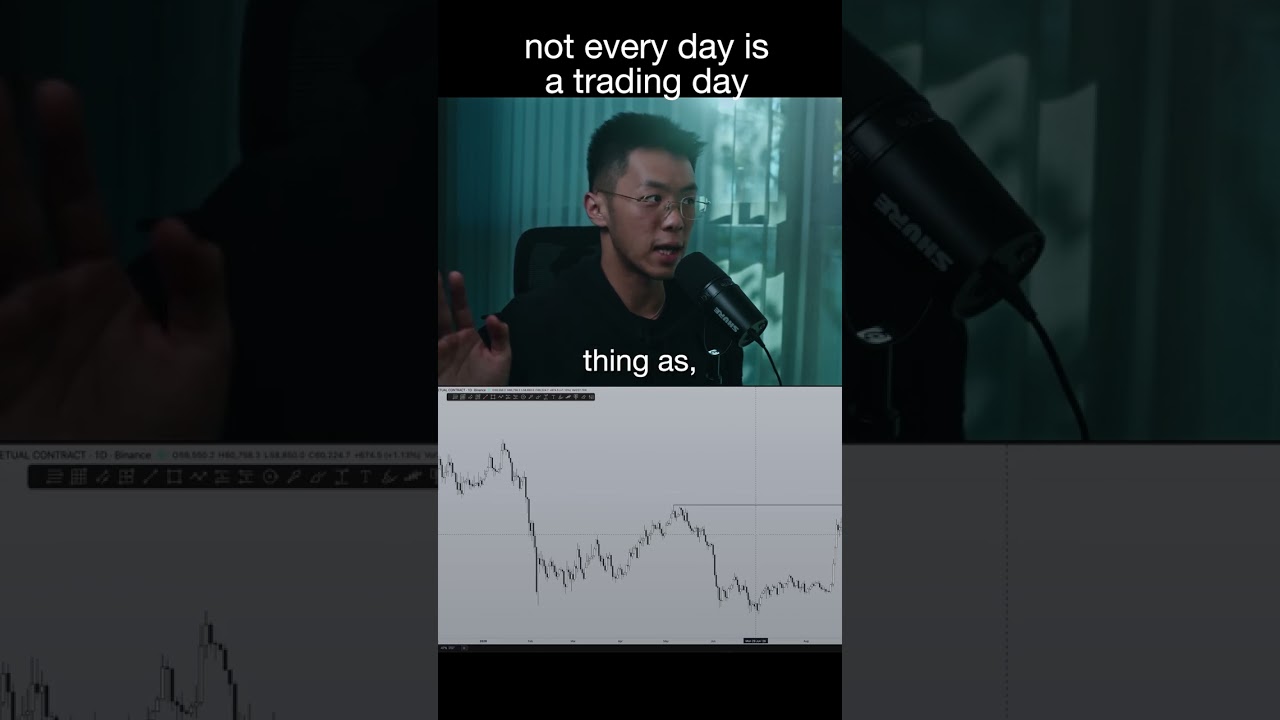
In this short back‑testing video, The Art of Crypto walks through his daily trading routine built around the ICT “kill zones” – specific time windows for the Asian, London, New York and London‑close sessions. He explains how he uses these zones to set a session‑level bias (long or short) by looking for early directional moves, break‑of‑structure (BOS) on a 5‑minute chart, and then refines entries with Fibonacci retracements (notably the 0.705 and 0.618 levels) and order‑block zones. Throughout the day he demonstrates several live‑style trades, showing entry points, stop‑loss placement, and target levels, and reports the resulting risk‑to‑reward (R‑to‑R) outcomes (ranging from 2.24 R to over 9 R in a single session). He emphasizes a disciplined approach: typically one entry per session, high‑probability setups, and strict adherence to his rules, while acknowledging that the ideal setups do not appear every day. The video serves as a primer; detailed rule‑sets are promised for a future video.
Chapters
What's up everybody? This is just a short video. I was just doing a little bit of backtesting and I was like, why not just record this for the sake of it so that I can share it with you guys? So the thing that I'm backtesting at the moment is the ICT kill zones, just getting a little bit of reps in to determining the session bias or like the daily bias. So it's a little bit hard for me to explain what I'm exactly what I'm doing, but to put it very simply, I'm looking for during the Asia. So like on every kill zone. So for Asia, that's between 8 PM to 12 AM New York. London kill zone is 3 AM to 6 AM London. And the New York kill zone is 7 AM to 9 AM London. And then there is a London closed kill zone, which is 11 AM— sorry, 11 PM to 1 AM. Actually, that doesn't really make sense. It should be 10 to 12, but you know, I digress. So the thing I'm looking for is I'm looking for some kind of direction to establish itself early on. So for example, during the Asia session, I am I have identified that things are going up. So during this kill zone, my bias is going to be looking for a long. Assuming this is the swing high, I'm gonna look for eighty eighty six in order to get into a long. So we'll see how it goes. But the way I identified it, okay, so that's definitely not the swing high. So We'll just watch a little bit. Okay, so right now maybe that is the swing high. So if we just draw a fib up there, you could argue that maybe we could have entered here. So okay, so right there I would have entered into a long, stop there, and my first target is going to be the previous high. So that's 2.24 R to R ratio. We'll see how it goes. So these are really quick short trades. For example, over there you have hit the target, uh, just really quick short trades in each kill zone. So that's if you were trading the entire day, that would be 4 to 5 trades a day tops. And these are very high probability trades. They don't always come every day, but when they do come, it's pretty high probability. So that's 2.24R secured right there, and I'm probably done for the Asia session. Now I could consider getting into another one here because since we— I've identified that the Asia bias is long, but it depends whether or not you want to try it out. I'm not because I've already made my money here and my primary sessions are going to be London, New York, and the London close anyways. So it's a good thing we didn't take that. We would have got stopped out. So now that our money has been made, we literally just chill until the opening of London during the London kill zone. So immediately I can see that the daily bias is shifting up, but I mean, sorry, the bias prior to London open was shifting up. Okay, so here you got the first break of structure on the 5-minute chart. Let me just remove this fib. So now you just got the first break of structure on this 5-minute, as in you broke here and you broke here. So, and this is right at the opening of the London kill zone, which gives us an indication that the bias for London is going down instead of up. So I'm going to be looking for shorts here after we have developed a swing low. For example, I think there is definitely the swing low for London. So I'm just going to draw a fib from the London kill zone swing high to London kill zone swing low, and you can see that the 0.705 is over there, so I'm going to be looking for a short there. And as for this time, because I understand that London is probably going down, I'm going to set my target a little bit lower, probably on that swing low over there. And assuming that New York continues the trend, I might even set it all the way down to the -1. But for the— I just want to play it safe and set it there. So we'll see how it goes. Okay, so Right there, the trade just filled, so we'll see how it goes. Okay, it's kind of choppy. It's very choppy. I mean, it's a Sunday, so it's to be expected. Okay, so now the New York opened. So usually, usually, right, there's a general rule of thumb: if London is going down, and if the London kill zone, or like just London in general, if that London is going down, more likely than not New York is probably going to continue. So in this case, I will try to find an entry if I get it. Okay, so right there you just got the first break of structure on the New York kill zone open. So if we look for a retrace, assuming that's the swing low— assuming that's the swing low, this is risky— then you draw a fib from there. And let's see, where's the optimal entry? The optimal entry is over here. So we will look for a short. We'll look for a short there. Why not? Stop above the high and targeting. Let's do for this case, let's do a negative one retracement of the fib targeting that swing low over there. We'll see how it goes though. Not sure if we will fill this though. Ideally, I want there. Okay, so we didn't fill that, I think. Oh, nope. All right. Okay, so that was pretty quick, but. The buy that like they understand, like the concept that we were going for was right. It's just I was trying to fine tune my entry a little bit too much. So we didn't get this. Let's see. Let's see how do we hit it? Okay. So we hit the TP. Okay. So we didn't get that. So that would have been another five R. We secured four R here and we secured two R earlier. So this has been six R and it could have been eleven R in just the span of a few hours. And that's why. This strategy is so powerful. Basically, like my default strategy, it's pretty high probability and the risk-to-reward ratio is really quick, and you tend to make pretty quick money, which could be a priority for some people. So I think, I think that's most of our money made for the trading day, at least for the New York session. Okay, right there you could have probably entered into another short because New York is probably just going to continue. So if you wanted to, you could do that. My rule of thumb is I generally don't go for it. Generally, but you know, for the sake of this backtest, like my rule of thumb is I tend to stick to one entry per session, but you could go for more. Wait, let me bring that back and let me see the targets. Maybe for this one we'll just go for the point negative 0.5 extension and we'll see how that goes. Okay, TP hit. So in the same trading day, we just secured another 3.5R, so that's 9.5R. All this is happening in the same trading day, and this tends to repeat itself pretty often. Oh, okay, I could have set it to -1, but I didn't see a swing low there, so it's all right. Okay, so I think most of the money is made. So here's— here we come to the London close, and the London close is important because this is another kill zone where if the daily bias for the day— as you can see, the entire day you were going down, I mean the entire London trading day you were going down means it's a bearish day. And when it's a bearish day, the London close, or the time prior to the London close, will form the low, the, the low of the day. So assuming that the low of the day is going to form in during the London close kill zone, if I see an entry, if I come, if I get a retracement— actually, let me just remove this fib— if I get a retracement, let's see, swing high, assuming that's the swing low, right? Then point something. Hey, doesn't really. I don't really see an entry there. Just go into the two minute to see. Not really. So we'll just see how this develops. But I think that is very possible. That's low of the day right there. We'll see how it goes though. Generally, assuming that that's low of the day, you could enter into a long right here targeting. I don't even know where to target. I'm not going to take that, man. Yeah, good thing I didn't take that. Okay, so right there you could have went in. That I will actually. I'll actually just. Take a bet on. So I'm just gonna target like, let's see here, assuming that's swing high. Do we want to set? You know what? I'm just gonna. I'm just gonna target this previous swing high. This one's risky because I don't exactly know what's the structure looking like. Oh, okay. Uh, so that's another 3.8R secured in the same trade. I yeah, once you understand these concepts, this is how powerful it can be. So initially, my initial target was here, but hey, you. know, pretend as though this is a real, real session. So I'm not going to cheat. And I mean, there's no point cheating as well, because at the end of the day, if you cheat, you're just cheating yourself. So we are done with our work for the day. Uh, literally the time between 12 AM to about 8, 7 AM to 8 AM is just a dead zone. You don't really— it's just going to be a lot of chop. It's at least it's not, uh, well, I stand corrected, but the idea still stands that we are really selective about our trades. So we have certain sessions that we trade and we have certain sessions that we don't do anything even though price is moving. So we will wait until the Asia kill zone opens again during the next trading day, and that is when we will start trading again. So, okay, no, I was mistaken. So from 7 to this point here is— it's actually— okay, so let me, let me correct myself there a bit. I thought this was 12 AM to 8 AM, but in fact this was 12 PM to 8 PM. So this entire session from here, starting to here to about there, is actually the New York trading session, so it's actually good. Like because you already know that the low of the day would come before the London close because it's a bearish day, then you could just literally just focus on longs the entire time. So the exact entry that I'm looking for is sort of like a breaker structure. I don't really see it here. Don't really see it here. Okay, you could argue that's the first one. No, no, don't see it. Okay, so even if we wanted to trade this, we would not have gotten an entry based on our rules, which is a break of structure to the upside into a 0.705 retracement. We would not have gotten that. Usually the 0.705 is a bullish order block, but we don't get it. So we will just trade the new— sorry, Asia kill zone. So currently Asia kill zone has opened and Currently price is going up and the key level here is 91.7. So this could be the, the higher level type, the higher time frame level that it's reaching for. Okay, so Asia just broke market structure, so we'll see how this develops. I don't think we are entering right now though. Okay, so you definitely broke market structure. So Asia is showing us that it's bearish, or maybe it could just be coming back into here. I don't see any kind of order block that I can take advantage of here. So this is what I mean when I say this kind of setup doesn't really show itself on every single day, every single sort of session. So it's, it's really up to you to determine if this day is going to be— I mean, this session has the entry that you're looking for, especially the Asia. It's a little bit less lower probability compared to the London and New York kill zones. And yeah, so that's why we didn't take the trade, because we understood that 91.7 is a key level on the daily. So the daily chart, that is a key support resistance level. So that could be the level that it's reaching for, and indeed it is. So now we want to look for a short somewhere about here. But yeah, we would want to look for a short. Look, keyword look. We don't enter short immediately even though there will be some kind of reaction downwards, as you can see from there. Okay, so it's just ranging now. Okay, see, even though there is some kind of reaction there, we don't go yet. Okay, we follow our rules. We wait for the London kill zone to open, and then we decide. Okay, so the London, right as it opened, it broke structure on multiple occasions, and we have a very clear order block that we can jump into in the form of there. So let's see if we draw a fib from there to there, and 0.705 is exactly at the order block. So we're going to set a short order probably somewhere there. Also, this is assuming that that's the swing low. So I don't know if that's a swing low. Okay, it's uh. It's a very choppy day so far. Okay, hasn't filled our order. Oh, we're already in New York. Okay, so let's just pause this. Okay, now we have to decide, um, do we still think that London— okay, so this day, on this day itself, London's a little bit ambiguous because we don't really know if London is taking us up or down. If I had to guess, probably up. So I'm going to remove this order for now and we'll see how things develop. On New York, and then we can make some decisions later. Okay, so New York kill zone. You just broke structure on multiple levels. So right there could have been an entry. Nope, doesn't retrace back into the zone that we're looking for. Okay, so right now, do we fill it? No, we don't fill it. Let's check the two-minute. Okay, yeah, we haven't filled it yet. Okay, so right there we would have filled it, but then New York is indicating that it wants to go up. So yeah, okay, good thing we did not take it. Okay, so New York is indicating that it wants to go up, and the reason I know this is because since the start of the New York session, we have been breaking structure towards the upside multiple times. So since today is a bullish day, I'm expecting the high of the day to come before the— I mean, to come during or before the London close. So the high of the day should form within the next 2 hours. And we'll see how that goes. Wow, it is a good thing we did not short that. Okay, and that's the high of the day, I think, right there. You broke structure. Okay, so the rest of the day should be going down. I'm not actually going to enter here because I don't see the entry that I would take. Yeah, I'm not going to enter here, but the rest of the day should be down. We'll see if I'm right. Even if it's not down, right, but the high of the day should have formed on London close. Should have. Oh, I was wrong. But hey, it's high probability. It's not like a 100% thing, you know? And now we literally just take a break because we're not in the kill zones, and we'll just wait for Asia to open and then we can decide. Okay, wow. Okay, so I think I was right. Just, um, the high of the day thing, right? The rest of the day should be down, but like the high of the day, yeah. Okay, so now Asia, let's see what it does. So it's currently breaking structure to the upside, definitely breaking structure to the upside. So Asia I think Asia wants up. Oh yeah, Asia wants up. So I was actually— the reason I paused it there is because I was actually looking for an entry there. Hey, you know, uh, the ideal optimal entry doesn't really show itself every single session, but at least we were right about the direction. The reason I know that is because the moment Asia opened, we broke structure to the upside, okay? And we continue to break structure to the upside. That's how I know Asia was pushing up. So Asia's up. We don't know what London's going to do yet. The moment London opened, it just broke structure to the downside. So I think London wants down. Okay, so right there could have been an entry, but price is a little— the stop is a little bit too close for my comfort. So there was no entry in the London kill zone. So again, assuming that London is down, as you can see from Here, right? The daily bias for London is down. Then we expect New York to continue the trend. So sometimes it does reverse, sometimes like this, but. Okay, so that could have been an entry, and that definitely could have been an entry. So what I was looking at is the 0.618. I was thinking about going short there, stop there with a target at probably the -0.5, and we would have hit that. So that, that was the idea that I was having, but I didn't take it because it didn't come back to the 0.705, which again just comes back down to trade selection. You don't— it's okay to miss pumps, or it's okay to miss trades. Losing money is not okay though. So yeah, you know, the high today probably came before the London close. Okay, so new Asia just opened. Uh, Asia definitely wants down. So Asia opened here, so you broke structure there, so that could have been an entry. So you break structure here Break structure here. You come back up to retest that. That could have been your entry. That's the order block as well. So if you were to have taken that, you would have went something like that targeting a previous low. So probably there. That's a 2.35R trade, which is not looking like it's going to play out. So again, high probability, not not like 100% chance, you know. Oh, um, I'm gonna end it here because I actually have to get going. But hopefully this is. This has been helpful to you guys. It's a little bit of, uh, understanding on how to use the kill zones to just determining daily bias, plus how to get, you know, good entries with really good R-values and stuff like that. Very— I know I didn't really explain much about the rules and exactly what I was doing, but that's going to come in a later video. This is just a little bit of a primer. Hopefully you guys enjoy this. If you did, let me know. Fernando, may the king be with you.