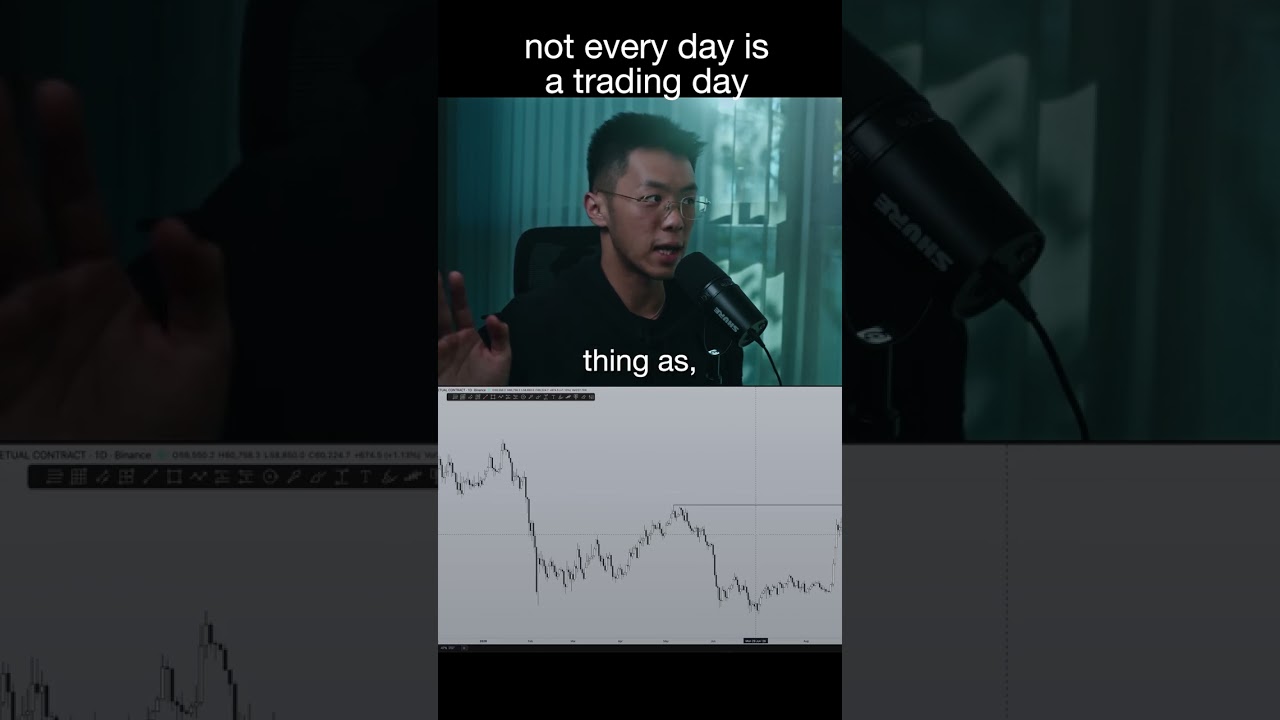
In this solo commentary, The Art Of Crypto explains why he abandoned conventional pattern‑based trading (e.g., wedges, triangles) in favor of a "smart money" approach. He argues that pattern trading relies on the flawed assumption that repeating chart shapes guarantee profitable moves, leading to frequent fakeouts. These setups often cause traders to enter positions at relatively equal highs or lows, which contradicts liquidity concepts that favor trading into strong, unbalanced price extremes. He emphasizes that successful trading aligns with the fundamental buy‑low, sell‑high principle, whereas pattern trading can result in buying high and selling low. The speaker positions the smart‑money strategy as more consistent with how markets actually move, advocating for trades that target strong liquidity zones rather than symmetrical price levels.
Chapters
In the last couple of years or so, I have completely switched my strategy to one that revolves around smart money concepts. It's because I realized this strategy over here is fundamentally flawed in the sense where it doesn't trade in line with how markets actually move. This comes from the assumption that, okay, just because it's a pattern and somebody on YouTube said that a pattern works, we're going to trust, you know, whatever that YouTuber is saying and we're going to trade it and we're going to trust our money with it. But the reality is, if you have seen this before, where on a, you know, wedge pattern or like a triangle pattern, you'll notice even if you enter, You end up getting into a lot of fakeouts. You're either going to be doing two things: one is you're going to be trading into relatively equal highs or lows. Like I want you to imagine here, right? If you end up going short, guess what? You have relatively equal highs, right? Big pull that could just get stopped out before price dumps. Or B, if you end up going long, same thing here: you have relatively equal lows. So that's the first one. You're always going to be trading into relatively equal levels, which we've already established is completely against liquidity concepts. And if your goal is to make money, you want to be trading into strong highs or lows rather than relatively equal highs or lows. Now the second thing is, even if you do get a Successful trade out of it. What you are fundamentally doing is that you are buying high. I don't know about you, but I'm pretty sure if you ask most people what is the correct way to make money in the markets, they would say something along the lines of you buy low and you sell high, or you sell high and you buy low—not the other way around. And you're starting to see how fundamentally flawed this kind of strategy is.