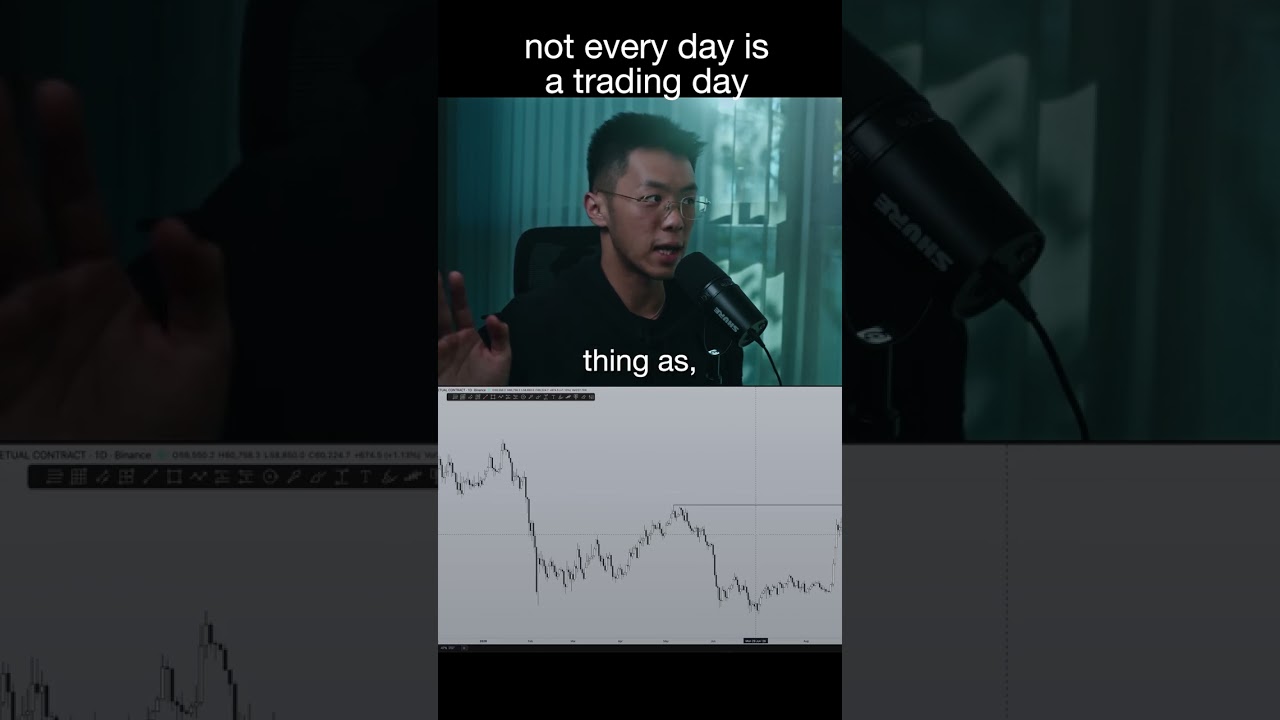
Institutions Are About To Push Chainlink Price HERE! Follow The Smart Money! #LINK Price Prediction

In this video, The Art of Crypto delivers a detailed technical analysis of Chainlink (LINK) aimed at determining its short‑term direction and identifying precise entry and exit points. The presenter begins by examining the daily chart, highlighting a series of lower highs and lower lows that form a "protected high" at the $21 level, a concept tied to Wyckoff distribution and institutional market manipulation. He then shifts to the 4‑hour chart, where he notes that the protected high has been broken, indicating bullish order flow on the lower timeframe. The analysis introduces a rising‑wedge pattern, noting its 68 % probability of a downside break but also the 32 % chance of a parabolic upside move. Order blocks—both bullish and bearish—are identified as institutional liquidity zones that can serve as entry or exit zones. Specific price levels are marked for potential long entries ($18.6, $20) and short entries, with detailed stop‑loss placement and a tiered profit‑taking plan ranging from $14.2 up to $26.4. Throughout, the presenter emphasizes risk management, position sizing, and the psychological aspect of “choosing your pain.” The video concludes with a promotional pitch for a private Discord community offering daily trade setups and advanced education. The presenter repeatedly states that the content is not financial advice.
Chapters
What's up everybody, welcome back to The Art Of Crypto, the birthplace of absolutely legendary gains. In this video, we are going to take a look at Chainlink and figure out exactly if it's going to go up, is it going to go down, and the exact prices where I will be looking to buy Chainlink. So if you want to find out exactly what the answer is, you're going to want to stick around to the end of this video. And without any further ado, let's dive right into it. So immediately, right off the bat, if we just take a look at the Chainlink chart on the daily, You can see that, you know, while we have had this massive run-up, and in fact probably not that massive, so about 40%. So while this may look like a lot, and while you may be thinking that, you know, we are in an uptrend on, you know, the higher time frame, or maybe, you know, Chainlink is about to pump to, I don't know, $30, whatever, here's the thing that you must understand. So if we just draw, you know, if we just go based on the idea of, you know, higher highs and higher lows or lower highs and lower lows, You know, lower high, lower low, lower high, lower low, lower high, lower low. You get the point. So over here, you can see that you know we have a high here, lower high, lower low. Sorry, lower high. We have a lower low here. We have another lower low here. And most importantly is that we do have a lower high over here. So right now, I'm just going to write this as a protected high. Now I'm going to get into what that means later on. So let me just mark down all of these as protected highs. Here's what you need to understand. If we just look at Chainlink in this way, you can see that at the moment it sort of looks something like this, which means at the moment, until Chainlink actually breaks this level at $21, all right, so let's just mark down that level at $21. Until it breaks that level, you can see that we are still forming, right, we are still in the process of forming a lower high. Now just because we're forming a lower high doesn't mean that we're bearish, because you know, the next round we might form a higher low And then we will continue to go break, you know, this previous high on Chainlink. Now, to explain what I mean by this word protected, so basically what you need to understand is that, you know, if we just go back onto, let's say, BTC/USDT. So if you have seen this pattern before, this is what you call a Wyckoff distribution. Now, if you know anything about Wyckoff, you know that it's done by institutions. So basically This entire move right here, and this entire move right here, as well as this probably, and this is caused by institutions. And yes, you heard that right. Crypto is being manipulated, and it has been manipulated for you know since the dawn of time. And the reason why this is is you know although it is not a truth that many people would like to admit, institutions at the end of the day are the only ones who can really move the markets. The reason for that is because They have a lot of money to play with. Their position sizes usually range between the hundreds of millions, if not billions of dollars. So imagine how many retail traders it would take in order to match the level of institutions. So basically, since they're the only ones who can move the markets, you know, might as well, you know, since we can't beat them, join them, right? Or at least try to follow what they're trying to do. We try to identify what they're trying to do. So the reason why these highs are protected is because imagine if you were an institution and let's say you went short somewhere around there. Would you realistically allow the price to come back up to stop you out or put your position into the red? I would assume not, which is why these highs are protected, because the institutions will not allow the price— like, if they are still short, right, if they're still short, they will not allow the price to come and break this protected high. Hence, you know, it's protected. So now that we understand that, how do we apply this to our trading? So basically, on the higher time frame, right, On the higher timeframe, we are technically still bearish. But if we go onto a lower timeframe, such as the 4-hourly chart, you can see that, you know, if we zoom in just a little bit, and let's shorten this protected high so that we have a little bit more space. So if we just do something like this, right, you can see that this, you know, lower low, lower high, lower low, lower high, lower low, and then this, right, then this move right here, if you just notice, we have broke through this protected high, which means And not only have we broke through this protect high, we have broken through every single one. This means that we are now in a bullish order flow, at least on the 4-hourly timeframe, which means when we are in bullish order flow, we look for previous highs to get violated, right? Basically, if the institutions prove that they are still going long on Chainlink, they will push the price to stop out, you know, to attack this level at $21 if we remain bullish. However, The one thing that you might want to keep it like the one thing that you might want to pay attention to is if we just draw sort of something like a trend line going from there to about you know there you know just give or take right give or take we'll cut through you know just a just a couple of candles but you know just bear with me so this pattern right here is something that you would call a rising wedge now rising wedges now I know this this does not look like you know the prettiest rising wedge and if you if you want something like prettier. It would actually look something like that. So rising wedges, right, just so you know, have a 68% chance of usually breaking towards the downside. Now, am I saying that Chainlink is absolutely going to dump right now? No, absolutely not. But what I mean is, this is something that you wanna keep in mind because while 68% of the chance it does break lower, 32% of the chance it does break higher. And whenever a rising wedge breaks higher, the move tends to be parabolically up, which means if we do get a break of this rising wedge, We should expect Chainlink to hit you know $21 at least, but my guess is that we are going to go to $22.8. Now the reason for that is because over here, if you just take a look on the four-hourly chart, this massive move downwards right was preceded by this last bullish candle. Now this means that this bullish candle right here is an order block, and order blocks what they are are simply institutional areas of interest. Basically, these are areas of untapped liquidity, right? Basically, there's going to be a lot of liquidity here, and this is exactly where institutions like to. Push price to, right? Bearish order blocks is, you know, this is a bearish order block. So a bullish order block would be this, you know, the last bearish candle before a massive move upwards. Which means immediately, right off the bat, let's just mark down these levels as order blocks. So this right here is a bearish order block. I'll mark that as orange. And as for a bullish order block, I'm going to mark it down with blue. Now, if you feel like you've learned something new just while watching this video, it would help me so much if you could just drop a like button. It's a really small gesture, but it really helps me out a lot. And if you haven't already followed me on Twitter at underscore the art of crypto, you're going to want to do so. This is where I'm sharing the latest market updates, and you do not want to miss out. So these two levels are going to be ideal entries for you know ideal entries slash take profit targets for you know Chainlink wherever we go. So in this case, if we are still bullish, I do expect 22.8 to be very close to the top before Chainlink does you know a retrace. Now. Do I mean that Chainlink is absolutely going to dump to zero? No. What I mean is that Chainlink is just going to do, you know, a pullback. So let's just mark down both of these, right? And if Chainlink were to break below, right, similar to, you know, protected highs, if, you know, the institutions right now, because they are bullish, they have broke through multiple protected highs, right? And if they are bearish, which means if they start shorting here, you should expect previous lows to get violated, which means at the moment these lows are what you call protected lows. However, if they do get violated, then these would no longer be protected because institutions are going short, which means they will come down and take out all the liquidity beneath these levels until, until, right, until you reach an order block, which again is an institutional area of value, and it is an area where they like to push the price to. So if Chainlink were to dump from here, I do expect this level at $14.2. Again, this is on the Binance chart. If you're on a different exchange, you're going to want to use a different chart, but Largely, it should remain pretty similar. So if you just notice, right? Why, right? If you just take a look at the VPVR, why would there be volume like here, right? People, you know, retail is going to think, hey, you know, this is this is strong support, right? We found support here, here, here, and that's why there's volume there. But you know, once you understand why there's volume, once you understand why there is no volume in between here, once you understand why there is a spike of volume. In this bullish order block, then you understand what the institutions are trying to do. But to the untrained eye, they would not be able to see this at all, and they would not know the slightest clue what is happening. You know, if the price does you know get rejected here or if it bounces here. So if you've watched until this point so far, I just want you to comment down in the comment section order block. Okay, I've seen a lot of people assume that when I say order block, they think I'm saying auto block. No, I don't even know what an auto block is. So it's it's an order block, guys. Okay, it's an order block right here. Right? Spelled out for you. It's not an auto block. I mean, this reminds me of like an Autobot or something. You know, Autobots roll out. I mean, just a little, just a little fun little segment. So for now, here comes the million dollar question: How do we trade this? Right? Knowing the information we know now, how do we trade this? So first off, you are going to want to mark down this level right here at 18.63. Now this level is 18.6. Let's just consider this 18.6. And you are also going to mark down this level right here at. $19, $20. Let's just consider this $20. So basically, the reason why both of these levels matter is because if the price of Chainlink were to break above $20, then it would break above this rising wedge. So you can see, right, if the price does get here and it breaks out, then that's a breakout of the rising wedge to the upside. But if it does break below $18.6, then it's going to— again, this right here, all right, this is a protected low right now. So this is a low right now, and the only sort of criteria that is needed for something to be considered a low is if you just, if you just take a look at this candle right here, the low of this candle is lower than the candles next to it. So this is what you call a swing low, and simply put, that is considered a swing low already, which means if the price of Chainlink were to break below $18.6, that would mean that we will have a break of market structure towards the downside, and we will expect lows, right, the previous lows to get attacked. So in this case, If the price of Chainlink were to break below 16.6— oh sorry, 18.6— then I do expect all of these previous lows to get attacked until we reach this bullish order block where we will very likely bounce. Now again, this is not considered financial advice. What I'm doing right now is simply giving you some areas where, you know, price is likely to have a reaction. Now will it have a reaction? No. Will you get stopped out potentially? Yes. But all I'm saying is Rather than, you know, absolutely not knowing what you're doing, like just in the middle of nowhere, maybe you're gonna buy or sell in the absolute middle of nowhere. I'm just saying that these levels are gonna be, you know, at least areas of value where you could play. So in this case, how do you use this information to your advantage? So basically, if you are watching the charts when this happens, if the price of Chainlink were to break below this level, what you're gonna wanna do is enter along with the breakdown. So basically, as the price breaks, you enter along with the breakdown. And then, you know, you just ride it. Or alternatively, you wait for the price to break down and then come back up for a bearish retest. Now, both of these entries are really good because you can just set your stop loss right inside the pattern. Basically, you know, a breakdown is supposed to bring the price down, it's not supposed to come back up. And similarly, a retest is supposed to flip, you know, previous support into resistance. So you know that if you just set your stop loss inside the pattern, or maybe above a certain level, If the price were to break back up to that level, then you know that your trade has been invalidated. And again, even the best traders in the world are wrong about half the time, and yet they're still wildly profitable. The reason for that is because they do not let any single mistake stop out their account very heavily, which means risk management is key. It's okay to be wrong, but it's not okay to let any single mistake wipe you out. So the take profit targets are going to be right here at 17.6. 16.15, 15.3, and ultimately you're going to want to take all your profits at 14.2 if we do get here. Am I saying the price is going to get here? No, absolutely not. But if it does get here, this should be very close to the bottom. And in this case, we are just going to set a stop loss right beneath this order block because we know that if the price does break this level right here, then we are potentially going much, much lower. And as for a short entry for Chainlink, As long as you know, you do not. By the way, you do not just. I mean, like you can short into an order block. Just make sure you use a stop loss. Okay? In this case, it's going to be right above the order block because we know that if this order block, if this bearish order block has been invalidated, then we expect Chainlink to go back up to. I don't know. Like um this level at. Nah. In fact, I wouldn't even suggest you guys start shorting Chainlink here. If we are going to short Chainlink, I will probably make another video. Explaining exactly why we are shorting Chainlink, and for that to happen, I want to see a distribution pattern going on. In this case, a rising wedge is a bearish pattern, which is why I'm calling for a potential short. Now, if Chainlink were to break above the upside, then what you're going to want to do is exactly similar to the breakdown. Basically, as it's breaking up, you enter along with a breakout or a bullish retest. In this, in both of these cases, set your stop loss right beneath the pattern. Or rather right beneath the level at $20, and these are going to be your take profit points. Now, the way you use these take profit points, by the way, is— let me just mark down one more at— so again, let me just read out the take profits. That will be $21.3, that will be $22.8, $23.7, $24.4, $35— oh sorry, $25.35, and about $26.4. Now, the way that you're going to want to use all of these take profit patterns, right, or levels Is, you know, as the price, let's say, is going up, you might want to close 25% of your position here, 25 here, 25 here, and maybe you leave a moon bag for, you know, to take the rest here. Similarly, if you're shorting, you take 25 here, 25 here, 25 here, and maybe 25 here. You get the point. Now, the reason you do this is because you always dollar cost average. Nobody knows where's the exact top, and nobody knows where's the exact bottom. Now, while this may be very close to the bottom, It's not a guarantee that we will even get here, which means that, you know, maybe the price could bounce here and just, you know, absolutely take off. If you don't take any profits, then what's likely going to happen is that price is going to come down and it's going to come all the way back up and you'll get stopped out, or maybe you might get liquidated. And a lot of beginners really approach me and they're like, hey, um, what if I take profits and, you know, the price continues to go in the direction? Wouldn't I be missing out on potential profits? Well, yeah, you will be. But here's the thing that you want to understand in trading. The moment you open a position, right, everything that you do from that point on is, you know, painful, right? If you take profits too early and the price keeps going in the direction that you are anticipating it to, then yeah, sure, that's going to be painful, right? That's potential profits. But think about it on the inverse side of things. What if you do not take profits, the price comes all the way down here and it bounces all the way back up and stops you out? I'm sure that would be painful as well, which is why you choose the pain that you're okay with accepting. For me, I'm okay with accepting taking profits too early. So pick your pain and just remember, nothing is confirmed until it is confirmed. And allow me to just add that if you are serious about doing this trading thing for a career, or maybe you just want to take your trading to the next level, maybe you just want to go crypto full-time, then you're going to want to check out the private Discord group. Maybe you think that, hey, I'm like, if you watch my videos, you know how accurate I am. And if you're wondering like, how do you learn the stuff that I learn? How do you read the charts like the institutions does? Then you're gonna wanna check out the private Discord group over here. You're gonna get access to a world-class trading education that will really help you out along your trading journey. And it will allow you to learn the things that don't work, and it will allow you to learn the things that work and to discard 90% of the things that don't work. So if you're sick and tired of, you know, feeling really panicky when you're reading charts, or you just want to know what you're doing, then this Discord group is going to be for you. And as a bonus, when you join this Discord group, you're going to get access to all my daily profitable trading setups where, you know, everyone is making money every single day. And there have been so many people in this Discord that have already paid off their membership in just a couple of trades. So if you're interested, you're going to want to head to the link in the description below Right now there's only about 10 spots remaining. In fact, there's probably only 4 more left, but I'll probably extend this for just one more day. Right, I'll close this on 30th of July. So if you haven't already gotten in, make sure you get in before the 30th of July. Once signups closed, it probably is going to be closed for a month. So make sure you secure your spot before that. And again, make sure you mark down all these levels because right now I'm giving you the exact levels that you should pay attention to. And if you can't even take the time to go mark down these levels on your own chart, then there's nothing more that I can do for you. So make sure you do that. And anyways, my friend, I'll see you in the Discord group. May the gains be with you, and peace.