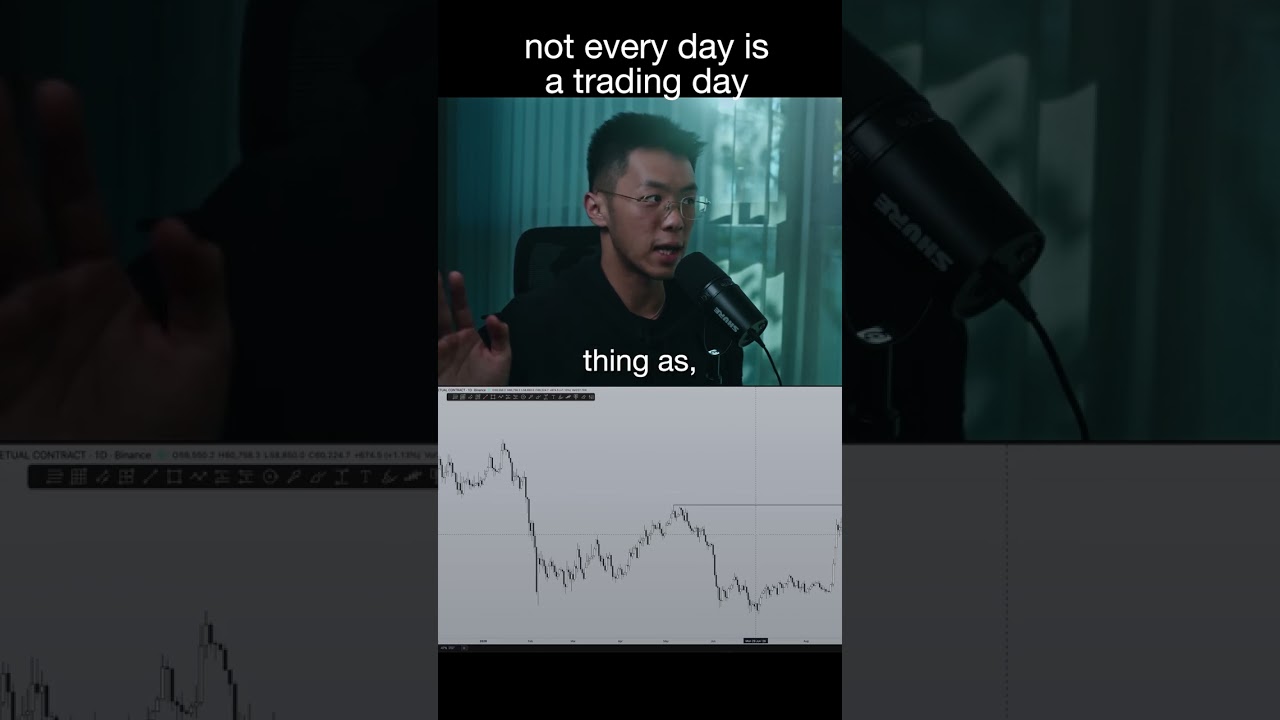
Is This The Best Scalping Strategy?! ScalperScanner Tutorial

In this tutorial the creator, The Art of Crypto, walks viewers through a high‑frequency scalping system that he used to grow a $25,000 account to nearly double its size in three days. The core of the method is a free web‑based volatility scanner (scorebyscanner.com/scanner) that lists the most volatile coins on Binance and Bybit across 5‑, 15‑ and 60‑minute intervals. The workflow consists of three layers: (1) use the scanner to select the top‑volatility assets; (2) examine a higher‑timeframe chart (1‑hour or 4‑hour) to identify the market’s environment – range highs/lows, premium‑discount zones, and overall bias; (3) drop to a lower timeframe (typically 5‑minute) to locate entry structures such as bullish or bearish order blocks and fair‑value gaps, then place trades with tight profit targets and stop‑losses. The presenter stresses extensive backtesting (300‑500 replay sessions) before risking live capital, disciplined risk management (small, consistent profits, avoid overnight holds), and the importance of treating volatility as “money”. Real‑time examples on XEM, BNX, BAND, and SDMX illustrate the process, including entry points, target zones, partial profit taking, and adjustments. Throughout, the video promotes a paid mastermind/coaching program for accelerated learning and offers a direct Twitter DM for enrollment. The overall message is that the strategy is simple, repeatable, works on weekends, and rewards consistency over perfection.
Chapters
In this video, I'm gonna walk you through a strategy that I used to get from $25,000 on the 13th of December. Basically, today is the 16th of December. In about 3 days, I pretty much doubled my account. I mean, not yet, but you know, it's pretty close. And I don't know if you can see from the chart here, but from the 13th and 14th, I traded a lot, but yesterday not so much. So this is a very simple strategy that uses this free website called scorebyscanner.com/scanner, and I'm going to talk you through exactly how I use this. This is going be a scalping strategy where you are taking multiple positions a day, but of course you can adapt this to intraday trading. I wouldn't say that this is like much of a short-term trading— like the highest sort of time frame trading that you can go with this is probably day trading. I wouldn't go any higher than this. I wouldn't recommend using the strategy and holding on to the trade for like a few days because that's not what this strategy is intended for. So let's just start things off with giving you a basic rundown on What this strategy involves. Firstly, you want to come over to this website here. It is absolutely free, and currently they only support two exchanges, which is Binance and Bybit. At least as far as my knowledge goes. Of course, the coins that are on Binance and Bybit tend to be on other exchanges as well. So you don't have to worry at all if you don't trade on Binance or Bybit because well you can just use KuCoin or whatever exchange that floats your boat. So the first thing you're going to want to do is if you pull up a default screen, it's not going to look like this, right? What you're going to want to do is you're just going to want to press this plus button on any one of these columns, and once you I'm going to add 60-minute volatility, 15-minute volatility, and 5-minute volatility. Now the rest of this is not super important. This is like— these 3 things are basically the main things that I use. Doesn't have to do with anything else. Now as you get more advanced with this strategy, for example, you can include your funding rate into your strategy. Then, you know, that would be if you can say take advantage of the funding rate in order to do your trading. For example, right now with the top 2 coins the top 3 coins actually, the funding rate is like super, super, super, super low, which means there's way too many people shorting. You can use that information to expect a short squeeze in the near future. But primarily we're going to be using— we're going to be filtering through coins based on volatility. Now the reason why I love this strategy so much is because it literally allows you to trade at any time of the day. Now let's actually run you through a live example. So the thing we're going to do, right, is we're just going to filter from top to bottom which coins have the highest amount of volatility. So let's say we want to dive into a trade right now. So based on this graph, I can see that some of the highest volatility coins are BNX and XEM. So now all I'm going to do is I'm going to move away from Scorpion Scanner and I'm going to go to a coin like XEM. And then the first thing I'm going to do, as I've always taught my students, is you want to identify your environment. So that's going to be a higher time frame. Right, so that's step number 1. You can write that down. Also, I highly recommend you take some notes during this video. It's going to help you out a ton. So based on the higher time frame, what I can see on this chart is that it is pretty much just trading in a range, right? Let's say from here to let's say here, right? So at the moment, I see that the range high has been taken out, and usually when the range high has been taken out, well, usually you retrace back to the range low, which in case In this case, I'm going to actually put it over there. So that's step number 1, have your higher time frame levels marked out, right? The recent range. Now, a lot of the things that I'm going to teach you in this video, you're not going to be able to get it right away, but practice with it. Go backtest with this. Do not play with live money yet. Backtest basically just means you go into replay mode and just go back to a certain point in time, hopefully without your knowledge, and like actually play the chart back through in real time. For example, at the moment you have a Let's say price is trading within this range and price is trading within this range. So price has just taken out the range high, so I'm expecting it to take out the range low or something. And then you just trade like that, right? So maybe in this case, this would have been just a deep retrace. And so, okay, you're good for a long. Price is probably going to retrace back into this order block, and if it does, then you go in. If it doesn't, well, you find another entry. But the point is, just practice In backtesting mode before you get into live charting, okay? One of the biggest reasons why people fail in these markets and lose all their money is because they don't practice first. If I told you right now to go play basketball against LeBron James, you're not going to do that because you're not as good as LeBron James. You probably haven't had enough practice as LeBron James. And here's the thing, we don't need to be LeBron James, but it is important to understand that the market makers, right, the market participants in these markets have been doing this for like years or decades. And they're really good at what they do. So who are you to just watch a YouTube video and then just go into trading and suddenly expect yourself to do really well? It doesn't work like that. So practice first, right? Until you get like 300, 400, 500 backtests, you should not be trading with live money. And if you think that is way too much, you can either suffer like the pain of taking the time to backtest, or you can suffer the pain of losing all your money. I don't know about you, but I would much rather backtest and Go through that process because in the process I'm gonna get really good at trading as well. So it's really a win-win, right? You protect your capital and you get really good at trading, and then you can do this like basically forever. As long as there's a market, you're gonna be able to trade. So there's no need for you to be rushing into any charts. So at the moment I can see that we have, you know, range high, range low. So I'm gonna wait for ideally this level to be taken, or let's see if I can hunt for an opportunity right away. So if I just draw a fib, I can see that within the short-term You have just hit the 705. So now that I have identified my higher time frame levels, I can now go into the lower time frame and frame a trade, right? For example, um, let's say this chart's actually really ugly, but if it breaks above here, comes back down here, you have a bullish order block. And I'm just going to take a bullish order block trade using Scalper Scanner as the thing to help me filter out the trade. So maybe something like that. But since we have already identified that on a higher time frame the ideal area would be for it to come here first. I would just prepare, right? Let's set a limit, whatever, set an alert for when price hits this level. And then once it comes here, you can expect a retrace back to range high. So let me go give you another example, another cleaner example. So let's say BNX is number 1 on the 5-minute volatility chart at the moment. So this is the one that's moving the most. So let's take a look. Okay, so this is what I did in the future, in the past. I shorted BNX here, right? Similar strategy, exact same strategy. It was pumping like really hard, and then it came on to like the top of the volatility, and I was like, okay, here's my thought process as I was running through it. I'm going to tell you about a couple more examples later, but I believe my thought process was we went on to the 1-hour chart most likely. So what I believe I saw was at the time price has just filled in this fair value gap here. Now, am I gonna teach you what a fair value gap is in this video? Probably not, because otherwise this video is gonna take like 2 hours. There is a lot of nuances in the strategy. This is not really for a beginner, but hopefully by seeing real time what I'm doing with the strategy, I can show you what is possible once you get good at trading and how quickly you can flip your money, which as you can see, um, it's pretty fast. There is quite a lot of profit in just a couple of days. So price hit this fair value gap on the higher timeframe. So then I switched onto the lower timeframe. I believe it was the 5-minute chart. And by the way, this trade would've been perfect If it filled, I think price was moving a little bit too quickly for it to fill. But if it did fill, that would be a ton of profits at the moment. But I believe I just went on to the five-minute chart, and then I saw that you get a bullish order block over here because then the very next candle, right? This is a bullish order block. I know it looks really, really ugly, but as long as this candle trades and closes below it and retraces back, that is going to be your entry, right? I waited for it to retrace back to the zero point five of this order block, right? The midway point. And then I shorted it. And where was my target? I was targeting this fair value gap over there, which I believe I would have took profit somewhere close to there. So yeah, like, it's as simple as that, right? You just use Scalper Scanner, right? This is my TP, the bottom of this fair value gap here. This is a 1-hourly fair value gap. It's as simple as using Scalper Scanner to filter based on the coins that you should be trading. Also, just to prove it to you, right, there is a sell 350 I took a partial profit there at 59 at this, at the entry of this fair value gap, which afterwards it did bounce. So I'm glad that I took the profit. And then, but then eventually it did come to my second profit point, which is over here at this bullish order block on the 1-hourly chart right there. And then that's where I took all the profit, and that was the exact bottom. Now this is just one of the examples. I have another one that I took yesterday. I think it was on BAND. So full context, this trade here where I shorted BAND Here, and I took profit there, even though my original take profit target was over there. But I'll explain why I moved the target. So this trade was taken during a call with my Inner Circle members. And if you're someone who's struggling trying to figure out how to trade profitably, people that work with me one-on-one get 10 times the results in like 1/10 of the time. You can watch as many of these videos as you want, but chances are having someone to guide you in the right direction, teach you the things that work and only the things that work, and help push you through the obstacles that you're going to face, or just help you entirely skip it. It's probably the missing piece that you needed all this time in order to become profitable. Like, this is the story of Maximilian. In just 3 weeks since the Mastermind began— like, this Mastermind began just like 4 weeks ago— and last week he shared with us that he passed a funding challenge. So he's now officially a funded trader with $50K to trade with. And of course, he's just one of many of these success stories. If you're interested, all you need to do is shoot me a DM on Twitter at underscore the art of crypto, and I will get back to you on the mastermind. Anyways, going back to the trade, I was looking through Scopa Scanner during the call with the inner circle. I saw that band came to the top of the five-minute volatility. It was as simple as checking right on the higher time frame. In this case, I was using the one hourly, and if you can see on the one hourly, you are trading just within this range, or you could even argue this range, and then the range low. is somewhere about here. So it was as simple, right? I now go onto the 5-minute. Price takes out the range high here, creates an order block. Now if you can pause this video to try to identify where this order block is, it will help you a lot in your development as a trader. So for those of you who took the time to pause the video, congratulations. But the order block is over here. And I note price does not quite trade back into the order block, but I'm fine with it. As long as price has traded through this area, I would rather get an entry than try to be perfect, which is a tip that I'm gonna give you on this strategy that will help you a ton with your profits. Because if you notice here, a lot of the trades that I take are small, consistent, like $500, like just a few hundred bucks of profit. I'm not necessarily trying to aim for the big trades, right? This one's $7,000 here, that's $2,400 here. Like, that's cool and all, but it's not what you should expect. I would much rather be consistent with this strategy because you have the luxury of taking so many, like such a high frequency of trades that you're going to be better off not being perfect but just being consistent. And just keep firing your shots. And then, like, even here, the original target that I had was actually at the range low here, which would have been perfect if I just waited. But when the price came into this area here, I took my first profit. In fact, I think I closed everything off here. Yeah, I closed everything off here because I saw that there was a possible likelihood that price might be retracing and perhaps reversing to come back up. And I was about to go to bed at this time, and it just goes back to show that I would much rather be consistent. I don't like to hold trades taken with this strategy for more than a day. Ideally, I'm going to open the trade and close it within the same day. The danger of holding this overnight is that because this is such a short-term strategy in nature, you benefit a lot from catching these little moves, little moves here, instead of trying to catch like super big move. Now of course, that should still be your aim to do, like you want to trade in the direction that is going to give you the most reward. Like with the fact that this is such a short-term strategy by nature, you will tend to get a lot of these reversals, right? And they happen pretty quickly. It's as easy as waking up the next day. For example, if I didn't take my profit here, it could easily have just reversed here and I would've woke up with half the profit. And here's the other thing that you need to know. Nobody ever went broke from taking profits. Just take your profit, rinse and repeat, cycle your money, and build up on the compound interest. In the beginning, it's gonna look like this, but eventually you're just gonna take off straight up. So just to run you through the strategy again, it is as simple as pulling up this free tool, right? This is absolutely free. Checking which coins have the highest volatility because volatility implies that there is money there. The fact that the markets are moving at such a high speed means there are market makers involved, there are retail traders involved. Basically, there's money. Wherever the money is, you want to go to where the money is. Filter it by volatility. If you can pair it with the funding, it's not important. For me, I just look at the volatility. 5-minute, 15-minute, 60-minute, it's up to you. Once you identify the coins that are worth trading, right, because the worst thing as a trader that you can face is to get into a coin and it does absolutely nothing for like 10 hours. As a trader, volatility is your best friend. That is step number 1. Step 2, you just go into a higher timeframe. For me, I prefer the 1-hourly or the 4-hourly chart just to get a sense of your environment, right? You need to understand if you're in a range high, if you're in a range low, if you're in a premium, if you're in a discount, where should you target? That is all going to be identified on your higher timeframes. So that's going to be either the 1-hourly chart or the 4-hourly chart. And once you do have that, you just have to make a educated guess on where you think the price is going to go. So when it took out the range high, I knew that the probability of it going to take out the range low was higher than it continuing to pump, which is a very retail-based strategy, right? When you see resistance getting broken, you think, oh, it's going to go to the moon, but that's rarely how it works. Once you take out the liquidity up here, there is no reason for the market makers to push it higher because there's nothing more to take. All the liquidity is going to be below here. And so that's what they did, right? It's very rinse and repeat. It's very predictable once you get used to it. The key is practice. So you just make an educated guess on what the higher timeframe bias is. Once you have that, then you can take a trade, right? Then you just go onto a lower timeframe. For my case, I'm using the 5-minute. You could use the 1-minute, you could use the 15-minute. Me personally, I prefer the 5-minute because it allows me to take trades where I'm not getting too caught up in all the noise of the 1-minute, but it still gives me the ability to catch a pretty sizable move and allows me to understand when there might be sort of like shift in structure. Now arguably I might have taken profit a little bit too early here, but again it's fine because I don't want to hold on to a trade for too long with a strategy. So step 1, scalper scanner, filter where the money is. Step 2, higher time frame, check all your key levels and determine where your higher time frame bias is going to be. Step 3, go onto your 5-minute and simply execute. And then just rinse and repeat and rinse and repeat. And using this strategy, the reason why I love this so much is you can trade this on the weekends. Usually the weekends are known— are notorious for being super boring, right? You go into trade and it does nothing for like ages. Well, using this strategy, you can have trades like finish. Now before I end off this video, here's just one last example to illustrate just how powerful this strategy is for getting in and getting out quick. Now this is a trade on SDMX that I took right before I recorded this video. Well, I bought it here and I sold it here, pretty much at the top. Now let me run you through the process, my thought process when I took this trade. What I identified was that on the 4-hourly chart, it had just taken out this low there. By the way, this stuff is not— I can't fake that. If you take a look here, like, it's not like some screenshot, okay? It's actually there. Same goes for all the other executions. Okay, so let me run you through my thought process of this coin. Firstly, it popped up on Scalper Scanner just now, so then I know that the money is on the chart. So I simply have to look for where the money is. So with that, I identified that the money was on this coin. Okay, so I came to this coin, went onto the highest time frame. In this case, it was the 4-hourly. I saw that price had just taken out this 4-hourly swing low, so I knew that there was an opportunity for me to go long. So then I simply went onto the 5-minute. I waited for some kind of order block to work with. In this case, this, this candle here eventually gets traded above. So when it retraces, I take a trade here and then I target there. So why there? If I go onto the 1-hourly chart, this is a fair value gap, right? Before it got filled in, this was a fair value gap, right? There's no price action between here and here. So all I did was I set my target, draw a fib, right, on this fair value gap. I set my target at the 0.5. If I go back onto the 5-minute, you can see that is exactly where I took my profit, right there. Now, was I perfect with this trade? No, but I'm not trying to be perfect. If you go back onto the 4-hourly chart, notice how this looks like a, like a relatively tiny move compared to all this move here. Right? It's just a very tiny move. But for you as an intraday trader, as a scalper, right, this strategy is primarily a scalping strategy. It doesn't matter. You're not trying to catch a move like that. You're trying to catch a lot of tiny moves as it's going up or as it's going down, right? You're not trying to be perfect. You're high frequency here. Here's another tip: whenever you're trading high frequency and you're trying to be too perfect and trying to catch, like, be too greedy and catch too big of a move, that's when you're going to get wrecked. Like, you're going to get proper, proper wrecked. I'm sure you've been there before. You are trading, like, you think it's a scalp, and then you see the price going in a lot of profit, and then you don't take the profit because you think that it's going to go, like, more towards your favor, and then it eventually reverses on you. And then once it reverses, you're like, ah, you know, it's breakeven, that's not worth it, right? I spent so much time on this trade, if it's breakeven, it's not worth it. And then it eventually puts you in the red and you get liquidated or something like that. You've seen that happen before. Right, so a good rule of thumb when it comes to this strategy is if it's enough money for you, that is good money, just take it. Nobody went broke taking profits. Be consistent, don't be perfect. You're not shooting for home runs. The more home runs you shoot for, you're going to lose a ton of trades. And I'm expecting you guys to not actually have good risk management. So if you lose a ton of trades without good risk management, you're just going to get absolutely wrecked. Okay, and one last thing before I leave you off with this video, another pro tip, is when you're determining your higher time frame bias It is very, very, very easy for you to just say, oh, but when I look at the higher time frame, I think STMX is going to eventually come to this point. Or like, oh, I think STMX is going to eventually come to this point. Yes, yes it will, but is that relevant to you now? Probably not, because you're trading on the 5-minute. You're not trying to catch moves that are going to go from here today or here today, right? That's not your goal as a 5-minute trader. Like, these candles might not look like much, but these are 4-hourly candles, and there is a lot of opportunity for you to play with within these 4-hourly candles. And your goal is to play in these candles. You're not trying to catch this, you're trying to catch this. So go high enough where you get a good picture of direction, get a good picture of the key levels, the important levels, get a good picture of like, is it more likely to go up or down? But don't go so high that it becomes like completely irrelevant, because chances are it's going to take months, maybe a year before STMX gets back to this point. It doesn't matter to you, okay? Now, if you watch this video and you feel like there are a lot of concepts that you don't understand, the mastermind is going to make this super easy for you. Like, we have had people that were completely fresh to trading join this mastermind, and within 4 weeks are taking trades worth 15R, 10R, and speaking like a proper pro. That sounds like something you'd be interested in, just shoot me a DM on Twitter at _theartofcrypto. But otherwise, for now, hope you enjoyed this. And if you want a part 2 of this video, Just let me know in the comments if stuff doesn't make sense, and I will do a follow-up to this video. For now, take care. Bye-bye. Bye-bye.