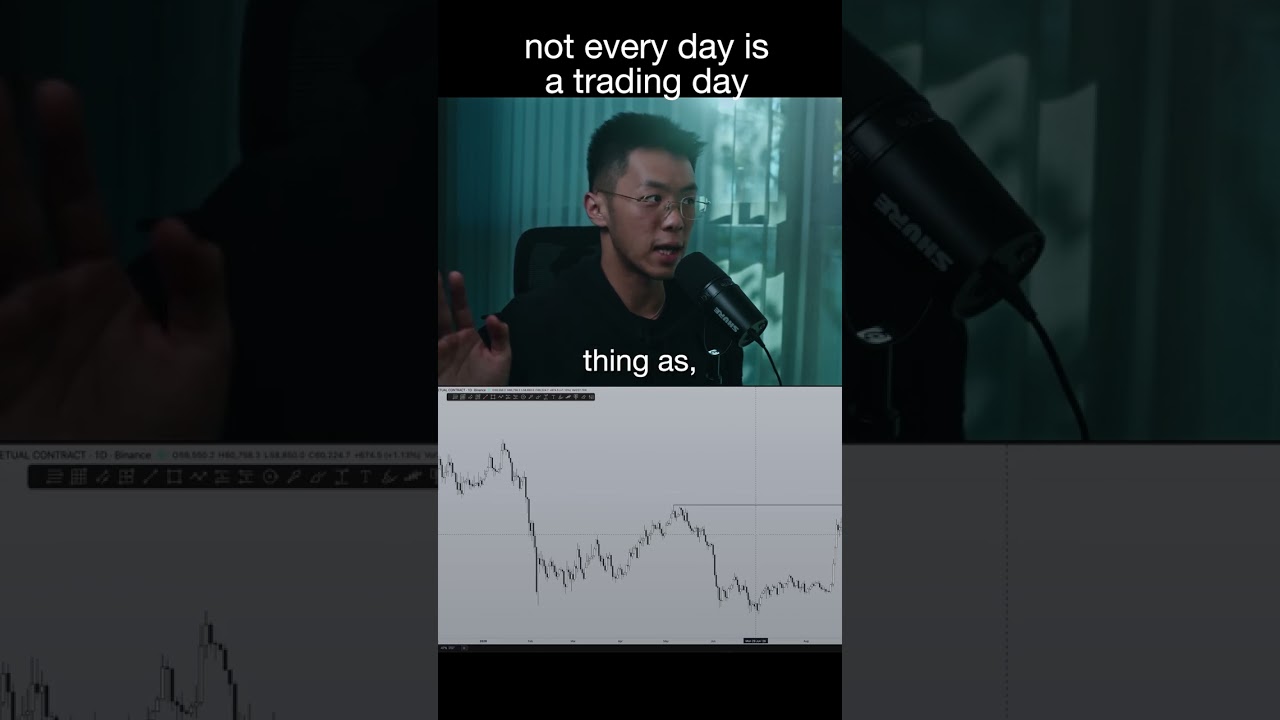
(LIVE UNCUT) How I Turned $5k into $15k in 12 Hours. And How You Can Too.

In this unedited, live recording the creator of The Art of Crypto walks viewers through a 12‑hour scalping session on the AVAX cryptocurrency, turning an initial $5,000 account into roughly $15,000. The video serves as a practical demonstration of the concepts taught in week‑2 of his AOC Mastermind course. He begins by selecting a 1‑minute chart for execution, while referencing 15‑minute, 1‑hour, daily and weekly charts to establish higher‑timeframe bias. Throughout the session he identifies liquidity zones, order blocks, fair‑value gaps, displacement and inducement patterns, and explains how to enter trades, set stops, and manage risk using R‑multiples (typically 1% risk per trade). He contrasts scalping with intraday trading, emphasizing the need for high‑frequency, small‑profit trades, mental‑capital management, and strict adherence to a pre‑defined plan. The session includes real‑time trade entries, profit‑taking, stop adjustments, and occasional losses, culminating in a reported 60% win‑rate and a 25% account growth over four hours. The video also repeatedly promotes the AOC Mastermind, inviting viewers to join a limited‑intake coaching program for accelerated learning.
Chapters
What's up everybody? The video that you're about to watch is going to be a live uncut recording of me doubling my account within 12 hours over the course of 30 trades. You can see the results and the numbers over here. Now I'm just here to tell you that there is going to be a lot of wisdom that's going to be shared in the video that you're probably not gonna hear anywhere else. And some traders go their entire career without ever hearing advice that I'm about to give in this video. So there's going to be a lot of value in this video. This video was made as a course module within the mastermind that launched a month ago. And within this one month, everyone has already been getting some crazy, crazy results. Max over here has already gotten funded for $50,000 by a prop trading firm within the third week. And I just want to tell you that if you get results after watching this video and you find that your trading improves and you find a lot of value from this video, you're very likely going to get 10 times the results in 1/10 of the time if you join the Mastermind. Chances are the only thing that is keeping you from becoming a profitable trader is just having a coach to guide you into the right direction and make sure that you're skipping all the obstacles that might come in your way. Now, if you're ever interested in joining this mastermind, I'm going to be doing intakes of only 10 people every single month just to keep the group small and to make sure that I can dedicate enough attention to all of you. If you might be interested, all you have to do is head over to Twitter, look up _TheArtOfCrypto, and send me a DM, mastermind. For now, enjoy this video and I hope you get a ton of value out of this. Hello everybody. So I decided to film a little bit of a backtesting video. I'm going to do this live with you guys. Now the reason for this video is to show you guys a real-time application of the things that I've taught you guys in week 2, and to show you guys that this is indeed possible to do on a lower time frame. So because the— in the modules that I recorded in week 2, they were mostly done on a higher time frame where I show you, oh hey, you know, on the monthly chart, in this monthly candle, you could have— if you were in the lower time frame, you could have taken advantage of an entry like this. But how does it actually look like when you apply it in real time? This is what this video is for. Now, the premise of this video is that I don't edit it, so I don't record unedited videos a lot, but just to give you guys full transparency and show you guys a real-time application and walk you guys through what I'm thinking basically in real time, I decided keeping this unedited would be the best. And secondly, um, if the audio sort of sucks— not at my main office at the moment, I'm in somewhere else— so if the audio sort of sucks, I'm using a different microphone, using a different setup. And also, yes, there will be no cuts when I'm drinking liquids. So if you guys can stomach that, let's get into it. So the way we're going to do this is— well, actually, let's pick a chart first to go into. Usually I do forex pairs, but you know, in this case I want to show you guys how it looks like to apply this stuff in the realm of crypto. So let's do, you know what, let's do AVAX. Yeah, so the first thing I'm going to do whenever, before I get into any backtesting, is I want to zoom this up, zoom out as far out as possible, and I want to go down, right? I don't want to look at any of the price action because I don't want that to affect whatever, you know, whatever I'm thinking about. or like be able to cheat. So now, because we're trading on the 1-minute chart, I don't want to go too far back because to my knowledge, most, most Bitcoins will have data dating back to 6 months for the 5-minute chart. But on a 1-minute, it's a little bit, it's a little bit more of a gray zone. So I'm gonna say let's keep it to, let's keep it to 2 weeks ago. I wasn't looking at the charts 2 weeks ago because I was on calls with you guys, so I don't actually know what happened in the market other than the FTX crash. So we'll just look out for an FTX crash, I suppose. But other than that, like, I don't have much knowledge. And secondly, because we're going to be doing this on the lower timeframe, um, let's actually define what I mean by lower timeframe first. It's going to be done on a 1-minute chart as my execution timeframe. Probably going to use the 15-minute chart as my, as my middle time frame with a 1-hourly chart higher time frame, just to show you guys that what I've taught you guys in week 2 is indeed applicable even if you are a scalper or like an intraday trader. And since most of the examples I gave you guys in the modules themselves are not lower time frame, decided this would be a good idea. So, you know, let's actually just kick things off, right? Um, I do have a trading journal already prepared so that I can key in all of the results. Now, the reason why this is $5,000 is because most of you are starting out with $5,000. So I just want to show you what is possible with a couple days of trading in, you know, a lower time frame. So first thing that strikes out to me— oh, also, um, I am going to do an analysis on a higher time frame like the weekly chart. Why? Because even as a scalper, understanding the higher time frame on the daily and the weekly is still going to immensely beneficial to your trading, and it's always a good idea to get a, get a sense of what the higher time frame is doing. Hence, I'm going to use the higher time frame for this. So let's start out with marking out— like, this stands out immediately to me as liquidity that has not been taken yet. Um, I'm not going to go anywhere this far because I'm not expecting like some super huge, some super huge retrace. So I'm just going to mark out this level here. And as you can see, in about— in a span of about 30 seconds, we have managed to mark out already the weekly trading range low and a weekly trading range high. Of course, this is not confirmed yet. Eventually, I do expect it to come, you know, take this, take this low. But like, check it out, right? In 30 seconds, you've just identified that you are in a, like, a discount zone and that you should be looking to buy, and you should be looking to sell in a premium. And all of this is done in just, you know, very quick. And of course, the weekly chart is not going to have any bearing on whatever happens on a 1-minute chart. So now we have to keep refining it. So in the daily chart, um, let's see if there is anything that can back up our statement or give us any clues as to what we should be doing. So on the weekly— on the daily chart, what I can see at the moment is that this bit of liquidity here has just been taken during this move. So I'm actually going to say that I'm expecting some kind of a little bounce, right? Remember how in the videos, in the modules, I say, oh, you know, if you're in a lower time frame, you can go for a little bounce here before ultimately going down here? Well, I'm going to show you an actual application on how to do that. So currently, because liquidity has been taken, I'm expecting some kind of retrace back here before, you know, ultimately going back down there. So that's the idea at the moment. So let's just remove— actually, before we remove that line, and now we actually back into— now we actually in our lower time frame. Now we can start doing our intraday or sort of short-term analysis Now I can see that on a 1-hourly chart, we don't really have to go too far back. The only range I would look at, I suppose, is, is there, like, within the recent trading range. Um, I'm going to say that if we do return anywhere above the 0.5, I'm going to look to— I'm going to look to short that. So given that our bias at the moment from the higher time frame is up then down, then I'm going to keep going up until this level. Um, also because based on what I can see at the moment, there is relatively equal highs, you know, with the body and the wicks here. Um, that is right beneath the 0.5. So yeah, fully expecting the 0.5 to get taken. So let's see if there is— if we should start looking for longs at the moment. I'm also seeing this liquidity here that has yet to be taken. Now a lot of people might be fooled into thinking that, you know, since it's at the 0.786, it should bounce from here. But I'm gonna add another layer to this analysis and say that usually after these kinds of V-shaped recoveries. You might not— like, these lows, the swing lows might— I mean, the wicks of the swing lows might be protected, but the bodies are not. Given that we have retraced this deep, I don't see why we wouldn't just take this out before continuing there, right? I'm sort of picturing like what's happening— like what happening— sorry, what's happening right now is we're getting a range high and we're gonna get a range low right there, and We're trading a range at the moment. This is what I'm seeing, this is what I'm predicting. Now of course I might be wrong, and that's perfectly fine, but you always have to have a bias before you head into anything. Otherwise you're just going to become buried and stonky and you can't make any decisions. So I will say that if you take out these highs here, well, maybe even these highs have been taken already. Like, if you can see We can take a look. I was, I was gonna say like these highs, if those highs got taken, I want to short that. But as you can see, uh, the bodies have already been taken by these wicks, so I'm going to disregard that. These bodies have also been taken, so I suppose we can just start looking for shorts now, uh, heading into that level. So, um, that liquidity has been taken. The only one that would be, you know, valid would be this bit of liquidity here, but I'm not even sure if you're going to go take that. So yeah, uh, also on a 1-minute chart you have displacement. So if you return, right, displacement basically, you know, that's displacement right there. So, um, you know, if you return back to here, you're going to look to short. I'm going to disregard this order block here because I'm already expecting us to go lower. Now if you do take a trade with this order block in mind, um, you're gonna take your profits pretty quickly, ideally around there. So that's still a 2:1 risk-to-reward ratio. So let's just take it just to illustrate to you what happens. I'm gonna short somewhere about the 0 point— yeah, you know, let's target the 0.5 and let's see what happens here. Okay, is that target hit? Okay, that's target hit. Okay, so that's 2.27 as a quick win. Now I'm on a 1-minute chart here, and so oftentimes, right, the biggest mistake that I see people do is when they're scalping is they try to target like a really long target. The difference between scalping and intraday is intraday you're trying to catch like the biggest move of the day, right? By identifying the daily bias correctly, you're trying to catch the largest move. But when it comes to scalping, it's a little bit different. You're not trying to catch the biggest move, you're trying to catch Uh, as many moves as possible, as many high probability moves as possible. So for example, an intraday entry would look like this, right? This is how an intraday entry would look like, whereas the scalping entry would look a lot more like— would look a lot more like this. Um, say that that is the range, so range Given that our bias is towards the downside, I'm going to target these lows here. So that would be much more of a scalping sort of target, even though that is really good in terms of a risk-to-reward standpoint. Also, I have taken that entry. Um, and as a scalper, if you were a true super scalper, right, tons and tons of frequency, you would even take profit here or like here and then look to switch long and then take profit here and then switch long— switch short, take profit here. And then little bounce, go short again, you know, something like that. You know, that's, that's like the scalper's mentality. I'm not trying to do that, so, you know, I'm not, I'm not gonna do that. So what? Wow, wow, okay, shit. Uh, it would have been a good idea if I would have just set the TP there, but again, um, showing you guys that you don't need to. Um, one of the things I'm going to teach you in the future is Before we jump into any trades, you always have a plan. And as long as your plan is successful, then that is a perfect trade in your eyes. It doesn't matter if it goes much more lower or higher or whatever. It doesn't matter because as long as the trade is successful, then— as long as the trade followed your plan to perfection, That's a successful trade in my book. And I urge you guys to have that kind of mindset as well, because if you try to be perfect in every single trade, especially as a scalper, you are not going to have a good time, my friend. Um, actually, now that I'm zooming into the 15-minute, I can see that the liquidity actually extends far lower. So I'm going to say that that is the actual area that we want to look for. So that TP was horrible. In the sense, from an intraday perspective, from intraday perspective, that TP was horrible. But from a scalper's perspective, that was perfect, right? Ten R in what? Nine seven zero five. Like ten R in like fifteen minutes. I'm not going to complain about that. So now if we get some kind of a retrace, I'm going to look to short that. Not necessarily looking to go long here, but if we do get a retrace, I'm shorting the shit out of that, right? If you— okay, right there, that's displacement. So there, that is displacement, and you look for that, right? Now you look for a retrace. Okay, that is the retrace. Where to? 0.5 of the fair value gap, right there. So that is going to be my first short entry, and my stop loss is going to be there, but I'm expecting that to be a protected Expecting that to be a protected high, so I need to take that entry. Now, I'm not perfect with the entry, as you can see, but I'm not stressing about that. So that is a loss. Might have entered a little bit too early. So during the sweep of these highs, I'm going to look for another short immediately. Um, no panic. Remember, scared money doesn't make money. Uh, that's displacement after you hit a point of resist— after you hit a point where you want to look for Actually right there you get a fair value gap, so that is going to be my second entry targeting the same area. Now it's okay if you get stopped out because you're always going to get another opportunity like this. Um, I already knew to look for shorts at this area. Something I could have done better was to wait for the 0.5 to actually, you know, for price to actually go into the 0.5. That would have made things a lot easier. But hey, it's fine. So price looks to be like mitigating that order block over there, right there. So the, the only reason why you wouldn't want to take a long here is because you are expecting— we're very close to the target at the moment, and currently if you can see, we're forming a range, forming a range here, right? So another pro tip, I suppose, Is that whenever you see ranges, some of the easiest trades you're gonna be able to take is just short the range high and take profit at the range low. So in this move here, if you're anticipating a range to form, you short here and you just take profit here, right? It's simple. Like, it's a really high win rate. It's not gonna be the highest reward, but it's like really brain dead as a trading method. So, okay, that is definitely displacement. Definitely going down. Um, okay, not sure why it would want to bounce over there, but not panicking yet. I'm not looking to short necessarily here because we're quite low already. Um, is it gonna hit the TP? Did I mistake the TP? Um, no, not necessarily. Maybe that was the TP instead. You know what, let's, uh, zoom back out. I mean, you know what, the next time price comes down— okay, now that you've created— okay, right there I, I would have actually just— I'll just secure my profit there. Uh, part of, part of the game when it comes to scalping is being able to change your plan as needed. Oh, the reason I'm securing it is because liquidity has just been taken out. So I'm just gonna say I'm gonna close the trades there. The reasoning for that— actually, that trade got stopped out. Wait, 1, 2, 3. Oh, oh shit. Oh, that's a pity. That's a real pity. Ah, this, uh Hopefully this goes to show you, oh, you're not going to get everything right always. So that's a 4.95R added to the bank. Now, part of the game as a scalper is being able to read and react in real time to situations that develop. You're not always going to— also part of the game with scalpers is being able to just be flexible and changing your bias when you see the signs. Or just being comfortable securing a little bit of profit before— I mean, like, just consistent, like, smaller profits. But since your trade frequency is going to be so high, it'll be fine. So right there is like displacement, and you actually retrade, like, you trade back into that order block over there. But given that I missed it, it's totally fine. Um, also, that, that is an order block as well that price trades into multiple times. I missed it because I was talking so much. But it's fine, you know, it's fine, it's perfectly fine. Uh, there is also the re— there is also the fact that this has not been taken out yet, so I'm actually going to take like a really risky, a really risky entry if we do get a retrace back up. Otherwise, I'm actually expecting this level to get taken out before, before— nope. Okay, at this point I'm not sure anymore. Like, it seems to Seems to be forming just like relatively equal lows right beneath that area. So I'm gonna, I'm gonna take a very risky move by shorting low, targeting that. But this one is very risky. I'm just taking this trade on the premise that this could be inducement, and maybe you might even sweep the liquidity first before going down. Who knows? Okay, um, yeah, it's not looking good. Might get stopped out now. The— now, now the time comes When I have to decide, is this inducement or are we we're just not going to touch a block of liquidity there? Like period. To do that, I need to zoom out a little bit. It's a tough question, but I'm just going to say that because I am a scalper, not trying to be perfect with every little entry. And also, this is another one of those like range high, you know, you short the range high, take profit at the range low situations. I'm gonna say I'm gonna take my profit here. Like, I don't need a lot. Like, I don't need to be perfect every time. If it goes lower, sure, like whatever. It's a good thing I took those profits there. And that's the, that's the difference between a scalper and an intraday trader. I should, I should have went long there, by the way, because Like you swept the range. Ah, I was talking too much. Anyways, now you're sweeping the range highs again. I don't see anywhere where you can enter though. So, um, right there even you could say that that's displacement. You know what, uh, now I might say it's the time to look for longs to head back, head back to that, um predetermined area that we, we decided on, which is over there, I believe, 13.44. And just so we are not— just so we are not, um, just so we're not zooming in too much, okay, within— okay, within actually this range here. Also going to mark out this 0.5 just in case. This one might be a little bit too zoomed out. Okay, back to the 1 minute. Okay, now that there is a lot of liquidity building right before that level. So I'm going to take a bet and say that this is displacement right now. You're retracing, so I'm going to take another short right at this price here. I'm going to target there, um, because this was the liquidity sweep of this level. So after liquidity has been swept, that's when you— that's when you look for Um, displacement. Okay, that was brilliant. Oh, that was fucking brilliant. Oh yeah, I love it when I'm right. Okay, so that's 4.94. Okay, now that that level has been taken out, and notice here, like, um, again, an intraday trader, I would go for my entry here and I would take profit here regardless of what happens. Um, but as a scalper, that's not what you're trying to do. You can— you have the luxury of catching a lot more tiny moves, and that is something that you have the ability to do. So just to give you guys a little bit of context, we started here, um, at what, like 7 PM? Right now we're at 11 PM. So in the span of about 4 hours, we've grown our account by 25%. So this is the power of scalping, even with just 1% risk. And we could totally up that to 2%, but I'm just showing you guys what is possible. Like, if you guys were ever concerned about paying off the cost of this mastermind, if you do one day like this, you're set. You're set. So, okay, now that that level has been taken out, now you look for displacement to the upside. With an order block for you to get into. Um, that is definitely displacement. Um, I don't see anywhere where we— where you can get into though. Um, I'll probably say that fair value gap over there could probably be a good aggressive entry. So I'm gonna— I'm gonna just take a bet here. Again, this is way too— actually, fuck it, it's way too early for you to be getting in. I want to wait for a little bit more confirmation before I do get in, so it's best I don't— I don't rush this process. Um, in fact, you're getting displacement to the downside. So if you were just following order block theory like to the T, I'd even say this is good entry. But of course, like, yeah, it's actually doing well. Um, okay, at that point, that point might look to close that trade out. Yeah, should have closed that trade out. But it's fine, you know, it's fine. Um, the reason I would have closed that trade out is because, uh, I got— sorry, I believe the reason I was looking at was this candle gets traded higher and returned back to that candle. So I would have closed that trade out break-even, but of course didn't react in time. So this trade is gonna probably get stopped out, and it does get stopped out, I believe. And that's perfectly fine. So right there, I would have shifted my entry to a long. Again, this is very, um, it's still a very risky entry because of the fact that you have not yet— this is still a risky entry because of the fact that you haven't necessarily gotten displacement confirmed on the 15-minute. If you guys remember, I taught you guys to wait for confirmation on the 15-minute, which is your middle time frame, before you do enter into displacement trades. But in this case, you know, I'm a scalper and I don't really care. During that sweep of liquidity there, you could have went in again, right? And this range might look small, and literally, like, this is the type of entry that you can take, right? Just sweep of the lows, take profit at the highs. It's as simple as that, but it's a lot of profit in there. In fact, I'm gonna illustrate it for you that this could be a viable entry. Um, it might look very aggressive, but you have just swept liquidity. Actually, that might be a bad idea because there's liquidity right there to be taken. All right, it's fine, it's fine. We're just having fun here. So liquidity has been taken. Uh, now you've went back into, uh, unmitigated order block. So you could say this is another entry, valid entry as well. So you're targeting that high as well. Again, as a scalper, you're not going for too much at once. Okay, so the second entry has also been stopped out. You're not trying to go for too much. Ah, okay, that's a pity. Okay, that's 4 trades in a row. Okay, so this is the danger of not waiting for confirmation of displacement on your middle time frame, right? So you already understand that you're looking for longs after this level has been taken, but if you spend too much time in the lower time frame, like in a very low time frame, this is where, you know, in that video when I talk about displacement, the reason why I recommend you guys to go on the middle time frame is because on the lower time frame there can be a lot of noise. Now sure, if you, if you're purely like trading that, then Absolutely. Like, if you're just trading those little moves, yeah, absolutely right. That's what a scalper does. I am not particularly prolific of a scalper, as you can see from, from these losses. But, uh, right now I'm, I'm gonna illustrate to you the power of waiting a little bit longer on your middle time frame for price to give you an entry. And you could even argue that right here could be an entry, like right here, because you just traded through That block over there. So I would say that within this range here, if we get no honestly, might even just go long here. To be honest, actually, let's wait for one more candle to play out. Okay, actually one more candle. Okay, so. Right here. I'll go for that, and I will target— should we target— so let's say that we're targeting those highs there. Okay, now that— so our initial entry was fairly aggressive. Actually, we wouldn't have filled the initial entry if we were placing it there. So this is actually the first time we get into the entry. Hopefully it doesn't get stopped out for no reason. That would be a real pity. It would show that, uh, we should have been more patient for price to get into this order block first before we entered. But if it does get stopped out, whatever. Oh, that, that right there, that's another opportunity for you to get in. So same stop, same target. So if, if I was trading like a real life situation— oh, also, this is another range formation right here. You get a lot of these on the 1-minute chart. It's as simple as buying the range low and taking profit at the range high. It's a really small move, but it's very, very, very— like, it just repeats like clockwork on the lower timeframe. If this is all you trade, you can still make good money. All you do is like— I don't know if anyone like codes or whatever— just literally like code parameters of how to identify a range high, like when a range is forming, and then just buy the range low after a sweep. Sell the range high or something, or like sell the range high after a sweep. And yeah, it doesn't get simpler than that. But yeah, you know, if you wanted to, you could just take profit here and you're set, right? But like, as a scalper, that's, that's a lot of money. Okay, so both of those entries was like— oh, look at that, look at that! Okay, so both were successful. That's 5.91, 5.88. And notice how with just one singular trade win, uh, you've mitigated Both of those losses already, so it's great. Um, now I look back at it, I probably should have taken profit a little bit higher. Now I'm actually expecting price to go way higher than this. Um, right now you have some kind of around the bottom, so yeah, I wonder if I— yeah, no, I shouldn't cheat, right? If I could cheat, I would move the TP points higher. But again, I'm a scalper, not intraday trader, so I'm not trying to catch like the majority of the move. If I can catch these little moves here like that, that's money. That is big money. So once you retrace back into a fair value gap, I'm going to look to enter again. So right there, so right there, place my stop the bottom of the fair value gap. Now I'll really, now really target somewhere higher. Um, liquidity that hasn't been swept yet would be Right here at 12.7, 12.7. So 696, somewhere there would be a— actually, that would be a better— and we'll monitor the price, okay? We'll monitor the price. For now, let's take it there. Now, I just want to remind you that this video that you're watching right now is a part of the course modules of the AOC Mastermind that I just launched a month ago. If you're finding value from this video so far, you are very likely going to get 10 times the results in 1/10 of the time if you join the Mastermind. Chances are this whole time all you needed was somebody to guide you into the right direction, making sure you're learning the right things and making sure you're skipping all the obstacles that you might be facing right now to become a successful and profitable trader. Now, if you're ever interested in joining the Mastermind, I'm going to be doing intakes of 10 people every month to keep the group small and to make sure I can dedicate enough attention to all of you. If you're interested in joining, all you have to do is head over to Twitter Look up _TheArtOfCrypto and send me a DM titled Mastermind. I'll see you inside. Now let's, let's take it there. Um, of course, if you zoom out more, uh, it would actually be also a smart idea to take your profit there, right? So as an intraday trader, right, let's say now I want to switch to being an intraday trader. I will take it over there. Okay, in fact, let's just do it so I can show you the difference, like what, um, how to catch a big move. Okay, right there. Um, given that you understand, like, give— okay, so the only reason why I would be comfortable taking these super aggressive entries is because smart money has already indicated with this displacement here that they want to bring price higher. So I can follow smart money, right? I can follow the institutional sponsorship and take entries as aggressive as this. Okay, so right there you have traded back in again. Right, this is how you ride a move. This is how, like, when I talk about momentum trading in the future, this is exactly what it looks like, right? I'm getting chances to enter during a time of high momentum. Right there you get another order block, um, and it's just as simple as riding it all the way to the target right there. Okay, you might think it's risky, but you only— and, and it is risky. The only Okay, now this— I was, uh, I was seeing some— actually, I might be seeing something familiar here. Okay, um, with this move, I'm just going to move my stop loss just a tiny bit lower, maybe down to there. So if I do lose this trade, like for example, there's 0.48, now it's 1 So if I do lose this trade, I'm gonna take— I'm gonna incur a loss of about 2R, let's say. No, 3R, uh, if I lose this trade. Um, and I'm fine with that, taking that risk. So what I'm seeing at the moment is, um, is that maybe just a liquidity sweep, or is that inducement? Nope, probably not. Um, yeah, you know Let's not move the stop loss around too much. Just let it play out. Hopefully it doesn't get stopped. Okay, that gets stopped. No, that didn't get stopped. Fantastic. All right, off we go. Okay, so, okay, if price trades back into this fair value gap over here, it's another entry possible. Uh, right there, that is also an entry that is possible. I'm not going to take it though. Okay, right there is another entry that's possible. Um, in fact, this time around I am going to take it because why not? I'm going to place a stop loss just a tiny bit lower at that, at that wick there, just because I don't want to, I want to get stopped out unnecessarily. Okay, it's a good thing I did. Right there, that could have been another possible entry as well at the fair value gap. You can see it there, right there. In fact, if you want to take it, you know why not? I will show you guys what happens when you take entries at the fair value gap. Now this one might be a little bit complicated. I'm actually going to place my stop there as well because I don't want. Actually, based on this trade, I think it's safe to put it there. Okay, I think I'm seeing something here. It's actually a very good time for me to illustrate something for you guys. Now, retail traders, when they see this happen, they're going to immediately think that this is called an ascending triangle. And usually ascending triangles— I mean, if you guys have studied patterns before, usually this stuff breaks higher. But whenever I see this, um, something else comes striking to me, which is the moment— usually you are going to take this trendline liquidity, okay? One of the types of liquidity that I did not mention in a previous video is actually called trendline liquidity. Now what trendline liquidity basically implies is that A lot of retail traders, right, when they, when they look at this level, they're gonna first think, okay, that there is strong resistance, right, quote unquote strong resistance above this level, which means there's a lot of liquidity built up here. And notice how when the market makers do this, they're doing it right before a key level. We have already identified on a higher time frame that there are a lot of relatively equal highs here that can be taken. In fact, um, in fact, now that I'm looking at this trade, and I'm looking at this trade, um, I think we might even be able to target higher. We might even be able to get away with targeting higher. Um, the reason is because, uh, the liquidity above these levels have been taken during this move. The part, the liquidity that hasn't been taken is actually over here. So if we're, if we're being cheeky, if we're being naughty, we're being nice intraday traders, I'm actually gonna, I'm actually gonna say it's gonna be a good idea to take the profit somewhere here. You know what, let's finish explaining what I wanted to explain first. So notice how they are doing it right before a key level, and the reason they do it— you know what, let's not be greedy, let's just take all our profits once it hits this key level. Um, the reason why they do this, right, this is a phenomenon known as inducement, where they induce retail traders to think that this is resistance and to short it here. But in reality, this is the level they want to take it to. So you will often find inducement patterns right before a key level of liquidity. And whenever you see something like this happen, never short this area, okay? Never, until the key level has been taken. This is done to induce retail traders— well, basically to take liquidity. And actually, because this is a bullish pattern, retail traders are going to looking to buy the, you know, quote unquote trendline support. But what you will most likely see, especially if you have traded patterns before, is like you get this sort of dip, um, sometimes maybe even to take some, some of that liquidity before it bounces. Now, a good rule of thumb is that if you have like, for example, in this case, 1, 2, and 3 taps of a trendline, Usually you will target the liquidity that is below the second tap, right? Rarely it goes below the third tap. But understand that with your higher timeframe bias in mind and understanding the concept of liquidity, you understand that this liquidity is just going to be a little sweep and it's not actually going to like just start dumping, okay? Even if you get displacement here and then you retrace back here, you don't short that. Why? Because you understand that this is an inducement pattern. This is the level that they're targeting. Before reversing the markets. So if you do get— like, not all displacement is the same. You have to apply some, a little bit of common sense. If you get displacement here, that is not market maker displacement. That is like retail getting stopped out displacement. So, and their stops are still not taken yet. Of course, um, if you take these stop— if you take these stops here and go all the way here, then you're going to short that targeting this low over there. Right, as a scalper. So we'll see how that goes. I've already moved my stop loss beneath because I'm already seeing this happening in real time. Um, I think previously my stop loss was— where is it? It was below here, right? So that's 0.63. Now I'm going to move it here, 0 point— so if I lose this trade, I'm going to say I'm taking on -1.5R, um, as a loss. All right, notice how we don't buy at the support because we're already expecting a sweep of liquidity. So okay, that's even more relative to equal highs. Okay, so you just took liquidity there. You're going to take the second high, uh, second low. That actually looks like a range formation. So okay, right there, right there. Okay, notice you just took that liquidity there. Let's see if it goes lower. Okay, doesn't look like it wants to go lower. So if it goes lower now, like if it comes back Into, you could even say that it traded back into a fair value gap. So that could be an entry right there. Just take an entry based on the fair value gap, placing the stop there, targeting there. Again, this is not cheating, just showing you guys how to how to scalp. Ah, look at that! What a beauty! We predicted this basically to a T. So also, by the way, this move like this thing I did there with moving the stop loss is called a manual stop loss. So part of the— like, a big part of the game as a scalper is your ability to read and react to situations and be able to change your bias as needed. So given that I saw that this was happening, I'm comfortable moving my stop loss as this is happening because I know generally the sort of stuff that happens afterwards. So okay, let's calculate our winnings. I think this is I think we might have doubled our account with, uh, with all these trades. Let's see here. 13.21. Um, what's the next one? 18.07. 5.76. 11.65. We miss any entries? Three, four. Okay, those four entries. It's two point eight six. I'm gonna move this stop loss back to the initial because that's how we calculate our R. It's three point zero eight, and this is two point five. So yeah, we pretty much doubled our account on that move there. Fuck. Just doubled account. Uh, we just doubled the account in like, um, less than 24 hours. Of course, um, you're not going to expect to replicate these results in real life trading because of the fact that, um, you're not going to be able to add on so many positions. But hopefully this, this, um, this session illustrates to you what is possible when you're scalping and how these concepts that I talked to you about applies Equally as well in the world of scalping. Uh, okay, now that the key level has been hit, now I just go on to the 15-minute chart. Not going to make the same mistake again, uh, with the 1-minute chart trying to get confused with all the, for the little moves. So I'm going to wait for some kind— okay, that's this. But yeah, I'm gonna— I said I want to wait for displacement to happen on the 15, so we got that. So now I'm just going to wait for a retrace back into some sort of area of value. Um, which I'm looking at this fair value gap over here at the moment. So we retrace back to there, that's going to be the entry. As for the target, um, I would say that if we do not start pumping from this point onwards, I'm gonna say we retrace back to the 0.5, which is somewhere about there, assuming this is the high. Then somewhere at the 0.5 before before we go higher, we'll have to see though. We'll have to see. Okay, so um yeah, let's see how it plays out. Okay, you just swept liquidity there, which could have been an entry long, but if that was a long entry, you would have been counter trend trading. Okay, so right here you come back into the fair value gap. I want to take the 0.5 ideally, so let's see if it— okay, so right there, that is our short. Uh, we're not going to be overly aggressive on this one because usually what happens— okay, this is another lesson that you guys can learn, uh, which is scalper's paradise basically, is whenever you get like— whenever you take a key level, right? In this case we just took this key level you don't like just dump immediately. What happens afterwards is a period of distribution where smart money is distributing their, like, whatever buys they took lower, they're selling it to retail here, right? It's a process called distribution. Uh, you sort of see that happening with like kind of a heads and shoulders pattern at the moment that's forming. Um, but this is scalpers' paradise because distributions are ranges, right? And scalpers love ranges because it gives you very clear trading parameters to work with. Scalpers don't necessarily perform the best when you get these kinds of aggressive moves. This is sort of like the intraday trader's wet dream because they get a very clear move. Um, intraday traders don't really like ranges because they're not— they're trying to catch the bulk of the daily move, not necessarily trying to scalp the ranges. But when you get a range Whenever you hit a key level, that is when you as a scalper is like— that's prime time for you to step in and see if there's any opportunities for you. Uh, in this case, uh, that trade is actually looking like it's not gonna— it's not gonna do very well. But again, you win some, you lose some. That is a part of the game. Okay, that's -1, so you lost that. Okay, that's displacement. Um, actually, that is actually a displacement. So I'm gonna say I'm gonna go for that. Uh, don't even know where the fuck I'm targeting, honestly. Is there a level that I can target higher? You know what, let's say, let's say, let's say this move is going for that high there, right? Uh, very super, super duper aggressive. Really can be stupid entry because you're buying at a very high premium. But hey, if the market wants higher, who am I to tell it to stop? You know? Okay, actually that would have been— that's actually a very bad idea. Don't do that, boys. Okay, don't do that. Just be patient. Wait for price action to play out. Um, that's when you go in. Uh, okay, so right there I might be inclined to take a— might be inclined to take a, take a short there. I want to. Hmm. You know what, I'm gonna say I want to, but there's a lot of liquid. Yeah, you know what, liquidity seems to have been taken on this move here. I'm gonna say I want to take the short. Um, I'm gonna take— I'm gonna take my profit real quick though, like real quick. Once it hits like some kind of fair value gap, I'm out. Okay, right there, I'm out. So how much was that? 2.66. Again, Understand that I am a scalper, not trying to catch like super large moves. And also because market actually looks to want to push higher. Oddly enough, looks like it wants to push higher. So I'm not going to fight what the market is telling me, but I'm not going to be looking to buy either. I mean, I say I'm not looking to buy, but fuck it, I'm not. I'm a scalper, come on. Not some intraday trader. Who needs patience when you're a scalper? All right. Oh, perfect. Ah, perfect, perfect. Beautiful. Absolutely beautiful. This trade, this, this backtest has been going fantastically well so far. Uh, we're not even 24 hours in. Brilliant. Right. Okay, okay, okay. Now that that level has been hit, uh, so whenever key levels has been hit, you always go back to your higher timeframes, or your middle timeframe in this case, and then you just start monitoring what happens next, right? You're not necessarily trying to catch— I mean, okay, as a scalper, you're going to be spending the majority of your time here. But if you want to filter out your trade, like for example, every little move here you can, you can sort of catch. But I am a big fan of filtering out like bad trades because as a scalper, right, on paper, the more trades you take, technically the more profitable you, you tend to be. But like, the big part of being a scalper and being able to scalp effectively, it has to do a lot with your mentality. If you're in a real-life trading situation, like in a live situation, and let's say you take a bunch of really bad trades at once, maybe you lose like 10 trades in a row or something like that, you're not going to be in the right mental headspace unless you have like godly, you know, psychological control. So part of the game about, about being a scalper is not necessarily to trade every little move, but to trade good moves out of the, you know, the little moves so that you can preserve your mental capital, right? Mental capital is a thing. Your cap— your money capital is a thing, but so is mental capital. So instead of trying to jump right in, trying to trade this, I'm just gonna wait and see if there's some kind of, um, there's some kind of displacement going on in the markets. Uh, at the moment I can see some sort of a 3 drives pattern forming, like, um, you know, something like that. That, that, um, usually what happens after that is— so you start looking for— okay, another brief lesson. 3 drives pattern is something like this. It's a distribution pattern where after you get the 3rd drive, you sort of break structure and then you retrace. Bam. So that's the 3 drives pattern. Another distribution pattern is, you know, the heads and shoulders. You should be familiar with this by now. So something like that. So those patterns are really good, one of the only patterns that I do use because they are distribution and accumulation patterns, and you look for them when you hit quote-unquote resistance or quote-unquote when a key level has been hit. So this is a time where I would say, um, this kind of looks like a treat. Okay, so you do— you, you just trade past that. So Yeah, you as a scalper, you took a 45-minute break, you went to have dinner, you went to have lunch or whatever. Now it's time to get back in. Okay, so, um, if you do retrace back to here, that's like actually a very clean range. I'm not even sure if you'll retrace back to there, so I'm just going to say that, uh, if you retrace back into the fair value gap right there, I'm going to take a trade. Um, earlier on I said I want to target See if there's some clean lows for me to target. I'm going to say target there. Okay. Oh, come on. Come on, you have to retrace. Just go into the fair value gap. Come on, come on. Oh, come on. Don't, don't drop now. So what I was looking for is, um, for price to retrace back into the fair value gap that was formed after this candle printed, uh, but we didn't get that, which is a pity. I wouldn't necessarily have went in there. It just looks like a very, very aggressive entry. Should have gotten into that very, very aggressive entry up because we missed that move. But it's fine. You know, it's fine. It's fine to miss moves. Right there, that was a fair value gap that you could have taken. I mean, now that the move has happened, I'm not going to cheat, but I'm showing you guys. Okay, so now you at this point you have to wonder: Has liquidity been taken? And the way to find out when in doubt use a fib. Has liquidity been taken? Okay, it seems like it might have already been taken because right now you're in a nice discount zone. I'm just going to wait for one last candle down before I buy for a little bit of a retrace. Okay, come on, come on. Uh, did I fill the order block? You technically did. Um, so I'm gonna say I'm gonna take a trade on that order block. Uh, as for— as for if you're wondering what order block that is, it's, uh, it's this one. Now usually I don't recommend— no, actually, this is probably going to turn out to be a good trade. As for where I want to trade, I want to take profit. Um, it looks to take profit somewhere around the 618, so that'll be somewhere there. So let's see how that goes. Um, fairly risky entry though because you haven't— okay, usually what you look for is after you fill in the order block, you want to get displacement before you go in. So this is what you call a super aggressive entry. This could backfire, but I hope that illustrates the concept of what we're going for, um, with this trade. Uh, okay, okay, right there. Okay, displacement. You get the order block, bam, straight into the order block. Stop loss— now this is one of those really cheeky entries, 0.08% stop loss. Um, with trades like these, you do not need to hold on to them for very long, but boy, if you do, if you do get a trade like this, this is the stuff of— this is the stuff of dreams, basically. Um, I will look to take profit here as a TP1, but ultimately there. So, uh, not yet. Okay, that's TP1 hit. You know what, I might just collapse this trade altogether because this is a really tight stop and it might come back here to take, uh, this liquidity before going upwards. So I'm gonna say I'm taking my profit here at 6.73, I believe. Yeah, 6.73. So I'm done. Again, I had a plan heading into this trade, uh, I executed my plan. I don't really care if there's a big move like this. Okay, right there, that's a fair value gap. So I'm just gonna take a trade there and targeting the 0.4. Do we mark out the level correctly? Yeah, we're targeting those highs over there that haven't been taken yet. So let's see how that goes. Okay, so this is why you don't, um, you don't buy when you're looking for a retrace. But oh well, you win some, you lose some. Okay, at this point I think it's a waiting game. Okay, right there you get displacement, so that's your second entry, uh, to target these highs. The reason I'm going for this is because I see that liquidity has been taken, right? These liquidity has been swept here, so you displace, bam bam bam. And there you go. That was fucking perfect. Notice how much money I'm making in the span of like minutes. Like, I entered into the trade 8:03, I'm out of the trade by 8:06. That's 3.74R. It doesn't get better than that. Oh, the other trade won as well, uh, which was 8.81. So yeah, it doesn't get better than that. So now I think this is where we start looking for shorts because we got into the premium zone. So right there I see a fair value gap that I would like to enter if we do get the opportunity. Okay, right there, that is your entry. I'm gonna place a stop above there, um, a little bit wider than I would like, but it's all right. Perfectly all right. Now we just target the next low, right? If you were an intraday scalp— uh, if you were an intraday trader, you would target 0.5. But I am not an intraday trader. Understand what type of a trader that you are so that you don't hold on for— oh wow, okay, that was, uh, that's a fine example of scalping. Um, but understanding the type of trader you are will prevent you from Prevent you from getting going into the wrong type of trades. Basically, I'm very inclined to just short it here, like just a limit short right here. Very inclined to, but I'm gonna follow my rules that I set for myself and based on what I've taught you guys. And this is something else that you guys are going to struggle with when you see stuff happening in the markets. I'm going to tell you this right now, you guys are going to struggle with this. You're going to see stuff in the markets and you think it might look good, but don't ever take that, okay? Before you step into any kind of trading environment, you always have a set of rules— what type of setup that you're looking for specifically— and you basically just ignore everything else and you only take that kind of a setup. Why? Because if you deviate away from your plan that is proven to be profitable, by the way, you're just screwing yourself in the foot. Right, for example, if I took that trade right there, that wouldn't have ended well, let's just say that. So, uh, yeah, okay, right there you can say that this is a mini range, right? So range low has been taken right there. I know that looks tiny, I wouldn't even know where to put the stop loss. I'm gonna say the stop loss is, uh, I don't know, right there. So random arbitrary number. and I'm gonna target the range highs, right? It's 2 to 1. Actually, it would've hit, would've fucking hit it in the next candle. So I'm not gonna count this trade, but just illustrating how even the tiniest of ranges can be traded. But yeah, you know, if you, if you have a trading plan, stick to the trading plan. The biggest factor that, the biggest factor that determines people that make it in this market or in this industry is your ability to stick to your plan. and not deviate away from it. Now I know as a scalper you have much more flexibility in what you look for, but again, I have a plan and that setup there does not fall into my plan, so I'm not going to FOMO. And as you can see, if I did, I would have been royally screwed. So given that it's breaking the previous high, um, this might be the extent of the, of the pullback. So this range has been invalidated now. So I'm just going to remove this. Let's see where it takes us. Oh, whoa, whoa, whoa, whoa, whoa, whoa, hold up, hold up. That was a wrong button. That was the wrong button. Oh, I did not mean to do that. Oh, that, that could have been so much money. I was already expecting a retrace back to the— ah, man. Well, um, okay, uh, let's break that down. Let's break that down. Once this candle trades below, uh, once that candle confirms the bullish or bearish order block, that could have been another entry. You would have adjusted your range to be to go from here to there, targeting the 0.5, which you can see gets hit perfectly. Um, this trade would have targeted there. Yeah, you know, for, for this sake, right, let's just put it in. But to be honest, I think this is a good place to call an end to this backtesting session. But, um, yeah, just this is what I mean by distribution. There can— there tends to be a lot of choppiness after you hit a key level. So do not be surprised if you, for example, if you trade, um, if you trade above, if you get stopped out, like, don't be afraid to go back in because you understand in the In the big picture, that the probability of you being right is higher than you being wrong. So it's all a game of probabilities. So in this sense, feel free to just reenter, you know? So yeah, right there, the buys was correct. You know what, let's do this for like 10 more minutes, right? But we'll end it after like 10 to 15 more minutes. Okay, so now we have to take stock of the situation. Are we expecting that this is going to be an aggressive move? Um, what do I mean by that? So down here, ideally you want to buy in a discount, but then we already— oh no, I clicked on the 30-minute by accident. Okay, wait, wait, wait, where the fuck were we at? Um, okay, we were at here. Ah, now that defeats the purpose now. Okay, so this is— don't, don't be like me and click on like wrong buttons. For example, most, um, most charts will have data for like very extended data for the 1-hourly chart, uh, 15-minute, 5-minute, 1-minute, uh, 4-hourly, as well as the daily chart, because that is what most people, like most traders do. But for, but for random, random time frames like the 30-minute Or like the 10-minute, for example, you won't even have like 2 weeks of data to work with. So please do not misclick like I did. Now that— now this defeats the purpose of this backtest because now I know exactly what's gonna happen next. Um, but yeah, yeah, that was, uh, um, just one thing to note though. The reason why I was talking about aggressive move is because I understand that on a higher timeframe I had a higher target. I was— oh, actually, did it hit the Oh, it actually hit the— oh, look at that! Okay, we actually hit the target perfectly. Um, so if we draw a fib, right, remember earlier on we, we, we did this from this high, right, this low, that high. So earlier on we drew this. Look at, look at how— wow! Okay, you don't make this stuff up, right? Earlier on I said you come to here and then you come to here. Ah, see, this is, um, this is what's possible for you if you just go through this mastermind, do lots of practice, listen to what I teach you. This is the stuff that's possible, okay? And you can get to this point way quicker than you might think because the markets always move in this kind of a predictable fashion, every market. So don't be discouraged by this. Hopefully you guys are inspired by this backtest because I couldn't have scripted— like, if even if I were to script this, I don't think it could have gone any better. But yeah, okay, anyways, let's get back to what I was thinking here. So because we had a higher, you know, sort of timeframe bias, like a higher target, the reason I say that— are we expecting a discounted move or are we expecting just 0.5? Because during aggressive moves, you don't retrace. The market makers won't give you an opportunity to retrace back into the discount zone. Of course, you don't know when you're going to retrace into the discount zone or when you're going to retrace only to the 0.5. It is up to you as a trader to monitor the price action in real time and determine what do you think is the best course of action. Of course, the most telltale signs is you look for, uh, whatever your trading plan dictates you to look for. So for example, um, let's see here. So at this point, you would have gotten some displacement. I would have entered here, and I would have targeted maybe there, right, as a scalper. Uh, once that gets hit, you know, you retrace again back to fair value gap. Bam, right? So at this point, I would have already kind of had a sense that you were going to target this order block here, right, as a, as a, uh, temporary— I would have thought that, you know what, let's not, let's not continue there. So basically the moral of the story is, uh, you have to determine if it's going to only retrace to the 0.5 or if it's going to go lower. Because like sometimes in this case here, you don't go back to a discount. Like the market makers don't give you that opportunity. So you just need to know what you're looking for. And honestly, the things that you, you should only look for is, uh, displacement. Right, next week we're going to learn about, um, order flow and market structure. But understand that as long as you have a higher target in mind— I mean, like in this case, we already identified beforehand, right? This is the power of having a higher time frame bias. We already identified beforehand that this is the level that you should hit before going down, right? You should— um, of course, I don't know if this is going to come true back then, but you have a bias, right? You have a prediction. Without a prediction, it's very hard to do anything in the markets. So with that prediction in mind, um, when order flow, right, at this point— like, for example, once you get displacement here, retrace, you take profit here, right? Then you monitor what the market wants to do, right? It comes back up. The moment it confirms this swing low and the moment it takes out this swing high, you already know that the market is going back into bullish order flow. That confirms bullish order flow, in which case the lows during this move are going to be protected until otherwise proven, right? Notice how all these lows do not get violated at all until this move when it switches, right? This is known as the change of character. Then you short here, and you short here as well, and then, you know, it just sells off. And, uh, and once your higher timeframe bias has been hit, just like how I taught you guys in the module about higher timeframe bias, now you look for the next higher timeframe bias. Right, which, uh, we already determined is somewhere, somewhere down here. So, oh, so now you're just forming like a really large range. So then, um, at that point, the higher time frame bias becomes there. Okay, once you have taken that liquidity and you break structure and now you go back into bearish order flow, now your highest time frame becomes that. But yeah, hopefully this, um, this session has been of Uh, incredible value to you guys, to, uh, show you guys a real-world application of what I've taught you guys in what— in week 2's modules, uh, and the stuff that is possible with scalping. Because we pretty much just grew the account by, let's say, in one day— no, not even like one day. Yeah, yeah. Is it even one day? Sunday 7 PM until Monday's 7 AM. So in 12 hours— of course, I'm not saying that you should expect this to happen in like your real-life trading, but hopefully this has given you some sort of insight into the difference between scalping and intraday trading. And yeah, this is the result of what you can do. Uh, once you get good at this— and notice I haven't been using like super, super, you know, abstract concepts. It's exactly what I've taught you guys in week 2, uh, with the exception of the fibs and inducement. But notice how the majority of the things I was doing is just time frame selection, displacement, order blocks, and higher time frame bias. That's it. And key levels. Like, that's it. That's exactly all you've learned in week 2. And that's why when I sold you guys into the mastermind, I told you guys that by week 2, you should, like, by week 2, you will have your minds blown. This is exactly what I mean. Like everything else that comes, oh, also fair value gaps, right? Yeah. We're gonna talk about fair value gaps and fibs next week, but this is just to show you what is possible. you go through this mastermind. Okay, if I can do 100%, what, 200% in a day? Of course I'm not going to do this in real life, but if— what if you can only do like— what if you only get to like 1/20th of my level, right? Let's say you grow your account by 5% consistently, um, maybe even just a week. Not— maybe not a day, but just a week. There's a lot of power in that. 20% a month. So yeah, you guys made a superb choice in joining this mastermind. You guys are gonna— you guys are gonna step on a whole, whole different journey from now on. And actually, let's, for fun, let's just calculate the win rate. 1, 5 losses, that's 9 losses out of how many trades? 15. Wow, okay, this is actually one of my better backtests. Um, man, that's like a 60% win rate. So yeah, hopefully this has been insightful. Um, I'm going to go, go relax, smoke cigar later, and I will see you in week 3 for the formal lessons where we will start getting into fibs, fair value gaps, market structure, order Flow, uh, premium discount, fun stuff like that. Cheers. Now I just want to remind you that this video that you're watching right now is a part of the course modules of the AOC Mastermind that I just launched a month ago. If you're finding value from this video so far, you're very likely going to get 10 times the results in 1/10 of the time if you join the Mastermind. Chances are this whole time all you needed was somebody to guide you into the right direction, making sure you're learning the right things, and making sure you're skipping all the obstacles that you might be facing right now to become a successful and profitable trader. Now, if you're ever interested in joining the mastermind, I'm going to be doing intakes of 10 people every month to keep the group small and to make sure I can dedicate enough attention to all of you. If you're interested in joining, all you have to do is head over to Twitter, look up _TheArtOfCrypto, and send me a DM titled mastermind. I'll see you inside.