My Exact Strategy To Find Altcoins Before They Explode

In this 30‑minute instructional video, Xuan (The Art of Crypto) walks viewers through the complete workflow he uses to consistently discover high‑probability altcoin trade setups. He begins by framing crypto as a chaotic environment that requires a systematic "boat" to navigate, then outlines the four‑step structure of a trading system (entry criteria, execution steps, exit criteria, exit strategy). The core of the video is his "alpha" acquisition process: he argues that paid Discord/signal groups, curated Twitter follow lists, and selective newsletters are the most reliable sources of actionable ideas, while YouTube is relegated to research due to latency. He shares concrete recent trade calls (TIA, Toshi, Trump, Boden, Popcat) as proof of concept, explains how he filters these ideas through his own framework, and describes the practical mechanics of setting TradingView alerts or limit orders to capture the identified high‑probability entry zones. Throughout, he stresses the distinction between "alpha" (information) and "edge" (the personal system that turns that information into profit), urging viewers to avoid blind FOMO and to apply their own analysis before execution. The video concludes with references to deeper master‑class videos that detail his technical analysis process.
Chapters
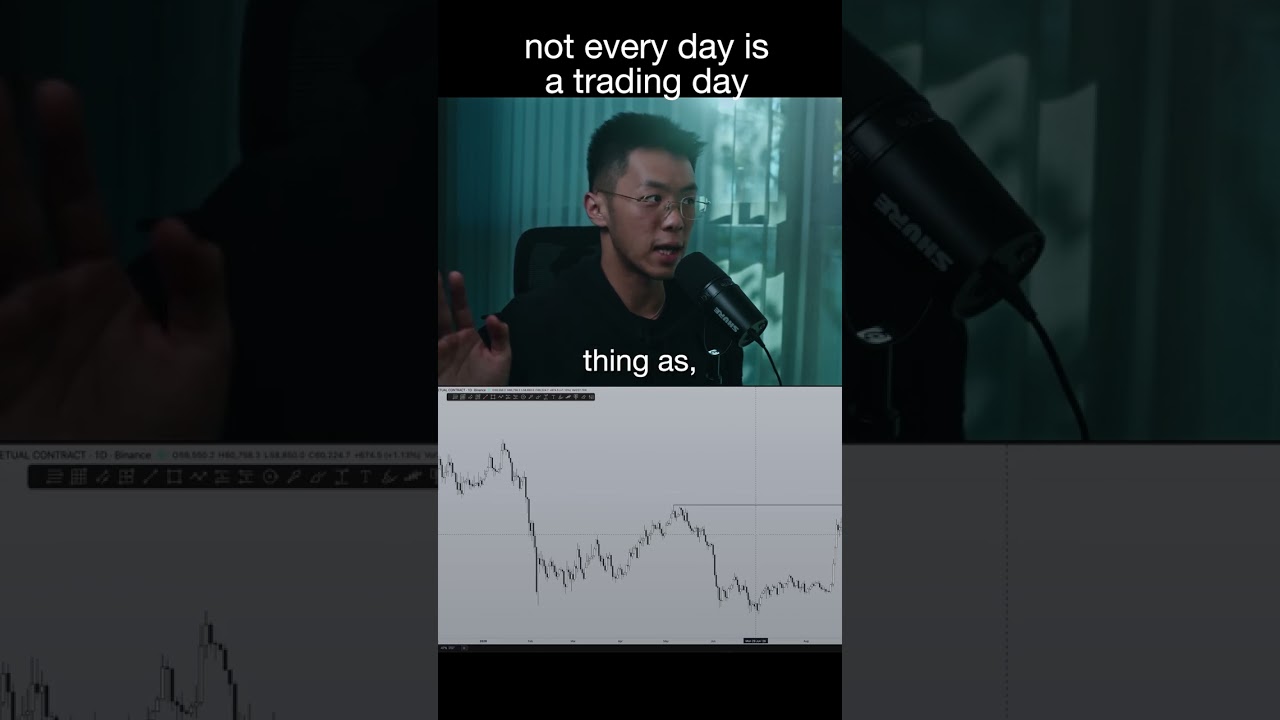
In this video, I'm going to be sharing with you my exact process that I use to be able to consistently find quality trade setups on a day-to-day basis. Now, this exact process was what allowed me to turn $20K into $1.1 million during the last bull run and is what's allowing me currently to be well on my way to making more. If you ever find yourself struggling with constantly chasing pumping prices and never being able to catch a big move before it happens, then what you're about to learn in this video will will very likely help you. The lessons shared in this video are distilled from the 5 years that I've been in crypto and should hopefully help you fast-track the learning curve without having to go through the trial and error that I've went through for the last 5 years. Now, before we get into it, hello, my name is Xuan, and I'm currently on a mission to create the world's best trading education suite and to make trading easy for everyone. Now, without any further ado, let's jump right into the video. So just to give you a little bit of proof that I do know what I'm talking about, for example, a couple days ago I called TIA. I mentioned that you do not want to be buying current price You want to look for this level, and exactly this is what TIA has been doing right from that current price just came down, and after hitting this level, it's currently bouncing and just got up five percent, and this was the exact level that it bounced on. Give you another example: a couple days ago, I also said that Toshi is good here and to pick some up. For reference, if we went back to the 29th of May, I called Toshi when it was around here after it took out some very key liquidity on the daily chart, and in just a couple of days, it's up almost two x. Like let's say I didn't catch the bottom, which I didn't, to be honest. It's up fifty percent in just a couple of days, and even just. Just another example. Before I called Toshi, I said get Trump here, and the ideal level would be 13 or 11.5. Now this one you must not sleep on. This will be huge. Like repeat, do not sleep on this one. Like, and then let's go on to the token address. Look, this is Trump. When I called it at the time, which was 29th of May, it was up here, and I said to look at minimum $13, which is right here, but ideally $11.5, which check out the bottom, it was $11.3. So I basically predicted the fact that this thing was going to come down first before pumping, and since hitting the moment it hit $11.3, it bounced all way back up to $17. So in a span of a couple of hours, just by setting a limit there, that would have been close to 70%. And let's take a look at Boden, right? I'm just scrolling up. So the ideal level I said, like, chart looks good to get in here now at $0.23, but ideally I would look at $0.26. And let's look at Boden after it came down to $0.26. Boom, at current prices you're up like 10%. But when I called it then, 29th of May, it was at $0.33. It did came down like By the way, I'm not trying to cherry-pick these trades. As you can see, like, this is just the beginning. Like, this is the latest message that I sent. And like, for example, let's look at Popcat, right, just to show you that I'm not trying to cherry-pick this. So let's move over to Popcat. I basically said that this thing was going to come down. Like, yesterday it was at 4884, and I said basically it would come down. At the time that I called it, it was here. And I'll say this is the aggressive entry, and ideally this would be the level that I look at. Like, this is just something that I do that I have been doing for the last 3 years, and I don't show you this to try to get you to join my group or whatever, but just to show you that, you know, what I'm about to talk about in this video is actually legit, and I'm not just pulling this stuff out of, you know, some hole. And guys, I will be sharing with you my step-by-step process for finding these quality setups and the exact process that I use to do my analysis on them so that I can catch these trades at very high probability levels. But before that, I need to teach you a very core principle that must first understand before I can even get into, you know, the shiny objects. Because here's the thing, in order for you to truly get lasting results, and that is what I'm here for, I'm not trying to just give you a fish and like have you come back all the time. I really want to teach you how to think. And it's my responsibility if I want you to get lasting results to teach you how to think and how to approach the problem. So this principle has to do a lot with chaos and order. Crypto is by nature a really chaotic environment. You can almost think of it as like a stormy sea where if I were to throw you right now, or if you were to jump into that ocean without a boat, without a life jacket, without nothing, and you just jump in, I know that looks pretty calm right now, but trust me, the further you get out into the ocean, like those currents become really wild. And I want you to imagine for a moment that you jump in without any equipment, without any skills, no nothing. Chances are you're going to be swept up by those currents. You're gonna be swept to somewhere random that you have no control over, or in the worst case scenario, you might drown. And that's the approach that most people take. When they come into crypto, they don't have any sort of system. They don't have any sort of plan. They just jump headfirst into this super chaotic environment and they just get swept up. And this applies to any chaotic environment. And in order to find success from crypto, which is very chaotic, you need some way to create order. Or at the very least, you need some kind of oasis amongst this ocean to reliably fall back on. And in order to find success from this very chaotic environment that is known as crypto, you need to create order. And I want you to imagine for a moment that The way this looks is simply going onto the ocean with a boat. Because once you have a boat, you're no longer at the mercy of the chaos that is the ocean. When you have a boat, you have a chance to set a direction, to navigate a certain direction and just not drown, to be honest. And in crypto, this boat is usually a system. And that system is something that I will be teaching you later on, but it's so important in crypto that you have a system. And the reason why that matters is because it feels like there is something happening like every second or like every minute in crypto. And a system in this sense is is just a collection of criteria and rules that you set for yourself to help you filter through all of this chaos to find the stuff that's relevant for you. Meaning, let's say that the CPI results get announced today and like some news comes out about the Ethereum ETF and Donald Trump says he's going to, you know, buy Bitcoin or whatever. Like which of these news are actually relevant to you and relevant to your strategy and which ones should you pay attention to? That is what having a system feels like because you have rules in place, criteria in place that, okay, only if these criteria are met am I going to even start to consider this trade and have Having this initial filter just cuts through like 99% of the chaos and ensures that whatever comes through that filter is something that's going to be very high quality. So that's the importance of having a system in this chaotic environment so that you can create order. And by the way, when I talk about criteria and having a system and stuff, it's a lot less complicated than you think. All you want in a system is a set of entry criteria. This will allow you to apply a filter on when do you even start considering a trade, because just because something's pumping doesn't mean that it's automatically good for a trade. Ideally, you want some other conditions to be Before you start considering it, there's entry criteria. And then the second one would be your execution steps, right? Ideally, you should have some kind of system like a step by step one two three four five exactly how you will enter into a trade once the entry criteria is met. And then from the execution steps, what you need then is some exit criteria. Like what are the conditions that you want to see being met before you even start considering taking profit? And then lastly, you need an exit strategy, which is a step by step how you are going to exit and under what conditions do you exit. So this is. The stuff that basically underpins a system, and it's not super complicated. The building blocks of a system, and this is all you need. But in this video, I'm not going to talk about like a trading system for you because I've already made a couple of other videos, like full-on masterclasses on just a system that you can pretty much copy and paste. We'll link those videos in the description box below that you can watch after this video. But for now, in this video, what I really want to cover is a system for finding quality trade setups. And the way this system looks like is going to be right here. So it's time to get into the fun part and actually give you the system that you can use to just consistently find quality trade setups. So essentially, this is my process for how I find altcoins consistently before they explode. And I can break this down into like 4 broad spectrums, which is I use Twitter, I do not use YouTube, and I'll explain why. I use newsletters sometimes, and I'll explain why also. And then I'm gonna give you my best source of alpha. And this, like by far and away, beats everything else here. Firstly, let's talk about just the best source of alpha, right? Where is the best source to find consistently quality trade setups that you can trade day in, day out? This is a source that I have come to time and time again, and after 5 years of trial and error and testing quite literally every other source of trying to find just, you know, consistently good setups, I always come back to this. And this is by far away the most efficient source. And what is this, you might ask? Well, It's groups. This can be Discord groups. This can be Signals groups. This can be masterminds, but just paid groups or even free groups if you can find it. Now, before you click off this video, I do run a paid group, but I'm not saying this to promote my group. In fact, I will give you some solutions that you can use to join some really quality paid groups without actually needing to pay. And all you have to do is just sign up to some exchange using the referral link, which is a really good return on investment in my opinion, because you're quite literally putting nothing down and you're getting access to some very high quality information. So why are paid groups the most consistent way to find high-quality setups? Well, it has to do a lot with the fact that, again, crypto is such a chaotic environment that— and there is so much chaos in this space. There is something happening quite literally every minute, and there is no way that you are able to filter through all that information by yourself alone. And the beauty about having access to information published by other paid groups or just other expert traders is that number one, they have the skill and ability to apply that initial filter that I talked about to create some order after chaos, right? Extract high probability trade setups from what is otherwise to the naked eye, just chaos. Secondly, they have taken the time now to not only create some order of that chaos, but to actually give it to you in a distilled down idea, ideally with some entries and stops and take profits. And they will most likely also explain the reasoning behind why they're taking that trade or why they're calling that trade or why they're calling that investment. Like automatically this just puts paid groups ahead of everything else here because everything else here, not only do you still have to put in some time, to filter through if that information is even like worthwhile or not, or if that information is actually quality information. But then you still have to apply your own skill to try to see like, how are you going to turn that piece of information into a potential good trade? And then like, see how the other sources are just not as efficient as this one. And not only that, but when you're in paid groups, especially on the higher end of the spectrum, what you get access to is usually some insider information or information that the 99% of people who are not in groups like this do not get. There is a reason why the rich always get richer is because they have access to information that quite literally the other 99% of people do not have. And it makes sense that if you want to achieve top 1% results, you need to have some kind of information that the masses do not have access to. That is one of the reasons, by the way, why I hate YouTube as a source of like consistently just quality trade setups. One thing you need to realize about YouTube is that it takes a lot of effort and a lot of time to create videos. Just to give you an example, because I'm also doing this YouTube thing, you need some time to create the idea. You need some time to write the script or just write out some bullet points. You need some time to create the graphics. For example, what you're seeing on the screen right now, it takes time to film the video. Like this is probably going to be like 45 minutes of my time gone. And after that, you still need to edit the video and make it fit for consumption. After editing, you still need to proofread or like just check if the edits are good. And if you need to change the edit, most likely you're going to re-edit it a second And after you edit, you need the thumbnail, you need a title, and then you need to post it onto YouTube. I just need you to understand that due to how much time and effort this takes, chances are by the time that information gets to your YouTube feed, especially if it's time-sensitive information, you are probably already too late. Now, one thing that YouTube is good for, and this is the reason why I haven't, like I've quite literally not watched a crypto YouTuber in the last like 2 or 3 years outside of one purpose, which is research. In my opinion, YouTube is really great for research, especially if you are trying to learn about a project, if you're trying to learn about technical analysis, you're trying to learn about key concepts such as the stuff that I'm teaching you in this video, then yeah, YouTube is great for that, right? More general, long-lasting skills acquisition or doing research into a project or into some narrative, YouTube is great for that. But if you're trying to look for quality trade setups out of YouTube, like, if it works for you, great, but if it's not working for you, there's probably a reason why it's not working for you, which is the one that I shared just now. Now, earlier on, I did mention that there were some paid groups that you can get into without needing to pay money. For example, SMFX. He publicly just puts his copy trading out there. All you need to do is sign up with his Discord and you get access to not only his copy trading, but also his signals group where he's always keeping you updated on the markets. I actually cannot remember too many other traders just because it's been a while since I've been involved in this whole thing. But the key here is that, guys, if you are able to and you have the financial means to support it, joining an alpha group or signals group or whatever is never a bad investment of your money unless that person does not know what he's doing. Which hopefully you've already done your due diligence. The plus side of being inside a paid group is that you can get your questions answered. Chances are, as a beginner, you're probably going to have a lot of questions. There are a lot of things that you do not understand yet. And in crypto, the cost for ignorance is really high because you are literally competing against some of the brightest minds in the world. You have hedge funds that have invested tens or hundreds of millions of dollars into algorithms that are designed to deliver price in a certain way. You are up against traders that have been doing trading for like 50 years. The competition that you're up against is immense. You're even up against me because crypto is a zero-sum game where if I'm— I win a trade and I make money, I'm not just making that money out of thin air. I'm taking it from someone else. And if you don't know what you're doing, chances are you're probably going to have your money taken away by someone else too. It's just the reality of the game. So you can either uplevel yourself, increase your skills, which these education groups are really great for, or you can stay ignorant and, you know, continue getting eaten up by the sharks. That are swimming in the ocean around you. And also, if you have been watching some of my videos and you feel like I know what I'm talking about and you just want to get access to stuff like this, then feel free to click the link in the description box below where you can join the alpha group. Now you don't have to click. I don't really mind if you click or not, but if this is relevant for you and you are interested in just getting some solution to solve your problems and hopefully fast-track your learning curve in crypto, then the link is there whenever you feel like clicking it. But otherwise, let's get back into the video and let's talk about Twitter, which is the other area where I look for the best sources of information. Now, one thing about Twitter that a lot of people do struggle with is the fact that out of all the platforms here, Twitter is arguably the most chaotic and like just everything seems to be like there's something happening the whole entire time. And I'm going to give you a solution to that. Just find people that you respect and find the traders who seem to know what they're doing. Just go into their following page. You can use my following list as an example. Like just follow the people that I'm following. And like this list is something that I've curated over the last 5 years that I've been in crypto. Now, obviously I do have like like my own alpha list. Like for example, this alpha list has about 100 accounts in it, and these accounts are like always consistently sharing just ideas, right? I look at these, I go into my own chart, and I apply my processes, and boom, right? I have a quality trade. So like this exact list of accounts that I've already curated is something that you do get access to in the AOC Alpha Group. Now I don't want to put it behind a paywall if it's possible, but again, this is just something valuable that I've curated for years. Again, if it's not relevant for you, It's cool, but if it's relevant for you, feel free to check it out. So the second best way to do it is just to go onto the following list of the people that you respect and just go through their list and like, you know, find people that seem to be posting quality information and just follow them. And this is how you start curating your own Twitter list as well. But the way I acquire information on Twitter is also very straightforward. Just go on Twitter. Usually within 5 minutes of scrolling through the alpha list, like I get some idea and then I just apply my process, which I will teach you shortly. And boom, you know, you have a quality trade setup. And then the one that I want to talk about lastly would be newsletters. Now, newsletters present a unique opportunity in the sense that it's sort of like a best of both worlds between Twitter and YouTube. Usually newsletters are really great where they're sharing like really quality information, but there are some newsletters also that specialize in just sharing the latest alpha and just giving you like trade ideas. And I'm going to give you a few that I'm subscribed to. For example, Lyn's Leverage. This guy's really good for research, like Ignas. By the way, I'm not affiliated to any of them and like I just genuinely find value from the work that they've produced, and so I'm sharing it with you guys. Daily Degen is just really good to just get an idea of some news events that's going on during the day, or like just some big events that's happening in crypto. Again, there's so much happening in crypto that you do need some kind of a way to distill down the information so that you're not overloaded. Daily Degen is really good for that. Crypto Narratives by Victor is amazing. Like, this guy has a knack and a genius for identifying the narratives that are going to perform well, and he does really good analyses on narratives that existed before so that you can learn from history because they say that history doesn't repeat, but it does often rhyme. What happened in the past, there is a lot that you can study and take and apply to current situations. And I have personally done really well after reading his newsletter. And Sheriz Alphas, this guy, he specializes in airdrops. So if you're ever interested in airdrops, this one's good. Alex Kyle, I actually haven't read through his newsletter in a bit. So Alpha Please is really great, by the way, like highly recommend you check out this newsletter. But yeah, like I can keep going on. One other one that I do want to bring up is this one called Moni, like Moni's Edge. So this one's like a really, I don't think a lot of people know about this, but this one, guys, this is where a lot of money can be made. Now they did stop posting like their free newsletter. If you just Google Get Moni, getmoni.io, these guys here are sharing some of the most cutting-edge information to help you make money. Like a lot of the smart money or like a lot of the smartest minds in this space have probably heard of Mohnish and they are not like mainstream by any means. When I say earlier that in order to achieve like 1% results, you need to have information that only the 1% have access to. This is one of the sources, like a really good source. Like they've called countless plays that have performed really well. So this is a newsletter that I would highly stand behind. Again, I'm not sponsored by them and this is pretty expensive, but But if you have the financial means, this one's a good one. And so those are all of the sources of information that I use to find just alpha, which I do want to cover just a little bit. Now, there is a very big difference between alpha and edge. Alpha is just the information that you find that has the potential to make you money. But at the end of the day, it's just information if you do not act on it. Now, edge is the way that you act on the information that actually allows you to have the cold hard cash profit in your bank account at the end of the day. And once you have the alpha, that's only step 1. Now it's time to apply the edge. And to do that, I just simply fall back to my frameworks and my systems. Remember what I talked about before about the importance of systems? Again, you will be able to learn, like I've created multiple like 1-hour masterclasses jam-packed with value on just exactly how to apply these systems. So check it out after this video. But essentially the process on a high-level overview, it's super simple. I'm not going to actually cover it in this video. Otherwise it's going to take way too long. But in essence, once I have that alpha. I'm just going to come on the chart and I'm going to apply the framework that I already know. And once I determine like, okay, at current price, is this worth entering? If it's not, then at what levels might there be a high probability entry condition? And once I identify that, I just set an alert just like this on TradingView, add alert. Then I just wait for that alert to play out and then I jump in. This is how I'm able to filter and keep track of the hundreds of potential plays that are present in crypto every single day. Just set alerts and wait for these high probability areas to be hit, and then you start executing. Alternatively, if you're more of a passive investor or a passive trader and you do not have the time to spend to like monitor the charts with these alerts and stuff like that, you can also just set limits. But the key here is to never ever just get an idea. Like it's definitely happened to me in the past, which is why I can relate to this. See an idea on Twitter, you see an idea in some signals group or whatever, and then you just jump right into it. That's not what you want to do. Once you see the idea, apply your own analyses to it. And again, you can get my exact step-by-step framework in another video that I will link at the end of this video. Once you identify those levels where you want to execute from, wait, like be patient until those levels are hit. Either that, or if you're like more passive investor and you would just like to set limit orders, that works as well. But the key is to never ever FOMO unless there's a really good reason to. For example, if the price is going straight up and you see no reason why it will come down, then yeah, go ahead, jump right in. But otherwise, you are always better off, just like what I proved to you in the beginning of the video, you're always better off identifying high probability areas and not just buying in at the top. Because otherwise you'll find oftentimes that you're getting in way too early and you miss out on a a lot of the potential profits. And guys, before I end this video, there is one thing that I do want to clarify. I know I mentioned a lot of things about signals groups being a really good source of information. That does not mean that I'm simply plagiarizing and copying whatever ideas they're putting out and posting it onto my Discord. That is not what I'm doing. There is alpha and then there is edge. I have my own system and I have my own filters to filter through whether or not a trade is good or not. One thing to clarify is that the way I use these signals groups is just to filter out what is worth looking at at the current given. Once I do have that alpha, it is up to me and my systems to apply an edge so that I can actually make money out of it. And that is the process that I urge you to do as well, and not just blindly follow what these other traders are doing, because then the results will be out of your control. But otherwise, I hope that gives you a good idea into a high-level overview of the processes that I use to consistently find quality trade setups. I will link a video right here that you can click if you want to learn the exact step-by-step technical analysis process I apply onto this alpha in order to generate an edge out of it. I'll see you there. Cheers.