In this solo vlog, The Art of Crypto recounts a $300 missed‑profit trade that occurred during his $10K‑to‑$100K challenge run with a private Discord community. He explains the trade setup: a short entered around $35.20/$35.05 with a manual stop near $35.50, targeting the Friday‑high/low breakout level at $30,341. While the price moved in his favor, he was distracted by playing Stardew Valley with guests and manually exited the position just before the target, turning a potential 3R gain into a break‑even. He uses the incident to illustrate three core lessons: (1) the importance of unwavering focus when trading on 1‑minute charts, (2) the necessity of extensive backtesting to build confidence in a strategy, and (3) solid risk‑management practices to protect against inevitable mistakes. He credits a Discord moderator, Dean, for discovering the weekend‑price‑respect pattern (price typically stays within Friday’s high/low range and reverses after a false breakout). The video also promotes related episodes (1 and 2) for deeper methodology, invites viewers to request a backtesting tutorial, and encourages joining the private Discord group. The overall message is that mistakes are inevitable, but they can be mitigated through discipline, preparation, and proper risk controls.
Chapters
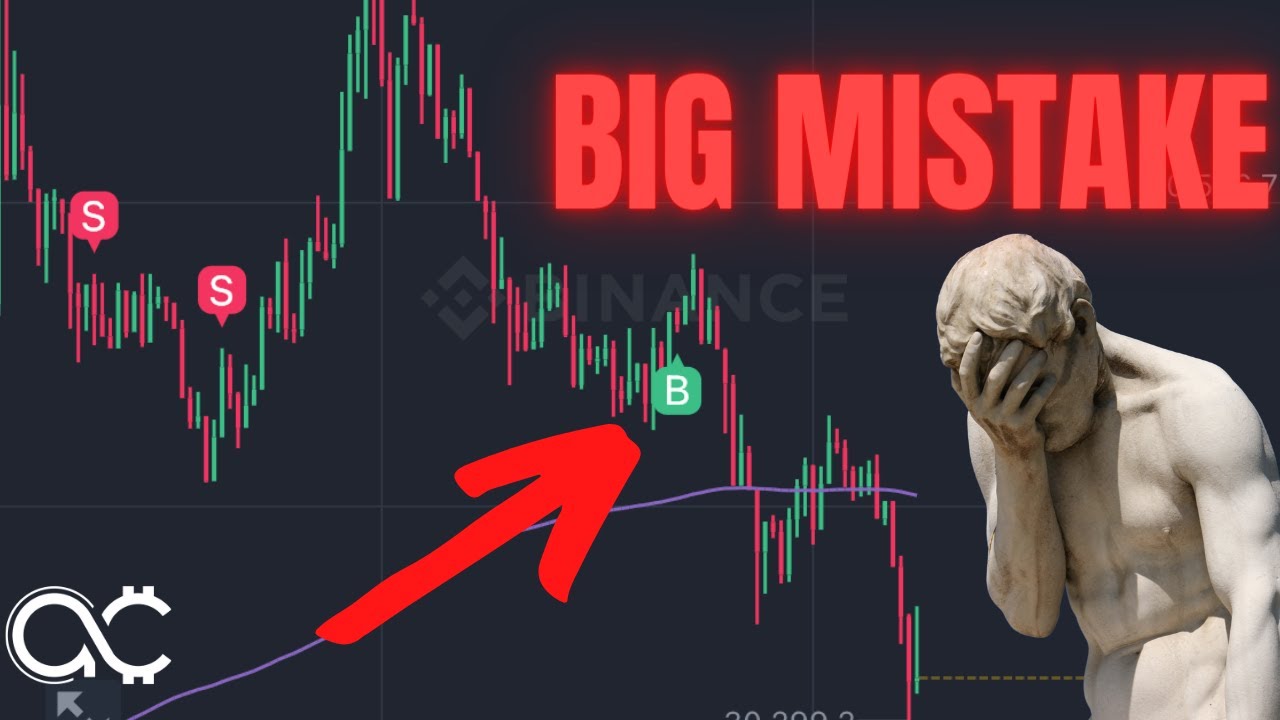
What's up everybody? So the title of this video is like a $300 mistake. Now you might be thinking that it's not much. Now just to give you guys a little bit of context as to where this is coming from, this is coming from a $10K to $100K challenge that I'm doing with the private Discord group at the moment where people are following along with my trades. And I want you to just take a look here that I called a short at $35.20 and $35.05 with a stop at $35.50 with a 1% risk earlier on. And I'm gonna get into how I made this mistake recently. Basically, what ended up happening is if you take a look at the archive here, you can see that I indeed shorted at both of those levels right there. But then you can see that I exited right here, right here, right before the dump. So going back to the $10K to $100K challenge, you can see that the TP was $30341, which is pretty much at the bottom, which is right there, right? $30341. And you can see that price reversed after hitting that level. And currently this is pretty much like an episode 3 into, you know, my trading methodology and the kind of bread and butter setup that I look for on a day-to-day basis. If you haven't already watched episode 1, where basically I just lay down exactly what I'm looking for on a day-to-day basis in order to generate consistent profits, then you're gonna wanna watch that first episode first. But this is gonna be part 3, and I'm gonna get into the mistake that I made because this is really funny now that I look back at it. I want you to take a look here, Right before price hit my TP, right? I entered here, but I exited right before. So it's a little bit funny the way that it happened because I had a couple of guests over and we were playing this game called Stardew Valley. And what ended up happening was, you know, I was in game during, you know, when price was doing this kind of shenanigans. Because of that, I could not focus on the charts, right? Because when I enter into a trade predicated on the 1-minute chart, I like to sit there for a bit to monitor price action, especially because I enter Right around here, and price actually went above my entry for a good moment. And you know, that stop loss that I set in the group is more of a reference because ultimately I know that the direction is going to be down. And because of that, I tend to use a manual stop loss, right? I'm sort of the one who determines when I pull out of the trade. And at that moment, you know, I was still in the trade. I was down about $200 at some point, but because I was so distracted with the game, I was like, you know what, given that market just broke structure over here, if the price is going to go above these highs, then I'm just going to stop myself out. That was the worst mistake, period. Like, look at this, man. I stopped myself out right there. Like, that is such a pity at entry, right? So I basically break even before price went down, which would've netted me about $300 in profits. That would've been about 3R because the account size for this challenge is $10,000. So $300 on a $10,000 account would've been 3% gain, which would be absolutely amazing. But full disclosure, I'm sitting at about $11,800 at the moment, so I'm already 18% up. Starting this challenge in about a little over a week ago. So just to give you a little bit of context as to why I decided to go for this particular setup, because this is ultimately what you guys are here to do, and I'm going to get into the moral of the story later. So I want you to pay attention to this level right here at this swing high right there. So this swing high and that swing low right there is the high and low of Friday. So what I mean by that, I want you to take a look at the date, right? Zoom in on the date, and you can see that this is The high of Friday and the low of Friday. So what tends to happen, and the reason why this matters, is because during the weekends, price, like 90% of the time— this discovery was made by a fellow moderator in the private Discord group, and his name is Dean. So full shout out to Dean if you're watching this. The fact that you discovered this theory is an amazing discovery. So most of the time on a weekend, price tends to respect the Friday's high and low. So most of the time it will not go above Friday's high, or it will not go below Friday's low. It respect the range. But once price breaks either one of these levels, right, the first level that gets broken, you want to short that or you want to go long at that, right? Because that is what we call a false move. So basically price is going to reverse, you know, after doing the false move. So notice how after you broke this level, I immediately started looking for shorts. And you can see that that short would have played out actually. It would have hit my target exactly. At the moment I still think it's going to go lower And I'm gonna make another video talking about why I think it's gonna go lower. But just to give you context, this is the exact kind of setup. And if you want to figure out exactly what kind of an entry that you wanna look for, that is going to be in episode 1 where I lay down exactly my kind of entry. And more than that, you're gonna wanna check out episode 2 as well for another example. But this is episode 3. This is a $300 mistake. It's not much for me if I were to be trading on a main account. I'm trying to grow a $10,000 account into $100,000. So the quicker I can do that, The more bragging rights I'm gonna have, basically. Like, hey, look at me, I turned my account 10x in X amount of time. So $300, especially at the start of this challenge, is gonna be quite a big blow. And I'm sure all of you already agree, but you shouldn't be distracted when you're trading, especially when you're doing it on a 1-minute timeframe where trades take literally from the time of open to the profit target was about 2 hours. So moral of the story, you know, focus. On what you're doing. But secondly, how do you avoid these mistakes? Because I'm sure I'm not the only one who has went through something like this. A lot of people have stopped out their positions just right before it hits the profit target, right? I'm sure a lot of you, like, the moment you buy, it dumps, and the moment you sell, it pumps, you know? And the trick to overcoming this— or rather than say overcoming, it would be more apt for me to say the way that you prevent this from happening or the way that you prevent this from repeating in the future is by backtesting your strategy. So what do I mean by that? Before I even have the confidence to start trading with live funds, I've already did like 100, 200, 300 backtests before this. And if you guys want my exact methodology on how I do backtests, I want you to drop a comment down in the comment section below if that is something you would like to see. But otherwise, drop a like. If this video gets like 1,000 likes, I'm gonna post that video right immediately. But The reason why I bring up backtesting is because before you have backtested your strategy, it is very hard to know what to expect. So before you've backtested something or looked at charts enough times, it's very hard to tell like, oh my God, the price is above my entry or price is below my entry. Is it going to keep going or is it, you know, can I be confident in my analysis that it will hit the profit target? That is how I decided to hold onto that position. Sadly, because I was distracted, I closed that position out. Very sad, but ultimately it did hit the profit target exactly. And once you backtest this, right, and you know, you might be thinking, hey, if AOC is telling me to backtest and yet he's still facing these kinds of problems, doesn't that make him a really terrible trader? Well, you can say that, but at the same time, we all make mistakes. And with this mistake right here, even though I lost $300, I think it's a really, you know, good price to pay because then I'm talking about this one and Now you guys are learning about something. So do traders make mistakes? You know, it's a part of the game. Yes, you know, I make a lot of mistakes and I'm not the only one who makes mistakes. It's a part of the game. If you're wrong, that's where risk management comes into play because everybody makes mistakes. And if you are risking like 100% of your account, if you're banking your entire account on trade ABCDE, if even if you have like a 99% win rate, right, it only takes one loss to wipe out your entire account. And all the progress that you've made. So if you want a full tutorial on how I would recommend you guys to do risk management, I'm gonna link a video right here. Make sure you check it out. And if you wanna join the private group, the link will be in the description box below. For now, may the gain be with you, my friend. Trade safe, and I hope you learned something from this.