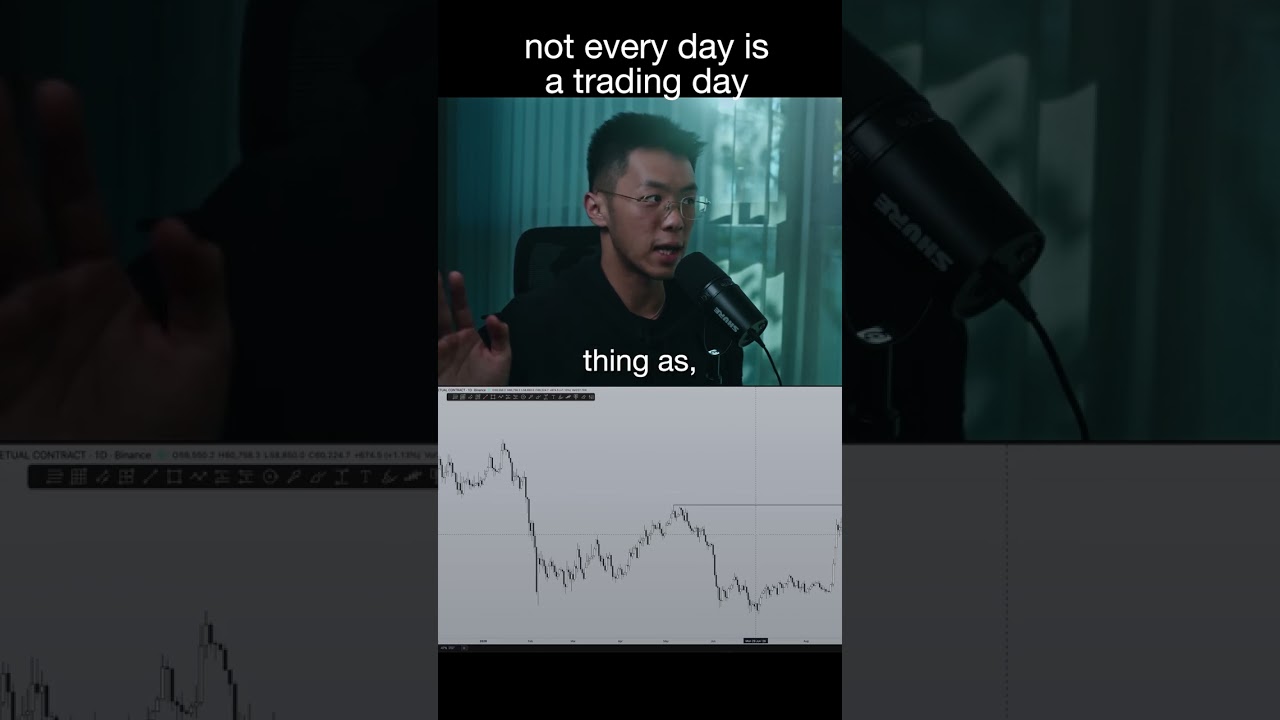
In this instructional video, Xuan of The Art of Crypto presents a concise, principle‑based framework for placing stop‑loss orders in cryptocurrency trading. He begins by emphasizing how critical stop‑loss placement is—mistakes can wipe out a trader’s capital—and notes that most beginners set stops subjectively. The core idea he introduces is that a stop loss should be placed at the point of invalidation: the price level at which the trader’s original trade premise (e.g., higher low, liquidity sweep, order block support, fair‑value‑gap resistance) is proven false. He walks through several concrete chart examples using Fantom, illustrating how to identify the invalidation point for different trade concepts such as higher‑low setups, liquidity sweeps, bullish order blocks, and fair‑value gaps. Throughout, he stresses the need to reason from first principles rather than blindly copying tactics, urging traders to understand why a given method chooses its stop‑loss level. The video concludes with a promotion of a free, hour‑long masterclass that details a complete, copy‑and‑paste trading strategy, and a standard call‑to‑action for likes and subscriptions.
Chapters
Oftentimes, one of the most common questions that I get asked by beginner crypto traders is, how do I set my stop loss? Or where do I set my stop loss? And it's no wonder because this is one of the most subjective parts in all of crypto trading and is something that if you don't do well, could quite literally cost you everything. So in this video, I'm going to be giving you a practical framework for you to start thinking about how to set your stop loss. And spoiler alert, most people tend to do this wrong. And what I'm about to share with you in this video are lessons that I've distilled after having been in trading for 5 years and having gone through all the trial and error, such as is it better to dollar cost average? Is it better to move my stop loss? Is it better to even just not have a stop loss? And questions like that will be answered later on in this video. If you wanna skip all the trial and error of having to figure this out yourself and just start getting more profitable immediately, then hopefully this video should help out with that. And guys, before we get into this video, if you don't know who I am, my name is Xuan and I'm currently on a mission to create the world's best trading education suite by making trading easy for everyone. But without any further ado, let's jump right into the video. And the first thing that I do need to talk about before I even get into the specifics of how to set a stop loss is to teach you how to think about setting a stop loss. Like every trading strategy is so different that I cannot just tell you like, oh, okay, a 5% stop loss always works, or like a 10% stop loss, or like, you know, it doesn't work that way. Frameworks on the other hand will serve you no matter what strategy you end up using. Like as long as you've got the fundamentals, are able to reason up from there, right? At any point. So that's what I'm about to do. And after having gone through like a lot of different trading strategies and having done this for this long, I've definitely come back to one thing time and time again. And it's the concept that your stop loss should always be put at a point of invalidation. It means that whatever idea that you have for that entry, at what point does that idea get invalidated? Now, just to give you an example, we're going to pull up a chart. In fact, we're gonna pull up, you know, a random chart, let's say Fantom. So let's say that at this point here, I want to go long here, right? Let's say I expect the market to, you know, form a higher low here and form a higher high, right? So that's the basis of the trade that I'm going in with. So I'm going to take a trade here. And so I would say that my stop loss in this case would have to be below this low because, for example, if price were right now to go below this low, my idea that the market would form a higher low after here would be invalidated, right? Because in this case it would form a lower low instead. So the basis of my trade basically gets invalidated. And I will have my stop loss just at the point of invalidation. It's honestly just as simple as that. Once you start thinking about stop losses in this way, like you become unstoppable. So I'm going to give you another example. So let's say I'm taking a trade based on this liquidity sweep here. I take a trade here. So I take a trade based on this liquidity sweep over here. Let's say that after the liquidity here has been swept, I expect the markets to continue higher. And if I'm expecting the markets to continue higher, well obviously it shouldn't come all the way back down to here, right? Or it shouldn't even come anywhere close to there. So Maybe on this next liquidity sweep over here, when this swing low gets taken out here, I enter, for example. So in this case, my stop loss could be underneath this invalidation point here, because if the price were to come all the way down below here, then it would make sense that my idea that the market wouldn't come back down here because there's no more liquidity left to take is false, right? I'm invalidated. So that's how I place my stop loss. Honestly, the framework is that simple. The next time you're thinking about how to place a stop loss, it doesn't matter how many like tactics or strategies or, you know, just different trading methods that you Like they're all gonna give you some kind of like stop loss placement criteria. But if you want to truly learn how to think for yourself, you have to reason down from there, right? Whatever they're giving you in the tactics. Now, most YouTubers don't bother to explain the reason why the stop loss is, you know, for example, if you're trading an EMA strategy, why it would be underneath the EMA or above the EMA, whatever. Like, of course, not all strategies are as simple as the EMA strategy, but you just wanna reason down from there, right? Figure out what's the first principle, figure out what's the fundamental behind why they're setting their stop loss criteria as that. And I think Almost every single one just boils down to the fact that it's an invalidation point, right? For example, let's say like this is, this tends to be a pretty common one. What if I take a trade based on a bullish order block, for example? So in this case, the basis of the idea would that the bullish order block is going to act as support and price is not going to trade below the order block, right? That's the concept. That's the basis of the trade. And so my invalidation point would simply be underneath the order block because I know if the price were to come below the order block, my idea that the order block is going to act as support is proven false. Or for example, Let's say I take a trade on a fair value gap. So let's say for instance, this is the fair value gap that I'm looking at. If my idea is that this fair value gap is going to act as resistance and it shouldn't get traded above, then my stop loss would just be above the fair value gap, right? Whatever your invalidation point is, that's where you should place your stop loss. It only makes sense. And honestly, placing stop losses is just that simple. There's nothing more to it. Now, if you actually want to learn a step-by-step trading strategy that you can quite literally just copy and paste, this is the exact same strategy that I use on a day-to-day basis. It's free, by the way. It's on YouTube. I've already made like an hour-long masterclass on it. Once you watch that video, and if you struggle with finding a profitable trading strategy to use, or just a strategy where someone actually takes the time to explain each aspect of that trading strategy to you, then look no further. I'm going to link the video right here, so make sure you go watch it. And as always, if you enjoyed this video, drop a like. If you want to see more like this, subscribe. But otherwise, we'll catch you in that video. Cheers!