These 5 Mistakes Are Killing Your Crypto Gains (Learned The Hard Way)

In this hour‑long instructional video, Xuan of The Art of Crypto explains why most crypto traders fail and outlines five concrete mistakes that sabotage profits. He begins by framing ignorance as a costly barrier and introduces the concept of "mental capital"—the emotional battery needed for sound decision‑making. The first mistake is trading in low‑probability market conditions, illustrated with counter‑trend trades and entering the middle of a range, and he shows how to avoid this by aligning higher‑ and lower‑timeframe analysis and using liquidity sweeps at range extremes for superior risk‑reward. The second mistake is focusing on retracements instead of expansions; he defines expansions as trend‑aligned moves that generate larger, faster price action, while retracements offer low win rates and poor reward. The third mistake is trading without a systematic framework; he details the essential components of a trading system—entry criteria, step‑by‑step entry procedures, exit criteria, and stop‑loss rules—emphasizing that consistency comes from following rules, not intuition. The fourth mistake is neglecting a trading journal; he advocates pen‑and‑paper, the TradeZilla software, or spreadsheets to capture emotions, trade rationale, and performance, arguing that self‑reflection turns awareness into improvement. The fifth mistake concerns psychology, specifically the pervasive fear of losing money, which drives FOMO, panic selling, and poor stop‑loss discipline. He recommends mindset shifts toward abundance, treating money as numbers, and building confidence through a proven, back‑tested system. Throughout, Xuan uses vivid analogies (ocean, mental capital, system as a boat) and practical examples (risk‑to‑reward ratios, Fibonacci levels, liquidity sweeps) to make the advice actionable. The video concludes with a call to action to like, subscribe, and consider his paid coaching service for faster progress.
Chapters
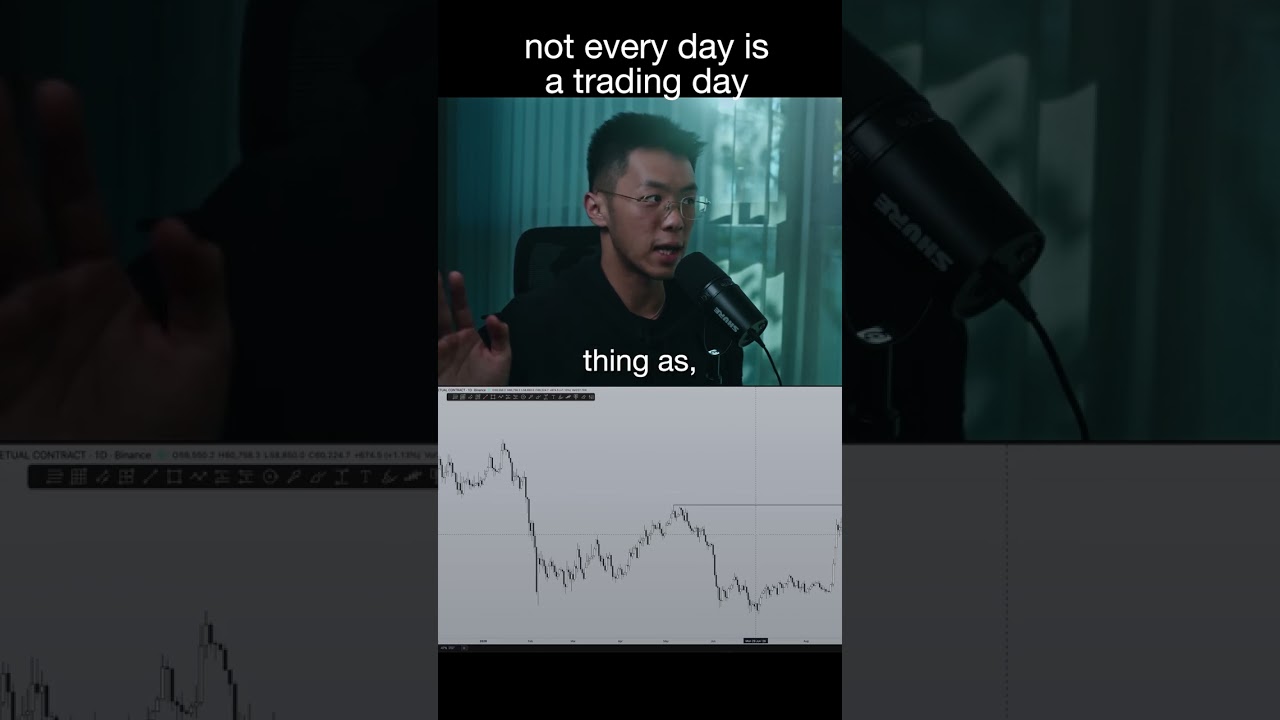
The cost of ignorance is one of the biggest costs that we pay in life because it is the price that we pay for not knowing what we should have known by now. And it is the difference between us being where we are right now and where we want to be in life. Now, imagine for a moment that you could rewind time and go back to your first ever day of trading crypto, let's say 5 years ago, whilst being able to retain all of the knowledge that you have right now. How different would your journey look like? Would you still be making the same mistakes or would you be a lot more successful? Chances are you would've probably even made a million by now. And in trading, this cost ignorance not only manifests itself in ways that, that would prevent you from achieving the dream life that you know you can achieve through trading, but it also causes you to lose a lot of money in the process. Because the reality of the situation is that we cannot fix a problem if we're not even aware that whatever that we're doing right now is a problem. In this video, I'm going to be shedding light on some of the biggest trading mistakes that you're probably making that you didn't even realize before that it was such a big problem that's holding you back. But hopefully after watching this video, you will learn this. Now I've been trading for five years now, and I have had to learn these lessons the hard way through a lot of trial and error. And in the process, I blew up my account not only one, two, three times, but I did so five times. I lost not only my own money like twice, but my grandparents, my mom, and even my friends' money. And I would never wish the same fate upon anybody else, which is why I'm making this video so that you can learn this and be able to just skip the five years of trial and error and not go through all that pain. Before we get into the video, hello, my name is Xuan, and I'm currently on the mission. To create the world's best trading education suite by making trading easy for everyone. So without any further ado, let's jump into the first big mistake that you are probably making, which is that you're probably trading in low probability trading conditions. And I know all of you have probably heard saying that not every day is a perfect day for trading. In fact, not every week is a trading week, and not every sometimes not every month or even quarter. And there is also the saying that you should trade less, but Trade better or trade less but trade best. And there is a lot of truth to those words. It's just that as a beginner or even as an intermediate trader, it takes us a long time before we even realize the true meaning behind that word. And this first factor here, which is trading in low probability market conditions, is probably the most common reasons why most traders tend to lose money. Now, just to give you some examples of what these low probability conditions are, the first of which would be counter-trend trading. When you trade against the trend, not only are you having much lower win rate, but even when you do win, like the amount of potential reward that you can get is a lot lower compared to if you were just trading with the trend. And the second of all would be, for example, trading in the middle of the range where you are unsure of the direction that the market is going to head to and you sort of get chopped up without a lot of reward and just a lot of losses in the process. These 2 conditions here are probably the most common reasons why you might be losing. So let me break down some of them. So why do we want to trade with the trend? The reason is simple. When we're trading with the trend, the moves, they happen faster, more aggressively, higher percentage movement, and much more higher likelihood. And the reason why this is important is because it helps you protect your mental capital. If you've ever been in a situation where you take a trade, but then you're just sitting there over the next few hours or even the next few days, just wondering like, hey, you know, did you make the right call? Especially if the trade you take is just doing nothing or even going against you, or like it's going up, but like just really slightly, you're always just stuck there wondering. And the reason why this is so important is because mental capital is one of the most important resources that you have as a trader. Now, some people might argue and say like, oh no, your capital's the most important, right? Or maybe time is more valuable than money. In reality, as a trader, you need to always be in a state of mind where you're able to make quality trading decisions. And that usually involves being in a kind of neutral or even a good emotional state. And mental capital is essentially just your emotional battery that we all have a finite amount of, especially at the start of every day. Now, the more negative emotions that we go through, That battery drains really fast. If you've ever realized how, for example, you get into an argument with your spouse and then perhaps you jump on the charts or even you just try to go back to work, it's usually pretty hard for you to get back into a state of focus because your mental capital has been drained and it has very adverse effects on our ability to just remain rational. And this is one of the reasons why people tend to say, if you go through some kind of traumatic event in your life, or there's just some really big negative event that happens in your life, you should probably take a break from trading because it does really affect the quality of the decisions Now, when it comes to trading itself, the way that you protect your mental capital is to take moves that not only are very high probability, meaning once you go in, like there's no guesswork, right? It's either gonna go up like in your favor or it's going to go against your favor, right? There's no like chippy choppy. And ideally you should also be taking trades that could potentially give you a really high win rate so that obviously the more you lose, nobody likes losing. It doesn't make you feel good. And ideally those trades should happen quickly, should happen very strongly so that they give you a lot of potential profit. And overall, just think back to your own trading. Like, how do you feel when the trade just— everything seems to be going right and the trade just, you know, goes in your favor and it just feels like trading is easy? But on the flip side, if you start trading in a low probability market condition, trading is going to feel hard. Not only are you going to lose a lot, but even when you do win, it's not going to be a huge number. Throughout that whole process, you're just going to go through, you know, so many sleepless nights and so much anxiety holding on to trades that might not be doing much. Yeah, it just makes you doubt your ability as a trader, like whether or not you actually know what you're doing. Just to give you a practical example of how this looks like, let's take a look at this chart here. Just not cherry picking, just this is one of the charts that I'm looking at at the moment. Like it's hard to argue the fact that at least in recent price action, it is looking like it is going in a downtrend, right? You have lower lows, lower highs, lower lows, lower highs. When you are in a downtrend, essentially the trend would be towards the downside. And I want you to just pay attention to one very little detail, which is, for example, the market here does a 10% dump in about 4.5 hours, whereas Only goes up by 7%, or you could argue like 8.5%, but it takes 4 times amount of time for this to play out. So you imagine like as a trader, if you were holding, like if you're trying to long here, not only would you be holding onto a trade for like 4 times the amount of time, but you won't even get a reward as big as just following the trend. And most, more likely than not throughout this whole process, you're probably gonna look at like, for example, this is quote unquote support and maybe this is an area that you want to execute from and you place an order long once that level has been taken out and like boom, you get stopped out. Forget the fact that you actually Get a reward out of this trade, you would have probably lost a couple of trades in the process of trying to catch the bottom. Got quote. Like just notice how every down move is really strong in terms of magnitude, but it also happens really quick, right? Seven percent dump, about four point five percent of a pump. This is again another six point three percent pump. This is another six point three percent dump that happens in three and a half hours, and it takes the amount of time to go up by a lesser amount. This isn't even the best example of counter trend trading. If we just look back at the previous move, which is. This up move here, like just notice how much bigger these up moves are compared to the down moves, right? I don't even need to use the tool to draw it out. Like you can see it just by the eye, right? Imagine for a moment that you are trading with the trend, how easy would trading seem like? And the truth is it would seem really easy. So the next time that you find yourself getting stopped out a lot and losing a lot of trades, and when you look back at it, you realize that you were just trading on the opposite side of the trend, that's probably because you were countertrend trading. And countertrend trading by nature is a lower probability trading condition. Now you might wonder at this point, like, Hey, Xuan, like, okay, I get that I'm making this mistake, but how do I know if I'm trading with the trend? The answer lies in having a higher timeframe and a lower timeframe. A mistake that a lot of people tend to make is that number one, they spend way too much time on the lower timeframe and they end up losing sight of what's happening on the big picture, meaning they always find themselves counter-trending. Or the second is that people spend too much time on a higher timeframe thinking that whatever's happening up there is relevant to what they're trying to do here. So as a result, they zoom way too far out. Let's look at the daily chart, for example. You might say that, oh, you know, the Is there any chance I'm actually on a downtrend right now, right? As a result, they apply this way too zoomed out perspective onto the lower timeframe, and then they start going short, for example. And then they would've missed from this period here to this period here. They would've probably been countertrending the whole way. And that's a result of just purely spending too much time on a higher timeframe. So the way that you find the perfect balance between a lower timeframe and a higher timeframe is to have a combo. This involves using a power of 4 to 6, meaning the difference between your higher timeframe and your lower timeframe should be separated by a factor of 4 to 6. So for example, if I'm on the 15-minute chart here, I'm just going to use my 1-hourly timeframe as my environmental timeframe, right? Also known as a higher timeframe. And this will allow me, and the only purpose of this higher timeframe is to determine like what direction is the market going in. For example, I can see on the 1-hourly chart that forming higher highs and higher lows. So I can essentially say that we are currently in some kind of retracement, but eventually the market will continue going higher. So in the immediate short term, like sure, I could trade this retracement, which is a low probability market condition, which I will cover in point 2, or I could just wait price hits like a very key area. For example, if we were to draw fib from here to here, we can see that price is currently in the golden pocket. And so potentially the retracement might end here and we might start pumping again, right? Just understanding the higher timeframe direction allows us to, when we go onto the lower timeframe, instead of looking for shorts, now we know that if we want our win rate to just go up instantly, prioritize longs, right? Especially once we see the market give us signs that it does want to go up. And notice how like if I were to spend all of my time on a 15-minute timeframe, like this is not a perspective that I would've been able to see in the first place. Now I've actually made a really informative, just a full-on masterclass teaching you how to read like the higher timeframe direction even more. I'm not going to talk about it in this video because otherwise it's gonna drag on way too long. I'm going to link that video somewhere in the description box below. Check that video out after you finish this video because just like what we talked about in the beginning of this video, you can't really fix a problem if you don't know that you're making the mistake in the first place. So this video is going to be very high ROI, like it's a very good use of your time. So finish this first and then go watch that masterclass. Where you can just dedicate all of your attention to focusing on how to do technical analysis and how to figure out this higher timeframe stuff. So that's low probability condition number 1, and that is countertrend trading. Now the second one is that a lot of people tend to find themselves trading in the middle of a range. And the reason why this happens, after speaking to over 1,000 students over the course of the last 3 years that I've been running The Art Of Crypto, is definitely because people are just not able to hold themselves back from FOMO, especially when like, let's say the price starts pumping here. Instead of waiting for price to give some kind of retracement, They just look at the green candle here and they just jump right in while they fail to realize even on just the 1-hourly chart here, the fact that prices came all the way up here means that it's at some kind of range high, right? I want you to imagine for a moment that price is trading, let's say, between these 2 levels. Once you take out the range high, statistically speaking, 80% of the time when price is in a range, it tends to want to stay in a range. So when you take out the range high, you tend to come back to the range low before moving higher. They'll jump right in here just to see the market retrace and then they get screwed. Maybe they set their stop loss here and they get stopped out. Otherwise they have to start moving their stop loss. And let's say that they are wrong on this initial trade here. Initially they entered the position wanting the stop loss to be here, but then because of their refusal to take a loss and to just accept the loss, they keep moving their stop loss lower. Maybe they start dollar cost averaging. Let's say they end up becoming wrong that, okay, this is not actually the bottom and price actually comes all the way down to here. Well, guess what? They just got liquidated and they lost a lot of money in the process. If that sounds like you, then it's probably because you're trading in the middle of the range. Here's the problem with trading in the middle of the range, and let me just illustrate this for you. In this example here, there is in this case a very clearly defined range high, and there's a very clearly defined range low here. So for example, when you take out the range low, boom, you shoot back up to the range high. Take out the range high, boom, range low, boom, range high, boom, range low, boom, right? Trading ranges is very straightforward. The problem that most people run into is they start trading in the middle here because they think that something significant is happening, when in reality, the most asymmetric risk to reward lies in the extremes. When you're trading from one side of the range to the other side of the range, your risk is relatively Low compared to the amount of reward that you might potentially get, right? Usually when you're trading ranges, your entries sort of look like this and your stop losses sort of look like this. Just to give you an idea, you take this trade at the range lows, you place a stop loss maybe let's say at the wick there, and then you target the range high, which in this case would be all the way up here. And by the way, this is the range I'm talking about. Take out the range low, boom, all the way up there. That is a 16:1 risk to reward ratio, meaning if you were to have risked $100 on this trade, you would've made $1,600 back in a period of 4 days. And you cannot tell me that this type of trading strategy is going to allow you to achieve financial freedom through trading, because you can't, right? The risk-reward is so low that it would take you 16 straight losses to be able to not end up not making any money. You know what you're doing at all in trading, that's probably not gonna happen. The reason why trading in the middle of the range is so dangerous is because you don't have any clear direction. Like when you are in the middle here, the odds that you go up or down tend to be kind of 50/50 or 60/40 at most, right? Let's say you've just taken out the range low and now you think the market's going to the range high. That's a different story. Then it's okay to take a trade in the middle because you have a very clear thesis on where the market's gonna go next. The problem lies in when you cannot come up with a clean thesis and you just start trading in the middle. For example, you'll start looking at price from this range to this range here, and then let's say you start thinking like, oh, you know, there's some kind of a, oh, fair value gap over here. And you just take that trade blindly without building a thesis beforehand. This right here is a good example of trading in the middle of the range, where the direction is more of like a 60/40 compared to when you're at the bottom of the range. For example, your odds of this going to the opposite side, statistically speaking, 80/20, right? 80%, you will return back to the opposite side of the range. This is the whole fundamental concept behind range deviations. Second problem when you're trading in the middle of the range is the fact that your risk to reward is really terrible. Imagine for a moment here that you're trying to trade here. Where would you place your stop loss? Stop loss. Let's say you want to place it above the range high, right? Because you know if the price were to go above this quote unquote resistance, then your idea would be invalidated. So you take a trade here, you place a stop loss here. Where are you going to place your reward then? Where are you going to TP? The bottom of the range. In this case, you have a let's see here a zero point five risk to reward ratio, meaning for every hundred dollars that you risk, you're making fifty dollars back. Quite a stark night and day difference from the sixteen to one that you make from here, or even just example three to one that you make even if you just trade this tiny little range here. Even let's say you do end up reading the direction correctly. And you do end up winning the trade, the potential reward for the trade is like you're already starting at halfway instead of like the full range where it's quite literally double the amount of profit. You're already starting halfway. So even if you do win, like it's not going to be a huge win. The third problem with trading in the middle of the range and not at the extremes is that you're probably going to have a lot of choppiness, right? Just look at how choppy the market is before like some kind of clear movement happened. If you find yourself losing multiple trades in a row because you couldn't identify the direction correctly, like you just lose, lose, lose, lose. Like let's say you go long, you go short, you go long, you go short, and you lose or fall, it's probably because you're trading in the middle of the range. One of the things that you need to understand is that price is always in a range, right? Ranges don't just look like, you know, these consolidations. For example, now that the market has formed a new high relative to like recent market structure, so for example, like boom, boom, boom, boom, like you have a new high over here. The fact that you formed this new high already means that your new trading range is from here. That's your range high and that's your range low because the move sort of began from here. That's your high, and that's your low. So you can even say that price right now is trading between this range low and this range high. And if we're looking for really high probability trades that will give us potential 16 to 1 reward risk to reward ratio, when the range low here gets taken out, we're going to trade it all the way back up to the range high. And if the range high gets taken out, assuming that we don't believe that the trend of the market is going to continue to go up, then okay, you know, we trade back to the range low. But the fact of the matter is that you rarely want to be taking trades like in the middle. Because that's how you mess up your risk to reward ratio and your win rate. And the simple fix to not being caught up in the middle is what I like to call a liquidity sweep within any trend. And the easiest way for you to not get caught up trading in the middle is to use liquidity sweeps as opportunities for entries. Let's take a look here, for example, throughout this like uptrend here. I want you to notice how every time sell side liquidity gets swept, it leads to the market forming newer highs. Here you have sell side liquidity gets swept, new high comes back, sweep the sell side. Boom. Okay. Hi again. The simplest way for you to prevent yourself from trading in the middle of the range, very simply, like every time price forms some kind of new movement, every time there's like some kind of new swing low, a new swing high, for example, just draw like a range high and draw like a range low. And you're gonna have a really clear idea of where you should start even considering trading. Because if you, chances are, if you trade in the middle here without already forming a thesis and not having a narrative, just play it safe and trade the ranges because these are some of the easiest trades that you will ever take and some of the the highest risk-to-reward trades that you can ever take. For example, the fact that you've just swept the range low here, it's a decent opportunity to take a trade right here, place a stop loss underneath the wick low, and boom, right? That's potentially a 10:1 risk-to-reward ratio. Or for example, you might say, okay, this is the liquidity that I'm looking at. So like price is trading within this range here, expecting price to come all the way back here. It just so happens to line up with the fact that if we were to draw a fib on a larger like scale from To here, we can see that the liquidity level here lies in the 0.618 to 0.705. And hopefully after watching my videos, you should understand that let's say price is currently in a premium right now. The fact that this liquidity level is still in a premium means that we don't really want to be buying on a premium. So we're just going to wait for price to come into discount before we start buying. And it just so happens that we have liquidity over there, possibly range low, range high, and boom, right? We wait for this level to give us a high probability trade instead of getting chopped up in the middle here. There's not much happening. Price went down by 3% over the last day, and there's been a lot of up, down, and just super choppy. Remember that there is a lot of merit in trading less, but trading the best. You don't need to take a trade every day. In fact, you don't even need to take a trade every week. I certainly don't. But when I do trade, wins that I tend to get are huge. And that's because I'm only just prioritizing the ones that give me the, not only the highest potential risk to reward, but also the highest potential win rate. And that is the beauty of trading in high probability trading conditions. You get to make more money while having much less headache about trading. And it's just all going to feel so much easier for you. And all you have to do is do your analysis beforehand, identify like this news, the mindset of trying to identify where are the highest probability levels and ignore everything else. Once you identify that, just click your TradingView, add an alert, and boom, when it happens, you'll be there to execute or to take a trade, or you can just set a limit, boom, and see what happens. Of course, never do this. You only set limits if you are trying to trade really passively and you don't really have much time to spend on the charts. And as always, like just remember to manage your risk and you're going to do pretty well. Point number one. But now we're ready to move on to point number two, and that is you are most likely trading retracements and not expansions, which is sort of a follow-up to the point I made about low probability market conditions. This one is just going to dive a little bit deeper into a very common mistake that beginners tend to make, especially once they start learning about technical analysis and they start trying to figure this out, but then they don't realize that they're making this mistake. So trading retracements instead of expansions. What is an expansion and what is a retracement? Well, I want you to imagine that this is essentially like the market phases that you can potentially be in. Let's say that the trend prior to this is uptrend. That means any up move is considered an expansion, right? An expansion is always a move in the direction of the trend that usually forms a new high, or if you are in bearish market condition, it forms a new low. Now, retracement would be a retracement. You've learned about Fibonacci retracements, for example. This right here would be a retracement. So it's as the name suggests. It's just a retracement before the trend continues higher. The mistake that most people make is that they're trading the retracements and not the expansions. Remember what I mentioned earlier about how when you trade with the trend, the moves tend to be a lot bigger, they happen a lot faster. It's just overall so much more fun to trade. That is essentially the difference between trading expansions and trading retracements. Twice the amount of movement, very likely in half the time that it takes for a retracement to play out. This is a problem that I see that is most common amongst beginners that first learn about Fibonacci retracements. When you first learn about order Blocks when they first learn about fair value gaps, they start to think that every point that the market is always trading. Like for example, you have a bearish order block over here, and then you see that there's a bullish order block over here. And so what they do is they take a trade on this bearish order block, and then they take profit at the bullish order block. In this case, it would have worked. But in most cases, you are truly shooting yourself in the foot here. One very big reason, and it's the fact that whenever you take a trade where your TP level is at a PD array, and a PD array essentially just means a retracement level, right? It's just equal to a retracement. All this means is that it's a retracement level. Could be an order block, could be a fair value gap, could be a Fibonacci retracement. Whenever your target exists in one of these like areas, you are trading a retracement. Let's say you take a short here and you close it out here, right? What you are really saying is that you're expecting the market to retrace back to here. Now, the reason why you're closing your short here is because you believe that the market will come higher after it fills in this order block. And when you think that the market's gonna go higher, usually you believe that, okay, it's still in an uptrend at the moment. I'm just going to counter-trend trade this, trade the retracement, take profit here so that I don't get caught up in the opposite side of the move when the market does expand again. But that's essentially what you're saying whenever you take profit at some kind of retracement level. Even if you were to take profit, for example, at, you know, a Fibonacci retracement, if you take profit here, you're essentially just expecting the market to retrace here before moving higher. So in this case, my question to you would be, why would you be trading a move that's this small, something that takes so long to happen, when you can just focus all of your attention in trying to trade with the trend? Just ties back to what I mentioned in the first And the way that you are going to be able to determine the trend is to use a higher timeframe and a lower timeframe. And that ideally, that will involve some kind of knowledge on the higher timeframe bias, which you will learn about in the video that I'm going to link in the description box below. And secondly, I just want you to pay attention to how long these— this move, like this retracement has taken to happen compared to this, for example. Each move probably happened in half the time. And why allocate your capital to getting stuck in this type of price action when you You could focus purely on trying to catch these instead. Huge difference. It'll change the game when it comes to your trading. And one last thing before I move on to the next point, the way that you are going to determine if you are trading a retracement or an expansion, when you're trading an expansion, your TP is always some kind of liquidity. So what does that mean? Liquidity is essentially just a fancy term for saying previous swing highs and previous swing lows. I want you to imagine this for a moment. If you're expecting the market to continue to be bullish, usually you're gonna form new highs, which also means that previous swing highs will always get taken out if the market is in a bullish condition. Previous swing high, boom, taken out. You get, you form a new high. Similarly, in a bearish condition, previous swing lows are always taken out so that you can form new swing lows. If you find yourself, for example, that by taking a trade here, where would you target? Well, at the very minimum, you would target this previous swing high here because you're expecting the market to continue in this direction, right? If it is, then it makes sense for this swing high to at least be taken out. What if on the flip side of the equation, you take a trade here, for example, and then you take profit here, for example, at some kind of PD array? Well, then you know you're trading some kind of retracement. The fact that you're taking profit here means that you're expecting the market to come down here. So in this case, why not just wait until price comes into this area and trade down? So why trade this move that's going to give you potentially a very low win rate compared to taking the higher probability and higher profit potential move by just waiting for price to actually come into the retracement area before trading it? So that's the difference. And usually when you're even trading expansions, you would involve the use of some kind of expansion. For example, using a Fib expansion. Maybe you might even take your profit here because you're in an uptrend, you're expecting the market could form new highs, right? Means a higher high. So you can trade this difference here. So for example, you expect that the market will come all the way up here before forming some kind of retracement, and you can take your profit here. And then you can forget about this retracement here because you know that this is going to be low probability and low potential reward. And you just wait until price comes back into this area here before you trade another high probability move. Super straightforward, super simple, but just not something that people tend to realize that they are doing. And now we can finally move on to the 3rd biggest trading mistake that you're probably Making, and that is the fact that you don't have a system. Now, I always like to say that trading is a really chaotic environment, meaning this is sort of how what trading looks like. And the way that I equate jumping into trading without having already a system in place is jumping into the ocean without a life jacket, without no equipment, no boat, no nothing. The most likely event that's going to happen is that you're going to get swept up by the waves and just get washed away by the currents. And the worst case scenario is that you would probably drown and you'll never see the light of day ever. And yet this is how most people tend to approach trading. Trading by itself is a chaotic environment because of how many variables that are present at any given moment. There's always some kind of news event going on in trading. Even when you just look at price action, right? There's always so many, you know, possibilities that price action could take. Overall, it's just chaos. And in order to win, you need to create order from all of this chaos to have some kind of safe haven amidst this ocean. So that you can consistently, reliably extract profits out of the markets. And this is the system. Now, just to go back to that ocean analogy, having a system would be like getting thrown into the ocean, but then this time you have a boat. Instead of being at the mercy of whatever news event is happening at the moment or whatever price is doing, you are now in control. At least you can head towards that direction because you have a boat, right? You can steer and you can power up the boat. You can actually get somewhere. And when you have a boat, it's very unlikely that you're going to be drowning as well. And the way a system looks like in trading is super The only things that you need to create a system is the only things that you need to create a system is pretty straightforward. All you need is some kind of entry criteria, which is a set of rules that tells you that okay, at this current point price action is ready to be considered for a trade. Then you need to have some entry steps, right? So once the price has met your entry criteria, then you need some steps: one, two, three, four, five of exactly how you would enter that trade. For example, a step could look like that number one when one hour liquidity has been taken out. Then step 2 would be we go onto the 15-minute chart. Step 3 would be from the 15-minute chart, we're going to wait for a change of character on the 15-minute and then price to retrace into a fair value gap that exists at the 618 or whatever. Then step 4, we take a trade at the start of the fair value gap. And then step 5, we place our stop loss underneath the wick or whatever. Like, just being specific with the steps that you will take to enter really helps out a lot. And I think arguably the most important one here is the entry criteria. The reason why so many people struggle to find consistency in their trading is because is they do not have entry criteria. They just look at price and based on however they're feeling right now, or based on whatever they think is the correct move, they just take a trade without any sort of basis. And when you do that, every trade is going to look different, and it's no wonder you cannot find consistency. One of the things that I always like to preach is that in trading, you do not rise to the level of your skill, you always fall down to the level of your systems. I am not actually an amazing technical analyst, right? My trading skill might be a little bit above average, but I'm nothing special in terms of, you know, technical analysis. The thing that's allowed me to be so day in, day out, week in, week out, month in, month out, is the fact that I have systems. Like, I don't have to think about what type of trade I'm going to take. How am I going to consider the exit criteria? How am I going to exit? How am I going to enter? Like, I don't need to think about that, right? It's all in a system and I just have to follow the rules of that system. When you are able to do that, trading becomes a lot more consistent and it does become a lot more easy. And if you don't do that, well, guess what? You're going to be having a very chaotic time trying to make this work. And you're always going to be stuck wondering like, you know, why was yesterday so good and why is today so horrible? Like, why can't I find any sort of consistency in trading? This is probably why that is the case. And then you want to have some entry criteria and you want to have exit steps, right? Same thing as exit criteria. Like, what conditions do you want to see being met before you consider taking profit off the trade? Or how are you— like, what's your rule for setting your stop losses, right? You need to think about this stuff beforehand and have it in the system. Once you do, you just have to follow the system and boom, right? It's as simple as that. So that's mistake number 3 that most people tend to make that are holding them back immensely when it comes to trading. Mistake number 4 would be that you are not journaling. Now, before you click off this video and like, hey, you know, this is such a simple tip, there's no way that this could be the thing that's holding me back. After coaching at this point about 1,000 students, one thing I can tell you is that whenever someone gets stuck in a plateau or whenever someone's struggling to just find consistent profitability, the one bit of advice that I administer to all of these students that has been by far and away the most effective thing that they could have possibly done is journaling. Journaling. Something as simple as writing things down on pen and paper and just writing about like how they felt during the trade, or why did they take the trade in the first place, what could they have improved on, right? Stuff like that. It's as simple as that. Something that takes 5 to 10 minutes a day. This is the thing that consistently gets them over the top. Like, they already know technical analysis, they already know a system and stuff like that. They're just at that point where they cannot consistently generate profits. The reason why journaling is so important and gets them over the top so consistently is the fact that we cannot solve a problem unless we're aware of it. And one the best ways to become aware of some of the bad habits that you're making in trading is through self-reflection. When you actually take some time to sit down and reflect on the reasons why you took this trade, for example, what you could have done better and stuff like that, you just gain so much insight into things that you wouldn't have realized when you're in the moment. Remember that what gets measured gets managed, and whatever gets managed gets improved. You cannot begin to solve a problem unless you're aware of it. And the best way to do journaling, in my opinion, the first one is nothing comes close to pen and And there is some kind of magic when you sit down with your thoughts and just free flow write for 5 to 10 minutes. Not only are you going to complete the act of journaling where you're actually reflecting on what you could improve on, but at the same time, as you go through a lot of trades, remember what I mentioned earlier about mental capital? It's that emotional battery that you have. It gets drained the more trades you take because trading is a very emotionally intense thing. And there's something magical about just writing your feelings down on pen and paper that It just transfers the emotions from here onto paper and it almost feels like a weight is lifted off your shoulders. If you don't believe me, give it a try for once and I think you'll understand what I'm talking about. Pen and paper journaling. Now I've tried countless methods of journaling, but consistently I do come back to pen and paper and nothing quite compares to pen and paper. And the second way that I would recommend journaling would be to use this software called TradeZilla. I'm not like sponsored by them to, you know, mention them. It's just a tool that I've used and I can fully stand behind because this is pretty much like whatever you're doing in that pen and paper, trying to analyze like the mistakes that you made. This does it automatically for you. And out of every other trading journaling software that I've ever seen, like this is by far and away the best. If you're already trading with live money and you are not using TradeZilla, you are missing out on insights that could potentially help you make an extra $10,000, $100K, or even a million throughout the course of this bull run. It's just a tool that I can fully stand behind and fully recommend. And given the fact that journaling is such a powerful tool that allows you to go over the top and just overcome any plateau This one is truly a no-brainer investment. And for the Excel wizards out there, like third method would be to just use a spreadsheet. Like every trade you take, like just paste the link or whatever. Personally, I've never been too big of a fan of Excel because I just honestly suck at spreadsheets. But if you are somewhat of an Excel wizard and you want to do your journaling through spreadsheets, that's a viable method as well. It's just for me, my suite is literally pen and paper, which is the most traditional method, and then TradeZilla, which is Possibly the most high-tech method to do journaling, but it doesn't matter what you use to journal. Just make sure that you journal. You are truly going to see the payoff very quickly. Now, the 5th biggest mistake that you're probably making that's really holding you back, and this is definitely not the least, it has to do with your psychology. And more specifically, understanding that 90% of all of your trading psychology problems comes down to a fear of losing money. Now, let me just give you a couple of very common examples. Let's say you are FOMO chasing price at the moment, or you're just trying to FOMO enter. That is a manifestation of a fear of losing money, because in this case, you're afraid of losing the potential profit that you could make if this trade does take off, but you're not in it. So you're trying to chase price, get a really terrible entry, and put yourself at risk of not only not following your system, but also, you know, getting in in the middle of the range where again, your profit potential just becomes much lower and you're just breaching a lot of rules here. Now, another example, which is more of a negative example, would be panic selling. You're panic selling something, you're afraid that this thing could go much lower than it is right now, and then you're gonna stand to lose a lot more money. Instead of just trusting your stop loss and trusting your system, you are applying your emotions into this and you're introducing subjectivity into your trading, which objectivity is the key to creating consistency. And the key to creating objectivity on a consistent basis is through systems. And once you have that system, you just need to follow that system, which psychology tends to get in the way of that. And a lack of psychological mastery tends to get in the way of that. Let me give you another example. Let's say this time you're dealing with stop loss. And if you've been in crypto, you've definitely been in a situation where you have refused to put a stop loss, or maybe as the price is coming down below your entry, you start moving your stop loss, or even worse, you start dollar cost averaging thinking that this will, you know, bring your average price down and eventually it'll come back up and you're gonna be in profit. All 3 of this stems from also a fear of losing money because now not only is the market telling you that you are wrong by showing you that your position is in the red, you are refusing to not only admit that you are wrong, you're also refusing to just take a small loss. And in the process, you put yourself at risk that could quite essentially remove weeks of progress. Or for example, even when you start, you know, refusing to take profit, or just you keep moving your TP higher and higher and higher as the market's going up, that is also a fear of losing money because you're afraid of missing out on potentially catching the top. Well, like, if you take profit now, what if it goes higher? You're being afraid of losing that potential money. All of your trading psychology problems mostly comes down to a fear of losing money. So it makes sense that as long as you can overcome this fear of losing money, you're going to be in a much better position to not only make quality trading decisions, but you're just To make more money overall. The first thing that I do need to talk about is the idea that in order to trade well, just like how you need to create order from the chaos, there are also 2 states of trading that you can be in at any given point. The first of which is fear, and the second one is confidence. As a trader, when you're operating from a standpoint of fear, it's really hard to accomplish anything because when you're operating in this mind space, every decision that you take feels like it could go wrong. Or even if the price is going in your favor, you think that it can still go wrong because you're just fearful, right? You lack confidence. But the opposite is true when you're in a state of confidence. You have confidence as a trader. Not only can you trust your own decisions, but you can trust that whatever decision you make is probably the best one, and you can just let the market, you know, do its thing, let the trade play out. So it makes sense that you want to be on this side of the fence rather than this side of the fence. Easiest way to achieve confidence is just to have a proven system that you can fall back on. What do I mean by proven system? Well, firstly, earlier on I mentioned that one of the biggest mistakes that you can make is, you know, not having a system. But not all systems are created equal. Doesn't matter if you have a system, if that system is an unprofitable one. Meaning, have you actually taken those rules of the system and went onto fxreplay.com, for example, to backtest for 100, 200 times and seen the fact that, okay, over the course of these 100 trades, as long as I apply the rules of my system and I follow it strictly, it will make every 100 trades I take with this, it'll make me 250% gains, for example. Do you have data like that? If you do, great, because now there is literally no room for doubt. You know that as long as you're following your system, it's already proven that as long as you follow the rules of the system, are going to make money over the long run. And that is a very powerful piece of data to have, because once you have that, boom, no more fear. So not only do you want to have a system, you want to make sure that you've backtested it already, or like just have some data to prove that, okay, this is profitable. And the second thing, which is a little bit less easier than the first one, that will help you, you know, achieve this confidence is in your ability as a trader. If you get better at trading, not only in terms of your psychological mastery but also technical analysis, and also the more you journal, the more you do this, the more experience you have with this, like the more confidence you're going to have. Obviously this one takes way more time, way more like just actual, you know, hard work compared to taking a couple of hours to research a system and then taking another like maybe 3 to 4 hours backtesting that system 100 times, seeing if you're able to follow those rules and if you like the rules of that system and whether or not it's profitable. And boom, all of a sudden you're in confidence. And if spending that kind of effort and putting in those types of hours into doing something that will generate an ROI for the rest of time is not something that you are able to do, then hey, you should probably consider quitting trading before you lose all your money because chances are you will. Now the second way that you can Overcome this fear of losing money is actually through rewiring your mind. The thing about most people when they approach trading is that we all come in with a certain amount of capital, and chances are if we're living in societal life, we probably worked quite a few hours to acquire that money. In societal life, we need to put in a certain amount of effort and a certain amount of hours to get a reward, which is money. So because of this, we associate some kind of meaning to this money where oh you know because I worked so hard to get this money, this money special to me. But in the financial markets, nobody cares. It's just numbers on a screen. And if you are not able to treat your money like numbers on a screen, it becomes really hard because you are so emotionally attached to that money that any form of loss, even if it's the tiniest amount of loss, just like you're just not comfortable losing money. But here's the fact, losing is a part of the game just as much as winning is. The best traders in the world have come to terms with losing money like so much. Even if they were to lose like a significant chunk of their portfolio, it wouldn't really If you speak, read about the best traders in the world, they have all just gone beyond coming to terms with that they will lose money and they will lose a lot of trades throughout their career. And if you're able to do that, just disassociate any sort of meaning with the capital that you have. And even better, if you can get excited about the fact that you are losing more than you can get excited about the fact that you're winning, guess what? You're probably gonna win. And I know this sounds like a really psycho mentality to have, and it's true. This is psycho. This is not something that is normal. And yet trading is one of those industries where the distribution of the The profits are so unequal. You do need to be, you know, contrarian or extraordinary or just not normal to be able to win at this game. Just to put it in perspective, 90% of traders are losers. And out of the top 10% that are profitable, I guarantee you like the top 1 to 2% probably account for most of the profits. The rest of the traders are just sort of getting by. And by definition, if you want to get into the top 1% or even 5%, you need to think and act differently compared to the rest of the 95%. And if most people are normal, it does take some kind of crazy or some kind of It's not normal to win at this game. And now I'm not saying that you have to become that level of psycho just to, you know, make it in this game. One of the easiest ways to rewire your mind to overcome this fear of losing money is simply to start thinking in terms of abundance rather than scarcity. Almost always, like, especially if I look at my circle of friends who are like way more successful than I am, whenever I speak to them, I always get the feeling that they are operating from just such a state of abundance where it doesn't— like, sure, they might've spent $10,000 for 2 nights in this Airbnb, but it doesn't matter. Even though they're not incredibly rich at the moment, you know that they'll always make the money back. Or they never hesitate to, you know, help the poor or to donate to charity or to invest in better team members or to invest in themselves, even if it means that they're, you know, depleting most of their capital because they know without even a sliver of doubt that they will make that money back. It's the reason why I never hesitate to stay in, you know, slightly more expensive Airbnbs that are really nice. It just forces me Always, like it just keeps me on my toes. For one, like the fact that I'm spending this much money means I need to make a greater amount of money to be comfortably staying in a place like this. And number 2, it just always forces me to be in a state of abundance because I need to truly believe that I'm just gonna have so much money in the future for me to be spending this kind of stupid money on somewhere to stay instead of staying just like a couple streets inside and like having the cost literally be half of what I'm paying here. So it's just shifting your mindset away from scarcity where you always think like, okay, whatever amount of money that I have in crypto right now is all the money that I will ever have, to I will always get more money, right? It doesn't matter if I lose a small amount or if I lose all of it. I know in the future, no matter what, as long as I work hard, I am going to make so much more money than I know what to do with. And if you can believe that in a very deep level without a sliver of a doubt, guess what? You are going to get to that level. There is a saying that success starts in the mind. To first believe something before you can start acting in accordance with that belief. You can only achieve the results in accordance to what you want if you start acting in accordance to get the result, right? So it starts from the mind. From mind, you go to belief. From belief, you go to action. And action, you get the result, right? But it starts with the belief. And if you can rewire your mind in that way, the fear of losing money is going to become a much smaller problem than you previously imagined. And the third way to overcome this fear of losing money is simply to start journaling. Again, you'd never realize that this is a problem until you actually talk to yourself basically about how you feel, for example, when you're in a trade, or how you could have done better, or like stuff like that, right? Self-introspection. Once you— oftentimes once you become aware that certain things that you're doing is, it's just purely from a little bit of like fear of losing money, even just becoming aware of it oftentimes fixes this problem completely because you Realize that why make these stupid decisions based on such a you know trivial you know emotion? What's the worst that can happen? I'm going to lose this trade. I'm going to lose one percent or two percent of the account. It's not too bad. And when you're able to become aware of that, it's what boom! It suddenly gets solved. And by the way, if you believe that trading is able to give you the freedom that you deserve and to allow you to spend your time however you'd like, but you cannot for the life of you figure out how to make this thing work consistently, then feel free to check out the first link in the description. Box below. Don't worry, it's not some $997 course. This is just a website of me telling you how my service can potentially help you overcome your problems. But only if this is relevant for you and you would like some help fast-tracking the learning curve when it comes to trading, then feel free to click it. It's there whenever you want to. But otherwise, if you found some kind of value out of this video, drop a like. It does truly make my day. And if you want to see more content like this, make sure you subscribe. And if you want to see me make a video on a topic you'd like covered, drop a comment down in the comment section below. But otherwise, thank you so much for spending this past hour with me and I truly hope that you have a blessed day. Cheers.