This Isn't Fun, But Learning This Made Me Rich

In this video, Xuan of The Art of Crypto presents a mindset‑focused framework for achieving trading success, centered on the "1,000 units of input" theory. He argues that momentum—built through consistent, daily effort—is the decisive factor that separates successful traders from those who quit. Using a scale analogy, he explains how tiny daily actions (the "rocks") accumulate until a tipping point is reached, after which results compound dramatically. He ties this to the law of inertia, showing how missed days cause regression and make recovery harder, especially when large losses require disproportionate gains to break even. Xuan outlines the three essential components of a trading system—edge, risk management, and discipline—while emphasizing that building and adhering to such a system is itself a product of sustained momentum. He shares personal experiences of burnout, a week‑long holiday, and the subsequent struggle to regain productivity, illustrating the real cost of breaks. To combat this, he recommends tracking deep‑work with an automated time‑tracking app, adopting micro‑habits like daily chart predictions, paper trading, and low‑size live trades (scaling capital trading). He also mentions a productivity tool (Rise) and provides links to coaching resources. The video concludes with a call to action for viewers to like, subscribe, and engage with further educational content.
Chapters
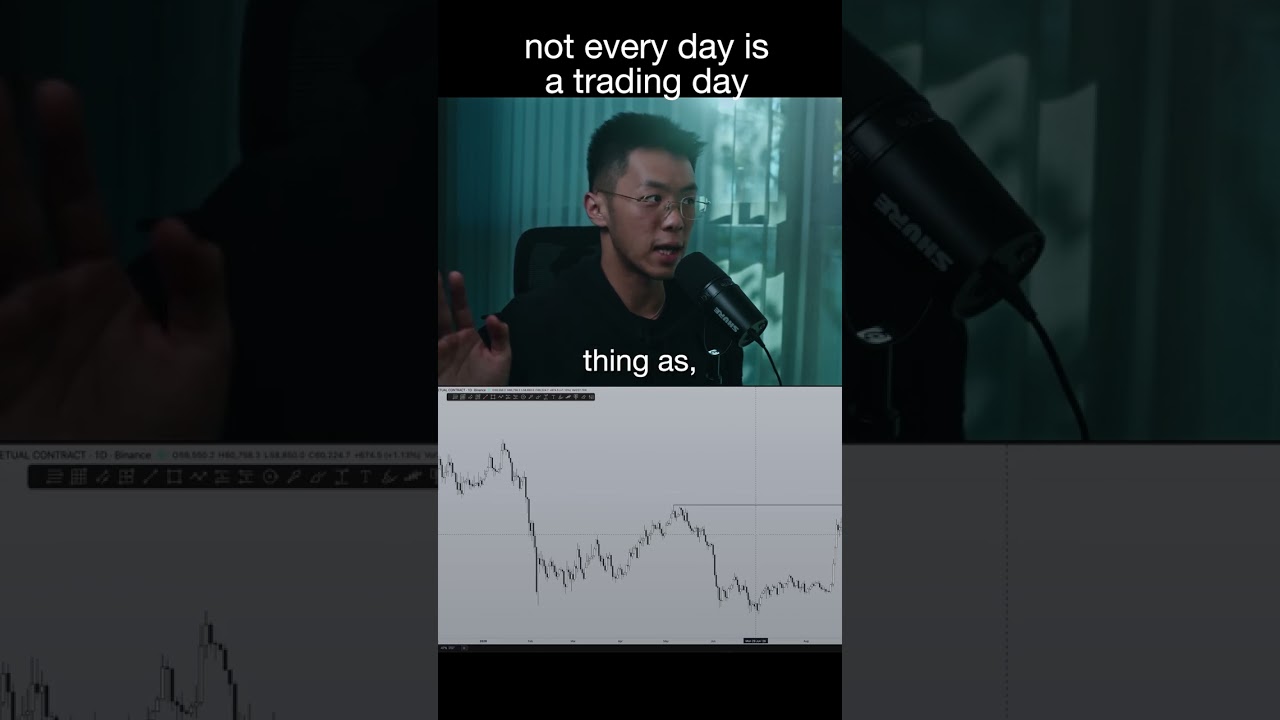
What's up guys? Welcome back to another video. In this video, I'm going to talk about a very important concept that you need to understand that will literally be the difference between whether or not you make it or you fail miserably. Now, one thing to note about this video, it's not going to be anything too technical. We're not gonna be looking at charts necessarily on this video. And this is much more of a mindset thing that you need to understand. Because here's the thing, in order for me to teach you how to win, it's also my responsibility to first teach you how to think about how to win. And this is going be one of those, what I like to call meta skills, that underpin everything that you do. Like, if you watch this video to the end and actually implement some of the simple things that I'm going to share with you, there is literally no way that you will fail. And I know that sounds a bit good to be true, but you know, stick with me and you'll see what I mean. Hello guys, if you don't know who I am, my name is Xuan and I'm on a mission to create the world's best trading education suite and to make trading easy for everyone. Welcome to the channel and let's get into the video. So the main concept of this video that we're going to be talking about, something called the 1,000 units of input theory. And the whole, you know, concept underpinning this is that in life or in anything that we do, momentum is king. And most effort almost always seems meaningless when you're first starting on any venture, whether that be trading. And the core concept that underpins everything that we're about to talk about is the fact that momentum is king in everything that you pursue. Effort almost always feels meaningless at the beginning. And just to show you something really powerful is to look at this chart, right? I want you to visualize that every day when you're putting some effort into to learning trading or learning something new about crypto or learning more about investing, you're almost adding on like little rocks to like, let's say this is a scale right here. Pardon my drawing, I am not the best at this. So every day that you hop into trading, you're always like adding, you know, one little piece of rock into, you know, this scale. And at some point you will hit the tipping point where you're going to see almost all of your biggest results, like your biggest wins. It's gonna be like all of those big profit and loss days, all of those, like that point when trading just feels easy to you and you're gonna be wondering Like, hey, what's going on? And it has to do a lot with, you know, putting in the daily effort to fill up this scale until the point where you hit the tipping point when everything, you know, starts to spill out. And at the beginning, it's not going to feel like a lot because, and this is, I feel, a really good analogy to describe trading, 'cause the trading and crypto investing is simple in nature, meaning there are only really like, you know, 3 things that you need in order to succeed in trading. One is you wanna have some kind of system. where you are able to gain an edge over the markets. You need, you know, some solid risk management. And then all you need is the discipline to follow along with that system and not deviate from that system. Like it's basically all there is. You can add on some like side criteria such as your ability to find alpha and to identify projects early on and actually invest into them. But that's more of a side thing, right? The key things that underpin your success in trading is how good you are at creating that system in the first place and then how good you are at following that system. And it's as simple as that. But the key here is that to get to the point where you have a system that works and is actually profitable is like, it requires you to fill up like basically half of this scale, right? Probably even more. And to get to a point where you can consistently remain disciplined enough in your psychology to follow along with that, to stick to that system with just discipline, is going to require you to fill up, you know, another half of this scale. And throughout this whole period, you're going to be running into some setbacks where, you know, the effort that you put in, maybe some of these rocks might, you know, come spilling out because of some mistakes or some setbacks that you face. And that's perfectly normal in, you know, a trader's journey. But coming back to, you know, what we were talking about before, when you first start out, it doesn't seem like the effort that you're putting in is really worth much. And it really isn't if you look at it on, you know, a day-by-day, or at least if you look at it at, you know, the starting point. And just to put it into perspective, 2e-06, which is basically just 0.00002, it's a lot of zeros. It doesn't feel like it's a lot, right? Even after you spend, you know, a whole week doing this, you're still, you know, you haven't even gotten close to 1 unit of input yet. It's not until where you remain consistent for, you know, day after day, putting in consistent effort into learning this, that, you know, you finally reach a point at, let's say, day 20, where you finally hit 1 unit of input. And this is sort of the start of a tipping point for a lot of people where, you know, things start to make sense and they start to see results. But unless you go through all of this, you do not get to a point in the scale where you're able to, you know, have just some kind of input on the scale where instead of the scale sitting at 0, the scale will be sitting at 1. And the thing about all of this is, and if you've noticed, all of these numbers here are compounding on top of each other. And it's true in the sense that everything new that you learn about trading, that's just gonna compound on top of each other, right? You're essentially like stacking skills. And the thing about trading, and not just trading, but like life in general, like anything worth pursuing, you're not gonna see any sort of result until you stack like enough skills to a point where you make some kind of meaningful difference on the scale. Until that happens, you're not gonna see any results. And that's a reason why so many people quit. It's not easy to stick to something for a period of time and, you know, not see any tangible benefits from it, meaning you don't see your bank account go up. What most people fail to realize is that as they're stacking this, you know, that scale is filling up, right? Every day that you come into this, every skill that you learn, every hour that you put into this, you're stacking these little pebbles, right? By themselves, it's not much, but every day that you come in, But every day that you show up, you get closer and closer and closer to that tipping point. And this is the overarching concept of this video, which is momentum is really king when it comes to learning any skill, but especially trading, because it's so easy to quit just due to how many setbacks there are. And that's the overarching, you know, concept of this video and why it's so important to understand, which is momentum is king in anything that you do in life. The beginning point here where you're seeing literally zero tangible results are like so important to push through because 99% of people actually fall out here. Most people's brains nowadays are so hardwired to, you know, instant dopamine. You turn on TikTok, immediate, you know, reward. You turn on some explicit content, boom, immediate reward. But then, you know, what you'll find is that most of the meaningful things in life, they do require, you know, upfront effort without expecting anything in return. Obviously, since you're learning trading, all of this is going to end up being some kind of reward eventually. It's just you gotta get to the tipping point. But what you, you know, need to realize, and this was quoted really well by Albert Einstein, is the fact that compounding is the 8th wonder of the world. And most people underestimate the power of, you know, just compounding. And you can see it from this chart, right? From day 1 to day 20, you're pretty much not going to see, you know, any sort of results. But the longer you keep at this and the more you're consistent with this, boom, right? From day 20 to day 30, you go from 1 to literally 1,000. And that's the beauty of all of this. And since you guys are watching primarily a trading channel and primarily an Of course, compounding doesn't just apply to your effort, it also applies to your money, which is, you know, every dollar that you're spending right now, like you're not actually spending a dollar, especially considering the fact that as of the time that I'm making this, we're literally in the middle of a bull run. Then you need to realize that, you know, every dollar you invest into, you know, just any random thing, it doesn't even have to be the best AI coin or it doesn't even have to be something, you know, amazing or groundbreaking. But as long as you're investing your money into something that's not totally shit, that money more likely than not is going to become, you know, for every dollar that you put in, It's very likely to become, you know, $5 or even $10 or, you know, fingers crossed, $50 in about 6 to 12 months. So every dollar that you're not putting into the bull run, like you're not just looking at $1, right? You're looking at $5, $10 down the line. And it's so important to understand this long tail thinking is that, you know, again, every bit of effort that you're putting in on day 1 or day 5, like it's not just this small tiny number here, right? This stacks, this compounds on each other. And eventually you're gonna hit the tipping point where, you know, you reach 1 unit of input and you're gonna start seeing some magic. And then the longer you keep at this, you're going to eventually hit, you know, 1,000 units of input. And I promise you, every trader out there who's— who you see is like super consistent, they make a lot of money, and they seem to really know what they're doing, and they seem to have no issue or no struggle whatsoever when they're trading— I promise you, they've all gone through this journey of consistency, not expecting anything in return, and just putting their head down, working, and showing up consistently, compounding their efforts, stacking those skills. And eventually, you know, they hit the tipping point and, you know, that's where they're at right now. And one important notion about all of this that I do want to share is that missing a day or like missing a couple days is not like— it doesn't just pause your progress. Like if I, let's say I spend 10 days being really consistent and I miss one day, I don't just pause, you know, it doesn't work like that. What you'll come to realize, and this will all make sense when I start sharing the examples, is that when you miss a day, you don't actually just pause, you actually Go backwards. And they're not— and it's not just backwards, you actually go back twice, right? So if you stop, whatever reason, at day 10, you're resetting your progress back at day 8. Now obviously, like, don't count this as days. Obviously it doesn't take just 30 days to get to a point where you hit the tipping point and, you know, all of this actually makes sense. For a lot of you, it can take much longer, but you can even consider this as weeks, right? If you miss a week, then you don't just pause your progress there because— and this has everything to do with the law of inertia, which basically states that an object that is in motion has a tendency to want to remain In motion, and an object at rest has a tendency to want to remain at rest. And for any one of you who's watched strongman competitions where they're literally pulling planes, like human pulling a plane, and I'm not talking about those like baby planes, I'm talking about like a Boeing, like A3. I don't know anything about airlines, but a big plane, they're pulling it physically. They have to pull it a certain distance. And yes, this is actually a human feat. In fact, if I hop onto here, you'll see literally what I mean. Like they're literally pulling a military plane and this is all done by a human. What you realize as you watch those videos is that that initial effort to get the plane moving from when it's stationary is the biggest one. Like literally anyone who isn't able to move the plane in the first place and get it away from a stationary state, they just drop out. Like they just fail the challenge because of the law of inertia. And anybody that is able to even nudge the plane by just a little bit, they usually end up being able to quite easily move the plane from the start to the finish line. And for the people that move the plane, And they stop, right? Maybe they get tired, they get burnt out, whatever, and they stop. They will not be able to cross the finish line because again, you know, like coming to a halt in the middle of your progress doesn't just put you at a pause, right? 'Cause now you have to deal with inertia. 'Cause now you have to overcome all of that inertia just to get back to where you were before. You can see this a lot in, you know, people that don't manage their risk at all when it comes to trading. They think that every loss is equal, but it's not because if your account is down 50%, Now you need 100% just to get back to where you were before. But if you're someone that manages your risk and your account is only down like 10%, all you need is 11% just to get back to where you were, right? Huge contrast to 50%. And the numbers get even more crazy when you start going down the rabbit hole, because if you lose 90% of your account, now you need a 1,000% return just to get back to where you were. Just to put this into perspective, if you had $1,000, you lose 90%, now you're down to $100. you need literally a 10x just to get back to where you were before, right? This is the law of inertia, and that's one of the best ways that I can illustrate that for you. And just to give you another, you know, a little bit of illustration, there was about 3 weeks ago or around 4 weeks ago, I actually, I got pretty much burnt out by, you know, the work that I was doing producing content like this. And I decided, you know, maybe I needed a trip. So I took a 1-week trip away from, I'm in the Gold Coast right now, and I flew over to Melbourne, Australia. I also flew my mom from, you know, Malaysia to Melbourne. So that was a very meaningful trip for me. But basically throughout those 7 days, I did zero work. Like, I didn't even turn on the laptop. I was basically, you know, just traveling, doing touristy things. And the thing that really sucked is that, you know, when you're dealing with burnout and all of these things, you almost expect like, okay, if I were to go to that trip, you know, I come back, I'll be fully reset. I'll be able to do work, you know, just like before, or even ideally do better work because now you're not burnt out anymore and you're well rested and you're feeling a lot better, at least mentally. Sometimes physically as well. But that was not the case. In fact, for a good, I'd say, 2 weeks almost after I came back from the trip, I struggled to work. I struggled to even just turn on the apps that I was supposed to turn on. And you can see this from the data. This is from an app I started using about a couple months ago that basically automatically tracks the amount of time that I'm spending on work. You can see it on the top right-hand corner with that 55-minute meeting time elapsed and that I've worked about 2 hours today. And basically right before that trip, I was putting in like consistent, you know, 30 hours of deep work, you know, every single week. When I say deep work, I only turn this on. Now you can see it from this app. I only start tracking this whenever I'm about to sit down and actually do some serious deep work. And basically this automatically tracks what apps I'm on and it automatically tracks if I'm getting distracted, how much time am I actually spending on the task itself and, you know, stuff like that. And it just basically helps me stay on track and make sure that I'm doing the highest ROI activities. This also has the added benefit of letting me, you know, actually study or reflect on what activities or how much time I spent on every activity, you know, throughout the week. And that really just helps. This app here, like I am not sponsored by them, but this has absolutely changed the game for me in terms of just keeping track of how much meaningful work I'm actually doing rather than, you know, just scrolling through YouTube and not feeling bad about it. Right now, if I were to go to some website that is distracting, it'll actually just let me know like, hey, you know, are you getting distracted? All right, thanks for the reminder. I'm gonna get back to my work. But anyways, that was my topic. So you can see that, you know, on average, I do about 25 to 30 hours of work a week. I don't really take weekends off just because of, I do genuinely enjoy my work. And again, it just goes back to, you know, that law of inertia, right? After that experience, I just realized like I don't ever wanna You know, just come to a complete standstill. That's just gonna make it so much harder for me to get back into a flow. And yeah, you'll, you'll see what I mean when I share this with you. So the other day, 30 hours, took a, you know, brief little break on Thursday. Didn't really do much there, but the rest of the day's pretty consistent, right? 3, 4, 5, 6 hours of work. And this is all like, you know, proper work, right? Just not just stuff that's wasting time. And in between like the breaks and everything, I don't really track. I only track basically like when I sit down to work, I turn it on and boom, right? Get right into the flow. And then we move on to the week where I basically went for a holiday. Right? Boom, completely disappeared. Over here, I did something like I still had to take some meetings here and there and, you know, and just do like a little bit of reviewing, right? I couldn't go completely MIA as, you know, the founder of the company and all. But for the most part, you can see that it was pretty much nothing, right? You wouldn't consider that a solid productive day of work. And this, by the point I reckon, I believe Saturday, even Thursday, I might have already came back from the trip. I believe it was Saturday actually. Yeah. And you can see like I still wasn't doing much, right? And then you move on to, you know, the next couple of days. And it took me full, like what, 1, 2, 3, 4, 4 days just to get back into some kind of meaningful amount of work. And on Wednesday, I remember just deciding like, this cannot go on. Like I cannot just complete, I cannot continue to spend, you know, multiple hours a day lying in bed scrolling through, you know, YouTube Shorts or Instagram Shorts. And, you know, enough was enough. I just had to brute force my way back in, start with some small tasks. And eventually, you know, I did build that back up. And throughout this whole process, And I promise you, when I did actually like brute force my way back in, I couldn't even start doing, you know, the real meaningful needle-moving work. It was mostly me reading. Like I remember reading like 3 books on that week. Like I just needed to do something and not completely nothing. So I decided, hey, you know, maybe reading might be a good use of the time. It wasn't until, you know, next week, which is like, you know, 13th of May, which was about 10 days ago where, you know, I finally bounced back and I was able to do some consistent work. So remember that missing a day is, you know, it sets you back so much, right? Because you have to still still overcome that inertia. And remember, like, all I want to illustrate for you is that, you know, missing a day, or in this case, you know, missing a week, is not equal to missing a week. Like, when I do come back, I still need to overcome all of that inertia just to get back to a state where I was before. Now, this is not to underpin the importance of dealing with burnout, right? Because if you're, you know, at some point everyone does run into burnout. I'm not saying to not acknowledge it and not to take a break, but just understand that, you know, if you're not in a state of burnout, Even a little bit counts, right? Going, just putting on my shoes, going to the gym for like 15 minutes. If I don't feel good, great. Like whatever, like I'll just move away. Even just that small little action that you take, but putting in some kind of effort every, you know, just showing up like every day, it goes a long way to building that character and to ensure that you maintain your momentum instead of letting it fizzle out. And yeah, and if you are burnt out, like in the event that you do get burnt out by all of this, sure. Sure, take a break. But again, just remember that you're going to have to deal with a lot of inertia when you do come back. In fact, something that just came to mind is throughout, you know, the 3 years that I've been working with students, I've noticed that, you know, every single one of them that actually just puts in small, consistent effort into learning how to trade every day or just doing something, like they're the ones that actually achieve the, you know, the breakthrough results to where eventually trading does feel easy for them. And in fact, what I've realized now that I think of it is when students take extended time off, they might've just went for a holiday. for like 1 or 2 weeks. Like, I literally do not see them on one of the coaching calls for 5, 6 months straight because life gets busy or whatever, and they disappear for 5 to 6 months. And when I ask them like, hey, you know, where have you been? You know, life got busy and it just became really hard to, you know, start back again. And let's be real here, 99% of people, including yourself, like, if you actually do come to a complete standstill, chances are you're gonna quit, right? Because, you know, trading's hard, you're not seeing tangible results. In fact, you might even be losing money actively, and you're just gonna quit and you're gonna fail to experience all the amazing benefits that getting good at trading does give you for the rest of your life, which is freedom, the ability to make money anywhere, the ability to take back your time, be able to do the things that you enjoy doing instead of being stuck doing things that you don't want to, like your job, for example. So this brings me onto, you know, another point which was shared by a good friend of mine. His name's Daniel, and he's basically like at 23 years old, he's worth around 8 figures worth of crypto at the moment. He used to be Andrew Tate's Hustler's University's head of crypto, right? He was the crypto professor, and he was at that position at at a very young age, like 20, 21. And at this point right now in '23, he's worth around 8 figures in crypto. And one of the phrases that, you know, I remember him saying that really stuck with me until this point is that, you know, he never works hard, right? And he's actually proud of the fact that he never works hard. He thinks artwork is overrated. But what he does well is that he shows up consistently day after day after day after day, putting in the work when, you know, he might not feel like it, but, you know, he still puts in some amount of work. And just that alone has managed to get him to where he's at right now. And So I've taken that to heart and consistency beats everything. Hard work is completely overrated. And the way that you're gonna make it easy for yourself to actually stay consistent with this and not lose momentum is through the use of small actions or small habits. And this just includes what I'm about to share with you in the action items. You could just maybe spend, like let's say you do get busy for the day or you do get busy for the week. Now the worst thing you can do is just come to a complete standstill and lose all of that momentum. But what if you could use a couple of small actions and do To be able to maintain that momentum, right? That could just look like, you know, backtesting a couple of times using FX Replay, you know, practice charting, which I will show you how to do that right now. It's essentially just hopping onto your chart. And I was talking about this with someone from the Inner Circle yesterday during the coaching call, which is one of my favorite exercises to do to get better at, you know, reading charts and actually just the ability to think a few steps ahead is to open up a chart, head to like the 1-hourly chart or the 4-hourly chart and just like make a prediction. on where you think price is gonna go, right? And don't actually take the trade. Just make a prediction, draw some lines, and, you know, check back in the next week. And something that you do need to keep in mind is that you wanna put this on some kind of to-do list, right? Some kind of reminder like, okay, Saturday this time, you know, make sure you check back to the charts that you did last week. Otherwise you're just gonna forget about it, which is what ended up happening actually here where, you know, I drew, you know, this parabola here back on Trias back in literally like what, June, July 2023. I was targeting this area here and this area here, and I even mark out the sell-side liquidity that I think, you know, would be a good area to buy into Trias. And boom, right, it hit and, you know, went a lot higher than that. Obviously I didn't take this trade, but it was still really good practice to just, you know, like even for you, like just do this on 5 charts throughout the weekend. It's not going to take more than 15 minutes, but it still allows you to practice your skills in a way that doesn't put your capital at risk. And most importantly, it allows you to maintain your momentum. And that's so important for making something as tough as trading Because again, you're gonna run into so many setbacks and you're probably not gonna see any tangible results for, you know, a good few weeks until you get the hang of the few key skills that you need to have until the point where you hit, you know, maybe half of the tipping point where you start moving the scale a little bit and then you start, you know, compounding more and more of that momentum and eventually you're gonna hit the tipping point and it starts spilling out. You're not gonna know what to do with all of the success that, you know, that's suddenly coming at you. And that's how it really feels like to get good at trading. Like essentially trading, much like everything else, nothing happens for the longest period of time and then everything happens all at once, right? That's how compounding works. And you know, in order to tap into the power of compounding, you need to have momentum, you need to have consistency. And some other examples would be, you know, instead of just practicing charting and not taking any trades, you might place a couple of limit orders or you might place a couple of market orders on trades just on paper. And the way that you do that is you're just coming onto your trading panel down below here, right? Right? Just maximize that, connect to paper trading, and boom, right? You have paper trading. You're able to place orders like that. Well, can't trade KuCoin, but let's go into Bitcoin and boom, right? You can— oh, oh right, there's a paper trading competition going on right now, so I can't show you that. But yeah, just do a quick YouTube search on how to paper trade. It's as simple as clicking this button and like placing an entry. It's as simple as that, I promise. Or the last one is what I like to call like scaling capital trading. Now you would have actually Actually, I will link a video after, you know, the end of this video expanding more on this concept and why it's so important to start doing this as early as possible. And this being like a very key ingredient, in fact, it could also be considered like a secret ingredient because nobody really talks about this to achieving big numbers. I'm talking like $5K, $10K, $20K, $50K a month. Like you need to start this process early so that you can eventually achieve those numbers. But scaling capital trading essentially is just, you know, placing live trades. At least place 1 or 2 a week, even if you're busy. Of course, do your analysis first and, you know, have some kind of system. But once you do have that, just placing a couple of trades that are like 1/10 of your usual size, right? So if you're usually entering with like $1,000 worth of position size, you might enter trades with just $100. And this just keeps you, you know, this just helps keep your skin in the game and, you know, maintain that momentum. And guys, um, before I forget, I actually just scrolled onto here. I will paste a link down below where you can get 1 month free for Rise. I'm not sponsored by them, but, you know, it's a really amazing tool. It's helped my productivity. When I say productivity, I mean like actual output, right? Meaningful output, not just like work like 6 hours a day doing nothing, keeping busy, like actual meaningful output. This has been such a game changer. So if you wanna get 1 month off, this is not like a sponsored link or whatever, it's just a link. It's just a referral code that if you use, you can get 1 month off without needing to pay for it. And I believe you might even get 25% off after the fact, but I'm not so sure on that. Yeah, I'll put it in the link in the description box below if you are interested. But anyways, if you do believe that trading is able to give you the freedom that you know you deserve but cannot for the life of you figure out how to make trading work, there's going to be a link in the description box below that you can click. Now don't worry, it's not going to be some $997 course or like some free, you know, resources or whatever. But for the people that this is relevant to, feel free to check it out if you want some help fast-tracking the learning curve when it comes to trading. And if you enjoyed this video, found this video helpful, drop a like. It really does make my day. And if you want more content like this, subscribe. And if you'd like me to make a video on a topic that you'd like covered, then drop a comment. But otherwise, thank you so much for spending your time with me, and I'm wishing you a blessed day ahead. Cheers.