Episode7
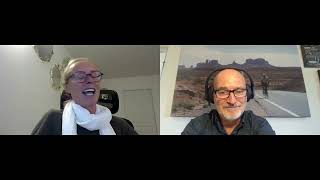
Jim Rees talks with corporate coach Jessica Price Jones about emotional intelligence and leadership. They discuss how purpose shapes careers and why emotional intelligence matters for happiness at work.
Welcome to the EI Guru podcast, a podcast completely focused on emotional intelligence. Typically, the first question I get is, what is emotional intelligence? In very simple terms, it's how we manage our emotions in our interactions with ourselves and others. Or put another way, it's being in the right state and, and not being in a state when under pressure. Emotional intelligence is another label for mindset, and we all know that when navigating those important conversations, we need to tap into our best. I'll be interviewing leaders and experts in this ever expanding field and sharing the data on why emotional intelligence is the difference that makes the difference in all of our relationships. Remember to share and subscribe to the EI Guru podcast, and if you have any questions, you can post them once you've subscribed. Okay, so good afternoon and welcome to the latest episode of the EI Guru podcast. And today I'm really delighted to be joined by Jessica Price Jones, who's a long term, I suppose, colleague, but more so friend that I've known for a number of years now. And Jessica is going to give us a bit of background. But Jessica is a coach, a corporate coach working with leaders around the world and is an author as well, author a number of books. In fact, one of the first ones I think you wrote, Jessica, was Happiness at Work. And then you wrote Meetings and Workshops for Dummies. And you're just about, you're getting really close to push the launch button for your latest book, Intuition at Work. So it's a real pleasure to be able to catch up to you prior to hitting the record button and hear all the information about where you are in the world. Now you're living in France and your son, your son's just recently married, so one of the three kids is now on their way. And Jess, I think I might just start by just handing it over to you and giving the audience an opportunity to hear about your background and what got you into leadership and your career and the books and your leadership journey. I guess. So there's a sort of, like a lot of stuff there to fill in, but if you could just do that for me, that'd be amazing.
My mini bio, as it were.
Yeah, sort of. Yeah, like a little mini bio.
So I guess that my leadership journey really started, Jim, way back when I got my first job and I thought, oh, you know, clever me, here I was, got a job with an investment bank and as I walked up the stairs on the first day, my heart had this horrible lurch. And actually, you know, the interview, that very interview that I'd done. I thought, I just don't fit here. But, you know, it was the status, the reputation, the money and everything that got me in there. And looking back on it now, I was going, how did I miss all those intuitive cues? Anyway, I wound up working for an alcoholic. There's a guy called Miles, and. And it was a nightmare. I was in St James's in London and I used to run around St James's Square going, oh, I wonder if I could get a little bit hit by a bus. Cause if I got a little bit hit by a bus, I wouldn't have to be here.
That's excellent. I love that.
And so that was the beginning, the beginning of it. And I lasted nine months. I lasted nine months in that job.
Before you were hit by a bus or hit by miles, Miles and miles.
Before I quit because I just couldn't keep doing it. And I went out and it was a huge incentive for me to go and find another job where I was really happy afterwards. But after that I. And I did. I worked in the city for about 10 years or so, and in the end I did love what I was doing and I found exactly the right boss for me. But unfortunately I got pregnant with my now married son and I wasn't allowed to work part time. And so I thought, I need to do something else. So I did a psychology degree. Basically, one of my drivers was to try and understand why I'd work really hard for some people and absolutely wanted to kill a few others. And, you know, what had made that happen. So what was the. Where did motivation sit? And that was the beginning of my journey. So went out, you know, fast forward 30 years later.
So. So that got you into psychology, the, the search for what made and created great leaders and the not so good ones, perhaps.
Absolutely. Yeah. Yeah.
So what did, what did you discover?
Well, I guess it's so individual because you have to find the person that works for you.
Sure.
So, you know, it's, it's, you know, what did I discover? And I think that one of the things that led me then to my first book was, you know, what makes you happy. And that's such an individual thing, but, you know, what makes you unhappy. So I guess it's like the Tolstoy quote, You know, every family is unhappy in its own way. Every person at works. If, if you don't like your boss, you're going to be unhappy. If you don't like a key colleague, you're going to be unhappy. If you fundamentally don't think what you're doing is worthwhile, you're not going to be happy. So there are some key things that fall into place, but then there are some peripheral ones as well. So you know, do people trust you? Do you feel respected? Do you feel a sense of purpose in what you're doing? So yeah, those are three things that I would say pretty fundamental to doing any job, unless you're doing it just for the cash. And if you say, right, I'm going to work down the local pub because actually what I'm really called on to do is to help in some voluntary organization, then you know what your purpose is. It's one is the means to another.
That's interesting that you talk about purpose because it's a, it's a really big question that so many people on the planet don't ask, you know. Well, I think going through our stages of life, you know, when we become an adult, we maybe start. And for me personally, the first time I really started to consider what was it all about was when my eldest daughter was born, so my first child. And I thought, okay, so what is all this about? You know, what, what is like why am I here? What am I here to do? And, and that was the first time I really sort of started thinking about, okay, so what's my purpose? And actually so many people on the planet aren't really fully in tune with what their purpose is. And it doesn't have to be something, you know, really grand and you know, earth shattering and it could be that you're just. Your purpose is to be a phenomenal parent, for example. It could be that you want to. Well, for me, for example, I found my, I feel as though I found my purpose 20 odd years ago and it was to help people with their self confidence and self esteem. So of course I ended up being a coach. And it's no wonder that actually that linked beautifully for me to be able to then go and work with individuals that needed support with their self confidence and self esteem. Hey presto, I love what I do. So, you know, it really helps being aligned with your purpose. But it's a really good piece of the jigsaw puzzle. So I guess you almost sort of tricked into doing what you do now as a coach and you, it sounds like you found your purpose, you know.
Totally. Yeah, absolutely.
By following by, by sort of almost being pushed out of the corporate world into your own thing, which is coaching and you know, you being the master of your destiny.
Yeah. And I'd never have got it. My husband got a job in. In Brussels back in the 90s. And I. I was furious with him and went screaming every step of the way. And then after six months went, I really like this place. Oh, wow. A wonderful job. And I've never had it so good. Wow. And. And that's when I started working for myself and fell into the. It really was. I did. You totally. Right. I fell into this life because I think when we started doing, it wasn't so such a known path.
No, definitely. Definitely not. And actually, I. I always talk about. I tripped over into coaching myself as well. So I sort of. I was in the corporate world, selling drugs. The legal stuff. Yeah, the legal stuff, as, you know, with AstraZeneca. And. And then literally couldn't get a job at the level that I wanted to because I was moving from one part of the country to another. And a friend said, do you want to join Speakers International? And then that was it. You know, I was in. And then the rest is history, as they say.
Yeah.
But let's just rewind a little bit before the book. So before Happiness at Work, you were very heavily engaged in a thing called Making Slough Happy. So that was a series that was, I think, shown on one of the tv. I'm not sure if it was BBC or one of the other big channels. So tell me a little bit about that and how you got involved in that. So. And. And what were the outcomes, you know, Making Slough Happy? So, you know, when you go down the M4, I think it is, you go past Slough and you. You don't really necessarily want to stop. And that's no disrespect to Slough, but I've been around parts of Slough and it's. I wouldn't say it's the best part of the world, but I'm sure there are great pockets of it. So I don't want to disrespect anyone that lives in Slough, but tell me about that project and what you've learned from that.
You know, it was. It was a real coincidence how that thing turned up. And by the way, I think that coincidence is part of intuition. It's a marker that, you know, keep doing this thing for me. That's how I experience. So my friend Jane was hosting a dinner, and I was exhausted, and I thought, oh, God, I really don't want to go. One Saturday evening, and I got in the shower and I think, ah, my whole body's aching with fatigue. I just don't want to go. And then I thought, okay, but Imagine, you know, Jane has invited everybody, she shot the whole thing, she's cooked the whole thing and she's even now getting it all ready. If that was me, I'd feel hurt if I was to now ring up and say I'm not coming. So I thought, pull yourself together, woman. Get your glad rags on and off you go, girl.
Up.
Exactly. And so I did and I met. We just started chatting to somebody there who. And she had tons of energy. This woman had tons of energy. Someone called Patricia Llewellyn, Pat Lellen, and she found Jamie Oliver. So I thought, let me just chat with this woman because she's got all the energy. I can just sit and absorb and feel regenerated by her energy.
And by, by the way, this is unusual for you not to be bouncing in with tons of energy. Your Tigger's sister. So it's almost like, you know, it's unusual that you don't go bounding in with all that energy like, hey, I'm here.
So there was Pat and she was chatting to me and I asked her how she'd found Jamie Oliver and talked to her about her business because she ran this production company called Optimum. And then she asked me for my phone number and I told her I was a coach and what have you. And she asked me for my phone number and email and I gave them to her and I didn't think anything of it. And then I got this mystery email two days later saying, could you call me? And I thought, oh, she'll. She's looking for a coach. Anyway, she asked me to go for a screen test and that's how it happened.
Wow.
So I did a screen test and then I said, you know what, it's better for the two of us. So I took a colleague along because you can bounce off someone else. So telly's very dull when the thought process of somebody behind camera isn't available and. But when there's two of you could say, hey, this is what I'm thinking, or what do you reckon? And so anyway, they like the pair of us and I think they called us the Trinity and Susanna of Slough. I'm not sure about that as a felt back. Anyway, the funny thing was about that program. It was called Making Slough Happy. But my God, it was an unhappy making process because it was exhausting. We were on, it was like we do be doing 20 hour days and the camera crews would change but we in front of the camera couldn't change.
Yes.
And then they were paying a per diem and they didn't want to kick you into the next day. They'd rather you did one incredibly long day.
They milked you for. They really wit you.
They did. Anyway, so what was the, what was the.
What was the structure and what was the outcome? So how long did it last, you know, and what were the outcomes from that, that program?
So I guess that it lasted about six, seven weeks. The actual filming and what we had to do, our mission was to take some people and groups of people and see, could we, by doing a whole host of different interventions, help them on their happiness journey. And we did a pre and a post measure. And the answer is, of course, that if you give people a lot of attention, of course they're going to become happy. I mean, it's a bit. The old Hawthorne effect, wasn't it didn't like to say that at the time, though. At the time. But the best bits of the show, as far as I was concerned, and what Philippa and I did was working with a few individuals and we really made a difference. Well, we helped them make a difference to their own lives. And that was the work that I was proudest of. And it never. It didn't make the cutting room. I know. It was left on the cutting room floor.
Right, okay.
And I kept saying, look, is this reality tv? And they kept going, no, it's documentary. But actually in the end it was reality tv. And so the real gritty stuff they didn't really want.
But, you know, you had an impact on the people that you were working with, so.
Yes.
That's lovely. Yeah. And did that, did that then spurn the thought or was the happiness at workbook already underway at that stage? Give me. I guess I've not spoken about this with you before, Jess.
It was already in process. There had been a really seminal book published and it was just about the time that all the. The happiness stuff was coming to a fore. And as a psychologist, I was really interested in it, of course.
Yeah.
And. And Martin Sellingman, who'd start. Who was the kind of. Started all of this. This positive psychology stuff, you know, he was just switching his focus from learned helplessness into positivity and positive. What's now called positive psychology. And so that was, you know, it really grabbed me and. And so it was a parallel journey, I reckon.
Yeah.
And I think that I got into the slough stuff because of my interest.
Yep. Yep. So you. Your energy attracted so like energy attracted like energy. So birds of the feather flock together, that sort of stuff.
Yes. And it was called Making Spa Happy. And they were looking for people who could do this stuff. And so it was almost a natural fit, but it was very unhappy making because the interesting thing was there were five of us experts, and of course, the more airtime one expert had, the less the others had. So everybody was going, I want to talk. When we. And I remember passing my colleague Philippa a note, just saying, keep talking.
Clever, clever. Very clever. Okay, so for those listeners that haven't had an opportunity yet to read your book Happiness at Work, can you just sort of do a little bit of a synopsis of the book? Are there some core chunks of Happiness at Work? Can you. Can you do that for us?
No, Jim, I can't possibly do that for you. I wrote it 14 years, but I.
What will they get from reading Happiness at Work?
So they'll get a clear framework and lots of how to's.
Okay. So, yeah, that.
That.
That in itself is good. So a clear framework of creating happier people at work is. Is that really what they'll get?
Yeah, for themselves. So how do I myself do this for myself? And what can I do if I spot it in someone else?
Right.
Mild business iopener, which is spelled I, O, P E, N E R. You can go and get a free survey about your own happiness at work if you want to. So that's iotner.com and the surveys are still out there, data still being collected, and I'm really happy to say that the model and the theory holds up. So there was analysis done last year. Does it stick together? Yes, it does. So that's something that I'm quite proud of because there was an immense amount of research that went behind the whole thing.
Yeah. And, you know, before we press the record button, we were talking about, you know, the podcast is called the Emotional Intelligence Guru podcast, but with an emphasis on not the guru part, because, by the way, I am definitely not a guru. I'm. I'm not the finished article. I always joke about it because a friend of mine said, yeah, you should be labeled the guru, because actually you've lived this stuff, you know, so my life journey. But we've all had a life journey, so that. That's not the point. The point I'm making is that the focus is around emotional intelligence. And of course, intuition embeds itself into emotional intelligence. And we spoke a little bit about that prior to me pressing the record button. So I want to get into that in a little bit. But going back to the happiness at work stuff, also, that blends into emotional intelligence. You know, and I'm just curious to understand you've worked with lots of leaders around the world and just your observation of, you know, what a good leader looks like and what a not so good leader looks like in terms of their emotional intelligence, their ability to handle themselves but also interact with others, you know, so their ability to, and I, and I think about under pressure. So under pressure, it's, that's where the rubber hits the road. So when things are going swimmingly well, it's easy enough to show up and leave a positive fingerprint. But when shit hits the fan, how do they handle that stuff? That's, and I'm sure you've seen examples of that, but I'm just interested to hear perhaps some examples that you've observed over the years, Jess.
So, you know, it's really interesting because I'm part of a not for profit organization in the States called the Coincidence Project, and I'm sitting on a committee. And the chairman of the committee yesterday evening reached out and this morning he, when I woke up, I got this wonderful email. Dear Jess, I'm sensing that. And I thought, oh, Chris, you just read me so right. And I go, there is a man who is really emotionally intelligent, who is somebody that I would follow. And if he said, right, we're going that way, I go, chris, absolutely, I'm behind.