Race Across America (full documentary)
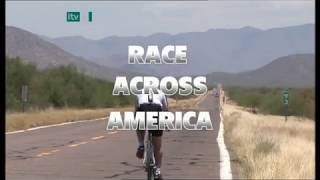
Jim Rees attempts to break the British record in the Race Across America, a grueling cross-country cycling event. The documentary follows him and his support crew through the physical and mental toll of the race, with updates from different stages as he pushes toward the finish line.
Up anymore. The neck muscles are gone.
The eyes are just closing.
Whoa.
I'm sorry, mate. I've made a.
We're going left, but we don't know if this is the right road yet.
We are cutting it so fine on time.
I cannot believe what I'm seeing at the moment.
Yeah, that's rough.
I want to get in there. Jim want to do it right.
He's not going to do it, though. By the cut off.
Welcome to Helm. I'm just a normal guy showing and trying to inspire others to believe in what's possible. My mindset is extremely strong. I'm an extremely determined individual. Whatever I've set my mind on to do, I normally achieve. I haven't had any experience in life where I've set my goal at something and not achieved it. The current British record is 11 days, 22 hours. And my plan is to be the new British record holder of the Race Across America. So anything under that will do fine.
I believe, Jim, that when he says if he finishes the race, he'll break the record. Of course, the big if is if he finishes the race. And there's a lot of things that can happen.
I guess I'm a little bit intrepid.
For him because it's such a big.
Undertaking, but excited as well.
You know, he's trained well and hard.
And he's absolutely ready for it.
So, yeah, quite excited for him.
There have only been, to my understanding, just over 100 people who have completed this event solo. And for someone like Jim, who's an ordinary guy, he's supporting a family, he's holding down a job. He hasn't had a year off just to train for this. If he finishes this or when he finishes this, it will be an absolutely amazing achievement for one guy and the team because without us, he's certainly not going to get there.
So you're hoping Richard's going to play. What game are you going to play? With Richard finishing healthily, that's number one goal. Breaking the record, fantastic. In the top five, even better. But again, cycling 3,000 miles shouldn't be sort of addressed lightly. And, you know, I'm respecting the race, respecting the other competitors, and really excited about it all, you know, can't wait for it to start.
We will be going from San Diego on the Pacific coast all the way through to Atlantic City. And that covers just about every sort of terrain you can imagine. We'll be going over mountains, we'll be going through deserts, and then we have the Great Plains through the middle of America, which Is supposedly flat, but I guess if you're on a bike, there's still a lot of hills there. Then we have the Appalachians, which are a pretty tall range of mountains, so we've got to go over those. And then we've got the final stretch to Atlantic City.
Well, the math works out around about sort of between 250 and 300 miles per day. So that would work out. That would equate to being on the bike for a minimum of 20 to 21 hours per day with three to four hours sleep per day, if you can imagine.
20 hours in one day, that's tough. Then getting up after four hours sleep and doing it again and again and again day after day. After four or five days, I think you're gonna be pretty damn sick of this.
The sleep deprivation is just an unknown. It's a curve ball that I'm just gonna have to handle as and when it crops up. And, of course, you know, I'm very mindful of those dangers purely because two people have died during the race.
Even if his body's strong, his mind could start just playing tricks on him. He could start wondering why the hell he's doing this. But as I say, I believe Jim is pretty tough in that area remains to be seen, because this is new ground for him. He's not done it before, and not many people have. So let's see what happens.
This obviously. Come alongside is. I want to have a conversation with you.
It's.
It's not because I've got wind. Come alongside. I want to have a conversation. The other thing I will do is come alongside. I need a drink, you know, so it'll be. That's when we arrived into Oceanside, and once we were at the RV camp, I was getting really, really excited as we drew closer and closer to the race. I was just mindful that after day two or three, you have no real control of yourself. When you stop pedaling, you almost sort of fall off the bike. So I was just conscious that we had to practice a few of those sort of situations. Okay, well done.
We can have it straight along there. Open the rope and then just open it out.
She's pulling. Stopping in with her arm.
The crew probably is about 90% of my success.
There's basically seven of us in the support group. One of those is a nutritionist who won't be doing any driving. She's going to be working on making sure he gets the right food. Then the other six of us are divided into two teams. Three people in each team, and we swap those teams over every 12 hours. Each one of us is responsible for 12 hours of Jim's riding whilst the other team gets into the RV support and actually drives that ahead and just ensures that everything's where it should be.
It's been nine months in the making, probably 18 months in my head thinking about it. And we're here finally. It's been a long time coming.
Yeah, well, I'll just.
In the morning of the race, it all sort of seemed to come at warp pace, you know, all of a sudden we were running out of time to get everything sorted. Phone calls are out of the way and I can now focus on the race. So, yeah, very excited about it all, although I was still quite calm. Time just sort of evaporated, you know, months and months and months of waiting and then all of a sudden we were here. All the other cyclists were around, all the other solo people were around, the media were there. Well, I am part of this, you know, I'm part of this group of other solo riders. The race was real. Now.
The race started about an hour and 12 minutes ago. We are now at the first staging post. So the initial part of the race. We don't see Jim, so this is the first opportunity we'll get to see him go past. Over the next 10 or 15 miles, he'll be climbing approximately two, two and a half thousand feet. So this is where it starts to really get on.
Jimbo, you alright?
You okay? Jimbo? Good. Hey.
My intention was to ease myself into the RA, so the first 15 miles of that climb, I took it very easy and I had a lot of cyclists come past me, but I was also wanting to make sure I cycled within myself.
I'm desperately out of water.
Water drinks.
Do I lift this lever? Yeah.
I think it must have been the adrenaline that was flowing through me, the fact that part of my race mode kicked in. Okay, water. Where is it? Come on, we need to go.
Okay, Jim, sports drink.
I need a big, big, big, bigger one. I'm used to having, you know, the right drinks on my bike and various bits and pieces and I, I think I was barking orders at some of the crew and sort of put them on edge and I think they then realized also that they were part of a race.
Feeling strong.
We need to sort these drinks out. These drinks aren't sorted. I need salt water. I need water and I need my sports drink. Okay. Have I got my gels? Yeah. I'm gonna go.
Okay, See you later.
After time Station one. And you've done all that climbing, you get a little bit of a reprieve and then you drop that 5,000ft that you've just climbed to minus 200ft below sea level. I remember going down there's a 10 mile stretch of downhill which was just quite amazing. Twisty, turny bends, downhill. And it was right down and it was your first introduction to the desert. It was like a furnace. And this is where my body did start taking a bit of a hammering.
You coming off?
Jim? Needs a bed.
Needs a bed.
You got cold water?
Try again.
Yes.
What Cold, cold wood. It's almost impossible to breathe out there.
We're riding along quite happily. Jim just said he wanted to stop, so we stopped. We've put him in the back of the car, air conditioning on ice around his head. I think he's fine. He's coherent. I think he's just a little bit tired. He's had seven hours in the saddle, so just needs to get off, move around, chill off and get a bit cooler. I think we're about 15 miles to the next time station where we'll meet the RV and the other half of the crew. So, yeah, I think we're in good shape. He just needs a moment. It doing great, buddy. We'll, we'll keep going five or a couple of miles or so.
Yeah. Thanks, boys. Starting the race, the intention was to cycle right through the first night, right into the second night and then take my first sleep at the end of that time station at Timestation 2, I was very ill. I ended up with heat exhaustion. I was off the bike for three or four hours, which wasn't planned, and I was sick.
Listen, I can massage you on the toilet. It needs to come. Come on. I can massage you there. Let's go.
Until I was sick, I couldn't move, you know, and if I hadn't been sick then there's quite likely I would have ended up in hospital because I did need to be physically sick to then be able to clear that from my system and then move on. Oh, feeling awesome now. I mean that, that was. I'm out of the oven, I'm baked, fried quite nicely. Welcome to America and the Race Across America. And I'm feeling great now. Fantastic. The team have done a good job of getting me back to where I need to be. Yeah, I'm really excited about tonight's ride. After that experience in Salton City, I just knew that I could make the time up. I knew it was a long race. I knew that the race would throw various curve balls at me. And really, the heat exhaustion was just the first of many of the curve balls that were thrown during the race. By day two, I think I was uplifted, actually, by the fact that I was still in the race. Heat exhaustion has pulled people out of the race before, even early on, and I was just grateful that I was able to continue and still be part of it. Another time station ticked off. So that's five. The aim is to get to six and see how I'm feeling and maybe stop due to the heat, just to sort of avoid the heat.
Come on, Jim.
The landscape had changed dramatically. It was very flat, just following a white line. Your concentration levels have to be very sharp. And if you've got sleep deprivation because you've had little sleep, then trying to stay focused is quite tricky.
When I came out of the bush and came down here and I saw all the cars, I thought, damn, this is weird. I mean, the guy's gonna bicycle across America in 12 days. It used to take months for people to come across America, sometimes years. He's hitting the mountains now, and then when he hits the flatlands, it'll probably get going real good. But these mountains and this desert, this heat's a killer.
Your guy's gonna go out here and climb Yarnell Hill.
Yeah.
Seven miles uphill. Then you're gonna go up to Kirkland Junction. Everything is still the same. So you've got Montana at 52.6.
Yeah.
Now you got Mon.
Yeah.
Okay.
So you've added about five miles of climbing.
He'll enjoy that.
Oh, yes. Oh, yes.
Do you want to go and tell him that we have covered 341 miles since the race started 29 hours ago, and he's been going pretty solid since then. He's had one proper break in that time. He's got a good 3 or 4,000ft of climbing to do.
It looks worse on the book than it actually is. This isn't really climbing until you get to the Rockies, to be honest. I mean, it's not nice that it's not. It's not a real climb. Yeah, the weather's nice. Yeah, this is much better.
I got a set of tracks down there.
Perfect. Cheers. Cheers.
Jim's on track to break the record, but his race standing is probably surprisingly low. We feel that that's because a lot of the other people, particularly some of the less experienced people, go off too quickly and don't get enough rest. So we feel we're going to catch those up as we go along because we're really being very careful about making sure that Jim's getting enough rest, he's not going to burn out and he's going to still be there at the end.
Our plan had to change based on how I was responding to the weather. Between two and five seemed to be the hottest times of the day, and that was the time that I was seemed to be struggling the most. So instead of sleeping at night, we took a chunk of time in the daytime between 2 and 5 to rest up and try and recover. I can't say that that was easy purely because it was sweltering hot in the follow vehicle in the rv, but I just don't think I was effective. When it was at its hottest, I started feeling tired again. So I was sort of almost dozing off on the bike, which is quite funny really, because you all of a sudden you wake up and think, oh, where am I? That's quite weird feeling. Witching hour is something that a lot of cyclists talk about and it probably relates to between 12 o' clock at night and 3 o' clock in the morning. It's where sleep deprivation seems to come around and knock you about quite, quite significantly. I had to negotiate very strongly for 15 or 20 minutes sleep at that time. But if it didn't work, they would have to then immediately pull me back off the road and give me a half an hour sleep and then see how I fared from that. Adios.
Hello, Jim. Welcome to Colorado. Goodbye, Utah. Welcome to Colorado. You've just passed the state line, Jim.
Do you feel you're getting stronger as the race goes on? Yeah, I mean, that was the plan, really. That was my own plan, my cunning plan to come here sort of 90%.
Fit.
And ease myself into the race. So that's what's happened. And it's also nice to play catch up to some extent.
At the beginning of the night, it was looking a bit tight. Jim did okay, but he wasn't flying. And I was getting worried. I was doing the maths that it was going to be very tight to hit hit this cutoff time for 2pm we had to have a chat and he's responded magnificently. And actually, I think we've seen him really cycling today. He's really in the zone. Fingers crossed. We should be in for a good day. We should reach Cortes easily. Right on track. He'll have done this stretch in about four hours. Great effort.
Here. I was living a dream. You know, this is something that I've been thinking about for probably two years. The crew were working, they were getting on really well, and I was feeling strong. I was feeling very energized by the whole thing.
Up to time station seven, we were 30th, which was last in the race because of the problems we had early on with Jim and the heat exhaustion thing going on. But since time station seven, each time station, we've come up to 29th, 28th, 25th, 24th, 22nd, and we're now standing 21st. So we're pretty pleased with that. We're now going into the Rockies. These are the highest mountains in America. This is the Continental Divide. This is the highest point in the race that we're going through. And we're going to be climbing up over there, what they call Wolf Creek Pass tonight. And it's quite warm and sunny down here. Up there, there is snow on the ground and it may even be snowing. This is the biggest climb. So, of course, how well he does here really is going to make a big, big difference to how well he feels in the rest of the race. So tonight, I keep saying this, you know, tonight is going to be the big one, but I believe tonight really is. It's going to be the big one.
Wharf Creek Pass is the most significant peak in the race. It's an eight mile climb in. In total, you know, from start to finish, and it goes up to 11,800ft in total. Nothing. And what's the. Can I look at the profile again?
Yeah, sure.
Okay.
That's a nice little bit.
Not too bad. And then it's okay. Okay, okay. And then bang.
Yeah. Did you read this bit? For two miles around the summit, the races will be over two miles high.
I'm feeling strong. You know, every time I feel my. My legs are gone. Donna comes and goes like that, and they're okay again. The views normally during the day are just absolutely amazing. And unfortunately for us, we were doing it in the. In the still of the night. So it was pitch black. I probably. If I was given a choice, I probably didn't really want to climb Wolf Creek Pass that night.
For some reason. Jim loves hills. I think it's because he knows mentally he's very strong and he can kind of get himself into a very good state. Whatever's happening to him, he kind of seems to enjoy pain.
You've got to have some glucose now. So which one do you want?
Go gel.
Go gel flavor.
He knows that the other riders, many of the other riders really hate hills, so he's really up for this.
Yeah, I am. Yeah. Yeah. Just tired. Just immensely tired. And when you Think, you know, I'm trying to take my mind off being tired, but you know, you're thinking about a bed. I'm thinking about the top of this climb and a little sort of 15 nap in the car, 15 minute nap in the car and then carrying on. So that's in the front of my mind at the moment. So I need to clear that out and just focus on this. This steep little fellow, isn't it? So, yeah, let's get going.
He just had a wiggle back there and I thought he was trying to avoid a pothole. And he's called us up to say that was him falling asleep. So if we see him do that, then I need to give him a blast on the horn to wake him up if he's already falling asleep. You know, you can imagine how tired someone must be to fall asleep whilst putting this much exertion in. Then we're going to have to keep a very close eye on it. That's it.
Watch the white line and stay alert. That's it. You've got a lovely rhythm going there.
It was getting colder, the temperature dropped significantly. I was shattered. I wanted to sleep. I was sleep deprived. And all I can remember is John and Donna continuing to encourage me, you know, that they were very keen, very motivational, very inspiring to ensure that I did get up to the top of it.
You've been great to get this far, Jim, and you're going to get that last three miles and then it's downhill all the way. One three mile stint.
Yeah.
Okay, hang on. That's got time for work. That's it.
Goodbye.
That's good. That's it. Come on. All right. How do you stay awake, Jim?
By staying awake. Yep.
How do you stay awake?
By being alert. Yep.
How does it feel to be allergic?
Yelling at me? Yes.
All the way up the hill.
Yep. What's your objective, Jim?
Needs to get up to the top. Yep.
Right. Got to get you out there at 4.
Jim, what's the time now?
3:59. Got to do it.
Come on.
It's now or never. You can do it, Jim.
Yep.
You can do it. Here we go. You're doing it now.
Yep.
Okay. Right, lets go.
I just wanted to get this climb out of the way and it was endless. It just kept on turning to the next bend and then there was another climb.
I'm really sorry that the rest of the crew couldn't be here to see this, actually.
That's fabulous, Jim.
Jim talks about wanting to be an inspiration. I think how much more inspirational could you get.
You just have to keep on thinking, well, you know, if I just keep on pushing and if I keep on going and stay alert, then I'll eventually get to the top. I was, I think, almost a broken person by that stage. And my body was desperately, desperately, desperately wanting to sleep. I can't do Race Across America without a phenomenal crew. And you know, you just saw an example of it tonight how without two pretty amazing people, I would have quite easily just been still asleep. Not even probably would have been, wouldn't even thought of climbing this tonight. So everyone's amazing. But this is quite a special effort tonight by both Donna and John. You know, willing me up Wharf Creek Pass is one of the significant climbs in the races that I had to overcome. And I'd done it. I ticked the box and the following morning I felt good again. It was quite a relief to some extent to not have, have to be doing some significant climbing. The roads were flat. The terrain was very same ish Kansas for me. I was bored senseless.
Jim's looking a bit miserable about the whole thing. It's just long, straight, boring roads surrounded by flat fields. So you kind of notice as he gets a bit bored, I think that he's average speed drops a bit.
I change bikes from my climbing bike to my time trial bike. And hindsight tells me now that actually my time trial bike was too aggressively set up. I was too low aerodynamically on my time trial bike to cycle a thousand miles on that thing.
You know, out here on the plains in Kansas, the wind really whips up, so we're running into a headwind now which can take 20% off your speed or SAP 20% more of your energy to go the same speed. So it's just hard, hard work. You've got to be very mechanical and methodical about it and that's what he's doing and he's just efficiently pedalling his way along. Hi John, it's Paris. Ten past ten. We're on the second part of tonight's ride. We're 20 miles into the 55. We've come to a bit of a halt just because Jim's just so tired and he's falling asleep.
Just feel sick, that's all. Just lack of energy, feel sick. I think we get to a point where you don't want to eat gels and you don't want to eat all the other bits and pieces. And it does happen.
The eyes are just closing. He hasn't slept properly for five days. So it's just starting to hit Him. Now.
I just felt sick again and I ended up having to physically make myself sick. And once I'd thrown up, I still wasn't well enough to be on the bike. So they took a decision to take me off the bike and find a hotel so I could actually have a good two or three hours off the bike and recovery.
This event has been very close to us not being able to compete in the race any further. The implications are that we now have to sprint to El Dorado, which is the next cut off point. We can't afford to drop any more time. We had a buffer of about six hours and this event is going to eat all that up. So we need to get Jim back on the bike for 12, 13 hours solid and he's got to maintain a good average speed to make it to the checkpoint. It is possible, but yeah, it's going to be tight.
All in my planning and all in my thinking, I'd never thought about not finishing this race. There was never any room in my mind for thinking that I was never going to finish it. Okay. When the crew got stressed about this, it actually wound me up a little bit. It was almost as though they didn't believe in my ability as a cyclist to be able to get to the cut off point.
It's looking tight. It is a Saturday, which could be good. So fingers crossed. If Jim doesn't meet this Cutoff point at 6 o' clock this afternoon, we're out of the race. Hi, Jim. Got some more fuel for you while you're pushing a bit harder. More gel. The witches at the back say you'll get there with that. At the moment, his speed is slipping dangerously slow and if he continues to cycle at this speed, it's going to be very, very, very close.
I thought I had about five and a half hours to this one.
You had. Well, it's got to be in by. Got to be a six, that's five and a quarter. But when you, when you average speed had gone down to 12, if you'd left it at that, you would have gone in with 15 minutes there. So we had a bit. You're now on course again. Okay, yeah, just straight, straight on.
Jim.
We'Ve got to do a left, then a right, then straight, then left, then right. We're going left, but we don't know if this is the right road yet. Right, left, straight here, left, right, right, right. They have made this the most convoluted route you can possibly imagine. As soon as we hit stop sign, we turn left. This is going to be the biggest relief of the trip so far last night. I did the sums quickly and thought we'd blown it. I thought we couldn't make it, but looks like we're going to.
Right, I want you to hold those two up there and I want you.
To hold that one there.
Right. Is that secure?
Yep. How is your neck, Jim? Yeah, it's not. It's not working properly. So when I. I'm in the aero bars, I can't. I can't hold it up anymore. The neck muscles are gone. So I'm coming up with various temporary solutions at the moment, but we're coming up with a more permanent one in the next time station. Okay, let's go.
Steve, your glasses are in the car as well.
Good luck to.
He changed his bike and the bike that he got was a bike that you're lower at the front and higher at the back. So the saddle is actually higher and you have to look up a long way. But with a headwind, it was so strong that it weakened his neck very rapidly during that day. And from that point on he's had a sore neck.
My neck muscles weren't able to support the weight of my head. And it's been given a terminology of Sherman's neck. We ended up having to build a neck brace and the crew did a remarkable job of building a neck brace. It was made of a baseball cap strap and a whole load of PVC piping. It was quite weighty, quite cumbersome. You know, even though it's made of PVC piping, it was quite a weight to have to have strapped to my body.
You'll not find a better one on the market.
Can I get my name put on it?
It is on it. And the website number. Okay, this is the road and then.
Right, keep on going. See you later.
See.
At the moment, Jim is not on course to break the record. He's on course to finish. And at the moment that's all I can do for him. My feeling is if we get him to the next time section by the cut off, then he'll need to push really hard and probably not sleep too much and then he might break the record. But that's when we'll really find out what Jim's got.
The thing that caused me probably the most distress was the sleep deprivation. And with that comes the hallucinations. I saw snakes that weren't there, that were just bits of tarmac. I did see real snakes as well, but the amount of things I hallucinated over was quite remarkable.
Looking good, Jim. Another 10 miles or so and we're at that 2,000 mile marker, and then we're pretty much on the Mississippi. And you really are looking strong. It's just your brain needs a bit of a rest, doesn't it? It's getting greener as we go east, but the key thing for us is it's getting busier. At the moment, though, Jim has gone over 24 hours without any decent sleep, probably closer to 48, and his mind's starting to play tricks on him. His body's strong, you can see his legs are looking good, but mentally, he's just completely frazzled at the moment. We've got yet another cut off to make now in Indianapolis. We are about 100 miles away and we've got nine hours to get there. If everything goes all right again, we should make it. If anything happens, we might not make it.
I didn't enjoy going through Indianapolis and we got some bad weather as well there, where it just made things a bit more uncomfortable for me, especially with the neck brace, because that was slipping and sliding under my chin.
Hello, Bob, it's John Evans here. Time Station 40, Indianapolis 0913. We're in.
The Appalachians is the last significant hurdle. In essence, it's four very steep climbs going up to about 10,000ft in total. My belief was that if I finished this race within the cutoff time, the British record would be mine. Mentally, I was in really good shape. Physically, I felt good, and I was very confident that if I could stay on the bike, I would be able to break the British record.
It's a morning of two halves. First half of the morning, he was virtually asleep on the bike. And whatever we tried to do, he just kept stopping, stalling, whinging, and he was just not with it at all. He still was focusing on, I'm going to break the British record. I'm going to break the British record. Despite the fact he was actually getting slower and slower and slower. So we've had to readjust where he is and his thinking and just clarify a few things. And I think he's cool with that. I think he's back in the right place now.
Every cell, every cell in your body is just buzzing with aliveness. And you're fully aware that you're almost completely and utterly depleted of all energy. And that's how, on some occasions, it does feel like doing this thing, you know, not considered to be the toughest race on the planet for no good reason. You know, it's a long way.
At the moment. Jim's not really able to comprehend the shape of the course or hold it in his memory. So we'll give him five minutes to gather himself, get an energy drink in, see what happens.
Remember how strong your mind is. Hey, you can, you can get it to do whatever you want it to do. Hey, it's all in there.
Yeah, I think the British record has gone now. We're not going to get it. Our goal is to finish and to finish inside the time limit. As we've seen in this last 10 days, anything can happen in this race, but we're this close now. We've got 310 miles to go, so we're 90% of the way there.
I remember something that someone, a friend of mine said to me before the race and he said to add some gentleness to this race. And that was really front of my mind when I was climbing the Appalachians and I was thinking, I'll just gently climb these hills. And I sat in my saddle and I just took it easy and just continued to turn the pedals and eventually climbed the four climbs.
We knew Jim would have to ride hard through the mountains and hard throughout the next day. And he'd ridden really solidly through the mountains come the witching hour, come 2am in the morning and Jim hadn't slept for well over 20 hours and even then probably caught half an hour, 40 minutes, it really started to catch up with him. The clock was ticking and based on the speed that Jim had been covering, we didn't have any time in our pockets to let him stop and have a proper rest.
I couldn't really turn the pedals was going at about five or six miles an hour on the flat. And again they, they decided actually that this is just silly and it's just, it's not going anywhere.
It was clear that he was just past it. He was out of control on the bike. It got to the point where we had to make the decision. I had to make the decision which was, okay, we're going to stop and let him sleep and, you know, that's probably the end of the race.
I was quite surprised that when I was woken up, I was then told that I wasn't going to finish the race officially.
I said to him, jim, we've got about 185 miles to go. You've got just over 12 hours to do it if you're going to make the cut off. And Jim, look, let's be realistic. This isn't going to happen.
Well, because we ain't DNF'd. Yet until 5 o'.
Clock.
We're not DNF.
They were very nervous. They were all in a space of thinking that I wasn't going to finish the race on time.
I mean, even driving this is going to take four hours. And we were asking him to ride a bloody bike. It's still a long way from Atlantic City here.
His reaction initially was one of shock. He didn't realize quite what had happened, but he was very understanding and he said, I know you guys have done what you need to do and you've made the right decision right now, but don't tell me it ain't gonna happen.
Well, you know what this plan means.
I couldn't sleep.
Now this. Green Nouns. We've got to go 15.
Yeah, yeah, I know.
15, 16. I want to get in there. Jim, want to do it right. It's a big effort now for 12 hours. Superb. We gotta do that now. Listen, we've gotta do that for the rest of this. I know, right, we're right behind you. Come on.
I think I'd lost touch with reality. I'd lost touch with how much time I had and what I had to do and what I had to achieve. But I also, in my mind, was very convinced that it was my mindset that would get me through this. Neck brace. Somebody. Someone take the bike, please.
His average speed across the course to date had been between 10 and 11 miles per hour. In order for him to complete, he'd have to cycle 12 hours at an average of 16 miles per hour. And he hadn't really achieved that at any point before.
You'D seen the crew two hours ago, we were pretty pissed off and ready to drive the RV to Atlantic City and let him catch us up there because we thought it was over. No one's. No one's ever come back from this far behind before. And if he does it, it will be absolutely amazing.
There's no way I'm gonna let this slip.
You gonna do it, Jim?
You're riding like a demon.
Absolutely no way I'm gonna let this. Not. Not for me, not for the whole team, not for my wife and kids.
I can't believe it. I have to say, I cannot believe what I'm seeing at the moment. I just hope and hope and hope that he can keep this up.
There's always a chance that Jim could beat the cut off, but he had so many things going against him.
Yeah, the crew were putting me under extra, extra pressure.
15 miles an hour, you just got to keep up that average. But it Means when you can move, you got to be doing 20.
It seemed to be that they were shouting all this and I was thinking, what's your problem? Why are you shouting at me? It's okay. I'm going to finish the race in time. And I was so unaware of how close to the cut off I was.
Are you and Enrico ready to get straight in this car? No f ing around. We are cutting it so, so fine on time.
As time wore on, it became more and more apparent that actually maybe he is within a shout of this.
Yay. That's more like it.
He was making time up along the course and riding 50% faster than he had done previously in the race.
I was very convinced that, you know, they can do the math. Just tell me what sort of time I have to do between now and the next time station and I'll do it. There was never a doubt in my mind that I was going to complete the race.
We're at the second to last time station. They've only got nine miles to ride down there. And with an hour to go, he's four miles that way, which means 13 miles to do in the last hour, which is absolutely possible and doable. And he's got a tailwind as well. So barring any traffic hold ups, we could be, should be, will be there with about two minutes to spare.
We had a cut off deadline of 11 minutes past 5 and we rolled over the line at about. Well, I clocked it on my watch at five, five. So we came in with six minutes to spare.
The commitment to seeing something through, to seeing it through right to the end is the difference between greatness and mediocrity. I told you I'd do it, Chick. The British record hasn't been broken and I have major restrictions. Respect for Chris Hopkinson who set the record back in 2005. You know, I've done the race, I'm an official solo finisher. But it's done and I'm delighted that we've done what we've done. I think everyone has greatness inside them. As I say, I'm just a normal guy. I'm not an elite athlete showing and trying to inspire others to believe in what's possible. Sa.