Theeiguruepisode1
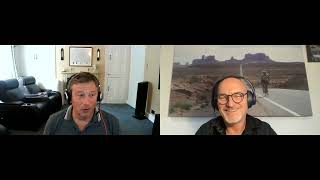
Jim Rees talks with Dr. Joe Maddox about emotional intelligence, where it comes from, and how to use it. They cover psychological theories, personal stories, and why emotional awareness matters at work and in life.
Welcome to the EI Guru podcast, a podcast completely focused on emotional intelligence. Typically, the first question I get is what is emotional intelligence? In very simple terms, it's how we manage our emotions in our interactions with ourselves and others. Or put another way, it's being in the right state and, and not being in a state when under pressure. Emotional intelligence is another label for mindset, and we all know that when navigating those important conversations, we need to tap into our best. I'll be interviewing leaders and experts in this ever expanding field and sharing the data on why emotional intelligence is the difference that makes the difference in all of our relationships. Remember to share and subscribe to the EI Guru podcast, and if you have any questions, you can post them once you've subscribed. So, good morning and welcome to the EI Guru podcast. This is the first episode of many, and today I'm delighted to be joined by Dr. Joe Maddox, who I've known for just over 20 years now. And we'll be talking all things around emotional intelligence. And one of the first questions we typically get asked is what is emotional intelligence? And my nutshell sort of take on emotional intelligence is it's a new label that's been around for some time now, but basically it's your mindset and how do you handle yourself under pressure and in relationships with your personal relationships and also your professional relationships. So I'm, as I say, I'm really delighted to, to have Joe on board in the, in a number of series, actually. This is the first episode, of course, and Joe's going to be doing a deep dive into emotional intelligence, the framework that he came up with some 25 years ago, maybe even more than 25 years ago. But I'm going to be asking Joe to introduce himself. So, Joe, I, I'm, I'm really fascinated. I mean, I've known you for a long time now, but I'm not sure we've ever really deep dived into your background. So maybe it'd be good just to hear, you know, a bit about you, what got you into psychology and then, you know, maybe then from there onwards, if you can, if you don't mind.
Yeah, well, thanks for inviting me to be part of your, well, your first podcaster for this series. And as you say, Jim, we've known each other for 20 years and our history goes back originally from the psychology side and then that picture behind you, the other guy got me into endurance events and cycling across America. Anyway, we'll talk about that another time. And then eventually doing Lands and geometries, all sorts of things. But we have a lot of shared interests and I think they do overlap when you're talking about endurance, resilience, emotional intelligence. So that's what, what we're going to be talking about this morning? Yeah, I mean I, my background tends how far you want to go back. My first interest, say in psychology comes from school days actually. I just started reading books and you know, I just really did wonder what I was going to do for the rest of my life, my career. And I got the big thick a handbook and I still got them because I didn't want to get a job. So I thought I'll make sure I get to university and have another three years to avoid bought all that. And I went through it. Everyone at my school seems to do business. This was back in the 80s I suppose people did business studies and it as it was then, I just wasn't my thing particularly. And I looked this psychology was available. Now you have to get three A's and be super clever but in those days you could kind of squeeze in if you're interested in it, you get somewhere. Anyway, that's what got my interest and it stayed with me for, you know, you know, 54 now, so 30 odd years. And then I went to university, London Goldsmith, sent to Cardiff, did my masters in Occupational psychology and when I was there I met a guy called John Cooper. Many people know John, a real charismatic guy. We're the same age and we got a job together at a careers guidance company and literally the rest is history. A year later we set up a company called jca, John Cooper Associates and we, we started applying psychology as, you know, very young to be setting up our own business, but we spent 25 years working together. I always say we outlasted our own wives. So it was a long relationship with its ups and downs, but mostly and invariably really good. And we're still best, best friends and we, you know, work and talk together a lot even though we're, we're, you know, doing our own thing a bit. Anyway, I just, just mentioned that because it's, that's a lot of that are the origins of the emotional intelligence stuff. It wasn't called emotional intelligence back then, back in the 90s really when we started, 1993 so on, you know, 30 years ago. And in fact if you mentioned emotions in the workplace, it was sort of frowned upon. I thought, well, you know, we don't do that. You know, can you, can you talk about cognition or something? Competencies?
It was more about performance Wasn't it? It was really focused on what's the bottom line, what are your figures.
Yeah, yeah. And it's. I suppose it still is, but what creates that people are now, you know, 20 years. It wasn't that much, you know, 20 years ago, people started realizing actually emotions do make a difference. But John and I, you know, we ended up going to America and working with a guy called Will Shuts.
Yes.
He developed Firo theory, which is about interpersonal relations. And he was one of the guys who set up a self esteem movement back in the, back in the 60s in California. Wow. This, what this, this person's doing is just where we're at. And we want to be doing that in the uk. But it was a different, different mindset. I mean, it's caught up now. Now we're still talking mental health. Well being is well recognized, but not back then in the workplace. So, yeah, we did workshops, encounter groups, all sorts of weird and wonderful things with Will Shut. So we came back and, you know, John, being the persuasive person he was, he managed to get the franchise to, to run Human Element Workshops, which is part of the Firo. You might have heard of Fire.
Yeah, no, I, I was like, I was lucky enough, Joe, to come along and do the Human Element program with you. Yeah. And I found that fascinating. And you know, it was where I got deeper involved in working with you guys. But also it really convinced me that emotional intelligence was it for me. And. Yeah, so sorry, I interrupted you there.
No, I just really, I mean, you've experienced that and I think you have to, you do have to experience this stuff to, to appreciate it. And that's one of my bedbugs about, about emotional intelligence. The way it's practiced. I think we learn about it, but we don't experience it. And shoots was very much about experiential. So he was essentially saying that feelings drive behavior and until you get into the feelings bit, you're not really understanding where the behavior is coming from. And that's what this. As you know, you know, Jim, that the Human Element workshop was all about. That really getting beneath the surface, which became a whole theme for me and John in the work that we do. I mean, Schutz was 50 years ahead of his time. He developed a lot of this stuff in, in 1958, you know, during the Korean War, he's working with submarine crews and you know, anyway, you can read about that another time. But it really inspired me. And he was one of the persons who did that.
His book, the Human Element is. It's a great book to read as well for our listeners that are really interested in reading. It's a really good background read for where some of your thinking was shaped in the early days.
Absolutely, absolutely. And he talked about Layers of an Onion. And you'll know the framework which we're going to talk about, it starts with, you know, a self concept. He described it as, we call it attitude, the self, you know, how do you see yourself? And then that feeds onto, that influences how we feel and think and then that drives much of our behavior. And during the Human Element program you go through those different layers and then we started accommodating that to the business world with AI. And you really unpeel those layers in, in many of the workshops and in the instrument that we're going to talk about the, what became the Emotional Intelligence Profile.
Yeah. So tell me, tell me a little bit more about. So I, I, we've got the history, the listeners have got your history about what got you into psychology and you know, you went off and did your degree, etc, then you started a business with John, John Cooper. What I'm interested in is how that then evolved, you know, so then what happened next because you, you, you know, you, you developed your own framework and model.
Yeah, so I mean, that was just one of the influences. So yeah, we set up the business and we had this strap line and this is really what we believed in. And we were quite different, I suppose when we, when we developed jca, it was about getting the best out of people in a sustainable way. And that the difference there was very much, I mean, most companies did assessment mainly and not so much in psychology, not much that much development, but we were about sustainable change and we used a lot of tools like Myers, Briggs, 16 PF and I, you know, still use them. I think they're brilliant personality tools. But there's a bit of a, after you've been, you know, so what factor, how do I manage this? What do I do about it? I'm, you know, an ENFP or I've got this extroversion trait. Can I change it? Do I want to change it? How do I. And that's what got us into. Well, actually you can manage your personality. And this later became our model of emotional intelligence. So how do you manage your personality and how do you make it sustainable? And again, it took us back to the human element work of getting beneath the surface because I think you could change people's behavior given the right techniques and skills, but doesn't make them necessarily Stay that way. And a good example of that was we used to work a lot in the career sector with young people and we put them up, we do a load of skills training and you know, sure enough, the youngsters would improve for a while, but then they go back to their old habits very quickly, particularly when they're back in the classroom with their mates and then they kind of forget about it.
And what age group are you talking about there?
Oh, 16. School leaver age. Yeah. Teenage years particularly, although we applied it later to really young, younger kids, Bubblers we call them, before they. What they call derailed.
Yeah.
This is a foundation really, to later the work we did with adults and actually, you know, people are the people. If you can get them earlier, you can make a big difference. So we were, we. So this was in the days that there's quite a bit more funding for career support in the education sector. And we developed something. Well, you know, along with John, we developed something called maps. And the key to this was making, stopping, turning behavior change into habitual change.
Yeah.
And we did this by going a little bit beneath the surface and focusing on their attitudes. And we focused on five areas that we identified as blockers to them getting on apprenticeships or staying in employment and things like that. And there's five reasons we identified why people dropped out, which is never really the big problem. Motivation, ambition, adaptability, perseverance and self esteem. So we call it maps.
Yep.
And we dealt a sort of indicator that worked really well because actually it took a bit longer to work with the individuals, but it made a more sustainable change. We actually got results where individuals stayed on their apprenticeships, they completed them, they stayed in employment, they overcame the setbacks and the adversity, they were more motivated and it was really great. So that was a sort of, you know, a big eye opener for us. And what we did at JCA was actually if we want to make change that sticks to. Then you have to start looking at not just behavior and skills and competencies, you have to get beneath the surface.
Yeah.
And MAPS was, you know, the foundation to that, which later really was the foundation to the EIP and the Emotional Intelligence model.
Yeah. Wow. How exciting to be involved in young kids, you know, where you can make a significant difference. You know, as you say, the earlier that you get them, the better. It really sort of rings true to a lot of our stuff that we as adults struggle with and grapple with. Tends to be, you know, related back to our childhood, our early childhood. And that's not about blaming the Parents as such. It's just about understanding what shaped us into who we are today.
Yeah.
And you know, that's why I find this absolutely fascinating and why I'm so passionate about emotional intelligence being the difference that makes the difference, not just in the corporate world, in our personal relationships as well.
I'd just add, Jim, I mean the concept of emotional intelligence really comes from the education sector, you know, emotional literacy, as it was called in those days, and helping young people identify their emotions, label them accurately and so forth. Um, but it seems to, you know, it seems to have gone now to the, you know, we're talking about leadership really to the top 1% of the population and how can we make a small difference. And I, you know, I do a lot of work in that sector with you, Jim, but the bigger differences I find are people who really have struggled with emotional intelligence and, and the younger generation as well. People are still working out how to manage their behavior, how to manage their emotions.
Yeah.
And we had, you know, just one example of that is working with, you know, individuals who are from the STEM sector, the science, technology, maths, and they tend to be a far more linear thinkers. Some might be on the aspergic spectrum, but we've worked with these deep scientists and we've had tremendous success in shifting their emotional intelligence because once they buy into the concept, the neuroscience and the hard numbers behind it, then they'll embrace it. We, we found. And they're the individuals who make life transforming changes in their behavior and relationships, not just in work, but their, their lives more generally. As did the young people once they embrace some of these ideas and realize they could get on better with their mates or chat to girls or boys better or whatever it is they want to do or not get told off by the teachers and find life just a bit easier. I mean, you know, this better night. You got many children. My son's 20, but I've been through this the last few years and just such a cruc to help people, youngsters understand why they feel and behave as they do.
Yeah, it's, it's the pressure on the latest generation. You know, your son's a great example of, you know, the latest generation of goodness me, they we didn't have to deal with all this social media stuff and you know, it was the school dance and you know, I, I love the fact that actually had I known all this stuff then, I think I was pretty okay with being able to talk to others, especially girls as I was growing up. But it would be such a cool thing to have had some of this stuff at school. And of course, schools are starting to very slowly, slowly, slowly getting there.
Yeah.
With introducing stuff around emotional intelligence. You know, I've done a very small amount of free talks to school teachers, but I'm not seeing it, you know, really grab yet in the, in the, in the school, in the educational sector. But you know that there's room for him. Well, of course there's room for improvement there.
Yeah, yeah, I think there's just, you know, like, we all understand the lack of funding and resource and time, but yeah, when we worked, I know we need to talk more about the business world and stuff, but this is the origins of emotional intelligence. And if you can, if you can apply it literally. We took the same model and we applied it to adults and top leaders and chief executives and the whole gamut. And we found that people are people. We all have the fundamental same needs. And in fact, a lot of the, the chinks, the derailers, the team roles that people adopt are historically related to how they play. They were in the playground or how they were with their parents and other things. I'm not suggesting we do psychoanalysis or go back to people's, but if people understand why they get triggered, what's going on for them, then they'd be far better able to start recognizing it in their adult lives and choose, make a choice. Is this something I want to continue doing or could things be different for me?
Yeah, and I think that's the, that's the interesting thing here with emotional intelligence is there is choice. It's about awareness. The first step is awareness and awareness of the patterns of behavior that we're running. And, you know, I, I'll put my hand up straight away and say, there's a lot of occasions where I, I'm operating out of awareness. In fact, you know, I remember a long time ago, a spiritual teacher was talking about most of us on the planet, asleep, walking through our lives. You know, we're not aware of the fingerprint that we're leading in every interaction. So it's about those situations and being aware of. Okay, so what are, what are, what are the patterns of behavior that I'm running? And we don't ever get that until we have feedback from others. You know, if you brush up against someone that thinks that, you're quite abrupt, and if they're, if they're good enough, they'll give you feedback and say, yeah, I'm not particularly sure I liked how you said that or how you handled that. And then you can become aware but without the awareness you continue to bang into things and to people.
Yeah, yeah. And it's an interesting cycle and one I think we miss often. I think with emotional intelligence we get, I mean most of what we do is habitual automatic behaviors. We don't concentrate on every emotion we have and every action we behave because it's too much effort.
Yeah.
And that's why we have, that's simply why we have attitudes and habits because the brain can't deal with everything that goes on all the time. So we, everything, most of what we do is going to be attitudinal driven behavior, habitual. So if you're not, if you ignore that stuff then, then you're going to be ignoring most of what you do. So how do you address that? How do you shift it? And it is through as you say Jim, recognizing, noticing, being aware but then making the change and then creating new automatic responses ways of behaving. And I think EI does really well on the, on the activity bit but doesn't actually focus. How do you then transfer that into habits?
Yes.
And that's, and when we come to our framework that this model, this is where I think it differentiates because it's got, I call it dual processing. You can do the conscious route or the automatic route and ideally you want to eventually turn things back to the automated. But then of course after time you might find you're making mistakes or these habits aren't working or you're playing out old, old defensive responses and you need to revisit say oh yeah, somebody told us I was a bit abrupt or is a bit something else that don't feel comfortable with. I need to go back and check in with myself.
Yes.
Do some coaching, whatever might help you.
Yeah.
Look again at those responses.
100. 100. I mean I, as I said I don't get it right all the time myself. So I'm not, I'm not, I'm not a perfect, I'm not the finished article by any stretch. And you can ask my two ex wives and they'll tell you for sure that that's the case and my kids will all also vouch for that.
By the way, I've read your book, Jim.
Yeah, exactly.
Very carefully. Which, but you know, that's what you've done more than most people I know is self exploration and insight understanding of what's going on. And you know, it is, it doesn't mean it solves everything but it's, it's better, it's more, it's helpful. You know, you can make, as you say, you can choose then what you want to do rather than ignorantly just, you know, putting up with stuff or being very defensive and assuming everyone else is wrong.
I mean it's, it's funny. I mean, you know me pretty well, but other, other friends that are close to me as well. And I joke about it myself actually about Mr. Magoo. And of course most of the listeners will be of the age where they'll remember the cartoon character Mr. Magoo who was operating out of awareness most of his time. I mean he had those bottle rim glasses that, and he was typically his, the, the cartoon that I remember. He, you know, he's, he's driving along in his old, you know, car, you know, chugging along in traffic but actually he's free of traffic. He's leading the traffic. There's disaster behind him. So there's chaos behind him that he has actually created and he's not aware of the, the, the chaos that he's created and he's happily driving away. And that's what happens with all of us. We're happily driving away, you know, walking through life thinking that we're okay. But actually, you know, there's a, there's chaos, carnage in the background that we've created and we've caused.
So Mister, Mr. Magoo. Yeah, I've forgotten about that one. I remember it'd be normally on a building site walking along a plank of wood that goes up on a crane and then you think, oh, he's going to fall to his death and he walks to another piece of wood.
Exactly.
He always seems to get away with it.
Yeah. Out of awareness. Out of awareness. And sometimes actually being out of awareness is bliss. It is blissful. And he was blissful. He was in a happy state. He was never upset about stuff.
Yeah. I suppose the point is, you know, choicefulness and you may say actually I don't really want to be, I know, going to a dentist or I don't really want to be that aware of what's going on. Some people do. It's just knowing I'm making my choices. I don't really want to think about this right now. It's too painful or.
Yeah, no, whenever I go to a dentist I, I actually predetermined that I'm probably going to at least get an injection and prepare myself for the injection and actually the injection is never as bad as I actually think it in my head.
Yeah.
You know, before I go there, that's this great big six foot dagger that's going to go into my mouth and come up the side of my head. It's never that bad. But you know, the thinking that I do before it, I sort of wind myself into a state of frenzy. A bit like when I go for a swim in the sea, I'm always thinking or I'm always listening to the Jaws music and I'm terrified of sharks. Even in the uk, you know, it's. And I'm thinking, oh, that was that little sort of wave. Was that a shark spin? You know, and, and that, that's, that's.
Even so when you're doing your triathlon, it must be a nightmare before you get out the water and do your bike side, is it?
Well, I suppose the only saving grace for me is that I don't typically train in a lot of sea water, so I'm not out swimming by myself. So that's, that's good for me when I'm in a race. I think I'd be really unlucky actually out of 2,000 people that are starting in Ironman to be bitten by a shark, if there is one.
It's worth pointing out, Jim, you have background in Australia, so you're more. This is true stuff.
Yes, yes, it's real.
It's real.
And you know, the shark alarm did go off quite a bit when we were at the beach, you know, so.
Just the thought how, you know, in terms of emotional intelligence, our brain is, you know, we might talk about this in another, another podcast about how brain operates, but it's, it's an, it's there to anticipate risk essentially and keep us safe and alive. So its primary objective is to scan the environment, potential dangers and it can be over sensitized.
And yeah, mine was.
But that's what, that's what happens when we get into the emotional hijack or you know, going for a difficult meeting or worrying about talking to somebod. It's. The emotions are often, you call them, expectations are there to tell us, oh, watch out, this is going to happen.
Yeah.
So if we over sensitize or we don't manage them effectively, let the emotions just take over, then they actually interfere with our capacity to perform effectively.
Yeah.
And that's, you know, what you don't want is when you're in a race to, you know, like you did loads of Iron man, so you don't want to be burning away your adrenaline in the first 10 minutes because you're terrified of the shark attack. That's probably not going to happen. Yeah, it is. And it's managing your emotional state so you can, you know, be, perform at your best for the goal that you want to achieve.
Yeah, and actually that, that's sort of what I talk about when I'm talking about explaining emotional intelligence. It's, it is about, it's a new label that, and when I say new, it's been around for 25, 30 years now that, you know, Goldman, not quite sure how far back he goes, but he came out with his book Emotional Intelligence. And I know we're going to talk about your book at some point during this particular episode, Emotional Intelligence at Work. But yeah, it's about mindset, you know, what sort of mindset and athletes of, you know, exceptional athletes, you know, the Olympians, the world class athletes, they, there is a mindset that they can tap into when they need it most. So under pressure, how do they perform under pressure, when they really need it, when they're looking to try and win gold medal after years and years of training, can they manage their state so that their best can show up? Because that is the difference that makes the difference. You know, they've all done the weights in the gym and the repetitions that they might have to do in the pool, but it's their ability to access, their ability, their mindset or their emotional intelligence, which is the bit that makes the difference. And, and as you've already spoken, it's the same in the corporate world, it's the same in our personal relationships. Can we access our best, our best version of ourselves under pressure, under stress? Or do we, as you said earlier, you know, do we knee jerk to a, you know, like a, what I call a hissy fit, you know, you know, we go into a meltdown, see red and go, you know, and, and bleed out a load of which aren't appropriate, which we don't really necessarily mean, but it's our defense mechanism.
Yeah, I mean, you've worked with elite athletes and, you know, gold medalists and I know, but I think they're, you know, a good example of individuals who focus on a particular objective and they've managed everything about themselves, their body, their mind, their training, their nutrition, everything for four years to get to that point, probably a lot longer. And that's phenomenal. When you look at some of the aspects we talk about later in what is a goal, directness, personal power. They've, they've orientated everything to achieve their goal and their, their mindset, another word for attitude, I'd say, yeah, managing is, is phenomenally strong. Having said that, very Often they get to that point, they've done that and their mindset has been on one single objective and yet they've not thought about other things that, you know, we live for a long time.
Yes.
And other things in our lives we might want to do as well.
Yeah.
And suddenly it's a bit of a wake up call. So it's a continuous cycle of. Okay, got there, let's go back. Revisit awareness. Awareness time before putting it into action.
Yeah.
So there's a cycle, the cycle part to this. And there isn't a sort of tick the box completed, I'm all done.
No, no, no, definitely not. It's not. I continue to get the lessons. They can, they come along. You know, when you just think you got it sorted, something comes along and you surprise yourself with how you have showed up in a certain situation. Yeah, but Joe, we could just talk endlessly about stuff. What I, what I'd really like to understand is how you came about the, the model. We keep on talking about a model, but before we get into the model, give me your version of what is, you know, so I've given you a sort of a little snapshot of what I think emot. Emotional intelligence is. But give me your expert view, your view and opinion on what emotional intelligence is. Describe that for us.
Yeah, I mean, I generally start by using the term emotional intelligence and saying it literally is the intelligent use of your emotions. So it's, you know, the two words are there for a reason.
Yeah.
Intelligent, thinking, emotion, feeling. Thinking about your feelings.
Okay.
So yeah, I'm not really. Some people just don't ever do that.
No, they don't.
Until they come so strong that they can't avoid them. What's going on for me, I can't control it. You know, you look at young, youngsters who lose emotional control, it's often these things just happen to you. I don't know what's going on. But even, you know, adults, of course, you know, the examples is the red mist. You know, it gets extreme. But a large part of emotional intelligence is noticing feelings sooner. If I can just pick up, I feel a little bit anxious about this. So this present, this conversation, I might notice a little bit nervousness. Oh, actually all I need to do is just chat with Jim and he'll relax me or have a few deep breaths and I'll calm down. I've done things before, practice them. They're good habits. I can replay them. Yeah, but if I didn't notice that and I let it build up, maybe I'LL you know, not feel that it would interfere with my thinking and my. Have a talk, whatever. So in a lot, a large part of it is noticing your feeling, thinking about your feelings, and then to guide your behavior. But of course, it's not just about yourself. You know, a lot of EI is about relationships. But if I can manage my own feelings and it's easier to manage my relationships as well, so I can converse better with. With you when I'm feeling relaxed and when I'm feeling tense and worried or thinking about my own stuff and not concentrating on you.
Yeah.
And you'll know that as a coach, you know, the worst thing to do is get preoccupied with, what am I going to. What am I going to do? Rather than who's the person in front of me.
Yeah.
So I think it's. Yeah, it's that. That's a very practical definition. There's a lot more to it. But thinking about your feelings to guide your behavior and thinking about other people's feelings to notice theirs and manage your relationships effectively.
Yeah. Yeah. Nice. It's interesting that you say that. You know, I. I always think about the heebie jeebies. You know, if you're uncomfortable, you get the heebie jeebies or the yips or, you know, you're just nervous. So before an important presentation or a race that you might be doing, you know, it's that and managing those effectively.
Yeah. Yeah. If I give you another way of describing it, you talked about, you know, Mr. Magoo driving along and all that kind of stuff just reminded me of my car metaphor for emotional intelligence, which is, you know, when you. Well, before you even get. My. My son learned to drive a couple of years ago, and I was teaching her. You know, I dared to be the teacher because it was during COVID There was no, you know, teachers around. So that's.
That's really. That's brave. That's pretty brave.
I learned more about my emotional intelligence. I just had to calm down. I was completely wrong. Everything I did. And.
Was it in your own car or was it.
Yeah, it's in my own car. We just went to a quiet road. This is the very first time. And, you know, William, he just wanted to get on and do it. Okay, I'll let you make your mistakes. But by the way, he passed. So he did great eventually. But the first thing I said, like, you know, being a boring old dad, I said, actually, before we get in the car, let's have a look around it. And, you know, just check the tires are right. Windscreens, clear the, you know, the oil and all the, all the things you have to maintain.
Oh, my God, I would have been so frustrated. Exactly.
Yeah. Well, the reason I say is at least as a metaphor for emotional intelligence. It starts by looking after. So if you're. Your body is the car and you've got to maintain it, look after it. And if you don't, it'll go for a while, but then it'll start to fall to pieces and you'll eventually have a big catastrophic collapse and you'll have to call in the AA or. And. And, you know, somebody will help you get help, but it'll take time to recover and rebuild a car, you know, but if you maintain it, it'll last longer and it'll do what it wants. So that's the first thing. It's the bottom of this model is, well, being maintenance, paying attention to yourself, your. Your vehicle, in this case. And then, of course, William learned to drive his car. And, you know, it was clunky, he made lots of mistakes, stalling and so forth, but he got better. And the great thing about AI is it is with practice, we can improve it. Yeah, it's not the same as personality, which is pretty fixed. I'm an introvert. I'm always going to be. I don't actually want to change that, but I want to manage it. I want to be able to do extrovert things and vice versa. So you can learn to improve your skills. You listen to the engine, like, you pay attention to your body, you notice what's going on in the car, you learn. And everything becomes automated, doesn't it? After time, you become so skilled, you don't even think about it. The same with AI with practice, a lot of it will be habitual.
Yeah, no, I like that.
Yeah. And that's. And that's. So I think that's about managing what you've got, your potential, resources. And, you know, one other part to that is when you, you know. So William became a, you know, pretty good driver, and he got so confident, you know, zooming around corners. And eventually he had his accident. As you do a bit of whiplash and bump, bumping around about. I said, well, it's judgment. Okay. There's another element to this. You're a brilliant driver, you're very skillful, but your judgment's not there. You've not yet had that experience. And that comes through wisdom. And it comes to also noticing your surroundings and anticipating things. So on the roads, you know, you don't know what's going to sort of somebody will come, come into you and you know, other bad drivers and it's not necessarily your fault. But if you preempt and expect things might not work out or work out what could be around a corner. So this is your awareness of others. So it's not just about your skills. It's about noting your environment, your surroundings, having anticipations. Remember, the brain is a pattern matching organ. It's there to anticipate and predict what's going to happen next. And it's the same thing in driving. A good driver will be somebody who, you know, anticipates and knows their, you know, the road traffic and you know, is ready for most things. But of course there will be things you can't prepare for and there will be setbacks and then you have to just take stock, slow down and deal with it.
Yeah, I love that, I love that analogy. That's a beautiful metaphor analogy, especially the awareness of others piece. You know, that's, that's pretty cool. Might, might nick that from you a little bit, Joe, that I, I typically welcome to it. Yeah, I know I typically, when I'm talking about emotional intelligence and the framework which will, I know we're going to get into, but when I typically talk about that, I talk about the, the fundamental foundation piece, which is the, the attitudinal piece that you've spoken about. I talk about that as, as though you're building a house or a building. So the foundation is the concrete. So they dig a big hole and fill it with concrete. Now if that, that foundation has to be level, so making sure that that foundation is solid and level and then you can build on top of that. So from there you can build. And I look at them when I look at the model, that's the way I think about it and share it with leaders that I've worked with. And as you know, I've been lucky over the last 20 years to have worked with hundreds of senior leaders around.