Connected FP&A: Partnering Across the Business for Real Impact
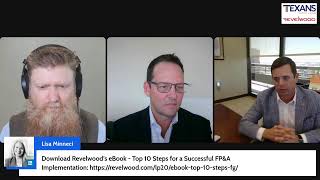
Paul Barnhurst talks with Ben Hart from Texans Credit Union and Dino Dodona from Revelwood about breaking down FP&A silos. They cover red flags like outdated tools and communication breakdowns, then share how trust-building and unified data create real business impact. Start with people and relationships before technology.
Questions this video answers
About $2.4 billion in assets and 140,000 members.
About five years.
Joined Revelwood at the end of October; has been there about one year (relative to the session).
About three decades (~30 years).
Adaptive Insights (Workday).
All right, for anyone who's out there, we'll get started here in a minute or two. Top of the. Yes, 30 after. Not top of the hour. I almost said top of the hour, but 30 after. So if you're out there on LinkedIn or YouTube and you can hear us, if you already joined, just please let us know in the comments where you're coming from. We'll get started here in just a minute. Alrighty. Well, they said before we'll get started. 30 after. So we just got another 30 seconds or so here before we get started. We have a guest here on the stage with me. If you're out there and you can hear us, let us know where you're coming from. I know we have a few people out there, so please just go ahead and comment. Let us know where you're coming from. Your name, we'd love to know. As we get ready to get started here in just a minute. I have here with me today. We'll introduce him in a minute. We have Ben and Dino with us, and we're really excited. So, like I said, we'll get started in a minute. We are starting to see the comments come in. We got Mike from New Jersey first to comment. Welcome, Mike. I think we got. Ben's in Texas and Dino, remind me where you're at again.
I am in Pennsylvania.
Pennsylvania. And I'm in Utah. We have Nam from Tel Aviv. And we got someone. We got sue from Minnesota. We got a diverse group so far. Give it about another 15 seconds before we get started here. All right, we got a. We got another Pennsylvania, Janelle, Portland. They're starting to come in, so people all over the place. Salt Lake City. Thank you, Ronnie. My hometown. All right, well, why don't we go ahead and get started? We only have 30 minutes, so we don't want to waste anyone's time. Please keep letting us know where you're coming from. Ask questions. So my name is Paul Barnhurst, the FPA guy, and this session is connected. FPA Partnering across the Business for Real Impact. How do you break down those silos and build stronger partnerships? This session is sponsored by Revelwood. You'll see a banner running across the bottom that tells you a little bit about Revelwood and how they can help you with your business processes. So please check those out. We also have with us, Texans Credit Union. We have Ben Hart, who's the CFO there. So, Ben, if you could take a minute and introduce yourself to the audience.
Yeah, Paul, thanks for having me today. Yeah. Ben Hart, chief Financial officer here at Texans Credit Union. We're about 2.4 billion dollar financial institution with140,000 members. I'm from the credit union land, so we like to say members instead of customers.
I've been here for about five years.
Prior to that, filled another credit union for about five years and before that I cut my teeth with the regulator. So I kind of grew up as an examiner and kind of some supervisory roles for the National Credit Union Administration. So glad to be here today. Look forward to the conversation.
Great, thanks. Ben and Dino, why don't you take a minute and introduce yourself?
Yeah.
Awesome. Yeah, I'm Dino Dodona. I'm the VP of Financial Transformation here at Revelwood. You know, I've been here at Revelwood for just about a year, coming at the end of October. Revelwood's been in business for about three decades working closely with the office of the cfo, you know, for both ERP planning and financial close solutions. I personally started my career in finance working for Thermo Fisher as a financial analyst. I transitioned over to the technology side when I was asked to lead a system implementation of an accounting system and from there I kind of never went back. I worked the rest of my career and both working for software publishers and leading financial transformation projects for small and medium sized businesses. Before coming to Rebelwood, I led a digital advisory practice at Markham Technology, now cbiz. And obviously excited to be here today and discuss FPA with with Ben and Paul. Welcome.
Thrilled to have you. Dino, we won't hold it against you that you left finance. We won't.
Yeah, that's right.
All right, so let's go ahead and jump into things. Before I do that, we have a lot more people have introduced themselves. Keep it coming. Let us know where you're coming from. We got Zimbabwe, India, Fort Wayne, Indiana. Jody just spent three hours training in my training today and she's listening to me again. So I must have done something right. I guess. We got Pittsburgh. All right. So great. We love the diversity. This is one of my favorite things, is getting people all over the world. It's always fun to see where you're coming from. So let's jump into things. Where I want to start is what are some of the warning signs that your FP and a team may be stuck in a silo? I think we've all felt like that. Where we feel like, hey, are we operating in a silo? Is anyone paying attention to me? Am I actually connecting with the business? So I know, Dino, you've worked with a lot of different clients. You've seen a lot of transformation projects, cells. You've even been in fpa. So what are some of the signs you see that tell you, hey, these guys got a silo problem? Like, something just isn't quite right here?
Yeah, that's a great question, Paul. I think from my experience, I think some of the red flags I see is, you know, some teams have limited collaboration. Like the FBA teams are kind of stuck in, I think, isolation. You know, they're producing reports and things on their own without, you know, the departments in mind, without working with sales and operations, you know, leads to kind of like miss, you know, misguided or misled forecasts and budgets and stuff like that. I also, Secondly, I see, you know, like, a reliance on outdated tools. Right. So a lot of folks are working in Excel. They're sending those sheets and out across the business, they're trying to aggregate that data manually, which obviously creates a lot of problems and version control and those types of things. And then thirdly, I'd probably add, like, lack of shared goals. Right. So if you're not working closely with the business and you're not focused solely on financial metrics that are. You're working together on and you're prioritizing those KPIs, I think you get conflicting priorities throughout the business. And I would say, lastly, you know, finally, obviously most important is the communication breakdowns, which are really common, you know, among FPA teams and other parts of the business as they kind of, you know, go in their own directions. And if they're working in a silo, you know, you have, you know, trust the roads, you know, the teams become disconnected with the. The, you know, the strategic vision of the business, I believe.
Thank you. I appreciate some of those red flags. And I think, you know, definitely one you mentioned is, hey, do you have shared goals? I think we've all seen challenges sometimes where that doesn't align our priorities. Ben, I'm curious. As a leader, you've been a CFO now for a few years and, you know, been in leadership roles. What helps you determine, you know, obviously you oversee FP and a. What helps you say, hey, we got a silo problem. Like, this isn't working for me, so to speak.
Yeah, I think there's a lot of times there's some red flags for me is if there are a lot of surprises throughout the day or throughout the weeks or throughout the quarters when you're starting to plan for maybe the upcoming budget cycle, if you're Going to a lot of meetings and say executives feel surprised that there's initiative happening. Or maybe I'm surprised I hadn't heard, you know, that we had this capital need for the upcoming calendar year. So for me it's just kind of, I mean, there's going to be surprises here and there. Right. I don't think any organization communicates perfectly, but if you're seeing those pile up day to day where you're constantly being kind of caught off guard, I think it's a good time to look in the mirror and go, hey, maybe, maybe I'm leading a siloed department and is not really, you know, really incorporated into the rest of the organization very well. We have an epic culture that won't get into the pillars of our culture framework here. But one of them is rejecting silos. Not just for finance and planning, it's for the entire organization. We try to reject silos whenever we can see it. So I think having that top of mind from all of our employees really helps us kind of steer away from a siloed culture beyond finance.
I really like that because right. Getting, breaking down silos, whether it's finance or other areas in the business, typically needs to come from the top. If they're not communicating and they haven't set a tone of hey, we all cross communicate, we're not building our individual kingdoms, it makes it that much harder to break down those silos at a lower level. So I really appreciate the kind of that mentality from the top. I think that's important. Obviously there's things you can do if you don't have it, but it's much easier if you do. And so speaking of that, what do you do if you don't have it? Ben, let's say you're not feel like you're getting the support at the top, but you feel like you're really struggling in finance because there are silos. Any, any advice you'd offer there?
Well, fortunately here at Texans I don't have that challenge. I feel like we have a pretty unsiloed organization. But if you are running into silos, unfortunately, I do think you just have to set time aside to really start having meetings with the important stakeholders in the budgeting process and really have. It's time consuming but really trying to gather the needs of each department. What are the capital needs for the upcoming. What type of OPEX creep you expect? What kind of headcount are you expecting and really start asking a lot of questions from all your peers. I think that the best way to break down silos is, is to stop looking inward, inward and look outward and start asking questions amongst all of your peers. And I think that starts establishing trust and eventually we'll break, break down those silos.
Agreed. Any, any thoughts or advice you'd offer there, Dino?
Yeah, I mean I think we, we're going to get to like the, you know, what creates a great finance business and what, you know, between the partnership between the business and finance. And you know, I think some of those things are like around, you know, financial transparency. Right. So team finance teams that openly share their assumptions and how they got to their numbers and these shows with departments, it helps, you know, foster that mutual kind of understanding. Right. Then also I'd say like invest in integrated technology. Right. So another way to break down a silo is everything integrating together. Right. So if you're using an FPA platform that kind of brings it all together, puts the financial data and operational data in one place where you're able to see it all in one spot, one system, one source of the truth, I think is a great way as well. And obviously using those tools to collaborate cross functionally across the different groups within your company as well. Right. So I think lastly I would say cultivate, I would say a culture of accountability as well. Right. Where every department has ownership over their financial outcomes and they have some kind of KPIs and metrics. I think those things are also important to kind of bring everybody together within an organization.
No, I agree that accountability is great. Having systems that speak to each other and allow you to easily integrate things versus how many of us have ever been in a meeting where I don't recognize that number or how did you calculate that number? I always say once that happens you might as well cancel the meeting, figure out what the number is and then hold the meeting again after you've aligned because you're not getting anything done for the rest of that meeting. Where I want to go next is obviously one of the keys in breaking down silos and building connected planning is the whole idea of trust building stronger, trust based partnerships. I still remember I was a 20 year old kid, was a missionary for a church and I remember one of the leaders told us, she goes, it is better to be trusted than to be loved. And the idea was your parents are always going to love you. We all have those co workers we'd love to go get a beer with or go have them on the softball team. But you don't want that person on your project who can relate to that one. Right. We've all had that person where, hey, they're a ton of fun, but I don't trust them. We have to have the trust of the business that's critical to be successful. And so I want to talk a few minutes about that. As we're talking about that, if any of you have questions, you know, let us know. We're still getting people telling us where we come from. We got Pakistan, we got Kenya, so that's great. So let's get into building those partnerships. Ben, if I asked you for one piece of advice to increase trust between finance and the business, what would you tell people? What's that? If you could give 1, 2 at the most pieces of advice, what would you say?
Bring your business leaders, your business department leaders along in the process. If you have the mentality that financial planning happens in one office or a few offices and then it just gets deployed out for everyone to tolerate, if you will, I think you've missed the boat. You have to give each business leader the platform to voice their concerns or in a lot of instances, just voice their allegiance or support to the goals in the financial planning process. So if you don't have that framework in place here, Texans, our controller and I meet with every department head this time of year, in fact, had a few of those meetings today where we actually talk about the upcoming budget. We're kind of letting them know some of the key assumptions that we're using in the budget to get their buy in. I want their perspective as well. It has to be a two way street. You know, having a platform to where it allows you to have a two way communication when you're building the budget, I think is key. They have to be bought in to the goals and into the budget. And if they don't have the platform to voice their concerns or support of the budget, then you're never going to have an organization moving in a similar fashion.
Yeah, I've definitely seen that in businesses where finance has set a budget and people in the business, I don't even know what it is, they're just doing whatever they want. And then you're trying to explain variances when they don't even know why there's variances. And nobody wins in those situations. So I mean, some great advice there. Dino, kind of your thoughts? I mean, obviously you've seen some clients that have great partnerships between finance and business. What are the qualities you see there when you go in? It's like, all right, it's clear these guys are working well together.
Yeah, I mean, I love exactly What Ben was saying, like he. I'll put the buzzwords on top. Exactly what Ben was saying, right? Which is, you know, is that centralized finance versus decentralized. Right. So I go in and see a lot of folks that are centralized, they're confined. The finance team is working within themselves. They're creating the targets, they're doing all this stuff. And then when it comes time to hold the business responsible for those targets that we're not collaborated upon, it becomes a demoralizing part for most people. Right. So the companies that I see that are most successful are exactly what Ben said, which is decentralized. They're working with the business leaders, they're getting an agreement, they're getting adoption on the plan as they're working through it. Everybody knows that maybe finance may make that first iteration, but they're taking it to business, business taking a look at it, they're coming to agreement. I agreement, adoption, accountability, all those types of things are really very important to a successful finance business.
Agree. We've had a couple great comments and I Want to share one thought I like what LinkedIn user, I'm not sure who it is, doesn't show their name here, but it says, you know, famous quote. We've all heard nobody cares how much you know until they know how much you care. And that's true in personal life and it's true in business. Another one, you know, recognize the groups, have mutually exclusive goals, then go about getting the groups to meet in the middle. You definitely have times where that's the case case where I'm incentivized on this, but that impacts somebody else negatively. And you, you have to figure out how you align that. And when you have those goals, you need to figure out how you align them so they're all moving in the same direction and, you know, work with everybody so we can all be successful together. Lisa shares. And Lisa mentioned from Revelwood. So there's a great. Oh, wrong one. You know that there's Reed, Texans, FP and a success story. So on the website you can see it's kind of some of Ben's story. Before we move on to the next section, I want to share one more thought here. An idea I love and I was able to teach this with Christian Waddig, fabulous FPA person, does a lot out there in the community and he talks about the emotional bank account and we've all heard about it. If anyone's ever overdrawn their bank account. Not fun. I did that a couple years ago where I accidentally moved money the wrong way. And so I moved like $4,000. It's supposed to go to one account to the other when I only had like $2,000 in it. Like, ah, man. In finance, I think it's easy to overdraw the emotional bank account. And let me explain what I mean. Reorgs, restructuring budgets, forecasts, those are negatives. They're gonna, they're gonna be withdrawals. Doesn't matter how well you run the process. If you ask your business if they love reorgs, restructuring, layoffs, budgets, forecasts, just about everybody's going to say no. So you need to make sure you're building it up throughout the year. You know, variance commentary where it's really negative and you got to tell a bad story. You know that's going to hurt you. And so the more you put those deposits in, the more you're going to be able to shelter those difficult times that have nothing to do with anything you did wrong. They have to do with the nature of the role. And sometimes we have to be the bearer of bad news, and that can hurt a relationship. So I'm always a big fan of making sure you're putting those deposits in all the way along. So when those negatives come, they know they can trust you. They know you have, they have, you have their best interest, that you're there to support the business. And you're doing this because you believe it's what needs to be done, or in some cases, it's what you have to do, because that's the nature of the role. And so that's what I'll say there. And we're going to move on to talking a little bit about connected fpa. But before I do that, any other thoughts on this part, Ben or Dino, anything you'd add here?
I completely agree with you, Paul. I think if you have trusting relationships throughout your organization, if finance has negative news they need to share with the group, they're gonna, they're gonna know your. That you have their best interest at heart. And so you're right, it, it takes time and it takes mult deposits in that credibility bank, if you will. That way you can spend it when, when you have to. So, yeah, completely agree with you. You got to have trusting relationships throughout the organization, right?
Yeah, because we're.
Exactly.
So you can spend it when you have to. We all have to spend. We need, we need money for when we need money, so to speak. All right, so we've talked a little bit about silos. We've talked about the importance of trust. And the reason we need to break down silos, the reason we need trust if we want to have connected FP and A, doesn't matter what tools we have, doesn't matter if we have a great culture. And I think I'd argue if you had a great culture, you have trust, but if you haven't broken down silos, you don't have trust. You really can't have connected FP and A. I think those are two of the bedrocks of this. So let's jump in a little bit to connected FP and A. Dino, I'm curious, you know, being kind of on the software and the implementation side, when you hear that word connected fpa, I know it's a common word we hear, what do you think of what does that mean to you?
I mean, I'm certainly going to come at it from the technology side, right. But I think really two words that come to my mind are, I would say integration and alignment. Right. So I think those two things where, you know, finance teams can break down those barriers with their departments, use the technology, have a seamless flow of data going back and forth between the two teams, you know, whether, you know, you're integrating the platforms like erp, Financial Close and CRM, throw all the other systems in there, all need to be kind of pulled together into one unified system where we can all go in and we're all kind of working from the same song. She, I think is the most important thing. Right. And again, it's about mindset, right? Like, finance teams need to act as strategic partners, you know, not just number crunchers. Right. You need to be connected, you know, connected approach, you know, with real time insights, decision making, you know, all those things that are needed. Right. I would say lastly, you know, unified data and processes, you know, enabling FMAA to like, drive, you know, measurable impact and outcomes on the business. Right. So we only know what is that impact FBA is making on the company. You know, I think that's easily done through different metrics that we can track. Right?
Yeah. No, thank you, that's great. Dino, we have a question. I think we'll get to it here in a minute. I want to get your thoughts here, Ben, you know, what, what is required? What, you know, how should companies think about connected fpa?
Well, yeah, you have to have a system in place that allows you to connect all the department's needs in the budgeting process. But, and if you have that, like, typically what I like to see are some of the, maybe this, this the way the budget is Referenced. So like very rarely do I hear, oh, it's Ben's budget. They might say that jokingly, but when I hear things like, hey, this is our budget for the year. Hey, this is how we performed compared to budget this month. This how we expect that we're going to perform next month compared to budget, that's when you know you're winning. It means that the budget has buy in from the organization. And when they use those team oriented pronouns, I think that's a good, you know, a while ago we talked about red flags on to identify silos. If you're hearing your team refer to the, to the budget as our budget, as our goals, as our variances, you're, that is a great sign that you're, you're breaking down those silos and you have integrated processes.
100 agree that shared goal. The worst thing you can do in finance, especially if it's a bad month to say you missed your numbers. Yeah, it's, we missed. Right. Everybody plays a role. Just because we're not out selling or picking up the phone doesn't mean we play a role. Did we misforecast something? I've done it. I think everybody has. I've done some pretty brutal ones that were not fun to explain to the business. But if I took it to say, hey, you guys should have caught it, it's your problem that trust is out the window. And I want to ask a question here as we're kind of talking about this, that Varun asked. So Ben, I think I'll throw this your way. He asked, what do you think of the philosophy? It's not a no, but here's what needs to happen for this to work. Right. Often finance is known as the no police. So maybe give you a minute to address that one.
Yeah, I love that, I love that question. It kind of reminds me, I think somebody made a comment earlier about meeting people in the middle and compromising, which is great, right? I mean those are skill sets we all have to have. But I will say sometimes you do have to say no. And sometimes you can't meet in the middle because in order for it to be successful, you have to fund that initiative 100%. So I do think it's a part of our roles in finance to, to say no. And we know it's not in the best interest of the organization. If there is a way to get to yes, absolutely. I think you have to communicate that through trusting relationships through that two way channel of communication that we were talking about earlier. But some, if you have Trust and you're compelled or convicted that something needs to be not approved in the budget. You have to be honest with your teammates and tell them that just simply can't, can't be done this year.
Yeah, I think that's a great point. And then there are situations where you have times the business asks to account for something a certain way that you just legally can't do. Right. There are times the answer is no and there is no wiggle room. You know, I had a situation where someone, you know, they wanted, they asked me what they, what I wanted the number to be for a forecast.
I said, what?
We act. Because they were going to accrue to that number and then hold everything back. They were asking me, what do we need to hit our budget? Because we're just going to assume that's what we're going to earn and then we're going to keep the rest. I'm like, I want it to be what you really think it's going to be. Right. There are times you just have to say, no, that's not the way we operate. But those should be few and far between. And so I, I agree with you, Ben, as much as you can, you want to have that compromise, but unfortunately, there are times that it's no, here's why. Let's discuss how else we can get you to your goal, even though this idea is dead. So one other question for you, Ben. Any advice? I'm sure we have some people out there that are like, I just feel like my company's disconnected. Where should they start? Like, how would you recommend they start thinking about it? Is it you start with technology? Is it people, relationships? Any advice you can offer there?
Yeah, people and relationships first. Right. I think you need to get in a room with, with those stakeholders that have most influence on the finance and planning process, not just in finance, but like throughout the entire organization. And just start having conversations on what they, how they envision the process to be. And then a close seconds. You have to have a system in place right here. Here at Texans, we have the Adaptive Insights workday platform that we use extensively. Revelwood helped us bring that on a few years ago, and I had used it my prior employer as well. You have to have a system in place that actually allows you to break down of those silos that I think the people in relationships can only get you so far. And then you got to have some software to come in and help you integrate everyone in a very efficient manner so that get, get the right people in the room. I Always say, like, if you have, say, five, six, seven, eight smart people in the room and talk things out through trusting dialogue, you're always going to land in the right spot. And if you miss, you're not going to miss by much.
No, I think, I think that's a great point of getting everybody in the room. And if you have shared trust, it makes it much easier to achieve those goals. Dino, before we kind of move to Q and A, any, any thought, final thoughts here on the connected FP and A?
Yeah, I mean, just talking about what Ben was getting into there is, I would say, is like, if you're trying to assess and figure it out, like kind of get the root cause out, you know, is it manual processes? And I'm going to go opposite of technology now, Is it cultural? You know, is it something within the finance team? They're not communicating properly, you know. You know, those are types of things that you can see that are. Could be having disconnections within your. Within your company, within your business. Right. You know, I'd say a key takeaway is, you know, make sure you solve those underlying problems first before you try and layer on technology. If, you know, just same, you know, scenario we talk about data, you know, bad data in is bad data out. Right. So it's the same thing with trying to set up an FPA process across your organization. If you're not communicating, if you're not, you know, if your teams aren't aligned or you've got a lot of manual processes, you got to kind of root those things out first before you layer on some. Some good shiny technology.
Yeah, I've shared this quote. Anyone who's heard me speak before has probably heard it. Hasrt consulting. I think the guy's name was Ben Hasrt. He shared a quote where he said, old processes plus new technology equals expensive broken Pro. You know what was expensive old processes with new technology, just broken. That's all you get. Like, basically, you're just wasting your money if you haven't thought about the people the process. Don't implement new technology with old processes because you're just going to have expensive broken new technology at the end of the day. And that's always stuck with me. When I saw that, I was like, I've seen that too many times. Or you think just throwing the technology at it will fix it. All right, so before we give you guys an opportunity to just kind of wrap up, why don't we see if there's any questions out there? So you have a question, go ahead, send them now, we'll probably do just have these guys share a little bit of thoughts as those questions come in. And then we're going to give Dino just one minute to kind of share a little bit about Revelwood. So why don't we go ahead, Ben, Any, any final thoughts as we let the questions come in that anyone has?
Yeah, there's a comment here that says you need to be a cfo. Go versus a cfo. Cfo. No, I love that from Alex. Completely agree.
Right.
If, if you, if you develop a reputation that it's always no, no, no, and if they're having to go above you as a CFO in order to get a yes, then you don't have a trusting relationship. I think there are times where you do have to say no, but that doesn't mean you, you say no in a way that you're still not going forward with the organization. So I love that, love that quote that Alex just put out there. That's, that's what I need to frame.
Yeah, I know. I thought that was well said. Any final thoughts from you, Dino, before.
We get into my little commercial?
Yes.
Yeah, I mean, I'll say, I'll say, you know, just a little bit about Rebelwood, just to kind of close it out here for. From our end at least. You know, at Rebelwood, you know, one of our core values is passion, right. So we are very passionate about helping organizations transform their fpna. And we live it every day and we love it. We'd like to do it with, you know, obviously with cutting edge, you know, solutions and software and, and all those great things. We can help you from one end to the next. You know, from ERP to financial, close to FP&E tools. We've been doing it for 30 years. We've got very tenured people at our organization helping most organizations. If you have a chance, please Visit us@rebelwood.com and come and see us and reach out anytime. I'm on LinkedIn and we're happy to help talk. It doesn't have to be all about a sale or anything. We're happy to just get into it and have a conversation about how we can help you out. That's all.
And I can remember having several conversations with Revelwood back in 2017 for one of my businesses. The project never moved forward, but I remember you guys are one of the partners we talked about. I think the first time Lisa and I met, she went and looked me up in your CRM. So I'll show you.
I still have it in as an opportunity. It's like my longest standing opportunity. Like 3,000 days. Yeah, probably we're gonna close it one of these days.
All right, I think this is a great question here. So wingsy, and I hope I got that right, asks what are the key drivers of successful connected FPA implementation? Dino, why don't we go there with you? Because I'm sure you've done more than a few implementations.
Oh, yeah. So, I mean, if I come at it from a consultant view, I would say, you know, obviously on time and on budget. Right. I think a big thing about FP and A where people kind of don't realize is it's much different than an ERP system. Right. ERP system, you kind of go off in a vacuum and you got to go do this implementation. Right. We have to do everything all at once and then we can go live. It's a big Cutover, right, where FP&A implementations are more around just getting your data loaded up in the system and immediately you can get time to value because you got your actuals in there where you can start doing, reporting, all that stuff. So I think having a successful connectivity is really starting and showing your leaders of your business that you got a quick time to value. Within weeks, you know, like four to six weeks, we can have your data loaded up. You can be looking at reports and looking at actuals and doing those things. I think that quick time to value shows leaders that you've made the right decision and you're starting to connect the business across different organizations.
All right, we'll take one last question here and then we'll be out of time, so I'll get your thoughts on this one. Ben, before we wrap up, Varun says a follow up. You get the team buy in for software and process, you'll implement the system and process, but then you have trouble getting participation. I know you've done an implementation recently, so yeah, with adaptive, anything you can do in that whole process to prevent that from happening. So any advice there?
Well, I think just communicating. Hey, we're bringing this new software, this new expense on board to help you be a part of the process. And you as a business leader need to be part of the process. This isn't Ben's budget. This isn't the CFO's budget. It's not the CEO's budget. This is our budget. And this system is going to allow you to be a part of the process and you should embrace it and put your fingerprint on finance and planning. As an employee outside of the Finance department.
Thank you. Great advice. And I know this is a short session, just being 30 minutes, but we love the participation from the beginning, letting us know where you're coming from, asking a lot of questions. We've seen a lot of going on in the chat. So thank you so much for joining us. You can reach out to Dino and Ben, you can find them on LinkedIn. You can find me there. And thank you again so much, guys, for joining me.
Thanks for hosting, Paul. See you.
It was good.
Thanks, Paul.
More from Paul







AI Is Accelerating Faster Than Humans Can Keep Up: What Should Finance Pros Do