Heal Hive Success Story: Alumni Ali Kates On Why Lab Testing Was Essential To Her Healing
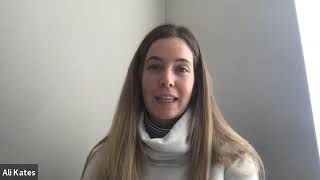
YouTube interview (Heal Hive success story) where Brooke interviews alum Ali Kates about her multi-year illness and how targeted lab testing and the Heal Hive program (including bee venom therapy) were essential to her recovery. Key points: Ali had long-standing hypothyroidism (diagnosed age 13) and retrospective evidence of Lyme; later diagnoses included celiac disease and a large neck cyst. After acute testing before her wedding she was found to have Lyme, Bartonella, and Rocky Mountain spotted fever; heavy conventional treatment (IV antibiotics via a port) worsened her health until she stopped and removed the port. Heal Hive labs then uncovered multiple actionable findings: low AMH/premature ovarian failure markers (fertility risk), high mycoplasma antibodies, low vitamin D and borderline B12, Hashimoto's markers, elevated inflammatory markers, and a high mold burden that matched a brand-new home (reported as among the highest the mold expert had seen). Ali began bee venom therapy (stinging), implemented targeted detox, sleep reset, movement, elimination diet/food journaling and environmental remediation (selling/remediating home), and reports early clinical improvement (less inflammation, ~20 lb reduction in inflammatory weight, improved sleep, and feeling better within weeks of stinging). The interview emphasizes: test rather than guess; use labs to guide targeted interventions (hormones, pathogens, mold, vitamins); and address trauma and lifestyle factors alongside biomedical therapy.
Chapters
Hi, everyone. Welcome to the installment of OGBs. Today we're going to be talking about lab testing with our alumni, Alli Cates. Allie Cates came to us with multiple pathogenic infections. She had basically tried it all. We're talking IV therapies, oral therapies, herbals. The whole shebang only got sicker and sicker. And now she's on the up and up, I like to think, because the heel hive. But she learned a lot of important things in her lab work. And she's here today, brave as all can be, to share with you what she learned, what other doctors did not discover, even though she saw so many over so many years, and what you guys can learn from the heal HIVE labs. Without further ado. Hi, Ali.
Hi. How are you?
I'm good. You want to just kind of give everyone a quick breakdown of your story and your journey?
Yeah, I'd love to. So I'm just going to go. I'll go through it pretty quickly, but. So I was diagnosed with hypothyroidism when I was 13. And looking back on that time period, that was when I actually had an active infection of Lyme disease. And then kind of fast forward, I had all these weird symptoms that would show up. So when I was 18 or 19, I had awful stomach pain and I got diagnosed with celiac disease. I did it colonoscopy and endoscopy, and they came back from Stanford with celiac. And then when I was 21, I had a huge cyst removed from my neck. And they only checked for cancer. They never thought that it was anything else. And mind you, this whole time I was always complaining of severe fatigue and muscle pain and just short term memory loss and weird things that were happening. And none of the doctors, even at Stanford, would look any deeper if there was something else going on. I never got any of the tests that the heel hive does ever done, ever done. And it wasn't until about a year and a half ago my husband and I were getting married. And it was two months before our wedding and I was working at the food bank here locally. I was putting on a huge fundraiser and I started breaking out in these hives. And mind you, I had broke out in hives, like multiple times over the course of, you know, the last 13, 14 years. And doctors always just kind of said, maybe it's a food allergy, not celiac, but like something else. And they would test me for igg and IGM food sensitivities, which I know that you'll get into later. And I remember going to my naturopathic doctor here locally, and I was like, can you retest my food sensitivities? And she tested them, and she's like, oh, yeah, they're the exact same, but I want to test you for a co infection of Lyme disease. And she's like, but you're fine, you're healthy, you're not tired. You don't have, you know, aches and pains. You're fine. And it's because I had normalized the fact that I was feeling all these things for so many years. And so she never dug any deeper. And I also just normalize them. So I never thought to, like, say that I was really tired because I thought that's how everyone was at this point. And she said, I'm going to test you for one CO infection. She's going to test me for Babesia. And I said, how much is it to run the whole test? And she kept on looking at me like, I'm a hypochondriac. She kept on looking at me. And I remember specifically looking her dead in the eye. And I said, if this comes back negative, then we can talk about, like, me being a hypochondriac, but if it comes back positive, then, like, you know, that's what it is. And she's like, you're fine. You work out, you look healthy, you're okay. And the test came back, and she said, I'm so grateful that you advocated for yourself because I would have never guessed that you had Lyme. So I came back with Lyme and Bartonella and Rocky Mountain spotted fever. And then fast forward, my husband and I get married. We come back from a honeymoon, and I go into just crazy treatment. I get a port put in. I'm doing IV antibiotics three to four times a week, eight hours a day. I'm doing everything under the sun besides stem cells. I try literally everything, and I just get sicker and sicker and more pathogens. And Babesia shows up. And it got so bad that, like, at one point, my liver and kidney weren't functioning correctly. But my doctors never said, let's stop the antibiotics. They kept on pushing and they kept on saying that this is good. This means that we're killing really hard. We're attacking the pathogens. And I remember one day I. It was so bad, I couldn't even get out of bed. I was so sick. And I remember going to the emergency room and they tested my port, and I had the beginning of an infection, and they caught it really early. And that was when I remember I was already part of a heal hive at that point. I think I was two weeks in with you guys, but I had already decided to give up all of the IV antibiotics, get my port taken out, and I have never looked back. And I'm so grateful for it because you guys caught so many freaking things that no one caught. No one at Stanford, like, anywhere.
That is crazy. And that story I know so well of just being put on more and more antibiotics and antimalarials, et cetera, antifungals, and you just get sicker and sicker and your body stop. I mean, your organs start shutting down and they're like, nope, that's a good sign.
Yeah.
Never made sense to me. I'm glad. So. So, I mean, but to make that leap to be venom therapy is a pretty big leap from all this conventional medicine. Especially when you are in a place of being so traumatized and so scared and you're feeling like, you know, you're going to the hospital emergency room, you're losing your life.
What?
I'm just curious before we get into labs, like, impetus to go natural to go bees.
Yeah. You know what's funny is that I remember following you on Instagram because a gal that I was in the IV room with, which, you know, she had tried it once before, and she was talking to me about it, and she said, you know, you should follow Brooke. She does be. She did be venom therapy. She's cured herself. And I just kept on, like, following you. Like, I would sit in this IV room, but I would see that you were so healthy. I'm like, how is this possible? And I remember just thinking and even talking to my doctors. I was like, but this lady Brooke has done bee venom therapy. And. And I think that it really works. And they're like, yeah, it'll work for, like, a couple months, and then it won't work. And I remember being so sick after nine and a half months and having doctors tell me, like, you can't work anymore, and me just not even be able to get off of the couch. I was like, this is no way to live. And I DM'd you. And you said ironically, hey, the Heal Hive is going to be digital this year, so you should just sign up and. One day of the Heal Hive Academy. Or one. Yeah. The cost of going through the Hillhive Academy was equivalent to one day at my doctor's office. My parents were, like, over $100,000 in medical at nine and a half months. And I'm like, If one day is going to cure what I have, I will never look back. And I remember just signing up and I just was like, oh, I'll still keep on treating, whatever. And then I just was learning more. I'm like, I'm done. Get this thing out of my chest. Get me healed, broke. And you're like, okay, let's do it.
Well, we'll always be port scar sisters. You know, there's no better feeling than getting that port taken out and being like, I'm done with this. This is not for me. Okay, so let's go back to the lab Testing. What did you learn through the Heal hive labs?
Yeah, I learned so much. I learned that you need to test and not guess. And I had so many doctors kind of guessing at what might be happening or what my inflammation levels might be or that there might be mold in my system, but we were never really checking them, and they were never checking, like, my vitamin levels or B12, vitamin D. And I don't know. I've just learned so many things that you can think that you have something, but until you actually know and see that on paper, you're not really gonna be able to do anything with it.
I mean, we have. What always astounds me is we have these labs at our disposal. Why don't we use them? In terms of we, as in most doctors, I just think it's sad. I'm sure you've encountered before doctors who don't actually know what they mean, so they refuse to actually write a lab slip for them because they don't know how to interpret them. That doesn't mean that you don't need the test and they're not important. So if you don't mind getting into the details, what did you exactly? What was one of the biggest shocks of the Heal have labs?
One of the biggest shocks for me was the hormonal component, like how you guys test all the hormones. And it's funny. It's not funny. It's ironic that I. I always kind of had this gut feeling that something was off with my hormones and finding out that my AMH level was really low and that I had, like, premature ovarian failure, which you can talk about later about how because I'm in such a toxic state, that's why my body's showing up that way. But no doctor looked at that. Like, I remember even going to my ob GYN and having her asking her to test it in April before I did the lab work. And she's like, you're fine. You can 27 years old, you don't need to test your hormones. And it's like, yeah, but you're guessing at that point you're not actually testing what's going on with my body. So that was a huge shock, which was incredible to find out. So I can be proactive with my health. The second thing, doing for your fertility.
Through the heel highs. Because.
Yeah, so I'm doing B bottom therapy and stinging. I'm going to start seeing for fertility points. So. So I think, because that's the only thing that's really going to help me get through this, I did do, I did try to do an egg retrieval and my body was just too sick to actually have that happen. And which we can talk about that more later. But yeah, so I'm doing the venom therapy for it and taking the right supplements. I threw out like 70 supplements that I was taking every day the other day. And it felt so liberating because I, I take, gosh, I don't even know, like six or seven supplements that I need for fertility and my hormones and it's once a day liberating. Like I don't have to keep on taking all the supplements. Yeah.
I mean, I think one of the things we teach so much at the Heal Hive is this overabundance of selling supplements without actually having them be directed or targeted. And then you then learn that there are specific. So many of our Heal Hive members are listening to this and they got really bad news from Heal Hive in the last week or two or month of diminished ovarian reserve, like massive sex hormone binding globulin, being high, low amh. And it can be really upsetting because they're very young. Many of them are under 30, under 35, and no one has ever tested them. And their fertility. And for men and for women, fertility is actually one of the best markers to test for to know how well our body is doing. And especially, as you said, until you went deep into actually killing off pathogens, you didn't even have certain pathogen show up like your Bartonella. And this is what we're always teaching our members in the Heal Hive, is that a lot of these pathogens, they will stay in a dormant state. They will hide. And sometimes the only things you can actually find are certain inflammatory markers, certain autoimmune markers and fertility. If your fertility has plummeted 20 years before it's supposed to, it's telling us that there's something really, really drastically wrong in your body. And we have to address that. And sometimes people just show up as having mycoplasma antibodies or high ebv. And the doctors just discount that, right? They just say, oh, those are just antibodies. A former, past infection. Well, you take healthy people, you test them for these antibodies, they don't show up.
Right.
Because their bodies are not in a production mode, because it doesn't have to be. Meanwhile, people like you are just kind of discounted. And that's another thing we found with your labs is your high mycoplasma. And it's one of those things that we're going to be looking at as you begin getting deeper and deeper into stinging to see how those antibodies go down and diminish. And that's going to be one of our markers. So we look at pathogen markers and how they diminish. We also look at inflammatory markers. So what was the next big, like, oh, holy moly. What did the heal? I find that you were like, what? Wtf?
Yeah. So the next thing was that I had. I had high mold in my system. And Sweetbrooke was like, okay, so now you're gonna have to test your home. And I was like, no, Brooke, we bought this home in 2019. It's a brand new build. There's no way that this. There's no way. And she's like, no, no, no. You have to test. And I was like, okay, fine, I'm going to test. And I tested. And our home has one of the highest levels of mold that this guy that's an expert in his field has come out, and he's like, out of my 30 years of testing homes for mold, this is the highest level I've ever seen, mind you.
One year old. One.
One year old. It's a brand new home, like, one year old. So that was a huge. Another thing to tackle is, like, army.
Level, by the way.
It was 18. It was 18. But then. So that we was at army level. So I did the Swift, for example. Then I had a guy come out, the mold expert. Then we went to a lawyer, and the lawyer had their own experts come out that worked with, like, John Banta, who you know about mold. Like, John Banta is, like, the king of whatever. And he came out and he did more extensive testing, pulled apart, you know, parts of our walls and everything. And he said. He's like, I've been doing this for 30 years. I only look at brand new builds with mold in them. And he said, yours is the highest level I've ever seen.
It's just crazy.
It's insane. So.
And here's Another was elevated as well. So that shows the molds. What about your mold panel was. Did you have any.
Yeah, it was high.
It was high.
Your mold panel and everything that was showing in my mold panel also showed in the home. So it was, like, direct correlation to what was happening. Yeah. So that was a big blow.
So it was a big blow. But what happened after, I mean, it's a horrible blow. And there's going to be some people listening to this that are, like, swallowing right now and going, holy moly. I might have to leave my house. I might have to change my lifestyle. I might have to disrupt my children's lives, my partner's life. I might. You know, this could lead to something really, really disruptive.
Yeah.
How glad are you at this moment? Because what you learned at the Heal Hive, as I said, get out now. And you don't. You know, there's a little bit of negotiation, Ali, if you remember, how severe is it? You know, like, are these hives really created from all of this, you know, inflammation from the mold and the allergen? And what did I say?
Yeah, you were like, you have to get out. You're like, this is such a toxic environment. And, you know, my husband, I had been through a really hard year. Right. We just got married. I just started treating heavily for Lyme, and then we bought this beautiful home, and now we're supposed to move out of it. And I can honestly say that I would give up any material thing to feel how I feel today. And I've only been stinging for less than a month, you guys. Like, it's. The medicine is so powerful, and because I got out of mold and because I addressed all of these markers in my lab work, I feel so set up for success now. Stinging, like, stinging is fun, and it's empowering, and I could go on and on, but, you know, there's no way that I would have been at this point if I didn't do all those really hard things, like sell our home and get out of the mold and live in an apartment that has a really low army score, because, yeah, I wouldn't be here right now.
So you've tested that guest. You've prepped yourself for success. How do you use the B system as well?
Yeah, so movement is super important for me because my, like, motility of my intestines is pretty slow because obviously of everything that's happening, but I think that, like, movement and elimination is so big. Like, especially when you start stinging, you really feel that you need to, like, move the toxins Out. And that's the most beautiful part about this whole thing, is that before I was so taxed with how many things were going in my system during the IVs, that I could never feel what I needed to do. Like, I didn't know what I needed to do. And so now with the venom, I'm like, okay, sting on this day, eliminate on this day. It's very methodical and organized. And, yeah, I love the system and following it, I have my marker right here. Track everything because it changes and you forget how sick you were before.
Yeah. I mean, the journal is so important because, one, it helps you understand your progress. But two, if you don't have your journal and you don't keep it up, you can be accidentally giving yourself things that don't work. And you could be blaming the bees, blaming your environment. It really is just keeping you on track. So one of the things we also learned. One of the things you learned through the Heal Hive was just even though you were already celiac, you were accidentally gluttoning yourself. You were accidentally being giving yourself inflammatory elements that did not serve your body. And you kept up with the food journal. You were able to use the elimination diet to then figure out your food triggers. How did that. How is that different than having an allergen test for food triggers?
Yeah. So so many things. So, I mean, being celiac or even if you're non celiac, gluten sensitivity is so, so major because you're just getting microdoses of inflammation that add up. And I was doing that. I was, you know, eating things that said gluten free. But when you actually look at their manufacturing practices, they weren't. As someone that comes from the supply chain at Amy's Kitchen, like, that was my background before I got really sick. Of course I should know that. Like, I would have to check these labels, but I wasn't, because I'm like, oh, it says gluten free. And then also, the interesting thing about testing or, like, IgG and IgM food sensitivities is I never felt better when I was on those types of elimination protocols. I always felt worse and more inflamed. And the low histamine diet, or low histamine protocol, not diet, because it's a lifestyle that the Heal Hive gives you. I've never felt better. Like, I'm just dropping inflammation, and it's not about, like, losing weight or inflammation. It's about feeling better so I can physically feel that because I'm not carrying around as much inflammation and my pain is less.
I mean, from someone who had massive mast cell issues from mastocytosis. I mean, your hives, your inflammation. Do you feel like you're in an inflamed state anymore?
I feel like I have some inflammation left, which I know that the bees are going to get at, but I feel so much. Yeah, right.
It's a very good, honest answer. I like that.
Yeah. But I feel so much better. Like, I lost, like, 20 pounds of inflammation already.
So that's something that we don't mean to. You know, it's not about your weight at the Heel hive, but as many can see from our members, is just. It's really easy when your. Your body is just, you know, your organs are not functioning properly. You're, you know, you're being inflamed by all of these microdoses, you know, of the wrong, you know, inflammatory oils to microdoses of gluten, to living in high mold. And it's just everything, like, adds up in these little ways. It's almost impossible if you don't compartmentalize them and methodically go through each of them to figure out exactly how to handle it. Because then what happens is, you know, practitioners just throw spaghetti at the wall, and they don't know what is what. And then they're adding supplements, and they're adding this and that, and having you maybe change different things, but it's never methodical. And the heel hive might take a long time. And for you, it's taken a long time.
Right.
You started with us in February and started stinging, you know, around now. And that's, you know, 10 months, 11 months in. Do you regret taking that time to do all the testing to get your inflammation down before you start stinging?
Not at all. Not. Not one bit. I remember feeling like there would be points where my husband would just be like, I just want you to start stinging so you'll feel better, you know, but it's so much more about the stinging part. It's about getting everything under control and dropping inflammation. And that happens without the bees. Like, there's. I would not give it up. No.
Well, I think that's important for everyone here who's, like, anxious, anxious, anxious, and, like, I'm impatient to get better. And it just, you know, it took you a long time to get sick, actually. And it's not that we want to, you know, keep you from getting better faster, but it has to be methodical, otherwise you do not know what's going on. So, Ali. So you found out through Heal Hive about, you know, sadly, infertility issues, which we hope to really, really reverse in the coming years. You found out about living in high mold, and you found out that your body was in a massive inflammatory state. Is there anything else? You talked about vitamin deficiencies. What did you learn through that?
Yeah, my, like, vitamin D was super low. My B12 was on the cusp of pernicious anemia, but I had to really get after it before it. It flipped. Hashimoto's, like, that showed up as well. There were other, like, just high inflammatory markers that I had in my body. Gosh, I'm kind of blanking on a couple of them. But there were just so many. Yeah.
And why do you think that the doctors did not test you for these?
I think that they just didn't know. So when I went through Stanford, I was going through Stanford parallel to when I started the heel hive, because my parents were like, just give it one last shot. Let's see if there's something else that's going on. And they looked for everything. Like we looked for, you know, rheumatoid arthritis, which I had, like, some inflammation or I had some markers for it, but not, like, enough. And they diagnosed me with POTS and, you know, seizures. They. I did all of these testing and they never told me the root of it. So they wanted to put me on all these different medications to combat all these things. They were going to put me on five different types of medications for my heart and all the crazy things. And I was like, can my Lyme people and my Stanford people talk together? Not really. Like, can my Lyme doctor, my Stanford doctor talk together? Not you, but the Lyme doctor and Stanford doctor, because they were just missing each other. Like, the Stanford doctor didn't think that chronic Lyme existed, so he wasn't going to test for it. And so even though I was showing markers of it, and I just think that they just don't know. They don't know that there's not enough research and there's not enough education for the doctor. Yeah, yeah.
You know, I think it's. I think the problem is that, you know, they're only. They're taught to really stay within the confines of what they're taught. And if they're not taught about it in medical school at the moment, and medical schools haven't really, you know, gotten hip to new modern chronic illnesses, that it's just ignored. And they don't go beyond that. And it's not necessarily their fault. It's just, you know, just not being educated enough about chronic tick borne illnesses. And then you find those good doctors that really are aware of it, understand just how, you know, troublesome it is true. So now that you have addressed all the things in, in what Heal Hive labs uncovered, you talked about pots, you talked about these hives, you talked about this kind of chronic condition you were in, can you tell everyone you're kind of, even though you're just in the beginning of stinging Heal Hive has done for you, even prior to stinging from the testing and from the bee system of what it has improved in your life?
Oh my gosh. I could be here for hours. But I think the biggest thing is knowing what's going on with my body. So like just being aware of like my detox protocol and noting that, you know, doing the saunas, doing the coffee enemas, all of those things, the sleep is huge. Like the sleep reset part is huge. And if you know, you, you're here because you have a chronic illness, like your sleep gets so thrown off and that's the most important thing. Like the vitamin D especially because the time change interrupt you. Yes.
As a practitioner here, so proud of you because today we started talking at 6am and there is a point of pride when I have people like you who are like, I sleep until 10am 11am and then I stay up all night and then all of a sudden you and I are talking at like 6am and it's a point of pride because of the fact that our bodies are meant to go to sleep earlier. We're meant to wake up earlier. And as someone who was never was always a night owl, even way before I ever got sick, I never thought I could be a morning person. And you just proved to everyone here who's like, there's no way I can actually have good sleep hygiene, correct my circadian rhythm let them know. And I'm telling them right now, you missy, were up maybe even be prior to 6:00am Just. Yeah, yeah, all morning just getting, getting it done. How does that make you feel every day?
It makes me feel. Yeah, it makes me feel really accomplished. Like I think that or I know that having chronic illness it takes away a lot of those kind of accomplishment moments. Like you, you kind of feel like you're not a part of real life anymore because you're so in it. And to wake up with the world and go to sleep with the world is really powerful. I think that is such a big part of healing is getting back into normal life. And yeah, that's a big one for me.
Well, we cannot wait to Keep watching your development and everything, all your successes, all your wins moving forward so people can find you through the platform. You're on the platform, you're under Ally Cates at the on the Heel High platform. But if they want to follow you on Instagram, how are they going to find you?
Yeah, it's Ali Lynn Kates is my Instagram handle. And I will want to say, I want to say one last thing, is that like, pro tip for people listening is to take advantage of what the Heel High gives you when it comes to trauma and working through your trauma. Because that even as someone that goes to therapy actively, that was a huge thing that kept on coming up. When I started to even feel better with the diet was I was starting to self sabotage. And I just think that the more that you get healthier, the more you need to work through it, especially if you've been sick for so long.
That's a perfect point. I think one of the hardest things to describe to people is actually as you become healthier, there's more proclivity for self sabotage. And it's just something you, you know, you think, well, I'm, you know, I just need to get healthy. I'll like stop self sabotaging then. No, it actually gets even worse. It's a phenomenon.
Yeah. Know that stuff follows you.
Thank you for bringing that up. So everyone check out Ali on the Heal I platform and on Ali Lynn Cates on Instagram. Ali Lynn Cates. It's a pleasure. We cannot wait to keep watching your success and keep on stinging, sista.
Yay. Thank you so much. So grateful for you guys.
We're grateful for you too. Everyone at the hive, it's all about the hive, right? I am so grateful for the bees. I'm so grateful for each and every one of our members. And we only get stronger. We only learn better together. So that's what it's all about. It's the hive. Thanks for sharing with everyone.
Bye, everyone. Bye.
More from The
The Science Of Bee Venom Therapy: Lyme, Mast Cell, Autoimmune + Long Covid With BVT Pioneer, Brooke
What does it feel like to be approved to safely begin Bee Venom Therapy with The Heal Hive?
The Heal Hive Talks Bee Venom Therapy With Lyme Disease Survivor Alex Saidac (@Gypsyonahorse)
Bee Venom Therapy Success Stories: Brooke's Journey Back To Health With The Heal Hive
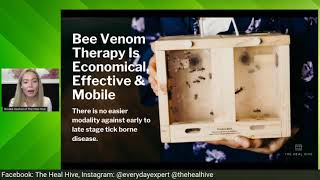
The Heal Hive's Founder Talks Bee Venom Therapy, Lyme disease and BVT Bootcamp
Welcome To The New Heal Hive: Our Founder Walks You Through Our Bee Venom Therapy Bootcamp
Testimonial: Why The Heal Hive's Lab Testing Course Is Essential Before Beginning Bee Venom Therapy
Testimonial: Why The Heal Hive's Lab Testing Course Is Essential Before Beginning Bee Venom Therapy
Testimonial: Why The Heal Hive's Lab Testing Course Is Essential Before Beginning Bee Venom Therapy