The Heal Hive Talks Bee Venom Therapy With Lyme Disease Survivor Alex Saidac (@Gypsyonahorse)
A recorded conversation and live Q&A about bee venom immunotherapy for chronic illness, centered on Alex Saidac’s Lyme disease recovery and Brooke (founder of The Heal Hive) explaining the science, risks, and practical guidance. Brooke summarizes studies (melittin/melittin-containing bee venom effects on Lyme and biofilms), mechanisms (cell lysis, mast cell degranulation), safety concerns (anaphylaxis risk, mold/environmental factors), expected timeline (long-term protocol), and community-based support (Heal Hive testing and programs). The Q&A addresses fertility, pregnancy, mold exposure, animal treatment, POTS, and international testing logistics.
Chapters
Yes.
So I'm so glad you put this together, Alexandra. Thank you for having me.
Yes. I'm so grateful that you're doing this. It means so much to me. It's. I mean, I've been on this healing journey alone, and so it's really amazing that you have created this foundation and a safe container for people to. To go through this whole process that I didn't have. And originally, I was just planning on just explaining about my journey and how it helped me, but there's also a lot of things that I did wrong because I didn't have the right information, and I did everything with trial and error. So I'm super excited to have you here that's a super pro and to inform people how potent this medicine is and what amazing creature the bees are. So. Yeah. Thank you.
Oh, you're so welcome. You know, don't beat yourself up too badly. I only created the Heel Hive because I did everything wrong at first myself. So, you know, I created the Heel Hive to basically take the guesswork out of healing, and it still. Even when you have the strongest foundation, when you are empowering yourself to heal yourself, it is nothing short of a miracle, because it is. Take everything that you have, truly.
Yeah.
I mean, you can't give yourself a hard time. You learn by honestly doing. But that's why I created the Heal Hive is a lot of people do not have the. The means or the patience to. To do the trial and error, and some people are so desperate and so at the deathbed that they really do need a helping hand in every way, and that's what we provide. But it isn't easy, no matter what method you choose.
Yeah. In my case, it took me three failed Lyme tests to get diagnosed, and then I finally found a lab here in Sweden that did the proper Lyme testing, and I was super, super sick, and I went to this really great Chinese doctor here, and he said, you should do bee venom. And I just started, and there were certain things that I wish I would have known because I was throwing up for two weeks straight, and I got all these crazy symptoms, and I was just wondering if you could, first of all, explain for the ones that don't know what bee venom is, because there's some people here that don't know what it's good for and how to use it in a safe way and what needs to be done in order to succeed at healing yourself so they don't have to do the trial and errors that I did.
I'd be happy to summarize that. So bee venom immunotherapy has been around. It's actually an ancient healing modality. It's now being studied the world over for many, many different ways to apply it. There's even an incredible study done by Dr. Eve Sappy at the University of New Haven in Connecticut, who looked at bee venom and its specific peptide called melittin. Bee venom and melittin. Not just bee venom or melittin. I just want to be really specific alongside antibiotics, in vitro research. So basically, they were looking at how it worked. Sorry, in vivo research, how it worked in cells. And what they found is that not only did bee venom along with melittin, whether melatonin was pulled out of bee venom or not, they both outperformed not only one antibiotic for Lyme, but all antibiotics for Lyme. So when they actually put all antibiotics, layered them on top of each other, so basically using multiple antibiotics and. And used both the component melatonin that's in bee venom alongside also just bee venom on its own, both elements outperformed any of the antibiotics they used. And what was even more fascinating, it's not that it just went after the Lyme bacteria, which you can go into the mechanics of, it's that it actually stopped the messengering of the actual bee. Sorry. Of the Lyme bacteria, along with the fact that Lyme bacteria is so wily, it's able to escape our immune system because it creates these basically super biofilm. It's not a bacteria, but it's basically this substrate that lives alongside bacteria, and host bacteria invade immune systems, and it would just basically break through. What it does in the study is breakthrough. These biofilms, allowing the immune system to finally be able to say, oh, here's the enemy. Let's go after it. So how does this melatonin bee venom exactly work? Well, bee venom is a complex mixture of enzymes and peptides, Melittin being one of its biggest ones. So melatonin makes up about 50 to 60% of the bee venom molecule itself. So bee venom and melittin specifically is really incredible because it goes after and causes something called cell lysis. So cell lysis is just a fancy word for basically poking these minuscule little holes in cell membrane. That poking of these holes in cell membrane basically allows the contents of the cell to leak out. That sounds kind of scary, right? Yeah. What's interesting is that bacteria are very, very susceptible to having these more irregular cell walls and are basically more susceptible to melatonin and the components of B venom than a healthy Cell and bacteria cell walls are irregular, so it allows the Melittin and the Beva to actually go after and poke these holes in the actual Lyme bacteria, allow the bacterial cell walls to basically explode from within, leak out like a leaky plastic bag full of gross substance. And that's how it works. But it doesn't even stop there. This is where it's really interesting, because Lyme bacteria have this incredible messenger in crystal. They can actually go and hide your lymph in your brain. There was a really interesting study done by this poor Austrian man who died of Lyme disease. The reason it was so interesting is because when he died, he actually gave his brain to science and he was convinced that he was dying of Lyme disease and he was going to die of Lyme disease, which is why he insisted upon his death that his brain gets excised and that they study it for any Lyme bacteria. Why? Because we have no good test for whether Lyme bacteria is hiding out in your brain. And all of his subsequent for 10 years, Lyme testing all came back negative, even though he had every symptom of Lyme disease. So he kept telling his doctors, I still have Lyme, I still have Lyme, I know I do. Got worse and worse work till he went back to deathbed, died, give his body to science. We really have to thank him. And when they excised his brain, a foundation, so many bacteria plaques of Lyme disease throughout his entire brain. It was the first study to actually show that even when your physical body below your neck doesn't have Lyme disease, or at least not showing up in any type of biometric testing, you can still have very active and actually exponentially large amounts of Lyme bacteria. So, you know, it can hide out in our immune system and through our body and our spinal fluid. It's been found in lymph, it's been found in bone, it has been found, as I said, spinal fluid and brain matter. So it can evade the immune system. It uses these biofilm as well as has its messenger to be able to basically sense when our immune system is ripe to kind of come out of hiding and come out and replicate its bacterial population in our bloodstream or go back into hiding. Which is why people all the time get really frustrated with Lyme testing. It's not just that the testing is sometimes inadequate or that the doctors don't really know how to understand the Lyme testing. The fact is that it goes in and out of its life cycle in your bloodstream. So if you're not testing regularly, you're really very apt to miss many, many moments of Lyme bacteria being active in your bloodstream. One of the reasons we test so regularly at the helohive is that our members actually find many of them who never tested make a positive for Lyme bacteria ever, but have had every symptom of Lyme disease, are convinced their doctors are like, nope, we're giving up on you. You don't have Lyme. It's in your brain. I mean, not in your brain, but, like, you've made it up or, you know, you're a little crazy. Maybe you just see a psychiatrist. Maybe you should go in with your presence. They come to the heel hive, they start stinging, and guess what we see all of a sudden when they start stinging. Positive Lyme test?
No.
Cdc. Positive Lyme test? Yes, of course, because it's now come out of hiding. So this is what we're coming back to. Viva. And where it's so absolutely fascinating is because of the fact that it gets at these bacterial cell walls and causes these cell deaths. That causes Lyme bacteria, because they're living, you know, they're living organisms to go, oh, shit, our populations are going down. We need to come out of hiding and start replicating the bloodstream. And that is why it's so very important to understand the mechanics of Lyme bacteria, our immune system, and be venom, because that is why it takes so long to actually have bee venom really work to 100%. Because in a way, we're just chipping away and chipping away and chipping away at these infections that can stay latent in our system for a really, really long time. So that, I hope, explains a little bit of that. But that is what is so fascinating about Vee. But that's the only thing, you know, bee venom also has this component called mast cell degranulating peptide, which is another peptide in bee venom that is absolutely fascinating because it does what it says it does. It goes after mast cells. Mast cells are these immune system kind of sensory guards. They work with both an allergenic response and our immune response. So whenever we basically have a sneezing attack or coughing fit or hives, that is our NASCAR is responding. But when mast cells go awry, which many times they do in chronic illness, that causes the majority of our symptoms. Well, many people here, I'm sure, who've gone through the gamut of Lyme, you know, protocol, and really found themselves, you know, at wit's end, know that many times you are recommended to take mass Cell stabilizers or antihistamines and they can help you for a while. They stabilize mast cells. What they don't get to do is the root cause of why these mast cells will arise. Well, mast cell degranulated peptide in B venom is so fascinating because it actually goes after these irregular ants and mast cells can basically become irregularly shaped and over gall will basically histamine your bloodstream and kind of become these over filled bulletins ready to pop at any moment, overly sensitized or your body makes too many of them. And so any little thing triggers one, which is why people become overly sensitive in chronic Lyme to environmental triggers and mold and pollen and food allergies, etc. Because these mast cells are basically, I call it, as my numbers know, mast cells gone wild. So this mast cell has gone wild and mast cell degrading peptide actually goes after mast cells and actually pops them open. Well, if you do this too fast, as I'm sure you have have, have experience, what happens is that you basically get an overflooding of these mast cells that have over 200 chemical mediators, many of them super inflammatory, that just create more of an inflammatory response. The more inflamed you are, the more inflammation you have, the less your immune system is going to work, right? The less your immune system work, right, the less the bee venom immunotherapy is really, really going to be able to change the overall trajectory of your health. So you go too far, you start the venom therapy in the wrong situation where mast cells cannot get be controlled because like, let's say you're living in a really, really high mold environment or you're not. You, you really have no idea. And you haven't done comprehensive testing to understand what, what things you're allergic to, what's going on in your gut, etc, you run into the situation with these mouth flows gun wild constantly and then you're trying to get at them with bee venom, but when you're not controlling them at all with your environment, you're just in a situation where, you know, it kind of goes awry. But when you get yourself into the right place and you do bee venom in the right place, all of a sudden you're able to really change the outlook of how your immune system and mast cells respond. And the maculine peptide and bee venom actually helps regulate that response. People can finally get off of that years, decades long anti histamine usage and mast cell stabilizers. For me that's the most exciting part because most of the symptoms of Chronic borne illness are not from the actual Bacter parasite. You know, if it's like babesiosis, which is another co infection, but it's from how your mast cells and how your immune, how your immune system is responding to these bacteria. So if you can change the trajectory of how your immune system responds to the bacteria, that is where bee venom, you know, beyond any protocol is superior. So when people say to me all the time, hey Brooke, when you think of this new protocol or there's new science on this, I go, that's great if it gets after Lyme bacteria, but what is it going to do for mouse cells? Because if it doesn't do anything for mouse cells, your symptoms don't really go away. You can still stay in this kind of stuck place of chronic illness. So that in a nutshell is, you know what bee venom immunotherapy is? Using live bees. And why do we use live bees? We use live bees because there's so many enzymes and peptides within bee venom that are actually very sensitive to oxidization. So if you try and take bee venom out of basically the live bee, you're losing many of the properties that can be beneficial. Do we know all of them? No, we don't have enough research, but we do know that many of these insects and peptides are just very, very sensitive to light to see to oxidization. So trying to use B venom therapy as an injectable through needles, et cetera, is just not as superior as using live feed could be. Ven immunotherapy of using live bees to help the body heal from a variety of issues, both chronic illness, chronic bacterial infections, et cetera, also viral infections. Why viruses do not have a cell wall like bacteria do. They have viral envelopes. And bee venom actually stops how viruses basically messenger and disrupt the viral envelope, doing in a sense a very similar function to how bee venom works against bacteria. So you can apply B venom to long term viral infections, long term bacterial infections. It has some anti parasitical qualities. As I said, it's chemotherapeutic, which basically means it has some chemotherapeutic elements. Those elements are really, really exciting and they're being well studied. Australia just put a few million into studying bee venom against breast cancer because it found that within basically 15 seconds, bee venom obliterated breast cancer cells along with stopped the metast, the messenger of breast cancer. Do I recommend people with breast cancer start feeding themselves with IVs? Not, not without speaking with your doctor and also without probably going through using it as a complementary medicine alongside like whatever you're using with your oncologist. But the potential for B venom in the future being well studied to be applied as both the chemotherapeutic agent along with all the other applications that have been used throughout history, as well as using it now, are really important. And I'll just finish my little monologue by saying that on top of everything, it also has these other peptides that are super, super strong and anti inflammatories, which is why it's been used throughout history, like anti rumor rheumatoid agent. And that people from, you know, from French villages to, you know, old Russians who have said, oh yeah, you know, everyone in my village or growing up, people from even my pediatrician's mother who was a doctor herself used the venom therapy in China. So I see it across the board internationally. I think America is probably one of the last places that, that, that that thinks the venom is a weird disease. Because if you actually look at the venom and how the therapy as a whole, which is the term for the bee products is used internationally, it's not so weird. So, you know, it's, it's, I think, taking away the idea that it's this woo woo holistic movement and understanding that it's actually deeply built on science and data and research. We don't have the huge billion dollar research funds to put into bee venom, but the research that we do have is actually fairly large and robust. And it's damning against any other protocol for Lyme bacteria, especially because of the fact that we know that it outperforms any antibiotics.
It's really interesting because my cousins in Romania, they used to sting themselves with bees where they had like arthritis in the knee or it's like a folk medicine. But it's also, it's so big to think about all the different diseases that it can target. It's not only Lymes. Like, it can actually help with so many different illnesses. And I think about all the people that walk around with autoimmune diseases that they have no clue where it's from and nobody can help them as well. Like bee venom, I feel like could help since you said viral stuff. And it's just, it's like bee venom therapy is so big when you think about it. It's not just, oh, I'm a woo woo person, I'm gonna sting myself with a bee. It's actually something that really, really helps. And I'm just so grateful that you created a program for people that they can follow. So if somebody want to start with bee venom therapy, what's your advice? What would you advise them on?
Well, I would say that get ready for a very long protocol. This is not a silver bullet. You can't just sting yourself for beast for six months and be done. I wish it was the case. It wasn't the case for myself, but it also is not the case when you look at how Bini venom morphed through science. It takes time, especially if these lyme bacterial infections are long. We know for a fact that if you don't catch lyme within the first seven days of being bitten, that it has a tendency to translocate into spinal fluid and the brain. The venom is one of the only elements out there in nature that is really effective for crossing the blood brain barrier, which is why it's effective against neurological Lyme. And we've seen that with our Hale Hyde numbers time and time again. So, you know, the most important thing to understand is, you know, if you approach fee venom therapy as a silver bullet, and it's as easy as born bee, you could get really lucky and it could really work very well that way because there's a certain circumstance of your life, your lifestyle, your environment, that's all working for you. But the vast majority of people don't get this sick, in my opinion, unless there's a lot of factors that are working against them, including autoimmunity that is turned on by bacterial or viral infection. The majority of autoimmune diseases are, you know, environmentally made by both bacterial or viral infection turning on autoimmunity or the environment itself compared to those that are, you know, genetically, hereditarily, you know, created. So I think it's really important to understand that why bee venom therapy is so supportive even in folk medicine is because of the fact that no matter what, even even though it's such a powerful anti inflammatory, it's still getting at these late bacterial viral infection that are many times the initial, you know, launching point for autoimmunity. And you can't really turn off autoimmunity until you turn off your body's response to these infections. That many times they dormant and they come back into basically a active form. And you see this all the time in how chickenpox becomes tingled later in life and the immune system becomes downregulated by age. And so, you know, it's really important to understand that bee venom is, as you said, potent. It's very potent and you have to give it time to be able to work get it these bacterial and viral infections. And so, you know, my first piece of advice is if you want to go down the be the immunotherapy route, expect it to take time. Expect it to take time, but also expect to feel better and better and better as you go along. Where I think many protocols with tick borne illness actually make people feel worse and they actually get worse. I know I did with antibiotics and I know I did with many other Lyme protocols, right? And so people have this initial reaction, oh my God, I'm not going to do BE venom therapy for three years. I couldn't even do six months of oral and IV antibiotics. You know, I could, I could handle three weeks of that. I couldn't do three years of D venom. And I would say to people, but what if it actually helped you feel better? You would be able to do it for three years if it just kept improving your health. And then it's, you know, people go, oh, okay, I see, I see what you're saying. So it is a long, if you're using it and applying it to tick borne diseases, it's in my opinion, quite a long journey. And the reason I say it's quite a long journey is because at the Heal Hive, we comprehensively test our members every three months with over 300 biomarkers. So these, they go into LabCorp, which is a US lab here in America, and they're sometimes pulling 40 plus vials of blood. Why so much? Because we want to be able to have not only the data, but be able to show them that their immune systems are improving, their pathogenic infections are going down. So what do we see through this lab work that people do every three months? We see EBV numbers go down. We see EBV early antigen, which is a biomarker that shows whether EBV acting Barr virus has been reactivated. It takes some time, but it always does. We see people's Mycoplasma pneumonia, which is a central CO infection, hepasmosis, another CO infection, Ehrlichia bartonella. All of these, you know, CO infections and complementary infections basically start to, the antibodies start to go down and go away. But as I said, we also see many times people six months to a year into stinging, especially the closer they get up to the head, start to show positive for Lyme bacteria when they never did before. Or people who showed up positive once five years ago but never show positive again, where the doctors are like, no, you're cured. You know, all of a sudden their biomarkers are lighting up. Like a Christmas tree. So we use this comprehensive testing to not only ascertain whether people are stinging in a really safe environment that is conducive for their health and their immune system, but to also help them gain that better understanding that it is actually working for them and when they can stop using it. Because there's also the aspect of when do you stop? It's kind of highly addictive. I don't sting myself. I haven't stung for years. I will do it once in a while. Like, I got Covid in September, and I went straight back to bees. And my numbers know I was stinging myself, and my husband and I use it. I consider it the people's pharmacy. It's truly an amazing be. Venom, to me, is a truly amazing gift. It's like a gift in my medicine cabinet. It just happens to be my medicine cabinet hive in my backyard. But, you know, it is truly able to be applicable to many different situations. And I think that you just have to gear yourself up for a long fight. But it's a fight that should, if you apply properly, just help you feel better and better and better.
Yeah. I think that's why I kept going, even though I had those crazy reactions, because the first time I stung myself, I had such bad brain fog. I was basically a vegetable. I couldn't speak properly. I would have, like, temporarily paralysis. Paralysis in my legs.
Paralysis, paralysis.
And I had seizures several times a day. And I was preparing to. No, it's. It's okay. But I remember the. The first thing I felt like absolute dog shit. And then I think, like, an hour went by, and I could hold a whole train of thought that I couldn't. Like, I couldn't even remember doing that. I was in a constant fog. And that little window was my glimpse to, like, wait, something happened. Like, I don't know what happened, but something in me was like, there's a.
Light in the tunnel.
That's why I kept going. It's just that I did it in a way where it was not safe. For example, I didn't have an EpiPen. Nobody told me I should have an EpiPen. But then at the same time, yeah, no. There were so many things I did wrong. But I also think that I was so sick that it was at a point where I was like, well, I might be allergic, but okay. The life I'm living right now is so miserable that I don't really care. I was very careless because I was so sick of being that sick. But that little bee gave me a window of a glimpse of that I could get better. And so I get really emotional when I talk about bees because they're the beginning of my, my healing journey. And it's just, it's. Yeah, it's amazing what they do. Did you have a similar experience? You stung yourself?
Well, I had a kind of crazy experience. I first went into a well known epic therapist a year before I embraced bee venom. I've been in a functional medicine clinic that day getting IV therapy and auto chemotherapy, which is where they like take your blood and put it through these plasma machines and go clean it out. I had been through a lot that day. At the end of the day, even though the woman knew that I had basically been on IV antibiotics and had had like my basically this not blood transfusion because they weren't putting any new blood in, but had my blood cleaned out, which was pretty intense. And I was exhausted and dehydrated. She brought me in and applied I think two or three bee stings. And I mean, bless her heart, she really loves the bees and really believed in that therapy. I won't take that away from her. But there was just no sense of, oh gosh, you already did a protocol today that is going to increase your mouth levels. Are you living in mold? Were you eating well today? Are you hydrated? Are you stressed out? And so all these aspects that should be controlled were just completely forgotten. And there's a lot of turkey feathers being waved around my head and a lot of chanting and it was, you know, I was just told, be venom therapy will heal you and save your life. But at that point, I mean, I. Every single person I met was telling me something crazy. I mean, people were holding crystals above me. I mean, I understand that. I understand the desperateness. I was desperate. I basically ripped through my savings, had nowhere to go. I was a single woman on my own. My parents didn't have any money to give me. I didn't have a. I didn't have a choice at that time though. A year prior to really beginning the venom therapy, I still had some savings. So I went into basically a slide on a collapse when I taste flight. I didn't have to go to the hospital, but after the second beef sting, I started really. My curse started closing up. I started having anxiety attack and I got really, really scared, sweating. I had to be put on a table, I had to lie down. They had to apply both conferences. And I remember lying in that table in this like secondary room she put me in, just thinking, oh my God, I cannot believe that, like I'm so sick, I'm willing to sting myself with, like, these bees and have this woman do this, you know, like, all this incense was still pouring in, and I couldn't breathe. And I just remember thinking, like, how. How is this okay? That, like, there's incense and I can't breathe, and I'm going into anaphylaxis, and, like, my throat's closing. It's just all. None of it made sense. And yet I walked out of there. And I was honestly scared. And I was like, I'll never do that again.
Yeah.
And the famous story is that I got thicker and thicker. I had to get a portacap put in, which anyone here who's had years of IV therapy knows. So I still had the scar but for my port. But it's basically this device that gets attached to your heart and allows you to give yourself IVs on your own if you choose to, or also just get easier access to your IVs if you're being given up, which mine had. And I just got a port put in. My parents had flown in to help me with that surgery, and we ran into a nurse that worked at the Lyme clinic. And I was basically hitting my data for cash saying, hey, I need more money to do more Lyme protocols, You know, do more auto chemotherapy and more, you know, candida cleanses and all the shit that I was doing. And my dad was like, well, how much does that cost? And his jaw dropped open when he realized that, you know, he'd have to remortgage his home. And he said, well, it's not working for you. You've been sick for, like, over two years now. You're only getting worse. So we remortgage our home, and then what happens? We don't have a home to even put you in when you need it. But, I mean, I was pissed off. I was just thinking, oh, my God, my dad. You know, my dad's not going to save my life. My dad is just missing me. And it was also scary to hear him have no belief in anything that I'd done, because I basically wasted my life saving and, you know, two years of my life running all of these protocols. So I was very defensive and very upset by him. And this nurse walks in that was at the Lyme clinic. Her name is Jillian, and she's still an apple therapist in New Mexico. And she. My father started talking, and my father said, so my daughter says you were as sick as she was with Lyme disease, and you're Better. And I just always assumed nurse Gillian had gotten better from the Lyme clinic I was at. Like, doesn't that make sense? She had really bad Lyme. She probably died from it. Now she works at this Lyme clinic. It's because of the doctors here, right? I just literally assume that was the last of me making assumptions because it made an ass of me and an ass of you. Right? So, like, I literally stopped making assumptions after that because I had gone this entire year and a half working with this woman five days a week, completely assuming that she just got better from Lyme.
But she didn't tell you crazy things.
I was doing at this Lyme clinic? No, she didn't. Well, because it was her job. She was a nurse at a Lyme clinic that was not doing be bone immunotherapy. So finally my dad says, how did you get better? He, you know, he's a charming man, but also, you know, quite aggressive because when it comes to partying with money, that's the last thing this man wants to do. And she basically was like, well, I didn't get better doing the protocol your daughter's doing. I got better doing something kind of wacky. My dad said, what? And she said, bee ven therapy. And he's like, what's that? And I was like, oh, Dad, I tried that. Oh, that's crazy. That's crazy shit. And she said, you know, I stung myself with live bees. And my dad said, well, how much did that cost you to as well? Once I learned how to do it properly and, you know, prepared myself properly, she's like, you know, I honestly, I got these from a friend who had a hive and basically free. And my dad looks at me and he goes, that's what you're doing, kid. So I always joke that my father's cheapness actually saved my life because I never would have gone back to be venom therapy from that first initial crazy reaction, because I know exactly what you're. You're saying. When you buy Beavan and. And you're not in a safe place to do it, it makes you feel like you're dying. And so I went back to it with her. We were able to convince her to treat me in the evenings after the. After the clinic closed. She got permission, of course. It wasn't like, you know, completely secretive, but, you know, the doctor there said, sure. I don't think he actually thought it was going to work. I think he thought I was still going to be his forever patient. I was clearly putting his kids through college at that point. And, you know, I get it like three days in, I got that first swimmer. Three weeks later, I was out of a wheelchair and walking. Three months later, I knew that I was on the right path, but I stumbled myself. And there were quite a few times that I still got sick. I still ran into problems, and I still honestly wasn't convinced. Even though I saw that glimmer, I wasn't convinced it was the bees because I didn't have anyone ahead of me besides that one nurse that had shown that this actually worked. So I felt very much on my own and isolated when I began. I mean, this is over a decade ago, so this is a long time. I was one of the first pioneers of really putting it out there. And I think probably not on Facebook, but on Instagram. So I was kind of testing out the waters alongside putting it out into social media. And it was scary, the things that I did not know and yet I could tell that it was going to work. I just didn't know how to get to that end point. And so I deeply sympathize with you with that feeling of, wait a second, this is working, but what am I doing wrong? Because it shouldn't be this hard or it should feel that 100%. And, you know, with the people I've worked with that have followed my recommendations, we've seen them go to that hundred percent. And that's what I want for people. I want people to have that freedom to eat what they want, live how they want. I always say to our members, whether you drink or not, like, make it your goal, like drinking a margarita, dancing, you know, at a table in Mexico and like a nightclub at 3am and waking up at 7am and like, you know, going kitesurfing. Because if you were able to do that before, you can do that again. You should not live this life of. I almost am there, but no, I can't eat this and I can't do this. I can't live like this. And I have to manage this. And I have to go to bed on time through that. I mean, life is so hard right now. We need to have as much health freedom.
Yeah.
In terms of. And the way I say health freedom, like freedom just to like live our lives without being burdened by sickness.
Yeah. And it's also the things that come with sickness. I just thought about you speaking about your father and like that you're so when you have any sickness really doesn't have to be lives. But it's really hard to navigate the people around you like, people you love, seeing them seeing you, and they don't relate to you anymore, it's so isolating, and it can make you heartbroken at times. And so I'm just so happy that you had that nurse that already did the journey so you could, like, cling on to her a little bit and then keep going, because it's so hard. It's really, really hard to be sick. And it's, I think, the hardest part for me because I'm a very. You're very strong, too. But I wasn't like, we're strong women. It was seeing Re Read the Dawn, Rent a Dawn. But it was like seeing my friends and family get uncomfortable with seeing me being a complete vegetable and not speaking to me the same way. And that on top of not knowing if you're ever gonna get better, it's, like, such a hard place to be. And so when I found you guys, I, like, I was so happy because I was like, oh, my God, there's a community. And it was, like, way too late. I mean, I still want to do the protocol because I still have some things that I want to get in check because I know I have gaps in what I've done. But I was like, there's others. There's other people out there, like, and they talk to each other and they like. Like, I was so excited to just see that because I literally. And especially here in Sweden, like, the doctors are so behind and with testing and every, like, doctors here, I mean, I feel like that's for a while. But here in Sweden, it's very much okay. Yeah. If you break your arm, it's great. Like, you always need to go to the doctors. But when it's stuff that you can't really pinpoint what it is, like, you don't get help. You don't. They don't go to the root cause. And it is just.
I think that's everywhere.
Yeah. It's so frustrating.
I mean, we all have to be our best advocate.
Yeah. But then when you're sick, that's really hard because it's almost like you have to be healthy to advocate for yourself because your brain is not there when you're sick, and that's really hard.
One of the reasons that I think comprehensive testing is so vital here at the Heal Clive, is that when people have lab results that are irrefutable.
Yeah.
And that they can bring to their doctor and show their doctor. No, you missed this autoimmune disease. That line turned off. Or you missed this nutritional deficiency, or you Missed my actual line. It is so empowering for people. And we really, really emphasize, like, the first few months is just teaching our members how to empower themselves and advocate for themselves. Because it's absolutely vital. You know, it is. I mean, and is a gift that also keeps giving and is absolutely vital. If I may digress for one second, I was getting my hair done this week with my hairdresser, who I've been with for, you know, a decade. And she was just came off of maternity leave, and she had it. She just had a daughter three months ago, and she telling me how her daughter has this rare autoimmune condition, and they were in and out of the hospital at the Children's Hospital Los Angeles, which is literally one of the best national children's hospitals in the nation. And the doctors couldn't figure out what's wrong with her daughter. And I said, well, you know, did you figure it out now? Like, is she okay? And she said, yeah. She's like, but, you know, I. I had to be the one to advocate. I had to be the one to do the research. And she's like. And they dismissed me until I found that one doctor who listed. And she said to me, she's like, you know, I want you to know, Brooke, that because of your story, I knew that if I didn't take my daughter's health into my own hands and did the research, that you were not going to get anywhere. And to me, that was everything. Yeah, because just hearing one person's story about how they advocated, how they were able to diagnose themselves, how they got help, you have no idea how that translates, you know, in terms of the domino effect for anyone. And I mean, this has nothing to do with lying. This is, you know, something different. And her daughter's going to be okay eventually. But just to hear that, hey, the doctors were telling me I was crazy. They were telling me, no, you don't. You're not a doctor. You can't diagnose your own daughter. That's not it. She put right on for an entire month. They didn't listen to her. And it's just one example of just knowing that there's always really, really amazing doctors out there, but having the tools in your toolbox to advocate for yourself and not let people gaslight you, especially when you're sick. Because we're talking, you know, this is a mother who's healthy advocating, and I totally get that. Like, she's able to do that, but she's also being gaslit, being social, crazy, just because you're unhealthy does not mean that you're not, you know, you get worse treatment than someone who is healthy. It's just finding the right doctor and I think empowering yourself, but it is hard. And I think the more that you and I, other people, have these conversations and educate other people about how to get tested and how to advocate for themselves, it's only going to get better. And I really, truly believe, like, I have met so many amazing doctors, I have a huge social network also that really follow me. Doctors that follow me that believe in bee venom therapy, they don't do it themselves. They may be pediatricians or gastros or whatever. But I can tell you, after doing this for a decade, being an advocate, I've also found that so many amazing doctors that absolutely say, you know what? There's something to that bee venom. I totally believe in what you're doing. Keep on doing it, keep on getting that bio. They are out there. You just have to find them. Oh, yeah, totally. It really does give me a sense that it's not all bad. It's just you have to advocate for yourself in the right way.
Yeah, yeah. No, but that makes me happy. You have you found a couple of good ones?
Well, it's mini, actually many. And I think there's kind of a formula to it, but I think most of the formula is just feeling like you are empowered to really hire and fire your own doctors, which the one thing we do have in America, which healthcare is a mess, but the one thing we do have is more or less ability to hire and fire our doctors. I know in some other countries it's not as easy. So when I advocate for that, we have to always take that into the context of whatever, you know, country you're living in.
Yeah. I wanted to ask, to give some people hope in here. What. What's your favorite success story of someone who's gone to you?
Someone who's gone. Well, I have to say Laura McLeod works for us because of the fact that she came to me sick as a. I mean, when I say sick of the dog, she literally came out of hospital and the next day she was at the first retreat. The only retreat I've ever done, but the first retreat. And I actually, I did. I did retreat. Sorry. The first retreat I did. And I remember looking at her and she was so frail and so sick and, like, was falling asleep on the couch. And I remember saying to my husband after the end of the weekend that I hosted her, but I don't think that Girl is going to get better. And fast forward, she's been at the Heel Hive working for me for the last four years. We were able to parcel together all the things that the doctors got wrong in her treatment did not diagnose her properly for. And she has been therapy. She's now engaged. I think she's skiing this weekend. She has her life back. But not only that, I just have to give her a shout out is that she is amazing at creating online communities. That is her forte. So I really feel that there was the universe shining down upon me when I started the Heel Hive, because first of all, I always say everything we do at the Heel Hive is. I may be the face, but it's the hive. You know, we data on, like anecdotal data of mine is not going to change and it's not going to create a movement. When you see hundreds of people get better, then you go, oh, okay, let's take this seriously. And that creates the movement and it just grows and grows and grows. So everything we do at the Heal Hive is such community based and really based off of wanting to create a loving community. But I had absolutely no idea how to do that. That is Laura's forte, and she's really helped build the Heel Hive into, I would say, the most loving, supportive community for people who are completely lost and forgotten the system. And I'm just so grateful for that. And it's really cool to know that, you know, the protocols that I taught her not only brought her back her life back, but she was then able to apply her healthy self to also help others create their healthy self. So it's that, you know, that feeling that, you know, when you really find a protocol that works and it truly does work, you're able to then create exponential goodness and health, you know, and you just had no idea in the least expected places. As I said, I did not. Out of all the people that showed up for retreat, I really dismissed that Laura was going to be, you know, one the success story, but also still working with me side by side, six years later. And so I'm deeply grateful. And, you know, I think it's really important that when anyone, you know, runs a company that everyone understands. It's, you know, I have my. I have, you know, my expertise, but I couldn't do without her. So I'm deeply grateful.
It's, it's, it's important to find people that are good at different things than you sometimes. Like, I know what I'm good at, and I know what I'm bad at. And I really like when people are good at things that I'm not good at, and that's what makes a good team. So it's amazing.
I would say better. I like to think it's a sign of intelligence, knowing what you're not good at. And I think that that is what is deeply needed in our society right now, where people are what they are good at and what they are not good at. So, yeah, that's. I think my healer fibers who are here will absolutely say, I don't know an answer to something or I don't know it. I'm like, this is not my forte. Sorry. But when I do know something, they also know I come down on them. And I can absolutely bring my bullwhip. And, yeah, there. There is no trying to negotiate with me about certain things because I know what I know, and when I know it, I know it. I don't know it. I'm more than happy to be like, this is not my forte. You do this better.
Yeah, that's good. You're a good leader. I can tell. I actually was not up to date. I didn't know that you were in the Netflix documentary. And I watched it and I was like, that's a boss lady. She's a boss. Like, you're. You really are. You really are. And it's. It was very impressive. It was very nice to see. And I. We need more strong female leaders in the world.
From your. From your mouth to God's ears. That's all I need to say. I think I'm a big fan of women history, like, you know, throughout the ages. And what's really fascinating is how many civilizations have done so well with being women led. And so if you guys don't know a lot about that. I actually love this podcast called Vulgar History. It goes into basically women's history throughout the ages. And I always. You did for the last time. You know, I would say five on five some years as like my, my, my, my both insight as well as guiding light. Because whenever I feel that things are really hard, I realize that, you know, women are incredibly powerful and they can create really beautiful, incredible movements and civilizations. So if, hey, I have a pretty good, you know, nothing's going to be as bad as many women in the past that had it a lot harder. So it always inspired. And I think someone said, what's the name of the podcast? It's called Vulgar V U L G A R History. Vulgar History. I love it. Vulgar History.
Should we do the Q and A?
Sure.
Let's see, guys. I'm not hijacking.
Did you get to run?
Should wait. How should we do this? Let's see.
So we can go from the top down if you want to. Does that make sense?
Yeah, that makes total sense, Christy.
Okay. Do you want to go?
No, you go.
Christy says my test was negative for Lyme and I went untreated for a year and it was caused problem where his husband was paralyzed from it. Then he finally treated me for a bit, but I still suffer. I'm so sorry to hear that, Christy. Yes, unfortunately, as we talked about before, that Lyme testing is really unreliable. I always suggest to people who cannot afford more sensitive Lyme testing or Armin labs. I'm betting you did. Armen Labs, Alexandra. New in Sweden. Is that the one you did that down the line?
She's a private clinic and she has a special microscope, so I don't really. I can't answer that.
Oh, God. Okay. So, yes, I recommend that people get consistently tested, even monthly. Usually you'll find a time that is active. So I'm so sorry to hear about that. But you're still suffering. We're always here for you if you want to start. Be them. Rachel says thank you for doing this. Will the recording be shared afterwards? If we have family, friends and clients who will benefit from this information, Alexandra.
Yes. Yes, it's being recorded, so it will be uploaded for sure. Just gonna figure out. Figure some stuff out. I'm joking. I know. How I already looked it up. But yes, it will be shared. Any success stories?
Cherie said yeah. Any success stories and information with unexplained infertility using bee venom therapy? I can speak to this because I went through my own fertility journey. There's some info on both bee venom for supporting fertility along with butter sperm. It's scant, unfortunately. There's very few research studies on unexplained infertility to begin with, much less unexplained infertility with bee venom. So we just don't have. It's going to be one of those answers. I'm sure it's not ideal, but we just don't have enough information to be able to say, you know, yes or no. It's a game changer for people. Or it could be helpful. I will say that if the unexplained infertility is happening because of, you know, bacterial or viral infections that are potentially affecting your immune system, that if you haven't done truly comprehensive testing, and I hear this all the time, people are like, no, I've been comprehensively tested. So I would say. How many vials did they take? Five, four? I don't know, two? Like, no, you haven't been comprehensively tested. When it takes you two or three times to the lab and you're giving over 40 vials of blood, that is comprehensive. So I really, really recommend Furry to definitely get comprehensively tested. We can do that at the Heel Hive, which is an awesome new offering for people who are not even wanting to explore bee venom. We can do in our next round of our semester, we're going to allow people just to use RPO head testing to get to the bottom of what's going on for whatever reason. So if you want to explore that more, I also recommend, if you haven't started working with a reproductive endocrinologist to do so and try and see if there' further exploration they can do on their end. And good luck. I've been there and it's devastating. But I always say to people, never give up, never ever give up.
That's so nice. That made me happy. Have they done any studies on how bee venom works and when you have autoimmune diseases in addition to Lyme disease?
So there are a few ganond against the word today, a few scan studies on certain autoimmune diseases like rheumatoid arthritis that have positive research data. Unfortunately, we just do not have that much means in America, especially to put that much money into autoimmune research. Much less autoimmune research would be beneficial. I always like to put the perspective into the fact of research in America. It usually costs about for a true research study that's taken seriously, it usually costs a minimum of usually about 25 million to launch, usually around 250 million to really get off the ground. And by the end of a research study to prove efficacy beyond a doubt, where the medical community takes it seriously. It takes 1 billion. Now from that moment that the medical community appreciates respect and takes it, you know, whatever protocol as effective and properly a protocol, it usually takes about 10 years for that information to be disseminated. Just to put it in perspective. So there's a lot of things going on right now in health that we already know that they're still not being disseminated to doctors and practitioners, you know, that are kind of on the field doing the work with clients and patients on top of the fact that we just do not have that funding for autoimmune disease. The one thing we are doing at the heal of high because we are so unique in that we do such comprehensive testing is that we're able to start to extrapolate many really amazing aspects that can be absolutely applied to just be venomous out. So people who come to the heal hub, they may have unexplained autoimmune issues, they may have environmental factors affecting their health, but we ensure that they fix those before they even begin b ven immunotherapy. Why? Because once they've begun bevan immunotherapy, we want everything they're doing to be as clean as possible. Meaning that we don't want them to be trying to ramp up and sting where they really have an unexplained autoimmune issue that may be affecting them or living in high mold or having a lot of gut issues. So the data that we're getting of our members getting better, their immune systems changing, that we can see in their biometric data from their immune system response, their inflammatory responses to just their Lyme bands, et cetera, are really, really fascinating. So the goal is to create a white paper. We're getting pretty close. We need to have a certain amount of people that have graduated. And you know, I just said it's a three year process to get really more or less to get from point A to point B. And for some of our members, you know, have been complexly ill for 15 years, 20 years, it can even take a little bit longer. So you know, it's taking some time to finish a white paper, but the plan is to finish that and hopefully that at some point in the future can instigate, you know, more funding put into bee venom therapy and its usages, especially with tick borne illness. So that is the major goal of caring with BL5 and always has been, is to have be better therapy, not only take it more seriously, but be able to get the funding that it so well deserves. But in my cases, what I can speak to, my personal anecdote is that when I was diagnosed, I also had fibromyalgia, rheumatoid arthritis, postural orthostatic syndrome, mast cell activation syndrome. What other issues did I have? Reynard syndrome. So all of those autoimmune diseases have been completely in what we call remission, but basically abolished. I've not had another incident of them in years. There's two autoimmune diseases that were turned on from Lyme disease that I got only after being sick for about a year, and that was celiac disease and pernicious. Those two diseases are irreversible. They're really, really well managed. They don't cause me any problems. But, you know, besides having to avoid gluten and some B12 support, but they are irreversible. So there's nothing I could do about that. But all the reversible autoimmune diseases that I did have that were deeply affecting my health, I was able to completely reverse that. Had absolute signs of them. And I do the same heel HIVE testing on myself at least once a year. Just, hey, why not? I can do it. And I wanted to really, really be on top of things. And I've never had those biomarkers come back. So I can safely say, at least personally, that for me, it really reversed the autoimmunity and also stopped that autoimmune train. So when I was sick, I just kept getting one autoimmune disease after another. And what was so amazing about bee venom is that it stopped me getting more and more autoimmune diseases and really reversed that cycle. So, you know, to me, as someone who was very had a high proclivity for multiple autoimmune diseases, that was everything just for my own sense of mind and going, okay, well like now that I've healed, that kind of, you know, exponential disease state has stopped. So yes, we don't have enough research, but you can speak to many heal hive members and they will tell you that many of their autobiographers have been reversed, if not completely gone after a few years.
That's just so incredible. Like, it really makes me happy. Like in my soul it makes me so happy. This next one is Joe. Thank you both for this potential golden key. Two questions you mentioned needing to be in the right environment, mold free, etc. To start treatment. I'm in a difficult situation of having been so sick in the the last three years. I haven't been able to start remediation for mold in my family home. We do what we can do. Limit exposure with air filters, regular deep cleaning, etc. But at least three of the six of us are affected by it. We've been looking to sell and move, but haven't found anything else in the area. Is it really contraindicated to start BVT in a mold environment? Can BVT treat internal mold colonization? Thank you. I'm.
First of all, I'm really sorry. As someone who's been through really bad mold before, I know how deeply horrible it is. Many of our members do here today, but I can see here nodes too. So bee venom has some anti chemical properties, but can it Treat internal mold colonization. Well, you have to understand that when you're affected by mold, it's not just mold that could be possibly mycotoxins in your body, it's also how your immune system and how your immune system, your allergenic response, responds to that and then therefore how your mast cells, those wily cells we're talking about before that, cause all these symptoms to spot. So if you don't get yourself out of mold, you're never going to gain that control over mast cells. But this is another really crucial aspect of bee venom therapy is unfortunately when people are living in high amounts of toxic mold, it also does a number on your immune system. It really down regulates its function. B venom is incredible. It helps you basically upregulate your immune system by also down regulating that kind of over response of autoimmunity through its both anti inflammatory aspects and also that kind of cell messengering that it's really complicated to get into. But at the heel high, we spent hours and hours on it, but you just take my word for it. So what happens when you start to give yourself B venom therapy? Living in high mold is you run into a few problems. One is that you run a really, really high risk of anaphylaxis. And if you become allergic to bees, like truly anaphylactic response to bees, you're looking at having to both not only get into the lowest situation possible in the future that you already were in, but then you have to desensitize yourself with an allergist that can become really expensive over a period of a few years to be then able to use the venom therapy effectively. So if you rush into bee venom therapy going oh, can I just use this? Living in high mold, you actually run the risk of more or less not being able to use it for many, many years to come. So to me that's too much for risk because this is truly a way to help yourself get better. And to me that's too risky to take on if it's going to put your healing back many, many years. Secondly, when your immune system is down regulated by mold, which is we know, we have extensive research on, really causes a lot of problems because B venom, why it upregulates your immune system and helps your immune system. But the blind bacteria as we've talked about are really wild. They're very smart, they love a downregulated immune system. They love the fact that you're living in mold. Why? Because they're able to take advantage of that and invade your immune system further so why bee venom is incredibly helpful. You really do want to be in a situation where you're helping your immune system work in concert with bee venom to the greatest absolute effect. That is where you're going to find that efficacy happens. I will tell you, we see time and time again people start to have their immune system markers change when they're doing these therapy and then I can look at their lab results and literally know before even talking to them or looking at what's going on in their home, you know, through other, you know, like home testing that they're back in mold. Why not looking at these mole markers, any inflammatory markers, looking at just immune system markers. Those immune system markers that were going and normalizing will absolutely fall. Why? Because if you're still sick, you still have these pathogenic infections, you're still really, really sensitive to mold. You're not going to get out of a situation where your immune system is deeply affected by mold. So I do not see bee venom therapy working properly to the extent of 100% for safety and efficacy for those using bee venom in conjunction with living in high foliage. Thirdly, when you use V venom therapy, it's really important to understand what is too much for your body to handle and what is too little. As Alexandra has and suffered through herself, especially when you're deeply compromised, it can be kind of a brain fuck if you don't know what is going on. So living in a high mold environment can create many, many of the symptoms that you may think are Lyme disease or a Lyme flare, but is really just living in high hope. It's going to be really, really hard for you to adjust protocol and treat your body at the space that it's in in terms of being able to handle more bee venom or it needs less bee venom when you're also getting assaulted by high amounts of toxic mold. So for all of those reasons, I really, really highly suggest get out of mold first. I know it's the hardest thing, especially if you're a family. You have multiple family members. I will tell you, our Keel hide members have done crazy things. They have lived out of their car before. They have camped in their backyard. They have moved in with, you know, maybe parents or grandparents or people that they never thought they'd live back with again. But hands up for any of our heel hybrids, I would say that you do it no other way. Once you get out of mold, you really realize that it is. See all the hands up. It is the danger staying in mold is. Is not a good idea. Yeah, I mean, it's literally every hand is up. So why it is expensive, why it feels absolutely horrible to do, while you probably have no energy to do it at this moment. I always suggest to people that, you know, one of the biggest things they can do for their health, even prior to diva in therapy, is getting out of mold. You get out of mold first, you're well on your way to success, you stay in mold. Unfortunately, it's usually the same old story that's repeated over and over.
I actually know Joe and he's really sick right now and he does have Lyme. So, like, what would you suggest for him to do? Because you know, they have kids and stuff. Like, like, is there something else he can do apart from getting out of the mold until he can start to be venom? Like, is that your suggestion to like go somewhere else?
So unfortunately, air filters, they lessen the burden, but they don't the issue. You know, you could have an issue in your home that literally there's billions of mold pouring out and all that is going to affect your children and yourself. I mean, the reason I asked for the hands here is, you know, none of these people have been happy with me. When I told them, when they didn't think you have to get out of mold. Yeah, I mean, you'll see, you'll see their faces. They're like, you know, I become their worst enemy. I'm telling them, yeah, you're going to have to get rid of your beautiful house you just built. Oh, that brand new house. Yeah. It's already covered in mold. Gotta, gotta leave it. A brand new apartment that you know everything. But I will tell you over and over, and it applied to me and applies to them. I mean, I've lived through that, that once you've gotten out of mold, you are only then able to look back and go, oh my God, I can't believe I stayed in it for as long as I did. Because you become so dysfunctional. You get used to that dysfunction, you become more fatigued, more unable to handle. Your Lyme disease also can take better hold because again, your immune system is down, regulated. That there is just this. It is a domino effect in the wrong direction.
Yeah.
That there really is no way of controlling that. Unfortunately, sometimes it takes really, really extreme changes. Honestly. I know it's really, really cold. I'm guessing if you know Joe, he may be. Is he in Sweden or is he in a America?
Do you know where he's. He's here. He lives in my area. But he's, he's A wild mountain man. So I think I'm gonna tell him to get a tent and hang out.
Okay. Okay. Joe? Yeah. I think what you can do is, for you, you live outside, you don't live, you know, like, you know, in your house. You get out first and you're going to see the difference. If you stay out of a home for two to three weeks and fully, you know, don't go into buildings, whatever that may have any mold, you will find that, oh, my God, your brain starts to work again, your body starts to work better. Things are going to change so drastically that it's not even going to be a question. You're going to be moving everyone into 10th summer. There's no doubt. Or building something that is more, you know, conducive for everyone, healing. And I know it sounds really extreme, but, I mean, I. To this day, if I was living in high mold and I couldn't get rid of my house or rent it out or whatever and move into a new one, I can guarantee you I'd be sleeping in the backyard. There's not even a. There's not even a question or I find a good trailer, test it, make sure that I could live in it, but I would never, ever live in a high mold environment again. Just knowing what it does to the body and to my children. Children. Did I just manifest a second?
Yeah, Maybe you're getting another one.
Getting up there in gears a little long in the suit, but you never know. But, yeah, no, I mean, I know it's not, but that's what I would do first. I can guarantee you, and I promise you, you will thank me if you do that. And then you'll be like, oh, okay, I see what you're saying. I already feel better. What's the next step? And the next step would then be getting you comprehensively tested and making sure that you have an EpiPen and you're well educated on what to do and what not to do. That'd be my suggestions. You're doing everything right, what you can do in your environment, you know, cleaning up a vacuuming, using air filters. Unfortunately, when you're in mold, it's just not enough to control those crappy little math valves gone wild. They're basically like American frat boys with too much alcohol, and you can't control them until you basically sober them up and get them out of your home. So, you know, that's how we think about them at the Heal Hive, and I hope that gives you a visual of what you have to do now.
Yes. So great. I'm sure he really appreciates the advice. And this one actually she wrote to me on my Instagram, if the mother gets Lyme disease during pregnancy, can it get passed on from the mother to the child? And she has a bunch of autoimmune stuff going on as well.
So unfortunately, yeah, the cases of gestational Lyme are fairly expensive. We have many of them here at the Heel hive. It's not that necessarily the mother gives Lyme to the child in the womb. It's during childbirth that the Lyme can be passed. And also they found Lyme spiral in breast milk. So it can also be passed potentially in breast milk. There hasn't been extensive enough studies, but the only study we do have is being live active Lyme bacterium in breast milk. Whether that Lyme bacterium is able to handle the acid, infant's stomach, survive it, whatever. But you know, God forbid that the infant is teasing or the infant has a cut in their mouth, that yes, there could absolutely scientifically be transmission there, even just with breastfeeding. But also gestationally it can be passive.
I hate this. I hate Lyme. I hate Lyme so much. That's just so unfair. That's just so unfair.
Well, I the one. So let's look at the positive because.
I know that I have a lot.
Of, a lot of Debbie Downer things to say today. Yeah, let's look at the positive. So let's say you, you are filming funny. The positive is that eggs, your own eggs are always going to be sterile. So you can do IVF full eggs and not have to worry about those eggs having Lyme disease and then do a protocol that ensures that you are not only in remission, you're 100% free, and then do IVF later. So it's not like you always, you're stuck forever in my opinion. But you know, my opinion is also based off of both what I've experienced with bee venom therapy and with how sick I was. We've tested my daughter quite a few times actually, because I'm just always on it. And my fellow hybrid know I'm very much into testing and everything. And so yeah, she's had zero, zero symptoms and there's been no, no even sense of having any immune changes or Lyme disease or tick borne illness. So at least. And I gave birth to her over a very, very bloody and intense 36 hours. So there wasn't going to be any transmission. It was going to happen. So yeah, I can safely say that especially with how my body has been stressed, how many years I've been since I've been regularly stinging. But I'm not only in remission, I'm 100%.
That's amazing.
So there is hope.
Yeah. Are there any available protocols for using BVT as a household cure for everything from COVID to cancer? Or is it a standard 10 stings twice a week, irrespective? I need my glasses.
I think using the word cure can be a heavy handed term for people, especially in the holistic sphere. I think we need to look at it as, as I said, it's like the people's pharmacy having this medicine cabinet which is a beehive in your backyard. It gives me great peace of mind to know that when bee venom therapy has been applied to both, like looking at, even anti aging, one of the things I should go into the study really quickly. So telomeres are basically our DNA trick. So as we age, from the day we're born, basically our DNA is constantly replicating itself to basically create new cells. Whether it's your cells on your lips, the cells on your hands, cells in your brain, whatever, heart cells, whatever, they're always constantly replicating each time they replicate. It's basically a copy of your DNA. Each copy of this DNA, basically like as if you're using a copier machine at a copy printing place, is going to become a left clear version of the version before. So when we have these telomeres, they're basically the end fragments at the end of our DNA. And these fragments basically shorten with time. And it's this, they shorten with this basically copying of your DNA. And so you can look at aging in the body with looking at telomere. It's really the only true way of understanding people's physiological age. So I could be 46, but I may have the age of a 26 year old because my physiological age of my telomere length is much higher and longer than someone you know, my age or even older than me. It just depends on there's a genetic component, there's an environmental component. But this is where it gets really interesting. When they've done studies on telomere length with beekeepers, especially beekeepers who use both bee venom propolis, which is a bee, is resin from the bees, which you can use medicinally, both antibacterial, antiviral as well as bee pollen and honey. What they found is that beekeepers who just gets on with bees have far greater telomere lengths than regular people. But when beekeepers also imbibe all of the bee products, they have 2.5 times longer telomere length than the average population. What does that tell us? That tells us that bee venom and consistent uses of bee venom actually is a great anti aging tool. We don't have anything close to that scientifically with any silver bullet. You know, like all the things that people are selling, all these anti aging, it always like befuddles me why anti aging companies are not going more into bee venom? Because we do have this data and it's, you know, pretty, I mean it's, it's pretty fascinating. So I say that as an example of, you know, we have this data. Has it been applied properly in massive long term research? No, it hasn't. But do I see bee venom as being useful for people who know how to do it correctly in the future to be preventative? Absolutely. Would I use bee venom if I got diagnosed with cancer at this moment? I would work with oncologists, I would work with modern medicine to use everything at my disposal that modern medicine has done with other types of immunotherapy, radiation, chemo, whatever is needed for whatever I have. But what I see be venom therapy as something that could be both potentially again huge word potentially applied and layered on or applied after I gained remission. Absolutely. I think that it can be absolutely supportive. And I've used it myself whenever I've come down with even twice. I went back to stinging. If my husband, let's say, comes back from a trip and has like a flu, I'll sting to not get sick. And my heel hybrids who've been with me a few years will tell you that I'm basically barely ever sick. I think I've been sick twice in four years, which is pretty amazing. And you know, my health is incredibly robust. But it's not just from these because I don't sting regularly anymore, but it's also from, you know, all the lifestyle changes that I being done, including staying out of time. I hope that that explains that. It did, it did.
All right, here we got some just comments.
That's really sweet Wyatt, thank you so much. And Samantha said the heel head community is everything. Aww, Samantha. Well, you're part of it and it would not be the same without you. Christy says it's not a health care system, it's a sick care system.
Yes, facts.
You know, I like to say that I like to take the onus off the doctors because even if there can be annoying and upsetting sometimes, it's really the system, it's not really the doctor People don't go into medicine because they just want to give people a hard time. You know, go become an investment banker or, you know, a healthcare CEO. Right, yeah. But, you know, the system is broken. Absolutely. That's why Christy left it. That's why. All right, well, BVT Pamela says, will BVT heal pink eye, glaucoma, or cataract eyes? Well, pink eye, glaucoma and cataracts are all really different disease states, so I think that that is kind of a bunch to add on. So pink eye is a bacterial infection, so I would not recommend putting bee venom, live bee venom in your eye. Ouch. First of all. But also, we just don't have any research on that. But people have a tendency to get pink eye the more that they're immune compromised. So things that are compromising your immune system are ongoing chronic illness, pathogenic infections, bacteria, viruses, mold exposure, autoimmune diseases that could be affecting your health that are not well managed, not, you know, having thyroid issues, et cetera. So, you know, will BVT be supportive of your immune system? Sure. Can it heal pink diet? There's absolutely no research on that glaucoma or cataract. There's some research on the venom's support of, like, eye health overall, but in terms of specifically cataract, glaucoma, nothing comes to mind. But there may. It may be out there. I just. Nothing comes to mind for me. Aw. Samantha says follow Jennifer at Mama be healed. That's M A. Is that two M's or. I thought it was just regular M A, M A, B, E, E. Yes. You said mama be healed on Instagram and you'll see how much appeal head works. Thank you, Joanna. Is there a chance to get by the protocol for credit union a lab in my country? So for a while, we had many international students. The problem is that they would promise to either come to America, get health insurance of America, which is actually not so hard to do, to get, like, travelers health insurance as an overseas person, or else get the testing done in their home country. What we found is very few actually followed through with that. They would, you know, come in with really, really great enthusiasm and then find that it was hard in their home country. Their doctor who refused. We still have some. We haven't accepted any new international students for a while. That could be changing in the future. But we do have some students overseas that are still part of older classes where we were accepting international students. And we have Canadian students that do some of their labs in Canada and then Travel to America, pay out of pocket for the rest of their labs. We also have a few members in Spain that get all their labs done in Spain. Spain has all the labs we have in America and we do for the Gila Hive in Spain. We also have some members that are in other countries in the UK and international that also travel down to Spain to get their labs done. We've had two members get their labs done in Belgium and in Germany successfully. But those are the only countries I know. It doesn't mean that other countries don't have the ability to do the test, but those are the international numbers that we still have that do that. We're considering reopening it again to international members, but not at this moment, not for this next semester. I'm sorry about that. I wish it was easier.
Yes, I will do my best. I will find a lab.
Anyone's gonna do it, you're gonna do it. I think, I think you're going to ride that horse straight the lab, you know, tie her up. And I need a full on video of that.
I'll ride into straight to the lab and I'll be like, listen, this is happening. I have rheumatism and have tested so many things, pills, iv, et cetera, et cetera. Nothing has helped. Is bee venning something I could try? Thank you for doing this.
You're so welcome. So, yeah, as someone who was positive for RA and I had very, very severe RA Bennin absolutely worked for me. And that's a personal anecdote, but there's a lot, when I say a lot, there's really, really extensive research on how B vent is really supportive for rheumatism and has been extensively used in many, many cultures really for ages upon ages. So yes, it can be very, very helpful. I do recommend, of course, always comprehensively testing, making sure there's not other things that could be affecting your immune system or keeping autoimmunity basically flaring before you begin the venom therapy. Erin and Jennifer, there's a few questions about Canada testing. I think I just went into that. So you could, you know, in the future when we accept Canadian students or if you're willing to get American health insurance, like I can go to Europe and get European health insurance and just pay out of pocket. It can be actually fairly reasonable. And so we have still some international students that, you know who come back to America and get their tests done. So that's always a way to do it. Jennifer says no question, but Brooke speaks the truth. I've been seeing under the Guidance of heel high for three years. And I've been sick for well over a decade and misdiagnosed. My journey is going to take longer than most. But I can tell you that from the program literally took me from bed, couch bound and afraid of falling asleep at night because I was dying for living. Program works if you follow the program. Love you, bro. Jennifer, love you too. Nothing makes me happier than seeing especially our fierce mama bears. You know, get back to being able to take care of their babies and take care of themselves. It's such a pleasure.
It's incredible. That's just. Yeah, this, this for me, this makes my journey all worth it just to sit here and like, see these stories because I've been doing this all by myself, so it's really incredible. And thank you everyone for being here.
By the way, I can say you're an honorary member of the heal hunt now and we embrace you with our community.
Thank you.
Thank you.
That feels great. Even though I haven't done that, I want to do the proper protocol and I'm gonna try and fix the labs here in Sweden because I feel like there's so many people here that don't get the help. So. Okay, next.
I mean, northern Europe has a really hard time with. I mean, Lyme is becoming really endemic there. So, you know, whatever I can do to support you to try and figure that out, that'd be awesome because, you know, it's a big dream of mine to be able to better support our international followers. For sure. We write it down. We write it down.
Eva Vai, I resonate so much with all of you having missed your symptoms, but for some reason I'm not buying into this Lyme diagnosis trend. I truly believe it's something else behind all this. Like experienced tornadoes five years ago and have been having the craziest symptoms since then. Having massive voltage going through my body, getting a grip of it with every flare, and super curious to try bee venom.
So I mean, I'm going to tell you that I think unfortunately because of piss poor testing, a lot of people are given venom diagnosis who have other issues going on that may not have Lyme. But also a lot of people who have Lyme don't get the diagnosis that they need. So I like to look at things. I think I talk about data a lot. I like to look at things statistically and I'm data driven. What we do know is that as a vector borne disease, Lyme disease is growing exponentially. There are areas in which basically you can do tick testing in which you know, they will take basically in a square acre, take this piece of like muslin cloth, pull it across the acre and then basically catch ticks and catch how many ticks are on that muslin cloth at the end. There are areas that just a few years ago would maybe have, you know, a handful of ticks. Now they sometimes have thousands of ticks. Those ticks are also growing in both the vector diseases that they carry, basically meaning they're carrying not only Lyme disease but multiple diseases. And the areas in which the Lyme disease is growing is not just in these places in America, like Lyme, Connecticut, that is well known. And the east coast, they're growing throughout, you know, like the mid north, Midwest, the west coast. California has a crazy amount of tick borne, sorry, ticks and tick borne diseases on our coast because the deer use basically the beaches of their superhighways to travel at night and they just drop so many ticks. So people go to the beach, they're like, I don't go to the mountains, I don't hang out in grass. There's no way I could get tick borne illness. That's why we have so many people with tick borne illness in California because they're catching us at the beaches. But it also goes to the uk, to northern England. Spain has one of the worst in terms of endemic tick borne disease growing. And this is a crazy part, you know who has the most tick borne disease? China.
What?
Yeah, like they're worse than you know, basically any other country in terms of their tick borne disease going crazy. There's an influence of both basically our populations growing into dense forests that basically decrease pet predators, the predators don't eat the animals. That basically are factors for tick borne illness. Combined with massive climate change that is also keeping basically a lot of areas that would have these deep freezes in the soil from going into deep freezes which allow basically ticks to grow exponentially because they don't have seasons where their numbers, their population decline. So those two reasons are making Lyme disease literally explode across the world. So when I hear Lyme diagnosis trends, I totally hear what you're saying. It does seem like a trend sometimes. Especially when people do not have a positive. There's no positive diagnosis criteria given that diagnosis besides a doctor or someone saying I can be a blind or them self diagnosing. What I will say is how many members come to the heel hive who are convinced they have Lyme disease have been told by doctors, you do not never show positive in any Lyme cut and Then they begin bee venom. And as I said, the Lyme test starts lighting up like a Christmas tree. I don't know if some of our PLI members are here today that will show that, but we even see those changes from even when they're making environmental changes. People living in high mold may never ever show having Lyme disease. They get out of mold, will start showing why. Because their immune systems, when you're so dysregulated and down regulated by both pathogenic infections and mold. Guess what happened? The body doesn't produce enough of an antibody response because it goes, oh, I need to basically protect myself from even producing an antibody response because that takes energy. So you have to keep in mind that a lot of these disease states that we're now currently seeing are not actually getting caught by testing. So you're right, there's a bit of a trend to it. Absolutely. But there's also statistically the trend which is unfortunate that it is actually super endemic. It is only growing and some places by up to 100 to 1,000 times per year. So that trend that you see is probably the trend that is really truly there. However, because of Pittsburgh testing, some people are self diagnosing that may have other problems in terms of having that sensitivity, that massive voltage. I was really sensitive to EMS and really sensitive to kind of any electrical when I was very, very flames I could actually it was a game I used to play with my now husband. But at the time boyfriend. We go to a hotel room and I make him move the bed because I could tell when I sat down in the bed or looked down in the bed whether the bed was like the headboard was next to a electrical plug. And at first, like the first few months we were dating, he didn't believe me. But as I kept getting it right over and over, you know, heavy beds, you could. He'd be like, how do you know where electrical plugs are? This is so crazy. It was because I could actually feel them. I lost that, I lost that spidey sense when I got better. But I will say that you're right. It doesn't have to necessarily be Lyme. It could be from any other different reasons that usually have to do with that extreme sensitivity and inflammation. So definitely, you know, bee venom can be supportive in decreasing inflammation. But if you haven't been comprehensively tested, I willing to say this over and over until I blew in the face. Get comprehensively tested. You really do not know what's going on with you until you're comprehensively tested. Okay. I know we're a little bit over time. How are you Alexandra?
I'm fine. It's up to you.
Do you want to keep going with the last 10? We can rip through them.
You can pick the ones you find important or all of them. That's completely up to you. Whatever you have time for.
Teresa says I developed celiac in 2000. I've been sick with mystery illness since that was 601, since 2018. Oh, that's hard. I'm sorry for you. I'm curious about the process making protocol. Not the concierge but regular. I like to see my family can help find her. So we really pride ourselves and having very, you know, viable pricing for people across the economic spectrum. So the lab testing we do, everyone comes in first and does lab testing. That is a non negotiable. We need to know what's going on with you and that is far less than even what like function, health supports? You know, I know that they say that you could do full comprehensive labs for 599. Well you start adding up all the add ons for Lyme disease and autoimmunity etc, it actually becomes about 4,000. So our Lyme testing will come way under that. With our cost and the top cost for the doctor, I think it's less than like 800 for that comprehensive testing with again most functional medicine doctors are going to cost 2,000. You're not even going to get that, that expensive of testing. So again we keep it really, really cost effective. And then depending on what, what your tests say, you'll receive a roadmap that will show you a strategy of what is going on in your labs, what is making you sick, what's affecting your body and then what to do about it. And you'll be empowered to go either your personal decision or work with one of our theohive doctor partners to get whatever necessary prescriptions etc. That you need in order to get on, you know, your way. And then the boot camp itself is divided into both really, really intensive five month course alongside mini courses. And again it's really depending on what's going on in your body. We have new pricing for this next semester that's starting soon. So I don't have it off the top of my head. I don't do that with Laura and Caitlin are the ones that handle that. But that would be on our site and very transparent and visible really soon. But for the cost of what our teachings and education, what you get is I pride myself in believing that it's the Most affordable way. I spent more per week with Lyme disease and getting nowhere than the whole course cost most of our members in one year. So, you know, I think that that is very, very cost effective. But everything costs, especially when you're sick and you've been out of work since 2018. So I totally get it. And that's why we pride ourselves in being as cost effective as possible. Rebecca says, is there a chance to get help with pots? So postural orthostatic tachycardia syndrome was probably the scariest issue I had. My members know this, but I would randomly pass out. It was something that nearly killed me. Passing out when you live alone and like, one of the times I did in the shower is terrifying. You hit your head wrong and it lights out. Seriously. So POTS was one of the things that I thought it wasn't. As I got sicker, I didn't think Lyme disease was going to kill me, like, directly. I was really convinced it was the postural orthostatic tachycardia syndrome that was going to kill me. That was one thing I couldn't control. And I would have no idea. When I pass out, I was found sometimes. Like, I had a boyfriend once find me on the toilet. Yes, Embarrassingly, I had passed out on the toilet, jumped over. A few hours later, he found me. I was still packed out, which is terrifying. Passed out and popped, you know, in a shower, fell all the time. So it's really serious and it's something that is really terrifying. There's really, really no great protocol that anyone who is a Potsdam doctor can say really is a game changer for me. I had symptoms linger for a few years of event therapy, but the first symptom that went away was singing with my pots. I never. From the day I stunned, I never had a. I never passed out again. And it. It literally nearly disappeared from the first, you know, few months of stinging to, you know, today. So I'm really grateful for that, you know. No, not. Not everyone feels that way, but I would say the vast majority of our members, within a year, I don't think we even. I mean, for the most part, the vast majority don't even speak about POTS anymore. I will say that many of our members find that just, you know, by graduating from boot camp and making the changes they have, getting out of mold and the changes that they have, like within the boot camp, find that their pot symptoms, if not are deeply alleviated, sometimes just being repaired just from that alone. Even before be venom. So I think there's Many ways to go about it. Usually it really does require, in my experience. So getting at the initial pathogenic infection that caused the POTS to begin and start the nervous system disruption, which we know Lyme disease really affects the nervous system, but also getting at nutritional deficiencies, digestive issues, things that are also mold especially, that are creating this central nervous system disruption and keeping it going. Nina says my pot symptoms have gone away to clear me out of mold and be on the right supplement for non waste. Exactly. Thank you for making my point, Nina. Appreciate that. Oh, Nina says I'm in the heel have myself, of course. But a huge reason I joined after years of debating for any is to ensure I can have another baby and not worry about that since you have your little one on your lap. Aww. So sweet.
Oh my God.
Kristian says, can you work on allergies while living in a tent? That's kind of a. I'm trying to understand that question better. Can you work on allergies? You mean bee allergies or like, can you avoid allergies? Yeah, I don't know if Christian's still here. Maybe they can. So. So like it's spring and you know, pollen's about and so is it kind of. Is it gonna. So you're like, check, try it out for two or three weeks, you know, living in a tent and see if you feel better and. But, you know, if you have allergies, then is it gonna be like, maybe it's not going to work for you? Can it work for you if you have bad allergies and you're trying to get out? Does that make sense? Yeah, it does. So when you have that allergy, pollen is everywhere. I mean, yes, living in a home with an air filter, it's easier to control the pollen. But you're not just living in your home. You're also leaving, going to work, et cetera. You're going to be exposed. So getting out of mold can be supportive to help that mast cell response, which would better control the allergies. So even if I was having big allergies that were seasonal, living in mold, I would still advocate for getting out and living in a tent. I believe you'll feel better. Christy asked, is there a good test to test for mold in your home? At the Heal hud, we use Environmental Biomics, which is a company that does Ernie testing. It basically swiping dust in your home. I use them to really, really successful extent over over a decade. And all the members do that. So you can start there. We also have a Full course on mold where you can learn more. Yes. This is all going to be recorded. Oh, Alison says. I can't imagine where I'd be if I hadn't found that. Feel high. Thank you with all my heart. Thank you for doing podcasts like this. Social media is how I found the beauty. I do have to say that, you know, social media, it gets so much flack, but then it also, you know, joins people together that are absolutely amazing. So I. I still have hope that in the future it will all be for good. And not all.
Does it have.
Does it have anything to help with ptsd?
Wait, do you wanna. I think this is from my Instagram that they maybe ended up here because of the PTSD girly camp that I'm doing. But this. This live is about. This live is about bee venom therapy and sicknesses. So it's not about ptsd. This live. I'm sorry if you thought so.
I am not a PTSD specialist. I've gone through therapy for a period, if that is a question you're asking. And I'm a big fan of all of our members exploring and where they work through the ptsd, that chronic illness. Ross. But does bee venom itself help with ptsd? To the extent the PTSD can be, as you know, Alexandra, brought on by being sick constantly, that, yes, like, you get better, you're going to have a little bit less ptsd. But PTSD just doesn't go away because you're not digging for, you know that. I think that working with people who are experts at it is absolutely essential. I wish I had someone like Alexandra in my life when I was healing, because it is so vital to get back connected to nature, even if it feels like nature is the thing that got you sick, you can't live in a bubble and to reconnect with nature. And I think. I don't know if you agree, Alexandra, but that's one of the biggest, most, to me important aspects about bee venom that I don't think is emphasized enough is that you can try other protocols. And sure, you know, they could work, but they don't necessarily always work. And with be venom therapy, you have a protocol that you can use preventatively, you can use prophylactically. You know, if I was you and I was like on a horse constantly in the woods, I would be probably. I would probably choose to sting more or less continually for the rest of my life to use preventatively. I'm in Los Angeles. I love nature, but the time I'm in nature, I really can protect myself. I'm not sitting on horses, I'm not galloping through fields. I'm not in high risk, so I don't have to sting myself all the time. But I've said this for many, many years. The coolest thing about bee venom, unlike other protocols, that if you are high risk and you're consistent exposed to, you know, Lyme disease and tick borne illness, my God. There's no other protocol, in my opinion, that you know is better. Bee venom therapy is superior because you can use it to again, anti aging toner link benefits on top of being prophylactically. So I'm a big believer in that.
Yeah.
Nature.
It's really important to develop your own relationship with nature. Again, even though it's terrifying because you think there's a take on you. But nature heals and nature is really important to ground ourselves. And when your nervous system is in fight or flight all the time because you're still living in the past of how you used to feel, nature is about, according to me, the only thing that can bring you back to the present. And being around horses is one of those things. So. And it's actually really funny because Hinto, my horse, I don't know if you guys saw him, but the white one with blue eyes, he got limes too. So I'm treating him for limes now as well. And it was, it was very. It was a journey for me because I was going through my own emotions of what I thought he would end up like because of myself. But then I was like, wait, hold on a minute. I got better, he would get better and he did. So it's really important to not lose nature just because you're terrified of it being the same thing again because then you're stuck in a loop that you need to get out of. So that's my say on the floor.
I love that for him though.
Yeah. It's expensive.
And I'm Stevie. Dawn.
Huh?
Yeah. I've treated dogs and I've seen dogs. I've seen dogs go from being able. From being paralyzed in line, crawling around the floor, to just a few days later with no antibiotic therapy, just using these completely be back to normal and go back to testing and such. Like, what did you do? How did you not use antibiotics? They respond much quicker. I have never applied V1 therapy courses, but I don't see why you wouldn't. I'm curious, Alexandra. Did you have like a moment that the horse was against it or was the horse always wanting to bite it? Because what I found so fascinating is the dogs always love the bee medicine. Like, they don't fight it like humans do. They give me more to the point that many times they, like, will actively try and eat the bees and get themselves stung. Do you find your horses are like that?
I haven't. I haven't stung him with bees yet because I want to have him like a pet. Like, I don't want him to go into a shock because he's so sensitive. So what I've done is, like, I kept him at bay with a bunch of herbs. So I've actually put together my own lion blend for horses that keeps him. So I got rid of his neurological twitching. Like he had. Like he had twitching. He lost hair and his eyesight would go. Like, he's not blind, but, like, his perception of depth is a little funky. So I just managed to keep him at bay and I removed the worst of the symptoms. But he will still sometimes just drop in weight. So I, like. Then I know, okay, I gotta go in with the probiotics and I gotta give him extra, extra much protein and fat right now to keep him. But I haven't tried the bees because I want to make sure that I have, like, a EpiPen or something if something would happen to him, because he's my best friend, and I just don't want to because I know the shocks that I had. So I don't. I don't dare to do that yet. But I would love to speak to someone that's done epitherapy on horses, but he's my best friend, so I really want to go about it the right way.
Well, I think, you know, we could talk about this post, but I have some ideas for you, so let's definitely explore that because, you know, I'd love for you to have as long a life with him. So, yeah, as possible. And as I've seen. As I've seen how. How dogs have just completely recovered so much quicker than humans and really loved it. I. I'm guessing that that that response could be applied to horses nearly similarly.
Yeah.
But I totally see what you're saying, but I'm being so sensitive and. Yeah, I'd love to off this.
Yeah, that would be great. I would love that. That would be amazing.
Well, you know, I want to come to Sweden this summer, so maybe we could do it in person.
Yeah, we gotta write.
We're definitely gonna write it down. I was telling my husband about this, and he's like, ken, my baby. He said, ken Beckett. Rod. I was like, you know what? I have to Alexandra that I have no problem riding with Beckett with at least, like, a helmet on. But have you ever ridden with like a two year old?
Yeah, I have. I actually my. I had a friend back in California and she was a crazy cowgirl and she was like, take my baby. And he was like six months. So I had like a six month.
Oh, my gosh.
And in Argentina, it's all about the horse.
I mean, it's not on every.
Yeah, I would never put a baby on a crazy horse. You have to know what horse you're on and you have to be careful. But in Argentina, it's very common that you let the kids, like, sit with you when you're on a very nice horse. Yeah, it's not. It's not that big of a deal. Some people probably murder.
Okay, so be you write it down.
Yeah.
Krita says, perfect for gravel, for the heel hive for guidance. The science of the bees and all the members of the. I'm a baby singer. She just started, but I'm already seeing such dramatic changes in my health. I know I'm on the right track and the bees before me. Living full and healthy life is such an inspiration. Thank you both for having these conversations. So our Heel Head members have shared the ERMI test. Pamela says, I've been with the Heal Head for over a year at the Heal Head community and connecting with others involved along with testing education has been amazing. Thank you. Blair has a question for both of us.
Great.
It was actually, have you been approached for information about treating animals with bbt, specifically horses who are suffering from inflammatory conditions of all kinds? Blair, great question. I clearly. I mean, horses really get affected by Lyme and they're in it all the time. I think there just needs to be more testing. And any vets here, or any vet wants to also talk with me and Alexandra. We could absolutely start a three way conversation about that. And, you know, look, there's no town like the present to get something started. And horses are just as important in my heart as people are. We're all important animals and mammals in this world. So, yeah, I think that'd be absolutely awesome. When it comes to comprehensive testing for kids, we can't do it. Can't work with anyone under 18. But I would say that, you know, trying to find a pediatrician who is really, really on top of things. I found one. I have a great pediatrician. If you're ever stuck, we're in California. But he's absolutely amazing. You know, I. I literally interviewed four or five pediatricians fired them all and ended up with him. So, as I always say to you guys, like it's hiring firing season until you find the right one. But you may not need to do all of the push. The children are less likely to develop as many autoimmune diseases as adults. So, you know, it doesn't mean that you'd have to do as many. All right, I think we Psycho Pico. Is it possible to pursue a testing program if one of us had the us? I answered that as much as I could, but, you know, I hope in the future we'll be able to do that. Alexandra, do you have any more questions for me before we end?
No, I think we covered. I think we covered most things, and I'm just so grateful that you took the time and that you wanted to do this. It really means so much to me, and this was great for me, too. I learned a lot. So I'm super grateful, and I think everyone here are total warriors, and I'm proud of all you for doing your journey and keep going and go out in nature. Be barefoot if you can. That's all I'm gonna say.
Absolutely. I do miss, you know, we moved from wine country down to la, and I do miss the feeling of barefoot. I try as much as I can, but I do miss it. Thank you for inspiring so many. I think that not only your vulnerability, but your journey is so inspiring and so is your attitude. I think so many get sick and then start to feel better, and they just don't want to have anything to do with helping others after that. Not because it's selfish, but because, you know, they just want to get on with their life. And I'm always in such awe of those that want to keep advocating even when they've found ways and gotten better and feel better, because it's so easy just to go, you know, I want to get back to my life, and I already lost so much years and time. So, you know, just thank you for being a constant advocate and your gear that you sell. I'm like, I want everything. I want to be rolling around my age with all of your awesome gear. So definitely, for all of you guys, know that, you know, there's probably going to be another one of these in the far future with Alexander. And I talked CBT for horses. I see that happening, but for now, we'll just be cheerleading you your journey, and I hope that the Heel hive can be of more help to you in your community future.
Thank you, guys. Thank you for joining and taking your time.
Bye, Jeanette.
More from The
The Science Of Bee Venom Therapy: Lyme, Mast Cell, Autoimmune + Long Covid With BVT Pioneer, Brooke
What does it feel like to be approved to safely begin Bee Venom Therapy with The Heal Hive?
Heal Hive Success Story: Alumni Ali Kates On Why Lab Testing Was Essential To Her Healing
Bee Venom Therapy Success Stories: Brooke's Journey Back To Health With The Heal Hive
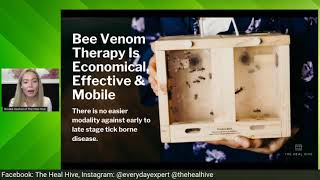
The Heal Hive's Founder Talks Bee Venom Therapy, Lyme disease and BVT Bootcamp
Welcome To The New Heal Hive: Our Founder Walks You Through Our Bee Venom Therapy Bootcamp
Testimonial: Why The Heal Hive's Lab Testing Course Is Essential Before Beginning Bee Venom Therapy
Testimonial: Why The Heal Hive's Lab Testing Course Is Essential Before Beginning Bee Venom Therapy
Testimonial: Why The Heal Hive's Lab Testing Course Is Essential Before Beginning Bee Venom Therapy