The Heal Hive's Founder Talks Bee Venom Therapy, Lyme disease and BVT Bootcamp
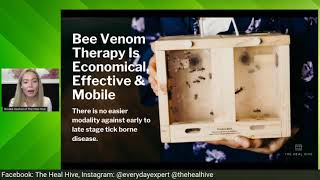
Recorded interview (May 27, 2021) featuring Brooke Gan, founder of The Heal Hive, describing her recovery from severe late-stage Lyme disease using bee venom therapy (BVT). She explains BVT’s historical use, proposed mechanisms (melittin, biofilm disruption, immune modulation, nerve support), cites a 2017 in vitro study comparing melittin/bee venom favorably to antibiotics/herbal protocols, and outlines The Heal Hive’s BVT Bootcamp (comprehensive testing, a ~3-month preparation phase, supervised stinging, courses ~4×/year). The talk includes safety guidance (age cutoff 18, allergy prevalence claims) and a live Q&A on dosing, sites, and duration.
Questions this video answers
18 years old
2017
Melittin composes about 40–60% of honeybee venom and is a 26–amino-acid polypeptide.
Less than 1% of the population, per the talk.
About three months.
Chapters
Her name is Brooke Gan. She is the. She is from the Heel Hive. I first learned about her a few years ago when I learned about bee venom therapy. Then I was watching last summer on Netflix, they have a program, unwell, and they were featured in a segment. And I immediately reached out to her and I said, okay, we're fascinated by this and we would love to have you for a tick tock. And thank goodness she said, yes, yes, we're all in. So she, she basically, I'm going to get back to my little script here. Okay, here we go. She is the owner of the Heal Hive, and she suffered very much, like so many people you've heard from, from a tick bite. And it led her to try bee venom therapy since she basically had exhausted all other measures. So today, Brooke is going to share with us everything the story behind bee venom therapy, the clinical trials, how it works against the pathogens, and. And so much more. And so we want to welcome brooke Gann to TikTok 2021. Thank you so much for being here today.
Hi, everyone. So, so excited to be here. I wish that we could talk about Lyme disease and prevention all the time. I just love the tips you guys just shared. They're so important. I mean, if I could preach to everyone, save your tick. That is like the biggest thing I preach. Save your tick. Test your ticket. So thanks for having me. So what is be venom therapy? I know it seems to be trending and kind of a buzzword right now, and for good reason. It literally saved my life. I tried, literally, I would say 15 to 20 different modalities. I've almost lost count by now when I got really, really sick with Lyme disease. And, you know, bee venom therapy is one of those therapies that seems like it's really outrageous and that it is this brand new alternative therapy, but it actually has an incredible history. It goes back 5,000 years and it's been used by nearly every culture, you know, since, you know, Charlemagne to, you know, ancient Chinese medicine. So what we see with bee venom therapy is that although it might seem like it's new, it actually is a really, really ancient healing modality used by so many cultures and now is just coming into the 21st century with all this incred research being put into it for its ability to heal on all different levels. Could I have the next slide, please? So, yes, it has been used and it has been effectively looked at in in vitro research and also in vivo research for things like Lyme disease, hiv, parasites, infertility, even allergies it's been looked at for multiple sclerosis, candida, Parkinson's, and really, excitingly, cancer. That might sound like a lot. And when I say that I see bee venom as literally a medicine cabinet of healing, it really has all of these incredible properties which we'll be getting into a little bit later, that allow it to go after kind of some of the most common issues that we're facing today with both pathogenic infections and diseases, along with autoimmunity. So, you know, for me, that's why I proselyze about it. It was such an easy therapy compared to everything else. And, you know, we were just talking about in this forum the expense of Lyme disease. I suffered greatly. You know, I spent probably more than $200,000 overall, at least $150,000 on fighting the disease with just modalities and doctor visits. And I wanted to create a visual for you today of kind of how to look at how I see bee venom therapy and how easy it is and how easy of a modality compared to what I used to. So just to give you an idea, I live in Sonoma, California, but I traveled to New York City last night. And you might think, how can you travel with bees? I actually have them right here. So I'm going to show you. You can check them into your luggage. It's that easy. So, sorry, I just lost my airpod. So when you begin bee venom therapy, you're going to see that you can just order bees in the mail like this. And these are the bees you would use for bee venom therapy. As you can see, they were absolutely happy and healthy to be able to get through being checked from California to New York. And they're calm, they're eating their honey. Of course, only organic. And this is. I don't sting anymore. I'm fully healed. But this is what I use. This is what I traveled with all over the nation. And this is my medicine cabinet. And this is all I use to cure my Lyme disease. And when I say cure, I haven't stung for five years. And I have been Lyme free and free of babesiosis and bartonella and also reduced most, most of my autoimmune issues that I had from chronic Lyme disease using just the stings from these little honeybees. Compared to. I brought some old medicines with me because I wanted a really good visual for you guys. I used to bring a suitcase of supplements or this, and this is what people use now. Or you can spend hundreds and thousands of dollars weekly monthly for other Modalities. And that's what I love about it because of the fact that it is so cheap, so economical, and its effectiveness is pretty proven, both anecdotally, but through research and also I'll go deeper into how it actually healed me. Could I have the next slide, please? So bee venom is proven to be a powerful antibacterial, proven to be a powerful antiviral, proven to be an anti inflammatory, proven to be an antinociptive, basically meaning that it is a pain relieving. It has pain relieving properties, which is so important with chronic Lyme disease. I know that my fibromyalgia and rheumatoid arthritis, when I got really sick was absolutely horrible. It also helps regulate mast cells. So many issues with people with chronic Lyme disease and chronic illness overall is just mast cell dysregulation, mast cell activation syndrome, et cetera. And many people will be afraid, oh my God, I could never do bee venom. I'm sens. It actually helps repair and modulate mast cell issues. It's also an incredible immune modulator. One of the most exciting things about it is that it can turn T cells, which are these incredibly important cells for our immune system, but turn them into regulatory T cells. So when T cells are over activated, they put us into a state of overactivity of the immune system, leading to more autoimmunity, leading to more pain, et cetera. Even mast cell dysregulation, when you turn T cells into regulatory T cells, it allows the T cells to chill out and be like, dude, I'm good. I'm not going to overreact to everything. And this is so important. This is why our members at the Heal Hive and this is why people all around the world that are using bee venom therapy can feel such relief so quickly. It's because of the fact that it calms down an overactive immune system, also modulating a immune system that might need a boost. So it does both things and basically helps rebalance. And one of the most important things talking about Lyme disease, especially spirochetes, is we know if you've been going through for many years, is that biofilms can be just as, you know, just as much of an issue as the Lyme bacteria itself, spirochetes. So what can happen is that these biofilms build up around the bacteria and the spirochetes use them to basically protect themselves. And what happens is that it doesn't matter how many antibiotics you use or how many antivirals, you're not Going to get through to the actual spirochet because it's protected by the biofilm. And, you know, the bioactivity of bee venom is actually proven to break open these biofilms. And another important aspect is that, you know, they've seen, research has shown in autopsies of, you know, victims of lyme disease. They've, they've seen spirochete issues in the brain. We know that spirochetes can cross a blood brain barrier. We know that most antibiotics cannot, which is why a lot of people will feel better, but they'll have massive brain issues, massive neurological Lyme. The cool thing about bee venom therapy is that it's actually, there's properties in bee venom that are actually able to cross the blood brain barrier. You might think this sounds really dangerous, and I can't imagine seeing myself with live bees. Science has proven that less than 1% of the population has a true bee allergy. And one of the coolest things is even if you do have a beef real bee allergy that you grew up genetically, you have an issue with bees. You have to carry epipen with you everywhere you go. Is that progressive allergists nowadays are using small amounts of bee venom in the same way we do at the heel hive to basically desensitize you. So just because you might be allergic to bee venom does not actually preclude you from starting. It might extend your actual length of healing, but it doesn't preclude you from starting because allergists are using it daily to help people be free of being, having an extreme reaction to bee venom. And at the heel have we used really small amounts? And I'll get into that in a second. But the coolest thing is that when you use small amounts, about 10 stings or below, the cytotoxic properties of bee venom are fairly benign, and we can do it safely. And at the heel hive, many people heal with less than 10 stings. Many people can heal with, let's say, five stings to eight stings. There's 10 is kind of the limit. But small amounts can absolutely cause you to even hurt, like at 15 seconds. So everyone is individual, but we use it in a really smart and strategic way. And understanding how the immune system is regulated by it and also how small amounts of bee venom, when applied, can actually desensitize you to any type of allergic reaction you'd have with it. So overall, its efficacy is incredibly safe. And just to put that into context as a comparison, if you think about antibiotics, when you Go to the hospital or you go to the doctor's office, they always ask you, are you allergic to any antibiotics? And it's because overall, statistically, you have a 20% chance of having extreme allergic reaction anaphylaxis from an antibiotic in bee venom, it's less than 1%. So even comparatively, antibiotics to be venom, bee venom is still safer. And that's why I get so excited about it. Next slide, please. So I was a pretty sorry state when I got sick. I first got bit by a tick about two years before I really lost all my functionality. In those two years, I started having. Of course, I didn't get it tested. I was told by a doctor, you know, oh, it wasn't on you long enough. That's one of the big fallacies. As we know. It can basically give you any type of pathogen very, very quickly. And so my first. My first reaction to it was not getting sick. My first tick bite that I found, I did not have a bullseye. But from there, I started getting chronic migraines, Chronic, like, stiff neck. I started passing out. It took years for that to actually be diagnosed as postural orthostatic syndrome. But POTS was one of my first issues. I remember I was traveling between New York and London working at the time, and my boyfriend at the time went to go pop out to get some coffee, and he came back, and I, you know, woke up, went to the bathroom. He came back, and he found me passed out on the toilet. And literally, you know, from there, I started just. I would be baking, making eggs in the morning or walking to the subway or getting up from the couch, and I would pass out. And it was probably one of the more terrifying aspects of Lyme disease. Doctors had no solution for me. They just said, you're working too much. You're stressed. You need to stop working as much. Of course, I didn't. I didn't realize that I was also in a very moldy apartment in London at the time, which I think really, you know, accentuated the issues, the first issues with Lyme disease. But the most distressing issue is that I had my first melanoma about four to five months after the first tick bite. And until I got treated with bee venom therapy, I had four subsequent melanomas after that. So for me, you know, finding bee venom was actually relief because of the fact that I haven't actually had melanoma cancer yet again. But for those two years before I got bit my second time, I was just, you know, trying to manage eating clean. And my symptoms Went in and out. Then I got bit a second time. Let me give you context of when I got bit, how active I still was, although I had migraines, although I would pass out sometimes from pots, overall, I was still fairly active. Other people would get a cold in my office. I would get a cold for two weeks. They would get over in two days. I knew there was something wrong. The melanoma really had scared me, but I just didn't know what it was. And so I vowed to eat cleaner and just to be healthier, and that seemed to manage it. Then I got bit a second time. When I got bit a second time, I was, you know, much more educated about Lyme disease. I had met a few people in New York City, where I was living at the time, with chronic Lyme disease, and it scared me. And I got a bullseye. I went to the doctor. He put me on antibiotics immediately. That was a Saturday morning. I planned to be back in my office on Monday. I never made it back. I never cleared up my desk. I never went back to the office from getting on that first round of antibiotics that Saturday morning. When I got bit. Friday evening, I crashed. And now I know I crashed because I already had Lyme disease. But what this tick had was babesiosis and bartonella. The combo together floored me. It took another three months to get a diagnosis, and even that, I feel I was pretty lucky. By the time I was actually diagnosed, I could barely walk. I could only crawl around my apartment. I was at that point incredibly sick. And I found out later that I had the most extreme case of babesiosis they'd ever tested in New York. So it took two months for my babesiosis test to come back because New York state health authorities did not believe someone could still be alive with that bad of babesiosis. So they kept rechecking my tests and had me go in a second time. By the time that they absolutely concluded that I had, yes, the worst case of babesiosis in New York State, I was actually called by my doctor and rushed to the hospital. It was that severe. I was put on oral antibiotics. I was put on IV antibiotics. I was put on oral and IV antivirals. I did not get marginally better. I actually felt worse. I ended up being in a wheelchair. I was put on oxycodone. I was put on massive doses of herbals. I tried all the IV supportive therapies, tried biofilm busters. Literally got worse. I finally went to a Lyme literate doctor out of state, and there I was put on ozone auto hemo, ozone autohemotherapy. I tried ultraviolet blood irradiation. I chelated. I did DNPS and dmsa. I did the shoemaker protocol. I spent countless hours in a hyperbaric oxygen chamber. I tried rife therapy, ivig, ldi, magnet therapy, biofilm protocols, edta, and antifungals as well. Nothing worked. I just became broke and really sick. And then the turning point was when I had to have a port, a cath, put in. So if anyone knows what that is, it's not a PICC line. It is a little bit more severe. They attach a cath to your heart, and so they can give you IV antibiotics and IV therapy. I require this because at this point, I. My veins had given up after two years straight of IVs, nearly every day, and I was marginally better. I would say about 30% to 40%. But I had no energy, absolute fatigue, was in constant pain. At that point, I was taking three to four oxycodones a day just to survive the amount of incredible pain I was in. And we're talking constant migraines, digestive disorders, the whole shebang, every common symptom of Lyme disease I had and more. And then as I was getting the port put in, my parents came into town, and I had to tell them, you know, I was out of money. I had gone through my life savings. I had sold every precious thing I had, and I basically was living in a suitcase with the clothes on my back, and I hit them up for some money to help me out with this. And my parents do not come from large means. And when they found out how much I've been spending, you know, sometimes $3,000 a week, sometimes $10,000 a month, they, you know, their jaws dropped. Just at that moment, the nurse from the Lyme clinic walked in, and I knew she had had really bad Lyme disease. And so I pointed her out to my parents, and I said, you know what? She works at the Lyme clinic, and she's gotten better. I promise. It's just a matter of time. I am getting better. I just need you guys to help me through this moment. My dad, being a cynic, was just like, I want to talk to her. He walked up to her, he said, you know, I heard that you got better, that you were as sick as my daughter. And she said, yes, I was. And he said, how did you get better? And she hesitated. My dad said, he's really smart. And he goes, you didn't get better using all the stuff my daughter is. And she kind of hesitated, got a little funny. And then she finally admitted that she had healed using bee venom therapy. My dad asked how much that cost, and she said, once you learn how to do it correctly, the bees, they can even be free. It can be a free therapy if you beekeep or have your own bees. My dad heard, free. My mom heard they don't have to remortgage a home. And immediately they were like, kid, that's what you're doing. And so I started doing bee venom therapy under the nurse's supervision. And within a week, I felt like I could get out of my wheelchair. Within three months, I was hiking again. My brain fog started to dissipate. I just started healing at such a rapid rate that before I would always take modalities and think, is this working? I can't tell. I think so. With bee venom, there was not a question in my heart. I knew immediately it was going to work. It still took me probably a good 8 months to 12 months to really, as I'm healing, as I'm regaining functionality every week and every month, to still believe it was the bee venom. It was just hard to believe that these little insects could make such a difference. I went from feeling that I would never get better. And most doctors were telling me that chronic late stage Lyme disease, of which I had was a lifelong condition, and that these mounting autoimmune issues that I started to have were just going to get worse. And all of a sudden, I started to have hope that I could have my freedom back, that I could have my life back. And that's my really sad story that became a true success story with Lyme disease. Next slide, please. So, you know, this is just a picture of. I tried multiple allopathic and traditional modalities, and I only became sicker. I was, you know, even during my journey, I had to learn how to get myself my own IVs. I had to learn how to basically take care of myself because I was always trying to save a buck. I'm sure a lot parents watching this know, you know, they've done their own children's IVs. You know, a lot of people here have been in that same position. And if you're still struggling, know that, you know, there is, there is, you know, hope out there. Next slide, please. So for the cynics out there and for those that are interested, Dr. Eve Sappi created a study looking at, okay, we've heard that Lyme disease can be eradicated using bee venom. People are raving about this. And in 2017, she wanted to see if there was any scientific validity to it. And so at the University of New Haven, they embarked on comparing melittin, which is a bioactive property, in bee venom, bee venom itself, the whole bee venom, along with multiple antibiotics, along with multiple herbal modalities, the most commonly used today against bee venom. So they used both herbal and antibiotics. They used layer multiple antibiotics against bee venom and Melittin. As you can see on the slide, that Melittin and bee venom blew all of the other modalities away. It wasn't even a fair fight. This was the first landmark study to show, at least in vitro, that basically bee venom outperforms antibiotics, outperforms herbal protocols. One of the more exciting aspects what this research uncovered is that not only does it get at the spirochete, it also gets at those all important bacterial biofilms that protect the bacteria. And so, you know, you can go onto the Heal Hive website to find this study. We have it published. It's really exciting. Obviously, there needs to be more and more studies at the Heal Hive. We're actually embarking on a landmark study using oura ring and our own data, and we hope to publish maybe in the next year or two. But we've seen just a remarkable recoveries from all of our clients at the Heal Hive and, you know, and including myself. Next slide, please. So what is in bee venom that makes it so exciting? The most probably important aspect of bee venom that makes up about 40 to 60% of each honeybee sting is a polypeptide, 26amino acid polypeptide called Melittin. It has incredible healing properties. One of the most important thing is that it creates pores in the cellular membrane. This pore formation basically take a bacteria, imagine it has a cellular outside made of phospholipids and that melittin itself basically breaks through and cuts these like, imagine miniscule little holes, like drills holes into the cellular membrane. What happens is that the contents inside the cellular membrane leak out, thereby killing the bacteria. Another thing that it does is that it breaks open these biofilms. So that is what the landmark study from the University of New Haven has shown. But Melittin has also been studied the world over for this pore formation and how that works. It also is one of the reasons that it's being studied for hiv. They've seen that melittin and bee venom itself can actually break open the viral envelopes of viruses and actually create a way that viruses cannot Communicate along with, cannot replicate. Which is so important because people just don't get sick with Lyme disease. Most of the time they get sick with other viruses or they get viruses that are reactivated like Epstein Barr virus and other viruses that cytomegalovirus, et cetera, et cetera. So what we see is that Melittin is why it's the most kind of abundant property in bee venom and it can be used on its own to counteract Lyme disease and bacteria and being studied the world over for its incredible properties against cancer, et cetera, et cetera. There are other aspects inside bee venom that are just as important. One is called peptide 401, otherwise known as mast cell degranulating peptide. And it's a really interesting peptide because of the fact mast cells are a big problem. Most people here who have mast cell activation syndrome are going, oh my God, I can't imagine degranulating any more mast cells. All I try and do is suppress them too, so they don't degranulate. And why is that important to actually have a mast cell degranulating peptide? Because so many people with mast cell issues actually have an over proliferation of mast cells. So when you have a compound that's able to get at the mast cells in a really small strategic way by using small amounts of bee venom therapy, you're going to be able to actually lower your mast cells in your body. It also can get at those the kind of over gobbling histamine and kind of, you know, stretch to the max. So it helps that if you use it in a really controlled way. But the other absolutely fascinating aspect of peptide 401 is the fact that it is a powerful anti inflammatory. It's actually been seen by volume to be 100 times more powerful than hydrocortisone. So so many people here deal with, you know, chronic pain with Lyme disease. I was one of them. One of my first symptoms that went away when I started bee venom therapy was my pain. I was able to within about three months get off of oxycodone after being on it for at that point nearly three years. And you know, my pain levels just dramatically decreased. And I thank Melittin for this. They also have. Melittin also has the ability to bind and activate specific receptors on neighboring cells to exert biological effects such as the reduction of pain and inflammation. And then when you combine them with peptide 401, which also is 100 times more powerful as a anti inflammatory and you have this ability to decrease pain while also decreasing inflammation and inflammation is really one of the biggest issues with chronic late stage Lyme disease. Bee venom also has something called acetylcholine. Next slide, please. Next slide. So, acetylcholine. It's not on the slide. Sorry. But acetylcholine also repairs myelin sheaths that cover our nerves. And so many people here know that one of the things Lyme disease does is it attacks the central nervous system, attacks the vagus nerve, attacks our nerves, you know, decreases our gut motility, et cetera. So by being able to support nerve regeneration, that is also an incredibly beneficial aspect. Another aspect is hyaluronidase and phospholipase. They also help dissolve microbial biofilms and making the cell walls more permeable. So to kind of recap this, it's that melittin on its own is About A, about 40 to 60% of whole bee venom. It is incredibly potent as an antibacterial, it's potent as an antiviral. It also helps break up biofilms. Other aspects in bee venom also help break up those bacterial biofilms. They're also antinociceptive, so they decrease pain while also being incredibly anti inflammatory, while regenerating nerves and also helping do things like decrease messenger metastasizing of cancer cells. So there's some really amazing research coming out. A group in Australia just proved that her two negative breast cancer, which is a very serious, usually fatal form of breast cancer that till now has really not had any modalities that are effective against it, that bee venom itself kills within 20 minutes her two negative breast cancer cells, but also decreases the metastasization of those breast cancer cells. It's super fascinating. Next slide, please. So I'm not the pioneer of bee venom therapy. I would never pretend to. No one actually is. You know, since 1950s prior, there was the true pioneers that took this ancient modality that you can find being spoken about in, you know, so many different ancient cultures and books and, you know, from ancient Chinese medicine to even, you know, French, you know, 18th century herbal ways to heal are a man named Dr. Beck and Charles Mraz. Charles Mraz was a man that basically, I would say, revolutionized bee venom therapy. And it was being used quite frequently in New York city around the 1940s to 1960s when antibiotics became more widespread and people started really embracing western medicine in the way we see it today. It got forgotten. And Charles Mraz was also an incredible beekeeper, but he based a lot of his work on Dr. Beck. Dr. Beck basically wrote the Bible of bee venom therapy. It's literally called that. And all of modern bee venom therapy is based off of his writings and his research. So for anyone who's interested in learning more, I recommend reading the bible of bee venom therapy. Dr. Beck was the true pioneer, and Charles Moroz brought it to basically, as you can see in this picture here, treating people with it in New York City and a thriving practice in the little corner. I don't know if you can see that. Well, but that's his calling card and it was bee venom acupuncture. And he had, you know, incredibly happy clients. It's just too bad that, you know, because of this advent of, you know, how we, how we embraced allopathic medicine, some which do a lot of harm, this kind of got forgotten and we've lost both of them to age. But I hope that I can be a good holder of their iconic status in bee venom therapy and help others understand how modern science can also combine these ancient modalities and these pioneers work to bring about a way for people to truly heal from common conditions, the most common being chronic late stage Lyme disease. Next slide, please. You might be asking, you keep talking about the heal hive. What is it? So when I began healing, I never thought I wanted to go back to being stuck in the chronic illness world again. In fact, for about two years after I was fully healed, I was still stubborn about not really sharing my story and, you know, trying to escape the chronic illness world. As we know, a lot of it is filled with fear. Online forums that just scare you, that are full of, full of misinformation, many are full of great information, but there's a lot of misinformation. A lot of people that are greedy, that, you know, pretend to be people with chronic Lyme disease, but are really selling you, you know, certain machines that are 10, $20,000 or modalities that will never get you anywhere. So I wanted to create a educational platform that used, you know, allopathic nurses, MDs, physical therapists, psychologists, brought all of these incredible practitioners that I vetted and curated to be, you know, top quality for members to an online educational platform where we not only teach about, you know, bee venom therapy, but we also help all of our members, you know, basically regain their health by really, truly understanding the science and the why behind lifestyle changes, sleep, hygiene, diet, exercise, movement, stress reduction, et cetera. So you get a medical support team. We care about safety more than, I think you would say, many, many clinics across the nation. I would never, ever allow any of our members to do dual modalities at the same time. We're anti herxing. We want you to have functionality over dysfunction and we want you to begin stinging with confidence that you're actually stinging safely will be an effective method. I think what we see overall, because a lot of people say, I've heard about bee venom therapy, but it seemed too scary or these online forums just seemed full of pseudoscience or bad advice or people just don't seem to get better. And the reason I started the Heal hive is because I was amazed that after I healed with bee venom therapy, it seems so many people on these online forums hadn't and they were struggling or you'd hear I got to 70%, I got to 80%, but I'm not fully healed. After three years I of stinging and I realized what was it that I did differently and what are they doing wrong? And so I wanted to create an educational platform. So it's pretty cool. Next slide please. We have a system. So the first system is comprehensive lab testing. And I can't tell you how many people come to us saying, oh, I've already been comprehensively tested, I don't need this part. Take it from someone with chronic Lyme disease that turned on multiple autoimmune diseases. You still need comprehensive testing. At the Healhive, we comprehensively test every three months and our tests are unique. They are tests like you've probably never been tested before and brought together from my years of experience of both, you know, going through different clinics, different doctors and also doing my own research. So we do comprehensive testing. It's all covered by insurance, it's through either LabCorp or Quest, and you know, it's also covered by Medicaid or Medicare. And we make sure that you have testing that is not boutique testing. So it's cheap, it's covered by insurance and you know, you'll go into bee venom therapy stinging with a heel high, feeling incredibly confident about your journey and where your baseline of your body is. If we find any aberrations or issues, micronutrient deficiencies, autoimmune conditions, you can then work with our in house MD Dr. Erica Lehman, who's a, you know, pioneering Lyme doctor in Los Angeles. You can work with our ER nurse, trained nurse Kylie. We also have a psychologist, clinical social worker and other medical staff on hand along with a movement physical therapist. Which is so important for those that are bedridden to be able to restore movement and restore their physical body is as essential as everything else. So once our members get done with Lab testing, they move on to part two, which is what we call BVT prep. And that is a pretty intense boot camp. It really is bringing people into a boot camp in which we're waking you up in the morning, you know, with morning wake up calls, we're making sure you go to bed really early, we're making sure that you don't have blue light issues, we're making sure that you don't get gluten accidentally, that you're changing your system. We provide meal plans and, you know, vetted recipes and everything under the sun for getting your, you know, your physicality back in terms of movement therapy and how much you should walk. It's very strategic, measured, and we walk all of our members through it because even those that are out there that are like, I'm a biohacker, I've done it all, we make sure to make it so comprehensive and so easy to apply all of these methods that are crucial for full healing. And then once our members graduate from BVT Prep, which takes about three months, they actually learn how to sting and sting properly and ramp up slowly. Some of you might be saying, I don't want to wait that long. I want to sting now. Trust me, if I had my druthers, I'd have everyone prep before they began stinging. What it does most importantly is make sure that you will not have issues with stinging, you will not have any anaphylactic shock, you will not have any massive hurting, and that, you know, you'll, you'll be in a place to allow the bee venom to actually heal you and not be in that stuck place of I'm only 70% better, 80% better. We really feel strongly that when people embrace these lifestyle changes comprehensively, test, address what has been found in these lab tests, along with getting mental health support, community engagement from a really positive, you know, inspirational community, and also have these, you know, these experts be able to lecture and talk about all the important things that you want to apply. But you're so confused. What do I start with? Do I start with changing my diet or do I change my sleep? Do I try and get movement in? Do I try and do stress reduction? First, we make it simple and we lay it out for you so that, you know, we take the, it's kind of the Cliff notes. We take all the questions out of this, out of the system of bee venom therapy. Next slide, please. If you guys want to learn more, you can download a free ebook that I created about bee venom therapy. It has amazing links to all the research from research from HER2 negative breast cancer to the research on Lyme disease, to the research on how Melittin works, to how it repairs myelin sheaths, etc. Etc. You can also explore our Instagram page at the Heel Hive. That's, that's T H E H E A L H I V E And you know, as has been mentioned before, we were so humbled and honored to be part of the Netflix documentary series on. Well, you can watch us there. Or there's a clip on YouTube from the Tamron hall show if you want to learn more. And just to kind of summarize, before I get into questions, I think we have 15 minutes of questions is, you know, a lot of people say, well, how do I know if I'm right for this? I will say people can start if they have never done any other modality. We have many people, nurses, we have naturopaths that are part of our program that are like, I have seen in my own practice that antibiotics only made people with late stage Lyme disease even worse. I just got diagnosed with Lyme disease. I don't want to start with antibiotics. I want to start with the Heel Hive. I want to start with bee venom therapy. So we have those people. We also have people who have been sick 15, 20 years on. We have seniors to people who are as young as 19. Our cutoff age is 18 years old. You have to be 18 years old or older. Obviously you have to be an adult to be able to start this, to be able to make your own personal decisions. And it does require that self reliance. We do ask you to empower yourself to become your own healer. And not everyone is ready for that, especially in the beginning. So, you know, I would say that this is probably the majority of our clients at the Heal Hive are people who have been fighting Lyme disease for at least a year to two, have ran out of money, ran out of resources, and also were interested in, you know, the science of this, the ancient healing modality of it and wanting to embrace it. For those of you that say, I'm so scared of bees, I could never do this. I have walked people through so many people who were terrified of bees, who are now beekeepers themselves, how to do bee venom therapy. So that should not discourage you. When you learn about how sweet and calm these little sweet honeybees are and how the last thing they want to do is actually sting you, it makes it a lot easier. So we also teach people how honeybees operate, how the beehive works and so it's not just the science of the bee venom, but also helps you become really, you know, understanding of B personalities and you know, how they operate so it's less scary. And you know, a lot of people might be saying, well, if this is so helpful, if this works so much, why isn't it more fully embraced? Why isn't there, you know, clinical research being put into it? Anyone here who has embarked on any kind of investigation of clinical research will know that it is incredibly expensive for us to do a conventional clinical research study on the in vivo how be venom works in people directly. If we were to work with like any kind of major university or pharmaceutical company, the beginning cost would be $250 million. That by the end cost to have a, you know, large scale embraced by medicine. You know, clinical research study would probably take up to 10 years and $1 billion. That is based off of what we know about Clin clinical research studies. So if anyone who's a billionaire is watching this and is, you know, like, hey, I want to put money behind bee venom therapy, please reach out to me directly. I can guarantee I will write you back in five minutes. But if you do not have $250 million to jumpstart this or $1 billion to really get a full clinical research study underway, then, you know, I would suggest you start, you know, working with the heal hive, be part of our own clinical research and help us be able to prove to the world that this modality is cheap, effective, safe and it actually, really, really works. And why aren't more doctors embracing it? You might be saying they are actually, since we work with both Lyme MDs, regular MDs, naturopaths, you know, we know that there's so many doctors out there that have seen this work for them. Our relationship with Dr. Erica Lehman, as you guys know, she's a famed Lyme doctor. She worked with everyone from Justin Bieber to many other celebrities with Lyme, including I believe, Yolanda Hadid. We know that she came to us. Why? Because one of our own members who worked with her said, Dr. Leeman, I'm doing better. And Dr. Lehman is not against learning more and wanting to help her patients. We have now been approached by literally at least a dozen doctors who want to send us their patients because they say, I tried it all, it's not working. And I'm interested in bee venom therapy. So do not think for one second we are anti doctor or anti allopathic medicine. We are actually the conduit between western medicine and our patients. And Lyme victims, Lyme warriors becoming fully healed. And we like to see ourselves as, you know, as a happily working co workers with Lyme doctors and allopathic medicine instead of against which I think is really important. It does take time. I'm not going to lie. Bee venom therapy is a lengthy process. It is not just taking one pill and it being over. But as anyone here who has gone through the years of chronic Lyme disease knows that although B venom therapy might feel like it takes a long time, it's not taking a long time and you're suffering the whole time. You're slowly getting better and improving every step of the way. In fact, most of our HEAL members say that they've had at least a 30 to 40% reduction in symptoms and feel better just after they graduate from BVT boot camp. That is with lifestyle changes, diet changes, meal plans, wake up calls, et cetera, et cetera. So what we see is that we've already can bring people to that 30 to 40% reduction in symptoms before they even begin stinging. And so, you know, it's not that lengthy of a process as it might seem to be. How do we, how do you join the Heal Hive? Who do we accept? We accept everyone. We work with both national and international students. Our largest base of students come from the United States, second Canada, thirdly Australia and the uk but we work with everyone from Russia to Italy, Spain, Norway, Ireland and any place in between. So we have members in Hawaii to members in Australia. And it's a really cool community because you learn all these, you know, you learn and you, you know, really get to get to know people from all over the world who are all struggling with chronic Lyme disease and late stage Lyme disease. And the process to become part of the HEAL Hive is basically you go online, you join our waitlist and when we have the next course, we do courses about four times a year. You'll be sent information on how to join and how to apply. And our members receive not only that, but they receive discounts on supplements to really cool discounts on. We have partners that we work with that give our members discounts on really cool supplies from everything from beekeepers, naturals to wellscript. So you get a lot more than than just healing with the Heal Hive. It really is a true community and we try and make sure that our members feel so supported because as someone who had chronic Lyme disease and nearly died three times from both POTS complications as well as complications with Lyme modalities that I tried previously, I will Say that I put it together to be my dream course for anyone struggling, especially for anyone who's tried it all and they've not gotten better. All right, I think that that's our time and I can answer questions. Al Igartua. I hope I said that right. Maybe Ali forgive my pronunciation, says hi, Brooke. Are there any side effects other than anaphylaxis? So side effects. You can have side effects from any time that you attack any biofilms, any bacteria, any viruses. So yes, there can be side effects in terms of hurting or die off, but we try and manage that. The coolest thing about bee venom, I keep saying the coolest thing, it's so many cool things. But one of the coolest things about bee venom is the fact that because you can start with really, really small amounts, you can really control the die off or you can't do that when you're taking allopathic medicine. In terms of severe complications, we've never had anyone at the Heel high ever even have close to anaphylaxis. That was under our supervision and doing it the way that we suggest. And you don't begin at the Heel hive without an EpiPen. So, you know, an EpiPen keeps you, if you were to have a reaction that became severe, it keeps you from having that reaction become any more severe. And then you can know that you can do this safely. But other than that, there always will be small amounts of die off and, and resistance from pathogens trying to fight their way to keep alive in your body. But otherwise, no, I mean, anyone under the Heel hive, we make sure that you only grow in functionality. You never become more dysfunctional. Anyone else? Gloria Kim says is there a particular bee species? That's a great question. Yes, because there's so many different types of bees. The bee species we're talking about is honey bee venom. So all honeybees around the world, there's different subspecies of honeybees, but as long as they're a honeybee, they all have this incredible properties of this type of bee venom. There's some venom in bumblebees and in other type of bees, but that venom does not have all the properties that honeybee venom is. So not only are honeybees giving us honey and all these other incredible properties in the hive, like royal jelly and antiviral, antibacterial propolis and, and yummy, delicious smelling beeswax, but they are also giving us bee venom. So honeybees are really these extraordinary insects that the entire suite of bee medicine together works in Conjunction with itself. Any other questions?
Hey there, Brooke, it's me.
Hi.
So this was fascinating, very fascinating to me. You talk about the brain, blood brain barrier, and I know that there are a lot of people who, they understand Lyme and TBIs, but some others might not understand why that is so important. They hear that with antibiotics, but explain to us with the bee venom therapy how that's really crucial.
Well, science has proven that there's the ability for bee venom to actually travel into the brain and get at any spirochetes or bacterial biofilms that are there in the brain. There's, as you know, there's very little research being shown to actually give us a really in depth look and approach to how neurological Lyme happens and how bacteria biofilms, along with spirochetes travel into the brain. But we do have enough research that shows that autopsies of people with Lyme have shown that there are bacterial biofilms within brains of people who have had chronic late stage Lyme. And also spirochetes have been seen in actual brain matter. So obviously, if many antibiotics cannot travel into the brain, how are you going to fully eradicate Lyme disease if you cannot use a modality that cannot travel into the brain where the Lyme disease can sit in dormancy or create issues for many years to come?
Yeah. And on top of that, I think it's fascinating in that, you know, so many of us understand that you have to take a cocktail of medications because you have, have not just Lyme, but you have the other infections like you mentioned, babesiosis, bartonella. So bee venom, actually, how is it that it can combat all of those? Because it was helpful for you, obviously, because you had the worst case of Babesia in the state of New York.
Unreal. Well, I mean, if you look at the research, it's on our ebook of how they've been able to see that bee venom actually can get at hiv. As we know, HIV is one of those viruses. It's one of the most complex and one of the hardest to eradicate and to treat. Our society went through years of hell with this with HIV before they got some control over it. And what they are studying is how effective bee venom is against HIV virus. So when you take a complex virus like HIV and actually bee venom is being studied by the Chinese against Covid. So when you take these type of studies and you combine them and you see that across the world, not really in the United States, because clinical research here is so expensive, but across the world, like how Australia is pioneering breast cancer and bee venom. You see that the antiviral aspects are incredibly well researched and there are pharmaceutical companies around the world over who are trying to work on basically nanoparticle izing or else taking the antiviral aspects of bee venom out to be able to create basically a pharmaceutical way to get the bee venom. But what we know at the heel hive is that it's not just the melatonin, it's not just the antiviral aspects, it's the anti inflammatory and it's the nerve regeneration, it's all these other aspects. So we still firmly believe that even when the pharmaceutical companies get really good at being able to silo out these different aspects of bee venom and sell the them to you in a pill or an injection for thousands upon thousands of dollars, we're still going to be like whole bee venom is still the way to go. It is literally your medicine cabinet. I mean, when I say to people, you can travel with them and this is all you have to take with you. You know, I, when I was kind of at my last part of my journey, by the last six months of stinging, it took me about two years of full stinging to fully regain my health. I want to go to Europe. That was outside of any type of idea I had, you know, even a year before that I could travel, that I could deal with jet lag, that I could deal with different, you know, places or old hotels. It might be moldy. But I did feel the confidence. But I also knew that I couldn't actually put bees on a plane like I could. Nationally, you can't take anyone listening, do not take bees internationally, you could cause diseases, etc. So I was just kind of sucking, being like, I hope, I hope I can find bees very quickly. I went to London. I found that, you know, know it's a flower filled place as anyone who's been there, parks everywhere. I just took my tweezers and started snapping up bees and it was amazing. I'd be on my way to the museum and give myself a treatment just in the park. And then I went on to Italy and it was amazing. All the Italians I would meet, they'd like people be watching me from the street, you know, just giving myself a bee sting. I get in a conversation and be like, oh yes, my grandmother, she, she bee stings her knee, it makes her feel better. So it was really interesting to find As I travel through throughout Europe, so many people did not think it was crazy at all. They're like, oh yeah, in my French Village people sting themselves the minute they get rheumatoid arthritis. But here we're like, oh, my God, how can an insect heal? But we now know that the science really is really coming together to prove exactly how it works.
Well, and I think it's interesting because a lot of us think about when we get honey, we get it from our very local honey. So you think about the bee. Do you have to sting it from your very local bee? But you just pointed out, if you're traveling and that's where you are, then that's fantastic. We have a couple questions that came in. We'll start with Jill Stewart. She says, how do you know when you're done?
That's a great question, Jill. What we do is, at least at the heal hive, we combined your comprehensive lab testing alongside your symptoms. And also in the comprehensive lab testing, it's not whether you're showing whether you have a positive for Lyme disease, because sometimes that doesn't always show up, but also all of your other levels. If your liver enzymes are still elevated, if you have still chronic activated ebv, all these things that we see that are common, from activated cytomegalovirus to mycoplasma pneumonia. If all of the. If all of them are gone, you're 100% symptom free. Then we put you on a regime for three months, not stinging. And if those symptoms do not come back, we say you're good to go.
That's awesome. Another one here, Gloria Kim, she read. Oh, we have Sally up here. How many times is just one time a day? Yeah, that's a good question.
That depends on you. We have an individualized approach where we teach people a formula for how to figure out that. But there are other sites that say you should do ten stings a day. We don't abide by that at the heel hive because of the fact I don't believe in hurxing. I believe that people should maintain functionality. And so because of that, you know, one, you shouldn't be doing bee stings every day. It actually can, which is really helpful for the adrenal system, can actually help you rebuild your cortisol production. But too much of that without supporting your body and giving it a break every other day can be dangerous. So there's a very specific way you should do it that ensures that you only heal, that there's no side effects.
And Sally asks again if it helps with nerve damage.
Well, it did for me. I had massive nerve damage from undiagnosed autoimmune Issues and also as I said from just extreme fibromyalgia. And as anyone who watches my own personal Instagram, if you want to find it, it's everyday expert will find that I am probably the most active person most people know. I took a red eye last night. I'm in New York City today. I have a full day of work ahead of me. I ski, I run, I train for the marathon and I run a company with nine employees and over 400 members. So if it didn't work, I wouldn't be here today. I definitely wouldn't be speaking to you.
Well, and Gloria read my mind because I had the same question about where you sting on your body. Does it matter? Does the spot, particular spot matter?
In the beginning you definitely don't want to sting anywhere else but your spine and your back. That's where we start people off because of the fact that even if you have pain, let's say in your knee or your joints or your fingers or your toes, wherever it is, you could actually cause a much more extreme inflammatory reaction. As I mentioned before, small amounts of bee venom actually desensitize you to the cytotoxic effects and they also start to produce a situation where your ige response lessens and you become desensitized in the right ways to the things you don't want to be sensitive to in bee venom. And the stuff that we're looking for that is healing doesn't ever lessen its effectiveness. But we want to start with the back because that is there's a super highway of nerves there. And the bee venom can actually help in terms of like acupuncture type response of that super highway of nerves on the back. And it's just a safer place to start. But as people develop as they become less immune responsive to desensitize, at least that's not the right word. Immune responsive. They're always immune responsive to bee venom, but less sensitized to bee venom. Their mast cell reactions go down, their histamine intolerance completely disappears. Then they can can work on certain issues and joints and fingers. What we've noticed is that most people never have to sting anywhere else but their back because the overall anti inflammatory aspect of bee venom by the time that they're ready to start stinging extremities has usually dissipated the issues that they have on hand.
That makes sense. So you talked about. Oh, here's another one that's from Brandy. Is bee venom. Brandy read my mind too. What's up with you ladies? Reading my mind And I asked that the same as Brandy, because, you know, our daughter Sam was 16 when she was, you know, the wheels were falling off of her. And even with Heather Datilo, my co host today, she had the same with her boys. You know, where we were knee deep into the bags of, you know, supplements and things like that that you showed that. Yeah, the list of stuff that you showed that you did. Heather and I have been there. Brandy's probably there. So why, why can't a parent say, yeah, I want my child to try this? Especially if it's an older teenager.
That's a great question. I'm asked that all the time. Especially because we find that we have members that have healed and they're doing so at the heel hive and they say, I want to send my teenager to you. And I have to say I have to sadly decline. There's a few reasons. One, one reason is that, you know, as a company, we cannot take on minors. Minors cannot necessarily make their own decisions being minors. Secondly, I do not recommend a parent encourage their child unless the child wants to do it themselves because of the fact that, you know, should there ever be that person that's like this crazy mom is sending her kid to all these modalities and hyperbaric oxygen chambers and IVs and now she stingers child with bees, we never want the person to deal with child protective services with that. And I know that's really being paranoid, but in today's age, it's, I think, really, you know, crucial to just understand because a lot of people don't understand Lyme disease and they can think you're crazy if they've never gone through it. Thirdly, because of its immune modulating aspects, we just do not have like a single clinical study showing that it will not do any harm to children that are still developing an immune system. I wish there was more studies even on, you know, because you see these ancient cultures and people, traditional people around the world that, that are beekeeping, keep beekeepers and their children from a really young age, help them. So they're getting stung all the time if you're a beekeeper. So I think that it probably would be probably safe. But we do not have the studies. So we just suggest that you can use the other aspects of bee venom therapy, like propolis, royal jelly, bee pollen, to help support a growing child. And as many people know who have seen their children have eradication of Lyme disease and go on to fulfill lives, is that children have different immune systems and humans, I mean, human adults, so.
Sometimes they're not always real human.
Exactly. You know, it. You've had a teenager. But basically, you know, my feeling is that I feel a lot more confidence in children's immune systems being able to, you know, get at Lyme. And I always say there's two things that are going to get at Lyme disease. Your immune system or be venom. And if you have a strong enough immune system, which children do much strong, I mean, you know, Trifold, you know, 10 times stronger, at least many times that with the right lifestyle changes the parents put through, you know, with probably a lot of kicking and screaming, many times children can go on to happy, healthy lives. But that's why we have a cutoff number of 18. But, you know, maybe in the future we'll be able to invest some time and energy into at least studies with teenagers. I would love to do that, but for now, it's 18 or above.
Well, we need those billionaires to step up and help, right?
Hey, calling you all.
And send. Send stuff far away, too. Brooke, I can't tell you how much I appreciate you being here today. This was such a fascinating topic. As much as I thought I had learned before, I just learned so much more. So I really appreciate it. And again, I'm sorry you had to go through the journey you had to go through, but it paved the way for information and healing for so many. So thank you for every single thing that you have done prior to this and for us today.
Well, thank you, Carrie. I wish there was, you know, more of these talks and we could do it every week because it's so needed and such invaluable information. And to all of the speakers that I'm sharing a space platform with, you all are just such pioneers and all courageous. And I thank everyone, and I thank you, especially Carrie and everyone who put this together. It's been a pleasure. And thank you and see you guys on the other side. That's right. Thanks.
More from The
The Science Of Bee Venom Therapy: Lyme, Mast Cell, Autoimmune + Long Covid With BVT Pioneer, Brooke
What does it feel like to be approved to safely begin Bee Venom Therapy with The Heal Hive?

The Heal Hive Talks Bee Venom Therapy With Lyme Disease Survivor Alex Saidac (@Gypsyonahorse)
Heal Hive Success Story: Alumni Ali Kates On Why Lab Testing Was Essential To Her Healing
Bee Venom Therapy Success Stories: Brooke's Journey Back To Health With The Heal Hive
Welcome To The New Heal Hive: Our Founder Walks You Through Our Bee Venom Therapy Bootcamp
Testimonial: Why The Heal Hive's Lab Testing Course Is Essential Before Beginning Bee Venom Therapy
Testimonial: Why The Heal Hive's Lab Testing Course Is Essential Before Beginning Bee Venom Therapy
Testimonial: Why The Heal Hive's Lab Testing Course Is Essential Before Beginning Bee Venom Therapy