Changing The Workplace One Thank You At A Time
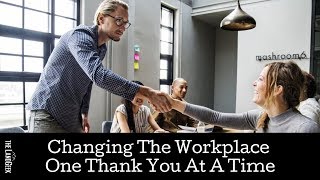
Podcast episode (YouTube) hosted by Mark J. Podolsky with co-host Scott Todd and guest Lisa Ryan (aired April 3, 2019). Lisa describes starting a daily gratitude practice in 2009 that she credits with improving personal relationships and sales performance; she then explains how gratitude can be implemented in workplaces (specific praise, apology approach, peer recognition) and supports claims with research (Robert Emmons, Losada, school studies). Practical recommendations include morning/evening journals, a 30-day gratitude challenge, and Lisa's book The Upside of Down; she also cites her site gratigy.com.
Questions this video answers
April 3, 2019.
2009.
42%.
6 to 1 (six positives for every one negative).
3 to 1.
Chapters
Hey, it's Mark Podolski, the land geek with your favorite niche real estate website, www.thelandgeek.com. and I'm really excited for today's guest because it's one of those topics that we all kind of know about sort of intellectually, but we don't talk a lot about. We don't talk to our kids about it probably as much as we probably should, or our spouses or just anybody. Right? But we know it's important. But before we talk to our guests, I'd be remiss if I didn't properly introduce my co host, Six Sigma Scott Todd from scotttodd.net landmodo.com and most importantly, if you're not automating your Craigslist and your Facebook postings, postingdomination.com TheLange Scott, are you excited?
I can't wait, Mark.
I'm excited. Today's podcast is sponsored by GeekPay IO, the only set it and forget it system that automates getting paid from your borrowers. A one time setup and then you get paid notifications. Everything's automated. Get your first Note free at GeekPay IO. TheLandgeek. Today's guest is Lisa Ryan. If you don't know who Lisa Ryan is, she was referred to us by none other than our coaching client, Jeff Dettmer who loves her. He's like, you gotta have Lisa right? On the podcast, Lisa is an award winning speaker who draws upon her 20 plus years of sales, marketing and training experience to deliver business strategies as well as career changing tools and boatloads of inspiration to her audiences. She is the best selling author of eight books and is featured as an expert in two films. The Keeper of the Keys of Jack Canfield, of Chickens for the Soul, Fame and the Gratitude Experiment. Let's just face it, Lisa's a big deal. So Lisa, how do you, how do you even get into like how does Lisa Ryan become the Lisa Ryan?
Well, that's a very good question. It started when two people who really loved each other. Now we're not gonna go back that far. In 2009, I actually started a gratitude practice with some of my friends. We had gone to a four day intensive workshop that included a firewalk and we were pretty jacked up. You might actually say we were fired up after that seminar. And when we were walking home or walking home. Yeah, driving home, we knew that if we didn't take action then life was going to go back to where it was before. So we decided to open up a Facebook thread and every Day. We wrote down things that we learned, experiences that we had, people we met. And then one of my friends said, well, why don't we write down three things we're grateful for, okay? Did it every day held each other accountable. And that single practice started in 2009, changed every aspect of my life for the better.
Now, how specifically does writing down three things you're grateful for, let's say every morning, improve your life? In what ways did your life improve specifically?
Well, when I first started doing it, you know, I went into it with no expectations. So almost immediately, I was in sales at the time, and I noticed that customers that I hadn't talked to for months were calling me, hey, can you come in and sell me some stuff? I will be right there. There were two large facilities that I'd been calling on for almost five years that seemed to close effortlessly. I noticed a difference from my husband, who is becoming more verbally appreciative. And believe me, it wasn't because I was keeping the house any cleaner. All of these things were changing. But really the only thing that had changed in my life was that practice of gratitude. So that's really where the research began. Because I wanted to see, is gratitude more than just this feel good emotion that we normally attached to it or was there more? And through my research that turned into, you know, not only programs and books and reading articles and white papers and all of these things, then I was able to show that it is something that works for us personally. But then bringing that same message into the workplace to create that culture of appreciation is now making a business a difference for businesses across the country and hopefully soon around the world.
Wow, Scott, when you were at your Fortune 300 executive position, how often was gratitude as a practice discussed among management? Like, let's just, let's just show our appreciation for the little things our team does.
Well, I mean, I think that it's something that, that, you know, it's something that was, was discussed and you know, you try to, you try to execute on it, but really doing it every single day on a large scale to employees seems very, very challenging to do. I mean, you know, it. And also a little, little weird at first, I'm sure. But essentially, you know, it's something that, I think that there is value there. How does it get executed, Lisa? How does a company, a large company or small, I mean, a small company seems like it's easier to do it than like a larger company. But like, how do you implement that? Because ultimately it's not. I mean, as A manager, I can go around say, this is what I'm going to do. But it has to come from the top. It has to be kind of built into the culture of the company. And changing culture of a company is hard.
Changing culture of a company is hard. But when we look at some of the statistics, for example, one of the ones that only 42% of employees felt that their boss or their manager shared any type of appreciation with them in the last 12 months. 12 months. I don't care if you have 10 people, five people working for you, or 20,000 people working for you. This. There's got to be something with your direct reports, with the people that report to you. Maybe you can't thank 20,000 people, but those aren't all the people that you have daily interaction with. So it's just looking for ways to be specific. And yes, it has to start at the top of the organization. But every single person in the organization can make a difference. And because what gets recognized gets repeated. It's instead of walking around saying, hey, good job, good job, good job. Okay, well, what was so good about it, you know, being specific? Hey, I really appreciated the way that you handled that phone call with Mrs. Smith. She was really irate. You talked her off the ledge. You did a great job, whatever it was. But now that employee knows that you're paying attention. Going back to how do you implement it? You know, sometimes if you go up to your employee and you've never thanked that person and you're like, hey, Mark, thank you so much. And Mark's going to look at me like, okay, what does she want? She has never thanked me in her whole life. She's got to be up to something. So we actually start with what I call the apology approach, where I might say, you know, Mark, I just want to let you know, I have not been letting you know how much I appreciate your efforts around here, and I'm going to make more of an effort to do so. So now Mark knows that it's on me to change the conversation, and it's something that I'm working on. But before it even can go into the workplace, it has to start personally. So with all of the programs that I do, I always start with that research. I always start with that foundation of gratitude. Because if you can find a way by looking for the good in your life, and now you have a better relationship with your spouse and your kids and everybody else in your life, and you're bringing less stress into the workplace because you're able to find more Good in the rest of your life, then my evil plan is that better, happier, more positive person now brings that better self into the workplace. But if managers don't get it, if people don't get it on a personal level and it's just one more thing they have to do, we must engage, then it's not going to work.
Lisa, what do you say to the manager or the CEO or the boss whose fear is, if I keep showering this person with gratitude that they're gonna start taking advantage of me? Like, you know, yeah, yeah, we're the, you know, the old school style is, you know, Steve Jobs, be demanding, have high expectations. You didn't meet the expectations. It's not good enough.
Do it again, right? Mother Teresa once said, we're more starved for appreciation than we are for bread. And I was actually at a workshop and they put a quiz out to the audience or a question out to the audience that says, when you appreciate people too much, I think the question was something to the point of can you appreciate people too much and have it lose its effect? And the overwhelming response was, no, you can't. The key to it is to be specific. You know, sometimes you're going to have those conversations with people. But the thing is, it's looking for the good and doing it on what they call a 6 to 1 positivity ratio. Marshall Losada did a study on high performing teams and he took a look at the their communication and what he found is for every one negative thing, something on a high performing team would hear. They would hear at least six positives. And this wasn't always like, oh yay, everything you do is so good. This is, that's a really good start of an idea. You know, let's see how we can expand on that. When they took a look at an average performing team, it was about 3 to 1, which is barely surviving. When you have a 3 to 1 positivity ratio, basically the people that are working for you are doing exactly enough work so that they don't get fired and you are paying them and exactly enough so they don't quit. It's an even balance. But on a low performing team, it's 0.3 to 1, which basically means those people are hearing three times more negatives than they are positives. It's almost like that old poster that, you know, perhaps some people still hang and have hanging up in this shop saying, you know, the beatings will continue until morale improves. It doesn't work when we're always trying to fix what's Broken. It doesn't work. So are there going to be people that would take advantage of you? Absolutely. You know, but it's a much smaller percentage than we think that it is. And you're going to get much more productivity, much more benefit out of the people who feel it. Feel that you sincerely appreciate the efforts that they bring to your organization.
Well, Scott, Todd, I just want to tell you I apologize for not telling you how grateful I am that on a weekly basis you show up on these podcasts and you create so much value for the Lange community. And I just don't know if I've been telling you that enough, and I hope I have. But I really appreciate all that you do, from flight school to coaching to everything you do at boot camp.
What do you want, Mark? What do you want?
Okay, see, now.
All right, now what do you want, man? You forgot to say. You forgot to say. I have to do a better job of recognizing this. And that's something I'm working on.
I have to do a better job of recognizing this.
Thank you, Mark. You tell me all the time so we can. We can continue our love festival.
But there is a love fest between me and Scott in the sense. But I don't think it's. I don't think I'm specific, Scott, in the specific thing that I love about you. And it could just be that there's so much. It almost feels like too much work for me, Lisa. Like, I just want to be general and be lazy about it. Be like, Scott, I appreciate you. You know what?
It's catching them in the act of doing things. Well, it's having that conversation. But see, what often happens, because you guys have been working together for a while, you know each other, you love each other, all that kind of stuff. But what happens is over time, you start to assume that Scott knows how you feel about him. So then we get a little lazy. Well, you know, it's like Scott knows I don't always have to be, you know, telling him stuff, but it's those little efforts that you go out of your way to, again, look for the things that he does well instead of just, hey, Scott, thanks. Great job. You know, the way that you keep the show on time, the way that you deal with the host, whatever it is specifically that Scott does well. And it's not going to be every single conversation, but it's more often to err on the side of over communicating appreciation than it is assuming that Scott knows. I love this one story that I heard about this couple on their 25th wedding anniversary, and the wife wakes up, it's the morning, and she's sobbing, just sobbing. And the husband's like, you know, honey, what's wrong? It's our anniversary. Why are you so sad? She said, because you never tell me that you love me. And he said, listen, I told you 25 years ago, if anything changes, I'll let you know.
That's great.
That sometimes what we feel like, you know, with, if it's not broken, don't fix it. You know, if it's. If nothing's going on, why recognize it? But the thing is, that's where the magic happens in our relationships. It's that connection through appreciation.
Scott, do you have a daily gratitude practice?
No.
Do you feel like this is too.
Woo woo.
Scott's a real analytical guy.
In a way.
Yeah.
In a way I do. Right? Like, because, Like, for me to sit down and write down or, you know, like, I might think about the things I'm grateful for on a daily basis, for me to sit down and write for it, it's like, I'm not. I don't know, I just can't get into that. Right. It seems like too much work. I do believe, I do believe that with everything, if you always think the negative about a person or you always see the negatives that that person brings, well, then you, you will always have a negative view of that person. And, you know, if you start to look for the positives or, you know, hey, this is what I appreciate about that person. I think that your interaction with that person can be always, or more often positive than not. And then for me, like, you know, I managed a team. I managed a pretty large team globally. Most of my team was remote. And so to actually catch someone doing something great, I mean, it was like you would hear about it through the grapevine or you would hear about it. I would make sure I said, hey, thank you, you know, and to me, just the fact that I was recognizing, hey, thank you for doing that. Thank you for doing that, doesn't necessarily mean I'm like, I gotta appreciate you for this. But at some point in time, like, you know, especially where I was in the company, it didn't matter. Like, you just had to get the job done, right? Like that, that was your. That was your deal, was like, I'm paid to do this. I just gotta get it done. And so, I don't know, I just didn't put a lot of emphasis on my manager telling me, oh, thank you for whatever. Like, I'm just gonna, I'm Gonna be a responsible adult and do my work. I don't need. I don't need a hug to tell me I appreciate you. Just send me a paycheck every two weeks and all is good. I know you appreciate me with the paycheck, right? I don't know. That's just my own kind of feelings.
So, Lisa, how do you respond to that, to these, you know, not to pick on Scott, but, like, to the more analytical of us, the more left brain of us, that they want the research, they want the science.
I'll back it up with science all day long. One of the. And I'll share two studies that come right to mind. The first one was by Dr. Robert Emmons. He's a PhD professor, University of California at Davis, and probably one of the world's greatest researchers when it comes to gratitude. I think four or five years ago, Berkeley actually got a $7 million GR to study the power of gratitude. But in one of his research projects, he took a random group of students. He divided them into three. The first group, he had them write down the things that they were grateful for. The second group, all the troubles, all the hassles, all the things that bugged them. And the third group recorded the day's event. So they were the control group. And what he found after 10 weeks, that the gratitude group was 25% happier. Now, you might be saying, yeah, Lisa, how do you actually know they were 25% happier? Because for about 10 weeks before the study, they journaled. They kept track of their relationship, stress level, headaches, backaches, whatever, to basically chronically separate the chronically happy people from the chronically not so happy people. And they saw a 25% increase. They found that the gratitude group exercised, on average, an hour and a half more per week than the other two groups. They actually had fewer physical ailments. And I'll tell you, there is a lot of research when it comes to autoimmune diseases, when it comes to neuromuscular diseases, that people who have a regular practice of gratitude fare better. They complained less often. They actually showed that they were more happy, joyful, enthusiastic. And then Dr. Emmons interviewed the people associated with the gratitude group to see if they noticed any difference. And they actually. They were more emotionally available. They were nicer to be around. You know, in mine, I never told my husband I was keeping a gratitude journal. Not that was any big deal, or it was a secret. It's just like it's my thing and not his. But it made a huge difference in our level of communicating with each other. And now we've been married almost 22 years. And, you know, it brings in that element of newlyweds because we're always thanking each other, just like we did at the beginning of the relationship. That same research that Dr. Emmons did, a researcher named Jeffrey Frow did F R O H and he did it in middle schools. Same setup with the kids, with the gratitude group. And that gratitude group, six months after that research was done, they were still looking for the good. They were still looking for the positive. Because we're wired for negativity. It takes work for us to start looking for the positive. And when you're writing it down, you're just using a lot more senses. You know, you're feeling the pen in your hand, you're seeing the words on paper, you're hearing the words. So you're just amplifying what normal gratitude does. And it literally takes less than a minute to write down three things that you're grateful for or five things that you're grateful for. So, yes, it sounds a little woo woo, which is why again, I always bring the research into my programs because I know I have a lot of people in there that either they don't believe it or this is just feel good, or this is woo woo. But when you look at the science behind it and the amazing power that we get from changing our attitude, looking for the good. And gratitude is just a really easy, effective way to get there.
Yeah. Yeah, I love it. Now I use an app called Journal 5 and it's the 5 Minute app. And I do, you know, the three things I'm grateful for? You know, how am I going to make today great? And I write these down and then for me, like, I do like the two kind of more general things, the first two, and then I get really, really specific, like a cool breeze on a, you know, on a hot Phoenix day, or, you know, that flower or, you know, maybe, you know, my daughter's smile in the morning. Something really, really small and specific that I'm grateful for. Number one is what do you recommend as far as, how do we, you know, really feel the gratitude as far as, you know, the typical things. I'm grateful for my health, I'm grateful for my family, I'm grateful for my home. You know, these sort of, you know, general things where after a while becomes sort of like, you know, just wrote and then also should be typing it. Should we be writing it? Like, which is more powerful, like, what's your sort of recommendation as far as a really effective gratitude practice.
Well, I have a couple different journals. I have the. The one that I do in the morning, My morning journal. And that I actually write with a pen now. It is now, even though I published a gratitude journal called Express Gratitude Experience. Good. My gratitude journal is probably one of the ugliest ones on the planet. It's a loose leaf paper in a binder. I fill it up, I take it out, I put the papers in a binder, bigger binder. But the nice thing about that is the challenge is to add detail, because like you said, if every day I'm grateful for my husband, I'm grateful for my cats, I'm grateful for my house. Gets really boring really quickly. But if I can write down instead, I'm so grateful that, you know, Scott cooked a great dinner last night. My husband's name is also Scott. Just so you know. Yeah.
Because I didn't cook dinner last night.
And, you know. Or I'm so grateful for binge watching Game of Thrones with three kitties sitting on my lap, you know, so we can start to get into the, you know, the feeling of it with details. But the cool thing about the morning journal is that you can be grateful in advance. So this morning I wrote down, I'm so grateful that I get to have a talk with Mark today. So it just sets that positive expectation for a good meeting, for a good conversation. The second type of journal that I do, my morning journal, I'm really consistent with the evening journal. I call my WINS journal. So W I N s is looking back on the day and figuring out five good things that happened during the day. For me, and for most people, that's actually the more difficult journal to do, because particularly if you've had just a horrific day and you're forcing yourself to find, you know, one, two, three good things that happen. But number one, you always can. And number two, the research also shows the people who have that gratitude practice awake less time before they fall asleep. They sleep more soundly, and they awaken more refreshed. So we really want to start focusing on count your blessings, not sheep. Those are. They're easy practices to do, but sometimes just in regular conversation instead of when your kids come home from school and you say, how was school, Johnny? And Johnny's like, well, Billy was picking on me, blah, blah, blah, blah, blah. Because again, we're wired for negativity. Johnny, tell me something good that happened at school today. Number one, the first time you do it, they're going to say, are you okay? Are you dying? Why do you want something good? So again, we're changing the conversation. Same thing, your spouse comes home from work. Instead of getting into that negative spiral, you know, what's something good that happened today? Changing the conversation in the workplace, looking for ways for more peer to peer recognition, which in a lot of cases is actually more powerful than manager to subordinate recognition. So we just really look, you know, starting your meetings with 30 seconds of good news, hey, tell me something good that's going on in your life or with a project or something instead of diving into business. Because face it, nobody likes meetings anyway unless there's food. But every single one of us have the power to change the conversation, whoever we're speaking with. But it, when we started with us with that gratitude practice, that is our personal practice, it just makes it easier to bring that better person out into the world.
I think it's great. And I remember sitting down with my mentor one day, this is like years ago, over coffee and I'm complaining about, you know, this and that, and, you know, you know, this person or that person. And he kind of looked at me, you know, like this, just, just like this wise look. He's like, mark, he's like, before you start looking at other people, what are you doing? He's like, how, you know, you got to keep your lane clean. Don't look at other people yet. He's like, if you can look at me and tell me, you know, you're doing all these things, you're working at 100%, you're, you know, doing X, Y and Z and you're keeping your lane, you know, completely clear. And, you know, then you can, you can complain to me. I was like, oh, you know, so. And so I kind of think about that before I just, you know, reflexively, like you said, like, we're hardwired to be negative. Like, well, what am I doing? You know, that I could be doing better before I just start getting that space. And then I'm much more, you know, because obviously I'm gonna be easier myself, most likely than I would, I would be someone else just because it's me, right? I gotta live with me. And do you find that that helps a lot for people or is that just something that, you know, if you're hard on yourself, then you're hard on other people.
I think that there's an aspect of that, but what really happens and how an easy way for people to start out is to take what I call my 30 day gratitude challenge. And so for the next 30 days, you know, give Yourself that gift of taking that minute, whatever it is, writing down five things that you're grateful for and then at the end of the month, you know, see how you feel. I used to do official 30 day gratitude challenges and it was just so funny because we'd get to the end of a challenge and somebody would write me, go, I'm really going to miss the end of the challenge. I really enjoyed writing down my gratitudes every day. And I'm sitting there thinking, hey, part of my evil plan was for you to see the benefit of it and continue. But what happens is people, you know, sometimes they're surprised by what they're grateful for. But what happens over time is it really does become a first response, you know, And I am not telling you to slap on a happy face. Everything's always happy, happy, joy, joy all the time. Because, you know, sometimes life really sucks. You get angry and frustrated and all these sad and depressed and all of these emotions. But if you can give yourself the permission to wallow for a specific amount of time, whatever it takes. And then, you know, when the rawness of that emotion starts to come out, to be able to say, okay, what's one good thing about this? Again, it gets into a practice. But I, there's been so many things that have happened and in the, I started in 2009. So in the nine years that I've been doing this practice daily number one, I have miles of paper that's kind of nice to be able to go back through and kind of see those ebbs and flows in life. It gives me a record of where my life has been, but it really has become a more automatic response. Okay, well this sucks right now. What's good about it? And it just, that practice makes it much easier to find something.
Yeah, it's so true. Scott, Todd, what are your thoughts you're gonna start? I think, I think we convinced Scott now.
All right, all right, all right. I'm gonna download the app. Mark, I'm gonna follow your lead here. I'm gonna download the app. I'm doing it right now.
There you go.
And five minute journaling app looks pretty cool. And I'll get back to you.
Alright. So we're gonna do our own 30 day challenge.
Lisa. Awesome.
Scott's gonna be way happier.
I'm happy now. Like, you know, but you could be happier.
Like what's that old that quote I say? People aren't happy because they're grateful. No, people aren't grateful because they're happy. They're happy because they're grateful.
Yep.
Do you know who said that?
Anonymous Very well. Yeah, they're probably, you know, person who has been quoted more times around the planet, the ever verbose. Anonymous no, I don't. I actually don't know who said it. I was just taking a guess.
I don't know. I don't know. So Lisa, before we go to the tip of the week, what's some of the worst advice you hear given your area of expertise?
You know, the whole focus on employee engagement kind of makes me drives me batty just because of the fact that engagement has become this thing that you must do to people, you know, you must do for people. And managers aren't getting into it because they already have this full plate of everything else that they do. And now we have to make our employees happy. And why can't they just be happy that they have a paycheck? And so we have to start much deeper than that. So I think that sometimes when companies think that either they're throwing money at a problem or they're getting, you know, giving people a lot of stuff to kind of buy their loyalty, what we need is that, that one on one, that personal connection coming at it through the heart. Sorry, Scott, I know that's a little woo woo, but just that real connection where you can see the good in others, where you acknowledge the good and it's a more since sincere, honest, transparent way of showing appreciation instead of again, gratitude, you know, appreciation. All right, we're going to survey our employees. We're going to send out an employee engagement survey and then of course do nothing with it because the fact that we did the survey is all that we need to do. That's what makes me drives me batty.
All right, Fantastic. Fantastic. Well now Lisa, I think your mentorship has been phenomenal this podcast, but we're going to ask you for one more piece of wisdom to extract out of you your tip of the week. A website, a resource, a book, something actionable where the art of passive income listeners can go improve their businesses, improve their lives. What have you got?
Probably my first and my favorite book when it comes to the power of gratitude is my book the Upside of Down Discovering the Power of Gratitude. What this one does is it takes a look at gratitude in my show process. So how does it affect the self? That's the research involved, the health benefits, your relationship with others is the O and then wealth is the W. And that can be either in the workplace or it can be personal abundance and prosperity. But the thing is that that's the correct order, you get it first yourself, then you feel better, you're able to bring it better to others and then you can bring it to the workplace. So that would be my number one tip. But give yourself the gift of that 30 day challenge. Try it for yourself. Do it with a friend. Do something and experience the magic that can happen from it.
Well, we'll have a link to that book for sure.
Yep. Thank you.
Great. Great Scott. What's your tip of the week, Mark?
My tip of the week is, you know, like I know you're a cloud guy for storing your pictures and video. That's all great. Check out Air camera dot com. It's an, it's a phone app and it's, it's basically, you know, it's like just think, anytime you use this app to record your videos, like family videos or whatever, it automatically goes to the cloud, gives you the links that you can share everything with so you're not having to sit there and store it on your phone. It's really kind of cool.
That is cool. How is this better than say, Google Photos?
Well, you know, with the Google. With Google, don't you have to go in there and like manually upload it?
No, it'll automatically upload as long as you have the app open.
Okay. And then does it remove it from your phone?
No, you have.
So this syncs. It basically removes it from your phone so that it's in the cloud stored. Obviously you can get a link or whatever, but I don't know, might work for you, might not. Check it out.
I like it. I'm just, I'm always just kind of weirded out. New sites that are looking at all my personal stuff.
I will tell you though, I, and I told you this last last week, I ordered a network attached storage, hard drive service and you're like, well, I just use the cloud, but I got my own internal network going on here. I love this thing, man. It's connected to my network. I can access it from like computers remotely. Almost like my own private Dropbox. And it's fast. It's fast. When I'm internal, I don't have to worry about the cloud and buffering or anything like that. It's all right here. It's pretty cool.
That is really cool. That's really probably the ideal way to do it. It's really geeky. Well, my tip of the week is learn more about gratitude and Lisa Ryan and improving every aspect of your life. And I think the best place to even start, besides her book would be gratigy.com so it's like strategy, but G R A t e g y.com we'll have a link to that site as well. And this has been really interesting because oftentimes, you know, we all sort of gloss over the power of gratitude. And I know it is getting a little bit more momentum today than maybe, you know, in the past. But even still, it's, it is one of those things that we can, we're just, you know, we're just, we're just like Lisa said, like, we're just kind of hardwired to like not appreciate something until it's gone. Right. And if we can just get a little bit ahead of that, I think it can make a huge difference in your life and really move the needle. So, Lisa Ryan, are we good?
We are good. This is fun. Thank you so much for having me on.
Thank you. I want to thank Jeff Detmer for referring you to us. So for those of you listening to this and you've got a great, you know, person that we can have on the podcast, a great guest, let us know and, you know, we'll take action. So thank you, Jeff Detmer. Thank you, Lisa. Scott, are we good?
We're good, Mark.
All right. I want to thank all the listeners again. I want to remind everybody the only way, the only way we're getting the quality of guests like Elisa Ryan from grategy.com is if you do us three little favors. You got to subscribe, you got a rate, you got to review the podcast. Send us a screenshot of that review to Support the land geek.com we're going to send you for free our passive income launch kit, which is normally $97, but you'll get it for free. So please do that. All right, Scott, let's, let's just do this. Let.
Alright, 1, 2, 3. Let freedom ring.
Lisa's like, I'm, I'm grateful.
That was so cute.
I'm not sure she's grateful for that, but I'm not sure that's making it to her journal today.
I know she's like, I'm grateful that I don't have to, you know, go on this podcast next week. And here, let freedom ring again in unison. Well, thanks again and we'll see everybody next time.
That sounds awesome. Thank you.
Thanks.
More from Mark





How to find funding partners: How to Scale Land Without Using Your Own Capital


