Dynamic Duo Derek and Ashley Gelber Will Inspire You to Make Your Business Work
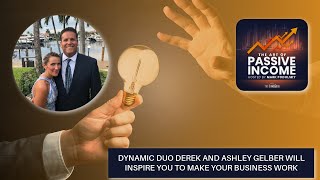
Derek and Ashley Gelber went from concert cellist and finance director to land investors using Mark Podolsky's programs. One-on-one coaching taught them to focus on velocity and multiple revenue levers like selling notes. They automate everything with virtual assistants and a training library.
Chapters
Hey, it's Mark Podolski, the land geek, with your favorite niche real estate website, thelandgeek.com and on this week's roundtable podcast, we have no roundtablers because it's July and everyone takes off. But I, of course, am working because I took June off. And I've got a special treat for you, dear listener. It is always our favorite and most popular podcasts when we have a coaching client on talking about their journey. And this week we have Team Gelber, Dr. Ashley, and Derek Gelber from the Fifth Horse.com, the Fifth Horse Land Company. And they have quite the journey. So Ashley, Dr. Ashley, Derek, welcome.
Thank you for having us, Mark.
Yeah, excited to be here.
So glad you guys are making time to do this because everybody's always inspired by someone else's journey and hearing it because you're just a little bit further ahead than the listener and what they're doing in their land investing business. So let's just rewind the tape. How did you guys even find Land Geek and Land Investing?
So we started us a remodel rental, you know, business where we would buy homes and remodel them and rent them out. And, you know, I was on the phone with one of my mentors one day talking about, like, I don't know, the latest remodel, and he's like. He's like, hey, go get this book. He's like, I read it last night. He's like, literally, I read it in one night. And I think you're just going to dig it, man. It's like all the nonsense that we deal with with tenants and roofs and ACs and all this stuff. He's like, there's a guy out there that just buys land and he teaches you how to do it. So I bought it on Amazon, and then when it came in, I read it that night. And at the back of the book, it was your book. It was dirt rich, and you had your email. So I literally finished the last page, emailed you, and you wrote back, and you hooked me up with Scott Bossman. And we just kind of felt our way through the next steps of how to take what you laid out in your book to, like, some reality. And that's how we started.
I do want to add, at the time he was reading the book, I was kind of running around the house, like, cleaning up or whatever, and he's like, hey, Ashley, get this. And he read a part of your book that was like, if you love finding a great deal, this is for you or something. Something to that effect. And I was like, I'm down. Let's go. So, like, that's, like, my favorite thing to do is find the good deal, and it, like, makes my day. So that's, like, the full picture. And, yeah, we were. We. We were rocking and rolling with Scott Bossman the next day. So.
Yeah, that's.
That. That's so funny. That's awesome. Okay, so then you guys go into flight school.
Yeah.
What was that like?
Gosh. Going back, it seems like ages ago. Even though it was only like, a year and a half ago, you know, that was exciting because Scott Todd is a master. Like, and you knew it the moment you were in it. And we're just, like, feverishly doing everything that we're told and, like, following the recipe. And, like, week to week, we were just excited, you know, for the next thing. We're like, we're ready. Let's do it. Let's go. Like, tell us what to do and we'll do it.
And.
And it was really cool to have that. And we also did the accounting for land investors on top of it, like, simultaneously. That was critical, too. I highly recommend that for anybody starting out. So, yeah. Yeah, flight school was awesome.
And the cool thing about, like, flight school was it was right out of the gate. So day one, here's what we're doing. There was no, like, you. You remember in college, you look forward to the first day of class because all they do is give you the syllabus and there's no real, like, stuff being done. Well, there was no cruising here. It was like, hey, you're here to go to school. And we're literally going to do, you know, pricing matrices and deals and marketing. Like, right now with you, like, we're going to hold your hand and do that, which was so crucial because.
You.
It's like reading your book. You get an idea of the hope and dreams and possibilities, but there's this huge gap. Like, okay, now what? And that. That flight school is perfect for us. Yeah.
And you both have really interesting backgrounds coming into this. So, Dr. Ashley, tell us what your background is, and then, Derek, do you grab your background?
So I've been a musician since I was two years old and a professional musician since I was five. But I am a cellist, a concert cellist. I travel all over. I give anywhere from 150 to 250 concerts a year. I've really been immersed in that musical world my whole life. That's. That's really my background in a nutshell. So, yeah.
So, yeah, That's. That's just so cool. Like, sidebar of all the places you've traveled to, which is your favorite?
Whoa.
Okay. It. Okay. I love Norway. In Iceland. There's something magical about the fjords. For me, it's, like, in. My favorite state is Maine. So Norway is kind of like. Actually, we got married in Norway, Maine. So, of course, it's very, like, there is a, like, tether there for me and my soul. But I also am partial to Switzerland. Those are my two favorite.
What about Italy?
I do love Italy. I had a. A music festival with my best friend in Tuscany, and that was astounding. Astoundingly beautiful. So, I mean, I, I. If I had to choose a continent, probably Europe, just because of, like, Vienna, Switzerland, like, I just love all. All of those. Those, like, really, their cultural meccas. I mean, that's kind of like where Western music was started, too, so. Or in the arts. So, of course, I have a natural pull towards that. I just.
And you.
And.
You and Mozart have so much in common, so it's pretty cool.
That's flattering. But, yeah, I do love Salzburg, too, so.
Yeah, that's awesome. All right, Derek, what's your background?
So my cultural mecca is Athens, Georgia.
So.
While Ashley was touring the world, I spent a ton of time at the University of Georgia. So I have kind of a versatile, like, past and career history. I was in finance for a little bit. I, you know, series six, 63, managing portfolios, helping folks with their estate or, you know, pay less taxes through different investment vehicles. I was in marketing and sales, so print advertising. I was a circulation manager for a really large newspaper in Georgia. And then my whole life, I was a swimmer. So that's what got me to the University of Georgia. I swam for the University of Georgia in 1998-2000, and then I left the sport for about 10 years doing the other stuff I just talked about. And then I had kind of a crazy situation where I had never finished. I'd never finished college. Kind of like, when I retired from swimming, I just. I was lost, you know, and there's an opportunity that came up. Literally at, like, midnight, I went and applied to the University of Georgia. Like, 10 years later. It just is a. I don't know, some kind of crisis mode or something. We were right in the middle of the financial crisis, like, where we lost the housing market. And I was like, well, maybe they'll take me back. They did. They took me back within days. I couldn't believe it. And I thought I was just lucky but it turns out they have a wonderful program for any of their athletes that never graduated. And as long as they have a couple years left and they keep their grades really high, they gave me a full ride. So I was able to go back, reunite with my coach and the team, and I started coaching United States swimming. And one thing led to another. I started coaching in Florida. And then various teams would reach out to me and recruit me along the way. And so for the past 12 years or so, I've been a United States swim coach and an aquatics director. So I direct the entire facility and make sure we monetize that pool and create as much revenue for that department as possible with not only like USA Swimming, but tons of other aquatic programming. So that's kind of my deal.
No, I, I love it. And you both have such varied backgrounds, but what you do have in common is so economic dependency. So if, if Ashley's not playing cello or you're not coaching or managing, you're not generating any income. And so you go into flight school and you see, okay, here's a way for us to start, you know, solving not just our money problems, but also our time problem. And so you really up level after boot camp and go into coaching. What was that like and what really made you guys make that commitment?
Well, I'll say out of the gate at boot camp. So we were in flight school starting in January and we went to boot camp in August of the same year. And in that boot camp, you know, we learned what the one on one coaching was. And we heard the current coaching, some of the current coaching students speak. And it was like the immediate response, like intuitively was. And it wasn't even really thinking. It was like, there is no other option but to do this. And like it became a necessity almost immediately. As soon as we, we were taught what this coaching program was and we're like, we have to do it and we have to do it now. I think we did our application like.
In the hotel room upstairs right after.
We learned that it was like available and we just, we couldn't get started soon enough. And yeah, I mean the overwhelming feeling was, this is a fact, this is happening and it has to happen now. We don't have a choice.
This business was so important to us that flight school gave us a foundation to understand what we had to do. But for us, it's not enough. We would like to pay for education, we would like to pay to expedite issues, problems, brick walls. We want to have access to the coaches, we want to have access to people that are already where we want to be. And so we, we, we. I listed one of the rental houses, sold it in a few days, and we were able to. We were like leveled up.
Burned the ship.
Yeah, your burn the ship speech at boot camp wasn't lost on us. We literally listed a home, sold it in a couple days, and was able to put that money towards our business.
Yeah. You know, I love that story so much, and I won't repeat it yet. Come to boot camp. But really, you know, from our perspective, we're looking more for commitment over cash because you need to have that as your foundation to be successful in the land business. Can commitment first, and then if you have that commitment, you'll find the cash and you'll make the investment. And it is an investment. But everybody's like, well, what's my return on investment going to be and how long before I make back this money? Because it's not insignificant. So for you to. How has it been financially running your lab business and growing it from time you started to today?
Okay, so this is a living, breathing animal. So just because you learn one way to acquire land or one way to sell land, or two or three or four, you have to do them all. Because the underlying market is constantly moving, shifting, and changing its mind. So what works one quarter will might not work on the acquisition of the sales side the next quarter. So when you look at it like black and white, like, oh, hey, I put this much money into flight school or coaching, I should be able to make that back this way with this sale. Well, it might not look like that. Some of our biggest injections of cash have been from selling notes. Right. Not even selling land. Our second first or second maybe tied for first biggest injections are cash sales of land. Right. But the brick by brick building of the business. And ultimately what we want to do is build a note portfolio. That's what we want to do. Want to build a note portfolio of at least a million bucks. That's the first benchmark. And the note portfolio of a million bucks will tap into that passive aspect of the business so that we can have passive income so we can focus on running the business, freeing up our time. And so a lot of folks are talking about selling land. Selling land. Selling land. Yeah. That's what we do to get there. But we also, it's really, if you really look behind the curtain, we feel like it's building a note portfolio. And so when you're talking about return on investment, mark, we made just from the various ways of creating capital in this business. We made enough to pay for coaching in the first two months of this year. Right. That's not to say that we sold that much in land. We did sell. I mean, we've sold probably, I don't know, 20 properties this year so far. And we would, we're usually on track to have more than that, but we're just seeing a slow time during the summer. We've had a slow summer, but we're making, we're building a note portfolio and we're using like Scott Toddle say, and I have this sticker on my desk and I drew the levers. He's pull on all of your levers. Pull on all of them. Arb, wholesale, retail. Even if you got to raise money and go that route of fundraising or if you go the route of JVs, there's so many different ways of injecting capital into this business that the numbers can, the numbers can be a little misleading. Somebody can say, oh, I made this much money in January and February. Yeah, but you didn't do that selling just land. You had to pull on another lever to inject cash in your business and sell one of your notes. Right. Or two, it doesn't matter. So there's like this arsenal of stuff and you've got to understand how to deploy all of that and when. So if you're running out of capital, instead of saying, well, I'm not going to buy any land this month, you reach out to other investors and see if they have any land for Arb so that you can have a really small capital outlay. You can control that property and now you're back in the game. Right. So there is always a way to make this work. And that is what she and I are getting really good at during coaching.
Yeah. And I do want to add everything, everything that he said. And also, you know, the way that we view our business has really evolved and deepened. Like, I think of it as like, like when we were in flight school, like there's a follow the recipe and like in a sense it's almost like two dimensional or three dimensional. And when we're in coaching, it really kind of elevates it into like more the fourth dimension and you begin to see it's not okay, I need to acquire a property and sell a property. We're interested in something which to some people might, you think, oh, well, you know, you might be not making as much money as you might want to with the idea of velocity. So when we started to inject velocity as Our, essentially our philosophy, everything just opened up and you never really would have predicted how it would have opened up the business, but it just got those gears oiled and like left and right, you know, we're moving things. But if you were to stop and say, oh, you know, I, I'm going to acquire this and then 4x and sell it and velocity isn't, doesn't always work that way. You might be like selling a note for, you know, 50 cents on the dollar and you think, oh, I really, you might think, I want to sell that at full value and get as much money as possible. Well, you might be sitting on that for six months, you know, and then your business is stalled. So like that velocity really like, you know, got our business really to expand quite a bit.
Yeah, yeah. It's so funny about the selling notes because nobody ever wants to sell notes.
Right.
It's emotionally, it's, it's too hard to see that passive income go away. Even though financially when you do the numbers, it's like the greatest thing you can do. Right? The numbers are like crazy. But, but it's just like human nature. We, we don't want to take that, that short term loss, even though it's going to give us a huge long term gain. It's so funny because I think it was Nicholas Tlaib, the author. He's like, we're just not built because he lose money every day in the stock market. He's just bleeding a little bit every time, every day and then have these massive outsized gains that destroyed all of his losses, which is sort of like venture capital investing.
Yeah, Taleb's the man. I've got every single book he's ever written. I just don't like his stance on bitcoin. I think he's just, I think he's trolling bitcoin. Like, that dude's way too smart. That dude's way too smart to not understand bitcoin in its entirety.
Yeah, yeah. Nicholas Tillet. It's so funny that, you know, not to get off on tangent here, but some of the smartest people I know hate bitcoin and some of the smartest people I know love bitcoin. You just have to do your own research and see where you fall philosophically on that side. Look, I've got a bitcoin mining machine. I have bitcoin. I think long term, it's the future, but I still see the other side of it. There's still security issues. My buddy Ori's in security and he's A genius. He's like, I wouldn't put a dollar into Bitcoin.
Yeah, well, Michael Saylor says the nuclear codes are first to be hacked with atomic computing. So bitcoin might be like. That's what everybody says. There's security issues there. Well, it's not the first thing people are going to go after. Right. Okay.
Not to go off on a crypto tangent. So let's get back to you guys and you know, the systems, the processes, the people. So speaking of the levers, right, the three levers of growth is other people's time, systems and automation and other people's money. From where you started in coaching to today, how much time are you spending working in the business versus on the business?
I say look, and Tate Litchfield will back us up on this. We want to have the most boring business possible.
Okay?
Seriously. And we don't need to unnecessary. Like, Ashley and I are very analytical. We're very type A. We understand where our efforts need to be and where they don't. And we understand what we need to outsource and what we don't. And we have a very good pulse on our business and we run a super tight ship. So we spend a good amount of time still doing some stuff ourselves. And it's not because we can't outsource it, it's because we still have stuff to learn. Okay. And that's important to us. So yes, we have VAs. We don't do our own marketing, we don't do our own posting, we don't do any of that stuff. But the stage that our business is in right now, we don't have to outsource everything yet. So we would say that we're probably a quarter of the way to where we would be completely hands off. Is that fair?
Yeah.
Yeah.
But we also, you know, I've spent a lot of time and I know Derek has, doing certain things, you know, creating automations. So we do have a lot of really cool automations in place that alleviate more time. And I do want to add, like, fortunately in our business, he and I gravitate towards different things. And somebody said it the other day and it's the perfect way to put it. We fit like a zipper. So like, I naturally like doing, you know, X, Y and Z and I love it and I'll do it and he does, you know, A, B and C and like, it just helps our business. And yeah, I think the way Derek put it, it's like we're very clear of where we next want to delegate and when it's time, we will. And we've also gotten incredibly efficient at those things that we do already. And so it's just kind of like its own machine at this point.
Yeah, we got some good SAs. We also have a fantastic training library we've built so that when those positions do come up, they go to the library and off to the races.
Yeah, I love that answer because there's a big difference between abdicating and delegating. And so many people don't have. Don't have, like, the depth of knowledge, and then they delegate it, and then they get so frustrated when their VAs don't execute the way that they. They want.
Right.
And it's because it's the blind leading the blind. You abdicated it. You didn't delegate it. So I really love that answer about, we want to learn it more first before we get it off our plate. And so I don't think there's anything wrong with that at all. So. Okay. Do you guys have a favorite deal you want to talk about?
Well, I know hers. I know hers already.
Yeah, I think I.
Go ahead.
Okay.
So Derek was at work one day, and I forget what I was doing that it was a weekend, and I think it was, like, my first weekend off from performing or something. And I just checked my email, and I literally, like, like, yelled out loud. No one was here, but I was just like, oh, my gosh. Because I do all the accounting, so I get all the emails that are like, so and so made a down payment on. So, you know, and, like, I, like, texted Derek. I'm like, you didn't tell me we had a sale. Like, I couldn't believe he didn't tell me. Like, it was the first time ever. And. And I was like, you know, a million exclamation points of like, you know, and not. It was incredible. And so he called later, and he's. And he, like, had no clue. So he does all the sales, so he's always the first to know. But this was my first to know, and I got to be on that. Like, I. It was like, candy, like, this person.
So to cut this person, I never talked to them.
Oh, wow.
That's what she's looking at.
Yeah, they just.
Yeah, that's what she's getting at.
He just Googled and, like, made a down payment. The next part of this sale is Derek comes home, and we're on the computer, and we're writing, and he's like, you know, there's a property right next to it. And then we got the other down payment. I mean, it was like the million dollar.
So I called the guy to say, hey, congrats on your new land. Legal's drawing up the contract. It'll be there in 24 hours via DocuSign. I know we haven't talked before. Do you have any questions? And he's like, no, I'm good. I'm like, well, check this out. I also own the property right next door. And he goes, send me the link. And so I sent him the geek pay down payment link and he bought it. So that was two. Zero work zero.
Oh, that. That's a nice one. That's a nice one. Okay.
Yeah, yeah, that's gotta be. That's gotta be the best.
All right, so if you're, if, if someone's listening to you guys and they just are a little unclear, unsure, what advice would you give them about the land business or even going into coaching? It's a tough question.
It is tough, because this business can be tough. Okay? So. When, when you're drawn to the dream of freedom and passive income, that's a strong pull, right? And then you get in this community and you realize everybody is such a fantastic human being, and you realize you're home. You're like, wow, I found. I found it. Like, that's the eureka moment, right? Well, then all the work starts, and then what you learn in class doesn't happen exactly the way it was supposed to, right? So it's on you now to pivot, whatever that may be. And we've. This summer, we've done 15, 16 small pivots to marketing, pricing, acquisition, everything, deals.
Of the week, everything.
So the advice would be, yes, this system and education is in place to help you get to those dreams that first got you interested. But nobody's going to save you. You have to do everything that you're taught and more. And that's where the community comes in, because you talk to the other investors, you talk to your coaches, you. You go back and look at your notes, right? So I would say. Don't be under any false assumption that just because you have the answers that it's going to materialize. It's answers plus action, and constantly being able to pivot and shift and be a freaking master at whatever it is you're trying to do, whether it's marketing or acquisition or sales or SaaS or whatever. And the other tiny little bit would be, you don't need to overdo it on SaaS, okay? Everybody out there is going to tell you that builds a SaaS is going to tell you need that SaaS for everything and you'll have death by a thousand cuts. So do your LG pass, do your geek pay, do your follow up boss, you know, maybe zapier, stuff like that. Right. But you do not have to sass it to death because if you think SaaS is going to solve all of your problems, it's not. At the end of the day, you still have to buy and sell land all on your own. So that's my two cents.
That's a great answer. I would say the first thing that like just jumps out is keep going, be consistent and have a really, really powerful why and believe it with every fiber of your being. And all the rest of it will just be okay. This is just a sign I got to keep going. I got to keep going. And I find something I've learned recently is when there's a wall or pushback, it's a sign you're doing something worth doing. And I take that almost as a challenge. So in this business there are walls and really all it is is to test you and to make you stronger. Push through it. And really all that took to push through was consistency and a reminder of your why. And you got it like that. That's at its most simplest way I can put it.
Yeah. And go to all the masterminds.
Yeah. The community is easily the best part of our business, at least for me. Like the people and then the resources. But first it's really the people and without it, I mean, that just makes this fun.
And yeah, we're beyond fortunate to be a part of a community that is like minded and like, like hearted. Like we all have a very similar heart and a very similar soul. We're all very similar in that respect. And man, when we found you guys, we just felt like we were at home.
No, it's, yeah, we're so lucky. You know, you guys, our whole community, it's, it's, it's amazing. And I, I always say that boot camp, like there's not anyone in that room I would hang out with and, and just enjoy. So just it's, you know, it's, it's really magical thing. But we're getting short on time here and I have so many more, you know, things we could talk about because you guys are so big on mindset and we could actually have a part two about that, you know, one day. But before we get to the tip of the week, I do have to give a shout out to our sponsor, which is flight school. Learn how the next 16 weeks can transform your life. Start building up that passive income quickly, safely, efficiently with Scott Todd, who's done it thousands of times as your Sherpa. And all you have to do is go to the landgeek.com forward/training schedule a call and that flight school tuition ain't gonna cost you nothing, guaranteed. Just show us your work. The flamethelantgeek.com forward slash training. All right, Derek, Ashley, we're at that point now. Your mentorship has been invaluable. What is your tip of the week?
All right, so the tip of the week is a book. All right. It's by Wallace D. Wattles. This is a book called the Science of Getting Rich. It was written 112 years ago. It's not a new book. I've never read anything like it in my life, ever. There are so many times when reading this book that I think of this community. I think of Mark, I think of Eric and Tate and Scott and Scott and Mike and Terea. I really don't want to talk about it very much, but if you can go out, I think it's five or six bucks on Amazon. But it's the Science of Getting Rich. It may or may not be what you think it's about.
You know, Zaina loves that book, by the way.
It's the most incredible thing I've ever. I'm speechless throughout the entire thing. And you know what? Like when you bookmark a page and then every page is bookmarked, so you just quit bookmarking them and the whole book's highlighted. And the whole book is highlighted. It's. It's unbelievable. That's our tip of the week. Anybody that reads that book, understands it and again, puts it to practice, like, takes action on it. I can't wait to see what it does for us. Actually, it's already working for us.
Wow. Well, my tip of the week is learn more about Derek and Ashley. Check out their land business@the fifth horse.com we'll have a link to. It is the number five. Check it out. And I just want to thank the listeners and remind them the only way I'm going to be able to bribe our coaching clients to continue talking about their businesses and their lives and their journeys. If you do three little favors. Follow rate, Review the podcast, Send us a screenshot of that review. Supportlandic.com I'm going to send you for free a signed copy of Dirt Rich, which currently has a value of about 12 Bitcoin. No, I'm just kidding. Not really. Not really?
Yeah. But honestly, like, the book, when I bought it, whatever it was on Amazon, was 20, but I had no idea what I was getting into. Mark, what that book has provided us just today, and we're nowhere near where we want to be, is invaluable. You can't even put a price on it.
Thank you. Thank you. Well, this has been amazing, you guys. Thank you so much for taking your time, sharing your hard earned wisdom with the community. And I. I think I'm seeing you soon, right?
We're not going to be able to go to San Antonio.
Atlanta. Yeah, Atlanta. October boot camp. All right, well, let's do this. One, two, three. Let freedom ring. Thanks, everybody.
All right, see you, Mark.
Thanks for listening to the Art of Passive Income podcast. Are you ready to learn how you can start building a passive income without renters, rehabs, renovations or rodents? Schedule a free consultation@thelandgeek.com training. Let freedom ring.
More from Mark





How to find funding partners: How to Scale Land Without Using Your Own Capital


