GET A SUCCESSFUL NEW YORK CITY BROKER”S PROVEN TIPS ON REAL ESTATE INVESTING
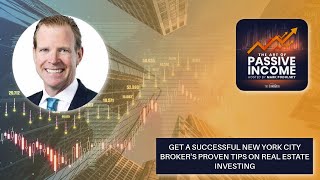
Podcast episode (YouTube) in which Mark J. Podolsky interviews James Nelson, an NYC-based investment sales broker and investor. Nelson recounts his career start, describes a recent investment case (two RV parks), emphasizes the importance of choosing the right partners/sponsors and building complementary teams, and recommends practical, hands-on research ("pounding the pavement"). He also highlights retail as an attractive, contrarian asset class post-COVID and promotes his book The Insider's Edge to Real Estate Investing.
Chapters
Hey, it's Mark Podolski, Land Geek with your favorite niche real estate website, the landgeek.com and on this week's Art of Passive Income podcast. My guest is James Nelson. And if you're not familiar with James Nelson, he's a highly acclaimed investment sales broker. He's the principal and head of Avison Young's Tri State Investment Sales Group in New York city. During his 25 year career, James has sold more than 500 properties and loans from totaling over $5 billion. His accolades include being named Commercial Observers, Power 100 Costars, Power Broker and receiving the Deal of the Year award by Rebny. James Nelson is also a serial real estate investor and has launched two real estate funds with total capitalizations of over $350 million. He is passionate about helping others achieve real estate success and offers regular training through his podcast, the the Insider's Edge to Real Estate Investing. He regularly lectures at little colleges like Columbia, Fordham, nyu, Wharton, and his alma mater, Colgate. James Nelson, welcome.
Mark, thank you so much. So wonderful to be back with you. Of course, had the pleasure of having you on my podcast. So for your listeners, definitely go and check that out. I certainly learned a ton and just appreciate all the value that you put out there through not only your site but this podcast. So thank you.
Yeah, James, thank you. And let's just rewind the tape a bit. And what was it about real estate that, that you're like, okay, I'm going to devote my life to this craft.
Well, it was really luck. I wish I could tell you that I had grand plans of becoming a real estate broker and an investor. But in college I really didn't even know real estate was an opportunity. And my senior year up at Colgate University, all my friends had investment banking jobs and I thought maybe I'd head out to the west coast to make movies or something until I figured out that no one was actually paying me to actually do that. And being $5,000 in credit card debt, I said, look, I better go find a real job. So I went up and there at the career service center, there was a posting for an associate position at Massey Nakala Realty Services and was based in New York City. And I went for an interview and miraculously I was able to get the job. And that was my start. So really good fortune to have ended up at such a great place with such great mentors from the beginning of my career.
Yeah, so you've raised a lot of money in funds, you've done a lot of deals as an Investor, kind of walk me through a recent case study of a deal that you liked and why did you like it?
Right. So for me, and a lot of what I talk about in my book, the Insider's edge to real estate investing is to find great partners who you can invest with. And so because the majority of my investing has been as a limited partner, of course, I go out as a GP as well. I've also, as you noted, raised funds to go out and put out capital into deals. But for me today, it's really, it's always about the sponsor and who I'm investing with. That is because, look, my expertise is New York City. And I also talk about in my book why it's so important to be an expert in whether it's a geography, whether it's an asset class. Certainly with what you do, I mean, you have a very specific niche that you focus in on and you've perfected. But when it comes to investing, and I certainly do invest in New York City, but I have holdings all throughout the country. And when I go into either a new area or a new asset class, it's really important that the sponsor who I'm working with, so my latest investment is actually in two RV parks in the Southeast. And I know I'm, you know, maybe I should be embarrassed to say that I know very little about the RV business. I mean, it looks good on paper, I understand kind of the fundamentals of the business. But if it were not for the partner and my 20 plus year history of dealing with this partner who has had success not only with, with these types of investments, that others, that's really the reason that I went into it. And what was attractive to me was certainly the cash flow and the future upside. So looking at some of these mom and pop operations and figuring out how to institutionalize them. So that's just one example.
I love it. Well, I'm glad you brought up your Wall Street Journal bestselling book, the Insider's Edge to Real Estate Investing Game Changing Strategies to outperform the Market. And So you've got 10 steps to dramatically up your game in the real estate market. Of those 10 steps, which one do you think for someone beginning is the most important?
It's a great, a great question because yes, they are steps and they're all part of the process. But you know, look, that, that first start, first step of finding the right partners, what I've found is this business is all about the people. And for those listening out there who are already in the business, you know, that the success of any real estate business? Yes. I mean, it's where you bought the property for, how you found it, how you improved it, how you capitalized it. But what really made it successful was your personal involvement, what was the value you brought to the table, and the other team members as well. So I think it's so important. This is a people business, and so the connections that you form and having the right specialists on your team, whether that's an attorney, whether it's a great investment sale broker, a mortgage broker, having great professionals is really key to the success. So I think it's about the people and finding that right team.
So when you're looking for a good team, what are some of the attributes that you would say, okay, this person has these attributes that I want them on my team?
It's a great question and certainly has to be someone who wants to join a team. And there's plenty of people out there who just like being a lone wolf and doing things on their own. I find that. Well, there's certainly some people who can be successful doing things on their own, but it's certainly not a lot of fun and, you know, it'll become all consuming. So I think Finding a Team, and this goes back to the Jim Collins Good to Great book, and not only finding the right people on the bus, but putting them in the right seats. So if you're building a team, you don't want to have a team where everyone has the same strengths. Right. You want to have people who complement each other. And so if your strength is being a great leader and going out and cultivating relationships, you might not be the one who's actually running the properties day to day or running the numbers on it. So I think it's finding people who complement each other, and they have to be team players. And the first company that I worked with, we ended up hiring a lot of athletes because they know what it's like, not only for hard work, but also how to work as a team, to win together. So that's a huge part of it.
That's. That's such an interesting insight, athletes. I remember talking to someone who was hiring like a Merrill lynch and they liked ex military for the same reasons. So it was like, oh, you're military. Come be a broker here. Because you've already sort of shown this track record of hard work, discipline, and being able to work as a team. So now that you've. Well, first of all, why write a book? I mean, I've written. I've got one book out I've got another one coming out, and it's really hard to write a book. So what made you think, oh, I'm going to write a Wall Street Journal bestseller and share all my wisdom. How did that come about?
So, well, it was certainly right after Covid, when we all had a little bit more free time on our hands sitting at home. And I'm a big fan of coaching, and my coach said, look, do you want to just sit here and try to wait this out, or do you want to try to take advantage of a period of time? And we didn't know if this was going to last weeks, months, years, but to really take advantage and do something that you might not have an opportunity to do when you're busy, back to your back in the office. So it started actually with the podcast and interviewing a lot of legends in the business. And so as I was pulling some of these stories together and that book is still in formation, I said, well, this is great, and this is inspiring, but it doesn't actually tell you how to do it. And, Mark, what's wonderful about your books is that you are so, so specific. You have given your audience the. The actual roadmap. And as you mentioned, I do a lot of guest lecturing. And, you know, these master's programs, there's. They're incredible. Not just for the networking and for the mentorship and the value, but, you know, you get the theory, the history, certainly how to underwrite, how to actually do the numbers. But what I found at a lot of these schools is what. What is not really provided for is the actual practical steps, the actual how to. Which, again, Mark, you do such an incredible job with your program. And so I said, look, I've got to write the book on how to do this. How do you actually go out and find properties? How do you work with brokers? There's not a lot of sources out there that if brokers are going to be at least for what I do and the type of investments. And Mark, I know your platform and the brilliance of it is you're going directly, you know, to the owners. But for what I do, you're dealing largely with the brokerage community. And so how do you cultivate those relationships? And I just, I want it to be a very practical guide. So if you're listening to this right now and you go out and you get this book, even if you've never invested in real estate before, you'll say, okay, I get it, I understand the big picture and how this works. And then you can figure out what you want to do. Okay. I want to go visit or I want to go invest in land. Okay. So this is really a foundation. So my hope and I have been on a speaking tour and been bringing it to the classrooms and getting a lot of positive feedback. So that's been incredibly gratifying because I'm certainly not in it for the money, but I've really enjoyed being able to share what has traditionally been a very difficult industry to break into because it's. Thankfully, there's great podcasts like this where you can learn, but for most people, they don't even know where to start.
Yeah, absolutely. And the old saying in real estate is that that first year you're going to starve. Do you agree with that?
Well, it depends what you're looking to do. So I'm an investment sale broker, so I sell apartment buildings, development sites, retail, office. The life cycle of that deal can be six months. Right. And so. And it's full commission. So getting into the business as a broker. Yes, you should. I don't know if I would call it starving, but. Because there are other ways to get into this, and maybe it's working as an associate for a senior broker and making a base salary with some bonus, but there are certainly ways that you can get into brokerage, even on the residential side, where you might be able to earn some revenue sooner. But, yeah, as an investor, this definitely, you have to take a long view. And if you're just thinking about how do I make money in the first year, I think that will definitely. I think you're going to set. Set yourself up for some challenges, but also I think you're going to miss the process to really build the right foundation for the future.
Yeah. And you've obviously seen a lot of people in real estate on your team in the brokerage community. If you were going to build, let's say, the. The perfect broker or the perfect investor, and you're going to make a stew of it, what ingredients would be in that stew?
Well, I think when you're a broker, the most important thing is you have to put yourself in your client's shoes. Okay. So if you're. If your goal is just how am I going to make the most commissions? You know, that's, again, that's not where the focus needs to be. It's how can I put myself my client's shoes and what's keeping them up at night? How do I help them stay ahead of the curve? Right. And that's a lot about what the insider's Edge is about is helping investors become more successful and things to look out for and how to find the opportunities in the market. So I think that's really important. But the hard skills that are essential are that expertise. Right. And so when I started in the business, I had a geographic area that I covered about 50 blocks and I had to know everything about every property. Had to know where were properties selling for, where were retail rents, learn about all the new infrastructure projects, zoning changes. And I tell you, even though I was brand new to the business, after studying an area for three months, I knew way more than the brokers who had been doing this for decades, but were generalists. So there's that mark, there's that expression, jack of all trade, master of none, that applies to brokerage, but I think it also applies to investing. And again, that's why you've been so successful, because you are so specific about your business plan and how you approach it.
Yeah, I mean, I always joke I'm an inch wide and a mile deep. And I'll be honest, it's not that I don't get shiny object syndrome. I do from time to time, but I just know that I have no advantage in any other segment of real estate. So why would I take the risk when there's so much opportunity in my niche? And so to that point, what would you say to somebody who's, let's say, graduating from college, they want to build wealth, they want to build passive income real estate, or someone in a W2 job and they're looking for maybe a sponsor and they want to make an investment. What makes a good sponsor to you?
Well, I think integrity above all is essential. And working with someone who has an incredible reputation and does the right thing. And that's not to say if you've been doing this long enough, not every single real estate deal is going to be a success. There's going to be challenges and this market will certainly test a lot of people out there. But the question is, how do you deal in these tough situations? You know, how do you treat the people in your business? How do you treat your service providers, your capital partners? So that's really, really important. And so there's organizations out there, you know, here in New York, whether it's the Real Estate Board in New York or Young Men's and Women's Real Estate association, but these are organizations that not only are a network and to help educate people, real estate, but they also do a lot of good. And I find that when you're out there, whether it's at a charitable event and you're there to try to help and make a difference that those people who you are surrounding yourself, who are also successful in the real estate business, that's really what you're looking for. You're looking for someone who has the right expertise and track record. And I talk about this in the book because I think one of the number one things that hold people back, and maybe you're listening right now saying, this sounds great, but I don't have the capital to invest. I don't have money to get started. And what you can bring to the table is that deal, that opportunity that no one else knows about. So you find that great opportunity and you bring it to a sponsor who has that reputation, that integrity, that track record, and you say, look, I'd love to partner with you on this. I'd love to do this deal with you. And look, I'll try to bring as much money to the table as I can, but I'd love to get some sweat equity in the deal to be included in your general partnership. Let's go raise some money from limited partners. And I'd just like to shadow you, and I'm willing to do whatever work it is, and you do a couple of those, and that's a great way to get started in this business.
Mark, I think that's amazing advice. That's amazing advice. What is the worst advice you see or hear given in your area of expertise?
The worst advice? Well, I don't know if it's advice, but I think there's so much herd mentality out there. I mean, just read the headlines, right? And I'm, I'm not saying that you have to be a contrarian to be in this business, but do your own research, right? And I think also one thing that's happening a lot right now, and this isn't me making a case for why you should invest in the office market right now. But what happens is, especially the media, they like to make these broad, sweeping generalizations that office is dead. Right? Well, it's very specific not only to sub market, but type of property, location, industry. And even we could be talking about retail, we could be talking about land. It's so important to understand, you know, what is specifically the type of properties that you're speaking about. So I think, Mark, that's a long way of saying that. Be careful not to overgeneralize. Be careful not to just get caught up in the headlines. You know, there can be great opportunities, even if the overall asset class is having its challenges. You know, you got to look for where are those opportunities within.
Yeah, it's, it's funny, I was reading something about this a couple days ago about all these empty offices and cities saying, hey, we've got a big homeless problem, let's pick on la. And there's all this office space and how it's just not feasible to, to convert office into residential and the things you just don't even think about day to day basis and how expensive it would be and the challenges it would be. But in that article, to your point, there was someone in the business who said, hey, look, this is a temporary thing and we don't know what's going to happen in this market two years from now where the vacancy rate could just plummet and they're going to want that space. So no one really knows. It's one of those things. So I always think about that. Jeff Bezos quote, if everything's going to change and everything is going to change, what do you think's not going to change? What's fundamentally core principle in commercial real estate?
I love that. That's spot on.
What do you think is that core principle that's not going to change?
Well, I think that first of all, real estate is clearly a hard asset. Right? So we can talk about the financial markets and other types of investments that you can make where you're often at, you're at the mercy of other people and you're also, you know, the type of information that you can get. And I talk about why real estate, why I like it so much more as an asset class than say investing in the stock market. You know, I love the fact that, you know, real estate is always, there's inefficiencies in the market that I know you know well about and there's ways to benefit from that. Right. And so I think unless if someone figures out how to get individual assets to trade on a stock exchange where everybody has the same information, and believe me, there's a lot of companies and platforms trying to solve for this. It's a lot tougher than you think. But I still believe that real estate becomes such an attractive asset class because you, you do have that ability to have that ownership, to control your destiny, to reposition it, to benefit from it. So I, I don't think anyone's taking that away from you.
Yeah, absolutely. And when you look at millionaires in this country and how they, they made it, it's always, I won't say always, but it's, it's. Real estate is, is number One, it's very rare when it's somebody's like, oh, I invested in the stock market for 30 years and I became a millionaire. I don't know if you agree with this, but I think stock market investing is just an ant, is just setting yourself up for constant financial insecurity as day to day, you watch the market go up and down, up and down. You see your net worth go up and down, up and down, day to day, minute to minute, hour to hour. Where in real estate, it's the antidote to financial security. You can see your, your net worth grow. You can see the passive income grow. You get the appreciation of the building. It's, it's.
You can control your. Your destiny. Yeah, you can control it. I think when you're investing in the stock market, first of all, you're getting the same. Everybody has the same information, theoretically, but you're relying on that company's board and, you know, they're making decisions based on what their stock is doing and their quarterly earnings. Whereas, you know, for you to actually take control of your own investments, you know, real estate gives you that, that benefit.
Yeah, absolutely. So speaking of asset classes, do you have a favorite asset class as as of today?
Well, I have to say, besides RV parks? Well, I love what you're doing, Mark, because it's so specific and you have been able to really figure out the inefficiencies and the whole strategy. It's again, my business is here in New York City, and I wish we had unspoken for land or land at least with tax liens, we might actually get there pretty soon. I wouldn't be surprised if you start seeing stuff in our market if things keep up the way they are. But now I'm a huge fan right now of retail. I love retail because first of all. And talk about a contrarian Play. The last 10 years, we've been all hearing about the death of retail and E Commerce and Amazon and certainly Post Covid. No one's going out, no one's shopping. And so it's been a huge disruptor. I mean, here in New York, we saw Even Madison Avenue, SoHo, you know, half a dozen for rent signs on every block. I mean, the rents in some cases dropped 70, 80%. And then guess what happened? People came back. People are out there walking around, and they might not all be showing up to the office, but they live here. Right? And so now we are seeing these retail corridors start to fill up again. And so what happened was the rents had to come way down. Right. To make it attractive enough for these retailers to make that commitment. But now that these retail corridors are full, now as an investor, you have the ability to go in there and buy these deals at very attractive cap rates that have expanded as interest rates have gone up based on these post Covid rents, which again, don't make generalizations. I'm not saying that every single lease that was signed in late 2020 has upside today, but in many cases, because I know we just closed on a prime corner in Soho. There was a national retailer paying $150 a foot rent. And for those of you listening across the country, you might say that sounds insane. Well, guess what? SoHo was up to $1,000 a square foot rent at one point. And you know, look after this all cash buyer came in and bought it at a 5 cap. That retailed retailer doubled the rent the next year. So, you know, there is definitely upside. But being that expert, that specialist and really understanding, you know, what are the types of retail spaces that rent, what's the right position on the block, what's the right. If you're doing multi tenant, what's the right tenant mix? Really important, but I think there, there's huge upside potential if you know what you're doing there.
Well, James Nelson, your mentorship has been invaluable to our listeners. But we are now at that point in the podcast where I'm going to put you on the spot one last time and ask you for your tip of the week. A website, a resource, another book, something else actionable for the art of passive income listeners to go improve their businesses, improve their lives. What do you got?
Love it. So I would say for a book recommendation, one of my all time favorites is Give and Take by Adam Grant, who's one of. He is the top rated professor at Wharton. He's got a great podcast as well. But it's really more of a mindset. It's not going to Mark. It's not a how to in real estate investing, but it's a mindset, an abundance mentality of giving back. I mean Mark, you're a great example of this, you're giving of your time, you are helping others to achieve this financial independence. And look, I really. And he did a study of the people who are givers, meaning that they put things out there without expectations of something in return. And in the long term, guess what? They do better and they're a lot happier. And it's the right thing to do. So hopefully that'll inspire some people out there. And I would say the tip of the Week. And Mark, this might be, I know for your business this is probably not possible, but okay, if you are investing in a specific area and let's say you like my retail idea, that resonates with you. Get out of your office, get out of your apartment, get out there and pound the pavement. I still believe that real estate is very much a touch and feel business. Where, sure, there's so much technology out there today, we can check out Google Earth, we can do all these things. But I guarantee, because I just did this last Friday, I'm looking to make some retail investments just north of where my office is here in New York City. And look, I looked online, I found, you know, maybe two or three listings that were of interest. I came back after canvassing a day and I came back with at least two dozen actionable ideas. And yes, some of them are for sale signs, but some of them were vacant stores, vacant sites. Hey, what's going on with this property? I really think if you get out there not only looking at the real estate but also talking to people out there, making connections, finding out who's active, you know that that's a great way. Again, if you're in a business that's really involves kind of block by block, I know with what you're doing, Mark, you've got an incredible national portfolio that might be a little more challenging to walk your portfolio. But you know, there you have it. That's my tip.
Yeah, I mean the way that we do it, we just, we just delegate it to someone local and have them fill out our property reports. So especially if it's a new area. But you know, dirt's so much simpler than what you're doing. Well, my tip of the week is learn more about James Nelson. Get the insider's edge to real estate investing at a very simple website which we'll have a link to. James nelson.com James nelson.com the Insider's Edge Real Estate Investing Learn the 10 steps to dramatically up your game in the real estate market. And think about the, the different opportunities that you may not have thought about. Because as much as I love land, really it is just the vehicle for you to solve your money problems and your time problems. Because once your passive income exceeds your fixed expenses and you're working when you want, where you want, with whom you want, you're free. And that's really my ultimate goal. And I'm kind of agnostic to how you get there. And so I think the more you are exposed to other ways of building your passive income and just the better because not every strategy is going to resonate with you. So definitely check that out. Also, if you are interested in solving your money problems and your time problems in real estate and land, well, check out our sponsor, which is Flight School. Learn how the next 16 weeks can transform your life. Go up the mountain of land investing quickly, safely and efficiently with Scott Todd as your Sherpa. And I know what you're thinking. The investment. What's that investment? It ain't going to cost you nothing. Guaranteed. You're going to make back that money 180 days or less. Just show us your work. Learn more go to land geek.com forward/training thelandgeek.com forward slash training James Nelson Are we good?
That was awesome, Mark. Thank you so much and just really hoping that your audience out there listening is going to get a ton of benefit and wishing everybody all the success.
Thank you. And I want to thank the listeners. Remind you the only way, the only way I'm going to get the quality of guests like a James Nelson from James Nelson.com is if you do three little favors. Follow rate Review the podcast. Send a screenshot of that review. Support the Land Geek.com I'm going to send you a signed copy of Dirt Rich and it just really helps because James Nelson is going to look at our reviews like, oh yeah, I'm not going to go on that podcast. There's no reviews. So it's selfishly do it. All right. Let freedom ring. Thanks everybody.
Thanks for listening to the Art of Passive Income Pod podcast. Are you ready to learn how you can start building a passive income without renters, rehabs, renovations or rodents? Schedule a free consultation@thelandgeek.com forward sltraining let freedom ring.
More from Mark





How to find funding partners: How to Scale Land Without Using Your Own Capital


