GET YOUR HEAD RIGHT, RAISE YOUR VIBRATIONAL FREQUENCY AND LIVE A HAPPIER LIFE
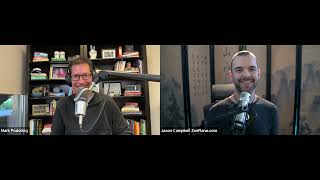
Podcast episode (YouTube) from March 7, 2023: a conversation between Mark J. Podolsky and Jason Campbell about meditation, breathwork, music as healing (Zen Piano), routines for entrepreneurs to build presence and emotional mastery, and several creative projects (VR breathwork course, Retreat app presence, Cleater, Arizona town purchase, Vatican NFT scoring). Campbell explains meditation as creating gaps in thought, three types of meditation (sitting/standing/moving), breathwork as an entry point for entrepreneurs, and the importance of habitual wellness practices. The episode also covers Campbell's background (100+ albums, Billboard success, 7th-degree black belt) and practical tips (5-minute breathing exercise on zenpiano.com; join invite-only programs via contact).
Chapters
Hey, it's Mark Podolski, land geek with your favorite niche real estate website thelandgeek.com and on this week's Art of Passive Income podcast. I am so excited and I think you, dear listener, are going to be so excited to hear about not just the business acumen, the passive income ideas, but the essence of the wisdom of Zenpiano.com my guest, Jason Campbell. So if you're not familiar with Jason Campbell and his music, I'm going to give you the rundown of his illustrious bio. Jason has released over a hundred albums. He's been number one on multiple Billboard and Amazon charts. His five Billboard top five albums in a five month period. He's a seventh degree black belt and the co founder of Zell Wellness. Jason's music is being used at hospital ERs, yoga studios, wellness centers, therapists, waiting rooms, hospices to relieve stress on families and reduce end of life drug use. He's the director of music for Genius X Virtual Reality. He writes music and meditations for virtual reality. His work is also found on performance based app like Happy Chilly Sleep and Focus at Will which I use and recommend for all of you who are add. Jason runs the Zen Business Mastery Entrepreneurial Mastermind and is releasing the first breathwork course in virtual reality in 2022. And we're going to talk all about this. His most recent endeavor includes purchasing the town of Cleater, Arizona with a small group of visionary investors. He is the sheriff of Cleater and he's combining Western culture with Eastern wisdom to create a community committed to the uplifting of the human spirit. Jason Campbell. How are you brother?
Hey, it's so good to talk to you here. We've had so many conversations and now we get to record them.
We've had a lot of conversations. We're in Genius Network together run by Joe Polish and it is the most pretentious name of a mastermind group. But that being said, there is a genius for sure with lots of those members, but especially you, Jason. And so let's just rewind the tape. And how does someone start in creating music to, let's just say, increase the vibrational frequency and awareness of others?
Okay, that's a pretty big, big question. So. Well, let's let me start with the story. So this is going back almost 43 years ago. I was 8 years old and my first piano lesson. My teacher said to me, never ever listen to notes. Idiots listen to notes. Masters listen to the space in between the notes. Because when you listen to a note, your mind is Cluttered, and you hear nothing. When you listen to the space, the note, the silence, the gap in between, then your mind becomes clear and you hear everything. So my earliest entry point into music was actually meditation. Now, I didn't know this was meditation. I didn't learn, figure out that it was meditating until years later when I was formally trained in meditation. But we would just take a note, hit a note on the piano gong, and we listen to that note dissolve into nothingness. And then there's that moment where it's a thing and it's a no thing, it's a vibration, and it's a no vibration, and you focus your. Your attention right on that spot and listen to it going into nothing. And I didn't know this at the time, but that's actually one form of meditation. Because if we go back to basics and we say, okay, what is meditation in its simplest, most basic form? All we're doing is creating a gap in the incessant stream of thinking. The voice in the head, the blah, blah, blah, the conversation in the head that you, the listener, is having right now with yourself. You're interjecting in your head in our conversation here, and it's going, blah, blah, blah, blah, blah. Well, that's okay. That's the, you know, the thinking mind we can call, sometimes called the monkey mind. And we obviously need that. We have to be able to think. But the mastery of meditation is. Can you turn that off? Can you have an off switch to the voice in the head? And in the beginning, it's actually sometimes hard. And especially as an entrepreneur. Ooh. I think it's doubly hard for entrepreneurs because entrepreneurs have a lot of thoughts. The average person has 50,000 to 80,000 thoughts a day, and 99% of them are the same thoughts we had yesterday. I don't know how many an entrepreneur is going to have, maybe more.
They're probably going to have double.
That's right, because they're going to have.
Double the amount of problems.
That's right, because that's what the entrepreneur has. It's a different profile, It's a different brain type. And so when you can turn it off, it's a very powerful process. Because if you think about it, most thoughts are repeated thoughts, so you don't need them. Sometimes you still have the same thoughts from childhood or high school or something that just keeps looping, like a skipped record that doesn't serve you. So the mastery in meditation at its simplest form is just an off switch. Click. You turn it off because you have the thought and then you have the observer. And really that can be found in the word that we all know called human being. There's the human part that constantly changes. We're all different now than we were in childhood. But the being part, the observer, the eternal I am, is, is the same. That doesn't change. And so when you can activate that and connect with that to just watch your thoughts as they go by, like watching clouds or. One analogy I like to use, it's like a cat staring at a mouse hole. And you just stare and you wait and you wait for the mouse to come out. Kind of like the mouse is the thought and you just wait. And at first there might be a lot of mice coming out, but if you can get to the point where just even a split second, there's nothing, there's that. Crack that gap in the stream of thinking. Well, once you experience it, once you can't unring that bell. And that opens you up to a different level of creativity that you just can't access when your head is full.
I love that for so many reasons. And I don't know if you know this about me, but I've been a long term meditator and I started with, I want to say headspace and I've, I've now used, I use Waking up app and Sam Harrison and I love that. The Zob Chen idea of look for the one who's looking.
Yeah.
And when you look for the one who's looking, there's nothing to find.
That's right.
And so there's just the silent witness. This is being. And so I try to explain this to my kids and they look at me like I'm crazy. Like, no, I'm the one thinking the thoughts. And. Okay, well, we'll look for that person thinking the thoughts. Where is it? Is it behind your eyes? Is it behind your head? Is it in your body? Like, where is it? And they don't understand and. But I think the way that you described it is a really great way to describe that. This idea of awareness and this idea of mindfulness and the escaping the, the prison of, of our thoughts, if you. And sleepwalking through our days, lost in thought. And so there's that, that great Zen story, I forgot who, who tells it. I think it's Eckhart Tolle. And the Zen master is in the market and he's trying to pick out a piece of meat. And he says, which is the best piece of the beat? And the butcher says, all my meats are the best piece of meat. And then at that point it becomes enlightened. And you realize all the moments are the best moments. And so it's interesting that your teacher taught you this amazing skill at such a young age, because I thought that there was going to be, you know, this story of Jason Campbell going through the University of suffering, and through this suffering, he's going to come out. And now that I've healed myself, I wanted to go and heal the world, but it didn't turn out that way for you. That being said, you get, you go deeper into to music, you go deeper into Zen and meditation, and that leads you into becoming a professional musician. So tell us that story, if you will.
Sure. Well, let me also say, oh, there's plenty of suffering along the way. So as Siddhartha, the first Buddha used to say, where there's no suffering, there's no enlightenment. Because if everything is enlightened, nothing is enlightened. It's a funny thing. One of the principles we teach is emotional mastery. And when you get into emotional mastery, well, the first thing, if someone says, oh, I just want to be happy. Well, if you're happy all the time, you're never happy if everything's blue, nothing is blue. So in order to experience happiness, you need its opposite. You need some contrast, whatever word we want to use for the opposite of happiness. And then the second part is, as opposed to I am angry. It's I have anger type energy running through me. Ah. Because once you say I'm angry or I'm pissed off or I'm worried or something like that. Well, no, you're not angry. You're a little dollop of consciousness hanging out in this big bag of flesh, meat, bones, levers, pulleys, and a circuit board called a body. You're not angry. Oh, you might have that type of energy running through you right now. You might feel anger, sure. Of course, that's very real. But when you learn to make a little separation between you and the emotion, first of all, you can experience it more and you can experience that emotion. And that's okay, because anger emotions hang out in different type parts of the body. Like anger tends to hang out in the liver and the gallbladder, and grief tends to hang out in the lungs, and worry tends to hang out in the stomach and spleen, just to name a few of them. And so when you think of emotions as like, flow through and running through you, it creates that little gap of space between you and, and the emotion. And then you can regulate your emotions. It's so much easier as opposed to identifying with the emotion. So, yes. Is there trauma? Of course there's. There's trauma. Is there suffering? Yes, of course there's suffering. And again, I'll go back to Siddhartha. He used to say, or was purported to say, I wasn't there, and if I was, I don't remember. He would say, suffering is absolutely 100% necessary until you realize it's no longer necessary.
Okay, so you. So you have gone through the university of suffering?
Of course, yes. I think it's a universal thing, the university of suffering. Well, if you think about it, just even being born. Being born is a traumatic experience. See, when we enter this life, I like to make the metaphor. We're met with the sword and the flute. And the flute is the breath. Okay, so we take a breath. The sword, if you think about it, is the cutting. And you get the umbilical cord cut. And if we say, okay, what's the opposite of death? Well, I'll tell you what. The opposite of death is not life, because life has no opposite. The opposite of death is birth, because it goes birth, death, birth, death, birth, death, and birth. And death is yin and yang. So you can have that in the symbol life. There's no opposite to life. So you can think of life as underneath the cycle of birth, death, birth, death. And so the cutting of the umbilical cord is simultaneously a birth and a death. It's a death of the mom had this body part called a baby, and that's being removed. So there's a removal, there's a death. There's almost a grieving. And it's Eastern medicine. We call that metal element. And if we have time, I can explain that a little more later or maybe another time. Sure, there's the cutting, but that death creates a birth, and then the birth is what's necessary. You think about it like lightning strikes a tree. Well, there's a death, but then within that, there's this massive birth that happens. And that can happen in life phases as well. You could have a death, and it doesn't mean a literal death. It can be a metaphor, death, or a death of a dream, a death of a project, a death of a season, a death of an idea, a death of a business, whatever it is, you can experience that. But with that, death creates room for growth. So we have birth, death, birth, death. And then life underneath has no opposite. And you can think of life as the silence, and that's the stillness. Because later on in my musical studies, I said to the Teacher. But wait a minute. How do you listen to space and listen to silence when there's a lot of notes going on, when there's no silence in here, you know, there's all types of notes, and this is really full, whatever the music is, how do you listen? And she said, oh, God, you're so stupid. Why do you ask me such stupid questions? This is how I was trained. And she said, find the silence underneath. It's like, ah, okay, hit me like a lightning bolt at the time. Because that would be an analogy of you have a painting, but you have the canvas. So see the canvas and not just the colors. And if we can think, if you have. In terms of matter. See, we have space and we have matter. Like no thing or a thing. The word exist is just Latin. It means to stand out. To stand out from what? From nothing or no thing. And so there's much more emptiness or space than there is matter. And if you go quantum, you know, let's look under all matter with a super high powered microscope, you'll see that actually it looks solid, but we're really not solid. We're more emptiness and more space than matter. And it gets really freaky. And then we flash in and out of existence at the speed of light. But. But it's an optical illusion that we can't see it with our eyes. In the same way that 24 frames per second looks like somebody's running. It was the trick 100 years ago, or a little more than 100 years ago, the filmmakers figured that out, that, wow, if I run film 24 frames per second, the eye is going to perceive it as motion, but it's not motion. And with the same thing, we flash in and out of existence at the speed of light. So there's more emptiness or space than form. And so listening to silence is kind of like seeing the space. Like, don't look at the object, but see everything around or the emptiness around the object. And at the end of the day, what does that do? It stops your thinking. There's many ways to stop your thinking. I'll give you another story. When I was a teenager, I said to my martial art instructor, I said, what is Zen? He looked at me, smiled, sidekicked me hard. He kicked me so hard I can still feel it now, you know, I went flying across the dojo, hit the room, fell down in a daze. He smiled and walked off, said nothing. So he let me experience Zen in that moment. I think I had a word for it called As I was going across the dojo, because in that moment when he hit me or kicked me, there was no past, there was no future. There was only now. So he put me in the moment.
Yeah. You know, and you. And I go to this center in, in Tempe, Arizona, and, and an Arcadia called Optimize. And it's good to know that you're a seventh degree back black belt, because there were some points in time I thought, oh, I could take Jason, because it's just, and if, if you meet Jason, it's just, it's a very peaceful presence. There's just a, an underlying calm about him. And. But when we go into a 32 or 37 degree or 43 degree cold plunge, there is no past, there's no future.
Yeah.
Mine just stops and your body is shocked. And I love that feeling for that minute or two and doing that. And so there is so much wisdom in all that you're saying. But I want to address the person who's listening to this and maybe not getting it, or their Type A and they're thinking to themselves, well, you know, easy for you guys to say. Yeah, but I've got stress, I've got bills to pay. I've got things to do. I can't sit in a cave all day and just watch my breath and listen, you know, and listen to Zen piano music. I got to get stuff done. Done. Yeah. And how can I get things done and yet keep the joy in just the doing? How can I strive and, and have goals and achieve goals and yet not suffer?
Well, that's such a great question. And the first answer is, how do you do that very masterfully.
And how do you achieve mastery?
That's right. Okay, let's dig in a little bit here. So here's the first thing. A lot of times as an entrepreneur, meditation can be very difficult. When I train groups and I go into rooms, I remember I was in Denver and I trained a couple hundred doctors in a room. I said, I asked the question, how many of you have tried meditation and feel like you failed? Half the room goes up. And especially with entrepreneurs. I tried it. And then I'm sitting okay, with this meditative thing, and you get an app, you get a whatever, and then you get still, and then your mind starts going, oh, wait a minute, I got this email to return. Oh, I got this to do. I got this, oh, my God, I'm wasting so much time. I could be doing other things. What the hell am I doing here? I'm wasting my time. And it almost, if you're not careful, can Create more anxiety by not getting something done when you feel like you need to get some something done. So, okay, and if that's you, well, what I suggest is don't start with the sitting meditation. You don't have the muscle yet to sit because the muscle is turning that voice in the head off. And if you're sitting down and that voice is actually getting louder and more stressed out, well, don't do that. Let's do something else. Now, I could sidekick you across the room. That's one way to put you in the now. Or you could jump in 39 degrees water for five minutes. That'll put you in the now. And that's a very powerful form of meditation. But there's three types of meditation. There's sitting, standing, and moving. So it's not just the sitting and moving in a cave or the monk on top of the mountain. And that looks so peaceful. But it's like, no, wait, I don't want to do that. I'm in the world. I got kids, I got responsibilities, I got land deals to that are going on. I'm buying dirt, I'm selling dirt, I'm moving dirt, I'm financing dirt. What the hell is this? Sitting and being still? I can't do any of that. The only thing you want to be able to do is back to turning your mind off. But also, I mean, hey, you got to take care of the body. We can get to that in a moment. And here's what I have found, especially with entrepreneurs, is the best entry point is through the breath. And it's through the breathwork. And I mean, I teach Monday through Thursday. I do breath Mastery for entrepreneurs, 7am Arizona time. And we get in, and you breathe, and we breathe together. And it does a bunch of things. One, it'll stop your mind. Two, you don't have to think. You just have to follow along. And then we also, through the breath, you can purge negative junk, negative emotions. And then you can also build up energy. I call it filling up your energetic bank account. Because most entrepreneurs overspend, not just in the checkbook, but in the energetic book as well. You have X amount of energy, and you spend that energy plus a little bit more. So then the question becomes, are you truly overspending or. Or are you under depositing? I take the approach that you're under depositing because you can't tell an entrepreneur to do less. It's impossible. Oh, yeah, just do less.
Just.
Just chill out, doctor. They might nod and yeah, I'll get right on that. You're not gonna do it. So build up more energy. And the lowest hanging fruit of doing that is gonna be through the breath. The other thing it will do, depending on the breathing technique that you do it is very meditative, but the meditation sneaks in. It kind of backdoors you with the meditation and it gets you to stop thinking and stop your mind through the breath. So that's not the front end. It winds up being the back end. So that's the lowest hanging fruit. Other options are just go for a walk in nature, put down your phone, stop all the phone nonsense, and go walk around. Because what happens? Only mankind can make a straight line. Nothing in nature is a straight line. So when everything around you is straight, it's one of the hard things about living in a city. Internally, you become more turbid and crazy. I mean, crazy is maybe an exaggeration, but it can happen. But just think turbidity. When everything around you is chaotic, like nature, like walking through nature, there's no straight lines. Everything's all over the place. Internally, you become more straight and more centered. If you look at the sages never went to, you know, the 36th floor of the tower to go find God. They always went to the top of a mountain to find God. And, you know. And why is that? Is that because God doesn't exist on a tower and only exists on a mountain? No. Looking for God is like a fish looking for water. When you look for it, you'll never find it. Right?
Right. You can.
Looking for God is futile. You'll never find God if you look. No, it's actually, it's already here. It's around you everywhere. But what the mountain does is it prepares you. It gets you ready. First of all, it cleans out all the junk in your body, just climbing up and it gets your mind ready. It gets everything ready so that you can actually listen and hear. That's why you go to the top of the mountain. Not because God exists there any more than anywhere else. But you get ready to do it and you can hear it a little bit more and a little bit clearer.
I. Yeah, I. I have so many thoughts about that. And just for you personally, I know that you have your. Your breath work and you have your meditation, but you're accomplishing so much, and I just would love to know your routine so that you can take care of yourself. Let's just use that metaphor. You put your oxygen mask on first, and then you go out in the world and you create and you provide value. So could you Just share with us a routine that you use.
Yeah, sure. And here's the first thing. It starts with the mindset. Because people will say, oh, wow, you're so busy. You do so many different things. I say, oh, no, no, I'm not busy. Bees and beavers are busy. I'm never busy. I'm just presence. And maybe if you look at my schedule some days, especially recently, My goodness, if you look at my schedule, there's a lot on the schedule. So we could say you have a full schedule. Okay, that can be a fact. However, it's always now and the. Whatever it is. Half a dozen things I was involved in before this podcast, before we met at noon. And then I have a schedule of a bunch of different things. Like later on, and I have dinner. I have all types of things that are scheduled. Okay, I have all those things. But that's not now. Now is right now. So right now we're doing what we're doing, completely immersed and completely focused. And so even the thought, oh, I'm so busy, that creates this loop. It almost creates an energetic drain, and it starts to suck out your energy, because that's not a positive thing. That's like a turbid, crazy thing. So first thing, I would drop busy and replace it with now. The other thing in a little. I'll answer this question, but a little tangent is drop all mindfulness. Mindfulness is wrong. Say what? I thought that was your whole thing, mindfulness. I thought that's what you were teaching. No, the whole mindfulness industry is completely wrong. I used to think that it was designed by, like, an evil priest who wanted to trick everyone into not being in the now and. And put mindfulness. But no, I think it was an innocent mistake. 1910, because I researched this. There was a scholar named T.W. davis, translated the word sati, which is Sanskrit, into mindfulness. Because think about it. Do you really need your mind to be more full? Oh, yeah. No, it's the opposite. You need mind emptiness. That's correct. Mindfulness is wrong. Mind emptiness is correct. But I think it was an innocent mistake. And he. He's a Buddhist scholar in 1910. I'm grateful the guy for translating. So he just used the word mindfulness. Probably a better translation would be awareness to the word sati. Sanskrit's tough to translate. Sometimes one word, you need a paragraph to translate it. So it's very hard to do. And so then, oh, let's be more mindful. Or the worst thing is, let's work on being more mindful. Oh, that's the opposite. Because presence is not something you can work on. It's only something you can experience because, oh, I'm gonna work on being present. It doesn't work because there's only one time you can be present. Now. And so it's not. It's even impossible to work on. So all you can do is come back into this moment. And yes, you have to plan. You have to think of the future. You have to think. We have to be very practical here in managing our affairs. But at the end of the day, you come back to the now and come back to the now. So the first part is just, you know, it's so cliche, I almost don't want to say it, but it's mindset, or we can say attitude or just, okay, I have things scheduled, but it's right now. And I'm going to gracefully or even graciously or mind emptyingly, not mindfully go through the day and just be present right now. Okay. Then the question becomes how. How do you do that when you have all these things pulling on you? Well, the first thing is everything that's pulling on you is actually your best friend. Because you say, oh, I want to be centered. Or you look at someone, oh, that person's so centered. Well, you think about it. What creates the center being pulled off center. If you're never pulled off center, there is no center. It doesn't exist. So everything trying to pull off at you actually makes you. So any obstacle and things pulling you off, you judo flip and you think, oh, wow, you're my best friend. You're trying to pull me off center right now. Wow, this is awesome. This creates my center. And the other thing that is so important is that you have to sharpen your blade every day. Don't be the lumberjack that says, oh, no, I don't have time to sharpen my blade. I'm too busy cutting down trees. Well, that's a very foolish lumberjack. And if you don't think you have time to stop and do some breath work or do something to clear your mind, because you're a complete scatterbrain. Busy like a bee and busy like a beaver, well, then, good luck. It's very hard to, you know, go through with some presence and go through grace, because then there's going to be little space between action and reaction. And that's the key to space. When you get space in your head, then there can be space between action and reaction. And. Okay, this is going to sound funny. I'm going to say It. I was always thinking of not saying it because I don't want to overwhelm anyone, but I suggest over 54 hours a day of wellness. That's tough. Four hours, but let me justify that. Doesn't mean four hours in a gym, hitting it hard. I don't do that. No, it includes walking the dog. It includes a little bit of stretching. It includes getting a massage. It includes going to optimize for an hour and sitting in a whole bath and doing a compression. And you can do other things. I walk the dog usually twice a day. Most of the time, I actually do phone calls because it's really convenient for me. What am I going to do? Sit at my desk and do phone calls? No, I'm going to get outside, I'm going to walk, and I have a little mountain right outside my house. I can walk out my house, and I walk up there. I know on it where I have reception for the phone, and I know where I don't. So if I'm on the phone talking and having a phone call. Okay. And I'll do that for at least an hour a day. So it's just built into it, so it's not a chore. Oh, my God. This is something I have to do now. If you're not doing anything right now, start with five minutes. And actually, here's something with, oh, I don't meditate. Oh, I can't meditate. Oh, I don't have my time to meditate. Well, you're listening to this. Just do this right now.
Okay?
Okay. So I'm talking to you, the listener. Close your eyes. Breathe in, breathe out. Open your eyes. You just did your meditation for the day. Congratulations. Okay. That you can do. And there's an old Zen saying, or Zen, you know, the master says to the student, you know, meditate for 20 minutes a day. Oh, I don't have 20 minutes and meditate for 10 minutes. I don't have 10 minutes. Meditate for five minutes. I don't have. Have five minutes. Well, if you don't have five minutes, you need to meditate for two hours.
Yeah, it's true. And I want to talk about getting into that. That habit. I do want to hear about more about your. Your actual daily routine. So I'll just share what mine is right now. And I say this with some shame because it used to be I would wake up and I would do your Cincinnati Reds breathwork.
Ah, yes.
And that was seven minutes. And I want to ask why I don't or why you think I don't do it because it's seven minutes. And I always felt better.
Yeah.
Doing it. And somehow I just lost the habit of it.
Yeah.
So now I've got this new habit. I'm doing at least 100 push ups. I'm first day. I do what I wake up as I meditate and with the. Making the waking up at about 30 minutes.
That's great.
A guided meditation.
Great.
Then I do my push ups, then I take a walk and then I connect. I, I want to connect with family, you know, my loved ones. I, if, if, you know, my, my son's at college, I, I want to connect. And so I'll text them or calls or whatever it is. And then I feel like I'll start my day. And yet the breath work is right there. Anyways, that's what I'm doing. I want to know what you're doing and I want to know why I quit doing something that felt so good.
Oh, it happens all the time. You just, you fall off the wagon, you just lose the habit. And one day turns into two days. The first thing I would suggest, if you're already meditating and that's a good, great morning routine, by the way. I would you say that that's one of the reasons that you're so successful is because of that routine or similar morning routines.
I mean, I think we can get into the definition of success.
That's right. That's a whole other.
That's a whole other thing. But I would say that if, if I define success as having a calm mind, a fit body, a house full of love, then I think those are definitely habits that help with being successful or being, let's say, a good ancestor. Yeah.
Well, that's a great routine. The first thing I would just suggest, if you're doing 30 minutes of meditation, just start with seven minutes of breathing. And I'll bet the other 23 minutes of meditation will be even better after you do the breathing. Perfect amount of time. Perfect.
Yeah. I want to talk about the uncomfortable piece of the breathing where you've got four levels. And when I did the fourth level, my mind starts freaking out. I can't get that. I can't hold that breath.
Yeah.
And for those of you who are listening to this, you're like, what is he talking about? Can you kind of explain? Sure. The breath work.
Sure. It. Okay. So there's so many different levels of the breathwork what you're referring to. These are getting more into the intermediate and then also advanced. And some of them are super advanced. When you're pumping your body full of oxygen and full of life. And then you exhale and you hold the exhalation, emptying your body of oxygen. Now, the technical word for this is called intermittent hypoxia. When I learned this in the 80s, it was called do this. Most of the things I learned in the very beginning were just called do this. All the names change and everything, but these are old, old concepts. And it does a few magical, magical things, holding the out breath. And if you can try it and try for five seconds and then 10 seconds, I mean, ultimately you build up to three minutes. When you can hold the out breath for three minutes, you have an immediate immune system of steel because it builds up your immune system because you drop your blood oxygen level and then you pop it back up, then you drop it down and pop it back up. All types of studies on that. But here's the other really, really good thing that it does, and this is what you're referring to, is that it activates the lizard brain. And the lizard brain starts talking to you, saying, what the hell are you doing to me? Oh my God, I'm gonna die. And so sometimes it gets loud and it starts screaming and yelling at you. And that's okay. We need the lizard brain. The lizard brain is your best friend. But you don't always have to listen to the lizard brains. Sometimes the lizard brain can give you good advice, fight or flight. Sometimes, no, not so much, because you're going to make it. And so you wind up building your nervous system and just building your power of intention by being very still. When you have this screaming lizard brain and you say, okay, lizard brain, you can yell and I love you and you can say whatever you want, and I understand. You don't even have to be quiet. You can yell louder if you want to. I'm going to hold. And that cultivates it's not just an inner peace, but the ability to stay very centered under adversity and under other things that are coming at you. Because, hey, life can be a shit show. And sometimes the shit show starts from within. Sometimes it starts from without. Sometimes external things happen, sometimes it's internal things happen. And that's the part of it, though, we need adversity. You need things to pull you off center so that you can be centered. And that's one of the powerful, powerful things. And what I tell everybody in the training, look, all you can do is the best you can do and just be present and maybe you make it for the whole time that we're Doing in the. Whether it's a recording, whether it's live or whatever. And maybe you don't, but either way is maybe one day you make it, maybe the next day you don't. That's okay. The only requirement is just be here right now and when. Not if, but when you're pulled out of the now into some thought and blah, blah, blah. And okay. It only is important how quickly you can recover, because you can't. Like, mastery is not to be found in perfection. It's to be found in presence. And then what's the quickness? Because then that what that does is build the muscle for the speed from upset to reset. You get pulled off and then come right back. You know, you get upset and then it takes you three days to reset. Okay, well we got to build the muscle then, and that's okay. And let's see if we can turn it into two days, the next one, then one day and then, you know, one minute or five seconds so you get pulled off and then, ah, take a deep breath and then you're okay. And so that's a muscle that you build. And holding that and doing that type of breathing is so powerful with that.
I love that. Okay, so what is the Jason Campbell four hour routine towards mastery?
Okay, well, here's the full disclosure. I don't do that every day. I set that as my benchmark. You know, most days, I don't know, in a week. Let me think about this. Do I make it? And I'm not rigid, I'm very flexible with this. But there's a bunch of days in a week that I don't do four hours. Occasionally I need a day to like do nothing and just like lay on the floor maybe, or just watch a show. Although I haven't been doing a lot of that lately. But occasionally, occasionally there can be nothing days. So this is. Okay. I don't like to be rigid. I like to make it fun and light and happy. But usually it's. I mean, I teach breathing for an hour and I do everything when I teach, so I'm doing it as well. And I do it with everyone. So I have that hours like built into my day. Well, I probably have an hour built into my day of just walking, walking. And usually it's walking the dog, but I don't walk the dog, the dog walks me is what I do. So usually that's morning and night. And so I have two of those four hours. It's just built into routines that I don't have to think about it. And then the other days, I might be doing some yoga, I might be doing some more qigong, I might be doing. And I usually start in the morning before I even teach.
Like, what is qigong?
Oh, qigong is just energy work. Think like standing yoga where you're moving energy. It's actually really, really powerful. It's kind of like Tai chi, you can think of it, but it's the movement and the circulation of qi, which is energy. And it's a powerful way to store up energy. What I said earlier, your energetic bank account. So you build up that currency, then you go spend it. You build it up so you don't get depleted. Because when you get depleted, your immune system drops. And then when your immune system drops, it's easy to have unwanted guests come in and set up shop. So we want to keep a strong immune system and we don't want to be depleted with energy. I think anybody who's lived any amount of time has experienced at some point you feel completely depleted of energy. It happens. It's happened to me many times that's happened. But then the corporate question is how quickly, how quickly can you recover? I'll go to the gym a couple days a week and I'll do, you know, I'll lift weights. It depends on the week. But usually I'm doing cold baths at Optimize a couple times I'll try and get a massage in once a week that counts. Just wellness or maybe even I haven't been doing this lately. But taking a 15 minute nap in the day, that can count towards your wellness. I always suggest if you're not doing four hours, don't start with four hours, but do something that you can succeed. And the best way to do it is to, I call forced cultivation, meaning it's scheduled and you don't have a choice. You just don't have a choice. It's just what you do. I mean, my dog looks at me with these big cute eyes and everything. I don't have a choice. I can't say no to this. She's too cute. And so I go take her for a walk and she knows, and she knows the time and she'll come up and I know what she wants. So put yourself in a situation where there's no choice in the matter. You just go do it and it's part of your day. And so it's very habitual.
Yeah, I love that. And I remember listening to Sam Harris talking about his meditation practice and he said I would meditate for years and it wasn't until I went on retreat, I realized I was just thinking with my eyes closed. And can you elaborate what does he mean by that? Because I personally have never been on a silent meditation retreat or any type of extensive, say 10, 7 day, 5 day retreat with someone like you, where that is, say 8 hours a day of just working on, on, well, mind emptiness.
Yeah. And probably what he's referring to, and I'm just going to guess here, is he didn't shut his mind off. He didn't have the ability to turn the mind off and to completely drop in without thinking. So thinking with your eyes closed, which is okay, that's not time wasted. To thinking with your eyes closed because, hey, I'll have somebody come. Oh, you know, I did a great meditation or oh, that was a bad meditation. You know, I had. My mind was busy and that meditation was bad. I said, no, no, no, stop it. There's no such thing as good or bad Zen. There's only Zen. And if you're just still and if your mind is busy that day, okay, well, your mind is busy, but the awareness of watching it and watching a busy mind, you're still building the muscle. Now, in this case, sure, you can go and do complete immersions and just immerse yourself and no phone and no nothing. And are you going to be deeper? Yes, of course. You're going to drop in in a certain way, especially if you're in a good space, you know, a good environment, maybe somewhere out in nature. It's going to be a lot easier than sitting at your desk with your text going off and your know, kids asking you questions in the other room or like with all the things that are pulling at you. Ultimately the muscle is to be able to do it while things are pulling at you unless you want to leave society. And that's okay. I believe it was Gandhi was once asked by a reporter, Gandhi, if you're so spiritual, how come you don't go to the mountains to find God? And he said, well, if I believe God was only to be found in the mountains, I'd move there immediately. Because, hey, in one way, if you think about it, it's much easier to drop out of society. I mean, back and we could go back and forth on this. But go with me on this point and to, oh, I just want to be so still and I just want to, you know, be so Zen and be so peaceful without things pulling on you. Well, that's actually easier. You know, try running a family, try running a business run, you know, raising a family. How about a relationship? How about all these things pulling on you? And when you can be still and be centered in that, it's a much stronger muscle than not. So it has to do with building a muscle. And here's the other thing. Look, don't worry about being at one with the universe. You have death in all of eternity to be at one with the universe. Enjoy your separateness. We're all separate right now. You know, you have. You get issued a body. What I was talking about earlier, okay, I was taught this as a child. This is not my shirt. It's the shirt I wear. It's not my car, it's the car I drive. It's not my house, it's the house I live in. It's not my land, it's the land I run businesses through, or however you want to. Want to think about it. And so now I'm not talking legal viewpoint, yes, sure, I own the shirt, I own the car, I own the land, blah, blah, blah. Fine.
Right.
Spiritual viewpoint, you don't own anything, because at some point you part ways and at some point you give it back. And you can even take that a step further and say, it's not my body, it's the body I live in. Because at some point you give it back.
And yeah, yeah, we're gonna lose everyone and everything. Everything is on lease. Yeah. And so there's this attachment that people have, and you see it, the drama unfold all day long where their identity or ego is wrapped up in this story of let's go back to success. Because I'd love to know your definition of success.
Ooh. It's a real good question. So when I think of definition of success, I like. I don't know if it's a complete. It's not quite a complete definition, but I like the Earl Nightingale. He said, however many decades ago, success is the progressive realization of a worthy ideal.
Success is the worthy progress. The progression of a worthy ideal.
Yeah. Progressive realization.
Progressive realization. The ideal of a worthy ideal.
Yeah. And that's one way. But do you even need to progress towards a worthy ideal? Maybe, you know, maybe you do and maybe you don't. Because also, see, we have different seasons of life, and at different seasons, you have different goals. And what we teach is we divide your life into basically five seasons. Let's go zero to 108. Okay, we're maybe stretching at 108, but go with me on this.
Sure.
And we use the metaphor. There's a metaphor of life called the five elements. And we say Wood, fire, earth, metal, water, not literal wood, literal fire. It's of a matter metaphor for the repeating pattern of five. Because if you look around, things tend to work in fives. Look at your fingertips, your toes, the five musical tones. And so even the all of oriental medicine is based on five, dividing the body into five different components. And so we say wood, but it's not literal wood. It's not literal, literal fire. So if we look at your life, in your life, seasons, well, let's say wood, fire, earth, metal, water, which is springtime, early summer, late summer, fall and winter. And springtime or wood element is age 0 to 8, because that's the sprouting and that's everything grows. You know, a two year old, you see a two year old the next day and they look different, like everything just sprouts and there's so much movement. But once you hit 8, you go 8 to 33. I know it's a 25 year cycle and I call that early summer. And that's look at me, what I'm going to be. And that's when you come into your power and that's when you do. And if you're going to do like physical training, that's when you do the intense physical training, that's when you do all your hard martial arts. And if you're into athletics and sports, I mean that's when you push and tax your body and you do all crazy stuff with the body because you have to push it and like forge the sword. But then you hit 33 to 58, that's earth element, that's late summer. And see wood energy and fire energy sprout up, they go up automatically. Earth energy is flat. So a lot of your life work actually comes between 33 and 58 a lot of times. I mean, again, these are not exact numbers. These are seasons. So give or take a year or two or three or five or you know, these are. And everyone's a little different. So this is real, real flyover. But that's when you really come into your power and that's when you do a lot of your entrepreneurial work is done at that age. A lot of times that might be when you raise a family. You have to be careful not to blow your body out with all the things that are pulling on you in that phase. And then the next one is the fall. 58 to 83, we call that metal element. And if you think about it, that's things start to fall in your late 50s, your organs fall, your face falls, people start to fall, people start to die. I mean, around you, that's your, It's a harvest and you really reap what you sow. So it's a really, really good idea to have some physical vitality. Moving into your 50s, you know, and getting in, getting that, you know, moving into that, into that time period. And then the last one is, I'll be quick. Here is water element or winter 83 to 108. And that's preparation for death and all of eternity. And try to give away everything that you have, both material stuff and also any type of wisdom. You have time to give it away.
I, I mean, we could have just had a podcast just on those five elements. Yeah, this, this, this is a part two. We could go really deep with that. One of my favorite books is by David Brooks, and it's a simplified version of this. It's called the Second Mountain. And the first mountain is egoic. And it's important. First mountain, I think, for people to climb. I wouldn't say skip the first mountain. It's, you know, get the, you know, get the good education, get the good job, get the house, get the cars, go up that mountain and achieve, achieve, achieve. You get up to the top of the mountain, if you're lucky, and you realize, oh, it's empty. So then you go into the second mountain.
Yeah.
And it's more purpose driven and you put aside the egoic stuff and it's about vocation instead of a job, about your, your highest calling. It's about intimacy and love and relationships. It's about community. It's about your faith and your spirituality. And it's a harder mountain to climb, but much more, you know, just fulfilling.
Yeah, that's right.
But I never heard anyone break down the five elements like that. And for those who want to learn more about the five elements, where, where could they go and learn more about that?
Well, okay, I'll give you a few resources. You can go into Zen piano and, you know, if you're interested in any of our programs, shoot us out an email. What we were talking about earlier, I don't advertise anything. There's no websites, there's no landing page, there's no sales page. I mean, because there's other things we do. We do retreats, we have a ranch, we own a town.
There's.
We didn't talk about. Maybe that's next time.
If you got time we could talk about. I'd love to talk about it.
We can go into that. But if you, if you go to Zen piano and if you're interested in any of this, we just do invite only. And so you either you have to know somebody to get into any of our programs, or you can just reach out and then I can have one of my assistants or someone you know reach out to you. Because we just. We don't do that type of marketing. It's all invite only, and you just have to know somebody or get to know us to participate in any of our programs. It's like the opposite. Like, I'm not on social media. I have accounts somewhere. I might look at a Facebook every once in a while. I don't even post my albums. I do a new album the fourth Friday of every month, and I don't even post it anywhere anymore. I don't do any of that because my business model doesn't require me to be on any social media. And if it does, it does. And if you're on social media, that's fine. But be very, very careful because it's scrambles the brain. And I think you asked me earlier, how do I manage so many projects? One of the things is, I'm not scrolling on Instagram. I'm just not. I don't put my head there. I like YouTube for education because if I want to learn something, YouTube is actually great just for learning stuff. But the endless scroll and the mindless scroll, oh, God, no, that's. To me, that's the of part poison, because that's the opposite part of the brain that does deep work and goes into. You know, you can be immersed in deep work and then you get distracted and it takes something like 20 minutes or so to come back to having, like, the brain connections all connect up when you're in deep work. So, like, if I'm working on some music or something. No, I'm working on it. I'm not sitting here screwing, scrolling around scatterbrained. I go into it and I go deep into it. That's part of it. Whatever you're doing, do it. And the concept of multitasking is a myth. First of all, there's no such thing as multitasking. Multitasking really means doing a lot of short tasks, but you still can only do one thing at a time. You do one thing, then you do another thing, and then you do another thing. Okay, Sometimes you might have to do that. Your job might require it, your business might require it at time. Maybe you have employees and you're putting out fires. I mean, whatever, but just be careful of it and at least have some time where you can go Deep into whatever you need to go deep into. And it really, really is, is worth it. So to answer the question, you can go to Zen piano. We have breathing course. We have, I have all types of music. I mean, I'm on Spotify and itunes. We have, I have some sleep music. I have study music. I have music for pets. I do virtual reality music. We have a breathing course. You know, we have one like a recorded one that's some of the tracks that you listen to. We have a live one that we do. We have a master's apprentice program where we meet, live a couple times a year and, you know, go run up a mountain and we do stuff. So we have all types of programs that we, that we do. I have a. If you have a virtual reality headset you mentioned in the bio that have the first breathing course in virtual reality, it came out if you download.
No kidding.
Yeah, it just came out, like, last week. So if you download the Retreat app, you just go into the Oculus store and look for Retreat. I'm in there with a bunch of other people as well. Retreat is like masterclass for VR. And so it's really cool. There's some really, really cool stuff in there. And you actually, you know, probably know half the people that are, that are in that app, Mark.
So I, I definitely do. And I might even make a course on passive income for retreat.
I'd love it if you joined. Yes, that would be great. That'd be so awesome, you teaching this in virtual reality. I, I, I would highly encourage it.
But I, I did get a sneak peek of Jason teaching in VR, and it is really cool. He's on a mountain. You're immersed, and you're doing the breath work with Jason. It's, it's super cool. It is the future. I'm excited now because I didn't know that it came out. And I have my own VR headset. Yeah, that's cool.
Well, here I'll tell you another project that I'm doing right now. This is one that I'm really, really excited about. And we just started this. I'm writing all the music for the Vatican nft. So the Vatican is publishing all the great Michelangelo and all their statues and the Sistine Chapel. And I have the privilege, really, of scoring it. And so you say, hey, what are some, you know, this iconic, some of the best art of all time, the most iconic art pieces. And then the question is, what does it sound like in an nft? So these are things I think about all day. Like when I go to bed. That's what I go to bed thinking about when I wake up. That's what I think about. How do you. How do you match that? And with a modern day. And half the people will be watching it, listening on their phone, not even good speakers. And so how do you make the match the sound to these iconic art pieces? So that's a really, really fun project. And that comes out sometime next year. The first NFT launch will come out.
Okay, that's. We could go down a rabbit hole just on how you've been got that gig. But I want to talk. I want to go back to your definition of success, and then I want to talk about your vision for Cletr.
Okay, well, okay, so back into the definition of success. Well, what I don't necessarily do is have a hard definition. There's a lot of drills. I mean, there's a drill and this is ingenious Network. I learned this. It's the. I know I'm successful when. And then you write down the eight things that you feel successful so you can have a marker. Because, see, it's one thing to be successful, it's another thing to feel successful. See, I call this. It's the Indiana Jones principle because you know somebody that's like a rock star and they do really, really well and they accomplish a lot of things and whatever it is, and they're a really good parent and they're just good. And you look at them, you're like, wow, you're just awesome. But it doesn't mean they feel awesome. And why do I call it the Indiana Jones principle? Well, you go to the movie and you watch Indiana Jones. Wow, Indy, you're so cool. You're so awesome. He's like, really? I'm getting chased by a boulder. I got snakes, I got arrows. I got. I got all this. I got planes, I got. Would you think it's easy being me? Someone's trying to pull my heart out. Are you kidding me? You don't want to be me? I'm getting terrorized, actually. So. But from audience viewpoint, you think, oh, wow, you're so cool. I want to be you. From his viewpoint, really? You don't want to be me? It actually kind of sucks.
Right? Right. And Elon Musk, I think recently said, no one would want to be me.
It's so true. That is so true. What that man goes through is unbelievable. Unbelievable. I don't want to be Elon Musk. Good God. But it's easy to look from the outside, and maybe I'm Talking back to the listener. Maybe you're that, maybe you have some of that. It's like, wow, you're so cool and you're so awesome. It's like, yeah, but I don't feel cool. And so that's okay though. There's a difference. See, being awesome and feeling awesome are two separate things. And actually they're even two separate skill sets. And if you feel awesome all the time, you don't feel awesome. You have to feel horrible sometimes. Or horrible is maybe an exaggeration, but you have to feel the opposite of it. It's okay to not feel good. Just don't stay there. And I'll take it a step further. It's not that it's okay. It's necessary in order to feel good, you have to not feel good. Otherwise if everything's blue, nothing's blue. So you do need contrast. And so when I wake up in the morning, do I think, oh, okay, today I'm going to be successful? No. When I was younger, in my 30s, did I think that probably I would think more of that, a little bit more goal oriented and task oriented. And also as you're building a career, then that's important to do. I like creating. Ultimately, I'm an artist. And what am I creating? Well, one of the things skill set I have mastery of, I know how to create sound. I know how to create. I know how to connect sound into emotion. Because what is sound? Well, if I take a pencil and I wave it 20 times a second, up to 20,000 times per second, that vibrational frequency we're going to perceive as sound. But if I do it 200,000 times per second, we are going to perceive that vibrational frequency as light. So it's the old saying, when a tree falls in the forest and there's no one there to hear it, does it make a sound? And I remember as a kid that was like, crack my mind. Does it?
Yes.
No, I don't know. Does it? Does it? Well, actually, no. It's a simple answer. It's an obvious answer. No, it doesn't make a sound, it makes a wave. But it only turns into a sound when there is a person or a surrogate, a recording device of some type to turn it into sound and so you have vibration. And so how do you turn vibration into emotion? And then how do you take vibration and pack it into a little MP3 or WAV file and turn that into a motion? That is an art. I love that art. I'm obsessed with that art. That to me is A lot of fun to do that. Because if you also think our frequency range, what we perceive as sound is very limited. Elephants hear around 7, 8 beats per second. And that frequency, or hertz, so elephants can talk and we don't hear it. Dogs hear up to 50,000. So a dog whistle. So there's. Sometimes a dog will hear something that we can't perceive. And there's all types of vibrations and communications going on in nature that's outside of our perception of sound that's happening. So we have this, like, this little. This little range. And also the ears are the first sense that develops in the womb. The ears are connected to the kidneys, back to the five elements. We call that water element. And the kidneys are the batteries in the body. Think two Duracells in the back, in your back. Like, those are. Those are your energy. That's where we store energy in there. And so the first sounds that we hear is mom's heartbeat. Gun, gunk, gun, gunk, gun, gunk. So actually, there's a rhythm that we first start to hear. And so there's something very powerful about sound. And we got two ears, we got one mouth. So nature tells us that listening is more important than speaking. And if you go back thousands of years, the ancient character for medicine combined two characters, and it said music and herbs. So the music and herbs. Yeah. Been used as medicine since the beginning of time.
Fascinating. And I took a philosophy class in college, and they did bring up, if a tree falls in the woods and there's no one there to hear, it doesn't make a sound. And we actually had to write a paper on it. So I did not answer it correctly.
What was the conclusion? What did you say?
Well, of course it makes a sound. It seems obvious.
So.
So your definition of success is being creative. And if you couldn't create, would you suffer?
Oh, I never thought of that. Well, I suppose there may be two. Two separate things. I mean, it's easy to create suffering and creation at the same time. You can suffer and create simultaneously. They're not mutually exclusive. You know, if I couldn't create, would I suffer? Well, something happened when I couldn't create.
Well, let's just say you couldn't create what you love to create.
Yeah, I couldn't. Well, you know what? Then I'd have a choice. I would have a choice, and, you know, and then you can choose. Okay, do I want to choose to suffer? Do I want to choose to be in resistance? Because a lot of times, okay, suffering is made up of three things. Resistance, attachment, and judgment. And so we resist. What do we resist? We resist the now or we create a story and we resist the story because you might have this whole life story, but it's still now. And we attach what we talked about earlier. Me, mine. We attach to things. Okay? Manage your things. Entrepreneurial success and success with stuff. I mean, it's called survival. You have to do that. And that's actually an important part of spiritual cultivation, is take care of your business and take care of your world and take care of your family or whatever lifestyle that you have set up. Take care of it and be masterful in your lifestyle. And so we have attachment, judge, and then judgment. Okay? Not to be confused with discernment, because we have to discern. Is this a good price for the land or not? Is this going to give me the ROI that I'm looking for by investing this money? Well, that's. We have to do that discernment, and we can call it judgment. So when I say, oh, don't judge. Well, no, you got to be really practical. But the monkey mind will judge non stop. Oh, that person's better than me. And I'm too tall, I'm too small, I'm too fat, I'm too thin, I'm too smart, I'm too dumb. Oh, I'm better, I'm worse. Like, and all that stuff that doesn't help. Like, it doesn't. Maybe it can inspire you to be better. And if you need that to be better and to, oh, wow, I really suck at this and everyone else is better, then I better work harder. Okay. I've had plenty of those moments in my life, especially growing up, you know, like, wow, I suck. I better practice. Yeah, okay, I'll take that. But I think you get the point where judgment can be not helpful or judgment can. Excessive judgment can create suffering. So the question is, you know, would I suffer? I guess the answer would be if I needed to. If. Yeah.
Okay, fantastic. That's a great answer. Just. Let's just segue into a project that I know you're super excited about. I'm excited about it. For you. The town of Cleater.
Yeah.
Can you give us the backstory? And what is the future vision? Sheriff?
Yeah.
Cletor.
Okay, well, this. It started out. Oh, what would this be? Maybe a year and a half ago, I saw a news article for a town for sale. Like, what? How do you buy a town? And I looked at it, and also then I found out the town was about an hour north of my residence. Cleater Arizona C L E A T O R. And you can look it up and Google it. It's actually a famous town. I never didn't really appreciate how famous it was until I owned it. And so I saw this advertisement and I'm like, oh, wow. Wow. A town for sale. So I sent a text to Joe Polish, and it was a joke, and I said, hey, want to buy a town? And with a link to it. Minutes later, he texted me back, maybe, no. What. I don't want to buy a town. What am I going to do with the. What do I know about running a town I know nothing about? What am I going to do? No, I don't want to do it. And he's like, well, no, I think it might be kind of cool.
What?
And we, like, circled the wagon, going back and forth. Yes, no, yes, no, yes, no, yes, no, about it. And then, you know, we got one of our. We got another real estate guru on the team, and we were, you know, all meeting, meeting together, and we had a meeting, and he just said, okay, because we're thinking of all these creative things we can do with the town. And he just said, look, gentlemen, yes or no? Do we acquire the asset? And he went running around the table and he's, well, yeah, I guess so. And then everyone's, yeah, yeah, it's like, okay, let's just acquire the. Acquire the asset, then we'll figure out what to do with it. Okay, so we did that. Now, to answer your question, what is the vision? Well, here's the interesting thing. If I said to you, hey, we bought 40 acres in the desert, who cares? You of all people would not be impressed.
No, I. I would make you an offer, 25 cents to the dollar, and then sell it with auto financing and make a cash flow.
That's right. Well, you. You're the. You're the land guru. I learned from you with dirt and land and. But however, if I say, hey, we bought a town, now all of a sudden that's more interesting. And it's. It's 40 acres. There's, I think, 14 houses on it. There's a bar, there's a store. There used to be a schoolhouse. If you go back, oh, 100 years, there was a railroad, there was a post office, and it was a mining claim. Mr. James P. Kleeter founded the town. They pulled out silver. They're still the mines that are out there. A lot of the things we started to say, okay, we own a town. First of all, we're making this up as we Go along. You can go to the website. What's your cleater.com? we had a whole NFT and we did an NFT launch with it. I believe it's the first town that ever has had an NFT and the first town that has ever been in virtual reality. So you can go to the Retreat app and see Kleeter in virtual reality. So then we say, okay, what are some creative things we can do with a town and just being awesome? Well, some of the things is it's important that it is an uplifting, is that it helps people, is that there's healing that goes on in the town. And we have events, we, we have some art events coming up in the town. We have all types of fun events between scavenger hunts and different parties. You can do it because it's kind of out in the middle of nowhere. You're out in the Bradshaw Mountains heading out to Crown King. You drive through this little town called Bumblebee. I think it's like population eight and you go a few miles down a dirt road and you're in the middle of nowhere and then you just descend upon this old ghost town. I think there's 14 residents. And there is a bar so you can go into a saloon. So if you show up with spurs and a six shooter, you'll fit right in. And so we're doing all types of just creative projects aside from the VR and the nft. We have some charity. We're looking at putting together a charitable sheriff's association that you can buy into and be a posse member. And you know, we'll help different, different charities that we're doing. We're, we're redoing some of the infrastructure. We actually got water. First time in the town's history we had to dig 700ft down to get water. Yeah, there's one of the universities out here that we're doing a bunch of stuff in conjunction with and just having different types of events. Let's see, there's a ton of stuff that we're, that we're also doing and part of, part of the wellness that goes on there. Okay. So if we say if we look at a sheriff badge and everyone knows the five points of a badge and everyone knows, okay, a sheriff is about protection of persons and property. Okay. Very important. We have to protect us and we have to protect our property. However, if we get into success, we get into wellness or well being or happiness, it doesn't end there. The sheriff is not going to protect against emotional distress. It's not going to protect against anxiety, it's not going to protect against mental turbidity, it's not going to protect against confusion, Certainly not going to protect against germs and diseases and stress. I mean, if we could shoot those away with a six shooter or an AR or whatever, I'd be doing it immediately. But unfortunately you can't. So, okay, so we have western culture, we have the sheriff, but what if we did this? What if we flipped the badge over on the backside and we looked at those five points from the viewpoint of wood, fire, earth, metal, water, and it's the five elements of the repeating pattern. It's about seeing the matrix. It's about medicine and medicine of growth. And when I say medicine, I'm really this context, I'm referring more to the eastern medicine and the Eastern even just wellness and well being. And let's have the true warrior defense on all fronts. So sure, against a bad guy coming at you, yes, of course. But more often in life you're going to have stress coming at you more than bad guys. And if you have more bad guys than stress, you might want to look at your lifestyle.
Right, right. Yeah.
So that's part of the healing, part of the wellness. And so you have a western culture with Eastern wisdom. And let's put it all together because you know, it doesn't matter. Wisdom, it does not matter. Where it comes from, doesn't matter. And guess what? There's an infinite amount of ways to walk up the mountain. Like circling back to the beginning of our conversation about being present and being in the now. Well, there's many ways to get there. You know, you can sit and do meditation, you can do breath work or you can go run out in a mountain. I had a conversation with a woman who flies, used to fly military jets, military planes. And we talked about that, about. Oh yeah, that puts you in the now. There's many ways to get there. And don't be attached to the skillful means of actually getting there. Just get yourself into the now.
So talk more about don't be attached to the skillful means of getting there.
Okay, well, so I'll give you an analogy. Let's go with Zen archery. Okay. You practice Zen archery. I'm not a master archer, but I've done plenty of archery. But you do, when you do the Zen archery, there's a focus to get your mind right and get your mind completely present of Zen. Zen can just mean presence. So you reach that. And then there's a tradition of once you reach that Point. You put down the bow. Why do you put down the bow? It's not about the bow. The bow is the tool. It's like the bow's the hammer. If you build a deck, well, at the end, you put down your toolkit. You don't have to keep your toolkits off. You're going to go enjoy the deck because it's not about right. So the bow in the arrow is just the skillful means to bring you to that point. To Zen. Now, my personal opinion, I don't think you have to go that extreme and put down the stuff that you like. I still swing a sword. I do all types of things that I enjoy that put me in the now that I could maybe put down. But no, I don't want to put them down. I like them. So I don't think you have to do that. But it's a great teaching of separating. It's not about the. The bow. It's about the mind. I used to have a company years ago called Zen Marksman, and we did the same thing with firearms training. It wasn't about the firearm, it was about the mind. And the firearm was just the skillful means to, you know, to get your mind into that point.
So it's. It's such an important skill for everyone's growth is getting their mind right.
Yeah.
And I don't know about you. I don't watch the news. I don't. I know you don't look at social media. I don't look at social media. I'm sort of blissfully unaware of what's going on in the world. I know there's a war with Russia and Ukraine. I know there is suffering. And yet day to day, I'm sort of just detached from it all. How do you reconcile the suffering where it doesn't seem like you could have much empathy in the sense that your mind is right, but you want to go and heal and help other people raise their vibrational frequency.
Yeah.
Do you ever feel it's just such a big project? I'm just.
Okay, so it's a good question. So it always has to start with you. And it's very easy to, oh, I want to go help other people, but you don't help yourself. I think you said in the beginning, put your own mask on. Oxygen mask, oxygen mask on an airplane, because you can only give what you have in abundance of. And, you know, it's like, oh, I want to give away money. Oh, but I'm broke. Oh, but I want to go, well, okay, well, Go make some money first and then make enough that you can give it away. And so it always has to start on yourself. And not you can say, oh, but wait a minute, that's selfish. If I only focus on me, but I really want to focus on other people. No, it's actually selfish not to because if you don't take care of yourself, then actually over time you're going to become a liability to others. And so if you want to be selfless, you have to have a little bit of. I'm going to be overdramatic here, selfish about working on yourself. And so everything starts with that. And then you come to, okay, what about global suffering? What about human suffering? What about the human condition? Well, you can do what you do and you say, okay, one drop in the lake, in the pond can create a ripple. And oh, but it's such a big pond, it's not going to make anything that doesn't matter. You don't want to think like that. Just do one. One thing is enough. Even just starting with you, one thing. And if you feel compelled to go help others, and if that's just part of your calling in some way, okay, just go help one. And then after that, help one. And then maybe it's two at a time, maybe it's a million at a time, but it's still one. And so you just one and that's enough. And what can you do about all the wars and all the suffering? Well, chances are you can't do much. Maybe there's a few people with the power that can actually do something about it. And the problem is a lot of those people that have the power to do it, they're not concerned with ending human suffering. That's not on the agenda. Suffering is collateral damage of a different agenda. So that's been like that since the beginning of time. You can go back to some of the oldest manuscripts, the Bhavagad Gita, and there was the. We spoke about this, I think in the hot tub, right? The one eyed land king.
Right, right.
And the one eyed land king only wanted one thing, more land. And actually, I will admit, you know, I can kind of feel some of that because I like land too. But you have to be careful, right? It's, look, there is enough and it's a good thing to have. Even in entrepreneurialism, have your enough number. There was a Taoist master, one of my teachers years ago, he'd always say, Jason, you don't need to put everything in your pocket.
I love that.
Leave it where it Is, it's okay, you don't need. It's what a great, what a great teaching. My business partner of 25 years has a saying. He likes to say, look, you don't need to remodel your hotel room.
You don't need to remodel your hotel room.
Yeah, you don't need to remodel. It means, look, how long are you going to be on earth for? If you think about it, not that long. So figure out what's your enough number? What's enough? Hit your enough. Whatever your enough is, hit your enough and be clear on it. Then after the enough, it's a party. You can have more, you can do stuff, you can do whatever it is that you need to do, but there is an amount that's enough. And the clearer you are with enough, well, the better off you'll be.
Yeah, we have a passive income mastermind group that defines it. Once your passive income exceeds 200% of your fixed expenses, you're. You have enough. Because even in a economic downturn, you're still fine.
Yeah.
And yet we're always moving the goalposts. I know I have that tendency where, for example, if we have a say, a Black Friday sale, and it goes well. Well, I don't know if it went well, if it didn't go well. I really don't. I mean, I guess it did compared to last year, but then if I look at another genius network member, there's like, oh, yeah, we did 15 million last week. 15 million. And then you feel like, oh, wait, I'm. My business isn't enough, I'm not enough.
So true.
I can be doing so much more. And yet to, to get back to that, what you were talking about earlier, I think is so just fundamentally such a great reminder that, yeah, you will be pulled off center, but you can get back.
Yeah, well, you know, it even ties into. So when I said judge, maybe a better word is compare. You know, so comparison. If you want to be unhappy, compare because, oh, you think you're so cool with your business because I'm doing X. But guess what, there's someone doing 10 times you. And guess. But that guy has someone doing 10 times them and that person has so, so it doesn't, it doesn't stop and then. Or you can, oh, I'm doing 10 times more than this other group and I'm so cool. So that's such a futile thing and you have to be careful of it. And that's the monkey mind. And so, and guess what those I, I experienced that too. So that, that's just the monkey mind. You look at something that is more than what you have and oh, wow, I really suck at this. And now I need to have more. It's okay to have that thought and maybe it's. There's truth to it. Maybe, hey, this is my journey and I need to do this. And that's inspiration. So you just have to discern what makes sense. But be careful of the dark side. And the dark side is if you have one, you want two. If you have two, you want four. If you have four. The one eyed blind land king. What do I want? More land. You know, there's a joke of like for guitar players, like, you know, how many more guitars does a guitarist need? Oh, just one more guitar. That's all I need as a musician. I understand that that actually makes sense. But it's just, oh, just one more and just one more. So you just have like, you have to own that. And when your mind runs away with it and you think, oh, you know, this is more than I need and this person has it, just laugh at yourself, laugh at the monkey mind. And we like to say chain the monkey to the tree, but we have to know that the monkey is a master locksmith. And however much you train that monkey to the tree, it's going to escape and it's going to come out and it's going to start, you know, oh, I need more. Because here's a. I'd be curious if you agree with this statement. This is what I have found most people if you, however much you're making, if you think if I can only double my income and add a zero to my net worth, then I'll be all set.
Younger me a hundred percent.
Yeah.
Was into that mentality. I had scarcity mentality and it was never enough. And I think that, and I talk about this in, in my book. Don't Rich. It wasn't that there was anything out there that was going to make me happy. I just didn't internally feel like I was enough. And so I kept, you know, I wanted the big house, I wanted the big cars and I wanted to signal to other people I'm successful. And after doing all of that, I still didn't feel like I was enough. Yeah. And it's, it's, you know, it's no fun when you're going through it but then when you get to the other side of it, it's, it's profoundly.
Yeah.
Life changing. Yeah. To get to that point. But to your point, just like you I still have those thoughts.
Yeah.
Where. Oh, wait, I. I could be that or I could be doing more. But again, I don't want to be Elon Musk. I don't want to. I don't want to suffer the way. That's right. People have to suffer.
Yeah.
To achieve those. Those things and.
Right.
It's. Man, I just wish it were so much easier. It's just. It's just not. And it's funny because you brought it up earlier. It is two different skill sets. There is the skill set of conventional success and running a business and being an entrepreneur and growing your passive income. But then that other skill set is learning to be centered, learning to be happy. Yeah. You know, the mastery of, of equanimity. And no matter what happens in life, getting back to your center and having that peace of mind, it's. The two are not. It's not. Once I get this amount of passive income, this amount of net worth, this object or vacation, whatever it is, then I'll be. It's. You can have. It's just two different things.
Well, because it's still now. It's still now and you're still you.
Yeah.
And your external situation is your external situation and at some point you're going to give it all back. So it's still now and you're still you.
So if you're listening to this, I hope you're realizing why I wanted to talk to Jason so badly. Because if you listen or if not listen, but if you read the review digest each week, I'm not in my thoughts ever talking about how to make more money. I'm not giving you any tactics of here's the best headline to use for your land marketing. I'm talking about these issues of can you build your business and simultaneously have the joy day to day, moment to moment while you're building it? Can you find the joy in the struggle? And I think this entire podcast with Jason is really showing you the path of, of how to get there and why it's so important. And so, Jason, I want to just thank you so much for taking the time and spouting so much wisdom.
Congratulations. This is so much fun.
It's been really fun. I. I want to be mindful of. Or I shouldn't say mindful anymore. I want to be. Yeah. I want to be respectful of your, of your time. So we are at that point then, that I want to ask you. And your mentorship has been invaluable this podcast, but I want to ask you for one more tip of the week website, a resource, a book, something else actionable for the art past listeners to go and do improve their businesses, improve their lives. What else have you got?
Okay, well, here there's a bunch of things. So. So if you go to zenpiano.com you can download a 5 minute breathing exercise and it's a lot of the stuff that we spoke about. So you can do it and you can actually experience. Second thing, I do a new album the fourth Friday of every month. So whenever you're listening to this, go onto Spotify itunes, look up Jason Campbell Zen piano and just click on the most recent album, whatever the most recent is, click it and then put on headphones. Each song is three minutes. Listen for three minutes and don't listen to the notes. Listen to the space underneath the notes and see if you have a moment of not thinking.
I love it. I love. My tip of the week is going to be a little bit different than zenpiano.com it's going to be how can we as entrepreneurs? Because I truly believe if you don't pay, you don't pay attention. And so if. How can the entrepreneurs listening to this and you talked about cultivating that habit, you spend an hour with entrepreneurs going through the breathing, going through the meditation. What an amazing way to start your day. Because I've done it with Jason. I can tell you that there, the investment that you would make in that hour with Jason guiding you will be. It's like a thousand extra turn.
Yeah.
It's ineffable. The way that you will feel afterwards and taking that feeling into your day, which then takes you into the rest of your life. Having that start that now and builds and that builds and compounds. I can't tell you what a difference it's going to make in your life if you start off with that hour of building your energy, getting more present, building the. The muscle, if you will, of being able to hear and see the space in between the sounds. So, Jason, I know that you don't market it, but how could we get involved?
Go to zenpiano.com in the contact and just send us an email that you're interested.
Okay, fantastic. So, Jason, hopefully I'll see you later at Optimize, but if I don't, I.
Look forward to it.
Thank you again. Is there anything I should have asked you? I didn't ask you.
Well, you can say, does God have God? And maybe we'll do another podcast on that question.
Does God have a God? All right, look, we're definitely doing a part Two. There's so. There's so much more to talk about here because we didn't even really get into, like, the, the deeper parts of Zen and your teachers and what is Zen.
Yeah.
Because there's so many different disciplines as far as awareness is concerned.
Let's do a part two. We'll go deep. Well, or deeper.
We'll go deeper. Fantastic. I would love that. So does God have a God? Is the only question I. I should have asked. I didn't ask. But we don't have time.
No, we don't.
Okay.
Contemplate that.
We'll contemplate that. Is that a Zen Cohen?
Yes.
Okay. And am I pronouncing that correctly? Yeah, Cohen. Okay, fantastic. Well, I want to thank the listeners. Hopefully you're getting a ton of value from the podcast. If you are, just do us three little favors. Follow rate. Review the podcast. Send us a screenshot of your review to support attheland geek.com I'm going to send you a signed copy of Dirt Rich. Even if you don't want to sign a copy of Dirt Rich, it really helps because the only way, the only way I'm going to get the quality of guests like Jason campbell present piano music.com is if you do that. So it also helps you as well be a little selfish. Follow rate Review the podcast all right, Jason, we're good.
Yeah. This is awesome. Thank you, Mark.
Thank you. Okay. One, two, three. Let freedom ring. Thanks, everybody.
Thanks for listening to the Art of Passive Income podcast. Are you ready to learn how you can start building a passive income without renters, rehabs, renovations, or rodents? Schedule a free consultation@thelandgeek.com forward slash training. Let freedom Ring.
More from Mark





How to find funding partners: How to Scale Land Without Using Your Own Capital


