Hotel Real Estate Investment – A Successful Journey To Financial Freedom
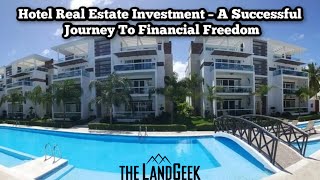
A podcast interview (hosts Mark Podolsky and Scott Todd) with Nicole Stoller about investing in branded, franchise-flagged hotels. Nicole—who runs The Richer Geek—explains they buy existing branded hotels (Courtyard Marriott, Hampton Inn, etc.), prefer value-add opportunities in local markets (Phoenix metro cited), and treat hotels as operating businesses where increasing top-line revenue (RevPAR, ADR, occupancy) and multiplier at sale is the primary value driver. Key practical points: use hotel-specialist brokers, secure franchise and lender approval (experience matters), run detailed due diligence (ADA compliance, architectural studies), focus on sales/marketing to drive revenue, hire strong GMs for day-to-day, and use STR reports for weekly competitive benchmarking. Resources mentioned: the book "Built to Sell," STR (Smith Travel Research), and therichergeek.com.
Questions this video answers
September 3, 2020
Slightly over a 10% cap rate
STR (Smith Travel Research)
Chapters
Hey, it's Mark Podolski, the land geek with your favorite niche real estate website, www.thelandgeek.com. and I'm really excited for today's guest because she is super geeky like Scott and I. But before we talk to our guests, I'd be remiss if I didn't properly introduce my co host. You know him, you love him. Scott Todd from scotttodd.net landmodo.com if you're automating your Craigslist and your Facebook postings, posting domination.com thelandgeek Learn anything about anything. Investor ninjas.com Scott Todd how are you, Mark?
I'm great.
How are you? I'm great. Are you ready to geek out? Yeah.
I can't wait to hear about this different form of investing.
Yeah, same here. So our guest today is Nicole Stoller. And Nicole has a very interesting background. She is in tech, but also wants people like herself, geeks in tech like herself to use their money in a better way. So we're just gonna get right into it. Nicole Stoler, welcome. How are you?
I am great and excited to be here. Thanks so much, Mark and Scott.
Okay, so Nicole, let's just rewind the tape. Tell us how you became the richer geek.
The name of my. That's my podcast. And the name is because I wanted to basically join together my two worlds, which I have. The technology world. I love it. I love working in tech. I think that tech rules the world. To me, it's everything. And it doesn't matter what part of tech you're in. We are powering the world. So I love it. In the meantime, I also feel very strongly that folks need to be doing something else besides just investing in your 401k, besides just the normal investing in the stock market. And you can absolutely accelerate your wealth by investing in or owning a business. And to me, that could be real estate and it could be a variety of other things. And that is what my husband and I have done. Specifically, real estate is the path that we chose.
Okay, great, great. So in real estate, then, what is your niche?
Our niche is hotels. We transitioned into that niche about almost four years ago now. And that is really our entire focus now in the hotel industry. And we're talking about, let's just clarify, we're talking about branded hotels, not motels, not the roadside little hotels, and also not boutique hotels, but branded, franchise flagged hotels.
Give us an example of a branded flagged franchise hotel.
It would be Courtyard Marriott, Hampton Inn by Hilton. Those types of Hotels.
Okay, Scott Todd, what are you thinking?
Want to own a hotel? I do. Like that would be cool, right? Like, I mean, can you just like get a suite wherever you want or like, you know, like, hey, I own this place, let's get it. What gifts? Or are you just providing the, like the financing for the, for the construction and the building, all the other stuff.
Okay, I love that. Yes, I own this place. Give me the best room in the house. All right, so here's the deal. We actually have not done any new construction. So we go and we look for a property based on a lot of the normal real estate fundamentals that you would look for. Right? Location, economic drivers, value add opportunities. So we look at all of those things and we're buying existing hotels that are under an existing brand or flag based on a good opportunity in the marketplace.
Okay, so you're actually buying the operating company behind, behind the hotel?
Yes, yes. And you bring up an interesting point because we have had offers for companies that come in and they basically would want to purchase and lease back. And there are also triple net kind of relationships that you could look at as well. But in our case, we own the land, we own the real estate, and we own the business that actually runs a hotel.
How do I find a hotel? Like, how do I buy one of these things? Like, like where, where I start there.
Are hotel brokers and we're plugged in with a broker. It's a very niche market. So I will say that. And we're plugged in with a broker that has her license in seven states and all she does is hotels. Because it's so niche though. That's why she's spread out to all of those different other states. As opposed to what you might find for example, in like a broker representing single family home investors. You're going to find ton of those right in your local area. So I would start by searching for hotel specific brokers who really understand that niche of the market.
Now Nicole, I've got a friend and she bought a McDonald's franchise. Now to buy a McDonald's franchise, she had to submit for about three years quarterly, like tax returns and estimated taxes, financials quarterly. She had to work for free for two years. I mean, they really make you jump through so many financial hoops before you can get one of these franchises. I can only imagine that there might be some type of hurdles or some type of, some types of hoops where like let's just pick on Scott Todd, right? He's got no experience running a hotel.
I do Know I do, but. Okay, let's say I don't.
Let's say you don't. I mean, Best Western is not going to say we're like Courtyard Marriott. Yeah. Scott, Todd, with your absolutely zero management experience, come on in and start running this place. So, Nicole, let's really help Scott get this hotel. What does he really need to do?
Okay, so you asked a great question and you are correct. Now you don't have to go work for free, but you do really have to a resume or some kind of experience. Or else the flag, which would be a Marriott or Hilton or whatever the case may be, is not going to give you a franchise and they are not going to accept you. So your acceptance of a purchase isn't just, hey, I make an offer and the seller accepts my offer. It's also the franchise accepts me, and also the commercial lender accepts me that I know what I'm doing. So here would be my advice. If you want to get into it, you need to find a partner or a mentor. And in our case, one of our hotels, we did a syndication. All of the paperwork, all of the upfront everything is us because we have hotel experience. And then our investors passively invest. So that was one way. Another way is to find someone that you can work with that maybe you're splitting the profits and they're handling the operational because they have X amount of years hotel expense experience and you go in together. Not necessarily. Maybe they're bringing funds, maybe they're not, but you're leveraging their expertise to be able to get a commercial loan and get approved by the franchise.
Scott. See, it's not so easy.
Yeah, I guess my, my six weeks as a night auditor at a Courtyard probably wouldn't cut it for management experience, but, like, see, I'd have to do some more work.
So, Nicole, what was your experience doing your first deal? And then just what were some of the things that if you would have to do them over again, what would you have done differently?
Oh, that's interesting. Well, to back up again, our first deal actually was in single family, small multifamily properties, like a fourplex and duplex and that type of thing. So that was a long time ago, and there's a lot of things that we messed up and we had to learn as we went through the process. And then we also moved into apartment complexes and multifamily. So lots of lessons learned. I think everywhere when it comes to hotels. I think it's interesting. It feels like. It feels like there's maybe a Few more gotchas. When you close, there's some things that pop up that maybe you didn't think about and you get better over time and you don't forget those or not. I shouldn't even say forget, you know, that that might be coming and so you prepare. So I will give you an example. Something in any kind of public place where people can come and go is to be very cognizant of ADA regulations and making sure you're providing accessibility, etc. And there was a very small piece that was missing from our, one of our first hotels that we didn't know because that was really the new, that was us getting into it and we were buying existing, like it had been in existence for 20 years. So it wasn't, it wasn't really something that popped up for us until it became an issue. So when we fast forward to purchase of like for example, our recent hotel purchase, we hire an architectural study company that understands ADA compliance and we have them come out and thoroughly document any changes that need to be made and anything that is still grandfathered in and we have that documentation and then we take it. If there's a lot of major updates, we have the seller make those updates before we purchase the hotel. So that's just an example of the things that you learn only as you go through the process.
Interesting, interesting. Scott, Todd, what are your thoughts?
You know, Mark, it's a lot, it's a lot like anything, right? Like you, you learn a lesson, you put it on your new due diligence checklist. And sometimes they're expensive lessons, sometimes they're not. But you know, ultimately that's how, that's how these checklists work come around, is that someone made the mistake and the next thing you know you're checking off something else. Just otherwise it's gonna cost you a lot of money to miss it.
Yeah, yeah. So Nicole, walk us through some of the sexy numbers of real estate investing. Because you're not developing, you're buying existing, you're buying a franchise. And as a result, I mean, are you looking at it from a cap rate perspective where, you know, if it's, if it's a million dollar property, it throws off $100,000, you're buying it at a 10 cap.
So we absolutely are looking at cap rates. Our most recent recent purchase was slightly over a 10 cap, which is part of the reason, you know, four years ago when we transitioned into hotels, it's because we saw better cap rates than we were seeing in multifamily. And we're in the Phoenix metro area, we prefer to stay local as our primary focus. And we just saw multifamily was quite challenging, especially as some of the big private equity and institutional firms came in and really drove down the cap rates. So we do look at cap rates, but it's slightly different. We are not really looking at noi that type of thing. We're looking at it now as a business which is a multiplier. So it's whatever the revenue is, an X percentage. So when you, you, when you look to increase the hotel profitability, cash flow during the time that you own the hotel, but then when you go to sell the hotel it is all about increasing that top line revenue so that your multiplier, which varies based on market so that you are basically getting 100k more per year out of the hotel through a variety of mechanisms that when you go to sell it now you have a higher valued hotel.
Very interesting, Scott Todd.
I mean I think that's a, I think that's an important piece too is you know, you're always going to have competition, right? Competition. Private equity is going to come in and change things. But then you have to have another strategy, another plan to kind of pull it through and still get the yield that you want. I think that one of the things that gets missed a lot of times is that investors actually, investors actually do make the return no matter what, right. Like they figure out ways that they can improve the property, they can improve the company, they can make changes that will drive to the, to drive the price of the property higher no matter what what circumstances throw you. So like how, how much, you know, like when you're buying these, these brands or these facilities, like how much of that kind of that opportunity are you looking for in order to be able to drive it? I mean like is that a big, big factor for you?
It is a big factor. So value add 100% is something that we're looking at specific in the hotel industry, just like multifamily does as well and few things that we would look at. So we actually want to buy and every market's different. So the multiplier to say what that is is it varies based on where you are in the country and what's happening in the market. But let's just say, you know, the multiplier of four then we want to be getting a good deal at a lower multiplier like 3.5 for example. And why would that happen? Well, it would happen because it's mismanaged. It would happen because Compared to the competitors, it is not performing as well. It could be that it's in the middle of a renovation and the current owner is just not wanting to carry through with the renovation. Lots of reasons behind why that might happen. So a variety of things that we look for in the multiplier itself. But also when I talk about mismanagement or how it's being managed, is the company mom and pop. Like the family goes and works at the hotel, which you do have a lot of that in this industry or running it like a business, thinking about strategies and growth, going after corporate contracts, getting involved in the community, going after, you know, convention type of business meeting rooms, like all of the other things that you can do as opposed to kind of like working day to day in the business itself.
I mean you got it, you got to really have you. I mean you really have to have a strategy, that strategy in place. Like the playbook. Right. Like this is what I'm going to do. Here's our go to playbook. We're going to go after the convention. I mean, like this is, I mean, I guess you could turn over the management of these units to somebody, but then, and I'm sure that you do, I mean like you're not in there running the day to day operations of the guest, not with multiple locations, however, I mean you have managers, however, you do have to, you do run like a holding company or whatever that's setting the direction of the, of each individual property and holding people accountable. Like you're not just passively sitting back and collecting dollars. You're active in some management perspective of the business.
Absolutely. We have general managers and that's really the level of kind of day to day that we interface with. So we're interfacing with our general managers who are then working with more of the on site and everything that's going on. And then we focus on growth strategies, marketing strategies. Local engagement's huge just because, you know, a lot of these are big private equity, out of state, not really involved in the community. So that, that does make a difference.
So have we talked about Revpar?
No, we didn't, but we can.
Let's just bring up Revpar, which is revenue per available room. And this is a really important metric for assessing the, the hotel. So can you kind of talk a little bit about Revpar and a way that you can increase it to increase the value of your property?
Yeah. So first of all, let me, let me share that one amazing thing about reporting in the hotel industry is the metrics and the Data that you have access to on a weekly basis. There's a company called Star S T R. They basically send a report every single week. It's a third party company for all of your competitors. So in your comp set, how they're performing and how you're performing. So it is exactly looking at your revenue per available room. It is looking at your average daily rate, it's looking at your occupancy. And you can see and it does a percentage also between this year and last year. So this kind of data is incredibly helpful if you use it to then start driving and making decisions. So you can increase your RevPAR one out of the gate if you're, if you're priced lower than your competitors, raise your price. Right. And you'll see this with people that own short term rentals like Airbnb. They'll use tools like you have to kind of watch that. It's a very dynamic thing and it does require active engagement and you have to watch sometimes the franchise company setting this and you have to override it. So there's a, there's an active engagement to make sure you're priced right. We are. One of our hotels is in the middle of a renovation. At the end of that renovation, our rates will absolutely go up because it's like staying at a brand new hotel. Like all the case goods, all the furnishing, all the finishes, everything will be completely brand new. And people want that, they want to stay in kind of a newer refreshed property That'll enable us to increase our revenue per available room. Some of the other things would be looking at group bookings and corporate bookings and big blocks of rooms and making sure that you're really maximizing those, those types of bookings as well.
Okay, fantastic. So, Nicole, if somebody was going to really be serious about getting into hotel investing, like Scott Todd, would you recommend. So Scott's got a corporate background, he's a professional investor. Would you recommend that he get management experience first? Would you say, look, management's the biggest headache. Part focus on the money part. Given his level of sophistication, I mean, what would you say would be his first step?
Wow. First step. I think that sales and marketing, driving revenue should always be the number one focus. Absolutely. You want to cut expenses, but the number one focus is can I drive more revenue? So first step I would be looking at who's coming to the hotel, what's the clientele like, how do you compare to your comp set? Where are the gaps? What can you do to Drive that revenue. And as long as you hire an excellent general manager, you can then get into the operations. But it's really more. How do I bring in more business? Because I don't think anyone would turn away incremental new business. Having your hotel be sold out every single night, that would be amazing.
I mean, and Mark, like, that. It sounds easy, right? Like, it sounds like it's an easy thing to do. Like, oh, let's just sell at the hotel room. But, like, it's a hard thing to do. I know. I know it's a hard thing to do. I mean, you know, as many people know, I have my experience for 10 years was working for a rental car company, and you might think, oh, well, renting cars is easy. Well, yeah, it's easy until you have too many cars in one city or, you know, like, that's kind of easier because you can pick up those cars and move them hotel rooms, man, if. If there's like no demand in the marketplace, you got to go find it, you know, like, you got to go create it. And if, you know, if something's happening, if something's happening to the. To the general area, like, you know, people look at something. Yeah, I'll pick on. Hopefully you don't own any properties. I don't think you do. But like Flint, Michigan, for example, Like Flint, Michigan, all of a sudden, the waters area, like, I really want to stay in Flint now. You got to go hustle, right? Like, there goes your. Your revenue per day. There goes all the other stuff.
You.
You need to go hustle, hustle to find out the business. Because someone's got to stay in Flint. Right? So it's a lot of work, though. I know it's a lot of work to sell at a hotel room, you know, it's hard.
Yeah, I mean, I. You know what I like about this model, Nicole? There's a. There's a big barrier to entry. Number one, you're going to get above average cap rates. Number two, there's going to be a lot less competition. Number three, so if you have the stomach for it to run this operating company, get good management in. And I get the sense that because you've done it, it's not that hard. Just like anything else, you can get the experience. You can get those above average cap rates. You can build your. You can increase your revpar, and you can just keep growing this into a hotel empire. So pretty soon they'll probably be on hgtv. You know, this, the Stoler empire. And I'd watch that show you and your husband going around, you know, literally taking over an entire city and just monopolizing, you know, every hotel room. And then the Airbnb people just giving up.
But, like, that does bring up a good question. Like, you know, it's interesting because for a long. For a long time, like, it seemed like the normal travel cycle was someone or process, someone would go and they booked their airfare first, right? Like, I mean, think. Think about, like, the. The order that people book things. They would go book their. Their airline first. Can I get to where I'm going to go? Then can I find a place to stay when I get there? And then the third one was the transportation. Like, can I drive around when I'm there? Because I can always take a cab. But rental car. Rental car was always third. So that was kind of like the order. And it's interesting because the other day, I'm flying out to San Antonio and the lady sitting next to me, you know, like, she's booking her airfare. She's following the normal order. I see it on her computer. She's booking her airfare. Boom. She gets the airfare booked. What's the next thing she do?
She would do?
Like, I'm thinking, okay, like, hotel comes next. But I was shocked she went to Airbnb, right? Like, I was like, whoa, okay, like, she went to Airbnb. And then when she. Yeah, I'm stalking over her shoulder, by the way. That's how you see all this stuff. But, like, she's doing Airbnb searches. She can't really find what she's looking for. Then she goes to marriott.com, right? So, like, I was like, wow, Marriott. In her mind, Marriott shifted. Like, how. How does the Airbnb's of the world, like, impact your business? Like, are you seeing that impact there?
It's such a great question, because if you think about the hotel segment, there's. There's all these different levels. There's like, for example, your experience, extended stay, you've got your select service, you've got your full service, and then you on up to your resorts, right, with like four or five pools and a spa. And they. They all have a different type of client that they're trying to serve. In our case, we are in select service and primarily our client during the week. It is corporate folks that, for example, they have 10 people coming in for a training. So let's just think about that. You've got 10 people coming in for a training. You tell them, go stay at one of these hotels. They're two miles from our corporate office to coordinate Airbnb for 10 people. Like, first of all, you're not going to put maybe. But men and women for work in the same Airbnb, staying in different rooms.
Right.
It's just probably not going to happen. And you can't. It's hard to book that bulk and coordinate all those logistics. So the convenience factor doesn't really exist when you're talking about those corporate groups, which is a big area that we're focused on. The flip side is our weekend travel. And our weekend travel is really a value oriented family. That's really what we see in our select service hotels. They want in and out, easy. Know what they can expect? Free breakfast, because then they're going to take the kids to the soccer tournament or whatever they're trying to do. Oh, and maybe they're also traveling with a soccer team and they need 40 rooms, which is another kind of group segment. So when you think about, like, the differences, I personally love Airbnb when I travel. We went to New Orleans. I want to stay. I want to experience the local flavor. I want to walk around. Just my husband and I went, or maybe a small group of friends. But it was an experience. Experience that we were after as opposed to convenience and value. Two different markets.
I'm with you. Okay.
All right. Well, Nicole, your mentorship about hotel investing has been phenomenal. But we're gonna ask you for one more tip. A website, a resource, a book, something else actionable for the art of passive income listeners to go improve their businesses, improve their lives. What have you got?
I have a book that normally I'd say, well, this is too old. I think it was written in 2011, which seems like, oh, my gosh, that's forever ago. Here we go. Built to sell. And the reason why is that you can work in your business. I just described, you know, the family that owns the hotel, that the daughter's the general manager and the son's the maintenance guy. And you could do that. But if you want to grow and a successful business that's bigger than that, you have to kind of be in this mindset that you're working on the business with strategies, not in the business.
I love it. And you're really speaking our language here because that's really what we preach every day, is build something bigger than yourself. Systems, delegation and automation. And don't create another job for yourself. For sure. Scott Todd, before we get to your tip of the week, which I know is gonna be amazing, just a reminder to the listeners Today's podcast is sponsored by Flight School. Learn more How 16 weeks can literally transform your life. Start building that passive income. No renters, no rehabs, no renovations, no rodents. It's a one time sale. Get that recurring income every single month. But learn more. Just go to landgeek.com get a free strategy call and see if this model is right for you. Okay, Scott Todd, what's your tip of the week?
All right, mark, check out ADA form. ADA form aidaform.com adaform. Look, I do a lot with forms. You know, like web forms, web based forms I use, I like. My go to is jotform. But ADA form offers a free service. It's free. Build these online forms, embed them into websites, do cool stuff with it. It integrates with like mailchimp. So you can do things, quizzes or whatever to build your buyers list. If you need a form is super easy. Adaform.com oh, I'm getting it.
This is a good tip. Yeah, Adaform, fantastic. Well, my tip of the week is learn more about Nicole Stoller and her geeky empire. And that website is going to be the. What was again, Nicole? I just lost it.
Richer Geek.
Richer R I c h e r.
Geek.Com therichergeek.com so just Geek out on learning more there. And it's the richer geek podcast as well.
Yes.
Fantastic. Well, Nicole Stoller, are we good?
We are. Thanks so much for having me on.
Thank you. Scott Todd, are we good?
We're good, Mark.
All right. I want to thank the listeners. Just remind you the only way, the only way we're going to get the quality guests like in the Cole stoller from the richardgeek.com is if you do us three little favors. You want to subscribe, get a rate, get, review the podcast, send us a screenshot of that review to support the landgeek.com we are going to send you for free the $97 passive income launch kit course as well as latest wholetailing course how to double your money 30 days or less. All right, Scott. One, two, three.
Let, let freedom.
All right.
I don't know, man.
Not bad. I mean Nicole didn't just throw her headset off. That's good. And disgust.
She didn't go running.
She didn't go running. All right, thanks, Mark. Thanks everybody.
Thank you.
More from Mark





How to find funding partners: How to Scale Land Without Using Your Own Capital


