How Do You Establish Trust With Your Virtual Assistant?
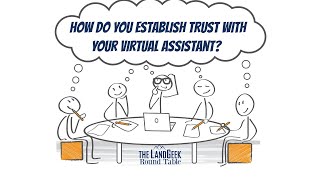
Mark J. Podolsky and four guests share how to vet virtual assistants: hire multiple VAs to compare work, monitor closely during training, use password managers like LastPass to control access, and adopt a hire-fast/fire-fast approach. They discuss real failures including overbilling and plagiarized ads, and emphasize setting clear rules with measurable benchmarks.
Chapters
Hey, it's Mark Podolski, land geek with your favorite niche real estate website, thelangeek.com and on this week's roundtable podcast, we have almost all the usual suspects. We got dude Buddy, the nightcap OG Scott Bossman.
Scott.
How are you, Mark?
I'm doing great. Good to be here.
I'm fired up to see you, my man. Fired up.
Good to be.
Speaking of fired up, we got the technician, Eric Peterson, taking time away from the grill to send us knowledge, knowledge bombs. Eric Peterson, how are things?
I'm good.
Good to see you. We've got Terea putting in the reps. Harris Terria. How are things in Atlanta?
They are coming along.
Good to see you. I love it when you call me Big Papa. Tate Litchfield. He's raising kids, he's raising tortoises, he's raising all our spirits. Tate, how are you?
I'm good. I'm doing really well.
Good to see you. Last but not least, the brain, the professor, your flight school Sherpa, Scott Todd from Scott todd.netlandmoto.com learn anything about anything. Any investor. Ninjas.com. scott Todd, how's the donut this morning?
Donut was great, man. Really, really good donut. Really good.
Really good. Okay, well, I think that's a really good segue to bring up our roundtable discussion, because when you look at Scott Todd and you see how svelte, how fit, how trim, his skin's glowing, the idea that this guy is eating a donut every single freaking morning is hard to believe. It actually makes me think, is Scott Todd trustworthy when he says he's eating a donut every morning? Which then relates to our virtual assistants. How do we know that and trust that our virtual assistants are working hard? They're not making mistakes? Do we go behind and check their work? What do we do to make sure that we can trust our virtual assistants? That is our topic. Let's start with the Nightcap OG Scott Bossman, what are your thoughts?
Well, I get to start today because Mike's on vacation. Excellent. All right, well, I mean, let's just keep it simple. When I hire va, there are a few things I'm looking for right away. The quality of their work, the timeliness of their work, the energy, excuse me, that they seem to be putting forth to complete the task and, you know, their energy interacting with me. So those are the things I look at and, you know, when you're hiring out one task, you may want to hire a couple people to do that task to then evaluate those different things, and that's what we've done. If a VA is putting forth good quality work in a timely fashion, they seem motivated to work with me. I may put more on their plate if they're willing to do that, and it may grow into a little bit more of a position. So those are the things I look at and do I evaluate their work?
Sure.
Especially if it's a new va, I'm looking at the quality of their work.
Okay, great. I'm going to ask just a separate question from that, as far as trusting the quality of the work, but have you ever experienced a virtual assistant being completely untrustworthy in the sense that they took a password or they made a purchase without your consent, they did something unethical which would break trust.
I've never had that happen where a VA has acted in an unethical fashion.
Okay, there you have it. Which leads us to the technician, Eric Peterson. Eric, how do you establish trust with your virtual assistants?
I think what. What Scott said is a great place to start. I think knowing the task that we're asking our VA to do, in other words, being familiar with it, hopefully having done it yourself, gives us a baseline to compare to. So if we go out and hire two or three or five VAs to do the same work, we have a baseline that we can compare the amount of time they're taking and the quality of the work that they're turning in. And, you know, a lot of times you'll find that you're not the expert in something. And as we begin to outsource those things, we'll find a VA that can do that much faster than we might be able to do it. And when we compare that to other VAs, we might see similar results, we might see different results. But also, ultimately, when we're working with multiple bas doing the same thing, we can really look at the quality of their work and the timeliness and efficiency of it and determine who's the best fit for our business based on who's going to accomplish the most and do it most effectively? I think beyond that, using tools that we have access to, like LastPass, gives us a level of protection where we don't have to be super concerned about giving a VA access to a certain account if we use LastPass. Because the reality is, if anything goes wrong, we can turn that off in an instant by logging into LastPass and revoking their access. We don't have to change a password. We don't have to do anything other than just click a button to remove them from that account and they can no longer access it. So, you know, those are some steps we can take to kind of build that trust, I guess, over time.
Yeah, speaking of LastPass, they changed their billing. I actually went to 1Password, and it's very Mackie. The UI is gorgeous compared to the people that might be on, I don't know, a Surface and eating software gruel. Right. 1Password is beautiful. So, Eric, not to digress, have you ever lost trust in a virtual assistant to something unethical?
Yeah, I was thinking about that when you asked. Scott. I actually have a situation with a VA that I had for a long time, that I had a. A pretty high level of trust with that. Basically the role he was doing for me, I kind of phased it out of the business. And he wasn't doing any work for a period of time for me. And I asked him to come back and do something else. And what I noticed was that he was billing me for the maximum amount of hours that he was allowed. And he did that for a couple of weeks in a row. I asked him about it because I was very suspicious, being that I knew it shouldn't take that long. And, you know, first he claimed it was a mistake and, you know, offered to make up for it. And I continued to watch him. And over time, he did it again. And the second time, you know, I just said, we're not going to work together anymore. I. I can't trust you any longer. It wasn't like I lost a lot, you know, I mean, this VA was getting paid, I don't know, probably around $4 an hour, and we're talking about maybe five hours max a week. So it wasn't a lot of money. But to me, when I see someone billing me for time that I know is too much for the work they're doing or is, you know, maybe they didn't even do any work and they're billing me. You know, I'm going to give them a chance to correct it the first time, but if it happens again, that's. That's it. We're not working together anymore because I don't. I'm not looking for VAs that I have to babysit and watch all the time. I want VAs I can trust. I can put them to work, and I know they're gonna accomplish the task and bill me appropriately.
Yeah. Yeah. What's that Warren Buffett quote? He looks for people with high energy, high intelligence, high integrity, and he's like, without the integrity. The other two don't really Make a difference? Yeah, for sure. But it's slow going. Someone won't reveal it right away. It takes time, which is unfortunate. There's a Marcus Aurelius quote in there somewhere about how people just to have that expectation, someone's going to let you down today.
You.
You don't know who, but just expect it kind of thing. Putting in the reps. Harris, how about you? How do you work with your virtual assistants as far as the trust component is concerned?
I think in the beginning it was a little bit tougher. We were a little skeptical, like our first va, and so we would go into upwork periodically and just, you know, manage her hours or gauge her hours against, you know, what she was billing us. And then as we noticed that she operated in integrity and for the most part got the job done and got it done well, we were able to kind of back off. And that set the tone for all the other PAs that we hired after that. It was kind of the initial one where we were like, okay, wait a minute, you know, she's overseas, you know, she's logging into our accounts and. But once we got that out the way and realized it works, you know, not everyone is a crook, we were able to then begin hiring more VAs. And so, like Scott and Eric, I'll kind of monitor what they do. There's a period of training that we take them through to make sure they understand the job, they understand the requirements, the responsibilities. And then from there, we may monitor for a week or so. And then from there, unless you do something overtly wrong, we may not notice. But what we also have is a really good system in place where our VAs all kind of work together. So if one is not doing their part or doing their share, the others will speak up. You know, hey, I was going to do this, but I didn't have any ads, or I was going to do this, but, you know, it wasn't added to the website or whatever the case is. So we function as a real big unit so that if one person, you know, like a tripod of the legs is missing, then it's pretty obvious that something is going on. We've only been burned one time. It was early on we had a va. Our first VA we hired to write ads, and we told her the rules and she went and literally took someone's ad verbatim and then posted it in the land geek group. And so we ended up getting messages from the people whose ad she stole and we let her go immediately. That was one of the things we said you cannot plagiarize someone else's work, and that's pretty obvious. So that's been the only big issue where integrity was involved, where we've experienced with the va.
Okay, but, I mean, that's bad. But it's not like over billing bad or, you know, log, you know.
Correct.
Getting into your bank account bad.
Correct. You just stole someone's ad, which is minor in the grand scheme of things, but if I can't trust you, then I'm with Eric. I can't work with you.
Yeah, no, absolutely. But I think that, you know, it's important, what you said in the beginning. You. First of all, this is early on, right. You're just kind of learning how to train virtual assistants. I bet it was either bad luck or some type of failure to communicate the quote unquote rules in a way where it was super crystal clear. This is what we expect with the ad. Now, I could be completely wrong. You probably did.
But if you're listening, we did, right?
Yeah, yeah.
At least we thought we did.
I forget. The book I'm thinking of is. It's Simon Sinek. He's talking about the Infinite Game and the idea that most people are very honest and have integrity where they want to be. But if you set up a structure, let's say, oh, I don't know, let's just say a company, I don't know, throw it out in the air, Wells Fargo, where they're getting compensated in a way where there's a tremendous amount of pressure to do things that are not ethical, then human beings will succumb to that pressure. It's very, very difficult, especially if that's the culture. So it's something to think about when you're setting this up with your virtual assistant to be Terea Harris, clear about the rules, about the boundaries, your expectations, and what happens if you cross it. And doing that from the very beginning, I think saves you a lot of time and also makes them more comfortable. We feel safer when we have these clear boundaries and they know, oh, if I step over this line, tree and landing are cutting my head off. And now I got to go deal with someone else.
Right.
So I forgot where I was going with that. Trea.
Well, moving forward, like, we took that and so moving forward, and we got better with understanding how to communicate what it is we wanted and needed and what was expected. So even if we didn't do a good job in the beginning, it just kind of. It became better as time went on.
Yeah, that's great. That's great. I love it when you call me Big Papa. Tate Litchfield, you're managing an army of virtual assistants. Have you ever had your trust ever been lost?
Yeah, at different levels of it. Right. I mean, as you mentioned earlier, some of these VAs make three, four, five doll an hour. And look, they need a kick in the pants frequently, a lot of them. And it's okay. Like, I've gone into the hiring process knowing that I'm going to have to keep an eye on these individuals, and that's because they are, you know, I get what I pay for in a lot of instances. So, yeah, I've had VAs milk jobs. You know, I can do the job in an hour and it's taken them 90 minutes. And it's kind of one of those things where you got to pick and choose your battles. It's like, well, is it worth going through the effort to hire and train and do all of this over again? Because I want to get the job down from $5 an hour to $3. I don't know. So I've got a lot of people who are kind of milking it. They're slow dragging their feet. I've had people do some things that I disagreed with. We've had some differences.
Yeah.
I mean, that's just part of running a business, Right. You're going to have people that you don't get along with and who don't see eye to eye with what I'm doing. And, you know, we trust about verify. And I'm glad you brought up Scott Todd and the donut eating, because this is something that we need to verify. Right. And so, Scott, we're going to need some hard evidence here going forward. It's not that I don't trust you, that you're eating a lot of donuts. I mean, I believe you, but I'd like to know what you're eating, man. He's like, hold on, hold on, hold on, Tate. But, you know, it's the same principle with my VA's, right? I trust you to do a good job, but I'm going to verify it. And after you do a good job three, four, five weeks in a row, I'm going to give you a little bit more slack. And look, every single person who comes into this business should expect to have some things go the wrong way for them. That's normal, Right?
I have a follow up question for you. Because you're managing so many people, let's say that you've got a virtual assistant. You know, they're showing, you know, really good potential. They're working hard, they're coming in on time, they're doing all the things you're asking for them and more. They're like what we call an A player. They're thinking for themselves. And so you get to a point where, like, you don't have to manage them as closely.
Right.
Do you find a point of complacence where all of a sudden their work starts to slip a little bit? The communication isn't as frequent, for sure. I mean, how do you handle that?
I mean, ideally you want to be in an eat what you kill situation, because I think that's motivating. Right? If you're in a situation where you don't perform, you don't eat, there's no complacency in that. Why? Because the only way to pay your bills is to continue to perform. That's not always going to be the case. Occasionally you're going to need to shake the tree. And that's why I say keep a little pressure on some of these VAs. I'll go to my VAs regularly and say, wait a second, how come our numbers are down? Right? And so the way that I hold my VAS to a high level of, to a high standard is I have a baseline benchmark that they better hit every single month or every week. Otherwise we have issues. The minute it dips below that. Okay, I get it. Holidays, whatever it is, if it happens two times in a row, it's like, okay, you've got, you're on probation. Essentially, you either outperform me and I want to be have my socks blown off this next month, or you're going to need to look for employment elsewhere. Hire fast. Fire fast. Who says that? Is it Scott Todd? I think he said.
I think it's Scott Todd. I think I've said it.
I'm pretty sure I've said it too. Or Eric Peterson. I don't know. Hire fast. Fire fast.
There's so many land geek isms, we can't even keep track with it anymore.
So much.
Who do you attribute it to? Okay, well, now, last but not least, Krispy Kreme himself, Scott Todd. Today's podcast is sponsored by Krispy Kreme. The best way to start in the morning. You'll lose weight.
Listen, I don't always take a picture of my breakfast, but when I do, I'm happy to share it with you guys. And if needs proof, I will be happy to email him every. No, I'll be happy to vox him every morning.
Around just a Chocolate glaze, Correct.
Well, on this one, on this given day, sometimes it has a little sprinkle to it. Today's had sprinkled to it. But you know what, Tate? I'll tell you what, man. I'm eating that thing around 7am Eastern time. That's 4am Your time. I'll be happy to pop one into your box every morning. 4:00am hopefully you don't forget to turn that phone off. And Allison's like, what. What is going on with your phone? Who's texting you? Oh, it's my donut alert. Donut alert.
It's my move. It's my food porn showing up at 4 in the morning.
You know, essentially. Yeah, okay. Yeah. So, you know, trust, trust, verify, whatever. It's all good. You know, I think that my own personal thought on this is that a lot of times when people are outsourcing work, they're. They're scared of. They're scared of getting had. Right. You know, it's like they're scared of that event that Eric talked about. Oh, well, they took advantage of me. And the reality is that anytime you deal with anybody, any person, that person has the ability of taking advantage of you. That's just the way that it is. Any other individual has an ability to take advantage of you. Now, I think that the way that you do this and the way that you offset this is that you have to find what works for you. And, you know, one of the things I think one of the mistakes I think people make when they go to outsource is that they just.
They.
They don't ever learn something first, and then they go and get someone to go do it, and then they don't know what they don't know. They get blindsided.
Right, Right. Delegating versus advocating, where advocating is the blind leading the blind.
You know, in flight school, one of the things that I teach is that you always know that it's time to outsource something because you hate doing it. And that's always been the cue to me is, okay, I've done this a few times. I don't like this anymore, and I'm out. I'm never doing this again. And it was funny, because that is the pattern or the recipe that I teach. Find the things that you hate and.
Get rid of it.
If you don't like doing it, don't do it. Get somebody else to go do it, because you're no good at it. But see, a lot of times people miss that key point and they go, and I actually had someone Ask me, like, well, how do I know? How do I mean, don't I have to do this myself to get good at it first in order to, you know, to outsource this? Or how do I know that the person's really doing a good job if I don't know it myself? And if you listen to what I said, What I said was find the things that you hate to do and.
Get rid of it.
Well, that means that you're actually doing it, okay? You're actually doing it first. And you don't have to be good at it. You just have to go through the process of it and go, I'm no good at that.
It's out.
Now. There are some things that I wouldn't advocate that you do. Like if you have zero experience or zero train on it, for example. Like if you had to go do something in the law, for example, and you're like, well, I got to try it first. Well, that's a little absurd, right? That's not to that extreme. So if it's work in your business, sample it, do it a little bit, but then get rid of it and think about what you want. And I think that when you think about what you want and you bring clarity to that, well, then, you know, if you're getting the results that you want, and if you're not getting the results that you want and you're watching the time, okay, and you're like, man, this seems a little crazy. And then you go and you verify it with somebody else here, do this work for me, and see how long it takes you. You don't have to do this. But business is a series of hypotheses. You're testing all these different things at different times, and ultimately you'll know if somebody's taken advantage of the situation. The challenge, though, is this. And it goes back to one of my favorite TV shows ever, which is Ozark. And it goes back to this. If you find that they're taken from you and they say, I'm sorry, it's the first time I ever did it, do you get rid of them or do you give them a second chance? Right. You caught them. They're like, I'm sorry, it's the first time I did it. Do you get rid of them or you give them a second chance? And I think Ozark clearly lays the way of what you need to. Well, I shouldn't say this. It tells you the right answer, not necessarily the right execution on how to get rid of somebody.
Let's leave it at that.
Exactly. Exactly. Well, I think this is a really great topic. And next week we will discuss trust a little bit more with buyers and sellers as a. As we go a little bit deeper into this, this issue. But hopefully this is, this is helpful. But now we're at that point in the podcast where we're going to ask Taria putting in the vet Harris for her tip of the week. A website, a resource, a book, something else actionable for the r Passive income listeners to go improve their businesses, improve their lives. But before that, we've got to talk about our sponsor. Our sponsor this week is Land Geek Boot Camp. That's right, vaccinated. Come, let's all get together live. We've got 20 spots left. Secure your spot, don't procrastinate. Go to landgeek.com Boot Camp Vegas, baby. Vegas. August 12th through August 15th. But we need to have a final number very, very soon. Take your spot. Be there. There's nothing like being in the room with Scott Todd. Tate Litchfield, Scott Bossman, Terria Harris. Can you imagine being in the room with Toria looking at your Facebook ad? It's incredible. The technician, Eric Peterson, Mike Zadum is wicked smart. We're there to help you for two and a half days. I promise you on Sunday you will leave there. All the land investing clouds are ahead. Will dissipate. Everything will be clear. You've got to have the investors toolkit or be in flight school. Utilize those two free tickets. Be in the room where it happens. Hamilton fans, thelandgeek.com Bootcamp, that's our sponsor. Oh, by the way, speaking of Scott Todd, would it be great to go up the mountain of land investing with him as your Sherpa? That's right. It's called flight school. Sixteen weeks, we guarantee you're gonna start building passive income. That tuition is not gonna cost you nothing. Learn more. Go to landgeek.com training. Get on a call with the Nightcap OG dude buddy Scott Bossman or the Zen master Mike Zano and learn more. So it's like a two part, two part sponsor this week, but certainly at the end of the day, you're going to be a better person for it and it's transformative. So go ahead and do it. Treehouse, what is your tip of the week?
Okay, so here's.
Is it near to tree or I.
Two weeks ago, signed up for. Am I here?
Yep, you're back. Okay.
Okay, okay. So I have been on YouTube in addition to watching like a lot of the Land Geek recordings, I found this other, I guess, channel, it's called the School of Greatness. And one thing I like about this particular guy, his name is Lewis Howes. He has some of the most amazing people on his podcast, and he interviews them from everything from topics from health to business to mindset to goals. He interviewed, like, Tony Robbins, Kobe Bryant. He's interviewed a lot of successful people in their own right. So I recommend that you take a look at his. I guess it's called a podcast I'm not familiar with.
No, it's definitely his podcast.
Okay, so look at it.
It's his YouTube channel, but he has a great podcast as well. The School of Greatness.
Yeah, it's really, really good. I can go on there, like, to scroll up and look for something with, you know, tips on marketing or, you know, if I'm frustrated, I'm challenged with whatever aspect of my business. He has had someone on that show that can kind of speak to that. So that's my tip.
I love it. I love it. Trio Harris, because Scott Todd's eating so many donuts. What's your fitness tip for him?
My fitness tip is to count your macros, and as long as he is getting it within the macros that are appropriate for him, he can have a donut every day.
All right, drop the mic. I love it. I love it. All right, well, I want to thank the listeners and remind you the only way we're going to be able to bully Terea Harris on a weekly basis to give us these tips of the week is if you do us three little favors. Follow us Rate Review the podcast, Send us a screenshot of that review to support@thelandgeek.com, we're going to send you for free the $97 wholesaling course, how to double your money 30 days or less. All right, we ready to do this? 1, 2, 3. Let's let freedom.
Freedom.
Not bad. You know, you know what it's going to be really good at, though? Vegas. Vegas and boot Camp live, baby. Absolutely. How are things in Vegas right now, Tate?
They're good. Busy. It's hot. But, you know, I don't spend a ton of time downtown on the Strip. But, you know, I know a lot of people have been coming to town. The hotels are open. A couple of the buffets are back in business. So Vegas is open for business, as far as I know.
If Eric and I want to get some good Nashville hot chicken, where do we go?
Probably Nashville. Okay.
It's a good answer.
I don't know. I mean, I did see that there's a new hot chicken place that opened up down the street from me. Haven't been there yet, but I've never been to Nashville, so I don't have anything, like, to compare it against.
I mean, Mark, you just asked the wrong question, though. Like, you. I mean, why would. Why would you want to go with Eric to eat Nashville hot chicken when we all know that he only eats ribs?
Right?
That is. That is a good point. But I can imagine just the family wanting a little variety.
Well, yeah. You get different seasonings on those ribs.
Eric, is that true, or do you just go with the same barbecue sauce?
We do not cook ribs that often at the Peterson household.
There you go.
So you just smoke them.
I don't smoke them that often either.
Okay.
Over the last six months, we've maybe had ribs two times, three times, maybe.
Okay.
Every instance. But. But yeah.
Yeah, I've definitely had more ribs than you that. This past year. Scott Bossman, are you a big rib fan?
I love ribs. Just don't have very often.
Yeah. Do. Do you think we're gonna look back and the treat, like, the way we've treated animals and, like, with the same shame as we do with slavery? Like, you know, like, can we believe we did this? You know, we ate animals, like, a hundred years from now?
I. I don't think so.
You don't?
Come on, Mark.
I'll tell you what I. I saw, you know that Netflix show, my octopus teacher? I'm not gonna. I love octopus. There's no way I'm eating another octopus. Be like eating a dog. They're like, charming.
Ah, that's not true. I'll have you eat an octopus by the second roll, guaranteed.
I guarantee if you watch this documentary, you will not.
I've seen it. It was awesome.
And you forgot.
He had to spend. Like, he had to spend a year. Yeah, they're geniuses.
Now he's gonna eat it.
Well, I wouldn't eat his octopus. I'm not gonna come eat your dog either. But you know what?
That's what I'm saying. It's still a very bright animal.
I mean, but they're tasty. It's tasty.
I know they are. I know they're tasty.
They're not domestic like a dog.
Two rolls. You're eating octopus. Guaranteed.
No way.
Guaranteed.
Mark, I can't. A lot of money after watching that. I don't know. Is anyone. Is anyone a vegetarian or. Tried it?
I tried it.
How'd it go?
I'm not doing it. Anymore.
No, it's hard. It's nice being an omnivore. Just be able to eat whatever you want.
I don't know, donuts and all.
I mean, you know, to ask the bossman to be a vegetarian. Like, they kick him out of Wisconsin.
Yeah.
And that's.
Family disowned me.
Yeah. It's like, say it's like salmon on the heck, I'm gonna stop eating cheese or drinking beer. It's just not socially acceptable.
Listen, I can tell my macros, though.
You got your Mac. Yeah, that's true.
Marco and I mentioned this, like, briefly last week, but of all the things that are shocking to me is that in the Harris family, okay, that you would think with all the bone broth that they drink, that they would have the strongest bones around. I don't know. Like, seriously.
That's a good point. That's a great.
Can you explain that?
No, no, no.
Explicitly.
I will. I will.
Though bone broth does not help when you get run over by a scooter. That doesn't help.
I will. I will say this, though. I do stand corrected, because I was saying, like, you know, I was joking that before I knew about getting run over by the scooter, I was saying that, you know, you're not hurting your ankles, just walking to get a donut. That's the thing.
Okay.
Like, that's really the deal. And then I found out about the scooter incident, and then I felt really, really awkward because one, I just bought that a scooter similar to that one for my own personal stuff, and now I'm like, I don't know if I should be riding on this thing, because karma's gonna get me. After I made fun of the event before I knew the event, and then, like, my wife and family were gonna go somewhere. I'm like, oh, don't worry. I'll just ride the scooter over the bridge. And it's a pretty tall bridge, and I'm thinking, like, that's a negative. I'm not going downhill on the scooter.
I think you're safe as long as you don't ride the scooter to get a donut.
Okay.
You ride it to get a donut. That's where karma's gonna kick you. Yeah, right. Okay.
All right.
Okay.
Do you want to tell the story? Because I don't think everyone knows the story.
So Landon and I were in Omaha, Nebraska, for Olympic trials, and he was walking down to the pool, maybe about a half a mile, and he decided, well, I'LL just jump on a scooter. And he got on the scooter, takes off and comes down a slight hill, and the brakes don't work. So he puts his foot down to stop because he's coming to an intersection, and they're people. So he puts his foot down, the scooter runs over it kind of gets caught under his foot, gets caught under the scooter, and he dislocates and fractures his ankle.
He was really.
It's really bad. So he's scheduled for surgery here this week or next week.
Wow.
Okay. Well, keep us updated on all that.
Definitely. We're going to set up a care calendar, a GoFundMe, all of it. We're going to have it all. We're going to post it on in mighty networks.
Look, I'll donate.
You're gonna have to donate time. We don't. We don't want money. We want someone to come and, you know, get his water or cook his breakfast.
Exactly.
No money. No money.
On a scale of 1 to 10, 10 being, like, the best patient ever, 1 being, like, just a complete pain.
You probably need to stop if you're.
Gonna ask this question.
Oh, yeah.
All right, thanks, everybody.
Don't put her in this position. Mark, come on.
I'm just curious. I'm gonna stop recording.
He's really good. He's a good patient.
Yeah, that's not what you said before the call.
The only time he's annoying is so, for example, they lost his scooter in the airport. We're coming back. And I was like, hey, here's a wheelchair. Get in the wheelchair. And he's like, absolutely not. So I'm not letting you push me through the airport. So he wanted to beyond his crutches at the Atlanta airport, which is busy and big. So the only time he's annoying is when I try to be overly helpful. And he's like, no, you're not going to do that.
You know how to fix that, don't you? Just pick his back leg. Don't listen to you.
Yeah, he got in the wheelchair.
That's what happened to Tate. Tate wasn't listening to his wife. She kicked him.
True.
I respond well that way, right?
Yeah.
I respond well that way.
Yeah. I feel like that's a baseball bat.
Just saying. I got one around here.
He has crutches, so those. Those have been used.
Oh.
Oh, there we go.
Yeah. Yep.
We're good.
Yeah. I mean, I think I made a comment, like, knowing Landon, he sees those crutches, like, this is a great tricep workout.
It's so bad. All he's talking about is how one leg is going to be bigger than the other one. And yeah, this calf is going to be huge. He'll get over it.
It'll even out in time. It's good. All right. Thoughts and prayers, Landon Harris, Thoughts and prayers. Thanks everybody and we'll see everyone next week. Thanks for listening to the Art of Passive Income podcast. Start your journey at www.thelandgeek.com and www.scotttod.net. rate and review the podcast and email.
Supporthelandgeek.Com your screenshot for a free Passive Income launch kit.
More from Mark





How to find funding partners: How to Scale Land Without Using Your Own Capital


