How James Buttermore Quit His W2 Job and Improved the Quality of His Life
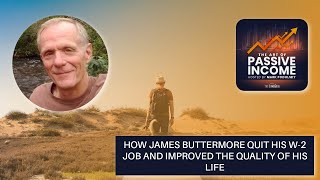
Podcast interview (Art of Passive Income) with James Buttermore, a land investor and recent coaching graduate. James describes discovering land investing via podcasts, using free training and Flight School/coaching to accelerate results, and a standout early deal (bought ~$4,500, sold ~$19,500). He replaced his W2 income in ~16 months and fully quit after two years, building roughly $11,000/month in passive income while running the business part-time (~20 hours/week). He outsources intake/lead response and uses systems and training videos; monthly business expenses (including mailings and taxes) total about $3,000, with software/automation ~ $1,500/month. He emphasizes following proven processes, patience ("no deal is better than a bad deal"), and coaching/community support. Tips mentioned: Landscape Pro 3 (photo editor) and the Natural app (Brain AI).
Questions this video answers
About $11,000 per month.
He replaced his W2 income in 16 months.
He quit his W2 job after two years.
Bought for about $4,500 and sold for about $19,500.
65 years old.
Chapters
Hey, it's Mark Panulski, the land geek with your favorite niche real estate website, thelandgeek.com and on this week's Art of Passive Income Income podcast, I have a very special guest. It is a recent coaching grad and everyone loves when I interview our coaching graduates as they are just a little bit farther along than you are. And it's so inspiring. And today's coaching graduation is James Buttermore. James, welcome.
Thank you.
So, James, what brought you to land investing?
Well, it was three years ago. I was looking for an opportunity. I had tried some things in the past and they just never panned out. Listening to podcast on what is it? I forget the name of the podcast, but it was a podcast and I think it was Roberto Chavaz.
Oh, yeah, it was Nick Loper's side hustle. That's what it was. That's it.
Yeah. And I heard that and I. It really resonated with me because in the past I a little bit familiar with real estate, not land, of course, but I own a rental property. So I kind of understood it. It just made sense. It just clicked with me. So I listened to a bunch of podcasts, listened to the training that you had that was free, searched, did all that kind of stuff, and that's what landed me into the land business.
And what were you currently doing? Doing at the time?
I currently was working for the post office, delivering mail. But prior to that I was basically in retail management for my whole life, it seems like.
Okay, great, great. And what has been your favorite deal?
My favorite deal was one of my first deals that was I closed on the deal on a Friday. You know, I had the deed recorded, sent it out on my buyer's list on Tuesday and somebody called me and bought the property, wanted to buy it for cash. I wasn't trying to sell it for cash, but sold it for cash. I paid like 4,500 for it, sold it for 19 5. So like 300 and some percent.
Yeah, yeah.
So I was pretty excited that.
Yeah, that's. That's like 400 something percent. That's really good.
And then, you know, my buyer's list has since then has generated almost a quarter, about 21% of my sales, so.
Kidding.
Yeah.
Now why do you think that is? What do you, what are you doing with your buyers list that maybe other people aren't doing?
I just, you know, I do have like a sequence mail that I've send out in the beginning, but I think there's a lot of people that probably do that. But Just follow up with them, make notes of if they tell me there's something that they are looking for. When I come across something like that. But just sending something every week, I think that's the biggest thing.
Just consistency.
Yeah, I love it. I love it.
So why was coaching valuable to you or how was coaching valuable to you?
Well, it is very valuable because you, it's kind of like you have coaches, you know, at your disposal when you need them. That's, that's the biggest thing you. You know, I've. There's been multiple times during coaching and where I'd have something in the business that I hadn't come across before.
And.
All you have to do is schedule a quick call and they can help you through that. So, I mean, that was the biggest thing, that being part of the mastermind and having, you know, the community, everybody's willing to help everybody, it seems.
No, yeah, no, absolutely. So what role have you outsourced that we'd say had the most impact on you? Because the last thing we want to do when people go to our coaching program is have them build themselves another job. We want them to build themselves a business and really get themselves out of the day to day.
Well, that's probably. Well, one of the things, the first thing that I got rid of was responding to leads, posting ads, you know, all, all of that that was caught. It was taking way too much time. And intake is very valuable. Although currently I'm looking for another intake manager because I've lost a couple of them.
Yeah. And I think what's interesting about that is that as you start evolving in this business, you realize people are going to come and go, but it's your process, it's your system that's the most valuable. And putting another person into that role gets much easier because you're not, you're not dependent on them and their knowledge. You already have all the systems and processes in place and they can just go roll with it.
Training and you know, I have a library of videos to train them, that kind of thing.
Yeah, yeah. So how do you measure success in your business?
How do I measure it?
Yeah.
Well, passive income, I suppose.
Okay. And so did you have a number that you wanted to get to you? Like, okay, if I get to this number, that's. That's going to be success for me.
Well, my, one of my first goals was to quit my W2 job and replace that income. I replaced my income in 16 months and quit my W2 job after two years.
Wow. Wow. What was that like?
Well, in the beginning, it was kind of scary, but now it's Great.
Yeah.
I'm 65. I've worked for my whole life.
No, I, I, I remember getting an email from you back in the day, and he said, I've been working all these years to get this amount of, of money for Social Security.
Right.
I've already eclipsed it in like three months.
Yeah.
It was such a powerful statement. Do you remember that?
I do remember that. It is pretty amazing that in that short a time I replaced what I would, you know, on my estimated Social Security amount.
Yeah, Yeah. I mean, if you don't mind sharing, what would you say your, your current passive income is at right now?
Yeah, I don't mind. It's around 11,000.
11,000Amonth. So this is always fun for me because if I said to you, okay, James, 11,000. Well, actually, I'm sorry, hold on. So, 11,000 times 12. So if I said to you, okay, if you wanted to throw off about $132,000 a year in passive income at a very aggressive, let's say, 2% interest, you gotta get the bank, which would be very aggressive today. And so you go to the bank, you go to your banker and you have a meeting, say, hey, Look, I need $132,000 a month in passive income to live the way I want to live. How much do I need to deposit at your bank to throw off that number? You know what they would tell you? Probably several million, $6.6 million. And so for you to create that three years in three years is remarkable. And if you're listening to this, think to yourself, how long would it take to save that kind of money? And what trials and tribulations would you even have to go through with the ups and downs of, say, something as uncertain as a stock market? I mean, it's, it's really remarkable when you look at what, where you started and where, where you've gone and you're working this part time, right? Yeah. So what, what do your friends and family think?
They don't, most of them don't really understand what I'm doing. I've explained it, but they just, they don't. But they were surprised that, you know, that I quit my job.
Yeah. Yeah.
My wife is really supportive. You know, she knows what's going on.
Well, yeah, she, she's seen the, the money flow each month and grow each month. And what's cool about it is like, it's not going to stop at 11. It just continues to grow.
And our next goal is she's going to. Is to have her quit her job in just. Just about a year, is what we figure.
About a year. And then what are you going to do with that time? Because then you're going to have your time problem solved and your money problem solved.
Travel.
Okay.
Is what we want to do.
I love it. I love it. And did you have a big why going into coaching?
My big why was kind of what you had talked about earlier was that I was 62, trying to figure out how I was going to retire and maintain on my, you know, the current standard of living I was used to on Social Security, that was going to be about 2,300amonth, which, you know, kind of scary. That's not a whole lot these days.
No, no, absolutely. So what do you like most in your business? What do you hate the most as.
Far as, like, doing things in the business?
Yeah. Yeah.
I actually like talking to sellers and closing those sales and, you know, helping them. A lot of times they have this property they don't have. They don't have any idea how they to get rid of it. They know they don't want it. I've had multiple property owners thank me for helping them, you know, solve their problem. So I enjoy that part of it. And what I like the least, actually, is higher or not hiring it is managing people.
Yeah.
Because I've done it for so long. I just, you know, so one of my other goals is that I want to hire an assistant that once that person's trained, they will hire, train, and oversee the VAs and I'll just basically manage one person.
That's amazing. So currently, how many hours a week are you in working in your own business?
Well, currently I'm working. I don't, I don't know the number. But like I. Like I told you, I've lost some VAs recently. So I'm. Right now I'm. I'm working probably quite a bit in it.
Would you say more than 20 hours.
A week probably at this point, but.
Wasn'T more than 30 hours a week is temporary. Yeah. No, so let's say 20 hours a.
Week somewhere in there.
Yeah. Yeah. I mean, so it's not a bad job to be making $550 an hour knowing that it's. It's going to go up. So just to put things in, in perspective there. Okay. Now I know people listening to this are like, okay, James is doing great passive income at $11,000 a month. But if his fixed expenses with all these VAs are $10,000 a month. What good is it? So what's your fixed overhead cost? Not including mailings, which I don't consider an expense. I think that's an investment.
Well, you're right, it is. And I. The, like software and that type thing, automation, that's probably 1500amonth.
And.
I just have. The only number I have in my head is everything all together, including taxes and everything is 3,000amonth.
3,000Amonth.
That includes mailing?
Everything that includes mailings. Yeah. Wow. So you're probably really. With a fixed overhead because mailings variable there, you're probably around 1500-2000amonth somewhere in there. Yeah, yeah, That's. That's probably what our average coaching client is at. If you were to start over today, what would you do differently? What would you do?
The same what I do differently. I would have went through flight school and coaching much quicker than I did now.
Why. Why do you say that?
Because I think I could have cut a year and a half or so off of my progress.
Yeah.
And what, what would. What was the other part? What would I do? The same.
Yeah. What would you keep doing that? You're like, okay, I did this right out of the gate.
Just following the recipe, you know.
Yeah, yeah, yeah.
That's, that's, that's the thing that learned early on with Scott was follow the recipe, you know, and I, because I had tried doing it on my own, which is the toolkit. Mailed for three months or so, didn't get any accepted offers, and then ended up talking to Mike Zaino. He gave me some advice, and then I decided to go through flight school. And that started in January, February. I bought my first property, sold it in April, and the rest is history. But because I. I had someone to teach me the process, you know.
Yeah, no, absolutely. And, you know, we are a community. So tell us about your relationships that you formed with other coaching clients and even your flight school class.
Well, there, you know, there's several that were in the flight school class that are student, to my knowledge, are still doing the business. Don Orissa.
Don. Yeah, we.
We talked a lot in the beginning, and then in coaching, there's. There's just. There's several people that are always willing to help.
Yeah. Yeah. So how. How would you say that? Well, you know, before I ask this question, what. What advice would you give someone who's a total beginner right now.
You know, throughout my land business career, or it's not really a career, but lamb business, I've had what I call landitis, where there's been, you know, I wanted to buy. I needed a. I needed to buy a property. So there's a few that I probably bought that I shouldn't have because of various things like ate too much or access wasn't good or you know, something like that. So my new mantra with that is that no deal is better than a bad deal. And actually I stole that quote from a book by Chris Voss.
Yeah.
Never split the difference.
Never split the difference. Yeah. I'm actually in a mastermind group with him. He's great.
Really?
Yeah, he's a great guy, huh? Yeah.
So, I mean, that book is pretty amazing. And that would be the thing. Don't be in a rush to buy a property. You know, make sure the due diligence is done and. Because if that deal doesn't work out, there'll be another one.
Yeah. Do you know what he says? One of his red flags are when he's looking at, to work with somebody, if they come out of the gate and say to him, I'm looking for a win win in this relationship, that's a big red flag for him because usually that person says, oh, let's work together in a win win. They want you to do all the work. Like, here's my idea now James, you go execute on it. Because most people are like, oh, I've said that a million times. He's like, nope, that's a red flag. Isn't that interesting?
That is interesting.
And his other phrase that I remember was the squeaky wheel doesn't get the grease. The squeaky wheel gets replaced.
That's true.
So tell me about your relationship with your coach. Who was your coach and what was that like?
Eric Peterson.
The technician.
The technician. Eric was great. He helped me get a lot of systems and processes in place. That and also getting organized in the business. I, you know, like property records and just everything. I didn't have that organized at all. And he really helped out with that. Plus, you know, just being able to talk to him and pick his brain.
Yeah, no, for sure. I always say to our coaching clients that 80% of the coaching program is mental. 1 8% of it is how to. Would you agree with that statement?
I would, yeah.
So which mental challenges do you think the, the coaching, you know, Eric or the coaching team helped you sort of blast through? That might have been self limiting.
Helping me get through, you know, the dips, the, the low points that seem like nothing was going right or whatever at any given, you know, at a certain time. That would probably be the, the Biggest thing.
Okay, great. Great. And so one more question before we get to the tip of the week. James Buttermore, how has this business changed your life?
It's given me the ability to see, you know, that. That I'm going to be able to retire one day and I don't. I don't have a W2 job. I mean, I know we talked about both those things earlier.
Yeah. But, I mean, but day to day, like when you wake up in the morning, you don't have anywhere you need to be or, you know, just the stress of dealing with a manager maybe you don't like, or the freedom to go see a matinee movie. Like these little things that people with a W2 job can't do and you're able to do. Is there anything that sort of comes to mind that you're most grateful for with that? Your time and money? Freedom?
Yeah. Being able to spend more time with my family. I get up every day, start the day, walking my dogs through the woods for about an hour, work out all that stuff. You know, I wouldn't be doing any of that stuff if I was still on my job.
Yeah. Would you say that your health and your relationships have improved exponentially?
Absolutely. Yeah.
Yeah. That's fantastic.
Time, freedom and. Yeah.
Yeah. I'm. I'm so just proud of what you've accomplished and know that this is just the beginning and the best is yet to come for sure. And.
But now I really appreciate the, you know, your. This whole. The whole land geek and you for helping everybody for this dream, you know, that's now reality.
Yeah, I know. I mean, this, this is my mission in life, is to free as many people as I can from the. The shackles of, you know, what I call solo economic dependency, which means if they're not personally not working, that making any money. And, you know, nothing is more gratifying to me personally and professionally than to see people be completely free and, you know, watch their relationships deepen to see that their stress levels improve, their health improves. All the great stuff in life that really transcends money. You know, a calm mind, a fit body, a house full of love. And when you have that time, freedom and money, freedom to cultivate and strengthen those bonds, it's a beautiful thing to witness. So thank you.
Yeah. Appreciate it.
Well, James, your mentorship has been invaluable, but now we're at the point of the podcast where we're going to ask you the tip of the week. A website, a resource, a book, something else actionable for the autopassive Income listeners to go improve their businesses, improve their lives. But before we do that, I've got to give a shout out to our sponsor, which is Flight School. Learn how the next 16 weeks can transform your life. Go up that mountain of land, investing quickly, safely and efficiently with Scott Todd, who's done it thousands of times as your Sherpa. And I know you're thinking, well, how much is the investment? It ain't going to cost you nothing, guaranteed. You're going to make back that investment 180 days or less. Just show us your work. Learn more. Go to thelandgeek.com forward/training thelandgeek.com forward slash training. James Buttermore, what is your tip of the week?
My tip of the week is a software called Landscape Pro 3.
Oh, I would check this out. Landscape Pro 3. This is getting geeky. Yeah.
And I'm not real geeky, but it allows you to edit, enhance pictures you can isolate, like the sky, trees, grass, whatever, and enhance just one part. You can replace the sky. So if you have some pictures that are just not that great, it really, it's pretty easy to use. And it does, you know, it makes the pictures look a lot better. And it's only 39 bucks.
Wow. Okay. Landscape Pro 3. I see it. Wow, Very cool. Now, the one I'm seeing is 120 bucks. Maybe I'm looking at the wrong one.
Yeah, there's, there's a more deluxe one, but there's two.
Okay. Is this from anthropics.com?
Yes.
Okay, so it's anthropics.com new in Landscape Pro 3. Let me see if I go to buy now. Yeah, it's 40 bucks. Yeah. Cool. Cool tip. All right, well, my tip of the week is also very geeky and it is an app I just discovered and everyone knows I'm obsessed with AI. It comes from Brain AI. It's an app called Natural. And what it does, it amalgamates all the apps on your phone. So you just go to Natural. You can type or you can actually just hold down the button and speak into it naturally and say, I'm hungry for sushi or book a flight to Hawaii or I want to get James Buttermore a gift. And it'll just immediately find you the cheapest best ways to go about doing those things. It's pretty cool. Let me just see here. I'm opening up the app and it's going to just keep improving in time. It's pretty new. So you can order food, delivery, recommend a gift, order groceries shop, book a flight, send a gift, and you can buy things just through Apple pay right through your iPhone. It's really slick. So instead of going back and forth and looking at stuff, James Buttermore, what should I have asked you? I didn't ask you.
I think you pretty well covered it.
All right, are we good?
I'm good.
All right. I want to thank the listeners, then remind you the only way James Buttermore is going to come back and update us when he's at $22,000 a month of passive income if you do three favors. Follow Rate Review the podcast. Send a screenshot of your review to support helandgeek.com I'm going to send you a signed copy of Dirt Rich as a thank you. All right, James, you ready to do this? I am. 1, 2, 3. Let's ring. All right. Thanks, everybody. Thanks, James. Thanks for listening to the Art of Passive Income podcast. Are you ready to learn how you can start building a passive income without renters, rehabs, renovations, or rodents? Schedule a free consultation@the landgeek.com training. Let freedom ring.
More from Mark





How to find funding partners: How to Scale Land Without Using Your Own Capital


