How the Land Business Enabled the Burnetts to Grow into a Beautiful Family
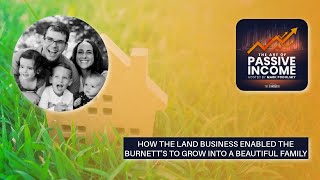
Val and John Burnett built a land business that gave them time and money to raise six children and help others through adoption funding. They scaled by hiring a team, using AI for marketing, and choosing partners who added skills beyond capital.
Questions this video answers
They have five children, with one more on the way.
He said it was his 11th live Land Geek event.
They said, 'we together own 83 of our company' (transcript quote).
Chapters
Hey, it's Mark Pinolski, the land geek with your favorite niche real estate website, thelandgeek.com and on this week's Art of Passive Income podcast. You guys are just gonna love our guests. It is Val and John Burnett. This is the second time they have been on the podcast. And I love these podcasts where we talk to our star students, our star clients, and hear about their journey. We peel back the onion. We learn about their struggles, we learn about their successes, we hear about their why, and that you are able to take their, you know, you can smart cut and learn from. From their successes, their mistakes, so that you can emulate them and avoid the mistakes as well and really get to where you want to be and accomplish your why, faster, farther. And these are so inspiring, these conversations. So, without further ado, welcome Val and John Burnett. How are you guys doing?
Really good.
We're really tired.
Really? Okay, so let's start with really tired. So last time you were on the podcast, you had basically built your land business to a point where you could work when you want, where you wanted, with whom you wanted. And he had two kids. Where are you now?
We're at five and one on the way.
Yes. We almost have six kids.
Yeah.
And doing great. I mean, you know, one of the biggest goals of mine. We've talked about this before, like, where, you know, we had to have some goals to drive us forward. Right. And one of them was that so that I could actually stay home with the kids and grow the. Grow the family and make a beautiful home. Like, that's what I wanted to focus on, you know, because we, you know, now we have quite a few and lots of focus from my end on that part. And so, you know, John, I worked really hard to get this business ripping and roaring because we wanted to make sure that we had a wonderful home life and a good marriage and, you know, teaching our kids to love the Lord with all their hearts, you know, so it's just like, there's a lot of effort to. That goes into that. But, yeah, so go ahead. Like, we've been working hard to create a really cool family, and. And then this business has just enabled us to feed into that. Like, our, you know, our priorities are, you know, to love God and enjoy him forever. Okay. So. And then to pass that on to our kids. But this business has allowed us to do it in a really awesome way.
Yeah, that's a lot of flexibility, you know, so, like, we've. So I do, you know, I do breakfast and dinners with the family. Every single day. I've got lots of flexibility in terms of scheduling. So, you know, if we want to go out, if we want to go travel, we just do. Right. Like, so we went camping last week. We're going to be going on a big trip in a couple weeks. And so it's really given us. It's given us the flexibility that we want to make that happen and to focus in on our family. So it's. It's been wonderful. It's been great.
It's definitely helped us to keep our priorities straight.
No, no, it's amazing. But I want. I want to talk about the, you know, the video game of growing the land business. Because last time we spoke, John, you were at. In Val. You guys are at a certain level. Yeah. And now you've gone three levels up. You've really ultimately scaled your land business. And I want to hear about, you know, sort of the trials and tribulations of doing that. And then just emotionally, because we were talking before the podcast, like, like, John had a point was like, he didn't need to work. Like, he solved his money problems, he solved his time problems. And then value, you had a mentor that said, no, here's your opportunity to do X, Y and Z. So let's talk a little bit about that.
Yeah, yeah. So basically, we had a point in our business where, you know, it was providing for our family. I had the time flexibility that I wanted. And really jumping into the land business, that was our primary goal, Right. Was time freedom. We wanted the flexibility for me to be focusing on the family. Right. And then we achieved that. And then the question you run into is, well, why am I continuing to scale this? Right. So the why shifts when you reach that, why? You have to ask yourself, well, what's next? Like, why am I, if I'm going to stay in this? I've already hit my initial goal. Why? Why am I going to continue this and why am I going to scale it up?
Yeah. So John was got to the point where he was working like a couple hours a day on the business and it was completely running the whole thing. And got to this point, like, okay, are we like early retirees? And like you said, like, we had a really awesome mentor friend who has been actually alongside us in this business for a long time. He's watched it and he is just totally amazed about it. And he's a very, you know, very good businessman, owns a lot of businesses and he's watched ours and he's just like, this is incredible. But he did talk to John, he said, you know, your kids need to see you working hard. Like, like as you, you know, are raising your kids, they need to see a hard working dad. Like, you know, and we're like, yeah, you're. The goal isn't to just like not work anymore obvious. It's not even that satisfying.
Yeah.
What it did was it multiplied our time to be able to focus in on even, you know, scaling our business forward, you know, skyrocketing that and then just on other. Other things that came into our. Our, you know.
Yeah.
Other opportunities that came on in. So.
Yeah. And so like basically, yeah, you reach a point where you can run your business with five to 10 hours and you realize I actually want to work more than five to 10. Right, right. And so for us, you know, basically what we looked at was a couple things. One thing was like, if we're going to be continuing to scale the land business, what's the motivation behind that? And you know, we came up with a few things. One thing is the creation of an office environment locally here in our town. So we have a lot of our VAs actually work locally here in our town. And we've kind of created, we've been working on creating that team and we were able to do things like we did Christmas parties. We, we do those every year. We, we try to get together for lunch and dinner regularly as well. And so we've got an office environment which is a lot of fun and, and I really enjoyed that. And our goal is to continue to build that out and ultimately provide jobs here locally within our town. And then the other thing is, and this is kind of a larger scale motivation, we had a big conversation around this last year was the idea behind building this out such that we are in an opportunity where we can be radically generous. Right. I think it's important to be generous wherever you're at. Right. You can aspire towards generosity, but if you're not generous in the moment, you're probably not going to be generous when you have the opportunity. But we want to be generous now and we want that to continue to scale. Right. And so we have the opportunity to give well. Right. And so that's a big motivation for us now as we've built out our company and then we've been looking at, you know, as we've looked at other opportunities and other ways to expand and grow and just had some fun other investing things that have kind of come in that we've been able to spend time and energy on that have been really good for us. So yeah, it's been great. It's been wonderful.
Yeah. I think another John ran into was, you know, sometimes it's hard, you know, to work by yourself.
Yeah.
So, you know, John kind of discovered accountability groups, basically.
Yeah. Just. And this is, like, this is really important. So I went to Coaching Live and I. I was like, counting everything up, and this was my 11th live land geek event that I'd actually been to, which is.
Yeah. Just so people know, like, Coaching Live is for our coaching students. It's a live event, and they. They come here and we all get together and. And as a community, we give content, we do masterminding, and everyone walks out. Meeting a new friend and being smarter and better land investors. Yeah, essentially. Yeah.
And so I always found, like, for me, land investing can be kind of a lonely endeavor, and we had each other, and so that was really helpful. Right. Because we could be excited about the wins that we have. If there was an issue we were going through, we could commiserate with one another. But having. Having community with other land investors has always been extremely vital to me. Right. So the. The mastermind calls that we would do, I would make a point, like, every single week, I'm going to show up to these. Every single week, I'm going to ask a question. And every single week, it was like a little endorphin rush of just being around other people who are going through what I'm going through, who understand. Right. And so that was extremely helpful to me. And what I found going to these live events, that was really the same thing. So I learned a lot from the events. But also just being around other people going through the same thing and having the opportunity to bump shoulders with them, to talk and to get ideas and then also create community, I got a lot of value out of that, both from a personal perspective and then also, I mean, financially, like, I made a lot of money because of the opportunities that arose from the relationships that I made at those events. So a big thing for me, I. I have been meeting with land investors that I've met at live events for, like, I've got one group that I meet with, and we've been meeting for five years every week, you know, and so. And that's been. That's been pivotal. Like, we've. We've. It's been an opportunity to provide motivation to one another, to provide critiques and make sure that none of us is sandbagging, that we're. That we're pushing forward in an effective way and making good decision. Our companies and, yeah. It's been great.
Well, that's why I feel like our journey has been all about just finding ways to push ourselves. So like the first decision, good decision we made was flight school. You know, it was just like, well, that was kind of a no brainer to us because yeah, we were gonna, we need to learn this. And we're not gonna just like, you know, depend on ourselves to, you know, go through whatever this big textbook thing, I don't know what, but we're like, we're gonna learn this and then we're gonn next step. And we were like, I think we. Well, the next step is we need a coach.
Right, Right.
Really glad we did all that. So we did flight school first. Then we went immediately into coaching because we knew we needed the push. We, and we did like, you know, once we got halfway through coaching, John and I were like so tired because we were still working two jobs. You know, we needed, you know, Eric to tell us, you know, unless your marriage is in trouble, you better get going still, you know, like, don't slow down, you know. And it was just like the key to us, you know, continuing and not maybe giving up, I guess.
Yeah, I think.
And so we've known that we need, we need that push all the time. And so this was a way. After coaching, I think John did a couple sessions of coaching was. Which was really fun too because we did, you know, we got two different perspectives. So we did, you know, flight school, coaching, coaching. And now we're in these accountability groups that they've created on their own and stuff. So I think that really has been. I, I think it's a key to success. I think. So I can do it without it.
But yeah, I think that with, with any endeavor that you're going at by yourself, I mean whatever it is, like even just like working out, you know, you think about it like there's always a good excuse, right. And the good excuse could just be I'm tired, I've got a one year old. And you know, and he was out five times last night or whatever it is. Right. And there's always a good reason and then that can just cause things to fizzle. And when we, when we jumped into land investing, we just kind of knew we're like, we've got lots of good reasons to not work on this on any given day. And so we need something that's going to keep us rolling regardless. And yeah.
It'S really worked.
Yeah, I know. I 100% agree. I mean I think that as you go up In. In any endeavor, personally, professionally, we need someone outside of ourselves who's not emotionally attached to help us get out of our own way, because human beings will do whatever they can to stay in their comfort zones. And you need that other person to push you in a. In a. In a. Not in a. In a shaming way, but in a. In a generous, loving, supportive way. You can do this. I did this. You can do this. And even the person who's pushing you, like, I need a coach. I have the same things, and we all do. Even though it's so much easier to look at someone else's problem. Oh, yeah, this is it. But when it's in our own, it's hard to get out of our own way. And. And that's really where the value comes in. But I want to just transition and talk about some of the challenges and some of the. The joy of. Of scaling and getting to that. That next level. And I love the idea of shifting your why from, okay, I want to solve my money problems. I saw my time problems. Now I want to give, you know, just this radical generosity. And Val, I'd love to know, like, what does that mean to you? But I, like, I started, like, I hired actually a consultant to help me. It's called, you know, go big, to give big. And so to help me grow so I can give more.
Right.
And so I love that idea of radical generosity, and it's a great place to be, but you need to get that next level before you feel like, okay, I've got my family taken care of, I've got my team taken care of. Now I'm going to really expand my impact and give even more generously. So walk us through that. You know, getting through that piece, I.
Think for us, what we really settled on was that, I mean, part of it is, you know, we'd like to give wherever there's opportunity. But. But the big thing that we settled on was, like, we love the idea of funding adoptions. It's so. It's so expensive to adopt. And, yeah, we know people who. Who want to do that, you know, and they're trying to find the funds for it, you know, because it's. Because it's expensive, you know, and so for us, that's a big thing that. That we really like. That's. That's kind of the big thing that. That we'd like to start pursuing alongside what other. Whatever opportunities.
Yeah. And, you know, also, you know, we're thinking about blessing our kids, too. So, like, we are paying for them to Go to the schools we want them to go to, you know, and that's expensive and it's. But we really want, we want to do that for them, you know. And yeah, also I love the idea of them getting like us getting to a point where we can like hire our kids, all right, you know, and learn how to be entrepreneurs themselves, you know, so, you know, I, I love that. I, I don't know, it's just interesting, you know, you just see whatever God kind of brings into your life. It's surprising, you know, your life turns out so different than you think.
Yeah.
So far for us that's been the truth. But I think that there will be always opportunities that come your way and you can just grab onto them and go if you have, you know, the funds, so.
Right.
Well, we're excited to see, you know, I don't know how, if you've experienced the same thing, but you know, things just get brought into your life and you can do good, you know, then, or, you know, we want to be able to do that. We want to be able to just go ahead and take care of whatever comes into our, our view, you know, so just being open, open minded to that and being, just keeping our hands open to, you know, letting the money flow out.
Yeah, yeah. No, money is, is like energy, you know, it's, it's very woo woo to say. I know, but it, it is one of those things when you have that abundance mentality and you just feel this, this inner confidence that I have enough and you just all, you just kind of know, I'll always have enough and I can be generous. And it's like the more you give, the more you get.
Yeah, it's so much better. Just like, it's great, like, okay, I'm gonna get more so I can give.
More, you know, And I think it's an important attitude to have everywhere in the, in the process, like.
Yeah.
One thing, like one thing that Dave Ramsey said that I think is actually really true is the idea that that money is essentially just like a megaphone to whoever you are. Right. So.
Right.
So if you're stingy now, you'll be stingy if you've got a ridiculous amount of money, if you're generous now, you'll be generous, you know, whatever you are. It like this, like money just creates more opportunity for that to express itself in various ways. And so, you know, I think it's important to, to take incremental steps towards where you'd like to be as somebody who's wealthy, wherever you're at, you know.
Yeah, okay, so we were just talking about this on another podcast and the business is really, there's three businesses essentially. So the first business when you start is you need to learn how to buy land and sell land. Yeah, that's the business. How do I buy land? How do I sell land? Once you get that down, like, okay, how do I create a team to buy land and sell land so I have a real business and I can solve down to my money problems, but also my time problems, then the business is, well, how do I find more money to feed this machine? And that's really the business that is like raising money and learning how to, to just, you know, either structure deals, debt deals, equity deals, and continue growing. Do you agree or disagree with my three business?
I think that of constraint. Yeah, I think that that follows our trajectory pretty dang well.
So yeah, that we were actually very surprised about was that, you know, we worked really hard and we were like, wow, like all of our properties just like flying off the shelves. We need to buy more property. But you know, like, how, how do we get the money? And people just started handing us money.
You know, okay, so are you doing debt deals? Are you doing equity deals? Were you splitting profits?
We've done kind of a little bit of everything.
Yeah.
So like a big thing, I've done a lot of land ar where we acquire at on a payment plan and then we sell on a payment plan. So I've done a good amount of that. And then we've got some investor split deals and we've also done some, some debt as well. Basically structure that. And so yeah, if you prove yourself.
To be a hard worker and trustworthy, you know, like, suddenly like people just, they're like, oh, can I invest with you? What can I do? Like, you know, here's some money. Like we're like, oh, yeah, yeah, yeah.
So. So my big thing is like never ask anybody for money. Ask them for advice and then they give you money. And if you ask them for, if you ask them for money, they'll give you advice. Yeah. What has your experience been as far as raising money?
Yeah, that was like the big, the big first thing for me is I kind of like I reached this point where, yeah, interesting. Where I was like, okay, I need to acquire some more capital. Like, we're in a good spot. This is humming along. But. And I actually considered getting a part time job and I was like, okay, like I've got this, this great company that I used to work for. It's a Fortune 500. I'll talk to my old. My old boss. And I did just that. Like, I brought a spreadsheet of my deals just to show him, like, what I've been working on. And he was like, what are you doing? Like, why you don't need a job. Like, you need more of this. And so. And he's our first investor, you know.
And so, actually, I want to help you guys.
Yeah. And.
Okay.
Yeah.
That's awesome. And he's been amazing. This is the same guy we've been talking about.
Yeah, he's been fantastic.
Yeah. Huge mentor. And he's also helped us, like, just to stay focused on the land. You don't. Like, it's easy, you know, Again, like, when you bring other people to look in at what you're doing, a lot of times they'll notice you're getting distracted. You know, there's so many different ways to, you know, make money in land or other programs. Yeah, whatever. And what this guy has done, but he's like, just stay focused. Like, stay focused and scale your thing, you know? Like, he's been great that way.
Yeah.
He knows.
And I think.
Yeah.
Yeah. I mean, is it interesting?
Like, we want to just add complexity to our lives and chase the shiny object. Like, we get bored.
I know.
Yeah.
Yeah.
It's true.
It's true. And I think that, you know, the whole. The whole adage that in real estate, there's, you know, there's a million areas where you can go an inch wide and a mile deep. This is really true. I think in land, there's so many different opportunities to get in and make money, but each of them has, you know, it adds a level of complexity, and I do think it's worth expanding. But you have to do that slowly and with intention because if you're not careful, you can easily get distracted from, you know, you can be like, I've already gone an inch wide and a mile deep here. And so what you don't want to do is leave that to go an inch wide and a mile deep over here and then leave that and bounce and bounce and bounce and bounce and bounce, you know? And so for us, like, we've done some fun and creative, like. Like big land deals, but the. The foundation of our business has always been just this model land, geek model.
Like our bread and butter. You know, it's always humming and going and always bringing in the income. Our paycheck's always there.
Yeah.
And so now we can kind of be creative and do whatever, you know, but still, we're still learning to stay focused because the most successful people we've noticed just are laser focused and, you know, not. They're like, almost really focused on a certain area. You know, they're getting to be experts about it, you know, and so if you don't discipline yourself to kind of stay focused and, you know, become an expert in something before you start jumping around to do other things, I just think that, you know, you just have to kind of learn that discipline. I think that's what we've been learning over the last few years is to kind of, you know, be content, keep working hard at that, you know, and learn the disciplines.
Yeah.
Yeah. Do you guys have a favorite deal?
I'm trying to think. We have, like, we've done. So there's. There's been a lot. I had one where we sold a property for gold. Like, somebody mailed us gold coins.
No way.
Yeah. So that was exciting. And I took my jewelry shop, and I'm like, how much money can we get for these? So that was. That was a fun one. I mean, we've had some where, you know, where the property defaulted and. And.
Oh, yeah, this is. That's kind of like the cool thing. I. I don't know. Something I've loved about this business is just the risks. The risk is not like. I mean, I just can't find nothing really bad has ever happened to us. It's just.
No.
I mean, no one.
No one believes me when I'm like, yeah, I've done this over 6,000 times. I've never lost money on a deal. Like, it sounds ridiculous, but we made our money on the buy.
It's helpful because, like, yeah. I think Eric was the one who told us, like, he's never not sold a property. And we're like, oh, yeah. He's like. Even if it was, like, really ugly.
Yeah.
Really? Yeah.
He's like, there's a pig for every barn. People don't believe me.
We thought we had to like the land and think it's. It was beautiful to us to sell it, and it just always sells, which is really cool.
Yeah. It's also been helpful, too, like, just to kind of go through, like, I. I have a natural tendency towards, you know, paralysis by over analysis. And I can also, like, freak out right over if I. If I see something that's stressful having to do with, like, a property or something like that. And it's just been wonderful. Like, now on the other, you know, it's. It's been coming up on seven years in a few weeks. And I, looking back on any anxiety that I felt, I can now say that was not justified.
You know.
That has been like. It's just like whenever I tell some of my friends what we do, like, they're like, what do you guys do for. Tell them while John does it. But, but we do this and you know, we flip land and you know, and even if it defaults, it's actually a blessing like thing because we'll have properties that people just like can't pay on. And we thought that that was going to be a scary thing, but now we're almost like, okay, yay, we get to make more money on it. Like.
Yeah, I know. It's a weird thing like the gift.
That keeps giving there, which is so interesting. I mean you a lot of times sometimes, well, if somebody's about to pay up a property, you know, like, we'll try, we'll do our very best to do whatever we can. But yeah, if, if they can't pay for the property, probably the best thing in their interest is stop doing it. And then, you know, it goes on. And for us it's a, it's a win, win for pretty much each one. So anyway, that's kind of what we've learned too is just kind of like. Okay. All the things we were scared about at first actually turned out to be the opposite.
Yeah. Yeah. I mean we're essentially a bank. We're a bank. And, and sometimes when you're making payments to the bank.
Yeah.
You don't, you can't, you can't pay anymore.
Yeah.
And that's okay. But the great thing about our business is there's nothing to go and take. We don't take somebody's house, we don't.
Have to take their car.
Like, there's no emotional angst. It's like, okay, your life, circumstance changed, had nothing to do with us.
Yeah.
And we're gonna go on and we're just gonna sell our land. We don't have to deal with lawyers or anything like that. It's. It's incredible. Subscription model.
Yeah. I know every time I tell somebody about, they're like, that sounds like way too easy. I'm like, it is. It's not easy to start a business. Of course you got to work hard at it. But yeah, this is the one I would choose like. And I don't know, it's kind of a no brainer to me. Like nothing, nothing bad about it, you.
Know, so, so let's, let's talk about hard work.
Yeah.
Where, where do you define the hard in the actual day to day of your land business? Like, there's always that, there's that phrase, like, pick your hard. Right?
Yeah.
What, what is your hard?
I think that what I've learned about myself is that I'm good at creating systems, but I'm not good at operating within them. Right. So, like, I can, I can create a system and I can operate within that framework for a specific period of time, but if I, if I, the longer I draw that out, the more likely it is that the overall growth in that framework I created is going to taper off and then start declining. So, so for me, what I've learned is that I need to, I need to delegate if I create, if I create a structure and a framework, or else, or else it's not going to be beneficial to the company. So that's kind of what I've learned. And then, and then the delegation side, you know, training is not fun, but it's, it's fun when it's done. Like.
Right. Right. Do you have a favorite method of training? Because in Dirt Rich too, I have like the land Geek method of, of systems building.
Yeah.
Doing it. But I'd be curious, like, what your method is.
Yeah. So what I tend to do is, I'll just do, I'll do, I'll book in meetings with whoever I'm training and I just tell them this is going to be. We're going to be building out this system while we are, like, during this meeting. So there's going to be lots of long, awkward pauses while I figure out how to overcome this problem and build this out. We'll build this apps, we'll do whatever it is we need to do to make this happen. We're going to record it, Watch this as many times as you want and then, and then keep me in the loop as you progress. And then we keep on meeting, we follow up, we get feedback on anything that, that from the prior weeks, talk through those tasks and then just keep it moving. And so that's how I kind of progressively train my, my staff and delegate as I go. And that it's great too, because you've got that time and you know, you're doing these tasks and it's not particularly fun, but you just, you're like, all right, I've got an hour. Like, I have to do this. And so you just keep on slogging through. And so that's been, I think, the most helpful way for me to do it. I think there's probably Some better ways to do it and part of it depends on the team member. But yeah, that's what's worked best for me.
And something I've just watched John go through as you know, it was just kind of like make sure he's got a plan for the day, you know, so in the mornings he'll, you go to a coffee shop or something and he'll sit down at a coffee shop. And that's like the first thing he does before he even opens his computer is that he plans out and he gives himself a lot of good stretch bowls.
Right. Because I think one of the things with, with a land business is you're operating. And it's one of the things that's so wonderful about it is that there's not really any urgency to anything.
Right.
There's no credit and that. But that also hits both ways where you, you can hit the day and you're like, there's nothing. Like, I could go home and the company will be fine, you know.
Right, right.
That's why you don't create your own.
You have to create your own. Yeah. And so that's like I read Atomic Habits and I've just been thinking through, you know, effective planning for the day is critical. The day, the week, the month, the quarter, you know, and, and rolling that out is, is really, really helpful and in scaling.
So that's, that's, that's so good. How, how are you guys utilizing artificial intelligence or AI or chat GPT in the land business?
Yeah, this is the master of this. Totally. The Valley.
Yeah.
So.
And John, by the way, I do think we should do some type of training on this. I have been reluctant to do it honestly, for the coaching clients for flight school because it's been the, the, the pace of change has been so rapid and I was kind of, I'm kind of waiting just to see like how things kind of play out and then really create more of a like a done for you AI solution to do it. So I've been kind of waiting on it because I don't want to teach something. And then it's like, oh wait, this is totally obsolete. A month later.
Yeah. Yeah. You know, it's interesting because I do think that that's true. Like AI is. It's been shifting and changing so rapidly and I think it's like, it's crazy just looking at where it was two years ago compared against right now, it feels like we're at one of those major technological transition points where, you know, you think about it like in the in the 60s, right? You had 1969. Like, you look at 100 years before that. Everybody's driving a horse and buggy, and then all of a sudden we're on the moon, right? Like, there's this. There's crazy rapid technological transition that happened, and then largely that kind of tapered off. And so we've got technological advancement, but it largely is. Is with what's in our pockets, right, with our computers and our phones. And now it feels like we're at that major transitional point and everything is shifting, shifting, shifting so rapidly. And I think that. I think that AI will be in a different spot, a radically different spot in five years than it is now. But I've. I've started using it really right at the cusp when ChatGPT started, you know, when. When it became publicly accessible, I started using it right away. And I've done. I've been building out content marketing for my lamb business. And because I want, you know, like the deal, the deal of the week that I send out every week I find extremely valuable, and that it's a touch. And even just being present gradually builds up trust so that people that you contacted years ago, they'll buy a property three, four, five years later. That's not even the deal of the week, Right. But it's just because. And so what I wanted to do is, is continue that, but build it alongside content, where the real focus of that content is just provide value, right? And so provide value week after week after week. That's. That just does that. And then. And then, you know, alongside that is an opportunity to work with me. Right? So, yeah. And so that's where Chad GPT came in. I had this vision for content creation and on just various aspects of land ownership. And I hired somebody to help me with that. And I was like, you know, this is kind of hard to manage this get the tone I want. And. And then. And then that was the point that Chat GPT came out. And so. And then I had a year's worth of content, like four or five hours, you know. Incredible. Yeah. It's crazy. And that's the thing. Like, you can, you can. I mean, I was like, what should I write? I was like, I'll ask it. You know, you're just like, here are the types of people that I generally sell land to. Give me 100 potential articles that I can write that would be of interest to these people. And a lot of it's junk, but a lot of it's good, you know, and so you start building out A inventory of potential articles and then you start having those generated one at a time. You build out a repository of these articles you can write. And so, and then I do the same thing for ad copy. You have to be careful with ad copy. And to be fair, I don't know that I've done a fantastic job of this. But like ChatGPT can, you can, it can get fairly formulaic when it comes to writing ad copy for your properties. And the tone can be off, you know, and it's hard to get right tone where it's not like to somebody who has a PhD, you know, or like a, you know, some kind of a lit degree, like talking about the various aspects of the sunset and whatever. And. Right. You try to, you like write it as though you're writing to a. You know, the other day I was like, right. As though you're writing this to a 12 year old. And it's like, hey there, pals. You have to talk about five acres. It's like four football fields. You know, it's like, right. So it's, it's hard to strike that balance and tone and you have to work on your prompts, but it's, it's wonderful to be able to generate that and it connects to zapier so you can do all the, you know, all kinds of stuff. So I'm, I, I largely use it for content generation, but I, I think that there's a lot more opportunity for it because with AI, you know, when it comes to, there's the auto automation and delegation in our business. Right. And automation, anything that has essential, like the variables are completely consistent. Right. And so when this happens, then this happens every single time. Right. But when there's any level of critical thought required, that's when you have to move to delegation. Right. Because if there's some level of critical thought, you can't automate that. But AI is, is starting to transition where there's a low level of critical thought that can be essentially automated. Right. And so that's where I think things are going to start shifting. Where there's, there, there's going to be a substantially larger amount of tasks that can be automated, whereas before it had to be delegated.
No, no, 100%. And I still think it's a good intern. I wouldn't have it write my, my ads, my content without myself or a human reviewing it and giving it, giving it some soul and giving it some personality. And you see it everywhere where you're like, okay, a human didn't really write this. Yeah, and it's like you can feel it in a way. It's like listening to a song that. That moves you versus one that just is kind of formulaic. Like, you know, a pop song sounds good, but it doesn't. Doesn't move you.
Yeah.
In a way that something else could. Not that, you know, we're writing ads that are going to make us cry, but they're also. But they are going to, they're, you know, the ad is going to, you know, emote something to that avatar where they're like, okay, these, these are the people I want to work with, and this is why, and this is the place I want to buy. And, And I think even you guys talking about yourselves and your why and your, your philosophy of, of radical generosity is going to attract a different buyer versus someone that doesn't discuss maybe their life philosophy and why they should work with that land company. It's a differentiator. And so often people will come up with a cool name and then nobody knows what's behind it or the, the why or the, the entrepreneur. And, and people do business with people. They don't do business with companies. And so I think it's, it's really interesting as far as.
Yeah, it was funny because when you first started the lamb business, John would actually, like, want to be at home so that they could hear kids in the background. Yeah, people, like, are like, they like that, you know, like, they like, they trust better. You know, it's just like putting it into, like a. Making the person sound like a real person is actually good.
Yeah, yeah, yeah, yeah.
All time, you know, like. Yeah.
And I, and I have a, A fear that as AI continues to develop, we're going to get to a point where we're going to want to do things in person again because we're not going to know if that person is really that person.
Yeah, yeah, yeah. Like, like there's the, like the AI caller stuff is crazy, you know, and it's still like, you can kind of tell because there's like those pauses, you know, where it's like computing. Yeah. It's gonna get better and better and it's going to be harder and harder to tell if you're talking to a real life.
I know.
Yeah.
It's freaky.
Yeah, Yeah.
I don't know about you. This is just a random thing too, but I mean, I've started, like, wanting instead of texting people all the time, like, I want to like, like call people again. You know what I mean? You know how we got texting Aren't you so surprised when anybody just calls you?
Well, it's, it's, it's so funny. Like I'm like, who's calling? No one calls anymore. Except my, except my mom.
We go back to. It's like how happy, you know, like, like I think it's like the younger generations just literally don't h. Don't know what to do with like an actual phone call. Yeah, yeah, I just like that. What. You know, so somebody actually like calls me like, oh, hey, yeah, it's a little bit scary now because we have to actually talk. But yeah, it's better.
No, no, I think, I think like my kids generation has lost that, the lost art of actually conversation, conversing in that way. And I think that it's going to be a deficit because if you go into the business world, it's all about communicating effectively and finding that connection. And if you haven't practiced it at a young age, it's, it's something, it's a skill like any other skill. And not to say that you can't sell land via chat, right? You can, yeah, you definitely can sell land via chat. But yeah, you got at a certain price point it, it becomes people want to know you're a real person. Yeah, yeah. And pick up the phone. Yeah. What's your, what's your best advice for someone who's not starting out? They're in year three of their land business. They, they've, they're at that point now where they've got the fundamentals, they've got the team, but they want to scale and they're at that crossroads. Do I go into debt? Do I get an equity partner? Do I, do I sell notes to, to fuel the business further? What would your advice be?
I think that I guess one thing would be to a, like, you know, ensure that you have an effective. Why for your business. Right. If you're going to be scaling it, you need to have some level of motivation. And then I think another is just that every, like if you're looking to acquire funds, there are benefits and there are pros and cons for every different option that you choose. Right. But they're all good options. So I guess one thought I would have is to not, not, not be inactive because you're trying to pick the perfect option. Right. So, right. You can move forward with any given option. And the key is, I think if you, if you require the funds because you have an effective system, then I think it's important to, to ensure that you maintain your momentum because that would be the worst thing, is losing your momentum. The other thing is, I think on the debt side to be, to be cautious that you don't over leverage yourself. So what you don't want to do is get a bunch of money and be like, I'm going to send, I'm going to spend all of this on mailer.
Right, right.
And you do some kind of experimental mailer to a new county that nobody's ever done, and then all of a sudden those funds are gone. Right. Because, because you, you broke away from the model or whatever. So I think, you know, for me, my general principle is that if I'm, if I'm acquiring debt, it's used on acquisition. Right. And it's not being used on other aspects of my company because that's where I think those funds are best utilized. And so that's, that's been a big philosophy for me. But yeah, I think the big thing is just maintaining momentum. If you do, you know, if you do want to avoid just the standard debt path, then I think there are ample people that are looking, that are interested in the idea of doing some kind of an equity split. And there's, and then to be able to do land arbitrage, it puts you in a position where your holding costs can be extremely low. Right. When you net. And so, yeah, so, I mean, really all of them have been beneficial to me. I think that where we're at in, in our business, we're really trying to kind of simplify. And so we're starting to be like, all right, we're going to move away from land arb and the equity splits just from a bookkeeping standpoint. But I'm enormously grateful that we were able to, to have those as an opportunity at the phase where we were jumping in.
So, and our first, the first thing we ever did was when we got into the pickle of we didn't have enough money to stay going. You know, we asked him like, can we have a loan? And you know, he, he was like, you know what? Like, I would rather become an equity partner because I think that I'm going to add like a lot of wisdom to your business. And so we had to kind of make that decision. It was, it had to be the right person.
Yeah, you got to be really careful with the equity partner thing. It's one of the best decisions that we've.
We. It was the best decision. We think we are so thankful we.
Did it, but it could easily be careful. It could easily be the worst decision that you Made for your business. Right. Like, yeah, the thing where. Because you're married to this person, essentially for the lifetime of your business, you also have to be careful about how much equity you give up because you. You need to be motivated to get up every day because of the level of ownership that you have in your company. You know, and, yeah, their investor was.
He knew that, too, so he really was protecting us, you know, and going, like, I want this to be really good for you.
Right.
You know, so he's that kind of person. And then he also has just, like, been a coach to us all the way through. So I don't know. I don't know if there's probably a rare find that we found there, but.
But I think that if you do. If. If there's any kind of like a capital investor that' that you're giving up some level of equity in your company, it's really important. Like, and I've told people this, like, if it's just like, if all they're providing is finance and that's it, then you need to go in a different direction.
Right. Right.
You need to find an alternate. But if. If, if they're jumping in with you, then you want to provide that there's. Or you want to ensure that they're providing a substantial level of value beyond just the money itself. Right. And. And we have that in our. You know, and we together own 83 of our company, you know, Valerie and I, and so we've got a large chunk and we're still excited, you know, about. About all the money we make. And. And he's done, you know, he's done. Yeah.
And he's kept us on track and he's kept, you know, he's pushed us, you know, a lot. You know, so it just kind of depends on what comes into your.
Yeah.
Opportunities, I guess. But. Yeah, but we didn't really. When we hit that point, we're like, oh, we didn't know this was coming. Okay, we gotta figure it out. Yeah. But it worked itself out. And, you know, like I said, it's like, you know, the money started sort of presenting itself once we proved ourselves. You know, people kind of kept hearing about us and, like, hey, like, you could invest with John and Belle, like, you know, and so we had, like, a long list of people who wanted to work with us. And so we just had to decide what was the best. Best for the company.
And I think it's a. It's definitely a glass ceiling that people put over themselves. Right. Too. Where it's it's hard to just start. Start having those conversations and talking to people. But once you do, you know, it's. It's great. It's not.
Yeah, yeah. So what's the worst advice you see or hear given in the area of land investing? What should people be avoiding?
I mean, for, for me, I just like what. What I learned really is just that shouldn't want to like, just get a bunch of riches. I don't know. Like, you know, it's just like have a reason why you're doing this.
Yeah, I think, I think that, yeah, it's interesting because I'm trying to think of like, specific advice that I've heard, but I do. You know, I think sometimes people have. Have a goal that they don't really realize isn't going to be fulfilling when they reach it, you know, and so if you want to just sit my ties on the beach, like, that's really nice. But. And, and I love a Mai Tai on the beach, but when you get to a point like, you know, nine months of my ties on the beach with no work might not be as fulfilling as you think. And when you reach that point, you need to start thinking about, well, what. What is it that I'm doing? You know, because I think that, you know, you want to have like, you want it.
Riches is just not a good thing.
Yeah. And the other thing is I think it's important for people to. What you don't want to do. You know, it's easy to. So when we jumped into this, our goal was to have time and flexibility for our family. And it's easy to have that as a goal. And then you're starting something new that requires your time and energy. And you can, if you're not careful, kind of give your. Give your family the shaft. Right. For that period.
Right.
You say you're doing it for your family, but actually like.
Right. So if you're not careful, you know, you can lose your family in your pursuit of financial freedom for your family. Right. And so it's important to effectively carve out time so that you're not. So that if you're sacrifice what the things that you're sacrificing to achieve this goal is not your relationships with your spouse and your kids. Right.
Right.
And so you're giving of yourself in other areas. So for us, that. What that looked like was, you know, we had. We had times that were no lands times when we. When we were really in the grind of, of, you know, I'm working full time. We're Starting this. And so we had like 8 o', clock, you know, no lands after 8 o'. Clock. And, and Sundays we would just, we would, we turn it off and have a day with our family. And you know, having stuff like that I think is really important. And I think it's important to ensure that whatever you're doing, you're maintaining all of your relationships that are of importance.
And then just being. I think it's easy to have sideline glances to other people who are doing stuff like. So what I mean is like, you're comparing yourselves to others and that's just going to rob your joy, right? And you need to be content where, where you are and be thankful and then just work hard, you know. And so I think, you know, it's easy to see like other couples maybe doing a little bit better than us and we're like, jealous or something. It's not, is not a good thing to do. Just quit sidelong glancing. That will rob your joy and, you know, be content with what you have. It's okay. You know, also it's like, how much money do we really need? Come on, like, let's just be having fun today, be thankful for what we have today and not be like always wanting something more, you know, I think that that is something we've, you know, learned along the way too, because there's a lot of success. You know, people kind of get farther, faster or whatever and stuff. You just have to keep yourself in check and. Because otherwise you can. That's miserable, miserable people. You know, to be comparing yourself all the time to other people, I think.
That'S, that's great advice and I think that's a great place to, to just, you know, transition into the tip of the week. A website, a resource, a book, something else actionable for the art of passive income listeners to go improve their businesses, improve their lives. Your mentorship. This podcast has been so great and the, the wisdom and the, just the, yeah, the, it's, it's been really. This is the kind of podcast people should listen to again and again because you're gonna, you know, especially as you grow your land business, you're going to understand things at a different level of what Val and John have been talking about because they've gotten to a land, a level in their land business that, you know, if you're in year one or year two or year three, you might not even understand until you're at year five, six or seven and you're hitting those, those points because you might not even know what the Existential crisis is of, wait, I can work two hours a day now, what do I do with my time? And it is an actual existential crisis. So it's, this is a great one to go back to as you go up that, that level in your, your land. Your land business. So Val, John, what is your tip of the week?
Yeah, I'd say, I mean, yeah, I think so. The book Atomic Habits. I'm sure this has been a, It's.
A great, it's a great one. It's a great.
It's funny because like so many, so many business books are like essentially a blog post that's been like expanded to fit, you know, 190 pages or whatever. But Atomic Habits, there's so many nuggets in there. And I think in terms of like effectively organizing your time and building up habits so that you can manage yourself, that's enormously helpful. So I, that's a book that I'll be coming back to again and again and again and I'll learn something new every time. I think the other thing, if I can have one more tip would be, would be community is just, you know, ensure that you're surrounding yourself with like minded people wherever you're at. If you're just starting out and it's day one or if you're three years in, you know, don't isolate yourself. I think it's really important to be around other people that are in the same boat as you and that are pushing along in their own businesses.
Yeah. And I mean the biggest thing that wise people always tell me, it's just like, remember what life is about. Remember your priorities, you know, like, take a step back. You know, for John and I, it's we number one is God. Then we have our marriage, our kids, our family, you know, so that the business is to bless that, you know, like. And we're not like, you know, have any other motivations apart from that. It's like this is. We gotta keep our, our eyes on the right things and right.
And ultimately we want it to be something that enhances each of those relationships.
Yeah.
Right. So.
No, yeah, it's incredible. With five kids and one on the way, the amount of energy the two of you still have.
Oh yeah, it's incredible. We just went tent camping this last week.
It's fun. I mean every, you gotta, I mean, you know, some people think they like lose their life or something when they have kids, but we are like totally experiencing something different. If you look at it differently. I mean it's like kids Bring so much joy to your life.
Yeah.
And, like, and you get to relive your childhood all over again. So John and I have a lot of energy because we get to do a lot of fun things.
Yeah. Yeah. I was talking to John a couple weeks ago. He's like, yeah, I'm watching nine kids. Like, nine kids right now.
Oh, yeah, yeah, yeah, yeah.
We had a friend. A friend who had a baby, and we watched their kids while they were. While they were having their baby. And so we had nine under nine in our house, which was hilarious.
Yeah. I think we've got a podcast title, 9 Under 9 How to Build your land business.
I know, it's so true. So, yeah, I mean, have. Have kids. They bless your life. They give you energy. I mean, you're tired because you're spending. But you're spending your life on good things.
That's awesome. Well, my tip of the week is learn how to become like Val and john. Go to landgeek.com training, schedule a call, and John might be one of the people you talk to to help you and guide you. Talk to one of our land geek sherpas and see if this business resonates with you and. And learn more how we can help you go further, farther, accelerate, and go up that mountain of land, investing safely, quickly, efficiently with flight school. So. Thelandgeek.com forward slash training. Val, John, are we good?
Yeah, it's good. And we're thankful, Mark. We really thankful for you paving this, you know, path for us and sharing what you did, you know, you gave, and we're really thankful. We would never have gotten to do this if you hadn't, you know, opened your hands to it, you know, so thank you. Thank you. Instead of clutching it and saying, this is mine, you know?
Yeah, I know.
So that was really cool. And it's produced so much fruit, you know?
Yeah. This. This is. This is my why. And, you know, nothing. Nothing really gives me more joy. That's. That's why I continue doing it.
That's right. And, like, you know, if there's anybody who is on the fence or whatever, just give John and I a call and we'll just let you know how much changed our life, you know, enjoy, you know, having a big family now and. And, you know, on one income. This is great. You know, I get to decide whether I want to, you know, I'm. It sounds kind of fun to get back involved, but guess what? I don't have to. So I don't have to if I don't want to, and I get to if I want to. So, you know, it's like, it creates so much freedom that way. So, yeah, just give us a call and we'll help you. Help you, whatever you need. So.
Amazing. Amazing. All right, are you guys gonna do this with me?
Yeah.
Yeah.
One, two, three.
Let's Freedom.
That was really good. You guys are the best. Thank you.
Thanks for having us.
Yeah.
Thanks for listening to the Art of Passive Income podcast. Are you ready to learn how you can start building a passive income without renters, rehabs, renovations, or rodents?
Schedule a free consultation@thelandgeek.com forward slash training.
Let's Freedom ring.
More from Mark



How to find funding partners: How to Scale Land Without Using Your Own Capital




