How To Be Innovative In Wealth Management?
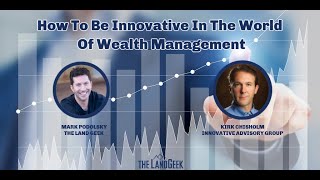
Podcast episode where Mark J. Podolsky and Scott Todd interview wealth manager Kirk Chisholm about innovation in wealth management, focusing on using self-directed retirement accounts to invest in alternative assets (real estate, private mortgages, private company stock, crypto). Discussion covers Kirk’s background, why most advisors follow conventional mutual-fund strategies, barriers and low public awareness of self-directed IRAs, common tax ‘gotchas’ (prohibited transactions, annual valuations), risk-first due diligence, and recommended productivity/readings (The 12 Week Year, Deep Work, Essentialism).
Chapters
Hey, it's Mark Podolski, the land geek with your favorite niche real estate website, thelangeek.com and on today's podcast, we're gonna get wealthier. But before I talk to our guests, I'd be remiss if I didn't properly introduce my co host. You know him, you love him. The brain, the professor, your flight school sherpa. Scott Todd from scotttod.net landmoto.com learn anything about anything. Investor ninjas.com Scott Todd. How are you, Mark?
I'm great. How are you?
Pulse is still normal. Respiration is fine. I'm not complaining. But today's guest is Kirk Chisholm. He is the wealth manager and principal of Innovative Advisory Group. And he specializes in helping people with their portfolio management, their investment analysis in both traditional and alternative investment markets. Basically every day he's like, how can I make you wealthier? It's a pretty good gig. Kirk Chisholm, welcome.
Hey, thanks for having me on, Mark. This is going to be a lot of fun.
So, Kirk, let's just rewind the tape. And how did you even get into wealth management?
That's a good question. Actually. I really got interested in college. I was in college, freshman year. The market was pretty much going through the roof. This is in the late 90s where, you know, even a monkey could make money. Right? Remember those commercials were like, hey, we could have a monkey pick stocks. And they outperformed the S and P, that kind of stuff. So that really kind of got me interested. I had a bunch of interviews, I'm sorry, internships at firms when I was in college. And just really, even though I was cold calling for them, I really enjoyed it. So that was, that was a lot of fun and really just started out of college and it was just, it's something I've always wanted to do. I just, I enjoy investing. It's a new challenge every single day. As soon as I have it figured out, they throw something new at you tomorrow. So, you know, it's a problem that'll never be solved. It's a puzzle that, that's, it's kind of. I equate it to. It's like imagine doing a puzzle, but the picture that you're trying to create with the puzzle changes every day. So you. Right. You know, as soon as you figure out, you know, a few bits of it, it changes. So that, to me, is exciting and it really allows me just to help people and change people's lives. So I really enjoy doing this.
Yeah, it's. It's an amazing privilege to do so. You know, in, in the world of wealth management, it's. It's this huge, huge world, Kirk. So let's just get in right to the. The crux of it, the word innovative. Why are you guys innovative in the world of wealth management?
Yeah, so, you know, when I started out in the industry, I realized pretty quick that everybody pretty much just does the same thing. So 99% of advisors out there, they're doing the same thing as everybody else. Hey, here's a bunch of mutual funds. You know, we're going to allocate you reduce your risk, all the, you know, stuff they talk about, but it's basically everyone's using the same strategy or a similar derivative of it. And I always looked at that as lazy or, you know, kind of lacking creativity or thought. And it's not that they're doing a bad job, it's just that they don't bother to test assumptions. Like, you're in the real estate market, remember 2008. Why did that happen? That happened because, well, real estate always goes up. Why bother testing that assumption? Because it always goes up. So we don't have to think about that anymore. Let's move on to the other problem. Right? And because Wall street doesn't test their assumptions and they don't think about things outside the box, they tend to get these kind of problems like 2008. And so what we do is we look at things with a fresh set of eyes. A good example is, you know, what we specialize in, which is investing in alternatives with retirement accounts. This is something that you've been able to do since the 70s. There are four other advisors, none of which you will find because they don't want this kind of business. There are four other people besides myself that do this. Why? Because it's not easy, because it's not scalable, because it's not a product. But it's. I've seen some people make, you know, hundred thousand percent returns on investments they know really well. Why would you ever put them in a mutual fund? That's just ridiculous. So we look at things as like, what is the best thing for the client? Is it, you know, if they're investing in land, for instance, if they're flipping land, why not do that in a retirement account and not have to pay the taxes? Why are you putting your retirement account in mutual funds? To me, that's just silly. So everything we do, we kind of reassess in terms of what is the best use of that strategy for people to also Include risk management, which I think is something that's quite overlooked in our field.
Scott Todd, what are your thoughts?
All right, so not to be, you know, like, negative on it, but like, okay, Kirk, like, you're right, I agree with you. If I make money land flipping, why not do my retirement account? Why, why do I need you? Like, I can go get a self directed ira, I can go get a qualified retirement plan, whatever. Like, I can just do it. Like, what's stopping me?
Nothing. You don't need me to do that. So what our role is, and you know, we do a lot of education for the public because this is something that less than 10% of the public that has an IRA is even aware that this is a possibility. There's about 4% of IRA owners that are actually doing this. So it's part of this is education, right? It's just knowing that you can do this. Part of the reason I'm on this show is to help educate your listeners that this can be done. Use me, don't use me. I don't really care. I'm not hurting for business, what we do. There are a lot of do it yourselfers. You can do this yourself. It's not brain surgery. But there is some complexity there that quite frankly, a lot of people just say, you know, this is too complex, I need some help, or point me in the right direction. Or in some cases, people come to us and say, the stock market's really scary right now. Find me some alternative outside of the stock market. It might be land, could be private mortgages, could be private company stock, cryptocurrency, whatever. Like, everyone's a little different in what they want to do. But the nice part about this is that you can have that expanded opportunity set to invest in what you know, as Peter lynch said. Now, you know, I will tell you that this is. It's not altogether straightforward. There's a lot of parts of the tax code that people have to understand. And if you're investing in mutual funds with your ira, you're not going to get yourself into trouble. You just click a button and you're done. If you're investing in real estate, you have to do things properly. Or you could create prohibited transactions, which means that that's an immediate distribution of those funds from your ira, including paying all the taxes on it, not something you want to do. So if you're one of these people that has a really good attention to detail and you're willing to comb through the tax code or find the right people, you can do it yourself. Like, it's just like investing, right? You invest in land or mutual funds, you could do that yourself too. But there's a lot of complexity in there that, that does overwhelm people. And people use us for advice. And you know, it's not like the 70s where you can't buy stocks on your own. Right? Like you can do this yourself. And I think people should, but people should be aware that it's not as straightforward and there's more to it than that. And I think that's some of the biggest challenges are people just don't know what they don't know.
Yeah, no, I totally agree with you, Kirk. My question be, why? Why is it such a small percentage of people that are even exposed to these self directed retirement accounts? What, what's the big secret? Like why don't we see these commercials like we see on, on the Golf Channel? You know, go to your self directed IRA and start investing in, you know, these assets that you know best. Art land, real estate, cryptocurrency. We never see it. It's like, it's like this hidden little.
Thing why you hit the nail on the head. If you think about anything investing related. How do you know about it? Advertising, right? How do you know about TD Schwab Fidelity Advertising? If they didn't advertise, you would know they existed. Right? But yet there are custodians or 47 custodians out there that specialize in this and they're not advertising. So you don't see advertisements on tv. Hey, you can put this, you can put real estate in your IRA because they don't have that kind of budget. They are not making money hand over fists like some of these traditional custodians. So they don't have the marketing budget. They're more creative with their marketing. They do it. And if you're a real estate investor, you probably come across some of these companies because they do advertise. But it's not like it is with, like you said, the Golf Channel, because that's a huge budget that these people have to have. So the reason that it's not a conspiracy, it's not like people are trying to keep it away. But td Fidelity, Schwab, they're not going to advertise something they don't do. So they're only advertising what's in their best interest. And since they don't do alternatives, they're not going to advertise about that. And most people are not willing to comb through the tax code. I mean, let's be honest, unless you're really having a tough time sleeping at night, you're probably not going to comb through the tax code. So that's not going to be something that you're going to find out on your own. You might find out through a real estate investing meeting, a podcast like this, or maybe like a blog post or an article in some publication, but that would be it. Because, you know, and even then you might not understand what that means. I mean, I can't tell you how many people come to us and say, hey, I want to. I say, what are you investing in? Oh, I'm investing in a 401k. Okay, what's your 401k investing in? It's a 401k. What do you mean? So there's not a great knowledge of all parts of wealth management because that's not what they do for a living. So even if they heard that concept, they might not fully understand what that means. So I think there's a lot to it. But the advertising is the biggest part of that, I think.
Okay, Scott Todd, what are your thoughts?
I was just going to ask, you know, one of the things that Kurt said was that there's a lot of like gotchas in the tax code for real estate. Like what, what are some of them that you see that put people at risk when they're investing in real estate through their self directed IRAs.
Yeah, that's a good question. So there's a few things. So one is you can't do business with a disqualified person. Now a disqualified person would be yourself, your spouse, kids, grandkids, parents, grandparents, lineal ascendants and descendants. You can do business with your friend, you can do business with a third party as long as there's an arm's length transaction. You just can't do business with direct family or yourself. And what a lot of people do is they'll just say, hey, I want to buy this rental property, I'm going to rent it out to my mother. Or I'm just going to stay there while I'm on vacation for my two weeks a year so I don't have to, you know, that two week exemption of not disclosing rental, rental income. So you know, people think, oh, I can just stay there a little bit and no one will know. That's a problem. Because if the IRS finds out, and I can assure you, if they're looking, they will find it. You are not smarter than the irs. There are many things they do to find out that you probably are not Thinking about never try to get around the rules. So there are things like that. If they find out, then you've just taken a distribution of that asset from your IRA and you're paying taxes. Now the problem is not the paying taxes. That's not the problem because the IRS isn't going to find out this year. They might find out six, seven, eight years later. Well, you took a distribution eight years ago. You owe taxes from eight years ago, plus penalties and interest. Sometimes you. I've talked to people who've lost their entire IRA because of that, all of it, because the penalty interest just racked up. That's a huge problem. You know, investing poorly certainly is another piece of it. But the prohibited transactions is the biggest part, because I think a lot of people really try to get around the rules and you just can't. You just don't even try. Don't, don't try to come up with an end run around the rules, because I can assure you we've been doing this for a long time. We know the rules, we know the exceptions to the rules, and we know the exceptions to the exceptions. We have not come up with anything new in the last 10 years. Like there actually there's one new thing that's come up recently, and that was a case, but this doesn't apply to anybody in real estate, so. But generally speaking, there's nothing new. Just make sure you're following the rules. There's another piece too, which is annual valuations. Most people don't realize they have to have a valuation on the asset every year. When you're investing in stocks, there's a valuation every second of the day that they're traded. Like there is a price. But if you own real estate, how does the IRS know what that's valued at? So you have to provide a valuation every year. So those are some of the bigger ones. There's obviously some others, but there's some of the main ones I think would be applicable.
Interesting, interesting. So, Kirk, when someone comes to you and you start educating them on the world of all these alternative investment opportunities, what are some of the questions they should be asking that they're not asking?
Well, I would say, you know, the biggest challenge that we see from clients, prospective clients, is kind of a lack of due diligence on the investment is that they're not doing their homework or they're not working with somebody to help them do that homework. We have a lot of people who come to us and say, hey, I found this great cool thing. This guy was selling this These investment sponsors that we see, like, hey, this guy has this real estate that he's selling me, and he says I should put this in an ira. And I'm thinking, oh, is the real estate any good? Like, oh, he promised I'd get 20% returns a year. And I'm thinking, what year are we. Is this property any good? Does it have toxic waste on it? Like, how are you getting 20% returns in this environment? And why is he giving it to you? You know, like, there's. There's a disconnect where I think a lot of investors look at the returns first. They say, oh, what kind of returns am I going to get? 20%, okay, I feel good about that. I want 20%, right? It's like they're going to the store and they're picking based on performance, not on the investment. And then what they don't do is their due diligence. They have no idea what they're investing in. They have no idea how it's going to be managed. They have no idea, you know, what the market price is. They're just taking somebody's word for it. And what we do is we flip that around. We have a philosophy we call risk management first, which is you do the risk management. The performance takes care of itself. Like, I don't know if it's going to make 5% or 25%, but if I go through the due diligence and it makes sense as an investment, the performance generally will make sense. If Somebody's promising you 20% returns in this environment, then you have to kind of look at it and say, what's going on here? This is not. If the environment says five and you're seeing 20, like, all right, what's going on? What am I missing? And I think a lot of people don't ask that question, like, what am I missing? What could go wrong here? What is the worst thing that could happen in this situation? So when we manage money for people, whether it's a stock or real estate or whatever it is, we look at it and say, what's the worst thing that could happen? And we identify all of the risks. So these are the keys to risk management. Identifying all the risks, mitigating as many as possible, and being comfortable with what's left over. And there will inevitably be risks involved in every investment. Even in treasuries and CDs, there are risks. They might be small, but they do exist. So you need to be aware of what those are and be comfortable with it. And so that way you're never going to be surprised at a bad outcome because they do happen. And there's things you can't control, like Covid this year, you know, who had control over that? You know, we didn't know that was going to happen. We were prepared for it, but we didn't know it was going to happen. And I think that's how you have to look at investing is not necessarily knowing the future, but being prepared for it.
Okay, Scott. Todd.
I mean, I think it's all just good advice. Right? You know, it's, it's, it's money management. It's, you know, using your skill sets. I think it just comes down to execution of it. Right. Like, you know, if you know the investments you'd like, go execute on those. Use, use the tools available, find who can help you with the self directed IRA and use common sense because ultimately that's what I think it comes down to. And I think that you'll just see that growth just take place.
Yeah. You know what's so funny about all this is that I think like I know for me personally, because my full time job is investing, I'm really self aware when I'm gambling. And so I had a conversation with a buddy of mine and he's telling me about this stock that was, you know, like a biotech stock. And I was like, really? And he's like, you know, kind of hyping it up and telling you about the performance. So I bought like $5,000 worth. And I thought to myself, well, I lose $5,000, it's not, I'm not, you know, it won't affect my sleep. But that was the amount of due diligence I did was a conversation in a coffee shop. I put $5,000 down on the stock. It went up and it like doubled. And then like last week it lost 50% of its value. And I still hold it. And I'm thinking to myself, you know, I think I spend more time researching a new Mac, literally a $1200 Mac and going through all the specs and all the things that I did on this investment. Kirk, what is wrong with me? Why do we do this? How do I stop myself from doing this?
Well, you're human. So that's the problem. Every single investor out there has this same exact problem. You want to how Wall street works. Here's a simplified way to look at Wall Street. Let's say there's 10 analysts. One analyst does the research, they do all the due diligence. They know it inside and out. The second person now Knows the person who did the research. The third person knows the person who knows the person who did the research. Everyone else here is at a cocktail party. That's how most of Wall Street's research is done. And I'm simplifying it quite a bit. That's how investors do the research. They just hear about it from somebody else and say, hey, that sounds like a good idea. Not knowing anything about investing. I think, quite frankly, 90% of investors shouldn't be investing their own money. I think they should have the opportunity. I'm not talking about government control. I'm just saying in terms of knowledge base and level of time and effort they put in, they just shouldn't be doing it. They just don't have the expertise or the interest in putting the time in. They do exactly what you do. Oh, I read on CNBC or on Jim Cramer show or in Wall Street Journal about this stock. It sounds like it's going to the moon. Okay, what do they do? Well, I'm not too sure. I think they're gonna make money off of. Off of technology. Oh, okay. That's a. That's a good start. Like, what are their earnings? I don't know. What are earnings? You know, like, it's just there's so much that goes into it that I think people really need to spend the time to learn and get more knowledgeable about this. Just like what you said, you're a smart guy. You do your research, you're obviously successful in the land space, and you're investing in a biotech company. That's rule number two. You know, it's like the Peter lynch rule. The quote, invest in what? You know, there's a reason I don't invest in biotech and certain areas that are outside of my expertise. I am not an expert in those areas, and I don't want to be. And I know what it takes to be an expert in those areas. I'm competing against people who have multiple doctorates in those fields. And I'm just a guy who saw it on cnbc. I'm not going to be competitive in that space, so I don't try. So there's certain areas I know that they're not my expertise, but I do have friends that are, and I do talk to them, that I trust their opinions, but that's not something I have, like, a neighbor. This is like things I've built up over time. People who run, like, funds in this area, there's, you know, they're obviously not slouches, but, you know, that's the kind of thing you have to do. You have to build up your knowledge base or your ability to work with smart people that do know it. Because I know what I don't know. There's a lot of things I don't know, and I don't try. I'll give you an example. I had a client in the COVID when that happened in the market crash, a client told me, she's like, why didn't you invest in these five stocks? That was so obvious they were going to do well. And, you know, I don't want to name names because I don't get in trouble with my compliance. But. And I looked at these names, I said, well, out of those names, only one of them would have been quote, unquote, obvious to me. The other ones weren't obvious, you know, because very easily all of the retail stores were shut down, but one of them had a bunch of retail stores. So that could have affected earnings. How do you know that? And you know, she's like, yeah, but they went up, like 100%. And I was from the bottom. I'm like, yeah, I know. I invested some things that did really well, too. You wouldn't know the names, but they were obvious to me, and they did really well. So why do I need to invest in your obvious stocks that you think are obvious? When I made money over here doing this other thing, made the same amount of money for you. So why do you care? People have this internalization of, like, this shiny object syndrome, right? Ooh, a shiny object. I can make lots of money on that. Does it matter what it is? I mean, it could be, you know, it could be bitcoin, it could be gold. It could be some tech company. Doesn't really matter. Performance is performance. If you're trying to net out x amount, let's say you're trying to make 10,000 extra dollars a year. Does it matter if it's flipping land or buying tech stocks or, you know, investing in gold? What does it matter? Like, you're trying to accomplish a result, and ideally, you want to do something that you're good at, right? Like, you guys are really good at land. That's your specialty. You know it inside and out. I'm not an expert in land. If I had questions, I'd talk to you, right? So that is the nature of the way that smart people do investing. But all of us, you, me, all of us are susceptible to that, you know, shiny object syndrome because it's so alluring, like bitcoin. Wow. Look at all the money people made. I know. And people bought in the top of 2017, and then they lost lots of money. It went down like 70%. But, you know, if you had bought earlier, if you knew people that were knowledgeable and said, no, actually this would be a good time to buy, then you'd at least be making informed decisions as opposed to the hey, we're going to the casino tonight, you want to come? Kind of decisions. Right. So I think there's a big difference there.
Exactly, Exactly. Scott. Todd.
I think we got it, man. I think it makes sense, right?
Yeah, no, absolutely. Well, we're at that point now in the podcast, Kirk, and your mentorship has been phenomenal. But we're gonna ask you for one more tip. A website resource, maybe a book, something else actionable for the art of passive income listeners to go improve their businesses, improve their lives. What do you got?
Yeah, actually got a few things. One thing actually, I want to mention, because you were on my podcast, I have a podcast, Money Tree Investing, that you were nice enough to come on, that's a good education for people. But the one thing I think that has been most productive for me this year, and I say this year because I started implementing it and my grand practice grew 50% this year because of it. There's this book called the 12 Week Year, and it is so good. It's. I mean, it's helped me kind of basically take a full year's worth of productivity and jam it into one quarter. I got all my year goals accomplished this year in the first quarter. It was amazing. And I'm still shocked that I was able to do that. So that is one of the books that I love. And I'm spending the next two weeks rereading it again to make sure I can do it again for this year.
We actually implement that book and its techniques in our coaching program. So we work on a 12 week year basis. Every week is a month, every day is a week. And I love it. And we've been doing this for years now. I think if you combine that book with the one thing you really have, this magical combination of just productivity and super focus on what is the most important thing to do that day, to move the needle and get her done.
You're speaking my language here because I actually teach a course to a bunch of advisors and the books we have are deep work. If you're familiar with Kellen Newport, love that.
But Cal Newport's great. Yeah.
The one thing, the 12 week year essentialism.
Yeah. We had Greg McKeown on the podcast.
Did you really? I have to get him on. Yeah. His book is so good, what motivates me and getting things done. So I use all of those books at the end of the year and I reread them quickly and then kind of do my year end planning and it's like compressing all of that. Like what you're doing for your coaching program sounds like we're doing similar things where you just compress it all and it's just so powerful if you just take all those concepts.
Oh, yeah, it's amazing. Well, before we get to Scott Todd's tip of the week, I just want to give a shout out to our sponsor flight school. Learn how the next 16 weeks can literally transform your life. Go up that mountain of land investing with someone who's done it thousands of times. Scott Todd will take you up that mountain quickly, safely, efficiently. And we're so cocky about it. Cocky that this ain't gonna cost you nothing. The tuition you're gonna make back 180 days or less, guaranteed. Just show us your work. Learn more. Go to landgeek.com training Scott Todd, what's your tip of the week?
Okay, man, listen. Sometimes you have to move files from like one computer to another or you have to move files from your phone, iPad to a computer. And I know Mac sometimes have airdrop, but it's not always convenient. So check out this tip of the week. It's called snapdrop. Net snapdrop.net and all you do is you open up on a browser. So like if you click that link I just gave you, it opens up on a browser and you'll see like this computer in the middle that says like mine says Coral pike. Maybe yours says something else. And what will happen is if I go to another device around me, like my phone, for example, and go to snapdrop.net, it will now see through the Internet connection the other computer. And if I drop a picture or file through there, it will move it to the other device seamlessly. Seamlessly.
Mark.
Wait a second. I want to check this out. I'm going on my phone. Snapdrop.net I'm right now Bronze Bug.
But what's your other computer?
I'm known as Bronze Bug on the, on the computer. Now I'm Maroon Dorm with my phone.
Your phone is one name, your computer's the other. And if you dropped a file to one of them, it would just show up.
Send files or long tap send a mess. So if I'm going to send it from my phone to my computer, I'm going to tap on it. Oh, my gosh. This is really cool. I hate when you give a great tip of the week.
It's really cool.
As good as this tip is, doesn't make you wealthy, Scott. Todd, you know what's going to make you wealthy? Being innovative and actually maximizing retirement investing. What you know is having somebody help you do that. My tip of the week is learn more. Go to innovativewealth.com innovativewealth.com and also do check out that Money Tree podcast. It's amazing. Kirk gets great guests, and I was just honored enough to be included in one of those. So I don't know how he does it, but he gets them. So, Kirk, are we good?
Yeah, I think we're good. I think we're good. This is.
You're on mute.
Am I there now?
Now we can't hear you, but I. I get the sense that we're good. Give me a thumbs up.
I'm. I'm here.
All right.
I don't know.
Scott Todd, are we good?
We're good.
Okay, so it turns out that this is not a Kirk problem or a Scott Todd issue. I can't hear anything now. I think it's an AirPod issue.
Yeah, I think so. Can you hear me, Scott?
I hear you just fine. You know what?
I think now it's working.
See, we have a little joke between us, but the problem that Mark just experienced was a Mac problem. That's what it was.
I see. Yeah. Why don't use Macs?
All right, this is getting ugly.
All right.
One, two, three. Let freedom ring. Thanks, everybody. Thanks, Kurt.
All right.
More from Mark





How to find funding partners: How to Scale Land Without Using Your Own Capital


