How To Create Passive Investment Opportunities with Patrick Grimes
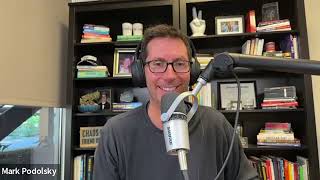
This is a recorded interview (Art of Passive Income podcast) between host Mark J. Podolsky and guest Patrick Grimes (Invest on Main Street). Grimes describes his path from mechanical engineering into multifamily and diversified energy investing, focusing on buying 200–300 unit, 20–50 year old apartment buildings in recession-resilient, landlord-friendly, tax-advantaged markets (e.g., Southeastern U.S. and Texas). He emphasizes conservative underwriting that can ‘write out’ recessions (stress-testing break-even occupancy, interest-rate caps, 6–8 months reserves, insurance), off-market/distressed sourcing, capital preservation over rapid returns, and complementary investments in diversified oil & gas funds with large tax deductions. He also discusses fundraising (primarily accredited investors, typical checks ~$100k) and offers guidance on vetting operators (prior downturn experience, stress testing).
Questions this video answers
Over 4,000 units.
Approximately 200–300 unit apartment buildings.
About 20–50 years old.
Typically six to eight months of reserves.
He states having raised over $50 million recently and a multifamily portfolio around $500 million.
Chapters
Hey, it's Mark Podolski, the land geek with favorite niche real estate website thelandgeek.com and on this week's Art of Passive Income podcast, I have an interesting guest. In the sense that he's purchased distressed assets, renovated them and stabilized them for one of my favorite words, long term cash flow. His portfolio includes controlling ownership of over 4,000 units in the emerging markets across Texas and in the southeastern United States. My guest today is none other than Patrick Grimes from investonmainstreet.com Patrick, how are you?
I'm great. Glad to be here Mark. I enjoyed listening to your podcast. It's fun to be on the other side of it.
So Patrick, let's just get right into your, your story and your background. I mean, how did you even get into real estate?
Well, I started out actually as a mechanical engineer at a college bachelor's in mechanical engineering, got into machine design, automation and robotics and it was actually the co founder of the company I was working for. That said, at one point he goes, you know what, we make a lot of money, but our wealth has come from real estate. And the only regret I have is not, is not buying more real estate, it's not investing more in stocks, it's, it's not buying more real estate. Buy as much as you can, as soon as you can. So that's how I got started. I was a little bit of a rocky start because I didn't understand risk at that point. I was very ambitious and dumped everything I had into pre development, lost it all in 9, 10 and 11. Came crawling out of that, got a master's engineering in business and then started a much lower risk investment future that led to large single family, multifamily. And we diversify into natural gas and oil on diversified energy portfolios now too.
Okay, so walk me through your buy box.
Well, so on the real estate side we're at a 2 to 300 unit apartment buildings. We're looking for two 20, about 20 to 50 years old ones that have been around long enough to where we can get them at a discount because they haven't been renovated in a while. They're kind of like the ugly house on the block. But all the other properties are similar in age and amenities. We just need to improve them, renovate them, make them look like the nearby properties to get those rents up. And we do that in recession. Resilient markets, ones that have shown to bounce back quickly or actually do well in recessions like southeastern states that are landlord friendly and tax advantaged places that Jobs and income people are moving to.
Yeah, the Southeast. I've talked to a lot of multifamily guys. They're all in the Southeast. What is it about the Southeast?
Well, so I'm actually, you know, right behind me, I have a sunny Southern California Orange county lake and it's beautiful and the weather's great, but it is hostile to business owners, it's hostile to landlords. So if you're going to take your investment seriously, then you would start thinking a little bit like a lot of the companies that are moving out of places like California, Seattle, New York and landing in places like Texas. Right. Northern, Southern Carolinas, Georgia, because those are legislator friendly there. Especially if you're doing a real estate business. You want to find a government that'll let you evict people that aren't paying, that'll let you raise rents, that doesn't have rent control after you've renovated and made it a better quality place and places that where people are moving because ultimately it's the employers that are paying you. So you need to have great employers, you need to have growing employers which draws in your tenants. Right. And so it's just a matter of analysis. My engineering background and having lost it all once, puts me deep into the economics. And I've talked before on economics and on stages and investing strategies. And the reality is every business owner, every person has an investment business whether they like it or not. And the sooner you start treating your investment portfolio like that, the better off you're going to be.
Say more about that. Everyone has an investment business whether they like it or not.
Yeah. So the funny thing is I work with mostly accredited investors, like individuals that can drop 100,000 in deals because we raise too much. We raise 8 million to 200 million to kind of do the smaller 10, 20, 30k investments. Most of those are entrepreneurs, they're chief executive officers, doctors, lawyers, high income earners and spend their whole lives becoming the expert in this little niche. Right. And then they'll have all these other people that they're paying in their lives to fix their home or you know, to fix their cars, all these other experts that they rely on and they, they have them fix it. When it comes to their investment portfolio, oftentimes they're like, no, I want to keep control, I want to go do it myself. I want to go find my own rental property like I did. I want to go find some land and build on it. And, and it's nearby me where it's not landlord friendly. And you know, the reality is if you take the, your investment, your personal investment portfolio and you look at it as another department of your company and now you're going to hire somebody because you're like, you think, well, I'm not, I'm not the expert in this piece of the company. I'm not the expert just like in finance, right? Or you're not the expert in the investment side of your own personal life and you would hire somebody to come and manage that for you because you're too busy doing everything else. The reality is people have that because they're working at this hard job to produce all this income, but they don't treat that income the same way that they would if that income was going back into the business, right, where they would look at immediate returns, doing what's the best for the bottom line. They have this sense of like control and, and, and not wanting to put other people in charge and not wanting to partner up. Oftentimes they get you in trouble like it did me back in 2008. 9.
No, it's interesting that you say that. It's an emotional issue with money. Everyone has their own ideas about it. But from a business perspective, especially when you're talking about accredited investors, high net worth individuals, they understand the concept of scaling much more intimately than say someone who might not be at that high net worth level yet. And that idea that Dan Sullivan and Ben Hardy have, that book who not how, and so that really resonates with me. It makes a lot of sense to have the best person invest as a separate business running that business for you. And if, just like if you would have a marketing person, they're thinking all day long about marketing and offers, you'd have a, your bookkeeper's thinking all day long about, you know, how to balance the books. Your, your CPA is thinking all day long. Well, if you have a good cpa, how to, you know, mitigate your taxes, you want somebody who's thinking all day long about where's the best place to put my money to get tax advantages and cash flow. So that leads me to the, the point of when you're looking at say a cash flowing property, how, how do you think about it in the sense of it's got, let's say right now it's at a 5 cap. A lot of people don't even look at cap rates. How do you think about that as far as, you know, valuing it as a, a good deal or not?
Well, first let me just tag team what you were saying before, what you're Saying before is right on. And I've got articles and forums that I wrote on that kind of single do it yourself versatile ver, large scaled, large syndications. And Patrick Grimes, Forbes, you can read along those lines of exactly that conversation. I talked to thousands of investors, they all had that same challenge you were talking about. So for me coming out of 2008, nine, having bought a money hole, essentially paid into it, hoping that I was going to get to the other side of this pre development, hoping I was going to get an asset and then somebody would want to buy or rent this asset not having cash flow. Every single deal in the multifamily large apartment communities we buy now there's a line in there saying conservative financing and conservative analysis and projections and it says underwritten with an eye towards what happened in 9, 10 and 11 as opposed to what happened in essentially the last five years, last 10 years even. And I believe that if it can't, if, if we can't write out a recession, then you shouldn't be doing the deal. Which means that we look very much at first of all the location. You said cap rates, first we look at the location. If it's a recession resilient location, then we want to cash flow strong enough that we have a break even occupancy that allows us to write out where vacancies have dropped. Right.
When you say recession resilient, are you defining that as an area that's more blue collar?
Not necessarily. Detroit was a blue collar and that wasn't recession resilient. And so it's not like a old school Detroit or a mining town. You're looking at employment because again it's the employers which pay your rents and real estate through the residence. And so it's the stability of the paycheck givers that will be the stability of your resident base. That's my firm belief and I talk about this on stages. So if you look at which ones survived better through 2008, 9 and 10, it was the ones that had a diverse employment base but specific verticals that it is split up in essentially that have built in insulation for market volatility. Examples of those are education, people are always getting educated, health care, healthcare always is needed. Right. Logistics, those are hard to move around like ports, those kinds of things are hard to fleet around to to other locations. High tech is not there. In fact, high tech's one of the reasons why Phoenix busted. It's one of the reasons why San Jose busted just in this last one because it can be moved very easily. A Percentage of manufacturing also in finance. Finance also tends to be a very strong recession resilient market. So there's lots of these kind of pillars that have built an insulation for market voltage. I'm going to find a balance of those with things that indicate it's a desirable place. Like you're going to have retail trade and hospitality as a healthy 10, 15% of an economy, but not like a 40 plus percent like a Las Vegas. Right. And what happens is when you kind of overlay those economic indicators over different areas and then you add to it the landlord friendly, legislative friendly that allows you to evict when you need to, raise rents when you need to, you know, there's only a handful of places left and that's very narrowly where we will focus on the real estate investments.
Okay. And I apologize for cutting you off with recession resilient. I love the way you answered that question, but go on with your, your valuation.
What was the valuation again?
So we were talking about you're looking at recession resilient markets. We didn't get to cap rates yet, but how else? You're looking at what you would define as a deal.
Oh yeah. So it was the break even occupancy is where we're looking at. Right. Because essentially our business is really geared around finding great investment deals. Where do those come from? Well, those tend to not be ones that are on the market. Those tend to be when they're off market. Why is that? Well, because somebody's distressed, they don't have residents that are paying. Maybe they had a financial disaster like a Covid or an environmental disaster like a hurricane or a tornado or they had a fire. Right. Or a flood or something and then so. Or a compounding sense of those. Or they didn't get the right debt. Maybe their debt distressed and their interest rate wasn't capped or fixed and now it's raising and it consumed all their cash flow or a combination of there and then they didn't have the reserves to ride it out. And so I've listed about seven things there and if you unpack those in order to make sure that we don't become the distressed deal of tomorrow, the distressed operator that we're constantly buying deals from. We need to make sure we put enough down in our properties so that our cash flow is high. And you said, you know, cap rates, we got to make sure that we're buying on an income basis and we put enough down so that we can cash flow to the point where if vacancies drop to where they have in prior recessions that break even occupancy, that allowable vacancy is well below that point. But you also have to compound the fact that well, we still have to cash flow. If we have variable interest rates, the cash flow, even if the interest rate goes to our cap and raises up, it's got to factor that in too. And then what happens if we have all of that happen and then we have a fire? The building we're picking up in Atlanta right now, the operator had a 14% bad debt during COVID couldn't renovate the units so he couldn't raise the rents because he ran out of money. And then a building burned down. And so it was an interest rate issue. It was all those issues compounded. So as long as you get it, put enough down, get an interest rate cap that allows you to cash flow, get insurance that allows you to rebuild buildings or, and cover your vacancy loss. But then you have to ride it out so you have to have reserves in the bank. The reserves in the bank are usually six to eight months in reserves that will store up in a new account and that allows us to ride it out and preserve our investors capital and not have to be a fire sale. So you kind of compound all of that and then you say at the end of all that you couldn't possibly make a return. Well, we do it all the time. Not double and triple your money. I was listening to one of your podcasts and somebody was saying, well you can get your capital back in 12 months. Well, it may take us three years, may take us three years to get your capital back. But we have capital preservation, recession resilience. We're going to, we're going to make sure that you're cash flowing and appreciating through markets and it's tax shielded cash flow, inflation has cash flow. It's the tortoise, not the hare. But I'm, I'm, I'm a believer that it's better to invest where you know you're not going to lose it all and get a reasonable return. And I'm willing to find the right investors. And we've raised 50 over 50 million just in the last, you know, handful few hundred million in real estate that we bought. We have a 500 million portfolio multifamily. Now they're out there. Those are the investors that are long term focused legacy wealth builders and those are the best partners for us.
I love it. It's so funny because multi family operators are always jealous of me and my returns and simplicity and I'm Always jealous of multifamily operators because you don't pay taxes. So I think there is a place where there's a nice blend in everyone's investment portfolio where you get the ridiculous returns, where you would land and make a cash flow. But also like you said, you're more conservative. You're the tortoise, you're not the hare. But you're also getting those great tax advantages with the depreciation, hopefully, which is offsetting because look, land lasts forever. So you don't get those tax advantages at all.
Well, that might lead into the energy stuff, if you don't mind your piggybacking.
Yeah, let's go to energy.
Well, so the tax advantages in energy are just, it's an essential need, right? You gotta house, feed and energize America. And the reason why, one of the major reasons why, where the energy is because it's a completely non correlated asset. You have the stock market going crazy, big roller coaster. And you have real estate which has its much more slower swings up and down. And we're in a correction right now. But then a completely non, non correlated asset to either of those is diversified energy funds where we're doing oil and gas drilling. And I think it's interesting what you say because we do, in fact, we don't buy land, but we buy leases. We lease land, that's the asset. We're not buying a building, we're not buying the land. But there are landowners, but we pay those a percentage of the profits. Instead of renovating units, we drill wells. Instead of buying proven existing buildings, we buy leases with known reserves. And the tax advantages on that end, well, first of all, the cash flow is not, it's there and actually growing at this point when real estate's waning. But the tax advantage on that side are what's potentially even more attractive because usually about 75% of your investment comes off your ordinary income. Like for the lawyers and entrepreneurs, invest 100 grand, like 75 off of your taxes. It's incredible. And so that IRS alignment with the essential needs investing and investing where they want you to go is incredible in addition to that diversification play. But I think it's kind of funny because it's a little bit. I could be leasing land from you somewhere out there and you could be collecting the lease, the lease royalties on that.
Yeah, absolutely. Well, I'm glad you brought that up. And I assume that those funds again are accredited investors only.
So here's the rub. Is the accredited investor by filing in a way that limits Accredited investors allows me to talk about this right now. If I'm talking about, hey, these are our investments and these are our deals and we have offerings available then, then I could not be bringing in non accredited investors. So it's kind of like a chicken before the egg. In order to increase and make aware the, the, the knowledge, the increase of Financial IQ of America that these alternative investments exist, somebody like me is going to come out and say, hey, look, we'll file in a way such that we can openly talk about it. It's going to limit us to accredited investors. You got 200,000 in income, 300,000 buying with your spouse, or a million in net worth, not including your personal residence. But if you're not one of those and you can't invest a hundred thousand, you can still reach out. I have partners of mine that bring in what are friends and family type preexisting relationships. So you got to meet them and wait for the next deal. But they do investments just like this for non accredited investors. The disadvantages, they're so hard to find because they can't talk about it, they can't openly market it, they can't do what I'm doing right now. So I'm here to help out whomever. But, but of course, you know, we're raising 10 to 200 million on our funds. And so we do that a hundred thousand a piece plus with accredited investors. But if you're not there, that's okay, I can help you. You know, that's why I'm writing for Forbes. I'm teaching a lot, all kinds of things. I'm talking on stage to all kinds of people and I'd be happy to point you in the right direction.
I think that's, that's great and, and really so generous of you. So my last question before we get to the tip of the week is if I'm evaluating three or four different multifamily operators, what's a couple questions I'd want to ask to be able to differentiate them?
Yeah, I was just, I was speaking on a stage in economics in Chicago recently and there was a panel of us talking about doing deals today. And somebody asked that question. And when I was answering, I took a step back real quick because I looked at the other panelists and what I realized is that all the other panelists that were brave enough to talk about how to do deals in today's economy were the panelists that weren't in trouble in today's economy. And all of us had one thing in common. We had all lost a lot of money in 2009 and 10 and we had just tanked it and bombed. And I think that that humbling and that resetting. Understanding how the markets shift, how the demand shifts and how the economic models break down and how the debts behave, debt markets behave when things start to crumble fortifies your risk aversion to continue for in a more measurable way. And so I think that that's a definite question is what is did you fail? And if not then when and how did you do it? And I think I always ask about were you, were you around in prior downturns and what happened? What's that story? And then I ask about what the stress testing is. The stress testing or how can you survive a downturn downturn like that if we have another one. And I'm a capital preservation guy, both of my energy diversified energy funds as well as multifamily, I want to know how would this survive in a collapse? How do we ride it out? Do you have reserves? Do you have replacement cost insurance? Do you have a low enough break even occupancy? What were the vacancies and prior recessions in this market for this kind of asset class? Do they even know the answers? Oftentimes when I ask these questions, they don't even understand the question. They're like, can you clarify specifically? I'm like, you don't. If they don't know, then they don't know. You know if you know, but you don't know if you don't know. And it's really interesting to see all that. But I, it just comes from, you know, being a little bit of a burn victim. I've been through the downturn, right? I've been through it and that's, that's where I start typically.
Yeah, absolutely. I mean I've been investing in land since 2000 and have gone through the, the same type of cycle. And I'm actually looking forward to the downturn now because we're going to get better deals. But for someone who's never been through it, they don't have the same type of humility that is hard earned and hard won.
And that is, that's not just real estate. You know, when Covid happened, it allowed us to buy a bunch of discounted deals in oil and gas. And we've got some incredible offerings because of that. And so in each market you have those people that are, that are looking for the right timing, more conservative. And it's just whether or not you got the right operator to be able to be patient enough to wait it out and to place those investments at the right time.
Well, Patrick Grimes, your mentorship has been invaluable. But now we're at that point where I'm going to ask you for your tip of the week. A website, a resource, a book, something else actionable for the art of passing listeners to go improve their businesses, improve their lives. What have you got?
Well, with so much going on, what has been really powerful for us is the book, the One Thing by Gary Keller. That book, the Time blocking and that 80 20, it just, it totally shifted my approach and allowed me to kind of get some clarity and peace. Aside from my morning runs around the lake behind me with my puppy, the morning when I was listening, when I listened to your podcast. But aside from that, listening to that book and implementing those techniques have just been a game changer for not only me, but I have my employees listening to it now. And we shared each other's calendars to see the time blocking that we're doing. And we talk about, hey, we just had a big company meeting. It was like two hours and at the end we reviewed what our one things were and got an alignment on those. I think this is incredible.
It's a great book and one that we always recommend. It's. I think it's the kind of book you should just read at least once a year, if not once a quarter. So great recommendation. My tip of the week is learn more about Patrick Grimes and go to invest on main street.com investon mainstreet.com he's got a podcast, he's got books, he's got resources. Look at the portfolio, look at the team. Check it out. Invest on Main Street.com Patrick Grimes. Are we good?
Would you want me to offer one of my books to your listeners?
Fantastic. Absolutely. It's so generous.
Well, so persistence, pivots and game changers turning challenges and opportunities. This was the first time I wrote out my whole story. I did a whole chapter in this. Some really cool guys. Phil Collins, the lead guitarist of Def Leppard, NFL, NBA entrepreneurs, incredible people that we did this. And it talks about the ebbs and flows, the pivots and the persistence required to make it. And my battle between the high tech world and real estate and private equity and energy and how I made it through. I, I love this. It was such a fun project. I we, we. I'm happy to offer a free signed copy to your listeners just to add value to their journey. They go to investonmainstreet.com book that's invest on and then main and then street all spelled out.com book. You can set up a meeting with me if you'd like, but it's not required. And the promo code just put in there. Make sure that we know who you are. The Art of Passive Income and we'd love to contribute to your journey.
Fantastic. We'll put that in the show notes and have a link to that. That is so generous. I want to remind listeners that we are sponsored by Flight School. Learn how the next 16 weeks can literally change your life. Start building that passive income quickly, safely and efficiently with Scott Todd Azure Sherpa, who's done it thousands of times. Create that passive income without renters, rehabs, renovations or rodents. Learn more go tolandgate.com forward slash training thelangic.com forward slash training I know you're thinking, well, how much is all this training going to cost me? It ain't going to cost you nothing. Guaranteed you're going to make it back 180 days or less. Just show us your work. Thelangic.com forward/training and look, if you're enjoying the podcast, if you're getting value, the best favor you can do is if you just follow rate. Review the podcast. Send us a screenshot of that review. SupportLangic.com you get a signed book from me of Dirt Rich. So Patrick Grimes, are we good?
Absolutely. Thanks so much, Mark.
Thanks again. Let's Freedom Ring. Thanks everybody.
Thanks for listening to the Art of Passive Income podcast. Are you ready to learn how you can start building a passive income without renters, rehabs, renovations or rodents? Schedule a free consultation@thelandgeek.com training let freedom ring.
More from Mark





How to find funding partners: How to Scale Land Without Using Your Own Capital


