How to Find Land Gold Mines (my county research process).
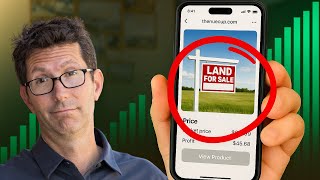
A Nightcap episode (host Mark J. Podolsky with John Burnett, Mike Zano, Scott Bossman) explaining their repeatable county-research process for land investing. They emphasize the importance of picking the right county (access, recreational potential, buildability, affordability, existing investor activity), the beachhead strategy (master one county), overcoming psychological biases about product-market fit, and practical operational advice (use data tools like LG Pass/Zamplo; learn tasks before delegating to VAs; build buyer lists). The tone is conversational and coaching-oriented, with examples and anecdotes.
Chapters
The most successful land investors don't guess. They follow a system. They don't pick counties at random. They use a proven research process to uncover markets prime for fast sales and massive returns. After helping thousands of students build profitable land businesses, we've refined this strategy into a repeatable process that spots land gold mines hiding in plain sight. In tonight's episode, we'll walk you through the exact approach we use to find counties where land sells fast, often with big, big returns. You'll learn what indicators we check before entering any market, which overlooked signals separate good counties from great ones. Why? Competition isn't the enemy. It's a clue if you want to find better deals, sell faster and scale smarter. Don't miss this one. Welcome to Nightcap. What's up, fellas? I'm joined tonight by Handsome Rob, John Burnett. John, good to see you, brother.
Good to see you.
Mark the Zen master. Breathe in the marketing. Breathe out the mailing. Breathe in the mailing. Breathe out the marketing. I forget the M M's. Mike Zano. Mike, how are you?
Great. Nice to be here. Nice to see you.
Good to see you. And the dude buddy that ICAP OG Scott Bossman. Scott, how are you?
I'm doing very well, Mark. Glad to be here.
It's great. Well, I just want to tell you guys that this is a great topic and it's a fundamental topic. The reason it is is that I don't care how great you are at due diligence, I don't care how great you are at marketing, I don't care how great you are at sales. If you get this wrong, everything goes off the rails. Picking the right market, picking the right county is the foundation to this business. And so I'm really excited to go deep, deep in this, into this topic. So with that said, John Burnett, should we just pick on you?
Let's do it.
You're a brand new land investor, as Mike would say.
Nice try.
Thank you. Appreciate that. How do you pick a good county? How do you pick a great county? What's the difference?
So, I mean, when I first jumped into this as a brand new investor, one of the things that they said was to go where the other investors are, right? And it's like fishing, right?
Like, you go to a, you go.
To a lake and you want to go where you see the other people fishing, right? You want to see, you want to go where the fish are, right? And it's the same thing in, in this business. I still do the bulk of my deals in the first county I ever mailed to. And it's not an unpopular county. Right. And so for me, like, I ended up. I ended up picking a county because I. I wanted to see an area where other investors were and where there was a proven record of success, that it worked with the model. And then it just came down to things like my budget, like, how much money do I actually want to spend on. On property? And so we picked an area where we ticked both of those boxes. And, you know, here I am on this podcast eight years later.
So, okay, so there's a. There's a lot to unpack there. And so what's interesting to me is, number one, you're in a county that's not unpopular.
Yeah.
And so how do you fight the. The fear that, you know, let's say you have a bad week, you don't get a sale, or you. You send out, you know, 100 offers, letters, and nobody responds. Like, how do you fight the fear? Like, oh, well, it looks like this county is now saturated, and you go on Facebook or you go on Instagram, and people are chiming in. Oh, you know, these guys talk about these big land margins, and they're not there anymore. Right. Maybe that was like that in 2018 or. Right. But today the market's changed.
Right.
How do you. How do you fight that.
That.
That fear?
I mean, I think part of it is like, just being in the community and seeing other people seeing success. Right. So that is helpful. Right. I can see what people are buying for. I can see what they're selling for. Right. And so when you see other people seeing success in an area, that's really helpful. I have found there's some seasonality. Sometimes prices go up, and sometimes prices go up on the buy side, and it lags a little bit on the sell side or. Or sometimes. Which is the one I like. It goes the other way around. It bumps up on the sell side and then takes a little while to catch up on the buy side. And so I have seen some seasonality and some changes in there, but I think that for me, a lot of it just comes down to, like, I mean, eight years in just kind of. I don't know, you just. I've. I've seen. I've seen it work pretty consistently. Right. And so for me, it's just seeing my own track record in this county and then also seeing other people and seeing what they're able to accomplish.
Yeah. Yeah. Mike, do you think that people, when they start and they don't have the faith that John has after eight years of Experience that they're more likely to hold on to an excuse. Okay, the county's saturated now, and I need to either go to a different county, or this business just isn't a good business anymore. Let's go into ATM investing better margins.
I think that's possible. I think that's possible. I think. But personally, Mark, I think of what is most difficult for people in the beginning is most people gravitate to what they know, and many of the areas they know are not going to work for our model. For example, I live in Massachusetts. If I wanted to use Massachusetts as my. As my area for acquiring land, it doesn't fit our model. But that's where I'm familiar with. So naturally, when I talk to people over the years that are getting into this business, that's one of the most difficult things to overcome, is like, well, this is what I know. I want to start where I know. But the reality is you need to get comfortable in areas that you don't know. And that's the real trick, right, Is becoming. Is becoming, you know, comfortable buying land that you never visit, becoming comfortable going to areas that you have never known. But you go there because you follow. You know, as we were talking, you've already mentioned, we follow established markets. Right. So we have to get over our own prejudice at first. Like, hey, this is what I know. I'll start here. Because that can lead to a real problem, right? Because most likely we're not going to find the deals and we're going to feel like the model isn't working. So I hear what you're saying, Mark, but I feel like that's an important thing I want to make at the very beginning here is like, that many people just gravitate to where they know. But it's like that book, where the Wild Things Are. Remember that book, where the Wild Things Are?
Yeah.
Is it Marie Sendak?
You. Yeah, yeah. Max, I think, was the kid in it. Like, you got to go off where the wild. It's like where the investors are, and they're not in your backyard. Most likely, occasionally, some of you out there will live in an area where in your backyard the wild things are. But there's no wild things in my backyard. So I have to go on a little journey and find those places. And that's the difficult thing in the beginning.
Yeah, yeah, yeah. I mean, Scott, I'd be curious, what's the difference between a good county, a great county.
A good county, a great county.
Well.
Not many good counties are not great counties. Not many great Counties are not good counties, in my opinion. How's that? I gotta giggle out of Mark. It'd be a lot easier to answer what makes a bad county and what makes a great county.
Okay, okay, let me rephrase. Let me rephrase. What makes a bad county versus a good or great, because I think, I think you're right. I think if it's a good county, it could be a great county.
Right?
Like John Burnett when he first started, he's like, oh, this is a good county. And then eight years later, because he knows it so well now, it's a great county.
Yeah, so. Exactly.
Right.
I think, I think a good county all starts with. Especially for beginners now, right? It all starts with where can you find proof in the pudding that land is being bought there and land is being sold there, and there's some data analysis that you can do there. It's also about affordability, Right. I would say most people that start this are starting with 5 to 10 to $20,000. You can start even with less than 5. But to find a county where land is affordable, I think is really important when you're first starting out and to go where other land investors are. If you see Mike Zane on accounting pretty, you know, you can probably, probably venture to guess. It's a pretty good county, right?
Yeah.
So I think, I think a good county initially is just county where you see other people working, like John mentioned, counties that are affordable, where you can buy land for 500, 1, 2, $3,000, which you can really do in a lot of different places in this. In this country, even still today, and be able to turn around and sell those to a really high, really large buyer pool. Right? So you want to work in areas where we can buy at a deep discount but also sell now. What makes a great county over time, I think is you getting to really know that county. Right? You build a buyer's list in that county, you get repeat buyers in that county, you get to know the county even though you've never been there. You know every little nook and cranny of that county, and you know the different types of land, you know the different types of subdivisions, and you know the pricing in that area. And then you pass that knowledge down to your marketing person and your sales assistant and your acquisitions manager. That's when it becomes a really great county for you because you just get to know it really, really well. And then what makes a bad county? I work in bad counties. I've gone off the beaten path where I'm like, Look at all this land. There's a gazillion one acre parcels there. It looks like the moon. Nobody's living there. No land investors are there. I'm going to go buy it all and I'm going to sell it all. We bought a lot of land there, but it took a long time to sell. So I broke the, you know, I deviated from what we taught there and tried a new area where I couldn't find a lot of data and it ended up being a mistake, I guess.
Yeah, I mean, you know, it's so funny because I'll be looking at some of our, you know, coaching clients and they're like, oh, this, this. I've got all these lots in this area and they're not selling. And I'll look at the area and I know the area. I'm like, oh, you're in a Burger King county.
Like, what?
Yeah, you're a Burger King county. Like, what do you mean? I'm like, well, you want to be in an in and out county. You go to In N Out Burger, right? And there's a line and it's. They're just selling these burgers fast, right. People can't get enough in and out Burger, Burger King, there's no line.
Right.
They're everywhere. And it's though eventually, yeah, I like Burger King. Eventually it's gonna, they'll all sell eventually at the right price, but it won't sell as fast. And so it's frustrating. When you first start out, you want to be in an in and out county. But I'm not in a Burger King county. What do I do? And the answer, unfortunately, is patience or you wholesale. Because if you, yeah, you either gonna wholesale or you're just gonna be patient on the retail side. There's no way around it. And I think, Scott, to your point, when you're doing your county research and you see it looks like the moon, you see there's a gazillion, you know, one acre lots there. It's. You're lacking humility by thinking, oh well, I'm a better marketer than all these other land investors. I'll buy it all and I'll sell it all. Well, no, the market's the market and you can't beat the market. I've tried. I remember, you know, in Treasure Lake, I got, I got enamored with this county. It was beautiful Pennsylvania, gated community.
Two.
Beautiful lakes, three PGA rated golf courses, million dollar homes in a thousand lots overdeveloped. And there were POA fees and they had high taxes.
And.
Yeah, there. There was a very small buyer pool for that, for that property. And I bought them all, about a thousand. They didn't sell fast. And I got frustrated because I. I liked the area. Well, I thought, oh, I'll be able to sell these. When the data said, no, there were not other Mike Zano's buying there or John Burnett's buying there. Why does Mark Podolsky think he knows something they don't? Especially someone new in the business now, someone like me who's been doing it for 25 years. Yeah, absolutely. I can test a county. I know how to do that. And I can sleep well at night knowing that if it sells, it doesn't sell. I've done a test. But when you first start out, that's not what you want to do. You want to definitively know you're in a good market. And so I think it's frustrating. But, John, I'd be curious as a newbie, right? You're looking at this county and you don't like it. It looks like it's a piece of desert in the middle of nowhere.
I wouldn't buy it.
You wouldn't buy it? Who's buying it? Looks like it looks like all the land investors are buying it. But I can't visualize anyone else who would buy it. I don't like it. None of my friends would like it. If I tell my mom I bought a piece of property three hours from the nearest city for $500, she's gonna be like, you just lost $500. You'll never sell it.
Right.
How do you. How do you answer that?
Yeah, I think it's like, it's. It's an important question to ask. Right? So part of county research is like, will people buy this?
Right.
And seeing other land investors is a really good sign that the answer is probably yes. Right. And so for me, you know, when I'm looking at. There's generally three core criteria that I look for that indicate that I can sell this property. One is access. Right? I want there to be access, ideally both legal and physical. Right. And then another would be I want something where there's ideally some recreational potential. Right. And then the third thing would be ability to build.
Right.
And off grid is fine. I love off grid. And sometimes one of those three things won't necessarily be in place, but the other ones will be very strong and I'll buy anyways. But if I've got those three things in place, generally I can move a property because for me, my Buyers, they're generally looking for. They like the idea of land ownership. Like, a lot of. A lot. For a lot of people, this is their first real estate purchase ever. And to do that and to pick up five acres or an acre, like, it's. It's a big deal that's like your own football field. And, you know, you own an acre. It's like a football field in the middle of an area with a train that you like. Right. And so my buyers, they like the idea of land ownership and investment. Right. And then they like the idea of having a spot that they can recreate and the spot that they can build on someday. Right. And so if I can tick those boxes, then I can sell a piece of property. So.
Okay. And so there's no psychological barrier for you if John doesn't like that property? Like, John wouldn't buy that property right there.
I mean, I have had, like, areas sometimes where I just struggle to market it.
Right.
Like, there's this one county, man, like, I knew investors, and they're selling so many of these. And for me, like, I just kind of struggled to, like, market it a little bit more. And so I just sold it to those other investors, you know, and so there are. So sometimes you might find a county where you need to be able to catch the magic in the land. And there's. It's always there. The reality is it is there. Right. But you need to be able to capture that and to be able to market that property effectively perfectly.
Yeah, I love that. Mike, what are your thoughts about that? Especially as a newer land investor, you're looking at these markets and. And you don't resonate with it.
Yeah, I've talked to people about this, Mark, and I always put the analogy out there. Say you owned a donut shop and you didn't like blueberry donuts. Would you take them off the shelf? Blueberry donuts. But there's a ton of people that love blueberry donuts. You know, there's land. Yeah. You don't like blueberry donuts?
I love them. I don't like them.
I love them.
Can you imagine somebody, you know, just saying, you know, I. I don't want to eat this, so I'm not going to sell this. That'd be crazy. That mean how many sales would they lose? Everybody comes in for a coffee. You mean you don't have blueberry donuts? They may not come back. These people love blueberry donuts. So, you know, we can't let our own personal bias get in the way of it's like, is it. Is there somebody that's interested in this land? And if so, we're gonna market to them that particular avatar, so you gotta really let that part go. You know, there's, you know, dozens of properties outside of El Paso, Mark. And, you know, you and I probably wouldn't love it. Low lying, sage brush, tumbleweeds, mountain views. But the people in El Paso, they can shoot their guns, ride their horses. They can go do whatever they want out there unrestricted. It's a slice of heaven for them. So if I were to put my personal judgment on it, I, you know, I would miss a market.
Yeah, I love that. I. I like to use the analogy about McDonald's in the sense, like, I personally don't eat McDonald's, but a billion people do. But I certainly would buy a McDonald's franchise.
Yeah.
And not eat the food. Yeah, right. And I think so. I think the blueberry donut analogy is inferior, but very good.
Worked 30 years ago when I got out of college, I went and worked as assistant manager at McDonald's. And I was on this clean diet. And the first thing the manager does, he comes out, sits down. Okay, what you need to do is you need to sample the food every day, make sure it's good. I'm like, so he brings out all these sandwiches. I'm supposed to take a bite of all this food. And there I am, like, very strict diet at the time, you know, And I was like, oh, man, this is. Is not gonna work out. It's like, yeah, you're gonna know. This brings out one of everything. You're gonna try it all, like, oh, no, no, no.
Yeah, yeah, yeah. I mean, for sure. I mean, Scott, you know, let's say I'm a. I'm a new land investor. And I see these lots and they. They just look like they're in the middle of nowhere. They don't look pretty to me. And yet there's. There's a certain pool for the business part of it. But I don't love the product, right. This product of land. Because, you know, number one, you know, I don't like it personally. And then, number two, I can't visualize who. Who would buy it. And I. And also, I can't wrap my head around the fact, like, like, everyone needs a house to live. Nobody needs a piece of land. But then, you know, but intellectually, like, 99 of like, my life, our lives, right? We don't need this stuff, but we want it, and there's a market for it. How do you. How do you, as a new land investor, get over that psychological hurdle?
Yeah, I think it's. To me, there's two hurdles almost. There's a, there's a buy hurdle and there's a sell hurdle. So the buying hurdle, I think, is a little bit easier to get over because you can find the data, you can find proof that land deals are being done in this area. You can see that Mike Zano and John Burnett are in this area. You can maybe see what they even bought the land for. You can see what people are listing the land for, what people are selling the land for. And that's a little bit more data driven, in my opinion. So let's buy this asset at 25, 30 cents on the dollar and put that in our portfolio. Now, the next hurdle is selling it. And that's where I see a lot of people get hung up, because. A lot of people's preferences, I think, inhibit their ability to market effectively. And some people are even afraid to market because they can't get in the mindset of, okay, who am I going to try to sell this to? Who am I going to sell this to? So I think that's an essential part of county research, is, okay, can I find the data here? But. And I'm finding the data. But. But also, what. When I, when I flip the coin here and I'm turning around and selling these, who am I going to sell to? And that's exactly what John was talking about. When you're first starting out, I think the, the more, the more, more characteristics that land have that make it seem like it's going to be more marketable is probably going to be a better area for you. And then it just comes with experience, right? When you sell your first parcel of land out in the Arizona desert, you're like, oh, somebody does want it. And then that helps you with your marketing because you'll talk to those people and you'll be like, why did you want this? I'll never forget one of the first parcels I sold in Arizona was out in the middle of nowhere. And I thought I would never sell it, but I sold it to an astronomer. So the University of Arizona, who wanted to go somewhere on the weekend where there was no light pollution. And I thought, oh, wow, I never thought of that before, ever. But, but now there's a, there's a tick in the, in the, in the column there, where, okay, this guy wants it. I didn't, I didn't necessarily want it, but this guy wants it. And then you run into More and more and more people who want it. So it comes with experience. I think it comes with, you know, use the community, Go to the Facebook group and say, who would buy this land? And a lot of people chime in and tell you, rely on the community, rely on the. On the data you're seeing on the buy side. Try to get in the mind of your. Of your. Of your buyer.
Yeah, you can also.
We didn't have chat BT chat GPT back in the day.
Yeah.
I'll tell you what, these. These youngins come into this business now are so spoiled. Like. Like LG Pass now has Land Geek data powered by Zamplo. And you can go in, you can draw polygons, you can skip trace the neighbors, you can get spacing data. It's so unfair. The data is just driven. You click a button, you see all the Zillow listings, you know what it. What they paid, what they sold it for. But it's data driven. We didn't have it. I mean, of course we had it, but it was a lot of work to do it.
Did you say it was integrated with. It's integrated with L. Did you say LG panels?
Yeah, today. Yeah, we did demo. We just.
Yeah, we just started it today with Zamplo Mic.
Yeah.
It's power.
I knew it was going on, but I didn't know the. The.
The.
And I guess the scope of it.
It's.
Yeah, it's. It's. It's amazing.
It's a game changer.
It is. It is a game changer. I think we should drink to it. I. I don't. I didn't bring my drink out. Hold on. Can I go get my drink? I'll be right back. I don't have a real. And it's not an alcoholic drink, but I'll be right back.
This is a good question.
Oh, go ahead, Jess.
Apple cider vinegar and lemon juice and cinnamon water and blueberries.
That just melts the pounds off, man. That's like. It's one of those TikTok drinks you find that just melts the pounds off.
Good job. Yeah, it's good.
Mark. You must have a connection, because I've never seen that one for sale for Kavan. Come on. Come. What's. What's on the. What's on the COVID of that drinking bottle?
I can't tell you.
This is not my bottle.
It has.
Can't tell you.
This is inappropriate.
Oh, okay.
Oh, okay.
All right.
Yeah, but it's a.
It's.
It's a nice bottle. It's A thermal flask.
Yes.
I have a Chianti.
Oh, a Chianti. Some fava beans.
Yeah.
It's such iconic. It's so iconic.
He says, I have. This is actually, this is a prize from, from Kentucky. Woodford Reserve cask finish. Madeira cask from the outside. Portugal. And yeah. Very, very yummy.
Is that what a Madeira mushroom is or Madeira sauce?
Does that seem, you know, that's a good question. I bet it is.
If only there was a way to find out.
Right?
I know this isn't about.
I'll go to my encyclopedia within the M and look it up.
I. I know this call isn't about Zamplo and LG Pass, but just for a 2 second blurb. When is this live?
It's live now.
It's.
It's ready. Just go to lgpass.com or.
Yeah. For those of you on your annual data tree subscription, you might want to wait.
You might want to wait. Yeah, I mean. And you're gonna get a 20 discount through OG pass.
Yeah. Wow. Did you guys ever use like Lenovo stick computers and like build a scraper?
Remember that?
Never built a scraper, but I did. Yeah.
Yeah, I built the scraper. I remember going to bed and being very excited about waking up in the morning with theta. It's like Christmas.
Yeah. Yeah. It was amazing. But think how long it took. And you couldn't really manipulate the data. You just had data. Now we can manipulate it and you'll see the little dots and you can add and you can draw and I mean it's not that we can. We've had these tools for a while now, but to integrate it now with our own tool where the user doesn't have to bounce back and forth from this tool to that tool to this tool. And I've taken it in a bigger CSV file and download CSV file. Now I got to match APN to apn, name to name.
Right? Yeah.
Price to price. It's all right there for you as well. It automatic because when it. Because we've integrated with it, so it just, you just automatically do it and it just, you know, helps your due diligence reports as well, so. But to Mike's point, I don't want to go off on a, on a tangent on this. I want, I want to really stick to county research and whatever the hell you guys are drinking.
Nightcap. We missed you last week though. We had a good, we had a great interview with Kirk Stewart last week.
Mark, tell me, tell me.
He's killing it. He's he started in November. He's bought 40 prop or he's bought 70 properties. He sold 40 in six months.
Yeah, I mean, I, I think that, well, first of all, I think that's great. But he's not typical, right? No, I, I, yeah, I mean, I, I hope it, you know, if you guys watch that podcast, you're like, oh, I want to be Kirk Stewart, you know, right. Like I, I want to be LeBron James.
I'm not.
Right. I might be a middling NBA player in this analogy. I'll never be in the NBA. But you know, I'm saying is like, like, I wouldn't say, oh, I'm gonna be a Kirk Stewart, right. I would say this is something you can aspire to be. If he can do it, you can do it. But don't think that that's typical, right? It's just not. But that's great for him. But what is more interesting to me is what is he doing that the average land investors not. Did you guys uncover any of that?
Oh, that's kind of cool. Although it's not typical, the fact that it's possible is pretty exciting.
Well, well, 100.
Yeah.
I mean, Try and Quinn are now at a million dollar enterprise value business in but a little less than two years, which, I mean, think about that. That's insane. Again, not typical, but it's possible, right? I mean, and we have so many examples of this. You know, people, you know, crazy cash flow numbers. But again, it's not typical. It's possible. And I think that the, I think that the, the problem with the typical, you know, coaching model marketing is it's like, hey, give us your money. We're going to teach you how to do this and you're going to be like a Kirk Stewart.
Right?
And it's not honest, right? What's honest is that you're going to get the tools and the skills and the models and the, and it's possible for you to do this with a combination of persistence and grit and how much capital you have, how much money, I mean, how much time do you have, what skill sets you have coming in? But eventually you'll get there. But like Scott Todd, 17 months and three days, quit his Fortune 500, Fortune 50 job. It took me 18 months, but I had an investment banking background. I might have had more capital than the average person. So I feel like there's that, that part of it where when you come in and it's like, oh, that's why I want to do it. No, you've got to do what's best for you. Your budget, your time, and then just be patient because it's like planting a tree. And either way, the tree is going to grow if you keep watering it. And it's going to get bigger and bigger and bigger every single year. But if you're upset because in six months you didn't grow into an oak and this guy did, it's not. You're just setting yourself for disappointment.
Mark, you're exactly right. And I think of all of the people who maybe they didn't have all the time and they didn't have all the capital, but they had the drive and they still made it work. And I'm thinking of, like, some of our younger investors who have started in college even. Right?
Yeah. How about your. Your. Your cousin Cole?
Cole, like my nephew. He's my nephew.
Your. Your nephew? Yeah. How old is he?
He's. Oh, he just got married a couple weekends ago. He's got to be like 26, 20, 27 now, but when he started, 23. 23.
23 year old, little ankle biter in the land business, trying to make it work with no money, no time.
Yep.
What's he having?
With consistency, he did it.
Yeah.
And he's so grateful. He's like, I don't ever have to do anything else. I just. I'm gonna be a land investor. He's in his 20s.
He's in his 20s.
Yeah.
Yeah. So, yeah.
Good stuff.
Okay, let's get back to county research.
I'm sorry, we digress.
A digression. Eliza Kaplan's like, can you please answer my question? Can Mark not come on next week? I like it when he's not there.
Yes.
So, Eliza, would you start in your own state? And. And Mike, I'm gonna let you answer that because you did touch on it earlier.
It just depends where you live, Mark. You know, some people live in areas where this model works. I mean, I think if you look at the basic idea behind our model, you know, you want to be three to four hours out of a major city. You want to have an abundance of.
No, not three to four hours. I think you're an hour to three hours.
Well, okay, maybe.
Maybe two to three hours.
Well, I guess. Okay. You want to be in a distance where people would leave and. And go get away from it all. And that could be your right, because like I said earlier, you're 100% correct. El Paso. These properties I have are like an hour, an hour and a half away. Yeah. So you want to be a Few hours or just enough distance where people can get away from it all. But also, you want to have an abundance of opportunity. So I have, you know, people in my area will go to Maine to get away. But it meets the first criteria, but not the second one. There's no subdivisions that have thousands of properties similar size and shape. So you can't price them quickly and efficiently. You can do that. You want to have low annual taxes. Right. You want to have use. There's all these things that need to come together. So you could live in a state, Eliza, I don't know where you live, where that does fit. If this doesn't fit for me, and I think a lot of people it doesn't, but some people it does.
Right, Right. Am I the only one looking at Eliza's last name and being like, I think that should be a K. Did she spell her name wrong?
I was not on Facebook. Did you spell it wrong on Facebook? Yeah, she might have.
She might have, you know.
Does that help, Eliza?
Oh, man.
Yeah, go ahead, Scott.
Sorry.
No, I just could. I was just going to touch on what, what Mike said there. So. So use and, and affordability are huge in this business when you're first starting out. And the truth of the matter is, like, there are other land investors out there who do bigger deals. Those deals are riskier, they're harder to find. Your returns are not as good. They're harder to like. It's harder to price when you're in some large county out just outside of a metropolitan area and there's all these little acre tracts and these big acre tracts and like, how am I going to price this area? Who am I going to mail? How am I going to acquire this land when it costs $50,000 or $100,000? We love working in land where the market is just massive in these areas. I mean, there are counties where there are 50,000 plus vacant land parcels. In all these little platted out subdivisions, there are subdivisions that have 20, 30,000 vacant land parcels or more. And like Mike said, those areas are easier to work with when you're first starting. If you've got a low budget and you want more efficient use of your time and you want better data driven county research to be able to start working in an area.
Yeah, I love that. I love that answer.
Cheers. Mike did what Mike wasn't going to drink, though. He didn't like that. He didn't like that response.
Mike, what did you say?
I thought it was phenomenal.
Right? Yeah.
Yeah.
Pretty. Pretty passive aggressive.
Yeah. Really was yeah.
Oh, Eliza in Arizona, my neighbor. What part? Fantastic.
Eliza, who would start in Arizona?
Yeah. By the way, who started Colorado? This reminds me of a Kirby enthusiasm episode. I was drinking next to Laura last night, some friend's house. And guess what she did? She plopped. And my wine went all over the place.
She plopped.
She plopped onto the couch. Wine went everywhere. Would be out of his mind.
We.
We have our. We have a couple coffee tables, and somehow, like, Target started selling coffee tables with three legs, which basically makes it a catapult in any given direction, where. Because my kids will walk by and they'll just, like, start sitting down, and then whatever is sitting on it just immediately flies through the air. And so. So we've had a lot of. A lot of spilled drinks and food on the carpet. It's very exciting.
Can you imagine going to the Burnett house, 22 kids. Can you imagine baby proofing that thing?
Yeah, it's great.
It's.
It's challenge.
It's a challenge.
Don't buy Cheetos.
Dust everywhere.
Yeah. Just cheetah stuff everywhere.
Yeah. Val is not gonna. She's like, look, these kids eat organic, beautiful, healthy food.
It's organic.
It's organic.
It's fine.
Yeah, yeah, yeah, for sure.
Yeah. I think. I think Scott touched on something important, though. Like, a big part of this is, like, so, like, the strength of this model is it's a repeatable process. Right. And it's a repeatable product. Right. And you need a repeatable product. You need something that scales. Because, like, when I market to an area that I know well. Right. When you've got consistent variables, you mark it to that area. And I already know what my margins are. I know what I can buy this property for. Right. And if I've got a wide enough area, I can just continue to churn through that list over and over and over again. You know, you pick an area with. You pick a subdivision with 20, 30, 40 properties, you know, like, you might get one every few years. Right. Maybe. Right. As you turn and churn through that over and over again. So you need to have that level of repeatability. And if you move away from that, everything gets way, way more complex. Right. And you can't really systematize.
Yeah. I think that's such a.
Such a good.
A good point, John, is that this is a business, and so many people think, oh, I'm just going to make some quick cash. And. And, you know, I. I don't know. I shouldn't say that. Right. But I get the sense I don't really know what people think, but I get the sense that the, the marketing is, hey, I bought this for this and I sold it for this. And, and no part of the other story is, is discussed at all. Like, it's just, I made a lot of money and that's the end of the story. It's like, oh, but that's not the, the real story is you want a repeatable business that's high margin and has good cash flow. That's a good business. And then to scale it, you have to have three levers. Other people's time, software and automation and other people's money. And then you combine that with a fundamental asset that can't be destroyed. Nothing to maintain, nothing to protect. Boring. It's not sexy, right? You're not going to be the life of the party telling people that you buy property, you buy dirt and you sell it on terms and make it.
Cash flow for less than $5,000.
For less than $5,000. Like no one's impressed, right? You go and say, hey, I bought this building for a million dollars and I have all these tenants and I have all this debt and I have, I have, you know, this property management and I hope that no one calls at 2 in the morning, but I've got all these doors. Oh, I want to talk to that person.
Right?
You're the lonely land guy at the party. Everyone else wants to talk about the house flipping and the landlords and the multi family people or the person who developed a software company or whatever. It is like everything else in the world sucks here, but we have the best passive income model and the best business in the sense that there's low competition. It's a massive market, high margin, great cash flow and it scales and you can do it from anywhere in the world. All that is to say that it doesn't matter if you can't pick the right market, if you can't pick the right county. And you think county research is boring or unimportant. It is, I would argue, the most important thing in this business.
Are you saying trade doors for dirt?
Yeah, same. Trade doors for dirt. Yeah, I just got, I just, I actually just bought that domain doors today. Trade doors for your dirt dot com. We're gonna, we're gonna go after the miserable landlords of the country.
Am I the only one that thinks Mark's at the Animal Kingdom?
There's a lot of triggering going on.
I'm at a beautiful resort. I needed a vacation for my vacation.
Definitely Animal Kingdom.
Oh no, Jared Jared Bell. Cheers, guys.
Right on point. Jared, perfect timing.
Mark just found the brightest pace he possibly could, right?
Yeah. Oh, man, that's funny.
Yeah.
Scott's like, you're not allowed to go into your office anymore. You go to the jungle. That's right. That's where you belong, you filthy animal, man.
Filthy animal. Oh, what? Let's see, what else?
Yeah, I don't know. I think.
I think there's one. Oh, game. You want to play a game?
Yeah, I love your games.
Okay, let's play a game.
Let's play a game.
What do you got in mind?
Well, you're like, I love your.
Your.
You sounded like you had an idea, Scott.
No, I thought you were preparing this.
No, that was a layup.
Because you had an idea.
I was going to echo one last thing about trading. Trading doors for dirt. Dirt.
Yeah.
In that with dirt, it. There literally is just an ocean of opportunity. With dirt, like, it's just crazy.
Dirt.
What's that?
Ocean and dirt? Mud. Wet dirt.
I mean, anyway, I. Whatever, whatever. Zaino.
Mike is on fire tonight.
There's not an ocean of opportunity with multi family right now. Single family flipping. There's just not. And so it's a great time, I think, to get in the way.
Scott, talk about the realtors and houses and what's. How's that go? You have a great way to you phrase that.
Well, I don't.
I don't.
It's not really an analogy. It's just there's. There's millions of. Of realtors, land flippers, single, multifamily home investors fighting for a few hundred thousand homes on the market. But there's a few thousand land investors fighting for millions of vacant land parcels under $5,000.
Yeah, they are doing that favor.
And the other thing about county research is once you find the right county and you just remain consistent, you really never not have land to buy. Yeah, I think we could all say that.
Yeah.
Yeah. You know what's interesting is legendary land investor Scott Todd talks about this at boot camp because of the beachhead strategy. And so when you first start out, you. You stay in that one county, that one market, and you master it. You don't go into a different county until you've mastered that beachhead. And. And when you look at the analysis of. Of the way other businesses start, they start with a beachhead strategy. They start in one market. Do you know that Uber started on one street in San Francisco? One street. And they started on that beachhead, and then they expanded into a little other part of San Francisco and they just kept expanding the beach head and, and now, you know, we all take Ubers for the most part.
Right.
If you're in Arizona, you can take Awaymo, which is again a beachhead strategy. They, that they started just in the Phoenix market and it's owned by Google and it's self driving vehicles. It's, it's fantastic because if you're like me and you don't want to talk to somebody and you don't want to tip somebody, you take Awaymo straight. You gotta trust software a little bit though. It's kind of scary.
I think that was a mic drop. Nobody knows what to say.
Beach head strategy, you know. But I do think that it's important to, to bring up because I think if you're a new land investor and you've got 3,007 US counties or doing your county research, you might be tempted to start in two counties or three counties. But I would. John Burnett it. Yeah, John started one county still eight years later in that one county.
And I think it's, you know, my, my kids have this book and.
It'S.
Sam and someone dig a hole. I can't remember the name of the book. But anyways, it's these two, these two boys, they go to dig a hole and they're digging for treasure. They dig down and there's, and you can see like there's a little cutout and you can see they're like this far away from a diamond, right? And then they're like, let's change direction. So they go, oh, they go over to the side. So they go over to the side and they're digging sideways and then they're like this far away from an even bigger diamond and they're like, let's go down again. So they go down and so it repeats and repeats and repeats and then they end up with a bone and they're like, we found treasure. But I, I feel like sometimes we can do that when we are sending mail and, and I, like Scott mentioned, like those two, the two hurdles. There's the buy, the buy hurdle and the sell hurdle. And if you're not careful, you can come to that hurdle and before you actually figure it out and overcome it. And that, you know, that moment happens where it clicks and takes off. Instead you pivot to a new county and you start all over again. And so I think that, you know, and I have like, I pivoted to new counties occasionally, right? I mean outside of like I've had my core county and then jumped around in Other counties a little bit. But I think it's really important to do the work and try to understand how to make that work, because when it does, you know, that's when things can really take off for you.
I love that. I actually think the intermediate land investor makes a fatal mistake in the sense they get bored making money in their county. I can't tell you how many times I see it happen. It's like, I'm bored. Well, you're. You're bored of making money in this county.
But they do.
They get bored. They. They. They want to change up their marketing. They want to change up their pricing. They want.
They.
You know, I.
We're.
We're memetic in the sense that, like, if we see someone else doing something, we want to copy what they're doing. And so even though I'm successful in this county, and I've been successful in this county for a year or two, I see Mike's in this county. Oh, maybe that's better. No, you. You're great at that. Stay with it. And like, you know, Mike, Winnie the poet, eat the honey. Keep eating the honey until the honey's gone. Get super fat honey.
I do like honey. You know, it reminds me of something my dad told me when I was in. Just getting into high school, some girl broke my heart, and it was like. It's like, you know, at your age, kids are fickle. You know, they. They don't stay with one thing. They move to another. So we don't want to be a fickle land investor. Right. There's a word, Scott, a scrabble word for you. Fickle.
Fickle.
Not width. You want to go deep into one area, and you don't want to keep. You know, you don't want to be fickle. Don't be the fickle in investor. In fact, I'm gonna write a book, the Fickle land Investor. I'm writing it.
I mean, I. I was just talking doors for dirt.
It's great.
Yeah. I mean, I was just talking.
Yeah.
How, like, people start in something, it gets hard, and they get. And they jump to something else.
Yeah.
And then they go to that something else. Like, then they just realize, oh, my God, that's hard, too.
Yeah.
And they jump to something else. Like, there's just like. There's, like. There's, like, this idea that something's gonna be easy.
So it's a life lesson.
Nothing is.
It's.
It's just like. I mean, it's. It's the. I'm sure the heartbreaker did the same thing, you know, thought it'd be easy to. Somebody else. Went to somebody else. Went to somebody else. It just started with saying it was all, I'm sorry.
Yeah.
Yeah. No, it was a heartbreak, you're right. And thanks for bringing it up Was very painful. Laura always tells me I shouldn't dwell in the past, and I always tell these stories, but it was difficult, and.
Now we're telling them in front of millions. I'm sure Laura will be happy.
Mike, I. I appreciate your vulnerability.
Right.
Because I think. I think honestly, because like. Like, let's be. Let's be honest.
Let's be honest.
Everyone's had. Everyone's had a heartbreak.
Yes.
Right. And if you haven't had a heartbreak, then you're not fully living.
Right.
That's something else to look at. Right. For sure. So thank you for sharing.
Look how sad he is now, though. Eyes are dry, Eyes are drooping. I'm sorry, Mike.
I've had Connie's break my heart.
Yeah.
Yeah. And it feels. It feels like a real loss. When I was buying for 2500 for years, and I was making so much money in that county, and then all of a sudden, I couldn't get those deals anymore at that price. And then I had to go to 3,000 and then 3, 500. It was heartbreaking. But you get over it. You get over it. You know, you can't.
The margins stay the same.
The margins stay the same. But that, that initial change, because you know that county so well, like, the markets are changing.
Yeah.
Yeah, for sure.
Let's. Let's. Let's end with a little advice for Ricky. How's that sound? And then, because we're coming up on an hour here, so let's pick on Mike. So. So, Mike. Ricky. Yeah, we're gonna pick on you.
Recover from the last topic, you know? You know, Pat Benatar wrote a song about this. Do you know the song? You're a heartbreaker Dream maker, Love taker don't mess around with me. Yeah.
Yeah, I remember that song.
I'm really. I'm really in a moment right now. You got me in a funk, but I'll answer the question. Go ahead.
Okay. So Ricky might be a little funk with his. With his area. So he. He spent a few hundred on VA's scrubbing a list. Felt like he's not getting clear results. Thinks he made a mistake going east instead of west.
Maybe two things to unpack here, Scott. First of all. Right, Ricky, I don't know how long you've been Doing it. So this is just general advice. Sometimes we outsource things too quickly. So, you know, we want to just move right to the VAs. And the VAs are incredible. You know, they, they really take the heavy lifting off of us, the repeatable, redundant process we go through. But if you haven't successfully scrubbed a list yourself first and then handing it off to a va, I, I feel like that could be. I'm not saying that's what you did, Ricky. I'm just saying that this is a good lesson to bring up based on this topic. You know, we want to do something first. And we had this word a few weeks ago and I still can't say, Mark, what is it? The abda.
Abdicate.
Abdicate.
We don't want to. Abdicate versus delegate.
Yeah, right, right, right. So delegate means that you've understood it, you've done it, I'm guessing, right, Mark? And then you.
Yeah, 100.
You know, what has to be done. But abdicate is like, oh, just go do this for me, because I really don't know how to do it. You can do it better than me. Please do it.
Yeah, yeah, yeah. Can I. Can I just. Because we're talking about McDonald's earlier.
Yes.
If I want to buy a McDonald's franchise, I actually have to work McDonald's for a year for free to buy that franchise. Because McDonald's wants to know that you know intimately every single job that your employees are going to do because you've done it yourself. So you're truly delegating and you're truly managing somebody because you've done it yourself. You don't have to be an expert at the fries, but you've done it. You know the basics of it. And that's the same thing in the land business. You better do all of the jobs that your VAs are going to do.
Yeah.
And if you haven't, you've. You're advocating now it's the blind leading the blind.
Right, Right.
Even if you, you know, even if they're like, oh, well, they're pre trained, you know, they're. No, they're not pre trained for the way that you want to do things.
Right, right. Such a good point. And, you know, west is best, but there are some places in the east that do work. So, Ricky, I can't just say, because I don't know how far east you went. I mean, but. So I think at first, you know, I would look at. Did you ever scrub a list? Maybe you did, but it says, sounds to me what I'M reading here. I'm getting a vibe that this is your first time because it sounds like this is kind of a new thing to you. So I would say, okay, put the VA's on the back burner and try to do a little bit yourself, like, and just see where you get with it.
And I think, you know, listen to this podcast again and go back and maybe, maybe do your county research over, right? Just, just maybe wipe the slate clean. A lot of us have made mistakes with mailers. A lot of us have mail, you know, mailed areas we shouldn't have. We've wasted hundreds of dollars. We've maybe hired VAs for the wrong processes or that type of thing. So, you know, maybe wipe the slate clean. Go back to the beginning. Go to some of the land selling websites and see, see where other land investors are working. Hang out in the Facebook group and, and the Mighty Networks group and see where other land investors are working and start there and then try to, try to do a little data collection after that and, and then take, take action again.
Yeah, I love it. And Ricky, when we're coaching our clients, we ask them to show us their logic why that counties. Show me the data that you collected and convince me the 25 year land investor, that's a good market for you, your budget and your time. Show me the data.
It's one of the things I really appreciate.
Yeah, go ahead, John.
Oh, yeah, it's. I, I mean, it's one of the things I really appreciate that we do, right. Like is that that first coaching call is always county validation, right? It's like, because that's the most important thing, right? Otherwise you're just gonna be wasting a bunch of money on mailers and a bunch of time, right? And so like, that's where you got to be week one. We got to make sure that, like, that you're in a good spot.
Yeah, 100%. And people often want to check off the box. I picked a county, I got a list and I mailed the list. But they didn't go that deeper. Piece of why that county? What did the data show you? That that is a good county for you. And just taking that extra 30 minutes or hour could be the difference between a good and great county. And Scott would say there's no difference in a Burger King bad county.
What is it about burger. You don't like, Mark?
I don't.
It's not that.
I just like working. Burger King's fine. It's just that there's a line in and out Burger There's a line.
There's never a line there. I don't know how they're still open.
Did you go one time and you didn't get the crown? I mean, I feel like there's some. There's something.
There's no look, there's no trauma. There's no trauma. I have no Burger King trauma. I like Burger King, but there's no line. I love in and Out Burger. I will wait an hour for in and Out Burger and be satisfied with that weight versus driving right up getting the Croissan' Wich from Burger King.
But they have good onions.
Delicious.
Burger King has good onion rings.
No, it's good. It's good.
It's just.
There's no. Wait. No, no one's dying. They got great onion.
I'm gonna go get. As soon as this calls, though, I'm going to get onion rings. This is it. You did it. Laura, get the car ready if you want.
Get the car.
Yeah.
That's Stent. Tonight.
We gotta go talk about my.
My hot breaker over some onion rings. Yeah, yeah, yeah.
I thought this was a great episode. How do you guys.
Yeah.
Yeah.
It's very nice to have you back, Mark. We missed you.
Really? I missed you guys.
We missed you.
Of course.
I hope you guys felt the love. I'd sent you guys a lot of love in the dark. I did.
I sent you love in the dark.
Did you?
Is that a song?
Thank you.
I don't know what, John. I love you too, John. I don't know what to say. I feel like they just had a moment. Like.
Oh, my joke.
My joke last week was, hey, guys, Mark sent me a selfie.
I like it. That's a good one.
Well done. Well done.
Well played. Right there.
Well played.
Oh, man, that's awesome.
Yeah, let's. Let's have fun marking Mark's spiritual growth.
That's something to giggle about right there.
It is something to giggle.
It's a great.
It's a great joke. I can't wait to tell Lainey.
Oh, man. All right, well, I don't know what we're talking about next week. I mean, what would come after county research? Maybe we should just talk. What? Due diligence.
That's a good one.
I feel like that's it.
We can make it exciting about this business. It's endless.
It's kind of boring, but we could make it exciting.
Well, that's the good and bad news of the business. Isn't I always tell people. Here it is. You want it? The good news and the bad news, it's boring, but it can be systematized. It can be put into a process. The returns are exciting, but it's just this simple thing we do over and over again.
The lifestyle is exciting. Having time and money and energy and freedom to do what you want, when you want, where you want, with whom you want. Like, we get to do this together. That's the best part of it. Like, I don't even, I honestly get no joy from my own deals anymore. But when you guys close a deal and I say you, I'm talking about, you know, not just these three guys because they're bored if there's deals too, but like our clients deals, our community's deals. Yeah, it's amazing. It's amazing. I, I just put in, in slack, like a screenshot from somebody. Like, I think their third week in flight school, they just closed four deals. Like, that is just the best. And it's so rewarding when, when the ankle biters are, are seeing success because if they can do it once, they can do it a million times and they can scale it. It's repeatable, like John said. And it's life changing. It's transformative. How many things in life can we really dedicate our lives to that really can improve our lives, the rest of our lives and have generational wealth?
True. And you know, Mark, I think we missed one important thing we should bring up here. What's my dare say? That's not a joke, Scott, it's true.
Okay, I'm just waiting because I think.
One of the most nerve wracking things in the beginning is when someone's getting ready to mail, do I have a good area? Is my pricing right? Think of all that. What do we do in flight school right around week two, what do they get to do? They jump on a call. With who? Zoom call with Tate the goat. All the anxiety is removed, all the fear is removed, all, everything. It's like they leave knowing a good area, good pricing, extra 250 leads. So if you really want to skip all this anxiety, we'll join flight school. And in week two, you'll be on a Zoom call with Tate talking about your area in your list, and you'll have no worries.
Cheers.
Cheers.
All right, thank you guys. We'll, we'll see you next week.
Yeah.
Another exciting topic. We had like 20 viewers tonight.
Wow.
Wow.
Pretty good.
We live in the, we're in the rerun. Yeah, we're, you know, we're gonna look back a few years from now, be like, remember when we only had 20 viewers? And now Joe Rogan wants to get on our podcast.
Right?
And we're turning him down, right?
Yeah, yeah, yeah.
You know, there's a billion people watching at the same time. Could happen.
Could.
You never know.
You never know. You don't.
By the way, Mike, that's a nice track.
Well, it is a tracksuit business, but I guess that's a topic for another time.
It is a tracksuit business.
Tracksuit business.
All right, everybody, we will see you in a week. Happy County Research.
Happy.
Let freedom ring.
Let freedom ring night, everybody.
More from Mark





How to find funding partners: How to Scale Land Without Using Your Own Capital


