How To Match Your Physical Success With Your Financial Success
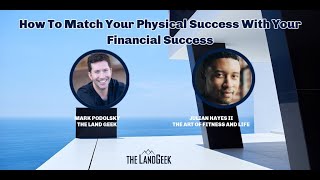
Podcast episode (Art of Passive Income) featuring Julian Hayes II, an epigenetic atelier and human performance advisor, interviewed by Mark J. Podolsky and Scott Todd. The conversation covers epigenetics (genes vs. lifestyle), personalized health programs based on DNA and labs, nutrition (Mediterranean/high omega-3), training and recovery practices, intermittent fasting, the role of purpose/social connection in longevity, and practical tips (music playlists, resources). The tone is conversational, practical, and motivational.
Questions this video answers
35
Chapters
Hey, it's Mark Podolski at the Land Geek with your favorite niche real estate website, thelandgeek.com and on today's podcast, I'm super excited for our guests because what good is making all this money and having all this wealth and having all this time if you don't have your health? So our guest is going to really help us learn more about that and also anti aging. Why do we have to age? Why can't we all live to over 100? 110, 120. But before we talk to our guest, I'd be remiss if I didn't properly introduce my co host. You know him, you love him. The brain, the professor, your flight school sherpa. Scott Todd from scotttodd.net landmodo.com learn anything about anything. Investor ninjas.com Scott Todd how are you, Mark?
I'm great. How are you?
I'm great. I am going to feel healthier after this, this interview. I can tell you that right now. Our guest today is Julian Hayes ii. He is an epigenetic atelier, a human performance advisor and an author. He has a boutique health and performance firm and what he does is he helps entrepreneurs and executives recharge and upgrade their entire human system without the guesswork. And we're going to learn all about that. But essentially what he does is he upgrades the entire human system by leveraging your personal unique DNA. So it's not a one size fits all data driven health metrics and one on one personalized programming. And he's got all the high tech toys that Scott Tyner are going to want to learn about as well as the performance team. Julian Hayes, welcome.
That is an awesome introduction. Thank you so much for having me. I'm pumped up. You got me pumped up.
Well, great, great. Well, okay, Julian, let's just rewind the tape a bit and let us know. How did you get started with this really high performance boutique type of firm of not just get fit but the entire system? Essentially, yeah.
It basically starts with just, I guess my life philosophy, which is to just constantly grow and evolve. So I definitely did not start with these aspirations to do this. I started with aspirations to become a doctor. So I ended up in medical school for a year while I was in New York. I kind of had these crazy synchronicities when I'm out and about in the city. One thing led to another. I decided not to go back. People think I'm crazy. It's whatever. And then, and, and so I started with just health and fitness, thinking about the physical body, because that's what I was used to. Let's. Let's build some muscle. Let's watch what we eat and go from there. And then over time, as my father started to get a little sicker and sicker and I started to look down my lineage, I started to notice that we always had the same kind of issues pop up generation after generation. And then I would go interrogate some of my other friends and see that they had certain issues that pop up that wasn't the same as my family. And I didn't believe in coincidences, so there had to be something there. So this leads me down a rabbit hole. I buy a lot of books, do a lot of research, start learning about genetics, epigenetics. I find a mentor who actually helps me structure this to actually make it useful, make it impactful, you know, learn how to read these different snips and everything. And then over time, as technology grows and I know different people, I just try different things on myself. And I'd say on top of it, then I start adding things to, in a nutshell, try to make the process as precise as possible, because I think the new model of health is going to be Health 2.0, and it's going to be much more personalized, truly personalized. And I'm just curious. And that's what drives me. Wow.
Scott, Todd, your thoughts?
I mean, I'd like to learn more about it. Let's. Let's keep going.
All right, so first thing, Juliana, what does epigenetic mean?
Yeah, epigenetics. So the technical term epigenetics just means above the gene. And an easy way to think about this that I always explain is that think about the hardware of a computer, and then you have the software that's the inputs into that computer, depending on the software, that's going to dictate how that hardware is going to operate. So the hardware in this case is your human body, your system. And the information that you put in, whether it can be food, the. The types of foods you eat, exercising, sleep, your environment, connection, how your finances, your mission, your loneliness, all these little factors influence the inputs that you're putting into your body. And then in a nutshell, what you're doing then is some genes are turning on, some genes are turning off, and you want some genes to be repressed, but you want some genes to express. So you're constantly evolving. And so it's a constantly evolving dynamic every day. But that's in a nutshell of how you can think about epigenetics. So you hear these people say, well, you know, we're. My family said this a lot. They're like, you know, weight just. We're just big boned in our family. You know, we don't lose weight in our family. Runs in our genes. Well, that might be true. So I do have genes that leads to a higher propensity for things like weight gain, things like blood sugar issues. But the key word is propensity, and it's a probability. So that just means if I don't stay on top of my lifestyle, that's one of the things that's most likely going to come first for me. But it's not an absolute. So you have to remember that. That your genes are not your destiny. It's clues to your past. But the epigenetics and what you do today can help mold your future.
Scott Todd.
I do think that that's a lot of times we give ourselves passes, you know, exactly what you just said is we give ourselves passes. Oh, well, that's just the is. I will tell you, like, my, my dad, my dad was 6 4. For most of my life. He weighed anywhere from, you know, 275 to 300 pounds. 300 plus. And you know, I always thought, okay, well, I'm gonna be overweight too. I'll be heavy set, not overweight. You don't think yourself overweight like that. You think of yourself as heavyset or big bone husky. The husky boy jeans back in the day, and you kind of give yourself a pass. Like, that's just who I am. Look, this is who I am. And you know, I gave myself a pass for a very long time. And when I got, when I got married, like, I'm surprised I even got surprised I got married. I mean, I was. I was my heaviest mark ever. I weighed 245 pounds when I got married. On my wedding day, 200. My wife had, like, lost this weight because, like, you know, pre jitter, pre wedding jitters, whatever it was, she lost weight. I'm like, I'm still eating, man. Like, I'm eating 245. And then all of a sudden I realized, like, this is not healthy, okay? Like, I realized this is not healthy. And from then on, I tried to, like, okay, I got to pull this thing back. And I did it in layers, you know, as time went on. But I don't wait till you 45 today. And in fact, you know, when I look around, my own family, my own family kind of has adopted that same mindset. And I think it's a mindset thing more than anything, but it's that willpower, Right? Like if you have the will to change anything, including like your finances. Well, you can change your health as well. It's just you have to have the desire to do it.
Absolutely. And you know, I come from the opposite end, but I do, like, remind people who are financially successful that the principles of being financially successful most definitely applies to fitness. And you're going to see results even quicker in that realm than you would with finances. Because when you're investing, you can only have that grow so fast. But in fitness, you can exponentially change your life in six to 12 months. Yeah, six to 12 months.
So, Julian, what do you recommend for people that want to get more fit? And what I thought was really interesting was that you said you were looking at other things in their lives. Like, what are your relationships like, how lonely are you? What are your finances like? Because it all plays a part in just your fitness overall. For example, if I'm lonely, I'm more likely going to watch Netflix and Money Heist and just start eating a bunch of chips as opposed to maybe doing a workout.
Yeah. And I mentioned loneliness because also that creates inflammation in our body. There's been studies on this now that just this feeling of loneliness over time creates these feelings of inflammation and that lowers your immune system. And if you look at some of the world's oldest populations, they don't talk necessarily about things like keto, paleo diet and crossfit training and high intensity workouts. Some of the things up there is to have a purpose, to have a mission, whatever, whichever words you want to use. It's also to have strong social connections because I think about this, and to answer that question, the very first thing is to, and it might be counterintuitive, it's actually to take a step back and to slow down and then you can speed up. And what I mean by this is to really think about what does optimal health mean to you? Because I'm sure you guys hear this a lot. People want to be financially free and they probably can tell you what they're going to do when they're financially free, what this looks like and everything. But if you tell someone what does optimal health look like for you? What does it feel like? It's harder. It's like, well, I just want to feel good, I just want to feel healthy. And I think that sells him short because optimal health to me is going to be different than maybe you, but both of them are still going to be optimal, it's just different. You know, I like to really perform and push my body to thresh to the, to the limit. That doesn't mean the next person has to do that. So really getting clear on what optimal health is for them. So what body weight would you like to be at? What body fat? Like how are you moving, how are you feeling, who's with you? Really get descriptive in that, just like you're doing with your finances. Then after that, then you start crafting a plan out thinking about nutrition and then thinking about exercising. And the reason why I do that is because I learned a long time ago. So when I first started working with people, I was a drill sergeant. I was very militant because I just trained everyone like me. So there's no empathy, really. No compassion is you do it or not? I don't want to hear what's going on. Did you do it or not? That's it. And then I, you know, I got to learning that not everyone responds that way. And we have these things which I first read about in Rage Alio's book Principles. We have these second, third and fourth order effects. So just like you mentioned with the Netflix, someone that's feeling lonely most likely then is going to seek pleasure to try to compensate for this feeling of loneliness. And most people is they're going to eat their feelings and what they're going to eat is going to be something that's comforting. And by eating that food there is then going to lead to weight gain. So it's this whole cascading like chain like events. So that's why I say start with, start with just really getting a clear picture on what optimal health is. And the last point, and then I'll stop is talking about the reason why I talk about the missions and the purpose so much is because I thought about this, I thought about presidents and if you look at a lot of presidents, they live a pretty long life and they have a super high stressful job. They come in with pretty nice black hair and they come out always gray and sometimes their skin's a little, little rough looking, but they live well into their 90s. And that's because generally when they leave their office, they have something else to fulfill their time. They have another purpose, whether it's humanitarian efforts or some sort of philanthropy or something. So for people, and I say that because we think about stress and that's going to be the first thing. We got to get rid of stress. We got to get rid of stress. Not necessarily.
Scott, Todd, Mark, you and I Were.
Talking about this, I don't know, two weeks ago we were talking about how we've got a long way to go, right, like you and I in terms of age. And we talked about, I was mention you like, I don't think I'll ever retire in this general sense. I think I mentioned to you that there was a. I remember hearing about this study where the average CEO, when he retires, he lives a whopping like 37 months or something like that. That's the average. I could be wrong. I don't quote me on that number. But it's low. It's like three years somewhere in that range after CEO retires. And you and I were talking about, well, why does that happen? Well, it happens because where's the purpose, right? You know, you retire and what are you going to do? Play golf? Well, your health is only going to go so long. You can play golf, maybe you can keep going, but what are you going to do? And you know, I think that that's where kind of work or that purpose or that drive keeps you going. I don't think I ever want to retire in that sense. And the fact that, you know, I stopped working doesn't mean I can't enjoy life. I mean I think I do that today. But you know, I think it's, I think it is important to have that purpose behind it too.
Yeah. Julian, we talk about this all the time. I feel the exact same way. I never want to retire. Scott and I kind of already are semi retired. We really only do the things that we want to do for the most part. And even this podcast is just our way of connecting with other people and learning about new things. I mean, could we do this at 110, Scott, would it, would anyone, would it even matter? Would we even care if anyone was even listening to our gravelly voices at that point? But for you and I, it would still be interesting to meet new, interesting people and learn and constantly sort of, you know, grow and get that, that mentorship. So Julian, what do you do? Like you're, I mean if you're not watching this on video, Julian's are super thin, fit, vibrant, young looking guy. I don't know how old he is, but it looks really good.
I'm 35.
You're 35? Yeah. You look 25. So what, what are you doing?
Okay, so let's see. So nutrition wise, we'll start with nutrition. It's, it's actually not, I follow kind of a more what you would say, more Mediterranean based diet and eating Style. So lots of different plants, lots of different fruits. A lot of my fruits are typically blueberries. I, my main animal source is fish. So it's going to be like mackerel, sardines, salmon. I like catfish still. And, and it's a high omega 3 diet as well because so my genes is I need a little extra Omega 3 support. So that's one reason why I'm cognizant of that as well. I don't eat as much red meat just because my genes don't tolerate it as well. So I probably eat red meat maybe once or twice a month and then sweet potatoes, rice, um, but definitely like vegetables is at the forefront of that. So I eat a lot but then I still always have a lot of vegetables as well. And so then let's see with the working out, it kind of depends on what mode I'm in. So I'm currently training two times a day now. I have a marathon. I got into distance running during the pandemic. A guy that was, I think he's about 70 or he's almost 70 and he has to VO2 max of like a 35 year old and he's like running and everything. And he kind of challenged me and when I get challenged I kind of go all in. He's like, you should be doing more cardio instead of just lifting weights and stuff. And so I was like, okay. And my genes say I don't have like great endurance genetics. So that was even more of a challenge and excitement for me to do. So I've been running a lot more. I still lift weights probably four times a week and then run. But I've been doing two a days now to intense training period. So I sleep, I sleep. Recovery's big for me as well. So I typically listen to lectures or podcasts while I'm doing some stretching in the evening. Time to kind of relax because I'm normally I typically can get high strung, a little amped up and if I don't control that at night, I'm just going to be looking up at the wall when I'm trying to sleep. So it's essential for me to kind of wind down with stretching and meditating at nighttime. And so I do sleep probably seven and a half to eight and a half, nine hours sometimes. And supplements, it's all over the place. It just depends on what the focus of the training period is. But I would say for people, if you're thinking about supplements because a lot of that's a common question that people ask. I like to think of supplements as something that's just, they're beneficial only if you have the foundation intact. So if you have a very poor diet at the moment, the supplements are not going to be as effective. So for me, something like vitamin D. Vitamin D is very important. So I take a vitamin D supplement. I have a multi mineral just to cover those bases and then I have vitamin C and I kind of forgot what else. But it's very specific. So my whole regimen is tailored to kind of what my genetics indicates and then also what my lab reports showed as well. So that's why it's very bio specifically. And then over the course of the year it may change depending on what my needs and everything are. But other than that, that's, that's it. So it's not too, it's pretty lifestyle friendly. I used, there used to be a point where I used to be like very militant about like counting out, measuring, weighing my chicken breast, counting my sticks of broccoli. But that's some of my friends, they're, they're, they're, they do competition. So if I want to go out and have a glass of wine or and have the bread, I don't have a problem eating that. So I'm not that nutritionally anal these days.
No, that's great. But I thought it was interesting, given how fit you are, that you didn't start off with a chocolate donut. Krispy Kreme chocolate.
The difference is, I mean it just, it catches up with me when I'm running. So if I was just lifting weights, I probably would still sneak in some more foods like that. But it sits, it sits me when I'm running and I feel heavy so I can't, I can't do it. So I have to be, I have to be very cognizant of that when I'm, you know, like. Because I'll start to feel it around like mile 15 and I was like, oh my goodness, this feels terrible.
Scott.
Todd, listen, you, you, you eat what you want to eat. That's the part of life, right?
You know, that's right. Like I'm a, I'm a cookie guy. And pastries, I love cookies and pastries. So I, I have to keep those away. If somebody really wants to get on my good side, send me some fresh freshly baked white chocolate macadamia nut cookies.
Yeah, go ahead.
Like if I would look the, the whole donut thing, man, like I would say that. Okay. Is it the best thing that I could eat? Probably not, right? Like, and will I Forever. Eat that. I hope that I can eat that forever. And then I mean, like, enjoy, right? Like, that's what it's about. Now, if I had no willpower and I decided to buy a six pack of donuts and eat all six of them for breakfast, maybe that's not a good thing. But if I have one, if I give myself permission to have one and enjoy life, so be it. No problem with it.
See, I admire. You have great control in moderation. I don't have that. So I. I cannot eat just one cookie. So I will eat them all because my appetite's like, crazy. So I think that's good. And the way I think about this is because I think a lot of people do think that if they need to be healthy, they have to become like this ultra militant, strict person. I like to think about a ratio. If you're batting, you know, if your ratio is 85, 15, 90, 10, you're gonna. You're gonna most definitely be very healthy and probably have your goal, you know, if you're eating healthy 85% of the time, 90% of the time. And what. And say you eat three times a day. And so 24 of those meals are good. I mean, you look at the big picture, you look at the big macro thing. So that one donut, you know, enjoy your donut.
Thank you. And Mark, notice that we have the macros come up not only here on this podcast, but also Taria says, hey, follow the macro. So therefore, I think the donut is a moot point. We should never discuss it again.
Fine.
Fine. So, Julia, what I've been doing, and I don't know if you agree with this or not, it might be just. I have to look at my genetics is I've been intermittent fasting. Oh, yeah. So I do a 16, eight, five days a week. And I've eliminated caffeine, alcohol, and sugar unless I'm on vacation. And it's like, there's a crazy patisserie in San Francisco that I absolutely love. Then I'll be like you and I go crazy. But for the most part, I just. It's either just like none just eliminated. So just. It's just one less thing I have to think about. And I don't have to be like Scott and self discipline. Now, what's interesting, socially, it can be tough because I'll have friends, hey, let's go get a drink. I'm like, well, I don't drink. Or with the kids, hey, let's go get some ice cream. And I'll just Watch them have ice cream, so kind of thing. But, you know, my kids are older, so it's not like that big a deal, but you know what I'm saying? So what are your thoughts on that?
I like intermittent fasting. I think that 16, 8 schedule is a great lifestyle. It's a great lifestyle strategy to have. I think it's a great default when you go to. Mine is more of a. I'm typically a 12, 12 or 14, 10, just because I have to get more food in throughout the day. So that's why I've expanded my window out. But I still always follow the rule of before I go to bed, no meals at least three hours before bed. And my sleep's a lot better. And my wearables have indicated that as well. I get more quality sleep. So I like that rule. And same thing. Oh, man. Caffeine. I limit myself to one cup of coffee a day because I do process caffeine a little slower, so it stays in my system longer. But it's really good coffee. Or I should say coffee. You know, coffee is good. But, but I think that's it. I think that's a great plan that you got. So I think you're, you know, I, I think, I think the fasting is good. Not because I, yes, there's benefits for fasting, but I think what it does is it gives you constraints and it gives you guidelines and structure. And I think that's really so important when it comes to our health, is to give ourselves some constraints and structure. And you hear people talk about constraints when it comes to creativity. I think Dr. Seuss's one of his books. I think he only could use so many different words and letters for that book. And so he had constraints. I think that's benefit as well in our health.
Okay, last question before we get to the tip of the week. What do you think is normal? What other. But other people say that's absolutely crazy, Julian.
What do I think that's normal that everybody else. Well, everything is kind of. Everything's a competition.
Everything's a competition.
Everything's a competition. Yeah, I, I, Everything's kind of a competition. Yeah. I think that's just what's really been on my mind lately is just that everything's in competition. Maybe it's not against anyone, but it's against yourself. And so I just kind of think about that. Cause one of my friends actually yesterday, they were saying, do you just do things just to, just to do it? I was like, you know what? I don't, you know, It's a competition. I'm. I'm always trying to get better. That's my ethos, is to constantly get better and to try to squeeze the most I can out of this life here. So it's a competition.
Okay. I love it. Well, we're at that point. Julian, I think your mentorship has been great, but we're going to ask you for one more tip of the week. A website, a resource, a book, something else actionable for the auto passive income listeners to go improve their businesses, improve their lives. What have you got?
This might be a little different. I'm going to say go to Spotify and find you some good playlists, create you a few good playlists of whatever type of music. Like that really gets you in the flow state and really gets your emotions in a positive state. And the reason why I say that is there's a lot of distractions in the world right now. And that can really affect our emotional and our mental state, which can then affect our physical state. So let's use music as a benefit because we're going to sit at our desk, we're going to work. Let's have something positive on.
All right. I love it. And Scott Todd, before we get to your tip of the week, I just want to mention our sponsor, which is flight school. Learn how the next 16 weeks can literally transform your life. Go up that mountain of land, investing quickly, safely, efficiently with Scott Todd as your Sherpa. In fact, that tuition for flight school is not going to cost you anything. We guarantee it. You're going to make back that money 180 days or less in cash or terms deals. Learn more. Go to landgeek.com training and schedule a call. Scott Todd, what's your tip of the week mark?
There's always some pretty cool transcription services available, you know, using AI or whatever. Check out this one. You know, like, this would be good for talking, talking to your computer, recording, maybe either an email or, you know, kind of a process that you want to have documented or something. And if you go to SpeechText AI, it allows you to get a Chrome plugin. It will allow you to do transcriptions right from your browser. You can upload files, you can record right there from your browser and send it in.
I don't know.
It's pretty cool.
Pretty cool. All right. Speechtext AI, that is pretty cool. Let's see what this costs. Not bad. 10 bucks a month for 180 transcription minutes.
Yeah.
19 bucks for 380. 30 plus languages.
Huh?
Not bad. Well, as good as your Tips are guys only. My tip is going to make you live longer, healthier, better life. Go to the art of fitnessandlife.com. we'll have a link to that website, theart of fitnessandlife.com. learn more about what Julian is doing, how he can improve your life. He's got a podcast and blog. He's got the Superhuman Insider. I want to become a superhuman. I want to live to be 120. But I'm thinking about this. I don't think I want to outlive Scott.
Todd.
That would be miserable. Scott, can we coordinate this?
Oh, Mark. Oh, Mark. I don't know, man.
You're pretty healthy, though. I don't have to worry about it. We'll see.
I'll say.
All right, he's going to be eating donuts. He's going to be eating that daily donut at 120. And so he's going to get interviewed by the news station. You know how we always do those random interviews, like, what's your secret? She's like, well, I. I always had a glass of scotch every day. And so he's. Scott's going to be on here saying, I had this daily donut and I've been doing it for the last 60 years.
Oh, yeah, yeah.
And.
And that's when my sponsorship dollars blow up.
Exactly.
I'm playing the long game here, man.
He's going to be like the Jared of Krispy Kreme. Without, of course, the jail.
Without the jail. Sent it out.
Prison.
Yes.
Without making bad choices. All right, Julian, are we good?
We're good. This has been awesome. It's been highly enjoyable.
Fantastic. Scott, Todd, are we good?
We're good, Mark.
Well, I want to thank the listeners and remind them, look, the only way. The only way we're getting the quality of guests like a Julian Hayes is if you do us three little favors. Follow us. Rate. Review the podcast, Send a screenshot of that review to support thelandgeek.com I'm going to send you a signed copy of Dirt Rich as a thank you. So please do it. It's the only way we're going to get quality guests, so we all benefit from it. Follow rate, review. All right, let's do this. 1, 2, 3. Let.
Let freedom ring.
All right. Julian's like, huh, didn't see that coming. All right, thanks, everybody. Thanks for listening to the Art of Passive Income podcast. Start your journey@www.thelandgeek.com and www.scotttod.
Net Rate and review the podcast and.
Email support@thelandgeek com your screenshot for a.
Free passive income launch.
K.
More from Mark





How to find funding partners: How to Scale Land Without Using Your Own Capital


