How to Solve Your Biggest Problems with Transformational Coach Aaron Velky
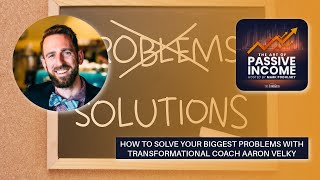
A podcast interview (host Mark J. Podolsky) with transformational coach Aaron Velky about overcoming internal barriers that block entrepreneurs from living value-aligned lives. Velky describes his journey from building a venture-backed financial-education company to confronting loneliness, overachievement, and misaligned goals; reframes money as energy and interdependence; explains how to choose a coach (look for character, lived history, a coach of their own); warns about "miswanting" (chasing culturally-prescribed goals rather than values); and shares practical habits (cold plunge, infrared, meditation, journaling, typical wake ~5 AM). He also recounts running a nonprofit called Money Club (financial-education game for students), which was wound down after COVID, and recommends resources: The Power of Now (Eckhart Tolle) and The Second Mountain. Ends with tips and links (aaronvelky.com / Instagram contact for a focus framework).
Questions this video answers
August 20, 2024
Let Her Play — described as an Amazon #1 new release.
Money Club — a program/game to teach financial education to students (framed as 'financial intelligence'); later wound down after COVID.
May 2015 (he was 27 years old at that time).
Around 5:00 AM
Chapters
Hey, it's Mark Podolski, the land geek with your favorite niche real estate website, thelang.com and on this week's Art of Passive Income podcast, how would it feel to, you know, solve your biggest problem, which is typically you? So today's guest is Aaron Velke. He is a transformational coach on a mission to help you solve your biggest problem, which is you. He works with entrepreneurs in pursuit of more, not living the life they know they are capable of. Capable of. He's been through all the things that kept him from living a life he wanted. Being his own worst enemy, believing his own excuses and not having someone to hold him accountable to change. He's a truthful, gritty, but authentic coach, fighting fearlessly no matter the size of the obstacle. For those that have been silenced or been told to shrink rather than go for their big audacious dream, he'll fight for you too. He's also got a book out. It's an Amazon number one new release called Let Her Play. So without further ado, Aaron Velke. Welcome, dude.
So glad to be here, Mark. Thanks for having me.
Yeah, yeah. I'm so glad you're here. So I just want to just start off with what is it as a heart centered entrepreneur and why do you like working with those types of people?
I think we are all those people. Now, we may not have committed to that, but what it means to be heart centered is that your business is not the only focus of your life. And I've been caught in the narrative that is if you just keep growing, if you build and grow and expand and make more and earn more, then you'll get there. And we all kind of imagine this there where we get to really live into our values. We get to be heart centered. My job is to take the imaginary there and bring it here. Because in many ways what makes someone heart centered is that they understand there is no there. They have pursuits that are bigger than just business. And they are willing to put their emotions, their beliefs, their art, their. Their tapestry out in front of everybody to see.
Okay, so I love that. Now what's more interesting to me is how you came to this realization, this aha moment in your life personally as an entrepreneur. Because typically when people are coaching other people to get out of their own way, they had to do it for themselves first. I'd love to hear about that journey.
I still do have to get out of my own way, you know, it. It's a cycle that I think was initiated by the pursuit of more. So I went into Business I was coaching youth soccer I was trying to build. At the time it was a nonprofit. It eventually became a venture venture backed financial education company. And things were growing. Everything on paper looked great, but I kept deferring what mattered most to me. I kept putting off everything that really made me Aaron for the when I get there, so when I sell the business, I'll travel more. When I make enough of an impact, then I'll be lovable. When I am successful enough, I'll be worthy of my dream. When I complete this year, or when we get to Forbes list, or when I get Baltimore 40 under 40 or when I hit the press, whatever it is, then I'll be enough. And those three things, being worthy enough and lovable have been the hardest internal struggles. I think entrepreneurship begets individuals who are willing to sacrifice for more, but often may not know why they want more or what more actually looks like. And I went through this Chronicle where on paper it looks great. But I was hollow and I was going through these hurdles where I was pushing everybody away, but what I really wanted was company. And there's this narrative we use like lonely at the top. And I think that it's not lonely at the top if you're not pushing everyone away. And I was pushing everyone away. So my whole journey of building businesses and investing and doing all of the things that we all aspire to do was so empty and it was so difficult to find myself in it. And now I sit in the darkest of moments with people who are going through the same stuff because I know how hard it is to be alone and not have anybody to talk to about it.
Yeah, what, what a, what an incredible, you know, service to do. And I, I really appreciate your, your vulnerability. And I definitely, and I, I write about this in, in my book, my book Dirt Rich have it going through that exact same struggle and that journey and those feelings of, of not being enough. And I had Parkinson's law of money. And the more money I made, the more money I spent in, in this, this sense, this feeling that there's something out there that's going to make me feel worthy or happy or enough. Right. And I realized that there isn't anything out there. It's. It's really an internal game and very, very humbling experience to go through when from the outside, culturally, it looked great. I mean, I had the big house and the big car and going on the big vacations and the kids in the private school and I had all the stress and all this overhead and all this fear and Then luckily, I say luckily. But when it was so fun, when the Great Recession hit, it forced me to shrink and see, okay, I had all these things that the culture said is great. I went up this egoic first mountain and it was not satisfying. And so I, you know, this book, the Second Mountain, is more about, you know, purpose and faith and spirituality and community and vocation. It's not your job, it's your vocation, it's your, it's your calling as well as intimacy and love and the good stuff of life where ultimately right at the end of our lives, you know, we typically ask ourselves two questions. Did I love and was I loved? And if we're always in the pursuit of more and we keep, you know, moving the goal posts, there's, there is that trade off. Something has to give and usually it's our, it's our relationships. But when, when I'm talking about the, all this, I'd be curious about just getting to the root of you. Like for me, I think it stems from my parents, right? There's something in the way I was brought up. I don't know if I was brought up shame based or what. I love my parents. I've got a great relationship with them. I talk to my mom, my dad, every single day. That being said, like I can see the scarcity, mentality, the fear with them as adults and I think that that seeped through to me. What's your, your relationship like with your parents and how did they influence you as far as how you see money?
I had two distinct experiences. So the first one, my mom was a bit more reserved with money. My dad was an entrepreneur in some sense. I don't think that word ever floated across my purview when I was younger than 18, like living at home. But he was a demolition guy that ran his own company. So his relationship with money in some sense was a bit more cavalier and free. Would spend, would enjoy and I think experienced money. So I got two different tastes and what happened through my relationship with money when I was away from mom, where there were more restraints, I was just like, send it. And so I got, I definitely became a spender in some capacities though. I grew up in an environment and ecosystem where I always felt like something was wrong with me. So there was always this I need to prove, I need to show you, I need to measure up, I need to out measure, to overachieve. And I think in the context of money to really couple those together that also became like over show, overshare, over give, like over anything. And there has always been this corrective measure that I think comes for us. We either do the overing for so long that we're like, I can't sustain this anymore, or we recognize somewhere in the middle of it that if we are overachieving over giving, whatever it may be, if we're people pleasing, that something's not working and we'll never be happy if we continue our pattern. Generally, I don't think most of us shift until we experience enough pain to shift. And anyone tuned in that is going through change, that is saying they want more, is probably also on the cusp of like, hurts to be where I'm at, but not enough for me to force change. And my pain threshold was so high, both financially and emotionally, to where it took a lot to force me to change. But kind of like you, I've gone through ups and downs. I've lost everything a couple times. And in starting over, you get to do it different. Right. That's the best part about entrepreneurship. You can restart and do it different. So my coaching and I think our business has been helpful for individuals who don't want to have to go through the pain. They just want to guide, they just want Virgil on the journey through hell with the Dante's Inferno reference. And they don't have to go through the same thing that I went through. But money has always been a centralized thing. I built a financial education company like it was always the center of my world. Just had to make change.
Yeah. So what is your relationship to money now? How do you, how do you view it?
Money is energy. Money facilitates the transformation of me and others. So the way that I see it now back to like the word vocation. I love that word. And I think that model is really important. I don't have a job. I wouldn't even say I have a business. I have a mission. And money is the facilitator of that. Money comes in as a means to allow me to transform others and to focus on others and to prioritize the transformation that they have. And money goes out to facilitate the nurturing, the care of myself and others. And I think looking at it that way, it also means that my relationship with money and using the word energy is also a baseline in interdependence. I'm not independent, I'm not self made. I'm never going to be super dependent on somebody else. But I also depend on a lot of people. And that idea of interdependence is really related to money because in that manner, we are all Winning. We are all able to benefit. We're all able to play together. And there's not this, like, I'm not the center of anyone else's universe. We're all just making this thing work together.
Yeah. I do really subscribe to this idea of interdependence. I do feel like we're all interconnected in a way. We all rely on each other, and. And yet there's this illusion that we don't. Right. And. And I think that it. It can. It can ultimately, you know, you can go too far, too far either in either direction on that, where I don't want to be dependent on anyone. And you start isolating yourself. You. You don't trust anyone, and you. It stunts your growth. And the other. The other way is you give everyone your power and you sort of abdicate your life to other people, and you have this sense of, well, if I lose that person, it's all going to go away. And then it's just a horrible place to be as well.
I've been in both of those places. They're both horrible.
Yeah, yeah, yeah. And so when you get into that. That good middle, especially as an entrepreneur, you have confidence that no matter what happens, you can deal with it, and you can deal with it skillfully. And you're coming from an. An area of. An idea of abundance versus an idea of fear. And I think that is. Is really the. The shift that is very difficult, I think, for people to make. And if they don't have an Aaron Velke in their lives, it's. It's really hard, I think, to go through that wall alone. And. And certainly you want to get to the point where you have that. That person who cares about you, but they're unattached, right? They. They can. They can see the problems skillfully that you can't because you're. You're wrapped up in your own stuff and help you get through it. And, you know, the question is, we all need it, but where. What is the point in life where they say, okay, I really need a coach? Like, ideally there. It's not when everything's falling apart, it's before they get to that point. And so how do you find that person?
There's a line in one of my favorite books called Ishmael that I have loved. When the student is ready, the teacher appears. That sounds prettier than it probably is in practicality. I went through all of this alone, and I distrusted a lot of coaches, and I think it's okay to distrust a lot of Coaches, not everyone is coaching for reasons that are ethically bound and high integrity. The common place to look at this is athletics. There is not a single athlete that would pursue greatness without coach or coaches. And we never bark at that. We never second guess it. But when we jump into business, or when we jump into entrepreneurship, or when we want to expand ourselves and become more, then we start to say, well, wait, wait a minute. Like, I must be broken. Not enough, not worthy to need some help. And so I think the work with a lot of men who are incredibly successful, who have just run out of their dreams, they. They just have outgrown what they wanted and they become who they want, but they don't know what the next level looks like. And in doing that, there's often a fear about asking for help. I think that when we look for our coaches, what's really important to discern is, what do you want? And there's two echelons to that question. The. The first echelon is sort of the on the nose. I want to sell the business. I want to make a million dollars a year. I want to be a millionaire. I want, I want, I want. And the reason that echelon is important not to stop at is that that echelon doesn't actually mean very much to us. The second echelon is, why do I want that? So if I say, I want a million dollars a year, or I want to double my salary, or I want to invest so I don't have to work anymore, okay, then why? What do you do if you don't have to work anymore? That helps us really find the root of things. What I notice is that whenever we build a future, we do a lot of work on designing a future self. Whenever we build a future, it's back to our values. But our goals might not be aligned with our values. So we might say, I want to double my income. I'm going to work 80 hours a week, and then when I'm successful, I'll spend more time with the family. So now we've got a disjointed first echelon and second echelon. We ideally want to stack them, but when we're looking for coaches, if the coach just helps you with your first echelon, you're going to need a different coach for your second. And ideally, you find someone that can help you integrate both of these things so that when you say, I want to double my business, we use constraint theory and say, all right, we do want to double your business. And also we Want to make sure you get 10 hours a week with the family. How do we do both? And I think that mentality is a lot harder to find. If you are looking for a coach, make sure they have a coach. Make sure they have somebody helping them. Make sure they have history doing it. I'm not a big believer in certifications, but make sure they have history. Talk to their clients, survey their community. Like, look at them as a character. Don't worry about their accolades, look at their character. Because ultimately you're signing up for someone to lead you. And I don't think we're asking questions enough about who's leading me. We're just looking at, well, they've been successful, so I'll mirror that. And it has much more to do with leadership.
Yeah, I love everything you said. And it's so interesting because I have a coach, I'm in several masterminds and certainly I'm a coach. And I really have a simple mission to help people solve their money and their time problems so that they can move up Maslow's hierarchy of needs into self actualization and figure out what they really want in life and what they're, what is going to bring them the deepest joy and what their, their values are. And what's interesting about what I do is that it's a real estate space and everyone else is talking about making money and, and how many doors they have and how many deals they've done and how much money they've made. And, and the sort of, the unconscious marketing message is when you do all those things, then you'll be happy.
Then you will.
Right. But I think it's two different skill sets. I think that, you know, making money is a skill and I think it's an important skill, but I think being happy is another skill set. And I, I often talk about, can you be like a duck? Can you be calm above the surface and, and working furiously below? And so when, when you are working with somebody who is out of balance, where they're, they're not in alignment with their, their relationship with money to what they are, their truest values are, how do you help them see it and, and move past it? Because I know personally that if, you know, say that my partner holds up the mirror for me, I resent it. I don't want it. Right. When my coach does it, I'm like, oh, that makes total sense. I see it. Why is that? Because she's not wrong. I can never say, oh, you're wrong. She's 100% right. I just don't like it.
It's tricky. When it's a partner, a friend, or someone we love, there is a submission. You know, when you work with a coach, like, you're. You're signing up for it. So I think there's submission and permission. That's important. I. I do think that what ends up happening if we don't know your values? If you don't know your values, you got to start there, right? The two most important questions, and really the thesis of a lot of our work is, who are you? What do you value, and what do you want? And most of us say what we want. But again, it's like, when I get there, then I will. And I'm more focused on the then I will answer than the when I get there question. In some ways, my journey and my failures and my consequences have all taught me that if you don't chase your values, you'll burn out. And to me, values that don't align with your goals is just a recipe for burnout. It's going to be maybe a month, maybe a year, maybe two years, maybe five, who knows? But eventually, if you are listening to this and you're like, I can't do this for five years. Your values and your goals contradict. What we have to do then is say, what do you want? Let's say I dropped $10 million in your bank. What would you do? And most people say things like, I'd write a book. I'd volunteer more. I'd travel and see the world. I'd go spend time with my mom and dad. I would start a scholarship fund at my high school. I'd pursue writing in the arts. I'd learn the violin. I'd understand that, you know, my. My time is limited, and I would be more present. And. And when we start to understand those things, then we have a North Star. And if we can organize all things to that North Star, which requires a tremendous amount of rewriting of behaviors, of identity, of habits, like, there's deep work that happens here. We have to go on a wellness journey in a lot of ways, but once we identify what it is, we build a vision that's so incredibly powerful and not for motivation. I hate the conversation in personal development about vision being about motivation. Vision is a criteria. So when we build a vision, it gives us a criteria for our behavior today. If I say that I'm going to be incredibly fit to run an ironman When I'm 50, then I know exactly what behaviors I should begin today, whether they're uncomfortable or not. That process, though, requires us to know ourselves very well. And I think when we sign up for coaching, what we're. What we're essentially surrendering is like, I can't do this alone. I trust you. And I trust you as much as I would trust my own voice, sometimes even more. Because my job is to zoom out far enough and show you the picture, the trajectory that you're on 5, 10, 15 years from now. And if you don't like where that trajectory ends, then you're going to have to trust me in some cases, or our work together more than the inner narrative. When you go, I can't do this. I don't know that I can do this. I'm just really scared. So there's a lot of work that goes into it, but underneath all of that, we have to get to a place where we can say, I can't do this alone. I have to be interdependent. And if you don't believe in interdependence, you will never be able to work with a coach.
Yeah. Yeah, it's. It's so interesting. So it makes me think of. Of so many different things you're saying, but I want to talk about the division. When someone comes to you and things that they. They want, how often do you find mis wanting? Because I think that there's a lot of miswanting out there. And do you. Do you. Do you see that? Or is it just my own bias?
It's nine times out of 10, probably nine and a half times out of 10. What we are often caught in is a web where we are playing the game of someone else and mistaking that for the game of us. If we don't know our values, then a vision is largely going to be a perpetuation of whatever society says works well. You own the house, you have the car, you have the fence, you have the dog, you have the family. Got all the things. Therefore, you should be happy. But if we don't know what makes us happy and we don't understand fulfillment, if we don't truly understand who we are, then you're just going to get caught up in this silly narrative. I got caught up in the silly narrative. I chased it for way too long. And part of that is also a belief that business and personal are disconnected, that. That somehow we're one person in A and another person in B and that we. We need to keep them separated or that business can't be fulfilling. Like, there's just so many narratives that we have to unwind. A Little bit. But miswanting to use that phrase is, is common, I think, because. And this is, this was my story too, because there's one line that we say all the time and we say when I get it. So we've, we've essentially displaced a feeling to a diff. A different time. And anytime we displace a feeling, when I get the girl, the guy, the car, the house, we've essentially said the feeling can't exist here, it can only exist there. And once we do that, we essentially push the feeling away to where we can no longer experience it. And we use an object or an outcome to try to hold a feeling that can only exist in a moment. There's no feeling in the future. There's only feeling now. So I think we miss one because we've just gotten accustomed to when I get. And pushing feelings off on a regular basis. We do this in school, we do this with education, we do this with money. We do this with friendship. When I pushes everything that is now way out.
Yeah, it's so funny. You know, there's that, that Naval Ravikant quote desires a. A contract with yourself to be unhappy until you get what you want.
Yep.
And it's exactly what you're saying. And so this, this misalignment with money and your personal life and your business life, it's. Yeah, I know personally, I mean, I've, I've been through 14 years of therapy and I have, you know, coaches and mentors. It's a slow process, or at least it was for me. Is, is there something that you would recommend for somebody to smart cut that process or is it just take time? Like, I know, like business success does just takes time and like a long enough timeline, we're all going to get paid if we just state what we're doing.
Right.
You just, you just get mastery. It's. You're going to get paid either way. Is it the same thing, do you think with personal growth, can you really have a transformation in a month?
Not in a month, no. What, what we intend to do is play the long game. And the long game is difficult, to your point. You know, we start with an intention. Something like a vision creates an intention. A criteria creates an intention. Intention becomes a behavior. Behavior becomes a habit. A habit becomes an identity. So that, that process does take time. Now I will say this.
The.
The smart cut is help. It's always help find someone that's walked through all the, that you're about to go through and talk to them. And what, what I am probably most proud of in my career is that the experiences that I've had and walked through alone, where I didn't have help, is now what I walk people through. With help, I sort of become a Sherpa, right? Hey, I've walked this mountain a thousand times. I'm going to go with you. But what that does do is it smart cuts the level of pain that's necessary. It smart cuts a framework so you're not assessing options that are no longer valid. It's smart cuts the way you can focus and put your attention so you're not distracted all the time. You can just stay lasered in. It also smart cuts because you have someone walking with you that knows the mountain. Like, if. If I wanted to climb Kilimanjaro, I would have no idea where to start. But someone that climbs it 14 times a day and takes people up there all the time, they can do it with their eyes closed. So I can trust them. I can just follow them. So that. That's the smart cut. But that doesn't speed it up. Except for you have less loss. The process still takes time. I think all change takes time. And we constantly are like, I want more, I want more. And then also when someone says, hey, are you ready to change? We're like, whoa, whoa, whoa, hold on. Change. We want more. Well, then we have to accept change. And ultimately, to me, the smart cut is always clear first, focus second, and then action third. And if you can do that in that sequence, change is inevitable. It's still going to take you time. But I walk through people. I asked for six months or a year, typically. Now, with the caliber of person I'm working with, it's a year. And in a year, it's going to be the most transformational year you've ever had, hands down. I'll money back, guarantee that. But to do that, we have to constantly fight uphill against your story, against your beliefs, against your narrative, against the culture that you have, all of those things, because those tend to be the tethers. So is there a smart cut? Yeah, it's helped. But is it short? Nah. Sorry, bro.
Yeah. Yeah. So let's get a little tactical. If you don't mind. I'd love to know your morning routine.
I'm typically up 5ish. Somewhere around there, I jump in a cold plunge. Not. Not because I'm a big, like, yeah, cold plunge. But because it. It wakes me, it startles me, and I've had a lot of water trauma, so it's kind of reprogramming. Me to accept hard things. I sit in front of infrared lights for a couple minutes and just slow down. I meditate while I do that. I journal a little bit. Journaling has always been a challenge for me, but I. I rotate through different prompts and. And find ways to. To get some thoughts out. I make a coffee because that's my nice little morning morning ritual. And that's like a very methodic process of, you know, a couple different steps. And then by that point, I'm in free for all land of. Of the day at. At my best, I don't have anything planned until 9, so I have a lot of time to think, to. To like, do deep work, to focus, to get things done. If I've got my son, though, and like, he's here with me, then that's a little bit slower of a day or it's a much more intentional day and it goes back to my values. We went for a bike ride this morning. We sat and made breakfast. Like, read a book. Like, you know, that's still part of my morning routine, just a different intention. So I'd say that I have cycled through routines a lot. And every. Every week, Mark, I kid you not. Like, every week I ask myself this question. Is this morning routine for me or is it because this is what other people are doing? And at some point, I might not do any of those things. I might give them all up, but I've actually come back to these things time and time again because they make me feel very grounded, not because they're, like, cool or hip or trendy.
Yeah. So. So interesting. We have a. We have a very similar morning routine in a way, although I. I actually go to a place out here. I think we talked about this called Optimize.
Yep.
So I actually have to go there to get my. My infrared sauna and my, My cold plunge and. But I've never left that place in a bad mood. It's always set you up for.
For.
For a great day. It. It, It. It's so great. And, and I've never been a big journaler, but I've got the Streaks app and I've been journaling now. I think it's 121 straight days.
Wow.
And it's been great. It's been great. I've been just using the journal app on my iPhone, and I find, okay, that one, for whatever reason is. Is just, you know, that that habit sort of now has stuck.
That's great.
And so that's really helped me. And then meditating has been. I'VE been meditating for years, but just, you know, being an entrepreneur, you. You have so many stories you're. You're constantly telling yourself and just being aware of that, you know, oh, that's just a story. It's gonna, you know, just everything else is going to pass. Sort of helps me stay, to your point, grounded and, you know, not have these high highs, these low lows, and, and, and lead from a place of just calm and, and not overreact, not underreact, and just stay really present to what's going on at every moment.
Hardest thing in the world.
It's super hard. It really is. And, you know, I. Yeah, I'm failing at it all the time, but I'm trying to get better. Yeah, for sure. So I wrote down in my notes, biggie Smalls, what does that mean to you, man?
I grew up on hip hop. I grew up in, like, the D.C. area and grew up on hip hop and rap. And that's really funny. My, my history of hip hop was, Was kind of the beginning of. Of expression for me. Right? And, and rap has its own culture to it, and, and certainly living right outside D.C. had its own culture to it. But the first thing I think of is the biggest lie that I can. I can ever think of. More money, more problems. Because that's, that's the line I think of when I think of Biggie Smalls. And one thing I've had to. To reframe is like, no more money. Different problems. I have different problems now than when I didn't have any money. Are they better or worse? I don't know.
They're just different.
There are a lot of things I don't have to think about, and I'm very lucky to say that. And also I've worked my ass off to make sure that happens. But that's the first thing that comes to mind when I think of Biggie Small is like, more money, more problems. Okay, wait. Wait a minute. Wait a minute. Nah, man. I grew up on that. I said it my whole life. I said it in college. I said it. You know, I kind of joked about it when I was climbing up. Like, more money, more problems. Like, not true at all.
Yeah. Yeah, it's so good. All right, before. Before we get to your tip of the week, tell us a little bit about your nonprofit.
Well, the. This has, this has now been shut down. I, I let it go a little bit ago. But I'll tell you about the intention, because I do have a. A mission that is still very much alive. I just haven't found the right place to put the energy. We built an idea. The idea was to take money and make it a sport. And then we turned that into a game that we brought across the US through the name Money Club. The mission there was to give kids an early access point to financial education. I'm actually not a fan of the word financial literacy because I don't think that's what we're going for. I think we're going for financial intelligence. If we have EQ and iq, then we're looking at fq, which you have to say very slowly, you can't say.
Right.
But, you know, we, we built all these resources for students. And, And I think where it had grounds, it also was a bit ahead of its time. Like, the education system doesn't like to budge. So it was a. It was a big mission to change the education system. And man, we got rocked in Covid. Like, just really unfortunate timing. But that mission still very much lives on in, in coaching. In some ways, I have an intention to come back and maybe support some nonprofits that are doing financial education and help them with resources we built or just my experience leading it. But it was, it was one of the most significant missions I'd ever gone on. And it, you know, I quit my job In May of 2015, I was 27 years old, and went on this crusade and campaign across the country to bring financial education to more people. And very proud of that. I learned a lot. And, you know, I think the world is kind of waking up to it. But still, the education system is. Is in rough shape with AI coming and all these other changes. And I don't think the education system today, nor of the next two years, three years, four years, is ready for, like, meaningful financial education.
Yeah, no, I, I 100 agree with you for sure. I mean, it's so funny. I don't even trust the government to deliver my mail on time. I'm not going to trust them to educate my kids, but that's a whole other thing. All right, so, Aaron, this, your mentorship has been fantastic, and. But now I'm gonna ask you for one more tip. A website, a resource, a book, something else actionable for the art of passive income listeners to go improve their businesses, improve lives. Before you do that, I just have to give a shout out to our sponsor, which is Flight school. Learn how the next 16 weeks can transform your life so that you can solve your money problems, solve your time problems by creating enough passive income where it exceeds your fixed expenses and you're Working because you want to, not because you have to. And then you can work with a guy like Aaron and make sure that you're really living your, your truest values. But let's go up that mountain together, quickly, safely, efficiently, and learn more. Go to landgeek.com training and I know what you're thinking, oh, what about the tuition? Ain't going to cost you nothing. Guaranteed you're going to make back that money 180 days or less. Just show us you did the work. Go to landgeek.com forward/training. Aaron Valkey, what is your tip of the week?
Am I allowed to give two?
Mark, you can give three.
All right. Number one, the Power of now. Eckhart Tole really summates some of our conversation today about the the when I get there and, and that mentality. It's a great book. It can be a little heavy to read. It's a good audio, but go slow through it is really important. The second thing, we built a framework for entrepreneurs who have trouble focusing, who have shiny object syndrome and get distracted and really want to get focused. So if you are listening and focus is an intention of yours or it's something that you need to work on, find me on Instagram just my name, Aaron Velke. Send me the word focus and I'll get you the exercise, the framework and the instructions so that you can get more dialed in and go through our entire exercise. That's number two.
Awesome.
And then I'll, I'll give you the third one because you gave me permission. I'll, I'll give you another plus one for Mark's suggestion of the second mountain. Highly recommend the second mountain. Mark brought it up earlier and like said it so fast that it, it underscores a really important point. I think we're all fighting for fulfillment and second mountain gives you a great way of thinking of bigger than what you're currently doing.
Yeah, no, for sure. These are three great tips of the week. And my tip of the week is learn more about Aaron Velke and help you get out of your own way. Just go to aaronvelke.com I'm gonna have a link in the show notes so you can go there. Aaron, are we good?
I think we're great. This was awesome, man. You did a great job asking questions.
Thank you. Thank you. Well, I want to thank the listeners and remind them the only way I'm going to get Aaron Velke to come back for a part 2 if you do three little favors, follow rate, review the podcast, send a screenshot of that review. Support the landgeek.com I'm going to send you for free assigned a copy of Dirt Rich. And if you read Dirt Rich, you don't want another copy of Dirt Rich. Just do it because you're going to get better guests. Because the good guests like Aaron check our reviews like, oh, okay. This is a good podcast. Oh, come on. So selfishly. Do it for yourself. All right. Let Freedom Ring. Thanks everybody.
Thanks for listening to the Art of Passive Income podcast. Are you ready to learn how you can start building a passive income without renters, rehabs, renovations, or rodents? Schedule a free consultation at the landgeek.com forward/training. Let freedom Ring.
More from Mark





How to find funding partners: How to Scale Land Without Using Your Own Capital


