Join us Live to learn tips tricks etc to build your passive income with land investing
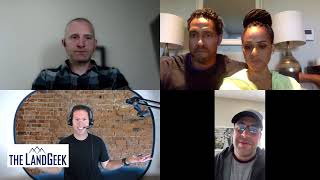
Mark J. Podolsky hosts Landon and Taria Harris and Paul Brewer on how they built passive income through land investing. They started with $5k to $10k, scaled to 95% term deals, and worked 10 to 15 hours a week before delegating to VAs. Most saw meaningful income growth within 1 to 2 years.
Chapters
Landon and Terea, we are live on Facebook, YouTube, Periscope, the motivation group on Facebook. And because unfortunately next week we can't have boot camp, we are doing one of the most popular segments from our boot camp, which is Grill the Geeks. And this is where you get to tell your story about how you found me and the community and your journey into flight school and coaching and. And what you guys have done. And then in the comments, people will ask you questions and grill you. So we just went live. I don't. No one's really on yet live, so I'll just say, is it a good Friday?
Well, it started out good.
No, it's a great Friday.
It is a good Friday.
It is a very good Friday.
Yeah. Yeah. How's. How's it going in quarantine land for you guys? Like, do you guys have like a favorite activity? Are you binge watching anything? We walk a lot.
We walk a lot. We walk a lot.
Okay, so we go outside and we walk around the neighborhood as much and as often as we can.
And. And now we're into Ozarks.
We just don't want.
Oh my gosh. Okay.
Way behind.
We're in season one, like episode five or six.
So we're the binge. I will tell you, season two starts off a little slow, but then it ramps up and then. Oh my gosh, season three is nutty.
Okay, good.
Okay. Yeah, good. So, you know, for some weird reason, guys, like, it says unknown for me. So whoever is unknown, good Friday. Right on. Hey, guys, thanks for leaving the comment. As, as we promised today, Bossman and I are going to jump on after Girl the Geeks and give away a toolkit. $1,997 value. If you already have the toolkit, we're going to use it as a credit for flight school or one on one coaching software, whatever you want. Or you can just gift it to a friend who wants some passive income. So let's grill the geeks. We got some people on live. Landon and Trea Harris. Tell us your story.
Sure. Yeah. So we started off where we both had a passion for real estate and we initially started off doing residential and flips. And Landon had done a couple of rehabs and he actually enjoyed it. And then one day he came home, he's like, I have an idea. He's like, I heard this podcast and he talked about this guy named Mark and he's like, land. And I was like, right, okay, sure. So a couple days went by and he's like, did you listen to the podcast. I was like, no, I did not. So finally I sat down, I listened to it and, and after listening to it, I went back to him and I was like, okay, if you don't do it, I'm gonna do it. Like, this seems amazing.
She's gonna leave.
Yeah. Yeah. That was gonna be the death of our relationship if he didn't wanna do land.
That's so funny. So then what'd you guys do?
We reached out to Bossman.
Yeah. Probably like two, three days. Yeah, it was like we went right in and started getting there with Bossman and he, you know, set us up. We jumped right into flight school, like immediately. And we went through that whole process.
And just what's flight school like for people that are listening to this and they have no idea about, you know, the training, which by the way, thelangic.com training, that's the link to go to talk to Scott Bossman or Mike Zaino about flight school or any of our coaching programs. And just for those of you who are joining, in case you don't know what our model is, it's we're buying property. 25, 3 cents a dollar. We are selling it. We're gonna try to get our money out within, you know, either on the down or maybe we'll go out 10 months. And then we're gonna have passive income every single month. Land in interia. No renters, no rehabs, no renovations, no rodents. And then the game we play is, can we create enough of these land notes where our passive income exceeds our fixed expenses. And then we're working because we want to, not because we have to. So the group training is called flight school. So before you can even go into one on one coaching, you have to go to flight school. So what is flight school like with Scott Todd?
I'd say flight school is like a total immersion of everything you need to know. Like it puts you further than where, say the toolkit is. And it gives you that one on one push. I don't want to say just one on one, but it's more of a push into getting into every aspect of it. I mean, you go through all of the due diligence and you go through what you need to look for on the GIS maps and you go through actually buying land and selling land and then you actually go through, you know, the steps of what it takes to automate your business and how to like it puts you in touch with every aspect of the business. So that was, it was, it was eye opening. It was, you know, was Moving relatively fast, but at the same time, just a ton of information. It was really good. Really good.
Yeah.
We enjoyed. Cheria, what were you gonna say?
I was gonna say flight school was a complete indoctrination to the entire business. Right. So we got to flight school. We knew very little Landon had gone through the investor toolkit. I hadn't. And so we went through flight school together. And it from. If continued to build. So it started off, you know, here's what the business is about. It just kind of modularized everything, and everything was unfolded. And so you were. You were held accountable. So Scott, Todd was very adamant. This is what we're doing today, but this is what we're learning today, but we need to implement this today. And so from. For the next week, you were able to implement that, what you learned, and then come back and ask questions and get clarification if you needed it.
Yeah, yeah. Scott is notorious for not ending class until everyone's done what they have to do. Like, he'll just wait. Like, you didn't show up prepared. Okay, well, I'll wait. So there is that sort of, like, built in. Like, we're all lifting this log together kind of peer pressure that goes along with that accountability piece. Like, you don't want to show up unprepared for, you know, what you've got to do, but if you do wait, you're going to do it. So I think that's what is so great about flight school. It's not academic. You are learning the business and doing the business because we all know the best way to learn is by actually doing it. So now you graduate from flight school. What came next for you guys?
So there's a period where we just went right into the business. We started working on our own and kind of buying and, you know, trying to sell land. We did a lot of wholesale deals, but weren't really getting that any terms, weren't getting any kind of, you know, full cash prices of what we wanted. And we knew there was a lot more we didn't even touch. And so we. I think we went back out to Boston again and go, hey, man, what's next? And, you know, we moved into coaching probably about three, four months after we had done flight school.
Wow. So before we talk about coaching, Scott wants to know, tell us about the excitement of the first deal.
The first deal.
The first deal for us, the first excitement we had. I don't know if he means the deal to purchase or the deal to sell, but we did our mailings like we were Told and we reached out to a lady who said she wanted to sell her property. And so she just contacted us back and she says, yeah, Well I have 10, you want them all? And that was like huge for us. We're like 10 properties. So that was one of our greatest deals in terms of purchasing and selling. Our first deal, we were a little apprehensive because we had tried to sell for like maybe a month or two on our own and we just, we couldn't get it. We something we knew we were missing. This was after flight school, so our first deal, I don't remember the numbers on it, but we were a little nervous as we thought, he's going to pull out, he's not going to do it. Like, let's not get too excited. But it went through. And within that, I think the first deal, a week later we had another deal and they just started kind of coming after that.
Wow.
Okay, so tell us about Mimi Schmidt and coaching. What's one on one coaching? Like how's it different than flight school? What's that? Like?
I'd say it's, you go even deeper. Like you really, you know, the, you go in with Mimi and like first of all, she, she takes, you know, listens to where you are in your business and you give her an idea because I think everybody starts out different places. But she kind of listened to where we were and she started telling us, okay, well if you want to do this number of, you want to make this much passive, you're going to need to be able to do this much in your sales and you're going to need to mail this much and you're going to need to make sure you're automating this much. And so what it was, was a little bit more of filling those holes that we had and more questions that we kept coming up with every other week. We were checking in and getting more questions and answering. She's given us the answers for those more so and that accountability piece of at least knowing you've got somebody there when you, you know, you're going through these things and you gotta be able to have somebody to kind of help you out and answer these, these things you just don't know. And then the acceleration point and that was the biggest things. Like we're, I think we're so much further now than we could have even thought we would have been. And we got that push to know, you know, when we needed to do more, when we were ready to do more, it's time, you know, so she kind of gave us that push. But it's been really good. It's been really good.
Yeah. You know, I've just got a really interesting question from Jeanette Cormier. She wants to know, she goes, this is great because I'm on the fence. Are most of the people who do this extroverts? What would you guys say?
Oh, no, no, no, I'm not. I'm not an extrovert. I think I learned how to be, but naturally I'm not and Landon is less than I am. So no, I don't think this business is based on a personality type at all. I think you can be successful E. Yeah.
Easily.
Yeah, no, I 100% agree. I actually think we have more introverts, more analytical engineering types in our community than we do like the rah rah kind of stereotypical sales types. And really the way that we build the business, it's kind of built towards introverts because the philosophy is we can always make more money. We can't get more time. So anything that's going to save us time, we're going to do and really build a business. What's up, Doug Hoyer? So, okay, so now let's grill Landon Terea. Go ahead, ask some questions. Let's see if we'll get some inside scoop into their businesses. So Scott Bossman has a question, says, Landon, you are a coach. You're a swim coach. Teria, you are a successful athlete. Talk about how that has helped you in your journey. Discipline, repetition, etc.
Wow.
That's a good question, actually.
Yeah. You know, I think, you know, being a coach, like that was the one thing I think I really got with being in coaching. Like, if I'm trying to develop a kid to make Olympic trials, it's really hard for a kid to do that on his own or her own. So, you know, the way I look at this is, you know, we want to be as far into this and as on the top and as good as you can be with this. So that was where, you know, I think coaching makes so much sense is because now you're being coached. You're being told how to not just having to fumble through it, not being able, having to kind of, you know, I'm guessing all the way. You really got to start getting to that fine tuning detail, the knowledge of kind of knowing what and through somebody who's experienced in it. And that makes up a big, big difference.
So I agree. I think because Landon is a coach and I've had coaches, you know, in the past and one thing we learned is trust the formula. Right. Do what the coach is telling you to do. And both he's experienced it from his kid's perspective. I've experienced it on my own where I think, yeah, that's what they said, but I think this is a better way. And so you kind of straggle off, you try to do your own thing, but you end up back to where the coach was trying to tell you or what the coach was telling you. So for us, coaching was a no brainer because we fumbled through the business and could we find the answers? Yeah, eventually we will find them on the Internet. We would find tons of answers on the Internet, but answers that related specifically to our business we find with our coach.
Right. And who knows how long it would have taken us. So it could have been years.
Yeah, yeah. But you know, both of you kind of being elite athletes and having that mindset, like, I, I'd love to look like both of you, but I really like, I'm not waking up at, you know, four in the morning in paying that price to do that. Do you think that type of discipline, that mindset of sort of being elite has transferred over into your land business? And even if you don't have sort of this elite mindset, do you think it matters? Like, what would you say?
No, I don't think you have to have it. I think it helps to have it, but I don't think you have to have it. I think this is one of those businesses that if you, if you, you know, you want to do well in it, you can, you can get there. I mean, there's so many different avenues that you can be successful and just grow and become, you know, get to that point. And there's just different levels, you know, and yeah, we want to be, you know, we want to be at home, hanging out, going to the beach and when we want to and you know, take a trip and that's what we want to do. So we know we've got to get to a certain point and you know, that's kind of what we're thinking.
I think that your mindset definitely plays a role in how successful you are in this business. And I think if you can teach yourself and train yourself, because it's all learned behavior. Right. Just to be consistent when it's working, when it's not working is the toughest part. To be consistent and kind of having to train at an athletic, athletic level, we go through where it doesn't look like it's working. Right. So one of My coaches, I had to send pictures in every week. Pictures, pictures, pictures. And so four weeks would go by, and I didn't feel like it was working, but I could go back and look at the comparisons. Oh, my gosh, it's working. So as long as you have your goals set up and you have a way to track how you're doing, I think you can learn how to be successful, for sure.
Yeah. No, that's really great advice, and I love the consistency part. I do think you really need to have that strong, deep desire, that big. Why that purpose? Because if you don't have it, it's too easy to just say, get shiny objects. And you're like, all right, forget land investing, ATM investing. Let's go. And then you're going to the next thing. You never really go really deep into anything. So Mark Isaac wants to know, do I need a real estate license? Do you guys have a real estate license?
I do. But you don't need it.
No. You don't have to have. No.
Yeah. When I actually spoke to my attorney when I first started, he's like, don't get one, because you're not a fiduciary. You can sell all your land for sale by owner, and you take a lot less risk. Doug wants to know what parts do each of you handle in the business? And he said, great meeting both of you in San Antonio. That's Doug.
Wow.
What do we.
I can tell them. Okay, so anything that deals with sales and people, that's Landon. So he talks to all our potential sales sellers, all our potential buyers. He kind of is the. He's on the phone. He does the phone part of it. And I do a lot. Like, I work with our VAs. I get them trained. I kind of make sure they're doing what they're supposed to do. I work with the automation.
Yeah, yeah. And, yeah, that's really it. Because everything else is, you know, you automate or you get the VA delegate. Delegate.
Well, that leads us to Jen Ramquist's question, which is, how much of the business do you have outsourced, automated. What do you still do on your own?
Okay, that's a good question.
That's a good question.
So we started off with all of our postings being done by VAs. So Craigslist, Facebook, all of our marketing is done by VAs. Currently, we just started having the VA also do response to our Facebook ads because we were getting so many. It was just becoming overwhelming. So we have now outsourced that we still handle the sales side of it 100%. We have someone who is doing like our deal of the week now. We just outsourced that. We have an ad writer, so someone writes our ads for us.
Wow, you guys are doing great. I'm so proud. I feel a little tear coming out because really that's what we want is, you know, you've got to scale this business. You really have to use all these leverage points. Other people's labor and time, other, you know, use software and then other people's money. You combine all three leverage points, you can really blow this thing up into something big. And I love the fact that you're outsourcing all these pieces, but you're keeping the most profitable piece for yourself, which is sales. Like the last thing I outsourced was county research and sales, because that's really the two most critical pieces for sure. That's amazing. You guys are doing amazing. Okay, so Joe Lucas has a really interesting question which is as a couple, he says, my wife isn't comfortable with the land business idea. I think it's a bit too unconventional for her. Any advice on how to get her on board?
That's a great question.
Oh, boy.
You know, I think just to get her involved would probably be just to get something simple. Find out what she likes and then kind of see if you can get her to the point where she might want to help out with just that part of it. Don't involve her into the rest of it. Let her help do what she can, where she can. And that might get her a little bit more interested in it, I think, because what you find is there are all these different avenues in it and you kind of start finding your way through it, you end up doing well with it and become successful. So I'd probably just find the one thing that she might like and see if you can involve her with that one piece.
Yeah, go ahead, Triya.
I know. I think that's a great idea. I think that's great. If you can get her to a boot camp, that would be good too.
That helps a lot too. Boot camp's good. Yeah.
I would say, Joe, like the only way we get the spouses to get on board is a boot camp, honestly. Because there's nothing that I can say or Scott Bossman can say or Mike Zano can say where she's going to say, oh, yeah, this is great. Because it sounds so self preserving. Of course we're going to think it's great. But when you talk to other spouses in the room who thought exactly like you did, and then they see in real time other people have literally, you know, they just want to share their experience with you. Then it becomes very real. Like, oh my gosh, this is amazing. But unless you do that, you won't really. It'd be really, really tough to get somebody on board. I remember the first time Matt Forbes came to boot camp. His wife Ann Marie, I'm telling you, scowling at me like this for the first half day, like, not happy. Matt dragged her to boot camp and by the end, you know, they're. They're in flight school, they're in coaching. Like, they're all in.
And she loves it.
And we love him.
Yeah, yeah. But man, scary in the beginning. So Joe, hopefully that helps. That's always fun. Yeah, yeah. So a lot of people want to know, how long have you guys been doing this?
Wow. We hit our one year mark. We just hit our one year mark. As of this month.
How long have you guys been in coaching?
Coaching has been. Yeah, so five months. Yeah, we're right at the middle.
Five, six months.
Five, six months.
We're in the middle of coaching.
Yeah, yeah.
Okay. So Natalie, Mina wants to know, do you recommend coaching through flight school or after?
I say flight school first.
After for sure.
Flight school first.
Yeah. It would be like going to college before you went to high school, right?
Yeah. So it's kind of miss so many things and it's way over your head by the time you actually, because there's so many pieces you need to already kind of be walking through a little bit before you actually get into coaching. Because the whole point is to accelerate it and make it go to another level.
I think flight school shows you how to run the business. It shows you what you need to be successful. But coaching is after you've kind of established your business and it takes your business to the next level. So I think in coaching you need to already have some structure, some framework of your business in place. And you can't really get that without going through flight school or the investor toolkit. But I don't see coaching being that beneficial if you have not gone through flight school.
Yeah.
And actually, Natalie, you have to go through flight school first before we even accept you into coaching. So coaching is by application only. And then once you get accepted, most people who apply are already in flight school. But if you just like you're listening to this, like, I want to go right into one on one coaching. Well, we're like, okay, we're going to put you through 16 weeks first and then you would go into coaching anyways, because really, you don't want to spend time with your coach talking about fundamentals. Like, how do I get a list? How do I scrub a list? We want to really accelerate you up there. Erin Bossman's giving you some love. Wow, that's impressive how much delegation you're doing. So Randy Suncliff wants to know, where do you get your VA's from? With all the current unemployment crisis, shouldn't be a problem finding someone local, right?
Yeah, but I think, you know, we get our VAs off of mostly upwork, some off fiverr. But, you know, it's so much easier just to go to a simple system like that. Everything's already set up. You have access to any process, any. Anything you need to know how to do. Anything you need done, it, it's there. So. Yeah. And usually it's cheaper. So.
Balancing out. Because, you know, it takes money to run the business. So for us, it was balancing out. We wanted to delegate everything, but we couldn't afford to delegate everything, so we had to find, you know, times and spaces to delegate and within our budget as well. We were even going to hire, like, our youngest son to do some work. So we're not. We're not beneath hiring unemployed family members.
Are you guys, like, what is your monthly overhead with VAs and software?
We're excluding mailing. Just VAS and software? Yeah.
Because mailing's an investment. I don't consider that an expense.
Here we go. I can tell you it's right.
Okay.
She's got the math all worked out. We work the metrics.
Yeah, yeah, yeah. I think that's like a really big newbie fear, though, as when people go into coaching because we keep pushing them to hire people scale, and it's like, well, if the cheapest person I can hire is myself, why on earth wouldn't I do this? But realize you can't penny pinch your way to wealth. Like, you don't scale, and so you have to do it. And that's where I think the value of coaching comes in, is you're like, no, just have faith. Like, it's gonna pay for itself. You're gonna get a massive ROI. You know, hiring these VA is 3 bucks, 10 bucks an hour. So you can go and do the things that really make sense for CEO of their business to do.
We were at like a thousand dollars a month.
Yeah. In.
In our VA's.
And yeah, automation. Yeah. Some of the automation is free, so, yeah, you don't even have to pay for it. So it just works Out.
Yeah. Yeah, I think that's average, actually. For sure. And. But like, think about all those people and all that you've got outsourced. It's only a thousand bucks a month.
Right? Right.
That's pretty insane. Peter wants to know. Virtual assistants are a flexible workforce. Easier to make adjustments to VA staff than hiring a family member. Yeah, and Peter's a one on one coaching too. What's up, Peter?
Hi, Peter.
Thanks for the comment. Any other questions? Paul Brewer supposed to be on. I don't know, bossman. What's going on? Paul Brewer. Maybe he's fighting a fire. Who knows?
He could be.
That'd be kind of cool. But any other questions for Landon and Terea? You guys want to talk about your favorite deal so far?
Favorite deal? Well, I think the one that comes up to mind, we actually had a property that we purchased a couple months ago. Got it on a pretty good deal and the guy we sold it and I think it went into default about a month, couple weeks ago and just resold it again. We knew it would go fast. So I don't know, our projected, you know, our projected profit looks like, you know, we're probably about 73%. Yeah. Our yield is about 73% on that. So, you know, when we collect it, it'll be awesome.
So.
But it's, it's, it's going in. So I like when I can, you know, have a property that comes right back and we can sell it right away.
Okay. I do have a favorite deal. My favorite deal is one done on Facebook messenger using Google Translate, all in Spanish.
Nice.
Nice.
Yeah, that was my favorite.
Yeah. So, you know, a lot of people who hear me talk on the podcast are very skeptical of the returns because I'm always like, oh, yeah, we make 300 to 1,000%. Is. Am I exaggerating or is that realistic?
That's very realistic.
If you can't double or triple or quadruple your money, it's. I mean, you gotta really work to not do it.
Yeah.
Oh, yeah. Okay, so Johnny Morrow wants to know, after wholesaling and using the Toolkit, was it still an automatic thing to go through flight school for you both?
So we did flight. So we did Toolkit. Landon actually went through Toolkit before flight school, but we did it while we were waiting for the next flight school to start. So we signed up automatically for flight school. That was our goal. And we didn't do the wholesales until we were out of flight school. So that flight school happened first. Then we did the wholesale deals yeah.
You know, it's so funny though, because I have like this crazy sort of heuristic that. And I'm probably wrong, but I think toolkit is for people that there's a 3 per. A 3% success rate on any do it yourself course because it's like, really academic. Then you're like left to your own devices and have to have the discipline to like, watch a video and then execute and then kind of, you know, left your own devices. Like, it's hard. And then you get distracted and there's no one. There's no accountability. There's no one pushing you to do it. But I would think, you know, an Olympic coach and a world class athlete, like, if anyone could do the toolkit, it would be you guys. But. Yeah, so that tells you how hard it is.
I didn't want to do the toolkit. I mean, me personally.
That's.
Hell, yeah.
Hard it.
I didn't want to do the toolkit. I mean, me personally.
Oh, Paul's on. Where's Landon Teria? Did I screw something up?
I have no idea.
Oh, Paul's on Where's Land? And they're just answering a great question. I. I should be able to add them. Oh, no. Oh, technical difficulties. Let me see.
I love it.
If I can add the call. So add to call. Where'd they go? What's up, Paul? Good to see you, man. How's it going, Mark, Good to see you. It's good. I don't know what I just did wrong. Paul sent you Skype requests. Waiting for approval. Oh, okay. Let me see if I can get them back on. Here we go. Add. So I should be able to have all. All of you guys on. Let's see. All right. Okay. There you guys are. All right, now we got all of us on. Okay. Sorry about that. Hey, man. Okay, so, Paul, we're going to get to you in a second because we had so many really good questions. All right, Sorry, everybody. Here's a question for. You know, we'll get to you, Paul, but for Landon Tria. Now, you guys went through coaching. Looking back, any blind spots, misunderstandings in the business you had back then?
Let me think I had one. Yeah, yeah. One of my misunderstandings, I think Mark touched on it earlier, was I can't afford to do that. Like, I have to hold on to this money and I have to try and run the business. That was a huge one for me, not understanding that I needed to invest into, you know, my VA so that I could expand the business in other ways that was a big one for me. Not that they didn't tell me, but just it was a mental paradigm shift.
For me, I think. For me, I felt like you had to have a lot of money to do it. Like, you just needed a ton of money to be able to invest, and you really don't. I mean, you. You can start slow and you just work your way up and you just. You climb a ladder and leverage. Yeah. And you leverage other people's money. It makes it so much different.
Oh, yeah, absolutely. Okay, so, Paul, now that you're on, tell us your story. How did you find Land Geek and then what was your journey like from flight school into one on one coaching and what you've been able to accomplish so far?
Yeah, so I found Mark back in early to mid 2018.
Could you move a little to the. To your left, I think. Okay. No, to your right. There you go. Now we can see you. Yeah. All right, cool.
Yeah, so I found you guys in 2018, probably mid 2018. I heard you on, I think, the Choose Fi podcast that you were on at one point. So at that point I was doing a whole bunch of stuff on financial independence and looking for some kind of a side hustle. Thought everything sounded great until you mentioned, you know, mailing people randomly. And I'm like, okay, well, I'm out for now. You know, it sounds cool, but. Yeah, like Vegas. Yeah, exactly.
That's it.
Whatever.
So fast forward about six months. It's pouring down rain. My drive is three hours into work. So the night before, I download a whole bunch of podcasts and I listen to them on the way in. So I queued up the first two podcasts and they were both you randomly on two other podcasts. So I'm like, okay, well, maybe there's something to this. So dove in, got your. Your free passive income blueprint. Devoured that. Then I went into the. Devoured that and started to try to do some deals. And it was, you know, shiny object syndrome. That was male. This county, it's male. The next county, it's male. The next county. So it wasn't really working, but I did get one deal that came back and I sold it two days before I decided to go into flight school. And it paid for flight school. So that was kind of my, okay, this does actually work, and we're gonna. We're gonna go for it. So flight school is paid for plus all the mailings for the next, like, three months. So I'm like, okay, we're in now. So fast forward six months after I started flight school, got into coaching just starting this February and since January to now, I've sold a bunch. And thanks to Eric and you guys for all the prompting in the right ways to actually do this business without killing myself and actually not making those early on mistakes that you're going to suffer through if you just do it by yourself. It's been nice shortcutting those and I've seen great success so far. So looking forward to continuing to grow.
Oh, it's great. And Eric Peterson is your head coach, the technician. So what's the difference for you between flight school and coaching?
The way I describe it to people is toolkits. Like looking at the business from 30,000ft, you get enough to do it by yourself if you're willing to put a ton of time and research in over a long period of time and then you focus more in. With flight school, it's more like the 10,000 foot view. Everything's there. You've got Scott Todd leading you. You've got great friends that you meet along the way and you know you're in, but there's still a little bit missing. You know, it's still going to take you some time. You're going to make your mistakes and stuff like that. You get into coaching, it's like the 1,000 foot view. You're like microscope right in on there. You're missing out on doing some of the errors, especially when it comes to like title searching and stuff like that. You have someone who's been doing it for five years, you ask them, say, nope, you want to avoid that property. I made that mistake before I got in with Eric and haven't made that one since. It's kind of nice. So that's kind of how I describe the process with the land geeks and their training program.
That's awesome. So Peter's got a question. What was your biggest challenge after flight school? That was solved in coaching and so I'll let Paul answer that first and I'll let Landon answer that one as well.
Letting go and letting VAs do the work that you shouldn't be doing. I have a mildly obsessive kind of personality when I get involved in something and no one can do it better than me. But come to find out, a lot of people can do it a lot better than me. The first one was my intake manager. I found him and hired him and it's like, oh, thank goodness. You know someone who's been doing it. He's been doing it with other land investors for quite a while. And he is phenomenal. And I don't have to deal with negotiating and getting the prices down. He does that for me. It was such a huge relief that was solved in coaching where it wasn't in flight school. I was still trying to do it all myself.
That's good.
Landon, Trio, what about you guys?
I think we had a marketing issue that we thought we were marketing properly. We weren't. And we got in coaching and literally one little tweak to our marketing strategy and everything just kind of blew up from there.
Yeah, no, for sure. And then, you know, it was, it's, it was interesting. I know somebody asked question, but how much capital did you guys each start with? Land and Trio, we'll start with you.
I think we have 10,000.
Yeah, we started. We. Yeah, we had borrowed money from our family, so we probably started about 10,000. That was just to kind of get everything going and you know, pay for some things. And yeah.
I think I did the whole I'm going to borrow from my 401k and I think I took 20 out is what we took out to get started.
Okay. But now looking back on it, how much money would you think somebody really needs to start with to get going?
Look at your county and what the average wholesale price is and buy a piece of property and get started with that. If you're not counting your mailing. Because mailing is an investment.
Yeah, I mean, yeah. I mean we did a roundtable. Like we were saying, you know, 500 to 1500 bucks is enough.
I was thinking $5,000. You. You're in.
Well, if you're not. If you're not including like flight school. Yeah, yeah, yeah, for sure. Get, get a couple thousand dollars and get a couple properties, easy.
Yeah, great. Jen Ramquist wants to know what percentage of cash to terminate terms deals do you guys both do or the three of you do? I should say ladies first.
I'd say about 95% terms, 5% cash. Yeah, we don't have a lot of cash deals now.
Yeah, I love that. That's wealth building right there. Paul, how about you?
Right, I'm same. I've had one cash deal out of the ones I've done, so no one wants to pay cash right now.
Yeah. So our one on one coaching client, Brian McClatchy is on right now and he's got a really interesting question for you guys. What impact does your retail buyer list in weekly deal of the week or monthly emails have on your sales? So only a guy like Brian would even know to ask this question. This is not a newbie question. Okay, Brian, wait. Way to grill them.
I think actually the impact has actually been really good. Like we have been doing a, you know, weekly mailing and our deal week, like we're now starting to see some like the follow up and people are coming back and like I really want that land. So like now we have this list and it's really just gonna feeding back into it.
But we haven't sold anything off our deal of the week yet.
Yet.
Not yet. Yeah, we feel it coming. We just really gotten consistent with it though with the deal of the week. We were like deal of every other week maybe. So.
Yeah, because that's the key. You've got to teach your list that you're showing up consistently. Otherwise they don't trust it.
Right, right.
Yeah.
How about you, Paul?
I'm just starting to see some traction. We did sell1 about two weeks ago off of it. I noticed that in about two weeks ago after some coaching with Eric, I started a actual onboarding sequence. So the minute I get their email, they get over five days, five more emails and it has nothing to do with selling. It's all about, here's like, I kind of stole from you, Mark. I did your fatal land buying things when I tweaked it a bit and I said, hey, this is what you need to watch out for and you need to ask anybody, whether it's me or another land seller, these questions before you buy. And I've had a bunch of people come back now and they're starting to interact with me over email, which I wasn't getting before. So for anybody out there watching, always be trying to educate and then they'll eventually come back and buy from you if they feel like you're a real person and you're trying to give them value rather than take from them. So that's kind of what I just learned over this last month in coaching. So there's another high level thing for you guys.
There you go, There you go. Brian McClatchy, Dawn Peresa, Aloha from Hawaii. She says thank you, Landon, Toria. I'm sure she thinks you too, Paul, but you just. Natalie Mino says that's a great way to look at it. Hi Natalie. Jacqueline Sprilly says hello team. So any other questions for the geeks for Paul Brewer? Paul, what's your. You didn't mention like what's your full time job?
So full time job as a firefighter. I work in the Bay Area, so. Yeah, I know, that's right. You guys live down there. I work for Santa Clara county, so I work. If you guys know where the big Apple spaceship looking building is, that's where I work.
I have kids out there. Go hose them down for me.
Send them over. We're not letting people into the firehouse right now. When we open back up, come on over.
So how many hours a week then, Paul? Are you working in your land business?
Way more than I should, but that's by choice. If I hired another couple vas, I could probably be down to an hour or two a day just to kind of check in on things. So 10 a week maybe. But you can talk to my wife. Yeah, talk to my wife. She knows I spend way too much time into it because I'm. I'm always talking. The next thing I need to do is get rid of Facebook messenger, but that's kind of my main marketing, and that's my sale. So I'm having a hard time letting go, but we're getting there. Yeah.
Landon, Treea, how about you guys?
I'd probably say right now it's 15, and we're working our way out of that. Like, we are handing off to every VA we can now. So we're kind of whittling that down. We want to get it down to, you know, maybe two hours a day and then maybe less than that. So, yeah, that would be our goal for this coming next month or so.
Awesome. Awesome. Jacqueline wants to know if current land buyers want to adjust payments or add payments to the back of the loan. How are you guys handling this?
I don't think we've seen one yet. However, if they do, I'm going to do it. I probably, you know, they give me the song against. I just want to keep them happy, and I want to keep them keeping going. So it's easier to keep the buyer you have sometimes than it is to get rid of and find a new one.
By the way, Landon, I'm. I'm only seeing your shoulder, so I think there you go. If you move. Yeah. Like now I've got, like, half your faces. Like, you guys, I got, like, really close together to get on there. There you go. So Don Paresa says, Paul, you're always so helpful. Grateful for. For you. That was sweet. Very welcome. Paul, are you going to be sad when you lose our competition? On a scale of 1 to 10, how sad? So who is this that's leaving this comment?
All right, so here's some. Here's something I highly recommend for anybody looking into going to flight school. Make friends with one or Multiple people in your flight school and then start a competition that'll motivate you to continue to produce and not just fall off. So somehow or other, Adam and I got hooked up through flight school, got hooked up at boot camp in January in San Antonio, and we decided to go into a competition. And our competition is, we modeled it off the Scott Todd and Mark Podolsky epic competition a few years ago. Whoever can sell the Most land in 2020 pays for the hotel boot camp. First boot camp of 2021. So as of a few minutes ago, actually, Adam, you're behind. I just sold another one. So you got some catching up to do, buddy.
Oh, wait, he was up, too. Like, he was up 4. He was up 4, Adam.
Yeah, I can't keep the land on the shelf right now. So that's catching up to do, buddy.
All right, Adam, you got to do gorilla geeks next week, then. Yeah. So you can. You can talk about your revenge. Andrew Mino says thanks for the insight. Really like the points of view. Jason Hoffman, have you discovered or developed your why yet? And if so, what does it look like? I'd like to think mine is to inspire others to discover, develop, and truly be themselves. Landon Terea, why don't we start with you?
This is it. I want to spend more time with my wife, and I want to be able to just take off and go and do whatever that. That's my why.
Yeah. Work when you want, where you want, with whom you want. Yeah. It's so true, though. Like, when you guys have that time and you're not you, like, we remove that big bucket of stress called money in our life, and then we remove the other big bucket of stress in our life called time, and we solve both those problems. I mean, everything becomes so much better. I mean, would you. Would you say that colors are more vibrant, food tastes better had your relationship gotten deeper and more meaningful as you are going through this journey together and starting a business together? I mean, is this good couples therapy? It is. It is.
And because we are kind of yin and yang, it helps provide good balance. Like, Landon would spend all day every day in the land, and I would spend no time in the land. So we. We help provide a good balance.
Yeah, I think so.
Nice. How about you, Paul?
Yeah, I got a couple of. Couple of whys, obviously family time with my job, too. It's not a matter of when you get hurt or something happens to you. It's a matter of if. So I'm trying to set myself up so that I can exit as much as I love my job sooner rather than later, and also trying to help set up, hoping to get my father in law involved in this too. He's on the transition out of running his own business, but he'll still need something to help bring in some income. So I've got a couple of. Couple of wives to kind of get into coaching and shortcut this instead of take the long road. So, yes, that's my wife right now. Then family time, obviously. The last two years before I switched jobs, I spent over 200 days away from my family at the firehouse or doing something. So.
Wow. Yeah.
120 is the average for a firefighter to be gone per year. So I'm trying to keep it at 120. So that's another reason to start this so the overtime and shift rates don't need to happen to kind of support the family.
Yeah. You know, would you do me a favor? Because I literally have no influence over Mike Zano. And I've been saying for years, mike, you got to quit. Like, you put your time in, you've made the sacrifices, you've saved enough lives. Like, why keep taking more risk? It's like, Mark, I. I love the guys. You don't understand. It's like a fraternity. And then I'm gonna get my pension in a few more years. I'm like, you don't know if you have a few more years.
Yeah, yeah, that's me. I'm trying to. I'm trying to do that. I'll talk to him. But he's only got two more years. Yes. I'm not gonna push too hard. I have 12 years.
Paul will. But I know he's like, mark, I'm not there every day now. I go in a little bit. Anyways, Chris Egnor's like, family's the ultimate. Why?
It's like a big frat house.
Yeah, yeah, yeah. Oh, my gosh. Some of his stories I can't repeat here. They're crazy.
No, don't do that.
It's a colorful group of characters at the fire department. Is yours like that?
Oh, you have no idea.
Really?
Yeah. We have 180 line staff, and there's 180 different personalities, and they're all crazy. You have to be crazy to be a firefighter. I mean, who else runs into burning buildings, right?
No. You know what? Okay, so this is my theory, because one of my first coaching clients was Jeff Axton, who's really close friends with Mike Zaino. And I always said, I even said this on the podcast, I think there's an advantage with a mindset of having that courage to do something, because our instincts are. When there's trouble, there's, you know, you go to fire. Like, we want to flee, but you guys go into it. So when you have that perspective. Well, in business, any risk I take, I'm not going to die. So I think that you're more likely to take these risks that some of us just might not be able to take because of the fear or being uncomfortable. But you've kind of been sort of, you know, you got to have a grizzled through it, you know, I mean, groomed for it. Groomed for it, yeah. So do you. Am I. Do you like my theory or no, I could be off.
Oh, great theory.
Yeah.
You know, it definitely has helped. I mean, who. I would have never thought a year ago when I found this that I'd be jumping in to start my own business. I mean, listen to all the podcasts. That sounds like a fun idea. ATM investing or this investing, but nah, this. It's been nice just jumping in and knowing that I've got someone there to catch me with the team here and they'll point me in the right direction. And meeting great people like Landon and Sharia, talked to them at San Antonio and just kind of talked about their experience going through. It's like, okay, you know, follow the recipe and you're going to be fine. It may not come as fast as you want, but it will. It will definitely come.
Yeah. So here's a question, Paul. Realistically, how fast can I get going? Being a single parent with a newborn and toddler, I'd like to have a consistent, stable income set up so I don't miss out on these precious years. I'm willing to put in the hard work now. Why? They're still small. Also, I'm based in Canada. Oh, Canada.
It can definitely be done from Canada. You just have to find some creative ways to get stuff notarized and to do stuff here in the States for if you're selling land here. But I'd say, realistically, if you can dedicate two years to getting things going, you'll probably get it done a lot faster than that, especially with the group here. But two years to really get things going is probably a pretty realistic goal. You jump into coaching, you're gonna speed that up. But flight school, at a minimum, two years, you should be humming right along.
Landon, Tria, what do you think? I agree.
I'd echo the same. Like, I think it probably Only takes you about two years. I mean, we're ramping up so fast in the one year that we've already been in. So, yeah, two years, you know, it's a little bit of a sacrifice, but you know, in the long run, it's nothing. It's a blip, it's a hiccup.
I think in her situation, being a single mom with kids, I think being able to delegate would be most beneficial. So I think you may get overwhelmed. You try to, you know, run the whole business and, you know, be a mom at the same time. But yeah, being able to delegate some of those things right up front would help you maintain sanity while you built your business.
Yeah. Okay, here's a flight school question for you guys. Randy, might have missed it. In the beginning. Was everyone in your class able to deliver their 20 names of Scott Todd when they were in flight school in your class? Oh, yeah, they did.
Stayed on late. Yeah, we stayed on late that night.
Yeah. How about you guys? Landon Triathlon?
Yeah, eventually. It took a while.
Yeah. So Randy, you guys don't end that class. So everybody gets their names.
Oh, it was still going in the wee hours a night.
I don't remember it.
Yeah, two years of vas, Paul, that's the question.
The more VAS you can hire, the faster it'll probably go because that allows you to focus on the important things of the business. But again, VAs cost money. So it's kind of a balancing act between how much you can afford to put out there versus how much you're bringing in. So it's a balancing act, which is why I say two years. It might be one year for you, it might be three, but two seems to be. I mean, just looking back, if I hadn't gone into coaching, looking back after flight school, I think about the two year mark is where I'd really start to start to see that, like you say, that hockey stick. Just kind of gauging from where I'm at now.
So, yeah, in two years, like that's what we typically see with our coaching clients. The first year is about setting up the infrastructure, getting your team in place, getting really confident with the business. And then that second year hockey sticks up and really moves the needle for sure. Matthew Levy. Happy Easter. Better late than never. What's up, Matthew? Jason Hoffman says, love it, Paul. Safety and taking care of your mental and physical well being is paramount. I actually got a question from Barris. I don't know, do you guys care if I answer this question real fast? He says, hi, mark. How the 2008 recession was affected. Land business in 2008 did the number of deals and profit margins went down. How much? So, bears, I actually talk about this in my book, Shameless Plug Time. Derrick, everybody get it.
Read it.
Everyone get it. It's $1.99 on Kindle in all the fine stores on Amazon.com so, bears, I go really deep into that, my whole story in the book, but suffice it to say, 40% of my note income just went away in 2010. That being said, Frontier Properties, my company was still profitable every single year. I had a good year in 2008, 2009, 2010 is really when I got hit. And to this day now I use a profit first system to help me manage cash flow for the inevitable downturns. Like. Well, we're not seeing one yet, but. Yeah. So, yeah, you guys, what's going on with Corona for you guys? Anything? Like, any effects on your business yet?
Effects on the business? No one.
We had one who terminated. Yeah, but we sold it.
But we sold it right away. So I didn't even. You didn't even see it? So, no, I haven't seen anything yet.
No, everything is going up. In fact, the guy I talked to today, he wanted to look at some other land I had. But when he got on and looked at the county, he said, oh, there's. There's confirmed cases of coronavirus there, but there's none in the county this lands in. So I want. I want this land over here. So here's my credit card number. Okay, sure, I'll take it. Not gonna hurt my feelings, but yeah, I've seen a huge, actually spike in people wanting land.
Yes. Same with us. It's been. It's. It's been. It's a good problem to have, but, like, it's kind of crazy. So tree at. Landon. Paul, thanks for sharing your stories. Inspiring for those of us who are at the beginning of our journey, following your footsteps. Nice comment there. Another one. Thank you guys for sharing. Just got into coaching. Very excited for the journey. So sometimes on Facebook, you guys, when you make these comments, I don't see the name. It's kind of weird. Sometimes I see your name, sometimes I don't. Here we go. Matthew Levy, what system do you. As a result of 2010? What system? Your profit system. Oh, yeah. So, Matthew, there's a book by Mike Michalowicz called Profit First. So just Google profit First. Of course, that's after you've read Dirt Rich. This infomercial has been brought to you by. So we only have a minute left. Guys, I just want to say thank you so much for joining us and sharing your stories with the community. So inspiring, so impactful. I love grill the geeks. Really, the three of you are just such a great asset to our community. I'm so grateful for you. So proud, really, of everything you're accomplished. And you guys know the beginning is just here. Like three to five years from now. It's, you know, it's gonna be very, very different for sure. So thanks, everybody, for leaving comments and joining us and interacting. So. But stay on because Scott Bossman and I are going to do Friday giveaway for somebody to win the $1,997 investors toolkit. Paul Landon. Sharia. Be safe out there. You guys ready to do this together?
All right.
One, two, three. Let freedom, freedom ring. And of course. That was good. And wash your hands.
Yeah, wash your hands. Go disinfect.
By the way, I have a question. Like. Like, I'm a big hugger at boot camp. Is that. Are those days over now? Is it gonna be the pow?
No, I hope not.
I hope not.
Yeah. All right, let's virtual hug. Bring it in.
All right, we're in.
Yeah. You guys hug. Okay. All right, thank you, guys. Scott Bossman, I'm gonna call you now, and let's. Let's do the giveaway so everybody don't hang up. Stay on.
We'll stay on.
I wonder if I can get Scott on. Let me try. Now I got to get techie here and go to Skype and then go to add. Call Paul.
You want to make a bet he's going to lose us?
I hope not this time.
I think he's got it figured out this time.
I don't know. I mean, it's not me. Come on, Tria. It's not me. I'm geeky. It's not. It's not like I made a technical issue here, although I. You know, that being said, we're doing a new website. I. I, like, destroyed. There it is. I destroyed our email last night, and everyone's like, what happened? So there you go, Scott Bossman. See, all four of us can join boss man. Nice. Is that cool?
How's it going?
Doing good.
All right, thank you guys for sharing. That was awesome to hear your stories.
Absolutely.
Really cool to see how far you guys are coming. Just a year, less than a year. It's pretty awesome.
Yeah.
Pretty crazy.
Yeah. So, Scott Bossman, look, Teria was just hazing me about my. My tech chops. You did not think that on ecamm we could have four people at once because we've only done three.
I. I didn't. I didn't know. I thought there was a limit, and I didn't know. So look, now we know. Knowing's half the battle.
Okay, you know what, though? Zeno's. Zano's jealous. Let's. Let's call Zano. Uh.
Oh, should we get him on? All right, let's see if we can bring him on.
Like, we're really pushing Ecamm to the limits now. All right, I'm adding him now. Calling Mike. Let's see if he jumps on. That would be. This will be insane if he jumps on. He might not jump on just because he doesn't like when I imitated his accent earlier. Oh, he's joined.
He's on.
He's joined. Where is he?
Am I here?
Yeah, I hear you, but I don't see you. Does anybody see him?
No, I don't think he had this camera on.
Oh, there he is.
Nice.
All right, this is cool. All you have to do is type.
Hashtag, jealous, and I get on. Yeah.
I would have been doing that all week. Yeah. So, okay, this is really cool. Now. Who wants to jump on? We got a party going on. Okay, we're. Should we do the giveaway, Scott, Mike, or should we. Should we take advantage of, like, all of us being on? You guys have any. Any questions for the geeks? Like, the two of you? Like, did I. Did I get to all the good questions, or did I forget something?
I think it was a great Grill the Geeks session for sure.
I think. Yeah.
Go ahead, Mr. Zane.
No, no, no, no, no, no. I agree with you. I. I concur, boss man.
I concur, boss man. So here's the exciting thing we do. We do have a winner. A winner. We have a Winna. And thank you to Erin, who she went through all five live Facebook videos this week and plugged in all the names of all the live watches into the. Into the app that we picked the name out of. So you ready?
Yeah. This is really cool. I wouldn't be doing this with lots of people. Johnny Morrow. Winner, winner.
Chicken dinner.
Chicken dinner. Johnny. Do you already have the toolkit?
No. So here's the cool thing.
Mark.
I had a call with him a couple weeks ago, and we actually talked about Johnny on Nightcap the other night. And this is totally coincidence that his name was drawn because it was drawn by my wife rooms away. But we talked about him because, Mark, you're gonna love this. He's like 21.
I'm not gonna love this. Are you kidding?
I know, I don't.
We were talking about how jealous we are of the young people who come into this, but how excited we are at the same time. Because, you know, imagine if you knew then what you know now.
Mark. I know, I know. So I had a call with Vicki and Anthony Fazo, and their daughter is like, 19, their son's 21. Like, the four of them are doing this together. And I was like, you know, my 19 year old is like, dad, I want to do what you do. I'm like, okay, you know, here's a book you can read it hasn't read the book, right? And the Faso kids are like, they're like, all in. They're going to flight school together, like. And then I'm like, I couldn't imagine if I had started my land business at that age, what my net worth would be today. I mean, it's insane. Good. Good for Johnny. Because most kids, like, like, you know, you don't know what you don't know at that age. Like, you're trying to figure yourself out. Like, you're not like, boy, I want to solve a money problem, a time problem. Like, this is like people in their, like, middle age or like they're their 30s, like, after. Like, life has like, knocked them around a bunch and they've had a bunch of crappy jobs and terrible bosses and, you know, enough burning buildings. Like, they're like, I'm done with the burning building. There's gotta be a better way. Oh, Zato. I was hazing you with Paul, by the way. Did you hear that? No, I was on a call. What happened? It doesn't matter because you won't listen.
They're trying to get you to retire before you can actually collect your pension. Just stick with it, man.
Stick with.
Stay the course. Oh, yes.
Yeah.
Stay the course, man. Two years.
You're skating on thin ice, Mike Zaino. You don't know if you're gonna have two years.
That was wicked good.
That's wicked good. Wicked smart. Let me tell you something, okay? You don't know. We're all skating on thin ice. You gotta make the most of it. Now, just one bad morning building, and that is it. And then Laura is going to be calling me and saying, I wish Mike listened to you. And then I'm going to say, well, Paul Brewer was the one that really was the one that would influence him, not me. Paul, please.
Yeah, it's all my fault. This time.
Sorry. Oh, someone wrote, stay with it. Get your pension. I don't know who wrote it.
I get some love out there.
There you go. No, no peer pressure, though. I don't know. But this is fun, you guys. I love the awkward silence. We still have a bunch of live viewers. Yeah, they're like, are they gonna talk?
They have any more questions?
Any more questions? I bet. I bet we do have some more questions. Let me see.
Guys, I have a call right now, so thank you, everyone. Oh, congrats, Johnny.
I gotta go. Sorry, sorry. Thanks. A presumptuous hard stop. Is that what you have? A. Pulling the percentage? Yeah, the pretentious hard stop. Oh, look how. Look how important he is. I'm surprised he didn't put out, like, his. Like his fancy Bluetooth mic in his phone. Like, sorry, guys. You know, I gotta call my stockbroker first, and then I'm gonna take a call. So. Yeah, I got a bunch of oil futures I gotta deal with right now. Thanks, everybody.
Oh, the shade. Handing it off to you, buddy.
All right, all right. Happy Easter, everybody. Okay, last question. We'll give Todd Kushet the last question. Two years until it's running smooth. But how long should it realistically take to be earning a livable monthly income?
Yeah. Depends on your.
I don't know. It all depends on you and how much time you want to put in. I would. That's a question. You know, ask that question in the Land Geek Facebook group so you can see some of the other Land Geeks in there. See what they. How long it took them. It might be a good poll to. To do there, Mark.
Yeah, Land Tria. Yeah, we're all. We're all just speculating. It just depends on. On you for sure. Hernan Rios wants to know how do I start this process? Hernan, great question. Just go to the landgeek.com forward/training schedule. Call Zen Master Mike Zano with a nightcap O.G. g. Scott bossman. Someone wrote, it depends on your expenses. All right, well, again, thanks, everybody. Please be safe out there and, you know, have a great Easter. And again, I can't thank you guys enough for taking time out of your busy lives to share your journey with everybody. And I am forever grateful. Full. So thank you. Thank you, guys.
Great job.
See you guys.
See you.
More from Mark



How to find funding partners: How to Scale Land Without Using Your Own Capital




