Learn How to Redefine Your Financial Goals and Habits
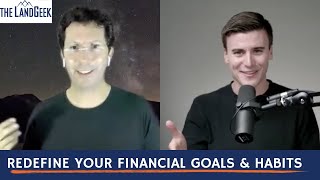
This is a conversational podcast episode (hosts Mark J. Podolsky and Scott Todd) featuring guest Caleb Guilliams. Caleb describes his rapid rise in finance (taking over an investment role at 19), outlines Better Wealth’s framework for building intentional wealth (ROR — "return on result", efficiency via cashflow/assets/debt audit, and "controlled compounding"), criticizes one-size-fits-all advice (e.g., rote save-10%-and-dollar-cost-average guidance and some Dave Ramsey prescriptions), and promotes his book The And Asset and resources at betterwealth.com (promo: /landgeek). The episode mixes mindset guidance (live intentionally, ask for discounts, get out of comfort zones) with practical strategies (notes, using leverage, controlling capital, investing time in a business or income-producing assets).
Questions this video answers
April 22, 2021.
Caleb Guilliams.
Better Wealth — betterwealth.com (promo path: /landgeek).
The And Asset.
He states that by age 19 he saw "98% of Americans were financially failing" while working in the bank.
Chapters
Hey, it's Mark Podolski, the land geek with your favorite niche real estate website, www.thelandgeek.com. and today's guest is like the youngest, coolest guy I think we've had on the podcast, Scott Todd. But before we talk to our guest, I'd be remiss if I didn't properly introduce my co host, the brain, the professor, your flight school sherpa, Scott Todd from scotttod.net landmodo.com learn anything about anything. Investor ninjas.com Scott Todd. How are you, Mark?
I'm great. How are you?
I'm not great today. My boom mic's not working. You know, if Matt Forbes is listening to this, I'm mad at Matt because I don't want to take any responsibility.
Yeah, I mean, you know, like, I don't know, maybe she just pulled it down just a little bit lower. It might not be as loud either. But you know what, man? You know, it's funny because you're dealing with this Tate sending me all these boxes about like he can't access this website and like, I access it just fine on mine. It's must be a whole Mac thing. But we won't go there.
Oh, we're already going to the map. The Mac thing. All right, well, let's, let's talk to our guest. Our guest today is Caleb Gilliams. Am I pronouncing that right?
Close. It's Gwilliams Williams. Yes, I'll take that.
All right. Anyways, you know about Caleb. He is taking over the entire investment department of bank. By the age of 19, Caleb saw firsthand how 98% of Americans were financially failing despite professional, and that's a quote unquote word, professional financial advising. After three years of traveling the country, being mentored by the most successful financial minds, and Caleb discovered a better way to build wealth. After leaving his prestigious position at the bank, Caleb found the company Better wealth, authored the best selling book the and Asset, hosts the Better wealth podcast, and speaks to thousands around the world. He's one of the youngest leaders in the industry. Caleb is quickly becoming the new face of finance. Caleb, welcome.
Hey, guys, thank you so much for having me on and I've already enjoyed our conversation. It's, it's fun to see you hold the microphone in one hand and your coffee in the other. I love it, man.
Yeah, yeah, it's, it's, I'm, I'm like, yeah, it's, it's not ideal. But that being said, so Caleb, let's just rewind the tape. And for you, the tape's not. That's not that far to rewind, right? So you get into finance and then tell us, like, what did you discover? And then how did you come out of that?
Well, I'll rewind. A couple of years ago when I was eight years old, when people see me, they're like, man, you look like you could barely drive a car, let alone, like, why are you trying to talk to me about money? But I grew up in central Wisconsin. My dad's in the medical space. I wanted to be a doctor for about a week, and then I took Biology one. I'm like, I did not inherit what my dad has in DNA. And so I've always kind of been interested in money. Got a job gutting chickens for one of my first jobs. That's a very Midwestern thing to do, I guess. And then I started making money, and that's when I started getting like, man, what if this money could work for me? And that's. That's what got me a job at a bank, because I was just super interested. And I read a lot of books and knew that money followed value. And so instead of trying to, like, make more money going to a different job, I stayed at the bank and eventually worked in our investment department. And then we had a crazy thing happen. The investment advisor left, And I, at 19 years old, took over a huge responsibility. And that's where I had enough, I would say, insight to be like, I don't know that much, but I'm going to travel and learn from people that did. And I think people just pitied me. They're like, man, I want to help you. And so I've actually. People on the show, Russ and Joey were some of the people that I've had the pleasure of learning from, and I love calling them friends. And I've just learned some really, really powerful things. And I would say, I would summarize, my mission is to help people live more intentionally, and if you get this whole money thing figured out, you can live a more intentional life. And so that's what I'm on a mission to do. And better wealth is my platform and company to be able to best do that.
I love it. I love it. Scott, Todd, are your thoughts?
Well, I mean, one of the. One of the cool things I think that even. Even older people struggle with is the ability to say, like, I don't know, like, those are the word. I don't know is something that gets lost somewhere. Because ultimately, I think that when you find yourself In a. In a career or a job, in a situation where, you know, you're trying to impress somebody to say, I don't know, that's kind of like, a scary thing to do. Right? Like, but yet I think I have a lot more respect for someone says, I don't know, but I'll go find out, or I'll try to figure it out and get back to you. And then if they go and do that, I'm even more impressed.
Right.
Because most people, one, they'll walk away from whatever situation and never once think twice about the, I don't know, they just threw out there, or two, that they'll go research it because they won't, or three, that they'll get back to you. So, you know, I think that that's a pretty powerful combination when you execute it at any age. Just. I don't know, but we'll go find out.
Yeah, no, no, absolutely. So, Caleb, tell us a little bit about your definition of something called ror. There's, like, there's four principles of better wealth, and. And the first one is this clarity of your definition of ror. What is that?
So when I was at the bank, I saw a lot of people not living intentionally. And it was funny, because I believe when I look at people that are really winning in life, they understand that they are their greatest asset, and they're spending their time, their money, and their abilities backing up the life that they want to live. And so I also saw, like, Wall street, like, everyone out there is what I call sheeple. Just. Just, like, getting in line and doing what they're told. And we're almost being seduced by this idea of rate of return. If someone will say, I can get you a better rate of return than this, then I'll shift my whole life, my whole money into this fund. And I was like, man, why are we doing that? And I started asking people, and I met so many people that could not articulate why they were doing what they were doing. And so it just hit me as I was. As I help people with money. If we don't have clarity, we're gonna lose. So ROR for me, stands for return on result. We're gonna say no to being seduced by this rate of return concept and saying, no, I want to be intentional with results. And I'm gonna spend my money and time and help and put it in a place that will help me live the life that I want. And so that's the basis of everything that we do, is getting ultra clear on the Results that we want to live and then spending reverse engineering everything else from there to accomplish that.
Yeah, I love that. Because, you know, the thing about finance and investing, it's not one size fits all. So when I was your age, which I can't even remember then, but if I, you know, if I could, like, I think the. The strategy would be to be ultra aggressive because I would have time. I would have time, if so, to deal with any kind of, you know, big setback where you get to Scott's age, you're kind of looking at bonds, right? Because, like, you're so close to retirement. And.
But even this idea of retirement, like, what. What does that even mean? And so. Yeah, I hear you. I hear you. And it's also. It's like we got. I want people to just articulate what they would do if money wasn't an issue, and then that should be the metric. And it might be, you know, retire at 65 and watch Fox News, right? Or it could be like, I actually want to do this thing, and I should work till I'm age 70, because I'm actually doing the work that I want to do. And then this is how it looks like. And so I'm with you, man. It does depend. But I think a lot of people lack the clarity on what that even is.
Scott, Ty with your thoughts, because you're pretty. Pretty intentional life.
First of all, I'd like to just set the record straight, Mark, that you are, in fact, older than I am. Okay. Like, at this recording, I believe that if I just take out a simple calculator and subtract your age from my age, right now, it's a year difference. Okay. Now, albeit that might change in a. In a few weeks, but at this snapshot in time, you are older, so.
Yeah. Are you? I feel a lot older than you. Well, I feel like I'm in my 80s.
Yeah. I mean, but you know what? You still have good hair. Like, that's the thing is, you know, well, looks pretty good.
Well, that's. That's debatable. Okay.
All right. So first of all. But I mean that. That is a valid point, right? Like, because what's the valid point is what does retirement look like?
Right.
Like, to a lot of people, you know, we. We go through this process of, like, okay, well, you work. You work 40 years of your life, 45 years of your life, and then you get this thing called retirement. And then retirement. What do you do? Oh, well, you sit down and you go play golf, and you do all of the stuff that you didn't do in your life because you were too busy working. Right. Like you weren't living, you were working, you're working years. So, you know, you hang up the, whatever you did, engineering job or Procter and Gamble cubicle, whatever it is, you hang it up and then you go and you live your life. And guess what? Sadly, on average, for an executive, like someone that was an executive in a big company, I think the life expectancy from like the time that you retire to the time that you die is like 30 months or something. Like for a corporate Fortune 500 executive, like 30 months or something like that, it's some mind boggling number because you worked yourself out, you gave it all up. Well, you know, I think that if you, if you're able to kind of enjoy the experiences of life while you're working. And then to Caleb's point, you like what you do or you love what you do. Well, think about, you know, an actor, for example. Example, like Clint Eastwood. How old is that guy? 90 something years old and he's still directing movies. Okay, so.
Right.
What does retirement look like for Clint Eastwood? Well, it doesn't. But what does working look like to him? Right. Like it's a different lifestyle, it's a different way that you live things. And so if you're integrating and truly living without having to report to the office every Monday through Friday and worry about when the next holiday is, so you get that day off, all of a sudden it doesn't. It's not work anymore. So like, literally I could do what I'm doing today. I could do that until the day that my body gives out on me. Right. Like whenever that is.
Yeah, yeah. So, you know, that kind of. I want to get to Caleb for a second and about just. I don't understand why Dave Ramsey. Let's just pick on him for a second.
Okay, let's do that.
Why is he so popular? Because really his model is sustenance.
It's not.
This is not going to make you wealthy. It's, you know, live on rice and beans, don't go into debt, pay cash for everything, save, save, save. And then hopefully invest, which there's no. Really, I don't know what you're gonna invest in that's gonna. Then you're gonna be 12.
His 12% mutual funds, apparently.
12% mutual funds. And then all of a sudden you're gonna wake up one day maybe at retirement age and then start living.
Yeah.
So that I don't understand. So you could help me with that. But Then the other part is, you know, how are you helping those people get to wealth and not sustenance?
Yeah, let's talk about, let's talk about Dave Ramsey. And here I'm, I'm a nice, this is my Midwest, Midwestern niceness coming out. I really appreciate the message and the consistency that he has. And there are people in this country that literally spend so much money, have ton of debt. And, and so when you're in that world and you see person after person just drowning in credit card debt, like it's hard to make 25%, 30%. I've seen people that have had 35% when you add up all the fees of debt and it's like, it's frustrating. And so he is consistent and he shares his baby steps. And what I tell people is look at the people he's speaking to. These are people that literally need to cut up their credit card. Like I'm a big fan of using credit cards wisely. These people can't have a credit card because they will go massively in credit card debt. The problem is he's such a good communicator. You get people that actually have discipline, that have money, that want to create wealth taking his advice. And if you just take his advice and pay off your house and then invest in your 12% mutual funds and you actually take his order, it will cost you like 5 to 6 million dollars of lost opportunity cost by you paying down debt at 4% and foregoing 12%. Now in all fairness, you're not gonna get 12% a year in a mutual fund. And then the big thing that he never addresses, what's, what's the end game when you do have that money? Because the retirement disaster of like the lack of cash flow in retirement. There's so many problems with typical financial planning. But the problem with Dave Ramsey is he's, he's very consistent. He's speaking to one group. But people are taking it as gospel all across the country. And the principles that he's teaching are scarcity and actually are hypocritical when you think of how wealth is created. And he's anti leverage. And you and I both know that leverage is not bad. It's a tool that wealthy use to get wealthier.
Right, exactly, exactly. So let's talk about efficiency and the power of opportunity cost. What does that mean?
So the way that we just approach someone when it comes to their money, and I'd be really curious to hear your guys thoughts on this, but number one, we get super clear on what's important to you. That's where we talk about ror. I'm a huge fan of Simon Sinek, and I feel like if we can start beginning with the end in mind and articulate what we want our life to be like, that's half the battle. A lot of people don't know where they want to go, and there's nothing I can do or you could do to help them with that. The second thing is all about looking at what you're currently doing. I would say a lot of people are an example of, like, they know where they want to go. They have one foot on the. On the gas and another foot on the brake. That's an example of maybe having clarity on where you want to go. But if you look at their life, it's like, dude, what's going on here? Like, you. You got a financial junk drawer. You got money all over the place. You are not being efficient with what you're doing. And so I think of efficiency as getting that foot off the. Off the brake. And there's three ways that we look at that. Number one, we'll look at your cash flow. We'll ask the question, how can we, number one, increase your money cash flow. But your money can either go two places. It's either gone forever, whether it's taxes or lifestyle, whatever, or it's saved for some kind of future event and opportunity. Cost is just a function of when you lose a dollar, you don't just lose that dollar, but you lose it. That dollar could earn you the rest of your life. I'm obsessive of, like, that any money that's spent today, and I'm not a fan of, like, not forgoing your coffee. I had a latte this morning. But it's like, we have to understand that every decision we make has a consequence, right? And so we have to. But so we have to figure out how to track cash flow. And then we have to look at two other things, your assets and your debts. And we have to have a system of saying, are these assets best aligned with the kind of life that I want to live? And are these debts best aligned with helping me accomplish. And some people need to pay off debt because it's bad. Some people need to double down on debt because it's the instrument that's helping them live their life that they want to live. Some people listening to this are good with assets. Some entrepreneurs listening to this and maxing out their 401k and saying, oh, my, I don't actually think this 401k is the best asset to help me live the life that I want to live now and in the future. That's the efficiency part, is looking at cash flow, assets and debts and creating just a plan on what am I doing today to optimize where I want to go.
Yeah, absolutely. Scott. Todd, what are your thoughts on this? Because it seems to me that we're kind of living this the right way now, in the way that we're buying assets. But what's interesting is I'd love to know what your thought is. Like, you know your morning donut. Do you look at that donut like, okay, I'm losing 300 to a thousand percent on that donut?
No, I do not. I do not think, like, every time I spend something like, oh, I'm giving up money today. But what I look at is the way I think about it is I honestly think that the whole world's on sale. That's honestly the way I think about it. And the reason I think that way is because I know, like, literally whatever I want to buy, material items that I want to buy, I know that basically, one, I can go get it simply because all I got to do is take this amount of money and now go buy an asset that's going to produce that amount of money for me. So think about this for a minute. You want to buy a car? No problem. Let's say you want to buy a super nice car. What is that payment? $1,000 a month. I mean, for a super nice car. Okay, thousand dollars a month, which seems nutty. Well, the way I see it, that's five notes. Okay, so let's just say that my average note is $200. And you go buy five pieces of property. Now, remember, that's going to basically, five pieces of property are going to buy me. What about a $60,000 car? We agree with that. Like, thousand dollars a month, 60 months, maybe 72 months, $70,000 car, something like that. So I go buy five pieces of land. Those five pieces of land will cost me on average, around $2,000. So I just bought $10,000 worth of land. I sell it, I create the no cash flow, therefore allowing me to buy a car for $1,000 a month. With the cash flow, how much did I really pay for the car? $10,000. Not 100 or not $72,000. Right. That's the way I look at everything. I look at the whole world's on sale because I know how to take one asset and convert it into something that's higher.
Yeah. And that's an example of looking at assets and auditing where your money's at and you are ultra clear on certain assets getting you the kind of result that you want. I think that's an amazing example.
So when you say consistency and controlled compounding, like we all know the miracle of compounding, but what do you mean by consistency in controlled compounding?
Yeah, I think consistency is like the one thing that will separate successful people from most people is like they're consistent in the little things, but they're consistent over time and they have clarity with that. And so controlled compounding is just the function of like, understand that there's two powers when it comes to money. There's the fact that over time money will compound. And a lot of people want to over like say that this is an amazing thing. It's just math. And quite frankly, that's what we've been pitched. That's what Dave Ramsey's pitching us. And if all we focus is on compound interest, that's like everybody else and we just got to be careful with that. Control is what the banks use, what Wall street uses. They tell us to compound our money, but then they control our capital. It's what you guys use to really like even what you said every, the world's on sale. I love that mentality. But you need to control money. If you don't have the ability to control capital, the world can be on sale. But if you can't get money to that deal or it might slip us by. And so that really talks about my book. The and Asset is essentially, I know you've had other people that talk about infinite banking. It's essentially that concept of saying I want to control as much capital throughout my life so that I can invest in other assets to produce passive income. And, and I also want to understand that efficiency of our money growing and being able to use at the same time. So I wrote a book called the and Asset. And this book is essentially teaches people how they can take their savings, put it in a place, go buy notes or invest in their business or whatever, all allowing their money to grow tax free. And so it's the idea that everything that we have is there's a short term and a long term cost and I want to maximize both. A lot of people are telling you have to choose between short term and or long term. And the epiphany that I had is you don't have to choose anymore. You can do both if you understand how to use money and leverage it well.
Very, very cool. What's interesting about Scott and his philosophy of the whole world being on sale. I also adopt that philosophy. But I'll tell you, there's nothing more embarrassing to my children when I start negotiating at Nordstrom.
I love that.
Yeah. So you kind of, you know, you got to be careful sometimes with the whole world being on sale.
Well, I didn't say that I negotiate everything. I just say that the way I look at it is that that pair of jeans that I'm getting to buy from Nordstrom's for, I don't know, 100 bucks actually only cost me about 20.
No. Yeah, no, I'm just joking, but I'm.
Not going to Nordstrom's and negotiating.
Yeah, no, I know.
Maybe I should, though.
But it is a fun sort of get out of your comfort zone exercise.
You know what's funny, Mark, is there is. There is a mindset shift that takes place when you ask for a discount.
Right?
Like people that struggle with money struggle. Especially struggling with sales. People that struggle with sales. I would say that you're afraid of asking someone to buy something from you. That's why you struggle with sales. Okay. It's not some fancy words that you have to come up with. Sales. I would say that you're struggling with sales because ultimately you're afraid of asking someone for money and you're not convinced that they would even do it because you're not convinced you would do it. So if you just get comfortable asking people for money, go ask a friend if you can borrow $10. Go ask Starbucks for a discount on your coffee because make it up. Because, I don't know, like, I'm feeling like I should get a discount there. I come in here all the time. You might be surprised. You might be like, here, it's free for you. Wow.
Yeah, no, absolutely. Caleb's shaking his head.
I've done that before just to get myself out of the. Out of my comfort zone. Thank you, Tim Ferriss, for planting that in my brain in some of his work. And it's extremely uncomfortable, but I think it teaches us a lesson overall.
No, absolutely. And you find in life it's a lot of. A lot of growth is just facing that fear and getting out of your comfort zone and getting back to your book. Being open to other, more sort of, let's just say, cutting edge concepts with finance that might go against sort of that conventional wisdom of how you grew up, which might be, you know, get a good education, get a good job, put your money into 401k mutual funds, and one day you know, everything will be okay. Well, we kind of know that that doesn't work and you have to have, you know, you have to be open minded about these different concepts and, and I'm not saying, you know, be Pollyanna about it, but certainly be open to it. So let's talk about use and investing in the number one asset. What does that mean?
Yeah, it goes back to what Scott said earlier about notes is I think of number one, clarity. Number two, be efficient. Number three, understand the two powers of control and compounding and then invest your money and your time in the area that will get the best results. So for me, it's building a business. I'm really clear that my business, it started with just me. Now we have over 16 people and we're going to actually 3x this year. And this has been a rough year for a lot of people. But I'm very clear that for me, my best time and money is best spent in developing and building a team. I call that my asset based activity. That's the number one thing that I can be doing that can produce that result. But for a lot of people, we just get them to say, okay, where do you want to go and where's the number one place that you can put your money? Where's the number one place that you can put your time and what abilities do you have and where can you put that to get that kind of result? And that's what's fun and that's why we're on together. And it's like there's power in just understanding that there are alternative ways other than Wall street to put your time, money and abilities that can kick out way more cash flow, a greater rate of return, or ultimately get you the kind of result that you want to live. I think a fun story that I have is there are people that wanted to go through a process and they wanted all this money. And we got down to the real reason why they wanted to give back. We realized that they could do exactly what they would do with all their money now. And so they designed their time, their money and abilities to live what they would have done in retirement. And so it's just like I think I'm willing to think outside the box. It's because I've taken the non traditional route. But I just get really clear on, yes, what Scott said about buying that note. Buy 10 notes and your life is changed versus putting that money in an IRA. It will get you something, but it might not get you the result that you want. And so the last Part is like, money's gotta be in motion. Let's put it in a place that will get you results.
I love it. I love it. Which leads me to my next question. So, Caleb, what's the worst advice you. You see or hear given in your area of expertise?
It's the worst advice, and it's given all the time, is just to. Just to get a good job, save 10% and dollar cost, average your money over time. And I think it's the number one. I mean, I think people are just complacent and they're. They're zombies walking around and essentially like frogs getting boiled. They don't know it. Frogs getting boiled. So I don't know, it's just that. It's just that concept of just being okay with what the average person is telling you. Even though, you know, like, the average record for America, for the average American is not that great, and yet we feel like that average advice is what we need to take. So it's really just all of the Dave Ramsey, all that kind of mentality bundled up. And then the sad thing is when people really want to get ahead, they take that and they go all in on that advice. They got the discipline, but the mindset shifted because they're learning from people that are not giving them abundant principles and ways to think about money.
No, absolutely. Absolutely. Scott. Todd, any thoughts on that?
No, I think generic advice is good for just, you know, like fill in the blank, if you will, but you gotta. You gotta find what works for you.
Yeah.
And then execute on that over and over and over again.
Yeah, absolutely. So, Caleb, your mentorship has been fantastic, but we're now at that point in the podcast where I'm gonna ask you for your tip of the week, a website resource, another book where the art of passive income listeners can go, improve their businesses, improve their lives. What have you got?
Well, I would be remiss to not mention my book. So I'll say the. And asset, I think would be an amazing tool to help your audience. And I want to figure out a way to give them that for free. And then I will also say the book that I'm. That I read that changed my life and it was last month, is Smart Cuts. And it's just that idea of jumping in line.
And I read that book, Shane.
Yeah, I'm blanking on the author's name, but it's like I actually listened to that podcast when I booked the meeting with you guys, and so that maybe there's something there. I don't know.
That's awesome. Scott Todd, before we get to your tip of the week, I just want to remind the listeners that we do have a sponsor for our podcast and it's a flight school. Learn how the next 16 weeks can literally transform your life. Go up the mountain of land investing with someone who's done it thousands of times. Your flights. Go sharp with Scott Todd. Go up there quickly, safely, efficiently. Start building that passive income in real time. What's the best way to learn it's to do. You will actually be doing deals in real time with Scott Todd guiding you. Learn more. Go to thelandgeek.com training thelandgeek.com training schedule. Call and learn more. All right, Scott Todd, what's your tip of the week mark?
Check out this tool. You know, I'm always looking at tools. Check out Chantly Chanty. C H A N T Y. It's like a slack, but I think it's slack on steroids.
Really?
That's.
Phone calls, one to one meetings, everything. Check it out. Looks pretty cool.
Are you serious? You know slack is like a billion dollar business. This is slack on steroids.
I think so. Man. Check it out.
Holy cow. Let me see this thing. Get more things done together. Joint easy team collaboration tool. Get secure unlimited messaging. Free forever. Have you heard of this, Caleb?
I have not. I'm gonna definitely check it out.
Wow.
Nothing makes me angrier than when Scott Todd comes up with a killer tip of the week. Wow, Scott, I'm raging right now. This is so good. Your team will love Chanty. Look at this. Have some fun. Mentions, snippets. Import your team to Chanty. You can import from Slack Flock Hipchat. This is amazing. It's got an app.
Wow.
Huh? This is a great tip. Well, it's a great tip but my tip of the week will actually make you wealthy. You know, tools are great, but wealth is better. My tip of the week is. Learn more about Caleb. Go to better wealth.com betterwealth.com he's got a free financial assessment. He's got the free book. Unbelievable. There's free education start there and you know he's wise beyond his years. Don't let that baby face fool you.
Thanks man. It's a pleasure being on here and I love the message and what you're teaching and I'm just really, I'm grateful to be a part of your guys world.
Thank you and the feeling is definitely mutual. So thank you so much Caleb for, for taking time to really educate our audience on, you know, different way to look at finance and showing them a better way to start building wealth. And clearly, the younger you are, the better to start.
So, Mark, can I just mention one other thing?
Yeah.
If your audience goes to betterwealth.com landgeek, I'm actually going to pay the shipping, too. And it's something that I want to do just. Just because I want to help as many people that listen to your show. And I just feel really, really grateful to be a part of this. And so I just. I mean, better. Well, if they can get all the free resources, but if they go to slash landgeek, I want to go the extra mile and actually pay for the shipping to get them the book.
Wow, that is so generous, Scott Todd, you hear that? That's true generosity, man. He's not even listening anymore. Anyways, Caleb, thank you so much. I will have a link to that betterwealth.com landgeek Caleb, are we good?
We're good, man.
All right. Scott Todd, are you still there? Are we good? Yeah, we're good, Mark. Okay. One, two, three. Let freedom ring. Thanks, everybody. Oh, by the way, before we go, I just want to remind the listeners, please subscribe, rate, review the podcast. It really helps. Please do that. Otherwise, Caleb won't come back. Now we'll do it again. Let freedom ring. Thanks.
More from Mark





How to find funding partners: How to Scale Land Without Using Your Own Capital


