Learn the Strategies to Build Wealth Through Real Estate with Tamar Hermes
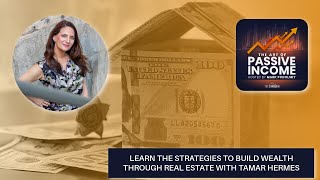
A Roundtable podcast episode hosted by Mark J. Podolsky with guest Tamar Hermes. Tamar recounts her start in real estate (bought a duplex to stop renting), advocates simple buy-and-hold and leverage strategies (refinance/1031 exchanges rather than paying down all debt), warns against speculative deals without due diligence, and emphasizes mindset, purpose, and women-focused coaching. She authored a book (The Millionaires: A Professional Women's Guide to Building Wealth Through Real Estate) and recommends Ed Mylett's The Power of One More. The episode includes sponsor promotions and listener CTAs.
Chapters
Hey, it's Mark Podolski, the land geek with the favorite niche real estate website, thelandgeek.com and on this week's Roundtable podcast, it's just me and my guest who I'm gonna put on my anchorman voice is a big deal. Tamar Hermes, if you're not familiar with her, is a highly sought after speaker and thought leader on the topics of real estate investing for women, wealth building, and asset portfolio diversification. As an expert, Tamar has been featured in countless media and podcasts such as voyageaustin.com, the bigger pockets Podcast, Conscious Millionaire, the Real Estate Investor show, the Lifestyle Investor Podcast, the Short Term show, and many more. Finally, she's on a prestigious podcast with more than two decades of real estate investing and wealth building experience. She teaches women earning six and seven figures how to invest in real estate with ease. Tamar Hermes, welcome.
Thank you. Mark. I have to tell you, that was the best intro I've ever had.
Well, I appreciate it because I've been really working on it for the last three weeks knowing that the millionaires mentality was going to be on the podcast. So Tamar, let's just get into it. Let's just skip the pleasantries, let's rewind the tape. And how did you get started in real estate and why?
So I got started in real estate when I was an executive in television at 28 years old and realized that while I had a great job, I was trading time for money. And I'm sure a lot of listeners can relate to that realization where you understand that the money coming in is only coming in as long as you show up for work, even if you have a glamorous entertainment position. And I didn't like it. I was looking for solutions. I did not grow up with a family that had a lot of means or real estate. And I just was exploring what can I do and looked at my top line, which was my top line expense was rent. And so it made sense to me that I needed to get rid of the rent. And, and I noticed that the guy that was collecting my rent was also in entertainment, but he owned the building. So I thought, well, let me do that. And I bought a duplex and the rest is history.
Wow. Okay, so what was it about the duplex or the real estate investing? Just the tactical aspect of finding the deal, financing the deal, and maybe improving the deal and getting all that done. That really resonated with you?
What resonated with me was removing the bottom line of rent. That was really the Goal. So it was very focused. I really didn't think that much about value add or about any of the strategies that we are. A lot of us are privy to today. This was over 25 years ago and we didn't have. Well, actually, I'm not that old, close to it. And the thing is, is that we didn't have all the resources we have today. So I was really looking at the basics. I was looking at how much will this place cost me, what are the expenses, what will my mortgage be, and, and how much will my tenant be paying. And based on that, that was like the win for me. And the thing that's really cool about this, Mark, is that we've gotten so fancy with the real estate and it messes a lot of people up because it feels like you need to have such a great deal and you need to do a BR strategy and you need a flip and you need to do all these fancy things. And the truth is the tried and true buy and hold or the tried and true lending somebody money for a good, for a good amount and getting a return on that, on that property, on that investment, those still work. They still work. You don't even have to be that fancy to do very well in real estate.
Yeah, I love that. Which, which leads me to my next question. What is the worst advice you see or hear given in your real estate niche?
Well, I would say the worst advice is to ignore, you know, to not to allow speculation to lead you. And what I mean by that is that there's a lot of fancy deals out and there's wholesalers and there's all kinds of people that are, oh, this is the best property you can get this return. Don't trust that. Unless you can do some due diligence on the, on the property and, and unless you can kind of see what your worst case scenario would be and still be able to live with it. So that's kind of the, that's, that's the, the feeling that I, that I think is it happens frequently where we get a little bit seduced, especially these days in real estate, and it's really important not to do that.
Yeah, absolutely. What would you say as you're going in, up through the real estate ranks and doing deals was the best advice somebody gave you?
The best advice somebody gave me is, was to. To keep going. And that sounds, I mean, you know, it sounds very simple, but the truth is, is that we'll buy something and we can get comfortable and then we can not, not make any changes because we're comfortable. And part of that has to do with like, let's say you buy a property and it's doing well and it's cash flowing and you think, well, I, you know, I'm just going to keep the equity and pay down the debt. And, and the truth is, paying down the debt is, is actually that's probably the worst advice, is to pay down the debt. Because the truth is, when the debts pay down, you have all this equity sitting in a property and you're not utilizing it. You're not using leverage, which is the key to wealth. So, so, so I think that what I've learned is that if something's making a certain amount, how can I get that money out? Either with a 1031 exchange or with a refinance or with a sale and, and pump the gas to get more. Now, I don't always do that. I have properties where I do have a lot of equity in them. I like, those are like insurance policies. Sometimes it just feels good. But I would not do that with my entire portfolio. And if I was young, I would be much more aggressive. Okay, that's fine.
When you say aggressive, give me an example of what you mean by what would be an aggressive stance in real estate or aggressive move for you.
Yeah, sure. So let's say right now somebody listening has eight buying and hold properties, and they're thinking, okay, if I can just, if I can just pay all these off in 15 years, I'm not going to have any debt. I can just live on the cash flow and call it a day. Right now that is a viable option. I'm not saying you may want to do that, and that's, that's not a terrible move, but if you realize, okay, I'm only going to have $10,000 a month of cash flow from these properties even in 15 years, and I really want 30, then what you need to do is you need to refinance, take that capital out and make it work for you. Or you need to sell it and buy something different. Or you need to. With a 1031 exchange, of course, so you don't have to pay the tax on it and, or defer the tax, let's just say not, not pay the tax and, and utilizing the strategies so that you can take advantage of depreciation and cost segregations and all the things that, that benefit you so that you can continue to grow the, the nest egg.
Okay, that makes a lot of sense. All right, so you've got all this experience, all this wisdom, all this knowledge. Oh, I don't know. Why not share it with the world and write a book? Tell us about your book.
So I wrote a book called the Millionaires, A Professional Women's Guide to Building Wealth Through Real Estate. And men can read it too and get a lot of value out of it. Although I specialize in coaching women and working with women, my high level masterminds with women and my group coaching as women. So most of the time that's where I focus and that's why I wrote the book speaking to them. And I wrote the book because there was a. There wasn't a place where I really could get all the knowledge that I wanted in one place, so I wanted others to have it. I wrote the book because it's really hard to write a book and I like to do hard things and I love the idea that the book lives beyond you. So I love the idea that when my life goes on to the next journey that the book will still be around for others to share a piece of me in my life.
I love that, I love that, that legacy piece. I love the fact that you're just unapologetic about, hey, men, no, right. Like you might as well have like a mastermind called the no Fly Zone. Women only. I'm going to make you even more wealthier and more successful and I guess, you know, your guy spouses or whatever can tag along with you, but from a marketing perspective, it's, it's really a smart thing to do to pick your people. And was there a point in time where you thought, I'm, this is what I really want to do, or was it an evolution? And how did you make that choice?
Yeah, it was an evolution. Just like everything in life I had, I was investing in real estate, I was raising my kids. I was, I had another company that I was, you know, that I was running that was pretty easy for me to manage. And I just felt like I wanted to stand for something. I feel like a lot of us get that yearning of significance and then we have to ask ourselves, is the significance about me wanting other people to see me as special or, or, or something fantastic? Or is it also just that I personally in my soul, want to feel like I lived with every morsel of my being and contributed everything I could and did everything I ever wanted to do and was, was not afraid of failing or being seen? And I'll. I'll admittedly say it was probably a combination, but more of the latter. For me, it was really in my soul. But I mean, I'm not going to be a liar and say, I don't want people to like, like me or think that I'm significant. I want to feel special, and I want acknowledgment from others.
No, I, I totally get it. And I, I really resonate with what you're saying. In fact, I was talking to, I had Derek Sivers on the podcast, and he would call that shallow happy versus deep happy. And so, you know what you're sort of explaining is this shallow happy of wanting to get that significance, that recognition from others that we have no really control over. And there's nothing wrong with it. Look, am I going to have key lime pie tonight for dessert? Absolutely. It's a shallow happy. Now, that being said, I couldn't do that all the time without there being some significant repercussions. But then when you go into the significance piece of it, that's intrinsic, that's really deep happy. And this idea that you have to create, you have to contribute, you just can't not do it. And I think that's something that, especially in real estate circles, we don't talk about enough because you get into a real estate conference or a networking conference, we're both in the most pretentious mastermind group ever called Genius. So. But it's always like, oh, what's your revenue? What are your sales? How fast you're growing? How many employees do you have? Nobody asks the question, how much value did you provide today? What lives did you try to change today? And it's just, we just don't do it. Why do you think that is?
I think that we're just so caught up in the rat race of making sure we can take care of ourselves and our family. For, for me, a lot of it stems from where I came from. Not growing up with a lot of money. I had a lot of fear about not having money and not having the comforts of my life that I wanted. I didn't want to live in a little apartment for the rest of my life. And I knew that if I wanted those resources, I needed to be able to provide for myself. And I think what happens is that we get really caught up in that. I was really caught up in it. And I realized at the point when I started coaching and stepping out with wealth building concierge, it really had to do with the fact that I got to this level where I didn't really need to work anymore and I felt a little empty without helping other people. So it really is something that is talked about. But then some people don't act on it, and then eventually it can catch up with them. If you're not thinking about others, then you're ultimately maybe going to feel a little bit empty inside because you're not really connecting. You're not contributing from your heart and really, what is there for you?
Yeah, I love that. I love that. How. How do you recommend somebody really dig deep and think about the concept of how much is enough.
Yeah. So I. There's a couple things with that. Right. One is I really like. I like all the internal work that we do, like journaling and meditation and exercising and all those things that. What I think they do is more than all the medical benefits that we know about, is they actually get us to stop our mind from racing for a minute. And when your mind stops, it almost is like you have a bunch of clutter on your desk, and all of a sudden your desk is clear. And then when your desk is clear, what do you create from there? So it creates that opening. So part of it is doing that work so that you can ask yourself, what's really important to me and what do I really want? What kind of life do I want? I mean, some people want a big house, some people don't care. You know, I was just talking to a friend today about a friend of his that owns 3,000 units. And he's a very wealthy guy. He's extremely frugal, and he also kind of honors his frugality. He said that they. They went to a conference and they decided to share a room, and there was only one bed. And so the guy slept on the floor and he didn't even think about it. And he's like a multi. Multimillionaire. But I mean, he's just a simple guy that likes, you know, that likes being in his. He likes having the properties, he likes making the money, but he doesn't. It's just kind of something that he does. And then he's. He's very happy with this simplicity. So that's an important thing to know about yourself and to know what your. Your likes and dislikes are. And once you get. Once you get there, then you can start looking at one. What are the practical expenses that I have? What is my overhead? I mean, am I sending a kid to college? Yes, I am. So I know what that costs every month. And, you know, what does it cost me to eat and to do the things I want to do and to pay my mortgage and all of the expenses? And then once you have that number, then you can go to the number well, if I had this much, then I could take this many vacations. Do I have enough for that? And then once you get that number, then you start to get closer to what really your enough is, right? Like all your needs plus everything else you want is met. And then you've got to figure out the taxes, right? So, like, if you want 30,000amonth, you got to figure. If you don't, if you're not really utilizing a lot of tax revenue strategy, then you have to figure, okay, well, then I need maybe 45,000amonth because I'm going to have a tax liability that I need to pay for. So then you have a number. And then the other thing you can do, once you have the monthly number, then you figure, okay, so that would be like, you know, 500,000 a year. And then what you want to get to is building through your assets a certain point where you can start to generate a half a million passive income. So if you can generate that, then then basically you're never going to take off your principal. So I love. That's kind of my role. I like the way it works. I mean, I still sometimes, you know, get a pain from childhood, like, you know, or a memory where it's like there's not enough. And then I have to kind of smack myself up a little bit and remind myself, wait a second, you know, look at, look at the numbers. You're fine. You know, it's just, you know, those things just kind of come up because you remember the feelings and the fear and. And so that's. That's kind of how I like to look at it. And, and it's quite reassuring, especially if, you know, with right now how we're. We're living so much longer. So a lot of. If you go to a traditional financial advisor, they do some fancy schmancy calculation and tell you, oh, you're going to live till 90. You need to work till this age, and you need to. And sorry that I'm making it sound like I'm a guy, but a lot of them are guys, and I have PTSD from some of them, so I get it.
No, no offense taken. Good.
And so, you know, they're kind of telling you this formulaic recipe of, you know, the. The traditional way of doing things, but obviously you're listening to this podcast, and so you know that there are other ways and you're research them, and a lot of them, a lot of you are doing them. And so the truth is, is that, you know, once you have a certain amount of Money that is generating a certain amount of interest and you have enough, enough land deals or whatever kind of investments you're involved in. You don't need to be working till a certain age if you don't want to. And that's right. That's a little bit of what, why we're even, why we're even listening to this podcast so that we, we don't have to be stuck in the, in the trap of, of having to exchange our time for money for the, for the rest of our lives.
Yeah, exactly. It's not like tomorrow and I want to hang out and just be on the golf course all day long because we, we could and we don't like all. Well, I don't either. But like, you know, like, you'll see, like, you know, like there's all this marketing. You see the guy typically, you know, who's made all this money just hanging out on the beach or on the golf course, doing whatever they want to do. I really think that's just a recipe for, for unhappiness. Right. I think the idea of total freedom to work when you want, where you want, with whom you want is way more enjoyable. I just think we're meant to create, contribute, and be other focused. And you know, at some point, I love that Tony Robbins quote. You know, depression is just an excessive focus on yourself. So to this point, that being like, yeah, you can keep making more and more money, you can keep moving the goalpost, but to what end essentially? Am I, am I understanding this correctly?
Yeah, no, I think that's true. And I think, you know, part of it is when you run the numbers and you're willing to do those calculations, then you can start to see that you do have enough. Or, or you can start to see, okay, this is how much I need to have enough now. It's so interesting because for the most part, I am the kind of person, I'm a go, go, go, wanna create, I wanna do. And that's just my joy in life is just learning. I do have a friend who was a very successful designer and he did retire at 70 and does nothing and even says nothing. He says if he does more than one thing a day, then he did too much. So there are people like that. And I think you honor it, you know, like that's what you really want to do. If you like doing nothing and pool lounging, he calls it every day, then enjoy it, you know, Enjoy it. But it's nice that he has that choice.
Absolutely. Yeah, exactly. And I'm certainly in no position to judge somebody else's life choice. But I think you're right, it does come down to the choice. And that's really what the passive income is buying you. That's why we go through the uncertainty, the learning curve, the deep happy of struggle is to get to that total freedom so that you can contribute more in the way you want to contribute or you can do, like, what tomorrow's friends does and just enjoy doing nothing. And I don't think there's anything wrong with it.
Yeah. And he's not conscious choice. Totally. And he, he also, this guy as an example, he's not a wealthy guy. I mean, he might have like 1 to 2 million. I mean, he does not have a ton of money, but he's doing what he loves. He doesn't live that high on the hog and he lives in a, you know, a smaller house. He's comfortable, he's got a pool, and that's enough for him. And I think that that's enough for him. That's the key. So defining that.
Yeah, absolutely. So, Tamar, this is your mentorship has been fantastic, this podcast, but now we're at the point of the podcast where I'm going to put you on the spot and ask you for your tip of the week. A website, a resource, a book, something else actionable for the art of passing listeners to go improve their businesses, improve their lives. What have you got?
A tip for the week. I love that. And it's so interesting because we had kind of talked about this briefly and now I just, you know, I always like to, like, just listen and like what comes to me. And I just, I think I recommended this on another podcast, too. I just like this book. It's. I think, I believe it's called the Power of One More by Ed Mylett. And, and I don't know why it came to me, but I just like the spirit of the book because one Ed, I've never met him, but he's a really great speaker and, and really great at explaining this whole concept of being able to create anything. If you always think to yourself, one more. Like, if you just think, oh my gosh, I am. I just, I can't work out for another minute. Okay, just one more minute, or, you know, I can't make one more dollar. Okay, just one more dollar. And he explains it really well, and it's kind of an inspiring book. So I just like that. I love mindset. I love working on mindset, and, and I just enjoyed that. So that's what came to Me. That's what I'm giving you.
I love that. You know what's so funny is you're the first person to recommend this book, and this book's a big deal. I'm on Amazon right now. That's got five star, 2,378 ratings. It just came out in June.
Yeah, yeah.
Who is this guy?
Yeah, he's a big deal. I mean, he's actually a real estate investor.
No kidding?
Yeah, he's a businessman and a real estate investor and he has a podcast.
Yeah. This is why I have people like Tamara on the podcast. It's not for you, dear listener. It's for me, selfishly, to find my next book, which I will be getting. That's fantastic. Okay, well, as good as your tip is, I have a better tip. But before I go to my tip, I do want to just give a shout out to our sponsor this week, which is Flight School. Learn how the next 16 weeks can literally transform your life. Go up the mountain of land, investing quickly, safely, efficiently with Scott Todd, who's done it thousands of times as your Sherpa, and start building that passive income with no headaches, no renters, no rehabs, no renovations, no rodents. Oh, yeah, that flight school tuition ain't going to cost you nothing. Guaranteed you're going to make it back in 18 months or less. I'm sorry, six months or less. Just show us your work. Six months, that's all we want. Go to thelandgeek.com forward/training, thelandgeek.com forward slash training and schedule a free consultation. Okay, My tip of the week, I'm very excited about it. Is tamarbook.com tomorrowbook.com and guys, don't put your nose up to it because millionaires mentality, it's all gender neutral. It applies to all of us. And not only is this book phenomenal, the resources on her website are crazy. You could spend hours on here. She's got a toolkit. She's asset building, she's team building. She has questions asked. You can connect with her. She's got a mastermind, she has group coaching. Tamar, you're amazing. Thank you. Thank you so much. Are we good?
We're so good.
Well, I want to thank the listeners and just remind them that the only way, the only way I'm going to be able to get the quality of guests like a Tamar Hermes is if you do this. Three little favors. Follow rate, review the podcast. Send a screenshot of that review to supportlandelandgeek.com I'm going to send you for free a signed copy of Dirt Rich. So please do it. Even if you don't want to sign a copy of Dirt Rich just for my fragile ego, it really helps, and you'll benefit from it as well. All right, Tomorrow's know how I end, but this is how you end. 1, 2, 3. Let's freedom ring ring.
Let's freedom ring.
There it is. Thanks, everybody.
Thanks for listening to the Art of Passive Income podcast. Are you ready to learn how you can start building a passive income without renters, rehabs, renovations, or rodents? Schedule a free consultation@thelandgeek.com forward slash training. Let Freedom ring.
More from Mark





How to find funding partners: How to Scale Land Without Using Your Own Capital


