M.C. Laubscher, the Cash Flow Ninja, Revisits to Talk Wealth and Investing
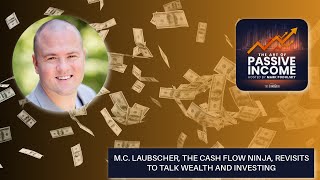
This is a recorded interview (YouTube/podcast) between host Mark J. Podolsky and guest M.C. Laubscher (CashflowNinja). Podolsk y introduces Laubscher and his credentials (podcast host, author, entrepreneur) and they discuss cash-flow-centric wealth strategy. Laubscher frames wealth in four "dimensions": 1) cash flow (owning assets that pay you), 2) tax efficiency of income, 3) appreciation (preferably forced appreciation via operational control), and 4) leverage/partnerships (working with operators to scale passive income). The conversation expands into financial sovereignty and self-sufficiency (energy, water, food, protection, supply chains) with examples from South Africa and business opportunities arising from disruptions (energy, commodities, food). Episode closes with Laubscher's tip: pursue daily excellence in your craft, and calls-to-action to visit cashflowninja.com and thelandgeek training.
Questions this video answers
September 20, 2022
4.5 million downloads
Over 180 countries
Entrepreneur magazine (listed among top 48 podcasts to entrepreneurs)
Regularly featured in Apple Podcasts' top 100 podcasts
Chapters
Hey, it's Mark Podolski, the land geek with your favorite niche real estate website, thelandgeek.com and this week's roundtable podcast, It's Just Me team is off. But that being said, I have an amazing guest. It's his second time on the podcast. You probably already know, and don't judge him from the South African accent. It's MC Loubsher from Cashflowninja.com if you're not familiar with MC, he's a husband, a dad, a podcaster, author, and most importantly to you, dear listener, a cash flow expert. So as a cash flow Investor and entrepreneur, MC's passion is to assist investors and business owners to create, recover, warehouse and multiply cash flow through advanced strategies. Oh, by the way, I've been on his podcast, the Cash Flow Ninja podcast, and he also had a couple other people that were kind of cool besides me, Robert Kiyosaki and Grant Cardone, a few others, but mainly me. And his podcast has been downloaded 4 and a half million times in over 180 countries and has been featured as one of the top 48 podcasts to entrepreneurs by Entrepreneur magazine and is regularly featured as one of the top 100 podcasts by Apple Podcasts. MC also founded Producers wealth and Insurance Brokerage, helping clients in the United States with advanced cash flow strategies and Producers Capital Partners, a firm assisting investors all over the world to invest in alternative assets that produce, my favorite word, passive income in any economy and market. Mc, welcome back.
Great to see you.
It's great to see you. So what have you been up to since we last spoke?
Yeah, I mean, it's, it's been quite a journey. Right? It's incredible how time flies when you're having fun, you know, five, six years already of just, you know, knowing each other and following your work. So congratulations on all the things that are happening in your world. That's just been incredible to watch your journey. Yeah, on my end, you know, Cashflow Ninja, which started just as a podcast, has grown into a full blown financial education company. So we do, you know, We've published over 900 shows, we've got resources, programs, and then also now books. Just sharing cash flow investing as a strategy, which is kind of in our world. It's comical to say that we have to still preach the cash flow investing strategy because a lot of folks that have come into our world have started to realize how powerful it is to have full control over your wealth strategy and within your wealth strategy, especially if it delivers passive income. But there's still A lot of other folks that are still trapped in, I would say, the Wall street model, the casino model. Yeah. So we continue to preach that. I've been involved in a lot of fun projects, I've got to say. And of course you meet a lot of incredible people along the way. Obviously, cash flow investing is kind of at the core of everything that I do. But I have to say, besides the first light bulb in my life being cash flow, 21 years ago, when I read Robert Kiyosaki's book, Rich Dad, Poor dad bought my first investment property, and after I collected rent and paid all of my bills, I had money left over, cash flow. And I was like, how many times can I do this? This is incredible. How many of these units can I have and or own? That was a light bulb moment to cash flow. Then becoming my own banker was a second light bulb moment, which is just cash flow management and being more efficient and effect with your cash flow management because it sort of amplifies what you're doing in your personal business and investing economy. The third light bulb, and it was always there, but it's become really, really to the forefront was just this, of partnering with incredible cash flow ninjas, as I call them, working with great operators. Because it's a very, very great way of just diversifying cash flow streams too. Right. So I've always, I learned that when I realized that in certain niches, you pick your cash flow niche, you pick your market, there's a dominant player in it, maybe one or two, and usually it's one very dominant player, and that dominant player is the cash flow ninja. Nothing happens in that market or that niche without that person knowing about it. And if something's about to happen, they'll know about it first because people will tell them. So to compete with them is really, I mean, you know, it's. It's tough. So the next step then becomes how do you partner with them and what can you bring to the table with them? And obviously there's a ton of different ways in which you can bring different types of capital to partner with them. But it's been great, it's been great to then diversify cash flow income streams, because I just feel like today too, especially in the economy that we're living in, that's pretty exciting times. I think it's very exciting. I see a lot of doom and gloom out there, but I find it extremely exciting because of the opportunities. But you have to be a little bit smarter too. It's just in diversified income streams, in different niches and different markets from different assets is a good way to position yourself really well in an environment that's unfolding, which we don't really have a crystal ball of how it all plays out.
No, yeah, absolutely. It's so interesting because obviously you're preaching to the choir with me and most likely listeners. And we're talking about passive income, we're talking about cash flow. I got an email yesterday and like, okay, here's a fund and here's for appreciation and here's for yield and cash flow like real estate and alternative investments and then appreciation. I'm looking at the appreciation stuff. I'm thinking, well, why do people invest for appreciation and why? Or is it something we should like? I never think about appreciation. I just want cash flow. How do you think about.
Comes down to almost like, I call it the four dimensional wealth strategy. If I have to break it down. So there's a lot of folks that the Wall street model and the Wall street casino model is essentially a one dimensional strategy. And that is I'm going to buy some Apple stock and I'm hoping that Apple stock's going to go up, markets go up, down and sideways. So you're betting it on like that 33.3333 bet that it's going to go your right way and then essentially you're going to either sell it or you're going to feel really good about yourself seeing that your account value has gone up. But that's essentially it and it's very one dimensional. It's essentially just for profit or just for appreciation. And that's it.
Right. So you either get a paper appreciation or you get a real appreciation. When you sell, you pay tax and.
Then what do you do exactly? Do it again?
I don't know. That's risky.
Exactly. Very one dimensional. So how I look at it too, and here's. Before I get to the four dimensional wealth strategy as I call it, the thing is you have to be clear on your strategy, what you're looking to do and then you build it out, right? So you know, if I'm going to, let's just say I'm going to install, you know, a light fixture, which I'm probably not, I'm not very handy. I'm probably going to pay someone to do that. But let's just pretend that I'm going to do that. I'm going to have a toolbox with different tools in that and there's different tools that I'm going to use for different. To do different things to eventually install that light fixture. So I look at the well strategy as the same thing. So how the ultra wealthy look at it is that, I mean, there's different things that do different things for them within their overall wealth strategy. That's why you have different types of income. That's why even folks that are just kicking butt and taking names, such as yourself in the land business, there's other ancillary incomes from that one income stream, whether it be podcasting, whether it be coaching, whether it be that kind of stuff. Because there's different reasons why you have it in your overall strategy. So you have to be clear of what your strategy is, what you're looking to accomplish. And then you figure out, all right, I need some tools to accomplish this. So this is where the four dimensional kind of wealth strategy comes in. The first thing is cash flow, right? Because cash flow is king, not cash flow. Cash flow is a cash flow investor. And that's what we're passionate about because we want to own things that pays us. Why would you want to own something if it doesn't pay you? So have something that pays you and produces cash flow. And also as a cash flow investor, I mean, you're benefiting then from all the tax benefits earning that income stream. And that's kind of the second part of it is the first dimension is cash flow. Is it paying me? Is it paying me to hold it and to own it? The second part of it is, well, what is it doing for me from a tax perspective? How effective and efficient is that income? Is it reducing any of my taxes? Is it like the one dimensional strategy of the appreciation play? Am I just going to get hammered every time that I make money? Because that's not a lot of fun on taxes, right?
Right.
So is it actually efficient income from a tax perspective? And is it an asset that could essentially reduce my taxes? And then I would say even on the third part, yeah, that's appreciation, but it's sort of a bonus. And what I like about appreciation plays is forced appreciation plays.
Can you define forced appreciation?
It comes to controlling and managing the asset to improve operations and performance of that asset. And as a result, the business is more valuable, the value of the business is higher. And now you're forcing the appreciation of that asset instead of buying Apple stock and hoping that Tim Cook or whatever idiots running it at that stage knows what they're doing. How can I control and manage my own asset? Force appreciation through the operations and efficiency in my business, which where I have more control over it. So that's the appreciation. When I talk about that dimension, it's not quite the same as buy and hoping that your timing is correct. And then on the fourth side of it too is yeah, it's great cash flow. Yes, it's great if it can reduce taxes, yes, it's great if it can appreciate in value over time and you can exit it if you want to. But on the other thing is you said something really powerful about passive income. Passive, which by definition means that you're not doing too much to get that income. So how can you accomplish that? Leveraging the skill set, the capabilities and the unique ability and the capital of others. So that's where great operators come in. Let's just pick real estate for a second. And even like multifamily. Now you have a great operator that is the cash loan engine in a specific market. They know everything that they need to do to increase the value of the operations to generate more cash flow. You're getting the tax benefits and then eventually, I mean you're leveraging their skillsets, their knowledge, their capabilities, their network, their community, the capital that they can bring in as an investor to invest passively in that. So that's kind of how I look at it. I look at it four dimensional and just to bring it back to the wealth strategy. So when you're investing in something, it's like, what is it, what is it supposed to do and what is it going to do for me? Sometimes you're going to need things that are very cash flow heavy. I love those. Sometimes you might need something for taxes, sometimes you might need something from an extra leverage standpoint which eventually results, brings in for the appreciation play. And then there's a lot of investments or vehicles and strategies that produce all four of those. But it all depends on your strategy, what you're looking to do.
Yeah, no, I love the way that you laid that out. And.
The four.
Pillars, if you will. I forgot what was the term?
Oh, dimensions.
The four dimensions.
It's like checkers versus chess.
Yeah, yeah, exactly. So I'm such a concrete thinker, I can't think of dimensions. I have to think of pillars. My hands around it.
Those Roman columns, the pillars.
It's a really great way of getting people to think about it in a more intelligent way as it comes to their wealth strategy, which ultimately comes down to, well, why get wealthy in the first place? Why even do this? And I know I have my answer ultimately for you when you think about, well, why am I seeking out these cash flow ninjas? Why am I trying to be tax efficient? Why am I looking for forced appreciation? Why am I doing all these things? And ultimately, what would be the MC Loubcher answer? What is your why?
For that, I think at the core is freedom, and that is a very broad term these days. Have they changed the definition on that word yet?
I don't think they have. I think the freedom might be defined as doing what you want to do when you want to do it, where you want to do it, with who.
You want to do it.
Yeah.
And I mean, and that's how I look at it. My definition of freedom is essentially spending, you know, my time the way that I want to spend my time, not doing things or making decisions based on. Based on money, essentially. Money is not a reason why I'm doing something and. Or not doing something. And then I would also say the freedom of relationships, doing things with the people that I love to do stuff with. And then the fourth part of that, I would say is your purpose to work inside of your purpose. And I've been part of Strategic coach Dan Sullivan talks about that all the time, those four freedoms. And I love adding the location part of it, too. That's changed a lot over the last three years, but that's another big one, too, of going where you want to go with the people that you want to go with and do things with, not having money be a reason or not, and spending your time in the ways that you wish to spend your time with. And the other thing that, you know, I think it's a. I think at the core of that, too, for me, is I love that definition, Dan Sullivan's kind of vision of what freedom is. I love the concept, too, of sovereign and sovereignty and being a sovereign individual. And that actually is. I've been spending a lot of time thinking about that, too.
Are we going down the crypto rabbit hole now? MC no.
No. And how I is from a sovereign standpoint, right, is if you think of things changing, how much control do you have and how can you survive outside or independent of what's happening to systems and processes around you if they're collapsing or resetting? And sometimes when you hear that, you know, especially folks in the U.S. it's like, all right, I hear you, I hear you. But I'm originally from South Africa, as you mentioned, not a Pennsylvanian accent. I've actually seen what sovereignty means and what it is to be a sovereign individual or have a sovereign family inside of systems that are not really there that you take for granted. Right. So a lot of people I'LL give an example. So a lot of people here in the west take for granted that they're inside of their houses, which has electricity. Fancy that. People don't in South Africa take that for granted. In most part of the country and most parts of Africa too, they don't necessarily just take that for granted. So what can you do? I know this is with an African kind of lens that people might be thinking, oh, this could never happen here. It's already happening in California, by the way, and it's probably going to happen all across Europe. So from an electricity standpoint, most people in South Africa just, they're energy independent in the sense that they have solar, they have solar panels, they have generators. My folks go at this time of recording about eight hours a day without electricity. There was one day that was around 22 hours. They didn't miss a beat. They didn't skip the beat because. Yeah, because they just prepared for it. They're, they're, they're sovereign from an electricity standpoint. They're of their own water source, which is then powered by that source. You know, so you look at, you think of these systems that we, where we live, just, it just, you don't even think about it. It's just assumed. And then you kind of relay into other systems that are, you know, and processes around you and you kind of build that out. And eventually when that comes down to is, there's ways that you can, there's ways that you can structure your life for yourself, your family, your community, your businesses and your investments. That puts you in a much stronger position from this sovereign kind of perspective and being self sufficient, if you will, and you don't have to get crazy preparation on it. It's just common, just basic building blocks of planning. All right, here's what's going on, right? If this happens, then this is in place. If this happens, then this is in place. When I shared this in early 2020, people thought, man, this guy's like a nutcase. And then all of a sudden the supply chain issues started happening and there were folks in our network that thought about this, that rented empty warehouses, spaces, stocked up products. They're crushing it right now just because they started thinking a little bit of how dependent am I on all these things, these networks that have been built out. What can I do to manage risk from that perspective? So I think that's a big part of it too. And I wanted to bring that in because it's tough to have the freedom conversation without that kind of stuff because you could be like, oh, well, I've got all the cash flow and freedom of all these kind of things, but I'm sitting in the dark and I don't have a candle to light.
That's also.
That does. Doesn't sound like a lot of fun to me. And that doesn't sound too freedom ish for me, if that makes sense.
No, and it's so true. And it's even hit home for me. I've got a very good friend in Sumba in Indonesia, surfing, teaching yoga. And at 9 o', clock, there's no more power. Bedtime, like you don't have a choice. It's that. That's where they stay. That's a small island. They're not. They could have all the wealth, doesn't matter, powers out at nine and you're just going to bed whether you want to or not. So it's a really interesting way to look at it. There's a great book out there, I think it's from the 99 called the sovereign Individual, that really talks a lot about this in different arenas of your life. And I think it's something that I don't think about enough. And I think it's great reminder, especially as we're living in such times of so much uncertainty, so much change that we. I mean, I know for me, I didn't grow up with this idea of being sovereign. It's sort of, especially in the west, it's a new thing. I mean, just think financially, you've got custodians over your money. And Scott Todd and I were kind of complaining today. We're waiting like our bank is holding a wire, a significant amount of money going through some kind of political stuff with this wire and like this shouldn't be. And they're like, well, this is why people like crypto so much, because they want to get rid of the middleman, which is why I kind of hazed you. Oh, we're going down the crypto rabbit hole. But I think it was a really good point. So. Which leads me to my next question. So how are you personally thinking about, or what ways are you personally taking full responsibility within your life to be more sovereign today than you were, say, a year or two ago?
You know, I think that over the course of, I would say the past five years, I started to start to think about a lot of stuff that I was seeing, you know, and I still have family and friends in South Africa, so I go back and visit there and I'm like, oh, wow, this is kind of, this is kind of the reality there. And it's still great place, love to visit and so forth. But when you live there, there's just things that people just take, like, they, they just have to adapt. And that's, by the way, if you want to have adaptive people in the world. You know, you go to, like, Africa, you go to Latin America, you go to, you know, Southeast Asia. Those countries, those people know how to adapt. They know, you know, I could see a lot of folks freaking out over, like, the elect diversity part of it, right? But these folks, they just, you know, it's just part of their life. They, they, they deal with it. You're in the area to, to just finish that point. In the area that I grew up in, a Stellenbosch, there's a lot of amazing vineyards there, and they grow, they grow a lot of Sauvignon Blanc and Chenin Blanc there with obviously Cabernet and Pinotage varietals, but the white wine varietals, too, when you harvest those, they have to go in big tanks and they have to be at a certain temperature. So, you know, the farmers there, they're not going to cry when the electricity goes out. They're going to make sure that they've got backups and generators so that they don't lose gallons and gallons and gallons of the Sauvignon Blanc and the Chenin Blanc varietals, which they just harvested. So the first year, probably it happened, it stung, it hurt. You have to dump a lot of stuff, but you won't get caught again. So I looked at some of the things that were. That were happening, you know, that I saw in Africa and some of the things that I started to see a little bit in the West. And I'm like, well, what are some of the things that I can put in place for my family, for myself, my family, for the community that I'm. That I'm in, and then for my business and then some of my investments. So what. What are they? You know, obviously we talked about electricity, we talked about water, we talked about food. And by the way, there's such a big movement right now around food, just in the United States, but globally, I think a lot of people are starting to realize, too, we've been so prosperous and the systems have been so effective and efficient for the past 20 years that all of a sudden, over the past three years, everybody's like, wait a second, there isn't certain things in my grocery store anymore. And if they are, they're very expensive. How about that? So you know, being closer to food sources and understanding where food comes from. You know, if you're living in certain areas, you can develop relationship with farmers and co ops and that kind of stuff, you know, and then also protection is huge, to use the South African example again. And in Africa, most folks in Africa and again Latin America and Southeast Asia knows this, that you're responsible for your own safety. You own that you're accountable and you are responsible for that. You're not going to pick up a phone and just call someone and then someone's at your front doorstep five minutes later or five seconds later or how quickly to come and help. So you're going to have to figure out how to defend and protect your home and your family until help comes. Now in other parts of the world, like I said, especially in Africa and so forth, most folks are like, yeah, that's kind of like one on one stuff. But here in the west, everybody's like, I'll just call the police. What if you can't call the police and folks think that is extreme? Da da da da da. That kind of stuff. You know, if you look at certain trends in place, you want to be in a situation to protect yourself and your family. You don't want to rely just on again, other systems and structures to have those things in place. And then for your businesses too, do a risk analysis of stuff. See things that are starting to happen in your business and in your niche, dangers which you should be aware of. Once you identify those, you'll probably see a ton of opportunities. I used the example of one guy in our network that started to see, man, the supply chains are like out of control. There's such a shortage of stuff in his industry and he's in packaging. So what did he do? Well, there was a lot of people over the past three years weren't going into work, so there was a lot of empty warehouses, a lot of empty offices, that kind of stuff. He understands this. So he negotiated a very, very good lease, a month to month lease, and then stocked up on products and stuff that he knew was going to be in short supply during busy, busy times. And obviously he's going to be able to charge a premium for it. So that's one way. From a business standpoint, every business is different. If you have physical products, if you have digital products, there's different risk factors involved. And then from your investments too, look at some of the things, the dangers out there. By the way, if you identify the dangers in the investment world, here's the thing about change Right. You said uncertainty change, massive disruption change faster than we've seen before, which leads to chaos. Usually societally, because the economics boil to the top. People don't know what's going on. They just see that, they lose their job, their value of their money is going down, all that stuff. So it manifests the craziness. But as an investor, you look at this and go, wow, there's a bottleneck here, there's a bottleneck there. There's distortions over here. So protect what you have. Have a strategy, a good wealth strategy, but then also leave some room to capitalize on some opportunities. There's a couple of areas right now where folks, I'll give you two obviously commodities, land commodities and so forth are. It's just in gangbusters right now. There's bottlenecks in a lot of these commodity markets. One of the big, big bottlenecks is in the energy market.
Yeah, I just have to push this energy guy on. And you know, lithium batteries.
Oh, it's, it's incredible. So there's so many ways to play the energy. You could go the infrastructure really that the world has in place, which is reliant on the fossil fuel stove. So whether it's oil, natural gas, whether it is nuclear or coal, there's an infrastructure. And there's a huge push to go to solar and wind and hydroelectric and hydrogen and all this stuff, there's no infrastructure in place yet for that. When you switch to one, the one system off and there's no infrastructure built out which could take 5, 10, 15 years to build this out, you have a massive imbalance which now folks are capitalizing on because you still have the same demand for energy across the world. So if you reduce the supply, the demand stays the same. There's a massive imbalance that folks can capitalize on the other way to play it. And this is Jim Rogers. One of his biggest positions is copper on the EV side of it. Incredible opportunity there. So a lot of folks, instead of buying like Tesla shares, hoping that goes up, all these folks are going to get into EV market, all of these. There's many different companies and all the big guys will do that. So instead of trying to pick a winner, how do you participate in this? Well, there's copper, there's lithium, there's rare earth metals, which aren't really rare. I've learned that too. Fun fact. But they're there and they're needed for batteries, so you can position yourself there. How about food? Same thing, Massive supply destruction, same demand. You know, people aren't going to eat less. The sizes of Domino's Pizza aren't going to get smaller to accommodate for it. It still needs to stay the same size. So there's a massive opportunity for folks to position themselves in there, too. I mean, there's so many of these right now. Right. So, yeah. So things that I'm personally doing to be more sovereign is start with myself mindset, being physically, mentally and spiritually strong. Control what goes into your house. Everybody wants to change the world. Let's change your house first, inside your own walls. Make sure that that is a strong unit. Then you contribute and do the same in your community. And then look at risk factors for your business and then for your investments and look at all the opportunities. I love that book that you mentioned, the sovereign individual. There's a couple of those. Talking about all these massive disruptions that would come. I'm just so happy to be alive to see all of the many that's coming, whether it's the Internet of Things, the people of the Internet of Things, 5G 3D printing, artificial intelligence. You could go on and on and on. All these things that are being rolled out pretty quickly right now. So, yeah, I'm pretty excited to live through all these changes.
Yeah. Peter Diamandis and Steven Kaller wrote this great book called Bold, talking about these new technologies emerging. And now they're getting closer and closer. It's an amazing time to be alive.
Yeah. And again, there's going to be folks that don't see anything coming. And obviously I'm preaching to the choir with your listeners and yourself, but there's going to be folks. You just have to understand, as an investor to the environment that you're operating, that there's going to be a lot of folks that don't see any of this coming. They don't listen to podcasts such as these, which they should, to kind of understand what is happening, what is in the process of happening. The folks that do see all these things coming and position themselves, I mean, they're going to be on the right side of this greatest wealth transfer, which I've heard probably for the past 30 years. Everybody talks about this great wealth transfer. I mean, we've seen the wealth transfer since 2020. Really, it went into overdrive. We've seen it sort of slowly over the past 20 years, but 2020 was like, it was incredible. And they're going to continue to be on the right side of this, knowing what's coming, knowing what is happening, because it's going to manifest itself in many different ways. Which would sort of be a distraction from the underlying. The underlying cause.
Absolutely. Well, mc, it's always a pleasure talking to you and your mentorship has been phenomenal, this podcast. But now we're at that point where I'm going to put you on the spot and ask you for your tip of the week. A website, a resource, another book, something else actionable for the art of passive income listeners to go improve their businesses, improve their lives. What have you got?
There's something that I've been thinking about quite a bit and it's actually the ninja part of the cashflow. Ninja is a very well known martial artist. He used to travel six to eight countries a year. Ninth and a black belt. He's 74 years old, could still kick my butt. Just clobber. And the lesson that I've learned from him was that he pursues excellence in his craft daily. So it's almost like Nelson Nash always talked about the arrival syndrome where people are like, oh, I've arrived at knowledge. I'm really smart. I'm right there. I arrived at knowledge. It's almost kind of the same concept where. So here's what I will share with listeners in your capacity as a business owner or as an investor. Pursue excellent in your craft as a business owner or an investor. Get better every single day. And that's one tip that I share that I've really focused on this year, is every day I just want to get better every day. I'll never know everything that there is to know. No one does. You'll never reach that essentially that summit that everybody thinks that, oh, I'm right there. You look at the most successful investors, the most successful entrepreneurs, they're just trying to get better and learn and get better every single day. So that's the one tip that I would share with your listeners, is just pursue excellence in your craft daily as a business owner and as an investor.
Yeah, I love that. And you see it in life where people who are just mediocre feel like, oh, I'm good enough. And then they're like, okay, I'm good enough at this piece of whatever they're doing. And then you see the people who are above average are like, okay, I'm gonna keep working on this. But they don't really have a, you know, a, a real strong path forward on how they do it. They kind of do it, you know, here and there. And then you have the people who, this is my craft. And they work on it every single day. And they have a internal drive to get better or what I like to say is like I like to be less wrong every day. And so I'm doing and they and just like James Clear talks about in the atomic habits, doing that every single day compounds and to your point, you'll never get to the top, but you will at some point be able to be like, okay, relative to my peers, I'm excellent at this. Like your dad is excellent at kicking butt in his martial art. And you know, MCU are clearly excellent in your craft of investing and disseminating knowledge, podcasting and just being a phenomenal human being. So thank you so much because my tip of the week is learn more about MC Lobster. Go to cashflowninja.com and find all the MC Lobster goodness there. I also want to remind people that today's podcast is sponsored by flight school. Learn how the next 16 weeks can transform your life. Go up that mountain of land investing with Scott Todd as your Sherpa. Quickly, safely, efficiently. Oh yeah, and that flight school tuition ain't gonna cost you nothing guaranteed. Gonna make it back 180 days or less. Just show us your work schedule. Call go to the landgeek.com forward slash training the landgeek.com forward Slash training MC are we good?
We're, we're fantastic, love. Thank you so much for coming on. Well, thank you for having me come on your show. It's been a blast and always love our conversations and appreciate you and everything that you do.
Thank you so much. I also remind the listeners the only way, the only way we're getting the quality guests like an MC Lobbisher from Cashflow ninja.com is if you do three little favors. Follow rate Review the podcast. Send us a screenshot of that review to supportlang.com I'm going to send you for free a signed copy of Dirt Rich, so please do it. It does help. All right, let's do this. One, two, three. Let freedom ring. Thanks, everybody.
I love it.
Thanks for listening to the Art of Passive Income podcast. Are you ready to learn how you can start building a passive of income.
Without renters, rehabs, renovations or rodents?
Schedule a free consultation@thelandgeek.com training let freedom ring.
More from Mark





How to find funding partners: How to Scale Land Without Using Your Own Capital


