Maximizing Your Traffic The Neil Patel's Way
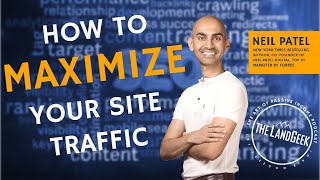
Podcast episode (YouTube) hosted by Mark J. Podolsky with Scott Todd, featuring Neil Patel. Neil recounts his start in digital marketing (building a job board at 16), explains why he focused on driving traffic and later blogging, and describes how blogging led to business and real-estate opportunities. He emphasizes SEO and long-form, regularly-updated content as high-ROI channels (Google/YouTube drive most revenue), advises prioritizing channels that convert, treating SEO as a long-term investment, and recommends competitive-research tools (e.g., Ubersuggest, Moz).
Chapters
Hey, it's Mark Podolski, the land geek with your favorite niche real estate website, www.thelandgeek.com. and on this week's podcast, we've got a big deal. Put on my anchorman voice. But before we talk to our guest, I'd be remiss if I didn't properly introduce my co host. You know him, you love him. Scott Todd from scotttodd.net landmodo.com learn anything about anything. Investor ninjas.com Scott Todd how are you, Mark?
I'm great.
How are you?
I'm a little intimidated. A little intimidated. I'll be honest.
He's a good guy.
He's an easy guy to talk to.
I know, I bet.
Well, our guest today, if you have ever done anything in marketing, you're gonna know him is Neil Patel. He, he is the co founder of NP Digital and subscribers. The Wall Street Journal calls him a top influencer on the web. Forbes says he's one of the top 10 marketers in Entrepreneur magazine says he created one of the 100 most brilliant companies. Neil is a New York Times best selling author and was recognized as a top 100 entrepreneur under the age of 30 by President Obama and a top 100 entrepreneur under the age Of 35 by the United Nations. Neil Patel, Welcome.
Thanks for having me.
So Neil, let's just rewind the tape because I'm sure as a kid you didn't dream of being, you know, one of the top marketers and influencers in the world. So walk us through the journey. How did you get into digital marketing?
Sure. So it was funny, when I was 16 years old, I was trying to get a high paying job. Most these high paying jobs, when you're searching online for jobs. Back in the day I was using monster.com and they all required college degrees and certifications and stuff that I didn't have because I was only 16. So I died. I, so I thought I would do the next best thing. Can I find a high paying job, go create my own job board? You know, because I was on these job boards looking for them and I was seeing how much money they're making, I was like, I'm just gonna go replicate this. Some of them, like Monster were worth hundreds of millions. Awesome. Like If I make 1% of what they make, I'm gonna be rich. And that was my goal. So I paid some people on a form that I found to develop a job website for me and popped it up and all of a sudden boom. No one was coming to my website. And I was like, what the heck? Why am I not doing well? Keep in mind I was so naive back then. I was like, man, only if I was number one on msn. You know, I was even thinking Google back then. Even though Google is more popular, I was like, I want to be number one on msn. And eventually I learned about Google and its popularity and I learned this thing called marketing that people just don't come to your website. You got to do marketing. And then from there I got learned how to do marketing, got good at it, drove a lot of traffic to my job board and then all of a sudden I still wasn't making money. So. But I was just like, you know, I like this marketing side, let me go focus on that. I can drive traffic. I'm not good at this business side creating websites and stuff. I know how to drive traffic. Let me just go focus on that. And that's what I ended up doing.
Wow, Scott.
Todd, you know, I like the story because if you can't, if you can't like find what you want or if there's a gap, go, go create yourself. And I think that that's the, that's the hustle, right? Like that's the action taking. And mark, it's a lot like what I talk about all the time. Like move your feet, right? Like when you hit a roadblock, what do you do? You throw up your hands and just like walk away and go, well, it wasn't for me. Or do you hustle? Do you move your feet and get it done some way or another?
Yeah, no, absolutely. And then Neil, at some point you decided to help other people solve their marketing problems, traffic problems. How did that come about?
Yeah, so that came about because I was just like, alright, how do I get business in marketing? And when I was getting business, I was like, I can cold call, which I was doing. I'm like, I can run paid ads, but they were too expensive. And then I was like, you know what, I'm calling all these people who are doing paid ads and telling them I can rank them organically on Google and get them traffic. I was like, why not do the same with my own site? So I started doing that, I started generating some lead and then I realized, you know what the best thing I could be doing? I went to a conference, I met Matt Wellenwag from WordPress and I was like, best thing I could be doing is just blogging and educating and helping others. Most of those people would just come for free advice, but I'll also learn more Myself and then because I'll build up my network and stuff and I'm like, a portion of people may hire my agency. So I started doing that and eventually, you know, that blog just kept growing and growing. Created a few blogs. Eventually I'm on my last one. I don't think I'll create another one after this, at least from for a blog that talks about marketing, and that's neilpatel.com and then I just kept going. But I've met so many interesting people. Believe it or not, I used to do a lot more real estate investing years ago than I do now. And one of the homes that we had in Vegas is on some grand island street. It's like grand island something. And you know, we bought it cheap, fix it up, and we're trying to sell it and we just couldn't sell it for the life. That's the Realtor ads on Zillow and all this type of stuff. And the buyer was one of my blog readers. He's like, hey, I noticed that you own this house. I don't know how he knew. I'm assuming he looked it up, right? There's public records or something. He's like, I really want to buy this house and I'll give you what you're looking for. Like, how do we do a deal? I was like, who are you going? He's like, I'm just looking to Airbnb it out. And at that time, not as many people were Airbnb it out, so you probably made a killing. But yeah, I got a deal just because of my blog. Another deal that I got from my blog is I was flying to Vegas. One of the people who is an entrepreneur's name, Sam Ko, he also does a ton of investing. Probably one of the biggest real estate guys in Vegas for condos. I was flying to Vegas. And he's just like. He's like, oh, what are you up to? I'm like, oh, I'm just on the plane going to Vegas. And he's like, oh, dude, I'm buying all these penthouses at the Mandarin Oriental, which is on the strip, was a city center deal. And I was like, oh, cool. And he's like, you should check it out. He's like, they need 51% occupancy. And because they're gray shell, which is not built right, it's just concrete. He's just like, there's no loans on them, so they're giving away for pennies on the dollar. And these are the most expensive units because they're at the top of the building. And he's just like, do you want in? He's like, I'm like, yeah, sure. What's the process? He's like, when do you land? Give my flight number. I'm like, I'm landing in, like, 30 minutes. He's just like, cool. Car will be ready to pick you up. They'll take you there. Pick whatever unit you want out. I'll get you the same price. I literally got it for a third of the price that they built it for. And then literally within no. 60 or 90 days, it was either 60 or 90 days. I either sold it for a 50 or 60% premium on what I paid for it. But, you know, all that happened because of a blog connection.
Amazing. Amazing. In fact, Scott and I were arguing before the podcast that I don't think that you write your own blog posts because it's so prolific.
I say, wait, wait, because I think I read this. I think that you have a process. It's your ideas. You have a team that pulls in pictures. And I know that you have a proofreader editor, because I used her at one point. So who's right?
Who's right? God is right. There's one thing that's changed, though. So we update a ton of my old content that I don't do because they update 21 pieces a week. Like, I don't have time to go into 21 old articles and update it because things change, right? Like, let's say I create an article on Facebook advertising. Two years ago, Facebook changes their ui. So if I tell someone, click this button to set this campaign up, and then tweak it with this. Well, Facebook has all these new features and constantly change, and I can go and update them myself, but I just don't have the time to update 21 articles a week. And then when we up them, keep in mind, those articles go back to the top of the blog section on neilpatel.com so a lot of times people be like, oh, you wrote a new article? It's not really a new article. Most of the content is just being updated. Like, I sent an email blast out today for an article on schema markup. I wrote it a long time ago, came out today. People are like, wow, you already got 300 comments. I'm like, well, it's an older article. I updated some of the content that I wrote years and years ago, have little to no comments. And when you update them and then pop it back to the top, people like, oh, wow, new blog post. No Comments. It's like, technically it's not new. It's just updated. But, you know, most people just assume and they don't ask. If they ask, I tell them the truth. But in general, I write roughly one blog post a week. Technically, I write one blog post a week, not even roughly. And then my team updates 21.
All right, Scott, I owe you $1.
You owe me $1.
That's right.
I'm gonna collect it, too.
That's right. So that's the Trading Places references.
Yeah, I remember that. Good movie. Eddie Murphy.
There you go. There you go.
And concentrated orange juice.
It is. Yeah. Concentrated orange juice.
Yeah.
Okay, so what's the worst advice you see or hear given in digital marketing?
The worst advice is that I see in digital marketing is people come out and they're just like, you know, TikTok is a new thing. You gotta be on it and you can crush it and you can do so well. Or they'll say, there's this new app that everyone's trying to get me on. I forgot what it's called. It's some chat app. Literally have, like, five invitations of people trying to invite me, and they're like, use the chat room, and you participate. You can get a lot of followers. And it's just so amazing. Now, I'm not saying you shouldn't be on TikTok. I'm not saying you shouldn't use this new app. You have to keep in mind, if you're a small business and you're starting off, you don't have the time to do all these. Go after all these channels. And if you do great, you should. I recommend that you pick the channels that you know convert well for your customers. Because even if you can get a lot of TikTok followers, the debate that still holds is, can you make a ton of money from TikTok? Now, don't get me wrong, you probably can. It's just gonna take time to figure out how to convert them. But at the same time, I can just go get rankings on Google for real estate terms and I can go make money right away. And I already know it converts TikTok. Yes, I get a lot of followers, but it's new. I gotta experiment. There's no guarantee it's gonna work. Now, I'm not saying you shouldn't do the TikTok, but first you should tackle the stuff that's lower hanging fruit, that's easier, that you know is gonna guarantee your ROI and. And then go from there. Don't focus on what's going to get you the most followers or the most traffic. Focus on what's going to get you the highest ROI and what is the lowest hanging fruit from that aspect. And then from there go eventually tackle the tiktoks, the linkedins or whatever you want that may be, quote, unquote, little bit more challenging to convert, easy to build an audience, much harder to convert into revenue.
All right, Scott, Todd, what are your thoughts?
Mark, I always think, like, and we talk about and we teach the fact that Stay in the channels. Right? Stay in the channels that we know. Okay. And, you know, I, like, I believe. And I think Neil's kind of talking about this too. He's doing it a different way, but, like the 80 20. Right. Like, if you can get results over here, yes, you could probably get results anywhere. But why chase the. Why chase the stuff that's unproven? Go to where it works and, you know, other people have success, or go, go do it and then take some of that time that you have and maybe experiment or lay down the future. But if you, if you just pick up everything and go, I'm going to TikTok. Okay, I mean, like, I mean, like, okay, go to TikTok, but what is that gonna do for you? You know, like, how do we convert over there? Go figure it out. But if that's your whole marketing strategy, I think you're in trouble.
Yeah. And I'm this big believer of, like, you stay in your lane. You do need to experiment and try new things, or else people are just gonna pass you by. But it's funny. So my Instagram account, I think I have like 200,000 followers. One of my team members, Fabian, manages that. He's amazing. He built it up from 0 to 200,000. We don't do paid ads or anything. Like, just pretty much did it organically. Now I have a platform, so it's a little bit easier for him, but even then, he's just like, look at this. Look at this crazy growth. Look at everything we're building. And then, you know, I go, look at how much revenue we make from Instagram. I'm not knocking on Fabian. He did amazing job. And I still have him do it because I think that branding's worth it. Indirectly, it'll produce roi, but when you look at the ROI directly, it's like little to none. And when we survey our audience and, like, especially our paying customers. How'd you find out about us? Number one, Google, number two, YouTube. That literally makes up like 90 plus percent of our revenue.
Yeah, no, I 100% agree with you. In fact, I just had this argument yesterday with a team member about TikTok and I made the argument. I said we could get a million views. It doesn't matter if no one buys like my teenagers on there. Like, yeah. And they're laughing like we're gonna do a land Geek song like the Land geek dance for 15 seconds.
Yeah. Which funny would go viral probably on TikTok. But yeah, you probably won't get one sale from if you do. Great. And again, I think we're on the same page. Eventually it's worth leveraging all these channels. As you expand, expand and your revenue growth starts slowing down, you have no choice but you know, especially if you're in the lower hundred thousands or million range or even tens of millions, you can grow into a decent sized company with just one or two channels. You don't necessarily need all these others and doesn't mean you shouldn't. It's just you have to figure out the right time and place for them.
Scott. Todd.
No, I mean, I think that it makes a lot of sense. One of the things that I would, that like I've struggled with and it's a mindset issue. I know it is. Is that, okay, look, SEO is honestly, it's an investment.
Right.
Like it's an, it's an unknown investment, so.
Unknown, expensive investment. Right, right.
So I want to go down this path, like, you know, and I'm going to throw money at it. And really, in order to kind of get your brain around this, you really have to just trust in the process. Right. And I don't have time to go do SEO stuff. I've got a platform that gets a pretty good amount of views, but at the same time, I want to get more. And I know I'm not ranking for some of the ultimate keywords because I look at the numbers, right. It's there. One, how do I go down this path of building SEO? And then two, how do I keep the faith, if you will, that the investment is worth it? And you know that whole concept.
Sure. So I look at SEO first off as something like you're buying land in a very premium place. Right. Like I always tell people, if you can buy a land on Rodeo Drive, which you can't, you know it's going to go up. If you can buy land on Central park south in New York, I don't care what you pay for it today, in a hundred years, assuming there's no flooding and everything's not underwater, it's worth a Lot more money. That's just reality. And if you look at history, that's what it's shown, especially in premium areas. Being at the top of Google is the same thing. So think of it as like laying a foundation. You know that if you build links, you do your SEO, you create amazing content, you follow the rules, you don't do anything black hat, you're going to get more traffic. When you get to number one for a keyword, that's the wrong way to look at it. You can't control that. If you create a good user experience, you create amazing content over time, what you'll find is you'll start getting more search traffic. In total, most of it's going to be from long tail terms. And the way I like looking at it is if you're not willing to go, you know, jump fully in, you know, just dip your toes and dip your toes for six months and look at your SEO traffic. And what you should see in your Google search console is more impressions, which means more people are seeing your results, which means you're ranking higher. And you also notice more clicks, but you see the impressions first. Because if you're bottom on page one, you'll get impressions, but just not as many clicks. And same with page two, three, etc. And even though you're not going to get a ROI in that six months, you're probably going to lose most that money. You're seeing that it's working, that you're getting more impressions. Google wouldn't be this massive company if it wasn't for that traffic converting really well. See, unlike Facebook or any other channel, when someone types in cheap laptop, they're looking to buy a laptop. When you're on Facebook and you're selling laptops, you got to convince someone to show my ad and then convince them that they need that laptop. Not saying it doesn't convert Facebook's amazing channel. I love it as well. But SEO is powerful. Yes, they have algorithm changes and stuff like that, but with Facebook, if you don't keep posting content, you, you don't keep getting traffic unless you're paying for ads. With Google, once you have your rankings, as long as you follow the rules, you're doing what's best for users. If you don't publish content for a month, you still get traffic. So I recommend the first six months start off small, dip your toes, and when you start seeing some results, even if you're not getting roi, then just go fully in and just dive right in. Just spend money and just be patient and Wait two years. Sounds crazy. Sounds like a long time. But I tell people, you know, it's like, you don't build a. Noah doesn't build an ark overnight, or you don't build a building or a hotel overnight. Like, nothing worthwhile happens overnight. And also, it makes SEO beautiful because even though you have to take some time and be patient, most people aren't. So although they say SEO is competitive and it is at the top, it's not as competitive, most people think, because most people aren't willing to take the time.
That's like that Warren Buffett quote, because everybody knows what he does, his investing strategies. But nobody wants to wait 40 years to get wealthy, Mark.
I would just say so, Neil, basically, is it possible? Is it possible? I mean, there's giants out there, right? Like, there's giant companies that a lot of people come up against. Is it possible to outrank the giant companies? You know, like, what term?
Like, give me a term you'd want.
To rank for land for sale or house for sale, something like that. You know, how am I going to go against realtor.com it would be tough.
It'd be hard to rank at the top, but it's much easier for you to rank for. Where do you live? Tampa. Land for sale in Tampa. Land for sale in Miami. Land for sale in Boca Raton. Right. Very dual still makes money. And you'll be surprised. Yeah, you may not make as much money as land for sale, but because you have a hundred terms, those hundred terms, when you combine them, make you way more money than land for sale. Gotcha. Because when someone's googling land for sale in Tampa, they're much more likely to be a buyer than someone just googling land for sale.
Right.
Okay, let's just rewind because I'm afraid we might be losing the listener because we're saying SEO and keywords. So, Neil, can we just give the listener, who's never, ever even heard of SEO, what does it mean? What's a keyword? Why is it important?
Sure. So SEO stands for search engine optimization. You know, when you search on Google at the very top, you see some ads, and they say advertising or sponsored or paid or something like that. And underneath, you got all the free listings. If you want to be at the top, you got to pay for it. Hence, it's sponsored or advertising. You want to be in the middle. That's called SEO. That's where you rank naturally and you don't have to pay your way. And typically, you rank by creating amazing content because people Type in stuff like how to find, how to evaluate land, how to know if you're underpaying or overpaying for a house. Right. People are searching for advice all the time. We all have questions, whether we ask Alexa, whether we ask Siri, Google home. But majority of us search on Google and the data shows that it's the most popular search and one of the most popular sites on the Internet, if not the most popular site. So you think about that. There's billions and billions of searches happening all day long. And if you create content, you'll start getting more traffic. Now, when you're creating content, Google bases everything on keywords. How do they know that your article is on talking about how to evaluate a home price or how to know if you're underpaying or overpaying for a home? Well, you're putting those keywords or those phrases in your article. Because if you're talking about pricing and evaluating land or homes, you're discussing that in your article and you're mentioning those words like you're talking about pricing or if you're overpaying for land or you're underpaying or how to do comps. So Google picks up on those keywords. Think of them as a big dictionary or thesaurus. So they also know when you talk about home, you may be talking about duplex or fourplex, that's another version of a home. Or when you talk about apartment, they know if you're talking about a duplex or fourplex, that's probably a better example. That's another meaning of a home. They know when you're talking about a two bedroom, that means two bedroom unit or home. Or if you're talking about a mansion, that's a version of a home. Right. They're dictionary, encyclopedia. So when you create all this content, you can start getting traffic for all these keywords on Google. When people come to your website, a portion of them will buy from you, become a lead, become a customer. And that's how you make money through this thing called SEO. And people use free tools. We have one called ubersuggest where people can put in their website or a keyword and it'll tell you how popular that keyword is, how many people search for it on Google, how many people of those that search for it actually click on the free organic listings, which is how much traffic you could potentially get. Tell you how hard it is to rank for that keyword, how competitive is. It'll even tell you other keywords to go after.
Okay, so when you say Other keywords to go after. That's what you mean by a long tail keyword, correct?
Because let's say you're a realtor, you sell homes, and you sell homes in the Florida area. You wouldn't want to rank for homes for sale because someone types in homes for sale. Could be looking for a home in Las Vegas, Beverly Hills, Tampa, New York, could be anywhere. So you may want to rank for homes for sale in Tampa. You may also do real estate stuff in the surrounding regions. Now, I don't know the surrounding regions of Tampa, so I'm going to make them up here. But that could be Boca Raton, that could be Miami, that could be Orlando. Right. I don't know which ones are the closest to Tampa. But you would want to go after all the subsets. Or for example, let's say you're a real estate agent in Miami. You may want to rank for homes for sale in Miami. Homes for sale in, I think it's called South Beach. Homes for sale in downtown Miami. Right. You're getting all the regions and the subsets. Homes for sales in Star Island, I think that's an expensive island where like shack or someone used to live. I don't know exactly who, but some celebrities or something like that. Although Miami is going underwater, so I don't recommend people buying a home there, at least from what the data is showing when you read online, which is kind of scary because insurance companies consider that act of God. So if your home gets flooded, act of God, you are not covered. Most people don't know that, right? They're like, oh, yeah, someone's going to cover me. Not really. You buy this mansion, good luck, because you're on your own and the government doesn't really fund you much for flooding and all that kind of stuff.
Interesting. Very, very interesting. So, Scott Todd, what are you making out of all this?
You got to start somewhere. So start. Use some tools and start taking action, man. Move your feet.
Well, I want to talk a little bit about the definition of amazing content. What does that mean? So, like, when I look at your blog post, I would define that as amazing in the sense that I'm learning something at a very deep level. It's not just here's how you do something and then click on this link or click on this link or, you know, opt in here to get this course on the whole thing. I mean, the entire blog post is like a course. It's long form. It solves a problem right away. But that is my definition of a Neil Patel amazing blog. Post. What is your definition of it?
Okay, so amazing content. What I mean by that, and I'll be more descriptive. Think of someone reading something and can they understand all the main points that you are trying to get across? The second thing is, when someone Googles for something how to evaluate a home price, will they really know from reading that article exactly how to evaluate a home price and figure out if it's underpriced, overpriced, or just priced right? If they can't figure those things out, you didn't do a good job. It's not about just getting all your points across. It's about answering any questions they may have. So the example I tend to give is. And I'll give. Two years ago, I bought a bidet because I thought they were the coolest thing. When I had a condominium in Vegas, I was like, you know what? I googled for bidets, found a really affordable one. And then I was like, all right, let me go get some quotes to install this. The quotes I got for installing it were more than the actual bidet. So I'm like, screw this, I'm not gonna pay more to install it than the cost of the bidet. Dumb toilet. So I started googling on how to install a bidet because I'm like, I'm gonna do this myself. And I landed on this article from How Stuff Works. And that article talked about how to install a toilet. But when I read the article, it just broke down what a toilet is. And I'm like, wait, I clicked through an article that was labeled how to install a toilet and a bidet and it just break down what a toilet is in a bidet. And it gave me no steps on how to install it. Useless article. Eventually, if you look now and you Google for a lot of stuff, How Stuff Works does not rank that high. Why? Because that content is mediocre. There's a lot of people who came to that page and didn't get a good experience. Google saw that and then they're like, we're not going to keep ranking this because people keep clicking the back button, which tells Google they're disappointed and they go to the next listing. So when you create an article, you need to poke holes in it. And what I mean by that is, are you covering every aspect? So if I had an article on how to create that New York deep dish pizza and I don't know how to cook. So my now. So my wording is going to be off here, but I may talk and maybe people in New York don't eat deep dish pizzas. I don't know how to really eat pizzas much myself. But, you know, when you think about that, I would talk about the ingredients, the dough quality, how to prep it, how to flatten it out. What tools or equipment do you need? Or do you just do it by hand? Do you need to put on some yeast or something like that if you want that New York taste? Do you need to import the water? Does the water actually make the taste of the dough different? What toppings? Where do you get these toppings? How do you know if a tomato is actually the right tomato? How to make the perfect tomato sauce? How much salt to put? How much do you bake the oven for or heat the oven to? How do you know when it's done? Do you eat it right away or do you wait 10, 15 minutes? Right? You see how specific I'm getting? And I don't know how to make pizza, but I'm trying to get so specific that when someone reads it, I'm answering every little question they may have, plus more where there's no confusion that when they make that pizza, it turns out the exact way the recipe calls it for.
And that's one post. These are not separate posts.
Yeah, okay, but keep in mind, I've been doing this for years. Most people want results. And right away, in a year, I'm just like, okay, I'll wait two, three, five, six, seven years. I play the long game.
You're playing the long game. Scott Thomas.
I'm not better than most people in many areas. I'm not better than people. I'm actually worse than people in many areas of business and even marketing. What I've learned is I just try to be more patient. Most people will give up after a year. I'll just keep at it. And that's what helps me win.
Mark, one of the things that I like that Neil said, and I don't know, he said it at the beginning, and you kind of connect some dots together, right? So it's not necessarily about, okay, that blog post has to be perfect today. I mean, you want to put a quality product out there today, right? But one of the things that Neil said that his team does is they update them too, right? So they're going back and they're constantly updating their content. It's like, it's almost to me. And I'm not trying to put words in your mouth, but the way I'm thinking about this is, think about Wikipedia, man. Like, you put a Wikipedia post out there well, it is what it is today, and it doesn't mean that that is now locked in time. And I think a lot of times people think about these blog posts as something that's locked in time today. Like, okay, I gotta lay down everything today and make it perfect and shiny because I can never come back to it tomorrow. Well, what Neil said that his team is doing is 21 times a week they're going back and they're updating new content with new information based on whether it's keywords or whatever, they're continuing to add to it. Almost like what Wikipedia happens with a Wikipedia link. Am I on that, Neil?
You got it right. And an interesting stat for you guys and for your audience is there's a billion blogs on the Internet, plus roughly 7 billion people. One blog for every seven people. There's even more websites in a building, but just think about that stat, the amount of content that's being produced on any given day. Facebook, Google, Instagram, they all have their fair share to choose from. They have more choices to choose from than they really need. So when people are gonna rank content on Google and keep driving traffic, are they gonna rank the outdated article or the freshly updated one that's the most relevant for someone? They're going to rank the more freshly updated one. In addition to that, when you create a piece of content, it's never going to be perfect. I may not know every aspect of a pizza and how to make it right, but I've talked about it so many times on podcasts and interviews that I know I need to think about the water and the quality and the quality of the ingredients and the vegetables or the meat or whatever it may be. So because of that reason, I know, hey, what needs to be included in that article, but that's not the reality of it. We're going to write a really good article and try to cover most aspects, but you won't cover everything. And that's okay. Over time, just keep updating and making it better, like Wikipedia. And I took that approach from actual Wikipedia like Scott mentioned. And the reason being is Google makes so many algorithm updates where they just change up who's ranking where. But Wikipedia over the years has constantly ranked really well. And what is the one thing that they do, they keep updating their content and making it better and better. So I took that approach from Wikipedia and it's worked well for me. Now there's no guarantee I'm going to keep ranking at the top. I'm actually knocking on wood because I'm superstitious But you got to take your shot, right? And you just got to follow the best practices and do what's best for users.
Very interesting. So if I'm, let's say I'm a new land investor and I'm going on these marketing websites and they're saying, oh, paid traffic, you know, if you can spend a dollar and get a dollar 50 back, do that all day long. If you can spend a dollar and get $2 back, do that all day long. Do, you know, remarketing and all these things. And people email me all the time, should I do paid ads? I always say the same thing, which is, well, do you know your conversion rate? Otherwise, it just seems to me you're just gonna be spending a lot of money not knowing if it works or not. What would you say to somebody that's looking at paid traffic?
So what I look at paid traffic is the same as I look at any marketing channel. If you can produce a roi, do it as much as you can. If you can spend a dollar and make two, why wouldn't you do it all day long? You have to know that you're really making two. Because if you don't know if you're making two and you're guessing, you could be losing two for every dollar you spend. And then you're just going backwards. Same goes with TikTok. I don't want to knock TikTok. I think it's amazing. But if you can figure out how to monetize and grow and you got that edge, go do it and double down. There's not one right marketing channel for someone. People take an omnichannel approach where they use multiple marketing channels. Businesses no longer can be built off of one marketing channel. You can start with one or two, but eventually you have to expand to keep growing, which we discussed earlier on Facebook. Grew through that invite flow, right? Your friend Scott or John or Bob invited you to join Facebook. Click here to join. Dropbox grew through the social sharing. Share this on Twitter to get more space. Pinterest grew mainly through SEO in the early days, right? Everyone had different avenues of growing. Now the big thing is that most people used to just use one channel to create a big business that's really hard to do. So now what I tell people is start off with a few channels and as long as you can do them well, keep them up and then eventually keep adding more and more channels to it. Eventually you have to add the TikTok. Eventually you have to add the LinkedIn. Start off with the easy ones Whether that's paid advertising or SEO. Start off with the ones that you know work for your competition and then eventually add on more channels. But don't knock a channel because you don't like it. Look at it from a profitability standpoint, and if you don't know your numbers, then don't spend a ton of money on paid ads. The reason I say don't spend a ton of money, no one knows the exact answer of how profitable paid ads gonna be until you start trying and testing it out. But you can start off with 50 bucks, $100, $200, and slowly ramp up to $500 and keep fine tuning. It may not be profitable right away, but eventually you should get there before you spend a thousand or $2,000 for most industries at least.
And you're platform agnostic, you don't care.
Correct. I'm looking for more TikToks, more LinkedIns, because it just gives me more opportunities to acquire more eyeballs.
All right, Scott. Todd.
I think it's thorough, man.
It's pretty thorough. Neil, what should we ask you? We didn't ask you.
I think you've asked most of it. I can't think of anything. This is fun for me. I love real estate, right? So most people, I believe, and as the saying goes, real estate is one of the only investments where if you put money in, you always make money. If you just fast forward, of course, if you buy it in the middle of nowhere, who knows? Although if there's another Covid, probably will spike.
Well, Neil, we do know, because that's kind of what we do with our, with our raw land. And it still makes money.
That's right. And you can do things like land easements. And there's so, so many cool things that you can do with land to make money in so many different ways that most people don't talk about that, you guys all know. But, you know, I look at things and it's just like, you know, real estate is one of those things. As long as you know the right people, you're following the right advice, you're doing your research, you can do so, so well. Like so many of these regions that would have never guessed are booming, like Montana or Jackson Hole. And then I was like, jackson Hole is this expensive? And all these people, you know, buy land here. I wish I knew that like 20 years ago.
Yeah, I mean, we, you know, Scott, you talk about this all the time. I mean, when's, when's the best time to plant a tree is 20 years ago. When's the second best time today.
Yeah.
So, yeah, you're right. You're right. Well, Neil, your, your mentorship has been really valuable, but we're at that point now in the podcast. We're going to put you on the spot one more time and ask you for your tip of the week. A website, a resource, a book, something else actionable for the art of passive income listeners to go improve their businesses, improve their lives. What have you got?
So I want you guys to do one thing. Everyone has competition. Go look at your competition and you can either Google Forum and you can see what they're doing with their website and study it, or you can use tools like ubersuggest, which we offer free reports, or you can use paid tools like Moz and put competitor URLs in there and they'll give you data as well and see where they're getting their traffic for. It'll tell you how much traffic they're getting, what keywords they're ranking for. It'll give you idea on their marketing strategy. And I think that's a great place to start because there's so much potential in real estate, especially real estate marketing online, that just we don't see enough people going after it because everyone's like, oh, Zillow, Realtor, they take up everything. There's so many businesses like yours that do really well. And I don't mean this in offensive way. You're not as big as Zillow, but yet you're still doing well. And that's okay. None of us really are. Not none of us, but most of us. 99.999% of us aren't as big as Zillow. I don't have a big brand like Google, Facebook, Zillow, or even Adobe or even the smaller companies. Right? But yet there's still opportunities for us. And what's cool about this is if you look at what your competition is doing, it'll give you a leg up. Because all these marketing channels that we've talked about today, it gives the small guy an opportunity to compete with the big guy without having to spend tons of money.
I love it. I love it. Scott. Todd, what's your tip of the week?
Look, Mark, go get Neil's book too Hustle on Amazon, right? Like, go out there, learn how to hustle. The power to charge your life with money, meaning and momentum.
You know what? That's such a me tip, by the way.
I mean, you always take the best tip of the week is your tip.
I take the best of the Week. I'll tell you what you got. So Neil's tip is good, right?
I almost stole your tip of the.
Week just to put your tip is really good. Really good. But my tip's the best tip of the week because my tips, the tip that's just going to keep on giving every single day. And I've been following Neil for years, and the content is phenomenal. Just go to neilpatel.com we'll have a link, and it's going to solve literally all your marketing problems. And there's some days where I'm just like, I, like, curse at Neil. He doesn't know it. I'm like, really? This is so much work, Neil. So much here. It's, like, overwhelming. But then I get over it. Like, look, I'm playing the long game and take this one step at a time. Find the right person to execute on the strategy and start turbocharging my traffic and getting results. So, Neil Patel, are we good?
We're good. Thank you guys for having me.
Scott, Todd, are we good? We're good, Mark. All right, well, I do want to thank the listeners. Remind them the only way we're getting the quality guests like Anil Patel from neilpatel.com is if you do us three little favors. You got to subscribe, you got to rate. Review the podcast. Send us a screenshot of that review to supportlandgeek.com we're going to send you to the $97 course for free. How to double your money, 30 days or less. Today's podcast is sponsored by none other than Flight School. Learn how the next 16 weeks can transform your life. Go up that mountain of land, investing quickly, safely, efficiently with Scott Todd, who's done it thousands of times. It ain't gonna cost you nothing. We guarantee the investment you make in flight school, you're gonna make back 180 days or less. Just show us your effort, show us your work, and it's done. Learn more. Go to landgeek.com training all right, we ready to do this, Scott?
Let's go.
One, two, three.
Let freedom ring.
Neil's like, oh, man. No wonder these guys aren't ranking on Google.
Saw the other podcast, but that was our TikTok moment.
That was our TikTok moment. Absolutely. All right, thanks, everybody.
Thank you.
More from Mark





How to find funding partners: How to Scale Land Without Using Your Own Capital


