Never Pay Cash for Real Estate with the Guys from Infinite Wealth Consultants
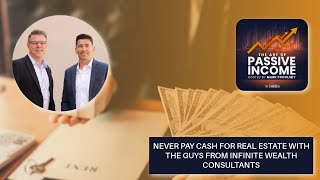
This is a transcript of a YouTube/podcast episode (Art of Passive Income) hosted by Mark J. Podolsky with guests Anthony Faso and Cameron Christensen (Infinite Wealth Consultants). Central claims: paying cash (or aggressively paying off a mortgage) can be a "million dollar mistake" because of lost opportunity cost; instead, store capital where it can be leveraged without breaking compound growth (they advocate a tailored whole-life policy and the "infinite banking" concept from Nelson Nash). Cameron gives a numeric example: with $1,000,000 investable assets, deploying $800k at 10% yields $80k while $200k sitting at 0–5% can shift an overall portfolio return from 8% to 9%, which compounds to materially larger wealth over 30 years (they cite roughly $10M at 8% vs $13.2M at 9%). The episode also critiques 401(k) plans as illiquid for investors seeking fast access to capital, offers advice for teenagers (education, mentorship, play the Cash Flow game), and recommends resources (Becoming Your Own Banker by Nelson Nash; Buy Back Your Time by Dan Martell; Tax-Free Wealth by Tom Wheelwright). Calls-to-action include visiting infinitewealthconsultants.com and thelandgeek.com/training (Flight School).
Questions this video answers
October 10, 2023.
$800,000 deployed to work (assumed 10% return) and $200,000 held in reserves (example uses 5% return).
$800,000 at 10% → $80,000; $200,000 at 5% → $10,000; combined = $90,000.
Approximately $10 million at 8% and $13.2 million at 9% (figures given verbally by speakers).
Becoming Your Own Banker by Nelson Nash.
Chapters
Hey, it's Mark Podolski, the Land Geek. His favorite itchy real estate website, the landgeek.com and on this week's Art of Passive Income podcast. I am so excited about our guests. One of them is a dear friend, Anthony Faso, but he's. He's with his partner, Cameron Christensen, who I would argue, if you guys are just listening to this, check out the video, check out this guy's hair, because it might be some of the best hair in the country. Anthony is a recovering cpa, and he was a CFO of a chain of restaurants and a small business owner. He was always looking for passive income and a path to freedom and helping other people create a path for freedom. Cameron was frustrated with investment solutions proposed by traditional financial advisors. The two of them have hooked up. They are now helping Infinite wealth clients who are not subject to the roller coaster of the stock market and just want to help you become free, have your passive income exceed your monthly expenses. Guys, welcome.
Glad to be here.
I'm not sure if I'm glad to be here or not quite yet, Mark, but I'm excited for this interview.
All right, so let's just get into it. We'll skip. We'll skip the pleasantries.
Let's.
All right. What is the million dollar mistake? Why should you never pay cash for real estate? Oh, geez.
Hang on a second, Mark. I apologize. Hang on one sec.
Okay, we. We got some numbers.
Okay.
Sorry, I was not prepared for that.
You know. You know, Anthony, we can't have dead air on a podcast. This is like a radio show. We can't just stop and have you guys go get notice.
If you notice, your dear friend stayed here.
I do appreciate that the recovering CPA.
Would have the information in his mind. Yeah.
Because I've got a buddy in Chicago who's very proud that he paid paid off his house as fast as possible. And now you guys are saying to me, wait, he shouldn't have paid off his house as fast as possible. Or even, you know, I'm listening to Dave Ramsey and he's like, oh, no, you should never have any debt. Right? And now you guys are going to come on and say, oh, that's a million dollar mistake. You should never. I mean, never's a strong word, Anthony. Never pay cash for real estate.
Yeah, well, and just what.
How about paying off my car? Like, should I pay off my car?
Well, you know what? We have to. I tell in regards to the mortgage. I mean, that can get a little more personal. I mean, sometimes it's like an internal goal. And it's kind of hard to justify not achieving it if that's super important to them. Right, but that's what we're looking at emotionally. But if we look at the numbers, I mean, paying off your mortgage unless you're near retirement can be a terrible financial decision.
Okay, say more.
Okay. And what we need to look at is if you, it's called lost opportunity cost. Let's say Your house is $300,000. So you, your mortgage, I mean until, unless you just got it was probably 4%, maybe even less.
Right.
And in addition, that interest was tax deductible.
Right.
So the question gets to be is, well, you take that $300,000. What's the best use of it if you, you could apply it towards your mortgage and what are you saving? Well, we're saving interest of what, 4%, maybe closer to 3 when you include some of the tax deductions. And the thing is, what else could you do with that $300,000? Could you do more? Could you create some passive income? Because, and because what the main reason why people want to pay off their mortgage, they don't want a mortgage payment.
Right.
And I get it, but what if we took that money and created some passive income? Maybe particularly if your listeners, that money would be much better utilized in, in, in your land business or getting in with land deals. But you should be able to make more money when you have control of it to offset the interest you're paying on the mortgage. And, and to be honest, if you do it right, you could create enough passive income where that asset can pay down your mortgage. So then when you fast forward to when the mortgage is paid off, so the mortgage is zero and you still have that asset that is producing cash flow.
Okay, that makes sense to me. But Cameron went and got numbers.
I did get numbers because I work with a cpa, so I got to make sure this stuff is right. Right. There's no like aroundish around here. We, we do the math. That's kind of our, our mantra.
Okay, so share the numbers with me. Awesome.
So the question you're asking me, Mark, was, you know, what's the million dollar mistake? And this is probably this one of the single greatest mistakes that we see investors make all the time. And the way that I propose this to them is I say, hey, listen, most of the time what people are doing is they're taking a micro approach to personal finance. And I'm going to share this example with them to get them to step back and take a macro approach. To their finance. So I'm going to walk you through a scenario. Okay?
Okay.
Okay. So if we have somebody that comes to us and they have a million dollars of investable assets, rarely are they deploying all of it. Right? So we're going to have some in reserves, and we're going to go put maybe $800,000 out there to work. If you're a real estate investor, kind of the rule of thumb is they snub their nose at anything less than 10%. Right. So if we assume that we can take 800, go earn a 10% rate of return, right. We've earned $80,000 on that investment over the course of one year. Right?
Right.
Awesome. So that is an 8% or 10% return on investment, but when you look at it in comparison to everything that someone has, it's an 8% return on wealth.
Okay?
Okay. So the problem here is not that 10% or what people are doing with the investments. The problem, and probably one of the greatest inefficiencies that we see is what people do with that remaining 200,000 is they have that 200,000 sitting there in cash, earning nothing for them. And so to fix this inefficiency, what we need to do is we need to take that 200,000, we got to go put it to work for us, but we still need to keep it liquid. You need to keep it safe. And so if we can assume that we can take that $200,000 and take our earnings from zero. And for round numbers today, in this example, let's use 5% over the course of one year, we can earn $10,000.
Right?
So now when we compare and we put that together with the $80,000 that we earned, our return on wealth is not $80,000, but now it's $90,000. And what we've done is you've taken your return on wealth rate of return from 8 to 9%. And what most people think is, oh, man, that's 1%, like it's not a big deal. Right?
Right.
But if we assume 8%, a million dollars at 8% over 30 years, we end up right at $10 million. If you take $8 million and assume 9%, you end up at $13.2 million.
Mark.
That's a big difference.
It's bigger than 1 million for you math guys out there. Right? So our million dollar mistake is not really to over $3 million. Right. And so it's a huge mistake. And there's incredible inefficiencies that investors are making out there that they're just not aware of. And so there's some really little easy things that we can do to help them amass large amounts of wealth.
Okay, so let's talk about amassing large amounts of wealth. I've got three teenagers. What would your advice be to them getting started to. Because they've got the power of time compounding. They can, you know, certainly withstand any ups and downs of a market cycle. Where should they start?
I would say when you're young, you need to get educated. And I think the. I'm sure you may have heard this book called Rich Dad, Poor Dad. Right. But I think that that is a great. It's a good story and it's easy for younger children to understand it. In fact, I had my son read it when he was maybe late teens, early 20s. And then one day he calls me and he's like, dad. He goes, I. He goes, I'm the poor kid.
Yeah.
I'm like, what are you talking about? You know, and then I assumed, you know, that he, his friend is driving a nicer car or whatever. He's like, no, I'm reading Rich dad, Poor dad. And every time I get money, I want to go spend it. I'm not thinking of buying assets, I'm thinking of buying liabilities. So I would say getting them to read something to open up their mind. And again, we are big fans of Robert Kiyosaki and he has a game, Cash Flow, which is more like a real life monopoly. And what I like about that, it teaches them to get more passive income than your monthly expenses. And what I think is key for teenagers is part of that there's one place you land on called a doodad, meaning that and you turn it over and it's some sort of liability, like you bought a big screen or you redid your kitchen or something. That really isn't producing assets. But I think that instills in the kids, you know, of, of. Of spending money on doodads versus assets. And then I think most importantly, it's finding a mentor.
Right?
Somebody that they. And what. And they should focus not on how much money they're gonna receive, about how much education they're going to receive.
I love that. I love that. Okay, so here's like, you know, they go to Uncle Anthony and Uncle Christian and they say, Cameron, you know, Uncle Cameron. And they say, okay guys, I just got my first job and this just seems like a no brainer. My company offers a 401k and they'll match up to 9% or 8% it just seems like free money. Uncle Cameron, Uncle Anthony, this is amazing, but for some reason, whenever I bring up 401k, you guys roll your eyes and then just start talking amongst yourselves. What's wrong with the 401?
Awesome. Mark. There's a lot that we don't like about 401 s. I'm going to tee this up here for Anthony, but the first thing I would if my kid came home and had their first paycheck, number one, is I'm going to have them read this book. This book is becoming your own banker. And what they're going to learn in that book is something that took me probably 20 years to learn about money. And one of the biggest things that you learn in there is that your money has to reside somewhere. So typically, if they haven't been earning anything, they haven't really cared where they kept their money because they didn't have any prior to that. But once we have some money and we need a place to put it, we've got to start analyzing some of the opportunities that we have. And so becoming your own banker talks about where you can put the money. And so Anthony's going to kind of talk about the 401k specifically, I would.
Say I'm not a big. And it's hard coming from a CPA. Normally, CPAs 401ks are kind of like their secret weapon, right? Or, hey, you owe, you know, a lot of money in taxes. Once you put a big chunk over here and you're going to pay less. That sounds good at the moment, but we need to figure out the long term. The problem is that money is locked up, you know, and we're very limited on what we can do with it. And really, you know, at the bottom line, for me, it goes down to. It goes down to your goals. What are you trying to accomplish? And, you know, there's nothing wrong if somebody just wants to be an employee, but I would assuming those people are not listening to this podcast, right? This is the art of passive income. We want to create passive income, ideally more than our monthly expenses. Where we like to say we want our pie to be bigger than me. So in order to accomplish that, we need to put our money in places that can allow us to create passive income money inside a 401k that's locked up until you're 59 and a half is. You cannot turn it into passive income. And also when you need it, there's going to be restrictions, there's going to be taxes and the penalty. And when you create passive income, you're going to find when you take the blinders off and start looking for opportunities, those opportunities are going to find you. And the best opportunity is going to have a small window to take advantage of. And if your money's locked up somewhere, you could lose in on the deal. We want to have our money somewhere that is safe and liquid, so when those opportunities come, we can take advantage of them.
I see. So Cameron just put up this book, Becoming youg Own Baker by Nelson Nash. And you guys have the Infinite wealth podcast. And there's a concept that you guys have created called infinite banking or becoming your own banker. What does that mean?
What I would say it's.
Go ahead.
Well, Mark, I want to be really clear is we didn't create kind of infinite banking. Right. This book is a book that was written by Nelson Nash and it was self published back in 2000. And all Nelson Nash did is what he took this idea that people have been doing or this practice that people knew for a really long time, and he just wrote a book about it. But this idea of storing capital, where you have a place to put it, is what people have been doing. Some really wealthy families and wealthy people been doing it for centuries. This book was really the first time that it was like a user manual for just us regular people that said, hey, listen, this is something that you can do on a personal level. Right. And as you start to dig into this whole strategy, you realize that wealthy people have been doing this because it provides them the control to the capital that they need. But then also is you got banks and financial institutions that are doing this as well. They're doing it on a very, very large scale, but they're using the same products that are available just to us regular people. And so Nelson's book, in my opinion, is the book that really opened everybody's eyes to the practice of being able to do this for yourself. And so that was really the takeaway that I had when I read Nelson's book was, man, it was kind of letting me peek behind the curtains to really what was happening, a. To how money works, but also how I can implement it on a much more personal level.
Okay, fantastic. So what should I have asked you guys? I didn't ask you before we get to our tip of the week.
Well, let me just give a little overview of kind of how infinite banking works. Sure. Like Cameron said, we got to store our money somewhere. And where most investors look for, somewhere that's safe and liquid, and then when they find an opportunity, they Withdraw the money and buy the asset. That asset produces cash flow and they got to put that somewhere. They put it back in the bank. All we're really saying for, because our niche is infinite, banking for investors, all we're saying, instead of storing that in somebody else's bank, store that inside a Whole Life policy. And this policy is designed very different than what you may have heard of, particularly you'd mentioned Dave Ramsey. The Whole life structure is very different. So it's not what they're talking about. But the advantages of storing it in there as opposed to somebody else's bank are, are plentiful. It's also safe and liquid. And some could easily argue it's safer than at a bank during these times. It's going to earn a much higher rate of return and it's going to have some level of asset protection. Some states it's 100% from asset protection and it's completely liquid. And what makes it different compared to a bank? When we take money from a bank, we take a withdrawal and we break the compound interest curve. Right Now, Mark, at what point would you want your money to stop compounding?
I never want my money to stop compounding.
Okay, great. Good answer. But storing money in the bank, you're breaking that compound interest curve every time. So one advantage of storing in whole life, we don't need to withdraw it and break the compound interest curve. We can leverage against it, meaning we take a loan against it, but since we never touched it, we're still earning money. So that, so we never break the compound interest curve. And when you use this money for an investment purpose, AKA your land business, that interest is tax deductible. So this is a great tax strategy here where we're literally creating tax deductions, but all we're really doing is, is just changing where we're storing our money. And by doing that, we're never going to break the compound interest curve. So you're going to end up earning more interest, have it asset protected, which will allow you to buy more assets and more assets.
Mark, I'm.
Yeah, go ahead, Cameron.
I was going to add something on there as you asked, kind of, hey, what you should have asked. But the first thing that came to my mind is what makes us different.
Right.
Anthony and I have kind of, we've been in the space for 13, almost 14 years. And it used to be a very obscure, small kind of niche, but I would say over the last seven or eight years it started to blow up quite a bit. There's a lot of People that are entering the space, and if I'm totally honest with you and your listeners, is there's a lot of people saying that they can do this and that they're good advisors or coaches in the space. And unfortunately they're not. They're giving bad advice. And so one thing I would say is that what makes us different is we do have a podcast. And that podcast, from our point of view, is us to be able to kind of send out a how to do infinite banking appropriately. Right. But also we're going to highlight the good and the bad of infinite banking. Right. Nothing's perfect. There are some downsides or some things that somebody should know about doing this before they enter kind of a contract with an insurance company. And so that's what we use that platform for. And then also additionally, what we use our podcast for is to just talk about opportunities for passive income. Right? Land flipping being a huge part of that for a lot of our clients.
Now, Mark, you know, there is one question that I think you should have asked, and it was to Cameron and it was when he left, was it to get his nose or to fix his hair? Because you just told everybody to look on YouTube and check out his hair. So I'm kind of curious.
Yeah, let me move over. Yeah, it looks good today.
I mean, I, I think what most people, after watching this on, on YouTube, the podcast, they are going to be investing in Cameron's hair products.
Hey, you know, Anthony's got, he's a recovery cpa and I've got all the details on hair products that anybody would ever need, so.
Fantastic. Well, guys, we're at that point now where I want to ask you for your tip of the week, a website, a resource, a book, something else actionable for the auto passive income listeners to go improve their businesses, improve their lives. What have you got?
I would tell you, I'm reading a book that I think a lot of you that would correspond with a lot of people doing the land business. And it's by Dan Martell called buy back your time. And it's, you know, a lot of people are. They want to invest in the business to scale it. And what he's saying is we need to invest in the business to buy back your time because there's certain things that you are good at and those are the things that you enjoy. So we need to get those other things to VAs or outsource so you can focus on things you enjoy and that indirectly will scale your land business or whatever business you're in. But Also, a lot of entrepreneurs have an issue where we're spending so much time working that we're not attending to other relationships. So we can also have that time to kind of do some other things outside the business that we enjoy.
Yeah, this sounds like my kind of book for sure.
Yeah. You're going to dig it.
Yeah.
Resource I would, I would suggest would be listeners read Tom Wheelwright's Tax Free wealth. He's a CPA. I'm not a big fan of CPAs in general. They're usually very arrogant. But Tom will write, I love the way that he approaches personal finance. He always starts with the goal in mind, like, what are we trying to achieve? And then you back into certain accounts where you should be putting your money. And that is very similar to our process is what are we trying to achieve? And then we can tell you what the best result of the best path is to get there. A lot of times we see clients come to us and they just have this whole gamut of investment accounts just, just out of, you know, habit.
Right.
They just pick them up along the way, but there's no real focus, no real goal that they're trying to achieve. And so that's one of the things that we'll address with them is, hey, where are we trying to go? Let's consolidate and let's start moving. So I think it'd be a good resource for you and your listeners.
Fantastic. Well, my tip of the week is learn more about Anthony and Cameron and not just where he gets hair products. Go to infinite wealth consultants.com infinite wealth consultants.com Just quick reminder, today's podcast is sponsored by flight school. Learn how the next 16 weeks can literally transform your life. Go up that mountain of land, investing safely, quickly, efficiently with Scott Todd is your Sherpa. Who's that A thousands of times. And I know what you're thinking, wait, what about the investment? Ain't gonna cost you nothing. Guaranteed you'll make it back 180 days. Just show us your work.
Learn more.
Go to the landgeek.com forward slash training. Thelandgeek.com forward slash training.
All right, well, Mark on that. I just say I went through flight school and spent some bonding time with Scott Todd. And it was, I mean, with this land business, a lot of times you read the, read your book like I did and like, you know, maybe I could do this myself, but you know what? I would say you could, but you shouldn't. You know, what we need to get is investing in yourself. That's. That's your number one asset. And that's going to allow you to go faster by spending those 16 weeks, I think will more than pay for itself in the long run. If you're trying to do it yourself.
Yeah, absolutely. To your point before, mentorship is so important and investing yourself is so important. Absolutely. And then once you are your own banker, you're just going to be able to figure out how to use all that capital to buy up that raw land, make 300 to a thousand percent, pay yourself back and do it again. Infinitely. So do that. All right. Want to thank the listeners, Remind you, the only way I'm going to be able to get these guys back on the podcast is if you do three little favors. Follow rate, review the podcast, Send a screenshot of that. Review support@thelangic.com I'm going to send you a signed copy of Dirt Rich, which is now worth about 2 billion in crypto. So please, please do it. All right. Thanks guys. Are we good?
We are good.
We're good, Mark.
All right. All right. Thanks everybody. Let Freedom Ring thanks for listening to.
The Art of Passive Income podcast.
Are you ready to learn how you can start building a passive income without.
Renters, rehabs, renovations or rodents? Schedule a free consultation@thelandgeek.com forward slash training.
Let Freedom Ring.
More from Mark





How to find funding partners: How to Scale Land Without Using Your Own Capital


