Proof Why Land Investing Is Considered A Sustainable Business
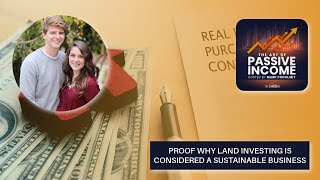
Roundtable podcast (host Mark J. Podolsky) with Landon & Taria Harris, Eric Peterson, and guests Chris & Lauren Paulsgrove about land investing. The Paulsgroves describe their path from earlier real-estate exposure to buying a $1,700 course (Aug 2020), flipping an initial parcel (~$10,000 profit in ~4 months), purchasing the Land Geek toolkit, joining Flight School (Dec 2021), then Bootcamp and coaching to scale into a sustainable business. They discuss complementary couple roles (visionary vs. project manager), hiring challenges (intake/buying role), recent hires (sales assistants) closing deals, community benefits, core values (hard work, generosity, hospitality), time freedom with family, and recommended books (Who Not How; The E-Myth).
Questions this video answers
February 6, 2024
August 2020 (Chris bought a ~$1,700 course)
About $10,000 profit on the first property, flipped in ~4 months
December 2021 (Chris convinced Lauren to join)
Approximately 50–60 properties bought and about 40–45 sold (Aug 2020 → present)
Chapters
Hey, it's Mark Penults to get the land geek with the favorite niche real estate website, the landgeek.com. and on this week's roundtable podcast, we have almost all the usual suspects. We've got Landon, AI Harris. Landon, how are you doing?
Well, Mark, good to see you.
We've got your partner in crime, Taria, putting in the reps. Harris, Tria. How are things?
Things are great. How are you?
Pulse is still normal. Can't complain. We've got Eric the technician Peterson. Eric, how are things in beautiful Franklin, Tennessee?
It's feeling like fall.
Is it feeling like fall? Yeah, yeah.
Miss that.
I know. Yeah.
Poor, poor land. And then in Turia in beautiful Northern California, we all feel so bad.
Boring.
Mid-70s. So boring.
I know, I know. What's a cloud, Landon?
We'll, we'll, you know, in a while.
I don't know what that is.
Yeah, exactly. Well, we have our special guests, Chris and Lauren Paulsgrove, who have just completed not just flight school, but also coaching. And these are always our favorite podcasts because we get to hear from their journey. It's like a gorilla geeks on steroids. So we'll all go around and ask a question, but I'll ask the first one. So, Chris, Lauren, first of all, what made you guys even think about land investing and how did you find the land geek?
Yeah, so that comes down to me. Always had a bug of real estate investing since probably late high school years. I had a boss that invested in real estate, and he really just was like, hey, I. I don't make all my money running this lawn care business. I make all my money in real estate. And that put a bug in my ear. I looked at all different kinds of real estate. I mean, we've. We've done long term rentals, we've done short term rentals, and I've listened to I don't know how many thousands of hours of podcasts, but a lot and a lot of different ones. And biggerpockets was on there in the early days. And I think it was just hearing the concept of land land investing multiple times from different people that just kind of drew me in. It finally clicked and I was like, oh, my goodness. You don't have to deal with tenants. You don't have to deal with people not paying the rent. And if they don't pay, you can just take it back after a certain amount of time. This could work. And so I think I ended up buying a course from another. Another land investor and got into it. I Think In August of 2020, I think it was like a seventeen hundred dollar course. I think I turned around and flipped that first property in four months or something like that and made ten grand, I think. So proof of concept and off to the races. Lauren let me do it all, so that was helpful.
I, I learned early on to get out of his way because I'm, I'm the cautious, steady person, like, oh, maybe we should hold off on this. And we had been doing a short term rental for a while and so at that point I'd seen proof of concept and Chris just taking something running with it. And so when he mentioned land investing, I was like, okay, well I don't know anything about this, but go for it. So, yeah, he spent his first or the first over a year doing the land investing on your own.
Yeah, yeah. And then I think it was probably a year, a year or so into it that, I mean it was nice to flip a, flip one or two pieces of land for a few grand cash. But I, I really wanted something that was sustainable and that was an actual business that we could rely upon for income. Not just like every few months, maybe we get a deal. And I somehow got turned on to land geek from that. And I think I bought the toolkit pretty quickly because it's like, I know it works and let's see what this, this one looks like. And then I think December of 21, I convinced Lauren, hey, we should join flight school. And it was like, I think I, I think it was the day or the day before the next class started that we had this conversation. She's like, okay, let's do it. Um, so we made the investment in flight school and learned kind of the systematic way of doing it all, which was helpful. I mean, it was helpful for us going into at least, definitely for me having kind of a base level of knowledge of like this works. Like, I wasn't questioning at all in flight school, is this going to work? Is anybody going to buy this land? I knew that I just wanted to know the systems, the processes, all the different resources to really make it into a business. So then coaching was a pretty obvious next step after that, after going to boot camp.
So yeah, boot camp definitely fired us up. We were like, okay, we've tossed around coaching. We've seen other, others from our graduate class in flight school who are doing this. And we were like, oh, should we take the plunge? And it was after boot camp in 2022 that we were like, this is obvious next step. Like, this is what we want to do this is something that we really want to be a long term solution for our family and just solution for us to have a really good and fulfilling life and be able to also give that to others.
So yeah, I love it. I love the journey. Well, Landon, what, what question do you have for them?
Wow, really cool hearing you guys story and just kind of watching you guys kind of progress through this just instant land investing. So actually, so the first question comes into my mind is because Terea and I have been together and we went through this process, I'm always interested to hear kind of what your relationship is like going through this together and like how do you guys balance it? Are there any roles that you take? You back off? What, what do you guys, how does that look with you guys?
Yeah, that's a good question. All right, I'll start. So obviously I was the one that had to get out of Chris's way. So he is the visionary. He will take something, execute on it. He's, you know, an engineer by mine too. And so just how he thinks about things completely different from me. I am project manager, daytime job, and again, steadiness person. I love relationships, I love building relationships and talking with people. But I am not the visionary. I will prevent the visionary from functioning well if I sit and think too much. And so yeah, I think in our relationship and how we approach our, our business and just life in general is very complementary to each other. So I'll give my piece of it and then you can maybe give your, your insight too. But for us, we really had to establish. Okay, you know, Chris was already two years into the land business at the time that we started coaching. I obviously had gone through flight school. We also did a move across country in that time. We had have three kids. We had a year old, our youngest was a year old at the time that we moved. So it was just a huge change season right before we entered coaching and when we were in flight school. And so flight school really helped me understand the concept of building a business. Seeing what Chris was doing and being able to have conversations with him and be like, oh, okay, so you're saying this and now like now it's clicking. I understand why you're saying this. I may not be in it day to day, but it clicks. And from a project management standpoint, that's enough for me to be like, okay, I can ask a question that maybe will help us move forward or listen to him. And I'm not just swimming or trying to swim in his sea of knowledge. So yeah, Kind of fast forward through that. When we entered coaching, initially it was, am I going to be doing all of this? How much am I going to be involved in it? And as we went through the year and we had Erica as our coach. Thanks, Eric, for putting up with us. And it was. It became more evident where my strengths were, and that was with building relationships with people, really establishing community, really. You know, I love talking with people about our land business. I have enough knowledge to talk about that and I really like to tell them about what we're doing. You know, we want to bless others with that too. And so, yeah, that's kind of my role in it is talking more about it with others and, you know, talking with potential investors, talking with just people in general who are curious about it or might want to get out of their nine to five or maybe want to add to their nine to five. And so while not add to, but, you know, concept of not have to depend solely on that.
Yeah, yeah. I mean, I'd echo that. The relationships are big.
That's.
That's an area where I can do it if I have to, but I definitely prefer to be more in the nitty gritty of details and getting. Getting stuff done, getting the business functioning. I think the other big thing that Lauren offers, she said getting out of the way. But it's not just her getting out of the way. It's really her cheering me along and encouraging me. I mean, we had a conversation just the other day where she was like, it was just something about, I can't get too in depth into something or I can't spend too much time on something because I'll just kind of lose track and need to do something else to stay excited. So I can't spend 40 hours a week working on the land business. I needed to have other things as well. And she's like, well, start another business, like, do something. I. And that vote of confidence was, I don't know, we've been married 10 years now and that that wouldn't happen in year one for sure. So it's. It's cool to hear that and hear the kind of the process and the growth that we've been through together and all of it.
Yeah.
Nice. Nice.
That's awesome.
It's a really good question. And then, yeah, definitely built our trust in each other a lot.
Yeah. Yeah. It's always. I'm always curious on. It's. It's so different from couple to couple and just sometimes even just partner to partner, whoever's working with it. So really Cool.
Nice.
Yeah, the, the family that, you know, buys and sells land together, Stacy, could.
Be said, could be said like that for sure.
Teria, what's your question?
So Chris, you at least had land knowledge before you joined our community. So Landon and I had zero land knowledge. Right. So I'm just wondering for those who are out there who think, well, I need to know this or I need to know that before I jump in and get going, or maybe there's an advantage either way, but so can you just kind of talk about how it helped you or how you think others can join even if they don't have real estate knowledge?
Yeah, I mean, I think with the knowledge that I had and even with some of the systems and tools that we use, like GIs, like I, I did that in my career, I used that, that software in my career and it really just jump started it, it made it faster. But anybody can learn all of the things that we use, like all of the softwares and tools and the way that we look at things. Anybody can learn these. YouTube has been, and I'm sure for everybody on this call, everybody listening YouTube will teach you just about anything or just a simple Google search. So I think it was definitely helpful to have some real estate knowledge and also to like looking at it. Like I could spend hours looking at a county GIS map just figuring out like, oh, how does this property get access? Oh man, what if I was able to buy all of these properties? And that stuff's cool, but anybody can do it. And the way that the program is set up too, with, you know, the toolkit, kind of do it yourself. And then flight school, getting a helping hand and then coaching really in depth, growing something, there's really an opportunity for anybody that wants to do it. One thing I was thinking, as you know, I was thinking about being on this is really, it just takes showing up every day. So if you have persistence and grit and want to, want to build something, you just have to do one task every single day. Like no matter how, how cruddy you feel or how cruddy you feel about your own business, like you just show up every single day and keep pushing forward and you're going to find success.
Nice. Thank you.
I, I love it. I love it. The technician. These are, these are, you know, your, your students. Eric, how's it?
Seen these guys before you see them? Well, Chris and Lauren, happy to have you guys on the podcast today.
Great to see you again.
You know, obviously through what you've already talked about, we all know you've You've kind of been at this for a while. You've. You're seasoned, we'll say. Right. So at this point, what would you say is your favorite part about the land business, and what is your least favorite part about the land business?
You want to start off.
So favorite part is actually something that would have surprised me, say, three, four or five years ago. Having the opportunity to bring other people along on the journey with us, whether that be people that have invested in our business, whether that be people that we've been able to buy or sell land to from. And. And then really the people that I've been able to bring onto the team. I'm really working hard on getting myself out of the day to day and bringing on people to help purchase properties, bringing on people to help sell properties and market them, and hearing their excitement and hearing how they're excited to be part of what we're building, that's probably my favorite part at this point. Least favorite thing about the land business. In the early stages of it, and even still a little bit now, trying to keep all the plates spinning is. Is really difficult because, you know, you focus on buying land and then you've got a bunch of land, and then you gotta turn around and try to sell all that land if you're the one mainly doing it. And the problem I've had more recently is bringing on a couple sales assistants and running out of land. Not actually running out. Like, there's still stuff in inventory, but it'd be really nice if we had another 10 properties in inventory. But I was focused on getting them hired and trained up and not as focused on, you know, making sure mail is getting out when it needs to. So still in these early stages of keeping all the plates spinning is probably the least favorite part.
Yeah, so I've mentioned this. I really like the community, and so the land geek community has been really awesome. I've loved Bootcamp. I really liked the VIP room. And even since, I mean, I text with some of the people that are also in the community. And I think the really cool part of that is you have people who are there with you in that stage or a similar stage, you have people who have gone before you, so you can kind of tap into that or just have some of those casual conversations over dinners, you're walking someplace. And also those that are not yet where you are that you can encourage along to. And I think that's one of the cool things. Coolest things is just the really awesome community through the business that we've had. We're not alone in it. Like, we don't feel like, okay, we have to figure everything out on our own. We. We really have such awesome people that we get to invest in, but also who have invested in us. And so probably one of my favorite parts is that least favorite part, I think, for me is, okay, Chris is visionary. He gets everything going. He gets the plate spinning, but the plates aren't necessarily in an organized fashion for my brain. And so I think the more difficult part for me is just, you know, everything. Everything that he has spinning, trying to make sure that I'm keeping track of things enough so that I can hear what he's saying, listen to him, see where we maybe need to encourage moving forward in an area or I need to be encouraging him more. And so I say it's least favorite because I think that can sometimes be the most tension right there is just, well, where are you doing all this? Or how is all this going right here? What did you change with this? And it's also, I don't know, I find a lot of positivity in the probably least favorite part too, in that it just helps us grow more and communicate better. So. Yeah.
Yeah. I love that attitude. Like, you know, the obstacles make you stronger. Yeah, right. And they help you grow. And it's. I was. I was reading a quote today. It was an FDR quote. Let me see. I just had it. Well, it's not here or there, but it was basically like something like, you know, smooth seas make for a poor sailor. Right? Like, you need those rough waters to get good at anything and. And have that, you know, go through that. That fire and the fact that you're doing it together, I think it makes it even, even more special as well. All right, well, I've got a question for you. What's been your favorite deal?
So I actually have two, and they're very recent ones. And it's not so much the deal, though, both great as it is how it was done. So I recently, with like a month ago, hired two sales assistants who will eventually be sales reps, like full on commission sales reps. And they've both now sold a property. And so those deals are awesome. Where it's like I never spoke to the customer. I didn't have to worry about if I was letting the customer down by not getting back to them in a timely manner. Both of the girls that I hired are awesome, and they both sold the property now, which is pretty awesome. And I'll just run through the. The numbers really quickly. One of them, I think, was a buy for twelve hundred dollars. Got it off a mailer, and it's four parcels. It's a total purchase of twelve hundred, and we sold it for six thousand on terms. So awesome bread and butter deal. And then the other one was. Was really cool. And it's kind of the direction that I've been trying to go for the past year in terms of size of property that we sell or, like, size of financing of it all. That was a buy for 8, 8 to 9, something like that, and then a sell for 40,000 on terms. So both awesome deals, ones that have been actually sitting for a little. Little bit of time, even though they're both great, but having somebody else do it, that was awesome.
That's fantastic.
So I remember you had a flight and. Or you had. I don't know if you were in between flights or something like that, and you texted me, and you were just like, property just sold. And I didn't have to do anything to sell it. And it was just. It was so exciting to get that text from him because we've heard it from others again, those that have gone before us, those that are there. And to hear that from him, I know he can sell properties, and I know he can sell them really well, but to hear that someone else sold it and just, oh, so exciting.
Yeah. And to celebrate that victory with them, because they were both really excited, obviously. So.
Yeah.
So that was. Those are my favorites.
Yeah.
Those are so cool. Landon, you have another question.
So I'm listening. And, like, you guys have got some great stories going. And then I'm wondering, because I hear a little bit more from you guys. It's more of a. To me, I don't. I don't know that this business is just about the money for you guys, but is it. Are there any other things that are measurable, like of. Of how you're succeeding or in your. In your success? I guess, as you're doing this business. Can you talk a little bit about that?
Well, first, I don't know if it's yet measurable, but kind of the way that I think we view life and. Yeah, the way that we view life, it's not necessarily about making a bunch of money and buying all the things that we want. It's about living a good life, so using the time that we have really, really well. Finances are just a tool for that. So I don't. I don't care if it takes, you know, 10 or 20 or $30,000 to live a good life. A Month or a year, that doesn't matter. It's really about living intentionally each and every day. I don't know yet how to measure it, but certainly, you know, bringing people onto the team is part of it. I think in. So we, we've written a vivid vision for our company as well. And one of the other things that I mentioned in it is giving back. So we have a goal, and I think it's giving back a hundred thousand dollars over the next three years just to different local charities and churches and missions organization organizations and things that we see as really important and valuable. So I guess that's one way to measure it is people that we've impacted.
Yeah, yeah, I'd agree with that. And I think, I mean, just in general, every anniversary, we measure just everything from that last year. Like, we look at it, we really just take into account everything that, you know, God's really done in our life and that we've been blessed with. And I think that is one of those things where measuring it and Lynn and I, you know, I'm a project manager, so I have to be careful how much I try to manage. Chris Part of that is the measurables, like I. The measurements are definitely something that, as I get more involvement in things, I. I'm sure that's going to come more. But I think, you know, we have several investors that we now get to benefit with these deals and with these, you know, this awesome business. And that's really cool to see. You know, we have three core values that are just, we talked about it for our family, who we are, and, you know, it's hard work. And so we will always work hard and strive to, to be very intentional with our time. And it doesn't mean hard work has to be, you know, angering work or disappointing work or anything. It can be really encouraging and uplifting. And we think, you know, we're made to work in that and we really want to be generous. Generosity is our second one. So to make sure that, you know, we're stewards of our time, our talents and our treasure, and we want to be really intentional with how we use those. And then hospitality. We love to care for others and, and care for those in our community around us. And it allows us to do all of those things by having the. Having our own business. And so we measure also by that. Landon, is are we aligned with this? Are we continuing to do this? And, and how are we continuing to, you know, be good stewards as things increase or as we have more capacity.
In areas so it's so good, you guys. That's awesome, you guys. Sounds like you guys have your why figured all the way out. I love that. That's fantastic.
Yeah, it's been, it's been a really cool journey with that.
Yeah, I would say it's ever evolving, though I don't wake up each day and know exactly what I'm going to do. I'm definitely. We're still figuring things out each and every day. You know, there's. There's kind of a cardinal direction that we know to go. So.
Yeah.
Yeah. That makes, you know, having good judgment so much easier. When you look at your core values and you say, well, this. Is this within our core values or not? And I think for those of you listening and you don't have a vivid vision, there's a great book by Cameron Harold that is called Vision Vision, Vivid Vision and just gives you the template on how to, to create that and, and really fortify your why and keep you, you know, in that direction. But Teria, what question do you have for Chris and Lauren?
My question surrounds just the coaching program in general. So what was the thought process? Because you obviously had some success, right, with. With even before the toolkit, you got into flight school. So what was the catalyst where you're like, nope, we're going into coaching and how did that revolutionize or change your business?
Do you care if I.
Sure, go ahead.
So I think, you know, Chris had been building things and he had a lot of areas where he was successful in it and he had seen that. But I think where we were last year going into bootcamp was okay. Chris left his full time job when we moved across the country and so he was focused on the land business. But then it was like, okay, there are all these parts and all these components to it. And I think it naturally felt like, okay, we should go towards coaching because it gives that direction and it allows you to really be 100% in this but also have someone else who's in it with you while, you know, I still work full time, so I don't, you know, I'm not actively next to Chris, like, yeah, you got this. Or we should do like. I think that was a huge part, at least in my mind was, okay, Chris has someone else who can help to kind of guide that and guide where he's thinking of going.
Yeah. The other thing I would mention too is coaching is an investment and so is the toolkit and so is flight school. And obviously, you know, the. They're different tiers of, of an Investment, and it was a big one. But I've just heard over and over again from people that have been really successful, like, they pay for coaches, they pay for shortcuts. That's essentially what coaching is. And these different educational programs are. They're shortcuts to success sooner. It's not that, like, we could do what we do in building a land business, but it would probably take longer, and we'd have to hit our head against the wall a lot more times and try 10 more tools or softwares to figure out the one that works the best. It's. I mean, coaching brought way more value than we invested into it monetarily. Just A, from the relationships, but B, from all of the knowledge and the softwares and the guidance behind it. So that's. That's a big, big reason. It's just a shortcut to. To bring our. Our goal and aspirations of a really strong business sooner.
Yeah.
Yeah. I love when people ask me, how much is coaching? I'm like, it doesn't cost anything. It pays for itself.
Yeah. I mean, more. More than that. And again, it doesn't even all come down to the money. So. Yeah, there's always been enough money that I've seen, at least in our lives.
Yeah. We just look at things and we're like, this is awesome. Like, 10 years of marriage. We're just like, look at the multiplication factors of this. And it's not just. Again, monetarily, it's. It's awesome to see what real estate investing does, especially real estate investing, where you have no renters or anything like that. So it's awesome to see that and the multiplication there. But it's also really cool to see just the multiplication that you get in so many other aspects of your life, too. And so, yeah, I think it's just a really. Yeah. Amazing thing to look at that and look at the timeline and just see how. Oh, wow. It's not just like, oh, let me add this little bit. The coaching added, like, just this huge multiplication factor onto it, and now we just see that ever increasing in our abilities to grow.
Yeah.
Eric, bring us home. All right.
So obviously, we've heard you talking about your business and, you know, the different things that you have off your plate and your team that you're building. But I know you're not all the way. You're there yet, but you're getting close. So thus far, what. What has been the hardest thing to outsource for you guys? Whether that's because it was hard to hire somebody, it was hard to train somebody. You just didn't want to let that thing go. You didn't think anybody else could do it. Like what is it and why?
I'll start by saying there's not a single thing in the business I don't think that I would not be okay with letting go if somebody else wants to do it all. If I can find somebody else to do it and just pay them in a way that makes sense, I'll do it. There's nothing I hold so dearly. The, probably the intake role and I don't know if you would agree with that, but the intake rule of buying properties has just been a headache and I think I've got it. I've got someone who's really good now, but I just foresee that continuing to be kind of a difficult point because I don't want just one person. I had to again and then I just, I had to make a change. I just, I'm down to one. But I don't want to just have one because it's just a single point of failure. But that's been the most difficult is finding people that, that just want to do that because it, at least in the way that our business functions, it's certainly not a full time role. And you, it's enough of a specialized position I guess because you are speaking on the phone with people. You, it is helpful to have some sort of real estate knowledge or just the ability to learn quickly because you're, you're doing basic property research at least how we have the role designed. So it's, it's kind of unique and maybe it'd be easier now to find somebody that the housing has slowed down a little bit. But that was kind of the pool I was searching for and I feel like at the time I was searching a lot of those roles were just in housing and not necessarily available to do land. But that has definitely been the most difficult part of it and that's my least favorite part of the business.
So yeah, I agree that has been, you know, we started that process over a year ago and like Chris said, we, we know someone in the role that you know is a really good fit for it. The cool part is with each time that we like Chris Cycles had different changes with people that he was working with for that he learned additional skills or different things that he wanted to do. So okay, I'm going to record these trainings so I no longer have to do a training every single day for two weeks straight or whatever it might be. Or putting the vivid vision out there that was huge in having a much, I don't know, a much more aligned individual come into the role. Just different things that, you know, positional contract, different things that he learned along the way and that I got to partner with that and partner with, seeing him go through it. But yeah, that was definitely the by far the most painful role.
Yeah. And some of that, the difficulty in it was probably a lot of my failings too, and the things I needed to learn about the role and what kind of expectations to have and having realistic expectations because from the first person I hired to now, probably the. I think I'm on six or seven, it's changed and my expectations have changed and the way that I've explained things have changed and the tools I've made available to them have changed. So it's, it's all part of growing and learning how to run a business.
Absolutely. Absolutely. All right, I've got, I've got one last question. How has this business changed your life or lives?
I mean, tremendously. You can start, like I've started on a lot of these.
I think for me, like Lauren said, I, I left my full time job when we moved from North Carolina to Illinois. And that was a big step because it's, relatively speaking, it's always been pretty easy for me to get good jobs and keep climbing the ladder. Almost to the point where a lot of the jobs I was just like, all right, I've done my job in 10 hours or 15 hours out of the 40. Like, what do I do with the rest of this time? There's nothing else to do. I'm bored. So I think for me, it's been nice to be separated from a job and not feeling like I'm getting paid for not doing anything for those certain hours. But to be able to spend the exact amount of time that I need to on the business, sometimes more, sometimes less, but really get to focus in and, and build something and then with the rest of the time, go and do other things that interest me. They could bring money in or not, but go and pursue other things and really just use all the time. Well, I think, I think there's part of a, or some of a theme in this podcast with us is time is really important and the way that we use it is really important. So we want to make sure that we're using it really well.
Yeah. And I think just to add on to that too is time freedom, also with our kids. So we like Chris and we actually have to do pickup soon, but Chris and I Like, we get to pick up our kids from school every day and we get to be really involved in just their day to day lives and be really intentional about that time with them. You know, we've been able to travel places. You know, Chris isn't within any restrictions on time in that sense. I mean, you're still working when we go to places, but there's a lot more flexibility that he has with it. And so I think you're just, you are extremely intentional with that time with our kids, which, you know, that's, that's a huge blessing to them. And I get to also be more intentional as a result of the business and just changes that we've made with that. So, yeah, that's been awesome too. It's just getting to really know our kids and getting to spend the time with them.
So that's amazing. You two are just a gift. This podcast is just really gift.
They are, very much so.
Well, as is tradition, it is now time and your mentorship has been great. But now we're going to ask you for your tip of the week. A website, a resource, a book, something else actionable for the art of passive income listeners to go improve their businesses, improve their lives. What have you got?
I'll go first.
Please do I.
So by the strong encouragement of Chris, I started reading a whole lot more books. And just with that, who not how has been one of my favorite books because again, I think it goes back to relationships and people and just understanding that, wow, okay, this other person has a significantly stronger skill set here. Why am I doing this? Or why would I try to tell them how to do this? Why can't I instead set the vision for them or get the blockers out of the way for them? And I'm speaking like a project manager now, but I think who not how was phenomenal in that, in us approaching it with the business. And I highly recommend that to anyone and everyone for any area of life. You're wanting to apply it like it is a really cool book.
Yeah, I mean, overall, I would just say books, people don't read enough books. I mean, there's so much knowledge condensed down into something that costs 10 or 15 or 20 bucks. I mean, it's. You get so much more value from it. If I had to say one specific book right now, and it kind of goes back to hiring people, at least for me, is the E Myth by Michael Gerber. And honestly, it took me a couple tries with that book to get through it, but when I got through it towards the end he starts talking about positional contracts which have really changed the. How we've done hiring our intake manager and then also our sales assistants. We've used positional contracts with them, which just outlines the expectations, what success looks like in this role, what kind of personality things they need, qualities they need to have to succeed in it. And then really kind of like the, the very measurable aspect of it is the 30, 60 and 90 day goals. Like, this is what success looks like at these points and getting to refer back to that with them and whether they met it or not, you know, there could be some changes I need to make, not necessarily just them. And so being able to have a reference point of like, this is where you should be at this point. Why aren't you there? Is it something you, you did or is it something I did or didn't do? So, yeah, books are great. Read books.
You all can't see it. We have literally a bookshelf right here And Chris has 15 books stacked on his desk right in front of us. So, yeah, they're definitely a huge part of our, our day to day and our just like you literally get to be in the room just by opening up a book with the smartest people in the world. And so it's a pretty, pretty cool gift with that.
Yeah, yeah, yeah. It's so true. I remember hearing Robert Kiyosaki talking about someone robbing his house and he said they didn't take the most valuable things. They left all the books. And I, I thought, oh, that's, that's so true. And you know, when I look at my own bookshelf, like, you could pretty much take everything, but don't take the books.
Yeah.
Because I, I love these books.
Yeah.
And you know, but, you know, today's day and age, it's so easy now to get new books. But that's not here or there.
But don't worry, Mark. Dirt Rich is one of the 15 piles on his.
So, Lauren, the check is in the mail. Thank you. So this has been great. My, my tip of the week is. Learn more about Chris and Lauren. Go to their website, Grounded Properties Land.com. grounded Properties Land.com. this has been a podcast for the ages. So much wisdom has been dropped by you guys. And we're so appreciative and just so proud of, of all that you've achieved. We didn't even get into your numbers. Do you guys even know how many deals you've done since you started coaching?
I have a guess. I'm not looking at it right now, but we've, we've probably bought 50 or 60 properties and sold 40 to 45 of them is my guess. And that's From August of 2020, when we started, until now.
Fantastic. Fantastic.
Nice.
Yeah. And, and on a part time basis. Well, not, not for you, Chris. But now it's full time. But it was part time.
Yep.
Yeah.
Amazing. Well, thank you guys again. Thanks for taking the time. I know you have to go pick up the kids and ought to be respectful and intentional with your time. I just want to thank the listeners and remind you the only way we're going to get Chris Lauren to come back and tell us more of their journey and their growth if you do three little favors. Follow Rate Review the podcast. Send a screenshot of that review. Support thelandgeek.com I'm going to send you one of Chris's top 15 favorite books signed copy of Dirt Rich. All right, are we ready to do this?
Yeah.
One, two, three, let's.
Freedom.
Thanks, everybody.
All right, thank you all.
Thank you.
Thanks for listening to the Art of Passive Income podcast. Are you ready to learn how you can start building a passive income with out renters, rehabs, renovations or rodents? Schedule a free consultation@thelandgeek.com training let freedom ring.
More from Mark





How to find funding partners: How to Scale Land Without Using Your Own Capital


