ROUND TABLE—Restarting The Momentum After Life Breaks
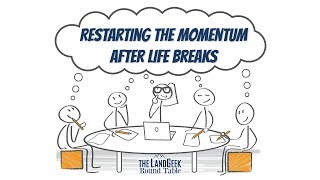
Mark J. Podolsky hosts a roundtable with Jeannie Morum, Eric Peterson, Tate Litchfield, and Scott Todd about rebuilding momentum in business after life gets in the way. They cover writing and publishing challenges, and how to stay connected with clients on eBay.
Chapters
Hey, it's Mark Fedolski, the land geek, with your favorite niche real estate website, www.thelandgeek.com. and for this week's roundtable podcast, we've got the usual suspects. Of course, we're very happy to have her back feeling better, recovered from the terrible flu. Jeannie Morum. Jeannie, how are you doing?
Great. Thank you very much.
Great, great. And of course, the always, you know, just super nice guy that I'm really excited to see in Vegas because it just brings the niceness out of me. Eric Peterson. Eric. No nickname, Peterson. Eric, how are you?
I'm good. Looking forward to heading out for boot camp here in just a couple days.
Yeah, yeah. If you're listening this recording, boot camp has already happened because it comes out a week later, but we're getting excited. And then, of course, the big papa. I love it when you call me Big Papa. Tate Litchfield, how are you?
I'm great. Happy to be here today and ready to see what we got on the discussion table.
Awesome. I know you got to jump early, so we're gonna. We're gonna do, like, a speed roundtable for you. And then, of course, last but certainly not least, the man with the mini bat. You know him, you love him. Scott Todd. Scott Todd.net landmodo.com and most importantly, not automating your Craigslist and your Facebook postings. Postingdomination.com thelandgeek Scott Todd. What's up, Mark?
You know, I'm excited about.
What are you excited about?
A new flight school starts tomorrow. Newbies. I get newbies to, like, introduce the mini B. And I can't wait. Like, I can't wait to see them, like, eyes wide open. They're excited. And then by the end, because we have, like, overloaded them with, like, good material, that they won't be able to go to sleep that night. That's what's always great for me, is to, like, see the new class come in and to, like, really feel like I've overwhelmed them so much that they won't. They're so excited, they won't be able to sleep as they head out looking for their first assignment. So I'm looking forward to that. Tomorrow starts tomorrow, flight school. And then we have another one scheduled for May.
Wow. I love it. I love it. I love flight school. For those of you that don't know what flight school is, learn more. Go to landgeek.com training and check it out. So I do want to just quickly let everybody know that yesterday I sent out A little. Or actually today I sent out an email which, if you're listening to this now, was a week ago. It was the first chapter of Dirt Rich, and Eric Peterson gave me some nice feedback. Eric, what did you think of the first chapter?
Well, I read through it this morning and my thought was, you know, I just felt that it was a really good, great introduction. Gives people the opportunity to kind of know your story and where you came from and why you're where you are today. I thought it was nice to show some of the kind of pitfalls and things you ran into along the way. And, you know, it just shows you're real just like the rest of us and gives us, you know, things we can identify with.
Yeah, absolutely. In fact, I'm probably too real. I'm more real than the rest of you. Like, I've made more mistakes than the rest of you. So it's all in there. And I really want to reward the community. So you'll get an amazing deal if you just go to. If you just email supporthelangic.com and just have as a subject line, you know, Dirt Rich, and it's coming out in a few weeks, you're going to get an amazing, amazing value of it. Now I'll tell you, you know, writing it is, Was not easy. Scott, you've written a book. I mean, the problem with a book is that it's a book and I can't go and then edit it. It's miserable in that sense.
Yeah, you can't. Like, once it's locked and loaded, you're there, uh, you're committed to it. So, you know, all, all the little things of, hey, let's, let's just get it done and we can fix it later. Not so much.
Yeah. No. And that's why, like, Eric's feedback was so, you know, good for me because I feel so vulnerable with it. Like, well, I hope it's good enough because at some point, like, I'm like, I'm never going to get this thing done if I want it to be, you know, perfect or even great. And I'm usually my heart's critic. I'm like, well, I guess it's good enough. Like, it's been 18 months. Like, let's just get this thing done. So I don't know, but hopefully it is. So.
But Mark doesn't show you, like, but doesn't it show you, like, you know, things don't. All new things, they don't come easy. Like, you have, you have experience as a writer.
Like, that's your. That was your degree. Right.
And so, you know, essentially, you know, like, man, it took a lot longer than what you thought it would. And I think that's what happens to a lot of people is, you know, people think that I'm just going to whip this thing out, it's going to be done, easy peasy, no problem. But like, if you stay committed to it and stay focused on it, you can get to what you want to be or to achieve. But you gotta stay, keep the drive. Right? Like, you gotta keep that piece open.
Yeah, no, absolutely, absolutely. Jeanne, what are your thoughts?
You know what? I really agree with that and I think that's why I was interested in having you talk a little bit about your mojo. How you kept that mojo going and you were by yourself. You didn't have all these great people surrounding you. And at that time. Correct, you were.
No, it was, it was all me.
Right?
It was all me. In fact, I had such a horrible scarcity mentality that if people asked me what I did, I wouldn't tell them. Right? Like, I was like, oh, I do real estate. And like, well, what part of real estate? I'm like, ah, you know, this and that. Like, I was like the most ambiguous person at the party ever. And like, you know, to the point, like my neighbors, that I was a drug dealer. This guy lives in this big house, he drives these big cars and doesn't seem to be doing much. And it was not great. Tate, you should be writing a book called the Youngest Real Estate Mogul on the Planet.
No, I'll leave the writing for you guys right now, but maybe in the future. But I imagine it's be as easy. After all, this isn't a craigslist ad that you're writing here that you can just throw out there. And you know, people like it. So I've gotten through a little bit of it and I like the first chapter. I really like it. I'm not all the way done with it, so more feedback to come.
Alright, thank you. Thank you. So, you know, one of the chapters in Dirt Rich is the chapter called Kaizen and it's actually a chapter in the second book I'm writing called Coax the Cat, which is a companion book to Dirt Rich, which I'm really not ready to talk too much about yet, but that's also a chapter and there's, well, this, this idea of continuous improvement. And we had a coaches call last Friday and we're talking about, well, how can we improve the coaching program. And one of the main elements of that was in the software project. We usually use basecamp. And the great thing about Basecamp is that all the coaches live in that project and we're not filling up anyone's email. So everything lives in basecamp. Every. Everything's searchable and archival. Like, they're like, oh, wait, what did Tate say about that County? It's all lives in basecamp. But the problem with basecamp is that it's like you're like siloed in a way. And so there's not this sort of sense of community in the coaching program. And so we solve that by creating a new exclusive coaching Facebook group. And within that coaching Facebook group, every month, the coaches are going to do an advanced module and advanced learning just for the coaching clients. So I think we're really going to add a lot more value to the coaching group, and I think it's gonna be great. Eric Peterson, what are your thoughts?
Well, I know we've already been talking about certain modules that I'm tasked with putting together. And, you know, I think it's gonna be very beneficial for the coaching clients. I mean, to have a resource to, you know, learn some tips about, you know, county research or automation or whatever it might be for that particular month. I think it'll be a great resource for them and it's. It'll be exclusive, from what I understand, for the. For the coaching clients. So it's a kind of a, an extra benefit for them and just help them get up to speed that. That much quicker.
Yeah, absolutely. And I think it allows all the coaches to really have a better handle of not just their coaching clients and where they're at, where we can be a lot more proactive as opposed to being reactive with them and then sort of treat them as an entire community where everyone's sort of accountable to that whole coaching group, where, you know, Jeanne's not going to want to wake up and be like, well, you know, I didn't mail this week. You're letting down the whole coaching program.
Right.
So I think that extra bit of accountability is going to be interesting as well. And then of course, the one on one aspect where, you know, Eric might be doing his advanced module, and then you can go in and say, hey, I had a few questions. And then you book that one on one time with Eric and do even a deep dive with him one on one. So I think it's the best of both worlds. I'm excited about it. Scott. Ty, what do you think most excited about regarding the new. The new coaching format?
Well, I Think that the fact that, you know, we can kind of solve some, some bigger issues in terms of education. You know, like, I think that one of the things that really defines coaching is that one on one relationship that you have with your coach, right? Someone who's going to know what you're doing and kind of, you know, kind of help you drive. Drive to where you want to go. I think that one of the funny things about coaching, though, and you mentioned it, was the silos that it created because, you know, like, people live within a project with their coach, but what they didn't have was they didn't have necessarily full relationship with all of the coaches. I think that's kind of what the really, the Facebook group is really designed to do is design the coaching Facebook group is designed to get you that interaction with the coaches. But also now you have a new education component in there that we can kind of help to lower the knowledge gap. Because, look, you know, some people have expertise in other areas that people don't. Right. So, you know, if you were to say, hey, Scott, you know, teach me on how to do an ebay listing and selling ebay while I've done it, I'm not necessarily the best person for that. And so now we can say, hey, you know, this is a need from the coaching students and boom, we can have an education program created for it. So it's really the opportunity for continuous, continuous education.
Yeah, absolutely. And then we also get that sort of a collective intelligence just in the coaching group as well, where, you know, someone might ask a question that everyone can benefit from that answer as well. Kind of. You know, we do have the mastermind group, but the mastermind group people are all different levels, right? From toolkit to flight school to one on one coaching. And so when you have everybody sort of that same level, it's a little bit different, I think. And the fact that it's so much smaller, you can't really hide at all in that group, which I think is nice. Tate Litchfield, what are you most excited about?
You know, I'm excited about the fact that it's going to be intimate. And that's one of the things I really like right now about office hours is you get a group of people on a call and we're able to work together and solve each other's problems. And now we're going to be able to do that on a much larger scale. You're going to be able to have Eric chime in and Scott, me and you and every other coach available. And if Somebody's not an expert in one specific area, we're going to get somebody who is an expert to help you out. So it's. I'm excited. I think it's going to bring our community even closer together, going to make us all hold ourselves to a higher standard and be more accountable. Our actions or the things that we don't do in our business. So on top of that and the fact that it's kind of this exclusive networking room, I think that's going to be really, really helpful to a lot of people. So I'm looking forward to it.
Yeah, absolutely. And Jeanne Morm, as a coaching client, what are you looking forward to with this? Kaizen?
Well, that was sounding like an infomercial to me because I'm really excited because I do feel like I'm in a silo. That's why I've enjoyed being on the podcast here, because I feel alone out there sometimes. And if I feel alone, I know there are. There are others that feel the same way. And I also love the accountability piece because, you know, some days that's what gets me up during the day or gets me up in the morning going, oh, my gosh, I have to get something done before I, you know, have that conference call with Mike, you know, so I have to get that done. So it really keeps me going. And I actually am at a point where I could be moving faster. So I think being in that group would really help us out a lot, especially me personally.
I think that's great. Which kind of leads us to our next topic, which is what happens when you've got momentum and let's say, like, life gets in the way. You know, Jeannie got the flu. Maybe, you know, Tate goes fishing for a week. You know, maybe Scott goes and flies, you know, to the Bahamas and takes a couple weeks off. You know, Eric is building his wife or built his wife a new office in four days, Right. And you've got these sort of life breaks that, you know, you know how it is. Like, after you've been working out every day. And you know that once you go back to the, like, you stop for like a week and you're going to go back to the gym and you're anticipating that pain sort of the next day. It's like you kind of lose your mojo. It's like, well, you know, maybe I'll start Monday, right? And then, then I'll go back. And then Monday comes around, like, well, you know, my. My sister's in town, so I'll start the next Monday and that way, you know, something like that, and pretty soon you've lost all this momentum. So, Aaron Peterson, how do you. What are some of the things that you do so you don't lose your mojo and you keep the momentum going when there are sort of these life breaks in your business?
Well, I would say that, you know, I just. I kind of create habits and try to find a way to spend time on the business every day. And when I have those situations where I might be out for four days or whatever and not really be spending any time in front of the computer or what have you, as soon as, you know, kind of things are back to normal, I want to get back into those habits and get right back at it. You know, um, you can't just ignore those things and let them go, because the longer that that goes, the harder it is to get back to it. So, I mean, yeah, I mean, really, that's it for me. It's just getting back into it, you know, going back to those. Those habits you were doing beforehand and just. Just pick up. Pick up where you left off. Don't be overwhelmed by it. Just get back to it.
Yeah, absolutely. Tate Litchfield, how about you?
You know, I second what Eric said about habits, but I think it's also important to keep it fun and keep this business kind of exciting, because after you do it for a while, you realize you are doing the same thing over and over and over again. And, you know, if you're used to a lot of stimulation, this. This is kind of a boring work environment for you. But I think there's ways to keep it fun. And one of those things that I look forward to is, you know, my. My meet up with the. With the team and with the other land geekers at boot camp every couple months. And. And that keeps it fresh. That helps me recharge my batteries and get it going again. I'd be going to that regardless of my. My coaching or anything. If that's where people are meeting and talking land for three days, I'd be there. And that helps me a lot, I think. You know, working with new people and just, I don't know, knowing that it's for the greater good. It's something that just has to get done. And sometimes that's just the way work is. And you don't want to get too complacent or lazy with it, because certain things like your mailing and your marketing, it's not necessarily fun, but it does need to get done every single day, no matter what. And like Eric, I Just have a habit of doing those things without fail.
Yeah. Yeah. How about you, Scott? Todd, wait. Scott, you're on mute.
Sorry about that. I think the fact that you just keep moving, right, like keep moving, keep getting energized, life is going to get in the way. I think the reality is, is that if you built your business properly with, you know, teams of people, the business is going to continue to go. So that, you know, if you're out or enjoying vacation or whatever, you might miss some things. But the business is going to keep growing because you've built it to be a machine. And that's ultimately, I think what a lot of people fail to do is they, they fail to create the machine in their business. Right. Like the, the business really should operate whether you're there or not. But until you've developed that business, I think that the best thing to do is really to have that deep down motivation or the deep down. Why?
Right?
Because when you're so motivated to accomplish this goal, there's nothing going to stop you. Right? Like life can get in the way, but that's when you're breaking out your own mini bat and you're like, you're shutting it down because you're like, no, I've got to achieve this, this goal. This is not negotiable. And you know, I think that, I think that it's that burning desire, Mark. You gotta like, if you don't have the burning desire over something, well then you know your goal. I'm gonna sound, I'm gonna price steal something from Grant Cardone. But look, if you're, if you don't have the desire for something, your goal is not big enough. Because you know, essentially your goal should be so large that they by themselves motivate you. And I'm not saying to work when you're sick or whatever, but it's amazing. It's amazing when your goals are so large and larger than life, you feel compelled to get them done at all cost. I think that that's kind of like the motivation that you need.
Yeah, absolutely. I mean, I think that you took my answer, but I'll go back to what Jeanne said. And when I first started, you know, I didn't have systems, I didn't have automation. I might have had one VA at one point, but I was doing everything myself. And there would be those days where I wouldn't feel like doing much right, or I'd feel like I was losing my mojo. And it all kind of came back to what Scott would say because I had you know, three young children. I had a wife that didn't work. And my purpose was way bigger than me. And so for me, my big burning desire was never to have to update my resume ever again. And I knew if I didn't work in that business to the point where I didn't get it done, I was at risk of having to go back to a job. And so it didn't matter for me what I would have to do. And eventually you get to the point where, like, your feelings don't matter anymore. Like, I'll listen. I'll go on YouTube and I listen, like a motivational speech. But how I feel at that moment is irrelevant. I don't feel like working out every day, Right. It's painful. I don't feel like writing a chapter in a book. It's miserable to look at a blank page. I don't feel like talking to Tate some days because he just makes me feel badly about myself. Why didn't I start when I was his age? Right? But I'll do it anyways because it's important to me. Tate brings me wisdom even though he's a hundred years younger than me, right. If I'm working, you know, on the business, it's going to move the needle in my life. And then eventually you get to that point where your purpose just grows and grows and you get to that point, like what Scott said, like, your goal has to be big enough to excite you. And even on those days you don't feel like doing it, you're going to do it anyway because you're working for something way bigger than just yourself. Because eventually you do get comfortable, right? And with being comfortable and not having a big enough goal, a big enough purpose, you're not motivated to do anything because you don't need to be. Right? So, Jeanne, does that help?
Yeah. And, you know, I'm going to add something to that, too, because I've been working on this a little bit, because working on developing this business, a lot of the stuff I have to do is new. And I'm learning for the first time. So it can be really scary for someone like myself who's a feeler. And when you talked about you don't feel like it, I go, ah, you know what? I'm gonna go clean the toilets, or I'm gonna do laundry, or I find all these other excuses. So I get the big picture and everything and the goals, but sometimes it gets down to the just apps, just digging it and doing the job, right? So I found that's where I was getting stuck. And you know what I found? I found Mel Robbins principle. And I don't know if you are familiar with her, but it's the 5.
4, 3, 2, 1.
And I will sit and have to look, go look at it a county, or I'll get an email from somebody on ebay and they want some information. I'm like, oh, you know, I really don't want to do that. And then right away I'll go, 5, 4, 3, 2, 1. And I'm up getting it done. So I found that tool for me will get these little things done. That seems so annoying because I'm a big picture person and I want to own lots of land and lots of acreage, but doing the little work right now is annoying. And so that's how I'm learning to overcome it. And now trying to get my momentum going is just tricking my brain.
No, I think that's great advice. And you know, whenever we have to embrace the suck and do something that we're not comfortable doing, we want, it's just natural. We avoid it. That's what procrastination is. Procrastination is just avoiding any type of pain. There's some type of pain that's involved with that activity. So we just avoid it. Right. And I think knowing it and sort of leaning into it and then doing it anyways, and eventually that pain goes away because you get so much better at it. But it is. I mean, it is hard. It just is. And the fact is, like, it's a simple model, but it ain't easy. And I think that's what makes this so special. Is that it? You know, it is hard. And we want it to be hard because if it weren't hard, it wouldn't be valuable. So it's. I think what you said was really, really interesting and important. Last subject before we get to Eric's tip of the week. Eric Peterson, do you sell on ebay?
On occasion I do, yes.
How do you deal with ebay? Flakes. They win the bid and then they disappear and don't pay you and you're stuck with that $35 listing fee.
Yeah, you know, unfortunately, that's just kind of the nature of the beast. You know, when you're working on ebay, that's just. That's part of selling on ebay. I mean, there's tactics you can take to try and avoid that. For example, when someone bids you contact them right away through ebay's messages, you try to open a dialogue with them, get them Talking, make sure they understand the terms, all those kinds of things. And then, of course, if they don't pay, you can offer second chance offers if there were bidders behind them and so on. But ultimately, I mean, it's just part of ebay, and it's a headache. And a lot of times it means you eat the listing fee and you go back and you try it again. And sometimes you have to try it again, but that's just the way it goes.
Scott Todd, what do you do?
Well, I think you can. There's things that you can do to minimize it. One, you can, you know, reach out to them when they place a bid and say, hey, I see that you placed a bid. And, you know, I just want to confirm how this thing is going to work. So you're reaching out to them, and then if they don't respond, you could say something like, hey, respond back to me. You know, you. That you agree and understand. And then if they don't respond back to you, well, then you probably have an answer. And the answer is that they're probably gonna be a flake to begin with. The other thing that I've done is I've kind of gone into the settings in ebay and basically said, hey, listen, they need to have a PayPal account attached to their eBay listing in order for them to bid. So if they don't have a PayPal account, they can't even see the auction. So again, it's not just having it. It's tying it back to their. To their. To their profile. And I know that we're not gonna, you know, accept PayPal as the payment. I'm just saying that Craigslist or ebay will actually go out there and look and say, this person's not having their PayPal committed to it. It's probably a scammer or somebody that's there. It could be a bot, who knows, you know, a Russian troll, you know, essentially. But the fact that they've taken the time and connected their PayPal profile to their ebay profile is a pretty good indication that they are, in fact, a real person. Right. So it's not a fake account. And then I also limit. You can't limit people based on having zero rating. But when I see people that have a zero rating, I'm again, contacting them to say, hey, I want to make sure that you understand how this thing works. And then from there, you'll find that the gap will get closed.
That's great answer, Tate. Anything that you're doing differently than Scott.
No, we take the similar approaches. I mean, if I don't get a response from somebody, that's kind of a signal to cancel the bid and move on. So that's. I pretty much do the same thing as Scott and Eric said. But unfortunately, sometimes you're just gonna. You're gonna lose occasionally on ebay, but it doesn't mean it's a bad platform by any means.
Yeah, I mean, Jeanne, I would even take it a step further and have, like, I use a text for a text auto expander. And so whenever someone would bid, I would just, you know, type in BD and it would say, hey, ebay bidder, thanks so much for your bid and your interest in our property. If you want us to end this auction now, click this link and have a GeekPay IO link. And once we accept payment, you are the winning bidder, and we'll end the auction. And that really, sometimes people will just do it. And then you kind of know, like, holy cow. And you can even explain. You know, oftentimes the auction will end and people won't pay. So we want to make sure you're really serious. You're really for real. This is a great buy right now at this bid. Plus the 499 recording fee. Here's your link to make payment. Once you make payment, we will end the auction with you as the winner. And so that can also help mitigate those ebay flakes by trying to get them to buy before the auction ends. Does that help?
Yeah. And I had a situation that happened last night. I've had ebay bidders that don't follow through. And so I was closing on one last night, and I was watching it. It was three days. And I'm not exaggerating. I commute. I was communicating with one of them. His name is Danny. He asked me questions. I always got back to him, like, within five minutes. But five minutes before that, ebay closed, that bid closed. Someone came out of nowhere, and they have zero, you know, feedback or, you know, zero stars. So I went to take a look at him even closer. He had just created an account yesterday, and I didn't trust him. So I went through ebay, reported it, said, could you please remove him? And they asked why? And I explained. They just built. He just created an account, not feeling comfortable, and they actually removed his bid because he was the highest bidder. Removed it. And then I was able to. Then the second bidder, Danny, got the bid. Well, then after it closed, I got an email from the gentleman saying, hey, I was the highest bidder. What happened?
Awesome.
I said, well, I want to always be ethical in everything I do, but I'm so tired of people not following through. And I just said, you know what? There was another bidder, and we're going with that one. And they were fine. And the one that did win the bid has been amazing. And I've been communicating with him all day. He is so excited. And that's one of my favorite parts of this job, is working with the buyers because he can't wait to get to that property.
That's amazing. Good ROI on that deal.
Yep, yep. Almost 400%. But I bought. I bought it. Pretty reasonable. It was really, really reasonable. And. But I also like Scott's tips and creating the settings in ebay, which I haven't done yet. So I love that tip. It's great, great idea.
Awesome. Awesome. Well, that. That brings us to the roundtable Tip of the Week and Philip Ma, if you're listening, you just get one tip this week. Eric Peterson. What do you think?
Wait, should we just call this the Philip Ma tip?
Yeah, let's call it the Philip Ma Tip of the Week.
All right, There you go.
All right.
Well, this week's Tip of the week is going to be a book by the name of Dirt Rich. You might have heard of the author.
Never heard of it.
He's known around here. But like I said at the beginning of the podcast, I did read the first chapter. I think it's going to be a great book about kind of getting started with land investing. So I would recommend Pre ordering email supporthelandgeek.com and that's all I got.
I met you, Mark. I bet you love this tip, don't you?
No, I love the fact that Eric was so comfortable and calm kind of plugging. Right. That's hard to do. Like, I do it all the time, but, like, it's hard to plug. So thank you, Eric. And speaking of plugging, by the way, today's podcast is sponsored by the Mini Bat. If you don't know what the mini bat is, that means you have not learned anything about Scott Todd's flight school and his basically companion, the mini Bat. If you want to learn about the power of the mini Bat, you've got to schedule. Call with Mike Zaino or Scott Bossman and get the details. Because like Scott said, April flight school is over, but we're gonna start filling up May. So go to thelangeek.com training and schedule a call with Mike or Scott Bossman. Learn about the power of the mini bat and how it gets you to execute in real time in this business. How about that, Scott Todd?
I think that's great, Mark. Great job.
Does the mini bat have a name?
Mini bat.
Batman.
Batman. There it is. All right, Eric Peterson. Are we good? Yeah, we're good. All right. I'm so excited to see you in a few days. Tate, are we good?
Yeah, yeah, really good. I like this podcast a lot.
All right, Jeanne.
I'm fantastic. I really enjoy hanging out with you guys. Thank you.
And we love it. And we're so happy to get that perspective from not just a woman, but a newbie as well. So it's great to have a little bit of land geek diversity on the podcast. And of course, Scott Todd.
We're great, Mark.
Great. All right, so hopefully we made it before Tate has to leave. And I just want to thank all the listeners. Please do us a small favor. You got to subscribe, you got a rate, you got to review the podcast. Send us a screenshot of that review. To support thelandgeek.com we're gonna send you for free the $97 passive income launch kit. So please do that. And everyone, Tate, Scott, Eric, can't wait to see in a few days. Vegas, baby. Vegas. If you want to start to see Jeannie Morum, who's going to be at the Scottsdale Boot Camp, just go to the link. Com Bootcamp and register Now. August is going to be here before you know it, so do that. Are you ready? 1, 2, 3.
There you go.
Not bad, not bad, not bad. Jeannie, what's for lunch?
Just soup.
Oh, yeah. You're recovering from the flu.
Yeah. I'm really jealous. I won't be able to see all you guys out there in Vegas, but I'll see you in Scottsdale.
You should be jealous. It's gonna be so much fun.
Well, she's not buying a Tate.
You see that?
We're like, yeah, sure, on Friday night.
We'Re going to do, like, a live nightcap. So that's really fun.
Wow. Yeah.
Although the pressure is going to be on because, like, we're going to be asking people, hey, how was the first day of boot camp? And hopefully they're going to be like, great.
We have to prevent their questions, Mark.
Yeah, okay.
I just spoiled it for everybody. Gosh, Dargan, no one listens to this portion of it anyway. And by the way, it's already over with. So boot camps are you over with?
So boot camps are over. Exactly.
Yeah.
Oh, yeah, they wouldn't. They won't know that either.
No, they won't know because.
Maybe, you.
Know, repeats, rewind, rewinds video of it. You know, I think people might be watching this thing over and over and over again. They might be binging on it.
It's true. True. Tato, we got food lined up?
Yeah, I think so. Just depends how tired we are. But I got a couple ideas for us.
Is Scott gonna be able to eat?
Yeah, he'll be comfortable. Scott's my boy. I'm gonna take care of him. All right.
All right, cool.
All's good with me?
All good. Good. All right, well, thanks, everybody, and see you in a few days.
Have fun.
Thanks.
More from Mark





How to find funding partners: How to Scale Land Without Using Your Own Capital


