ROUND TABLE—The Pros And Cons Of Setting Buyer Restrictions- Play It Safe Or Gamble?
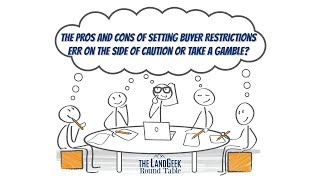
Mark J. Podolsky hosts land investors Cynthia Tripathi, Eric Peterson, Bearland Aaron, Tate Litchfield, and Scott Todd debating whether to restrict what buyers can do with their land. They weigh the costs of squatters and cleanup against the risk of payment defaults, and discuss whether existing structures like sheds and trailers are worth the headache.
Chapters
Hey, it's Mark Podolski, the land geek with your favorite niche real estate website, www.thelandgeek.com. and on today's Roundtable podcast, we are being graced with the presence of Cynthia Tripathi. Cynthia, you're back two weeks in a row. How are you?
The big deal. You can thank Eric for that one because he reminded me.
Yeah, I mean, we pretty much thank Eric every day for lots of things. So. Speaking of Eric. Eric. No nickname, Peterson. Eric, how are you?
I'm good, I'm good. Happy to be here.
Great, great. Bearland Aaron. Bearland Aaron. How are things going with you?
Hey, things are going great. Happy to be here. Also, Mark.
Great, great. And of course, the roundtable is never fully complete without the big papa, Tate Litchfield. Tate, how are you?
I'm doing swell, thanks. How about you?
How's that baby?
She's good, yeah. Learning to crawl. So exciting. More baby proof in the house yet again, I swear.
That's awesome. Well, I've got three teenagers, so we can't really. Unless you can do, like, an eye roll, like an exasperated eye roll at you. We got really nothing in common right.
Now, other than they're both terrible sleepers.
Yeah, exactly. Exactly. Or the don't embarrass me dad.
Yeah, I can see that.
Speaking of not being an embarrassing dad, you know him, we love him. Scott Todd. Scott Todd.net landmodo.com and most importantly, if you're not automating your Craigslist and your Facebook postings, postingdomination.com Atlanta Geek. Scott. Todd. How are you, Mark? I'm great.
How are you?
I'm good, I'm good. You got any parenting advice for Tate before we start the podcast?
Oh, man. Oh, man. I don't know. My wife and I, we. I do have a funny story, though. We go to. We're at this business the other day, and the sales guy was talking about it's like, his three kids and, like, I forgot the age, but they're still young kids. And he was saying that him and his wife are thinking about having another one. And both my wife and I at the same time were like, stop, stop, stop, stop, stop, stop. No more kids. We have teenagers. Do not do it. Don't do it, man. You'll think, don't do it. And, like, we were pretty brutal on him. And the look in his face was almost like pure, like, scared being scared. And hours later, we were laughing about it, saying, maybe we shouldn't have done this. Maybe we maybe shouldn't have destroyed his hopes of having multiple kids. Family, four, six, who knows? But. Eek. So have as many kids as you want, but have them, like, in rapid succession so that you get them all done before any of them reach teenage years. Highly recommended.
That's pretty good advice right there. That seems to be the general consensus that I hear from most people. Have as many as you want, but you just gotta knock them out. One, two, three. Rapid fire.
So don't, don't, don't overthink it.
There you go.
Duly noted.
See, you guys. Didn't think the Land Gig podcast would actually veer off into a parenting podcast, but yet here we are. So. But let's pivot, and let's talk about Tate Litchfield, a issue that can't happen. It's not a happy issue, but I think we should be fully transparent and talk about what happens when you do have a squatter on your land. So do you want to tell the story?
Yeah. And I mean, for our longtime listeners, they're going to be familiar with this story, Right? This was a guy who refused to get off the property, and we had to get the sheriff involved. And let me preface by saying this is the only time this has ever happened. Right. It's not a reoccurring issue, but we finally got that issue resolved this week, and we thought it had been resolved two or three months ago. Actually, a lot longer than that. It's just we got a letter from the county saying, hey, there's a bunch of trash on your property. You either need to remove it or you're gonna get hit with a fine. So all of a sudden, red flags went up, and we kicked it into overdrive, and we thought, ha, I wonder what's on this property? Because we had no idea. We hadn't seen any images. So what we did is we posted a gig on Craigslist and said, hey, we're looking for somebody to clean up our property. There's been a squatter on it. All trash needs to be removed and hauled away. And I threw out the price tag of 100 bucks on it. And within minutes, we had tons and tons of people responding to that Craigslist ad. It's like, oh, great, this will be great. So I call the first guy back and said, hey, here's the situation. I need you to go send me pictures of what's on the property. Text me periodically while you're cleaning up, and once you've completed the job, we'll arrange payment. But you're going to need to prove that the property's Clean. He said, no problem. Drives out to the property, calls me back and says, forget it. I don't want your money. You can clean up your own trash. And that was it. I called Mark, and that's when I called you. And I was like, what the heck is on this property? I have no idea. And Mark said, well, do we have to pay more money? What do you think? And so let's try one of these next, guys. So we go down the list. Number two. I call that guy. He goes out there and he goes, listen, this is disgusting. This property is nasty. He goes, I'm not doing this for a hundred bucks. It's Gonna cost you $350.
What?
What's on the property? He sent me these pictures. And there was a makeshift chicken coop. There was like a burn pile full of just nasty clothing on the property. Just garbage littered everywhere. And I thought, you know what? Rather get this off my plate, be done with it. Property can then go back on the market. We're good to go. Okay, 350 bucks, whatever. Let's get it done. So I call him back like two hours later, and I say, hey, how's it going? He goes, we started loading that stuff, put it in the trailer, and it stunk so bad. I'm not doing that. I'm not doing this. I'm not cleaning your property. Oh, geez. And for 350 bucks, he wouldn't clean it. So back to the list. We pull up the third guy on the list. No response. The fourth guy, he's not able to do it immediately. We get down to like the sixth or seventh guy who applied for the job kind of thing. I tell him everything. I'm totally transparent. It's nasty, it's gross. You're gonna have to take a couple trips to the dump. He calls me back and says, no problem, I'll get it taken care of. So what's it gonna cost me? 250 bucks. And I just got a text message from him this morning. Property's cleaned. We're good to go. So, you know, it was gross. It was really nasty. He had to take five trips to the dump to get it clean. But he did clean it, and he cleaned it for 250 bucks. So, yeah, it's more than we wanted, but we got a clean property.
Great.
Before and after images. Those after images are now going to be in our marketing and everything is good. So I don't know. So bad situation. But, you know, when I compare that to other types of real estate Investing, I realized a $250 loss, nothing. What's the price of a new toilet?
No, it's so true. There's a few takeaways that I have from that story, but I wanted to get Eric Peterson's thoughts on that. What's your takeaway from that story?
Well, it's actually very similar to a story of mine. And, you know, I went through the same thing hiring someone off of Craigslist. I'll say. Tate got a better deal than I did, though. I think I paid $300 to have my property cleaned. It was also pretty nasty. I saw it myself. And, yeah, I mean, it's. At the time, it's kind of a big headache and a stress. But you know what? It's so easy to solve it. I mean, people out there will do this kind of work for, you know, very reasonable prices. I mean, $300 to clean up a property that your. Your buyer has probably already put more than that into it. I mean, yeah, it's a headache, but I don't. And it doesn't happen that often. Like, so in what, over two and a half years or so. For me, I've had it happen one time. You know, 17 years.
For me, it's one. Yeah. So that's true. How about you? Bear Land. Aaron, what's your takeaway?
Well, I'm gonna have. I've got this ongoing saga of a person who is constantly late, and I just have a gut feeling they'll eventually default. When they bought the property, they had a house in another state. You, you know, they were going out there to camp and stuff, and then they ended up moving out there to live off the grid. And I have a feeling if they do default, I'm going to run into the same situation. But it's encouraging to know that, you know, there's people out there we can get to do it. You know, it might cost a little bit of money, but this person's already paid well over that amount. So, you know, and then you get the advantage of being able to sell it again once it's cleaned up. So fairly encouraged. You know, there's. It just shows that in this business, when we're not dealing with houses and, you know, the other kind of real estate things, since we're just dealing with the land itself, really, in the grand scheme of things, our problems are really easy fixes and that that's part of what makes this business pretty great.
Yeah, that's so true. And, you know, Cynthia Tripathi, you can make an argument that you could just change your selling philosophy, which would be, hey, you've got to make at least 6 to 12 months of payments before you can even step foot on that property. Or if you need to get written permission from us before you make any type of improvement to the property. What's your thoughts on that? Because our current contract states once you make your down payment, you can go out there and use the property. But I know there are other people that restrict it until they make either a certain amount of payments or even pay off the property. What are your thoughts?
Yeah, I'm a little more risk averse than all you guys. I don't want, I don't want to deal with it. I don't want to deal with any legal trouble. I don't want to deal with people causing problems. I don't let anyone live on the property permanently or build on it till it's paid off. And I'm very upfront with people about it. Most people understand it. I have no problem selling my land. And so, you know, unless I come up with an issue where I can't sell my land because I have those restrictions, I don't. I just, I'm not comfortable with it, at least at the stage of business that I'm in. I could see why people would allow that. Obviously, if you have those options, right, you're gonna be a lot more available to more buyers. But for me personally, like, if someone really wants to live on the property, I mean, I would have to have a significant amount of it paid off, at least half or more paid off if they want to live on it permanently. And, you know, kind of have like a probation period too. Like, you know, if you want to pay half up front, great, but you have to wait at least like 90 days or whatever it may be so I can make sure that you can make your payments. So for me, I like to err on the side of caution.
Scott Todd, what are your, what are your thoughts?
Well, I disagree with Cynthia. And the reason that I do, I mean, like, like, it's her, it's her policy. It's like her risk aversion and there's no problem with that. But, you know, like, Cynthia, like, the reason I would challenge you on that one is simply because of the fact, and you even said it, you're lowering your number of buyers. And really the number of times this happens is so far and few, that essentially what's happening is you're kind of, in a way, you know, harming the people who, who aren't going to do that anyway. And when I say harmony, I Mean, it's not like you really, you're taking away an advantage that you might have over somebody else trying to solve for the lowest common denominator, if that makes any sense.
Right.
Like, you know, it's, it's so far and few in between that you could be losing sales opportunities because you're fearful of this one thing as opposed to, hey, it's going to happen. It would be a cost of business to do so. I mean, I've had, I've never had anybody squat on the land like that, but I did have somebody like just trash up a property and essentially I did something very similar. But what I did was I, the county didn't notify me. What happened was I took it back. We sold it to somebody. Somebody went out there like, hey, listen, there's a boatload of junk out here on this property. And I'm like, oh, okay. He's like, look, if you just order me a dumpster, I'll clean it up. So we ordered a dumpster for $600, had the dumpster dropped off in front of the property. He cleaned it up, called us today, it's done. We called him up, said, take the dumpster. That's the only thing we've ever had. 600, $600. And it was the guy that left, he had put down $1,000 down. So he is his money that paid for it, not mine. So I think that, you know, you kind of have to look at it and say, well, what's the chance of it's going to happen? I mean there is that possibility. But just as Tate said, man, like replacing the toilet alone is going to be 250 bucks. Right. Like this. If this is the worst case scenario for one of our properties, it's not that big of a deal. It really isn't.
Yeah, I mean that's how I viewed it.
Yeah. I mean, right.
It hurt. It hurt. I didn't like, like sending the payment, but then I thought to myself, you know, here's a property where going to resell it for $7000. And my previous buyer, I acquired the property for 1500 bucks and previous buyer paid me $1000. So yeah, I'm still into the property for $750, but when I do resell it, I'm going to make potentially over $6,000 profit on it. So it's a no brainer. I'm not. It hurt and it was a headache, but now that it's resolved, my fear of that has gone down so much that, you know, obviously I want to avoid it. But it's the cost of doing business like Scott said, right?
Yeah, absolutely. One of my big takeaways from that story, Tate, was that you asked the person cleaning up how much they're going to charge you. You saved yourself, what, 50 bucks, 100 bucks? Because you could have said, I'll do it for 350. Because the other person was going to do it for 350. But they said 250. He said, okay, great.
That's a boot camp takeaway. That goes back to Scott.
Right.
How much would you like to put down on your property? Right. It's the same concept. How much will you do this job for? They said, well, you only have it listed for a hundred bucks. I go, well, is that reasonable? And they say, no, it's probably going to cost me a hundred bucks to do dump it. Well, what's reasonable? What's fair? He said, I can do it by the end of the week for 250. I said, all right, that sounds fair.
I'm disappointed in you, Tate. You should have been like 225 and you have a deal.
Yeah, I thought, you know, in the back of my mind, I thought about haggling with this guy, but he was, he was there, he was willing. And after having three or four previous people just like walk away from it altogether, and this thing must be gross. And I'm getting it for $100 cheaper than the last guy. So.
Sometimes it's good just to get it done.
Yeah, I mean, you know, unlike Scott, I'm not gonna cry over 25 bucks.
Yeah, exactly. I mean, that's, you know, for Scott, that's like a family of four. Lunch at Panera. So it's.
That doesn't even buy him much.
It has meaning that 20.
Man, more insults coming. And it's not even bear land this time.
Oh, my goodness. So Bear land. Aaron, let's. Let's move on to the next topic. Let's talk about what's going on with you and one of your buyers.
Okay. Well, I touched on it previously, but I've got this buyer and it's been an ongoing saga. This, this guy caused problems in the area. He's been arrested. He had moved out to the property with his family. They're living in a trailer of some sort. It's an 80 acre, and it's like in the middle of nowhere. And, you know, they're constantly like missing a month and then making a double payment the next month. So technically they haven't defaulted. Except this last time. They Made a payment on the day before and literally I saw it come in, it was hours before the next payment was due. And so they're getting a little further behind each time. And this time they made a manual payment of the amount that was due if there weren't any late charges, you know. So now they're really behind technically probably in default. But it's, it's kind of a, they're only in default by the amount of a late payment, so. Or a late fee. So I'm kind of just waiting to see what happens. The next payments due in about 15 days. So they've already been notified that they were late. They still owed payment and everything like that. So I'm kind of thinking that, that this is gonna be, it's gonna be sooner than later that I run into a default with these people. And you know, being as their, their, I guess I don't wanna say the kind of people they are, but the, you know, the history of what's developed since they moved there. I'm not real encouraged by what will happen when a default happens, such as getting them off the property if there's going to be a bunch of cleanup, that sort of thing. Like I said, I was encouraged to know that this is all, you know, these are all things we can handle. You know, it's just part of business, so. And that it's not in the grand scope of things that big of a deal. But you know, it's, it's kind of cool because if, if it all does happen, then I get to sell it again and maybe I can sell it to somebody that I can have a stronger, better, long term relationship with.
Would you Cynthia Tripathia and change so they can't go back on the property and make any improvements?
Probably not. I would probably just maybe pre vet my customer a little bit more to find out, you know, dig down on maybe what their plans really are, that sort of thing. Just so I know. But no, probably not because the chances of it happening twice in a row are pretty slim. And if it does, it does, and then I'll sell it again, you know, so not too big of a deal.
Cynthia Tripathi. Are you, are you kind of like silently gloating over there that you don't have these headaches because you're.
I think, I think the beauty of this business is it's your business, you can make your own rules. So, you know, if I want to do things a little differently, that's okay. If you guys want my buyers that want to go live on the Land, you are more than welcome to have them, because I'm selling, and no problem.
Send them to me.
Send them to me.
Even Tate's saying send them. Let's go. We got them. Just refer them over. I'll buy you lunch at Panera Bread.
That's not worth it. Oh, I'm not a Panera fan. I can't say good things, man.
Not a fan of people giving you money. Not a fan of Panera Bread. Geez, look what we've done to her, Mark.
This is why we can't get any girls to stay on the podcast.
You haze me, but I'm not taking it.
So, yeah, there you go.
She'll be back, Tate. She's gonna push back on us.
Good. I love it.
Well, Eric Peterson, I mean, what's your takeaway on this? Would you. Would you change your contract so you don't have to deal with these headaches? No, no.
It just. It happens so rarely. Like I said, it's usually not that big of a headache to deal with. You know that really the worst part if. If you find yourself in this situation is the time it's going to take to clear it up. So, you know, if you truly have someone that's squatting on the property, it's a little more complicated. Right? I mean, you've got to probably go to court and, you know, get a court order or whatever it is so that the sheriff can go out there and tell him to leave. And that takes some time and a little bit of money, but the cleanup is easy. And if that's all you have to deal with, that's no problem. But ultimately, I mean, if you got a decent down payment and you've collected your doc fee, I mean, chances are you've got room in there to be able to afford those costs. Now if you have to do, you know, the court thing and all that, I mean, it's. It's going to cost a little bit of money, but all in all, you know, it happens so rarely. I'm gonna keep doing what I'm doing.
Yeah. You know, we need to have. On the. On the roundtable is a landlord, and, like, they'd be like, oh, this is a problem.
Really?
Try evicting a tenant after they've made. You know, they've created $25,000 worth of damage on your house. I had a. I had a buddy of mine, he had a renter. This is not a joke. They had, like, 12 cats, and they were cooking meth in North Scottsdale, and he's like, the smell was unbelievable. He ended up having to short saw that house. Like, he literally, like, they ruined the house, essentially, and they had no money. Like, he sued and there's nothing you can do. So it was just a nightmare. Just a nightmare. So, yeah, I mean, couple hundred bucks, the dump. Kind of not a big deal.
I think it brings up, though, like, you know, like, you hear these problems, but then. But then, you know, you got to think about, like, what's the. What's the other side of it too, right? Like, you know, it's like the perpetual money machine. You know, I'm saying, like, it's the deals where you get a down payment. Like, I. I recently had one. A guy paid $1,000 down for a property. He agreed to 249amonth. He made one payment on this property, no more. We defaulted them out. Okay, we defaulted them, and then we resold it for another thousand dollars down and another 249amonth. Right. So this property might change hands a few times like that. And essentially, how many times have you resold some of these properties? It's crazy to think that people will buy these things, put money down, make a few payments, and then just disappear. But it happens all the time. I got a guy that has been paying for me. He was actually like my second or third sale ever. So he's been paying on this one property for two years. And I'm going to admit, I've been a little lax in collections because I've been giving him the benefit of the doubt, and he's about five months behind. And he kept telling me, like, hey, I'm going to get to it. I lost my job, whatever. And I just feel bad because he was like, number three. So I'm trying to, like, work with him, but he's not even making, like, the half payment. So he's about to lose the property. And, you know, there is that component, like, if they're brand new and they stop paying, you know, there's no sympathy. But somebody that's been paying for, like, what, three, almost four years now, I feel bad, you know, Like, I feel bad taking it back from. Because I know how much he's paid into the property. But I'm gonna resell that thing.
I would do the same thing. Tate Litchfield, when somebody's in default, is your. What's your emotional sort of journey with that? Are you like, ugh, headache, or you're like, yes, perpetual money machine.
Yeah.
I mean, don't get me wrong. I. Don't get me wrong. I hate to See the cash flow disappear for a month or two. But at the end of the day, I'm happy, right? I'm not happy because I genuinely want my clients to obtain their property. But if they stop paying, they broke their end of the deal, and I'm gonna live up to my end of the deal, which says, hey, you stop making your payments, I have to take that property back from you. Now, if somebody's been making payments for a couple years, I'm going to call them, I'm going to reach out, I'm going to. I'm going to go the extra mile to make sure that it's just not an issue with their bank or that their identity didn't get stolen. I don't know. I'm going to work with them, I'm going to try to help them out like Scott said. But ultimately, we've got a contract. We both agreed on it. If you can't live up to your end, I'm sorry, I have to take the property back.
Eric Peterson, what about you?
Well, I like to try to make it work if I can, but usually, I mean, when someone stops paying, they won't respond to me, no matter if I call them, text them, email them, like there's just nothing, you know, and then at that point, you just got to believe that they don't have any interest left in the property and they're just, they're ready to move on. You know, if they will talk to me, you know, I'm often willing to try to renegotiate, move them to a different property, you know, whatever, whatever we can do. But honestly, more often than not, I just, I can't reach them.
Yeah, Marilyn, Aaron, how about you?
Kind of the same. I did have a guy that bought two properties off me, paid well for six months, and then he didn't pay for two months. And I finally was able to get ahold of him after multiple tries. He had some family health issues out of state that he said he was dealing with. So, you know, I felt a little bad, gave him benefit of the doubt. We got him caught up over some time, and he started making payments again. And then about two months later, he just disappeared. And I've never been able to get ahold of him. So at that point, you know, I went ahead and resold the property he had. You know, I was. I had over half of my initial investment out of it at that point. So now my ROI is a lot better on that one. I've got a real great guy paying on it now, and it's great. I feel, you know, bad that the guy couldn't achieve his dream, the first guy, but, you know, the second guy can. So, you know, and I feel good about that.
Yeah. How about you? Cynthia Tripathi?
I was just having this conversation this morning because we have some family visiting in town, and they asked me. They're like, so, like, what happens if people just don't pay you? And I've been super fortunate in that I've never had a default knock on wood. Now I feel like I'm gonna have one. But I'm kind of selective with my customers. I mean, I don't turn people away. But if someone just isn't giving me a good feel or, you know, I just won't do business with them. So maybe that's why. But I think for me, I mean, if it's a new customer and they didn't make their first payment, like, I'm not gonna really, like Scott said, I'm not gonna have sympathy for that. But if it's someone who's been paying me for three years and they're just running into financial trouble, I mean, as long as they're responsive and communicating with me, I'd be happy to work with them. But if it's like a don't pay, haven't heard from them. I mean, just move on. You know, get your. Take the land back. You know, send the simple couple letters, and then just resell it. So that's kind of my. My philosophy on it. When it. When it should it come up, which I'm sure it will.
Yeah. I mean, you know, if you're not doing credit checks and you're not getting at least 20% down, it's inevitable that you're going to have defaults. Now, if you don't want to deal with defaults or you want to lower default rate, it's very simple. You do a credit check and you get more down, Right. You just insist on it. I like the velocity of the sales, and I like playing the. Like. Tate, would you say it's like kind of like craps? Like you guys have ever played craps, right? Like, you roll the dice and sometimes you crap out and you get a bad buyer, right? They might make the down payment. They make one or two payments, and you roll it again, you get another down payment, and you just keep rolling. See? Oh, you know, it came up, and I got a great buyer now, and they're phenomenal. But I think that the way that we do this, and because our marketing is essentially so inexpensive, it's not something that, where, you know, you have to insist on getting these, you know, pristine buyers. But I'm flexible like a yogi. I mean, I'd like to hear from Baron. Aaron. I mean, would you, would you change up the strategy to lower your default rate?
No, I guess I don't mind the gamble either. I don't want to start limiting the amount of prospective buyers by doing those sort of things. You know, I just can't say that we have. I've got enough people in the pipeline where it doesn't matter. I'm gonna demand what I want to. Want to charge, and I'm gonna do a credit check and all that. That's not there. So I don't, I don't want to do that. But I also don't really feel the need to do that either because.
I.
Mean, how hard is it really to deal with the default? I mean, it's, it's not. So why go through the brain damage of all that extra effort and, you know, if it happens, it happens, you move on. It's not too big of a deal. I don't, I don't feel the need to change the strategy.
Tate, what do you think?
I agree 100%. I mean, I'm not changing anything up right now. I mean, this system works. It works really, really well. And if you change a proven system, it's no longer proven. So, yeah, I mean, it would be nicer to get some better buyers periodically, but I would say a majority, you know, a grand majority of my buyers are good people, and they do make their payments every month and they are committed to obtaining these properties over time.
So.
Yeah, I realize that in every aspect of life and business, you're going to deal with some people that, you know, aren't as good as others, and that's inevitable, and I'm okay with that.
Yeah. Scott Todd.
Not changing it.
Yeah. I think Cynthia might have a. Have a business here like intuitive buyer.com and she'll just talk to them like, you know what? I wouldn't sell this person pass or, you know, yeah, this is a deal. Eric Peterson. You like that? Eric's on GoDaddy right now. I just bought the domain.
But I think, I think, I think if you do that and you don't have the defaults, you're leaving a big revenue stream on the table. I mean, like, I can't tell you how much money I make. Like, how much money I make from late fees every month, how much money I get from people who just walk away from their land. And I get to resell it. It's crazy. You know, I was trying to pull up while we were talking a report of late fees. And I want to say it's pretty substantial. Right. Like I want to say my late fee stuff is pretty, pretty high up there for a month.
Yeah. Now, I would feel differently if we weren't using land contracts. If there was a high cost of foreclosure and time, then I would insist on changing that model. But the way that we do it, I agree with Scott, like it is a perpetual money machine. It is another source of revenue that just keeps growing and building. And like Barryland Aaron said, you take maybe a 500% ROI on a terms deal and now all of a sudden it's going way up there. You're getting like synthetic numbers of 20, 100% after the second or third person. Right. So it's not a lot to dislike about it. Let's go to our final topic. Cynthia Tripathi, what's going on with you?
Yeah, so I just had a call this morning. My acquisition person was out. So I called this intake person or a guy who accepted my offer back and he said, you know what? I have, I have two properties. I send them an offer for one. He's like, I have two right next to each other. And he's like, you know, there are, there's probably about six to $8,000 worth of improvements on it. And I said, okay, what kind of improvements? And there's a couple things. I'm actually looking at it on Google Maps right now. So he said that they, he's actually like, like put some roads into the property, some cinder roads, so it's a little developed road wise, which is great. I mean, I love that. But then he also told me that there's a shed on it and a trailer. And he said, it's a really nice shed. There's nothing in it. There's a trailer on it. And my initial thought was, oh, like he told me that. And I said, you know, I don't buy land with stuff on it. But now, you know, I'm kind of wondering what everyone else's thoughts are on that because I, I've actually never had this come up before.
Eric Peterson, let's play a game. Deal or no Deal.
Well, we talked about it once, once in the roundtable. I had a very similar property that had a fallen apart shed, the remains of a trailer basically, and a bunch of debris and a driveway. And I kind of hesitantly bought the property and it sold super fast. I didn't do anything to it. I just called it like a fixer upper kind of thing. And I think I sold it in less than four weeks since I started marketing it.
So.
I would probably do it.
Tate Litchfield, deal or no deal?
You know, it's going to come down to price for me. How much is the property, what am I going to sell it for? In theory, and I like, you know, I've bought a few things with some structures on it before in the past and I've marketed as, you know, a head start on your property or, you know, something like that. And they tend to do really, really well. As long as it's not headache. Right. Like you got to do your homework and find out if that structure is permitted or, you know, if you're gonna get hit with a fee to get it removed or something like that. You want to do your homework ahead of time on it. But if it all looks decent and clears out, you know, yeah, I'd probably go ahead and buy it.
Yeah. Code enforcement type stuff, Planning, zoning doesn't like it. Those are good due diligence pieces to look at prior to buying it, but barelyn Aaron, let's go to you. Deal or no deal?
Well, the trailer, is that a mobile home or some other kind of vehicle? Trailer, I don't know.
He just said there was a trailer on it. And I mean, I just talked to him maybe like an hour ago. So we haven't really done any due diligence on it yet.
I don't know. I would, I guess I don't know if there's, if it's a mobile home, is there any sort of. Do you kind of start getting into some government regulation as far as. Because there's a dwelling kind of unit on the property now is it. Does that now make it outside of our, our model? That's something I'd be concerned with and I just don't know the answer to that. So without some definitive answer, I would actually probably not do the deal just because there's so many other ones, so many other ones out there that are, you know, you don't have anything on. There's so many, so many acquisitions to be had that if there's any resistance, I might not do the deal as far as that goes. But if there's no government kind of regulation or anything because it's a mobile home, then I kind of like the thing Eric said about selling it as a fixer upper and letting the person decide to deal with just depends with me.
Yeah. Scott Todd, deal or no deal?
Well, I'm going to say it's a no deal for Cynthia because they might have to live in the shed, and, you know, she doesn't want that, but she could send that deal to me. No, I think I kid. I think that. I think that, you know, there's nothing to really worry about on the improvements. I wouldn't pay extra for them. Right. Like, I would pay for the land value alone and leave it at that. I wouldn't try to go and value those things because, you know, you don't know the condition of them. It could cost you more money to kind of get rid of. In fact, I've always kind of. When someone tells me that there's improvements on the property, I use that as a negative, to negotiate down, to say, well, man, now I have all of these other things I gotta deal with, you know, like, I've gotta deal with a well. People love to tell me that, oh, there's a well on the property. Okay, well, when was the last time the well was checked, inspected? How do I know it's properly capped off? A baby's not gonna fall down it. How do I know that the equipment works? You know, all of this stuff, all of these now questions that I'm going to have to potentially face when I go to sell the land. And I just use that as kind of a negotiating tool. Down. But that said, you know, I would. I wouldn't shy away from buying the property, but I just wouldn't overpay for it.
It's a good answer. It's a good answer. Cynthia, what are your thoughts?
Oh, I'm for sure buying it. It's got great access. I'm looking at it. I mean, I'm definitely buying it. The question will be if. When I told him that I don't buy property with stuff on it, so if I was interested, he'd have to get rid of it. And he said, okay, so, I mean, I'm gonna check all of that out first. But he said, it's like a really nice shed on there. So, I mean, if it's a nice shed, I might just keep it. But I don't know about the trailer. But I mean, in any case, I'm definitely doing the deal because I'd be getting a pretty good price on it with all the roads and whatnot. That would definitely be a good upsell for that property. So.
All right, great. So, Cynthia, have you officially replaced your income from last week? No, not yet. You're 100 bucks short.
I'm like $108 short.
108 short.
Which, I mean, I technically would have been there, but, you know, I had a lady pay off her land early, and, you know, you get there and then you go down a little bit. Paid off, but I'm pretty much almost there, so I'm excited about that.
That's great. That's great.
If there was just people that would want to live on their land.
That.
Would pay you $108, you can have them.
I don't need them. I'm not. I'm okay.
She doesn't need a mark. She's okay.
All right.
That's good.
I like it.
I think that goes to show you how much there is to go around, though, right? Like, I mean, Cynthia is being picky. Scott's gonna sell to anyone and everyone. I mean, there's a lot of people out there who are looking for what we're selling. So that's. That's a really good way of looking at it.
Maybe one day I'll change, but for now, I'm. I'm pretty. Not saying I'm not open, but right now it's working, so I'm fine with it.
Yeah. I mean, why fix it if it's not broken, Cynthia?
Exactly.
It's not my style. But, hey, it works for you, and you're having the results you want and need. So don't let anybody on this call change you. Right.
Good.
Yeah, I mean, you know, I agree. And so I do want to remind all the listeners that Nightcap is a thing now. And I kind of talked to everybody before the we started recording. Am I the only one that's bothered by the spelling? N, I, T, E. But according to Scott, it is correct. Eric, are you bothered by the spelling?
No, I'm not bothered by it, Tate.
I'd have to watch it. No, I'm just kidding. No, not at all.
Marilyn? Aaron.
Like, a little bit. Not a lot, but in a. Like the smallest sliver of grammar Nazi way a little bit.
So, Mark, are you bothered by the chick Fil A signs then? Do you guys have chick fil A? Have you ever seen their advertising?
You know what? I love Chick Fil A, but unfortunately, chick fil A don't love me. I'm more like the cane's end of things. But I will go for the kids. But no, you know, the. No, it doesn't bother me. But, Scott, does the spelling bother you?
No, not at all.
No.
Cynthia, I mean, I didn't think any. I didn't think twice about it, so I don't think it Does.
Well, I feel like a jerk now.
No, no. I'm an English minor, so it kind of bothered me, but doesn't bother me. But if you want to actually watch it, you didn't see it live. You can see it on Facebook in the Mastermind group. You can join live. It's Wednesdays and Thursday nights. Bring your favorite drink of choice. It's fantastic. And if you want to watch the replays, go on to YouTube.com thelandgeek and check out episode one. It's already up there. So I think there are they three episodes in or two? There's three episodes in. Yeah. So it's really exciting. Also. Boot camp. Vegas, baby.
Vegas.
We are just about full. We still have some room left. Go to the landgeek.com boot camp and register ASAP. Today's podcast is sponsored by TL Folio. So don't think you have to flip, flip, flip for a lot of cash. You can still do terms. Get your cash out, sell your note and have that passive income revert back to you in 12 months. So check out tlfolio.com as a strategy. I don't know. Are we good?
Is there a tip of the week?
Oh, yeah. Before we go to the tip of the week, I just want to remind everybody, schedule a call with Scott Bossman or Mike zaino. Go to landgeek.com training. Flight school is filling up for April. Get your spot. Want to learn more about the toolkit? Call them. Want to talk about anything else? Call them. The landgeek.com training and of course, Eric Peterson. We're putting you on the spot as we do every week. Since Zaino is not here. What is your tip of the week? A website, a resource, a book, Something actionable for the art of passive income listeners. I don't know.
Aaron, what's the tip this week?
You know what? Fine, fine. I will do it. Because you know what? I'll step up.
I knew you had one in your back.
Tip of the week.
You were ready.
I just in case. I figured it was gonna be next time. Zaina wasn't. Tip of the week this week is jotform.com it is a site for making, you know, like forms and pop ups and that sort of thing. There is a free version, allows you, I think like a hundred submits. I just started using them. I did one that actually went out to my mail list to help me segment my mail list better. And they've got integrations with IFTTT and Zapier. So was actually able to have My form create a spreadsheet every time there was an entry into airtable. So I'm sure there's other sites like it, but that's my tip.
Pretty cool. What does everybody think?
I mean, it's a great resource. I've been using it for a while.
Oh, have you?
Yeah, it's good resource.
I just found out about it.
All right, cool, cool. Well, nice job here then, Aaron. I also remind everybody, you know, the perpetual tip of the week should be dirt rich is coming out very, very soon. Four to five weeks. So start looking for the pre order. If you want to get pre ordered, go to supportthelangic.com and as soon as it comes out, we are going to email you an irresistible deal on that book. So do that. Scott Todd, are we good?
We're good.
Mark, Cynthia, are we good?
We're good, we're good.
Bearland. Aaron.
Great.
Tate, let's do it. Eric. Yep. Yeah. All right, well, I want to thank all of you for being on this roundtable podcast. I really appreciate you taking valuable time out of your busy. Well, most of you have busy weeks. Not Tate, of course, but the rest of you are pretty busy with other things. Well, actually, now that I think about not Scott Todd or Cynthia Trepoth. Well, so I want to thank Bear Land Aaron for taking a little bit of time. You know what, never mind. You're all kind of like, what do you guys do with all this freedom, Flexibility. Anyways, I want to thank you anyways and I want to thank the listeners. Please do us a small favor. Please support us. All you got to do is subscribe, rate, and review the podcast. Send us a screenshot of that review to support the landgeek.com we're going to send you for free our $97 passive income launch kit course. So please do that. And sky, are we ready?
Let's go, Mark. One, two, three. Let freedom ring.
Cynthia didn't even try there.
She's like, no, you wouldn't be able to hear my voice anyway, so let you guys handle it.
I don't know. By the way, does anyone find it ironic that Scott Todd is super picky with like, let's say Indian food or Chinese food? When it comes to his buyers, he'll take anybody. Am I the only one to find that ironic?
I find it dumb.
Scott. Uh oh, he's got that mini bat look.
No, not that Scott. That Scott as picky about his food and not as buyers. Listen, how did you think of that?
Yeah, that's a dumb. I agree with Tate. Like that. That's a completely dumb analogy.
Is it?
It's kind of dumb.
All right. So, Scott, in Vegas, then you will eat Indian food with us, correct?
Well, I might just. I might bring in McDonald's or something, but. Yeah.
You liked it last night, Scott. You liked it last night.
I didn't really like it, though.
How could you not like Indian food? It's my favorite.
First of all. First of all, when. When you're ordering and you say, I'll have more. We'll have that blue stuff. And they bring it and they're like, this is the chicken. Like, this is not chicken, brother. I don't know how chicken turns blue or orange or yellow. Whatever color it was, Mark, but it was. I'm like, I'm out. Like, the safest thing is, is like the bread.
Tandoori chicken. I'm like, this is the safest. We're gonna get the tandoori chicken.
How can you not, like, nourish?
What color was it?
It's red.
How is chicken red? I don't understand.
Garam masala and red chili powder.
Nah, see, it's too. You're not speaking my language.
You need a. You need an Indian there to coach you through.
I had Mark.
I mean, I am kind of honorary. My first mentor was Raj Shah. He was Judati and taught me everything about living in India. He's from Bob. He was from Bombay. And, you know, in Indian food and everything, you know. But that being said, I don't know. Am I fully Indian? I did Reachantaram. I don't know. Does that get me any kind of points at all? One of my favorite movies, Slumdog Millionaire. Does that help at all? No, Nothing.
Millionaire.
Great.
Do you speak Hindi?
No, but I'm not against speaking Hindi. I. You know, when I go to the Indian restaurant, they show like the indie. The Hindi words at that time. I will try to speak Hindi until the server looks at me with that sort of just that condescending, don't even try it.
Look.
Sorry, I thought I'd try kind of thing, but there you go. I don't know. All right, well, Scott, don't hit me with the mini bat.
You know, there's something I learned that's very, very cool, Mark. I can. You can actually take like the mini bat or whatever and actually do it 3D without necessarily 3D. I don't have the bat right here. But like, check this out. Check this out.
Oh, it's much better.
Hold on.
It's much better with the bat. Hold on, hold on.
Didn't you just do this?
There you go. Whoa.
See?
See, like, you stand back. You stand back and then you do this thing.
This is what happened.
How many offers did you get out this week?
Get your offers out.
Oh, my gosh. All right, well, I'm gonna go eat some Indian food. No, you're not.
Just take it. Just take a trip at the Panera Bread.
Mark.
Whatever.
All right, guys.
All right, I'll talk to you later.
More from Mark





How to find funding partners: How to Scale Land Without Using Your Own Capital


