The Land Geek Spotlight
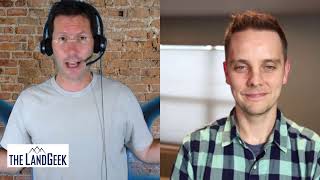
A March 2020 YouTube Live conversation hosted by Mark J. Podolsky with guest Eric Peterson about starting and growing a land-investing business. Key themes: the importance of consistency and mindset (e.g., quitting a job, committing fully), practical tactics for early-stage operators (build buyers lists, use marketplace platforms to source buyers, specialize VAs rather than one generalist), and funding options (wholesaling, partners, friends/family loans). The stream includes live viewer Q&A on marketing priorities, VA structure, focusing on multi-parcel sellers, and land-ARB opportunities.
Chapters
Eric Peterson, we're live. So it's great to see you again. Eric Peterson, the technician. For those of you don't know who I am, I'm Mark Podolski, the land geek with thelandgeek.com we are professional land investors, and Eric jumped on yesterday to talk about the state of land investing and if now is a good time to get started. Land investing, we talked about that. And we also talked about if you're currently land investing, what you should do with our time. And since Eric is like, he's kind. Like, if you know Eric, you've met him at boot camp, he loves public speaking. Loves it. And he thought Mark, he said. He said, goes Mark. After the roundtable podcast, he's like, let's do a Facebook Live together. Because I love being the center of attention. And I thought, well, Eric, I'm tired, man, whatever. But I'm doing this for him. Eric, you're welcome.
Thank you.
Thank you.
I so appreciate it. I'm so happy to be here. You know how I absolutely just love this kind of stuff. But here I am, and I'm ready to have a nice conversation this afternoon. So let's do it.
Yeah, absolutely. So if you guys are on Facebook Live or YouTube Live, you know, leave us a comment, say hello. Hopefully we're going to get to Q and A. But our topic today, by the way, everything I was saying about Eric is tongue in cheek. He really hates when I put him on the spot like this, but he's doing it anyways. He's embracing the suck, being comfortable, being uncomfortable. And of course, Paul Brewer, as always, happy Tuesday. Paul Brewer is on Live. Paul, so appreciate your support. So our topic this afternoon is when we first started our landing investing businesses, what did we think really moved the needle in our business? So I've really been thinking about this since we brought it up, and I wanted to get Eric Peterson's answer first. Matthew Levy. What's up, man? I'm actually having a call with you in a few hours. I can't wait. Welcome. And you got flight school starting tonight. Very exciting.
Awesome. Well, I guess first let me say hi to Paul. He's a student of mine, so happy to know he's on with us today. But I think when I look back at how I got to where I am today, I really think it comes down to consistency. There was a time when I first got started where I just kind of what I would call played around with the business. I didn't do anything consistent. I tried some things. I did a little Bit of this, a little bit of that and didn't really get anywhere. Then I devoted myself to it and I made some commitments with myself and I was consistent, I was consistent in all aspects of the business. Getting my offers out, responding to leads, marketing. And those things ultimately made a difference over time. You know, that doesn't come in a week or maybe two weeks, but you know, maybe months. But over time it, it makes an impact and you begin to make progress. And that's, I think that's one of the main things that has moved the needle in my business.
Yeah, I love that answer because when we were first talking about like what should we talk about when we stream live, there's a part of me that thought, okay, we're going to give a sort of a prescription like this, how to like the first thing that really moved the needle in our land investing business was the first time we hired an intake manager. We got intake off our plate or maybe the first big acquisition or something prescriptive. But really I love this answer of just consistency because Eric, you and I both know the land investing business is probably, would you agree, 90% mental.
Yeah, I would agree. I think it's a lot about overcoming your own fears and just actually getting in there and doing it.
Yeah, yeah, absolutely. So for me, so I'll tell you the story for those of you that don't know, I was kind of started off with Eric. I had a full time job as an investment banker and before that I worked with dentists and then before that I had like lots of just jobs. So I never really worked for myself. And really I was in, like I say it all the time, I really, really hated my job for so many different reasons. I think the biggest reason was just this feeling of a lack of control. And once I started making money, land investing, doing it on the side, flipping these parcels, you know, at the same time my day job, I'm looking at companies all day long and so, and I'm talking to CEOs all day long about their business and asking questions and looking at their financials. So in a weird way I intimately didn't understand business like because I'd never really owned my own business. I was kind of like, like parallel to what a company was doing and what their numbers would look like. And so I had like this intellectual sort of understanding of it but no real intimate knowledge. Like when, you know, if Eric said, you know, hey, here's what a peach would taste like versus somebody that would actually eat the peach, like he could describe it all Day long to me, but I wouldn't really understand it until I took that bite. So for me, I think what really moved the needle for me was when I quit my job and I somehow kind of just went through this exercise. Like at this time, I didn't know what I was doing. But now we could say I went through like a fear setting exercise. And I really went through it and I thought, okay, what's the worst thing that could possibly happen if I go full on in on this? Like, I just dedicate everything I have, all my energy to this land investing business. And I decided like the worst thing was I'd have to get another job, which at that time wasn't that. I mean, it wasn't something I wanted to do, but I kind of let go of like, okay, if I'm going to do this joyfully not be anxious all the time, this is the worst thing that would happen. And as soon as I kind of made peace with that, I could joyfully work this business and sort of not be attached to anything. If I got a sale that day, great. If I didn't, okay, I would just be solely grateful that I was in that 45 minute commute to working back, being micromanaged, and then just appreciating every moment I had, like with my wife, with my son who was a baby at that time, and just this belief that, you know what, I can do this that I think was when it really shifted for me from like, this is just like nice little side hustle to this is like my craft. And I think once I made that mental shift, or pivot, if you will, everything kind of grew from there very slowly. But, you know, better than not doing it. So now I'm happily unemployable and could you get another job now?
Oh, man, it would be so tough. So tough.
It would be really tough. Right? So Dan, Dean McDonald just jumped on. What's up, Dean? Hey, guys. Love the podcast, these live sessions. Thanks for the entertainment and info. Well, Dean, thanks for being on. Joe Lucas. Hello. Aloha. Don Pereza Racing Sugai. They're from Hawaii. They're. They're living the dream. For sure. Yeah. So look, that, that was really the answer. I mean, do you, do you have anything you want to expand on?
Not really. I mean, I think, I think that was it for me. It was just consistency, not missing a day and finding a way to make that happen. So if that meant me doing that work, if it meant a VA doing that work, it didn't matter as long as it Was consistent.
Yeah. Yeah. Anybody who's on right now have a sale. We had a sale yesterday. I don't think we've had a sale yet today. Today's not over yet. But, you know, our goal is always we want to buy a deal, a sell a deal every day. Some days are better than others. So now that we kind of answered the question to go to the people on here and see if there's any questions that we can answer for you, take advantage of this time with the technician because we have a hard stop at 3 o', clock, if not sooner. A pretentious hard stop, if you will. I haven't said that in a while, have I, Eric?
It's been a while.
It's been a while. Oh, my gosh, look who's on Kishal. He goes. Hi, guys, this is Kishow. Thanks for everything you guys do to help the community. Kishow, how are you? How's coaching going, man? It's good to see you. Any questions? By the way, I'm really excited for Matthew Levy tonight and everybody that's starting flight school tonight with Scott Todd. Just amazing. All right, so Joe Lucas, he wrote, I have everything in place to begin my land business down to budgets for VA's, mailing, automation, etc. Do you or the technician Nova, any small business funding sources? I just need funding. That's a really good question. Funding sources, show me the money.
I guess before I even talk about that, something bothers me about that comment or question, as it were. And he talks about having everything all set up and ready to go. And what I want to say is that, you know, I hope that means that he's still doing the business. In other words, he's sending out mail, he's doing county research, doing all those things, rather than maybe just spending time setting all this stuff up and basically spinning wheels. So that's the first comment I want to make in terms of finding funding. You know, I think there's. There's a couple options. If you have no capital to invest in land, you know, you could get deals under contract and wholesale them. That's. That's one potential option. You could double close on those properties and, you know, essentially collect the difference. Right. And start to build that up. And hopefully after a few of those, you start to have some capital that you can invest in land on your own. Number two, go out and find a partner, someone in the community that understands land could be a really good partner and they could maybe provide the funding, you take care of the sale and provide that investor, some kind of return on that money. And last but not least, could be family members, could be friends, could be other people, you know, that have money they want to invest or maybe get out of the stock market and find another vehicle for investment. Then, you know, borrow some money from them just as a cash loan and pay them back with interest. Give them 10, 12% interest, which is far better than they're going to get anywhere else right now. So those are the three that come to mind. Did I miss any mark?
I don't think so. I really like that answer. I like what you said in the beginning. Like, if you're setting all this stuff up, VAs, mailing, automation, etc. Are you waiting on the funding? Like, man, move your feet, make some offers, then come to us and say, I found this deal, right? I'm buying this property in this county. 25, 3 cents on the dollar. You have so many options at that point, Joe. This is the business that is the value of the business. In the value chain, you're buying an asset. I don't care what asset you buy. It could be anything. You buy anything. 25, 3 cents on the dollar. There's someone else on the other end of that deal. Me or Eric, email us, guys, I got this property. Assign the contract. If you want to wholesale it. If you want to flip it, wholesale it, do that. But don't ever let money stop you from doing this deal. Money is a commodity. It is out there. You know, it's not a commodity is taking the time and really making those offers and talking to the sellers and getting a deal. That's not a commodity. Not everyone can do that or wants to do that or knows how to do that, but you do. So go and do it, and then the money will come. Does that answer the question, Eric? You like that?
I think that does answer the question. I think we covered all aspects.
There you go. All right, Joe Lucas. I hope that helped. Look at Matthew Nunn. Closed 11 deals yesterday. Sold a few in the past week or so. I love it. Matthew, nice job.
Awesome. Congratulations.
Here's a question. Matthew Levy, what would you do first if starting your business from scratch? What would you do first if starting your business from scratch?
Hmm. I think. I think I'd spend more time up front building. I mean, still doing the business. Things are still happening. Mail's going out, marketing's getting done, all those things. But while doing that, I would make sure that I'm building those processes and systems as early as possible so that I could start outsourcing those things sooner, that's what's going to kind of get you out of the business and allow you to focus more on looking in and finding ways to improve it and continue to grow it.
Yeah, I love that. I love that answer. I think mine's going to be more philosophical. I think before you start this business, you got to really know what do you really want? What do you really, really want? And then from there, with that total clarity, go into this business. Do you want real wealth? Do you want passive income? Do you need a little extra cash first? Then passive income? Do you want to retire your spouse? Like, what's your why? Like, what's your burning desire? What is it when things get tough that's gonna get you back up? That I would want to know. That's like the first thing I'd want is just that. It's just that, that tap into that burning desire like mine was never to have to get another job. That was the first thing I knew I wanted. And then it can evolve from there. So sorry to not give you like a more how to answer, but that's the first thing. Jen Ramquist, Flight school tonight. Jen, it's going to be amazing. So excited for you. Kevin Su. What's up, Kevin? What are the key elements of a marketing system? Should we focus in early on stage? I'm sure there's a better way to phrase it, but I think we get the gist. What are the key elements of your marketing system should we focus on first? I know what I would do. You want me to steal your answer, Eric?
If you want, go ahead. I can follow up.
I would start building my buyers first.
There you go.
Because that's the only thing I truly own. Facebook's great, obviously. Marketplace, groups, Craigslist, lead gen, Zillow, the lands. But all those things are platforms that you don't own. They're great. They provide you traffic. But let's leverage all that traffic to build our own buyers list. So. So that on any day of the week, every day of the week, if you email your list, you call your list, you're gonna get a sale.
Yeah, I mean, that's entirely true. I think that if you're just getting started, though, you're not gonna have a buyer's list yet. So you do have to use those platforms and begin to build that. So Craigslist, Facebook, Marketplace, the lands, all those places that you just mentioned are great resources to begin to build that buyers list, which is extremely powerful.
Yeah, there you go. I love it. Jason Mendoza, What's Up. Jason, he's like, he's been a regular, too, I think. Jason Mendoza, Paul Brewer, Don Paraiso, Racine. I think they've been on, like, all our lives. Kevin sue showing up. Thank you, guys. For VAs, what's been the best experiences? A general VA that can do multiple tasks in training them or bucketing, like, tasks and utilizing VAs in that way for those more specific tasks. That's a great question. How would you answer that?
Yeah, so we prefer to have our VAs specialize in a certain type of task, whether that's someone that's a list builder, someone that is maybe a due diligence person, maybe there's a map creator, maybe there's a Craigslist poster or a sales assistant or an intake manager. All those things. But we keep them separate, rather than trying to have one VA bridge the gap of multiple what I would consider, like, single aspects of the business. And the reason for that is we want the ability to rely on our VAs. And if we have one VA spread across large portions of the business and they disappear, we have a problem. So I'd rather have a small, you know, piece of the business, lose a va, and then come back in and fill it quickly, as opposed to, you know, a large. I have one VA that does everything for me on acquisitions or intake. Like, that would be a disaster if they left. So that's why I like to kind of compartmentalize and keep things very specific with my vascular.
Yeah. Jason Mendoza. I mean, you guys both. I mean, you guys know I hate giving Eric Peterson any type of compliment whatsoever, but that was, like, the greatest answer. It's so true. So, yeah, I mean, that's what we do. We want to be bulletproof, you know, before we even. I mean, obviously, once we have the VA in there, it's really the system and the process. We want that to be really spelled out so that no matter what VA goes in there, they know step by step what to do and how to do it. And, you know, Scott Todd uses fleek IO we'll do zoom videos and put them up in Wistia. I love fleek as well. And so really, what Eric said is just about the wisest of answers, is you want to make sure you're bulletproof, and if one person leaves, the whole thing isn't going to collapse. But if you have one general VA that's doing all these things, you're vulnerable. A great book, Jason, I don't know if you've read it, is Chris Ducker's Virtual Freedom. It's a really, really good book when you get started with Vas. Eric, what do you think of. Have you read that?
I actually haven't read that book.
You would love it. I've. I know I have a copy if you want me to send it to you.
I'll listen to it. Thank you, though.
Yeah, he's. And he's got a. He does. He actually does the audiobook too.
Okay.
And he's got like a great, like, British voice. It's. It's a good one. I do think that you should have both because it's. It's got good reference. I don't think you'd want to go back and have to listen to, like, what do you say about how much he pays the. You know, this person or that? So it's good, right? Randy. What's up, Randy? A little birdie told me you're starting flight school tonight. Is that true? That's awesome. Kushal, he wrote Coaching is Going Great question. Do you know anyone who's killing it doing Land Arb? Well, describe killing it, but dawn just did a land Arb deal. I think she was killing it. She sold that property in a week. The ROI is crazy. I think anyone that does land arb is killing it. Because you can control so much property with almost no money and then make that spread. You mitigate your risk. You control your cash flow. You can rinse and repeat. It's a really nice scalable way to grow your passive income, taking almost no risk.
It's also a nice, basically no risk way to get started too, right?
Yeah. Yeah. So email Tate for the Land Arb deals, but once you get a taste of it, you'll love it. You'll eat from the Land Arb buffet as much as you can. Like one of those big Vegas buffets. Like, what other properties can I buy? What else can I get?
Yeah, I know. I know plenty of people out there that they love those land, our properties and have many, many in their, you know, inventory.
Yeah, Don's doing the high fives. Awesome. Kevin. Sue says thank you. Any other questions before we gotta end here? We've got about six minutes. Anything else? Bueller. Bueller. You know what's funny is I read this article. You know, you were old when you watch Ferris Bueller again, and you're like, he's a jerk. Like you're looking at from a parent's point of view. Right. Have you, have you watched it recently?
I haven't seen it in forever, but I was thinking I need to watch it again. Sometime soon.
Yeah. When you're a teenager, you watch, you're like, oh, Ferris Bueller's the best. Then when you're a parent, you're like, all this kid does is lie, right?
You're like, if my child act like that, we're gonna have a problem.
Yeah, I don't find this funny at all. All right, well, thank you to Dawn. Kevin Hsu, Matthew Levy, Kashal, Jason Mendoza, Jim Ranquist, Matthew Nunn, Joe Lucas, Dean McDonald, and of course, Paul Brewer for jumping on live and leaving a comment. And of course, last but not least, getting his question in the wire is Lance Ellis. Lance, is it. Is it Dr. Lance? When, let's see, like, Eric, like, you have a friend. Like, do you call him doctor? Do you call him Dr. Ellis or Dr. Ellis? I don't know.
That's a good question. What's the. What's the proper etiquette there?
I don't know what to ask Lance. Anyways, do you see a common trait in those of who fail repeatedly to get off of start? What do you see there? Common trait?
Honestly, I think it goes back to consistency. So, you know, as we watch people kind of get started in this business, whether they're toolkit, flight school, even coaching, you know, if they're not being consistent in this business, they're not gonna make it because something else is gonna come and take over, you know, that next shiny object, basically. So I think that's the biggest one.
Yeah, I agree. I think it's consistency and focus and knowing, you know, wholeheartedly that you're going in on this 100% and you're committed and you're burned. Your ships. We talk about that at boot camp. So it is Dr. Lance. He wrote. Yes.
All right.
Could be Dr. Lance.
Now we know.
Now you know. Anyways, Derek Kaufman, he said he watched Ferris Bueller with his daughters last week. So, Derek, like, as a dad, did you like it or you're like, wait a second, Andrew Miller. Hey, guys, sorry I missed most of this, but I'll have to catch the replay, so.
Awesome.
Awesome. Kashal, another question. Is there any merit to focusing exclusively on sellers who own multiple parcels instead of sending mail to people who own just one parcel? That's a good question.
Yeah, I mean, I think there definitely is merit in that, especially if you have the capital to deploy to go after those deals. However, it's not the only deals I would suggest you go after. I think it's a nice supplement if you're looking for some of those big bulk deals. But no reason not to mail the one offs either.
I agree. I mean, home runs are great, but singles will move the needle as well. So, Lance, thanks. P.S. i make everyone call me doctor at all times. Well, Dr. Lance, I hope you're being safe out there. I don't know if you, if you get like one of those N95 masks when you're doing surgery. Now is not the, the best time to be a doctor, unfortunately. I mean, thank God for you and your skill set. We all need it and appreciate it, but, you know, if, like, if you were my family member, I'd be like, oh, man, does he really have to go in today? Like, you know, we just want you to be safe. For sure. For sure. All right, well, great. Well, thanks, everybody. And tomorrow, I believe, at 1 o' clock Pacific. 1 o' clock Pacific. I'm gonna be on live again with Mimi Schmidt. We're gonna be talking about follow up, boss. So join us then. And I figured, like, if we're all in quarantine, let's do some more of these Facebook lives and answer some questions and, you know, talk land investing and maybe get a nugget OR 2.
Absolutely.
Dr. Lance says, Appreciate it. Stay safe. Paul says, thanks, gents.
All right.
All right, thank you, guys, and have a great rest of your day. We ready to do this, Eric?
All right, let's do it.
You want to do it? 1, 2, 3. Let's let freedom ring. I hope everyone else, by the way, is saying that. Yeah, and wash your hands. I don't know if saying that, when we say that, like, I could just see Paul Brewer be like, let freedom ring. So, yeah, awesome. Gary Miller was on. Thanks, Gary. All right, see everybody tomorrow. Thanks, everybody.
Take care.
More from Mark





How to find funding partners: How to Scale Land Without Using Your Own Capital


