Top Franchise Consultant, Kim Daly, Busts All the Myths of Ownership
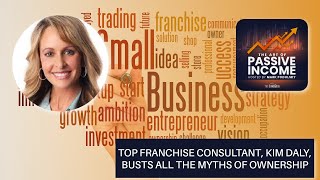
Conversation (podcast/video) between Mark J. Podolsky and franchise consultant Kim Daly (Dec 13, 2022). Kim explains how she entered franchising and then walks through common myths (franchises are always more expensive; 'build it and they will come'; franchisors don't share skin in the game). She explains franchising mechanics: franchise fee (one-time, "cost of entry"), ongoing royalties (national average ~6–10%), FDD disclosure (23 sections), typical franchise agreement length (7–10 years), success-rate claims (many franchisors report >90% success), and owner profiles (semi-absentee vs absentee owners). She favors businesses with low fixed costs, recurring revenue (B2B/service) and strong systems (example: Smash My Trash). She also discusses life-cycle timing, scaling to multiple units for wealth creation, and franchising resilience in recessions. Tip: take action—begin the franchise exploration process; consult experienced advisors (kimdaly.tv).
Chapters
Hey, it's Mark Podolski, the land geek with your favorite niche real estate website, thelandgeek.com and I have been so excited for today's guest. She is just so fun, so knowledgeable. I promise you by the time we are done with this podcast, you are going to be smarter in so many ways and hopefully just thanking me that I was able to pull so many strings to get her on the podcast because today's guest up on my anchorman voice is a big deal. Kim Daly, who is one of America's top franchise consultants, founder and host of Kim Daly, TV motivational speaker and international best selling co author. Kim has for the past 20 years been helping people realize their dreams of business ownership through through franchising. And while helping others achieve their dreams, she has been achieving her own. Kim Daly, it only took about three years to get you on the podcast. Welcome.
Was your schedule, not mine, Mark. Now with that introduction, I don't know if we can go up. I think we only can go down because that just set the bar pretty high.
I, you know, it's so funny you say that. I've got a speaking coach and he's like, don't ever introduce someone like really high because then it's like, oh, everyone's gonna be so dumb.
It down into low expectation. Wow, she was amazing.
Yeah. But have keep my expectations high. So Kim, let's just rewind the tape. How did you get involved in franchising of all things?
Right. The question people ask in our industry, Marc, is how did franchising find you? Because nobody wakes up and goes, oh yeah, I want to be a franchise consultant. Said no one ever. So I was franchising found me. When I was on my way to medical school, I answered a classified ad in the newspaper for a summer job and it literally changed my life. Or so I thought at the time. Of course, my dad was like, don't take that job, you'll never go to medical school. And I was like, dad, it sounds fun to like, you know, just take a year off from school. Of course, my dad's always right. I never went back to school. But I found an industry of entrepreneurs, of people helping people, people waking up every day to live their dreams. And I felt at home and I just never looked back. But I did leave franchising three years later, started my own company because that's what everybody who thinks about business ownership does is like, yes, it really is at, you know, where it's at is entrepreneurship. And so I did that for four to five years. Only to realize, no, where it's at is people, systems, tools, collaboration, and that's a franchise. And so I came back to franchising at 29 years old and I've never left. I've been here for over 20 years. So you can do the math and figure out how old I am.
Well, that I. Yeah, I mean, you got like, if you're watching the video, like Kim Daly's got like Benjamin Button thing going on. So lucky you. Anyways, I digress. Let's talk about the people, the systems, the processes, the branding. Because there is. There could be. I shouldn't say there is. There could be a higher price tag to get all of those delicious benefits of a business instead of you having to do it yourself. So let's walk through each one and what is the premium then? And is it worth it to have a franchise like that?
So I love that. False expectation, Mark. Okay, so let me break down what you just said, okay? Because it absolutely is a false expectation and it is not a true statement. So when you look at an entrepreneur who comes to the idea of owning a business, has an idea, well, then they have to figure out with their own time, money and energy who the customer is, how to find the customer, trial and error, the marketing, come up with the marketing and the logo, figure out where to spend their marketing dollars, how many marketing dollars, how long is it going to take to attract enough customers, how to overcome customers objections, how to compete against the competition. Right. How to hire people, how to train people to do that job. Right. There's so many unknowns and so much trial and error, which ultimately is what leads 90% of startup businesses to failure before their fifth anniversary. Okay? So that's the entrepreneurial world. So over here, in a franchise, the average person with the idea or the above average person with an mba, you know, somebody who's super intelligent about business but has the idea to own their financial future and desires to do that through business ownership as opposed to like the opportunities that you would offer them. But often we find. Mark, this is why I'm sure I'm a guest on your show. It's the same investor, right? They often love to be diversified, so they love the idea of owning a business. They don't have an idea, they don't have a specialty thing that they absolutely have to bring to market, but they want to own a business. So they turn to franchising to find an idea that's been flushed out, to partner themselves with people that have already clearly identified a customer base, a market to Find national vendors have figured out how to get to the customer, how many customers, how long it's going to take, how much working capital that's going to take. So the myth that franchising is more expensive comes from just an uneducated. Like, it's just an unthought out statement. Because when you really think about how much trial and error and time and energy that entrepreneurs put in, and most of them end up inevitably failing and over in franchising, your time and energy gets to go toward making money from day one because there is no trial and error. And the vast majority of franchise franchises, like the ones that I work with, have success rates greater than 90%. Some of them, 95 or higher percent of them are successful. So it's that franchising, it's not more expensive. It's that that's what it actually cost to build a business and be successful.
I'm so glad I phrased it that way. I was on a Wikipedia page and don't roll your eyes on Wikipedia. This is really good. I know it was about common misconceptions, and there's like so many of these common misconceptions that after I was done reading it, I just was just so, like, just like, it's like a blanket of humility wrapped around me. And so what other common misconceptions are there when it comes to franchising?
Oh, my gosh. You're hitting my. This is my soapbox. Are you. Are you sure you're ready for this Mark on your show? You literally just kind of met me.
I am ready. I am ready.
All right, let's do this then. What? Another really big common misconception is that a franchise means build it and they will come.
Okay.
Okay.
Can you expand on that?
If that. Yeah. So everybody sees that line at Chick Fil A and they say, well, I want a Chick Fil A, because as soon as I open my doors, there's a line of people. Okay? So when you invest in a franchise, the reason that Chick Fil A is enjoying the moment that they're in right now, today is because for 20 plus years, the pioneers of Chick Fil A, the original franchisees, were out there creating that brand experience that today consumers have come to know and love. So the idea is that it's where in the life cycle of the franchise are you entering the greatest opportunity that I would say is if you come in as one of the pioneering franchisees, because that's going to allow you to secure the best territories in the market. Right. Once the brand has already woken up, you know, and the Dallas is, the Atlanta's, the, the Denver's of the world, the Charlottes of the world, they're gone. The best territories are gone. So if you want to have the best opportunity for scale, and that's how wealth is created, not through one chick fil A, but through three or ten chick fil A's or not one, you know, one 800-God junk truck. It's, it's being able to leverage your time and scale that across multiple trucks. Right. Wealth is always created through scale. And the franchise that provides the right tools and allows you to be the CEO working on it rather than in it will give you the opportunity to then focus on the strategy and scale because you're not efforting every day in an individual location. So that's another point. But, so that's kind of, that's another myth that it, build it and they will come. It depends where in the life cycle you're investing. And if you're only looking at brands because it does feel like build it and they come, trust me, subway owners still have to wake up every day and figure out where their next customer is coming from. Every. Some brands may enjoy a moment in their life cycle when it feels like that, but that won't last forever. And so you still have to learn to fish to find your own customers. The idea is that the franchisor is, is there to help you. They're, they're developing that marketing. They're, you know, shopping the competition. They're always kind of staying on the cutting edge, keeping the brand growing and changing and developing with the time so it stays relevant. And that's why when you're exploring a franchise, Mark, the number one thing my focus is on for you is finding people, not widgets. So we're not going to invest in the gym because Kim loves to work out, or that ice cream shop because you love the ice cream. You're going to invest in a business that's backed by people that have a track record of success, have a vision for the future, have a culture that aligns with, you know, a place where you're going to feel well supported and enjoy this and have tools that are working today, but that are probably going to get better over time. And that's the environment that Kim Daly wants you to say yes to for your dream or ideal franchise business.
I love the concept of the life cycle of the franchise, but I could imagine there would be a risk reward ratio because if I'm getting into a newer concept for example, I don't stretch. I just don't. But I'm getting to that age where I should stretch. So I went to Stretch Lab in Scottsdale. It was a very nice franchise concept.
Yes.
And I thought to myself, well, this is an interesting business model, but I don't have one of America's top franchise consults helping me. So I just stopped going. Anyways, I digress.
I can't help you go there to stretch. I could help you own it.
Well, I know, I know, but so that's. So what questions would you ask someone like me that, okay, I want more. I mean, not me, but someone like me because I have enough passive income. But let's say that someone is working a W2 or they want to diversify their income and they're looking, they love, they love the idea of being a franchise owner. What questions do they need to ask themselves about that particular niche that would fit them? Because, yeah, I absolutely love Chick Fil A, but I certainly don't want to manage a Chick Fil A. And I love frozen yogurt, but I don't know anything about frozen yogurt marketing. And I certainly wouldn't want 300% turnover with teenagers.
Exactly. Well, okay, so we start at the end, Mark. Okay. Probably much. It's probably very similar to what you do with your clients. Like, I'm, I'm looking at like, what are you trying to achieve through the business? So defining your goals, your personal, professional and financial goals and in what time frame. So oftentimes another myth about franchising is that like, people will make this decision super, super heavy by trying to say, like, if this thing doesn't work for the next 15 years, well, then it's not a good investment. And I'm like, you know what? Take the pressure off of that. There's a reason franchise agreements are seven to 10 years. Because you're probably going to get over it within that time frame. And I say build it to sell it. A business, sometimes the biggest, you know, the, the biggest ROI is on exit in some businesses. Sometimes that's not a true statement, but I still believe that every business should be built to be sold. So. Because I think we all work better in smaller, like more goal oriented environments. And even if you are trying to build a legacy for your, I say let the legacy be the business owner that you are. How you dared to follow your dreams and start a business and how that changed the dynamic of the conversation around the dinner table and what your kids saw, the role model you were to your Kids, that's the legacy, not the specific business. Because it becomes too big of a decision when you're trying to control what the consumer might want 20 years from now. How are you ever going to decide you're never going to do anything? So we're here now. You're ready to invest in a business, find people that have a track record, that have a vision, that have financial backing and say, I want to sign up for that ride. I want to help you bring that idea or that brand to market over the next seven to 10 years, have some fun and plan to get out and sell it. And if you can get in and build multiple units in that time frame, which if you come to the right business and you're properly structured for that, you absolutely should be able to get your multiple locations up and running in a very short amount of time. Because again, you're working on it, not in it. Then what you have has created great value. Now to the question you were asking about how do I where in the lifecycle going back to that. So we begin with the end. And you're right, not every investor is going to be comfortable with coming in on the pioneering, the beginning days. But. And that's where we really turn to the parent organization. So if this was a franchise that was started by, you know, two business partners who had some success and they turned it into a franchise and they know nothing about franchising, well, that business is nothing more than a startup statistic in the making. That's not a franchise that Kim Daly would ever promote or would lead you to. But if that company was backed by one of the national franchise sales organizations or which are these consulting companies that know how to build and scale franchise businesses. So these companies come in and partner with young entrepreneurs that have great ideas that want to be franchisors and the two come together. So now you have a franchisor that knows leadership and development and how to build the infrastructure to support the growth. And then you have the entrepreneur who knows the industry they're in. And that's a perfect combination, especially when that gets acquired by private equity. So now we have even unlimited, you know, dollars to really build a brand, then that's a home run and that's not really a pioneering business anymore. You see, the pioneering businesses that you're taking a really big risk on is when the people that are, that are the franchisor are new to franchising themselves. Does that make sense?
It totally makes sense. And I going to give you a very interesting softball question for you because I think I know the answer. But if I'm the listener and I want to be judgy judgerstein, and I think to myself, well, this is all nice and good for the franchisor because I'm going to pay a, you know, write a big check to them and they're going to say they're going to give me X, Y and Z, but they really don't have any skin of the game once they get paid. And then it's up to me, the entrepreneur, and we're not really a partnership. Can you talk about that mentality and am I completely wrong in my approach?
Another myth, Mark. So I love it like you're hitting all the big ones, right? It's like you've sat in the audiences for the year, you know, for 20 years I traveled all around the country and hosted all these live events. And I always say it's not the questions that were asked so much as the tone in which those questions are asked. Right. These franchisors don't really care, like how dare they charge me a franchise fee and then they have to pay a royalty. Like how do I make any money?
Right? Right.
Love it. Okay, so let's be clear so the audience understands there are two fees in a franchising. You're not writing a big fat check to the franchisor. The first fee that you're paying is called the franchise fee, which is the one time fee that you give. I call that fee the cost of entry. So the day you sign your franchise agreement, you've been awarded the opportunity to join this franchise. Because again, let's back up. When a company decides to franchise, they're basically saying, we're looking for people's time, energy and money to help us build our brand. So it's a mutually beneficial relationship because they're trying to bring a brand or an idea to market. But they need to find people that get bought into their vision. Right. But they're using the franchisees real world experiences every day to keep refining that vision and growing the brand. So. And because franchising is so highly regulated, this is one of the most regulated investments you could invest in. The Federal Trade Commission requires these franchisors to file this document that's called a Franchise Disclosure document. And in this FDD there are 23 sections. And there's everything in here, Mark, from the history of the executives to any litigation. If the franchisor has ever sued or been sued, it has to be in here. Failures have to be disclosed, even personal bankruptcies by the Leadership team have to be disclosed. Like, stuff that has no relevancy to this opportunity has to be disclosed. So before you give the franchisor one dime of money, you're going to get this fdd. And if you're working with me, I'm going to coach you on how to use it. Because this thing will trip people up faster than anything if it's used out of context. So there's this fdd. So I'm like going all over the place with my answer. Back to your original question, though. What was the original question?
See, I, I, you, you basically really hit the question. You answered it because you said, look, that's a myth that this evil franchisor wants to take your money and then not support you because they have to report their successes, their failures. We have all this data and just pick on Stretch Lab again. If Stretch Lab franchisees are failing at a 50% clip, but Stretch King franchisees are failing at a 10% clip, that you would say, well, look, this parent company is clearly doing something better in the marketplace with their franchisees than this one.
Correct. And if their goal is to continue to grow franchises and they're only awarding, you know, they're just selling it, they're not even awarding it to people that they feel are going to be culturally a good fit or financially a good fit, how is that going to lead anywhere good? They're just going to end up getting sued. Right. They're going to end up fighting more battles with people than building a brand. Well, it's really good. Franchisors understand going into it, we need people that are ready to follow our lead. We need people that are coachable. We need people that are hungry and motivated and competitive, because that's what drives success in business ownership. Right there again, it's a myth that it's the franchisor's job to make you successful. There's no such thing. Could be. It's, it's so far from the truth. It's your job to make you successful. They're providing the tools. They're providing the environment. They're. They're going to be there to guide and coach and mentor you. But they can't make you get out of bed. They can't make you come to work with a good attitude. They can't make you be a boss that people want to work for. Right. They can't make customers want to keep coming back. You have to do all of that. So they're providing the environment. Like when I was the personal trainer, I could have the Most up to date, cutting edge exercise science workouts and a great gym with great equipment. But I couldn't guarantee my client's body were going to change. They were the only ones who could make their body change. They had to show up, they had to shut up, they had to do the work, they had to eat well, they had to sleep, they had to have goals and measurable goals that we could then measure. Right. They were really in control of their success. I could just guide that. And that's the exact same parallel in a franchise.
I love everything you said and it makes me think of if I'm going to hire you as a consultant. And I think to myself, okay, I have, I'm coachable. I have some entrepreneurial skills and experience and. But I don't have time and maybe I have this amount of money. Let me just ask you, what is your perfect franchisee avatar where they come into you? It's like, okay, this person, I can say because of my 20 years of experience, they have a higher probability of success in the franchise I recommend to them than this person.
Okay, I'm shaking my head because it's another myth that Kim Daly can predict who will be successful, just like the franchisor cannot predict who will be successful. The greatest predictor of your success is you.
Okay, Okay.
I do not try to play God with people's lives. I am here and my services are free, by the way. I am here to ask intelligent questions to help prepare your mindset and your expectations, to teach you. Like, before we ever talk about how much money you want to put into a franchise, I'm going to educate you on what your money buys. You said something interesting a minute ago, like, what if you don't have time to put into a business, you can still own a franchise. A lot of entrepreneurs can never say that. But in franchising, because of systems and tools and brands, you can be leveraged where you can come in as what's called a semi absentee owner, where you have a manager working in the business every day and you can maintain your W2 job or other investments. And maybe in the beginning, maybe it's 15 to 20 hours, and then it scales back once you know, people are in the right place. That stretch lab opportunity is absolutely that all day long. And then you could scale back to maybe 10 to 15 hours a week. And then, Mark, there's a very special class of franchises that are where owners are probably putting in even less than 10, maybe even five hours a week, really overseeing those. And so when I'm talking to people and I'm educating people about what their money buys. I set all of this up with clients clarity. But here's how it goes. Money and time are inversely related. So another myth is that the more money I put into this, the more I can make. Not true. So the more money you put in, what money is buying is time. It's buying leverage. So the lower investments, low investment of money always means big investment of owner time commitment to be successful. The bigger investments, say for example, a laundromat, right? Maybe a million dollars or close to, to build it out with all the plumbing and the electrical to get all your high energy efficiency, you know, washers and dryers in there. But once it's built, I mean, how much time is an owner really putting in? Maybe five hours a week. Again, mostly collecting coins and going taking the wheelbarrow to the bank, right? Maybe managing a couple of part time people, making sure the equipment is working. But you could even pay somebody because the damn thing, the darn thing is so profitable. You could pay somebody to do that if you really wanted to be almost absentee. So, so that's the myth is that the more money in, the more money out. No, the more money in, the less time commitment by the owner. There's another myth in there that the more, the bigger the brand, the higher the franchise fee. Also not true. I have some pioneering brands entering the market with $65,000 franchise fees. I'd say the average franchise fee is probably around 50,000. But that franchise fee is not correlated to how experienced the franchisor is or how big the brand is. There are, there are other reasons that franchisors come up with those franchise fees. And I want it. Before I start talking, I want to say one more thing. Earlier I was setting up the two fees. So one I mentioned was the franchise fee, which is this one time fee, right? The day you sign your franchise agreement, you pay the franchise fee. If you're buying multiples so that you can scale because that's where the wealth is created, you'll pay for those multiples up front, but you're still only going to build one store at a time. Or if it's one territory, you're going to enter one territory at a time and then scale into those territories as your revenue and your customer base grows. The other fee that you have in a franchise is a royalty. So the royalty is the percentage of your gross sales that you're giving back to the franchisor on a monthly basis. Now the national Average is between 6 and 10%. But here's the thing, Mark. Whether it's 6 or whether it's 10, it's the same. It's all an indication of the margin in the business. So when people turn to that FDD first, before coaching, before talking to other franchise owners, and they see a 10% royalty, and they jump to crazy conclusions. This franchisor is ripping me off. How am I ever going to make any money? They don't know what they're talking about. I say when you see a 10% royalty, that should make your. Your ears perk up like a dog. That's the opportunity you may want all day long. Because what that's screaming to me is big, fat healthy margin or low fixed cost, however you want to say it, it means the same thing. It means you can make a lot of money.
I. I love it. And this is absolutely fascinating. I just want to extract more wisdom from you. And I think people who are listening to this are going to want to know what are your favorite franchises and what are your least favorite favorite franchises and why?
Okay, great. So I just taught a class, a master class, and. And somebody asked this question, and here's what I said. So I don't really have favorite franchises, but I have favorite characteristics.
Yeah, that's what I meant. Favorite characteristics. Yeah.
Yes. So I love businesses with low fixed costs and big, fat, healthy margin. Not a fan of food, has high fixed costs and slim margin, not a fan of big retail, lots of inventory, high fixed costs, you know, no. Very slim margin. Especially if you buy your inventory. Wrong. I love it ends up happening to be more service because you can control your fixed expenses. So, you know, if I talk to an owner who's struggling or losing sleep at night over their business, inevitably it's because they have $25,000 a month in fixed expenses and no predictable way to know when that money is coming in. Well, that's no good. That's not quality of life. I'm not going to help you do that. Right. So some of the businesses, like, maybe you've heard of this, maybe you haven't, because you are the land geek.
Yes.
A business called Smash My Trash. Have you ever heard of that?
I have heard of Smash My Trash. And do you want to know why?
How have you heard of it?
Because I was on another masterclass with you and you talked about Smash My Trash. And it's an amazing concept. Can you talk about it?
Smash My Trash. Two people. An inside salesperson and a guy with a CDL license who can drive the Machine and maybe one other one to actually activate the trash compactor. It's B2B, reoccurring revenue. I mean, this is the simplest business, and it's trash. Basically, you're going business to business, business to business. Compacting the trash in their dumpster, reducing their hallway volume. I mean, what company doesn't want to spend money on that? I mean, what company doesn't want to save money on that? Right, Right. So it's a green company. Simple, easy reoccurring. Those are my characteristics. Simple business. Not don't need like a lot of expertise. That's another myth. People feel like, well, don't need experience. Like I do so, so much business in home services like roofing. And people are always shocked when they're like, I'm qualified to own a roofing business. I don't know anything about roofing. I'm like, yes, you are. If the franchisor needed you to have industry experience, they would tell you because they're not trying to sell you a franchise so you can fail.
Right?
So you don't typically need experience. We need people with business skills, skill who can drive business development, who can manage a team of people who can run an efficient operation, who can sell if that's the key skill, or manage a sales team. We don't need you to turn wrenches or paint doors or repair a roof. Many of these franchisors will teach you how to hire the actual laborer that does the work. Or maybe it's going to be a sub or maybe your employee. Maybe the people that do the work are a combination. I just learned about this new painting company, super high tech company, actually. But at the end of the day, they do interior and exterior paint, so that's long term sustainable. But they're doing it in a way that's disrupting the industry because of how they're reaching the customer, how they're servicing the customer, text messaging. When the people show up, they have all this cool visual technology. Like in my roofing company, they don't climb roofs. They send a drone up to take a picture of your roof to find the damage. Like, I mean, come on, this is awesome technology. These are like high tech companies that are in like everyday blue collar industries where the people you're competing against, no offense against that, you know Joe Roofer guy who puts a magnetic sign on his pickup truck and says, I'm in business. But he's not always the most reliable. He doesn't always, he absolutely usually doesn't know how to scale his business. He's doing every job that he's selling. He's working to the bone, you know, he has no margin. I can, you can look at a franchise in that same industry where you're going to be driving seven figure business in your first 12 months and you're not climbing or working on any roof. You're managing the guys, you're giving the business to that guy.
Right.
So you have a million dollar business grossing 20%, feeding him work all day long that he doesn't have to go find, which that, let's face it, that's not really his strong suit. His strong suit is fixing the roof. So in all the trades it works like that. But in healthcare, it works like that too. We have one of the fastest growing franchises this year in 2022 is the first ever mental health franchise. Mark, can you imagine a better time in our country for mental health services?
No. I mean, you had me sold at mental health.
Exactly.
Yeah.
So you don't have to have a license to own it. You're going to hire licensed therapists who bring their clients into your practice when you open now, why are they going to come over? That's the value proposition the franchisor would educate you on. Right. What makes this mental health clinic different? How are they servicing patients? That's in a disruptive way. That's different than the places are already out there. That would be for the due diligence process, for the franchisor to prove to you their advantages and how they're making all the difference in client satisfaction and then also in clinicians so those people will want to work for you. So you don't need a license. Right. So it's. A lot of these myths are limiting beliefs that stop people from exploring, they stop people from asking questions. And this is why I have a job, this is why I have a business. And I'm super passionate about it. I, all day long I just feel people's objections.
I love it. I feel like this is the Franchise Myth podcast. But I'd be remiss if I didn't ask you what is some of the worst advice you see or hear given in franchise consulting?
There's some. I mean, I don't want to talk bad about consultants, but you know, it's sort of like real estate agents, right? Some real estate agents really know their stuff. You know, they can actually answer the question you're asking and then others just have a license. You know what I mean?
Yeah, yeah.
So some franchise consultants just basically have that tag and they don't. They're just throwing companies up for people and actually not offering any coaching or experience because they don't even know what they're doing. And you know, I've been doing this for 20 years. I mean, I was that person 20 years ago. But the world I'm in was very different 20 years ago. It's a much, much more sophisticated landscape now to be a franchise consultant. So, I mean, I'm able to help a lot of people, but it's because I have experience, I have relationship, I have very solid understanding of how things actually work. And I think above all that, Mark, because I'm not afraid to call people on their assumptions and their limiting beliefs. I say, look, my advice is free. You don't pay me any money. I get paid by franchisors to do what I do. So if I make a match between you and a franchisor, they pay my consulting fee like a recruiter. So ultimately my advice is free. So you don't have to take any advice I ever give you. But you have everything to gain and nothing to lose. Because I've been doing this more successfully than any other franchise consultant for the last, at least the last 10 years, since I became sort of a history making consultant. So I have tons of experience to offer people.
I love it.
And relationships, which is really what this is all about. You're basically leveraging not just my knowledge of who's who and what's what in franchising, but my relationship. Because look, if you're going to get a job, right, and you're, let's say you're in an industry and you're looking to change jobs, but stay in the industry, right? Because you're in the industry, you sort of know like the culture of this company or you know what I mean? Like you know who's who and what's what. Well, that's me. I sit here for 20 years and we get together face to face two times a year with all of our franchisor partners. Well, I shouldn't say all our top 100. And so for two times a year, for 20 years, they have an opportunity one week to pitch what's new and what's changing and how they're adapting to the pandemic and all these changes in the marketplace. And I can sit and listen and judge. I can be like, I know who's BSing me and who's for real, right? So I can cut through that. So when you come to me, I'm not going to waste your time on the people that I think are still trying to figure it out. I know which ones like actually have it figured out.
I love it, I love it. And let's just use that. This is my last question before we get to the tip of the week. Let's just say, let's just use that Smash My Trash example and go back to the idea of where we are in the life cycle of that franchise. So when I'm coming in and I'm analyzing, is this a good opportunity for me? I want to know where I am in the lifecycle because I want to work with you to know, okay, this is a three to five year ramp up period. I want to get as many Smash My Trash franchises as possible. But then I want to sell at year three, year five, year seven, or if we go back to like the stretch lab example, that may be a little bit, let's say it might not be, but let's say it's a little more mature and it's been around say for three years. Then does that mean that I only have a three year window before I should be exiting that? Because I'm always thinking, well, how am I going to get the biggest bang for my buck? I would have buy, build, grow, sell.
The biggest bang for your buck, Mark, has less to do with where in the trajectory the business is and more to do with the successful business owner that you become. So let's say that first I want to empower my candidates to understand that your success is in your hands. And if you build a very successful business and you come in as a pioneer or you just come into a market and you own three, four, five, five locations and basically you dominate the market, that is attractive to a buyer coming in, right? That is attractive sometimes to private equity, depending on again the brand name, the recognition and where it is sort of in its trajectory. But even if it's a private buyer versus a private equity, it's still great brand value. You've still built something of tremendous value, right? So I think that has to weigh in. If you know that you're building to sell and we've identified that upfront, that's going to be a different course of franchises that I present to you than if you're building for a longer term, right? So if you're okay with slower and steadier growth, right? Because you're, you plan to be in it longer, then you can, you can look at things that you know aren't going to have peaks, but they're also not going to have valleys. But if you are looking to get into for A smaller time. You have to have the risk tolerance to ride that trend. And so like with Stretch Labs. So ironically enough, that's part of a very large. The largest boutique fitness franchisor in the world called Exponential Fitness that literally did an IPO in July of 2021 during the pandemic. These people, they didn't. They never. They have no permanent closures across 10 different brand fitness brands. They have no failures ever in the history of their company. Every day they're opening, I think at this point, around 2,500 club doors here in the U.S. it's a massive success story. Stretch Lab was the fastest growing brand for them during the pandemic, coming out of 2020 into 2021. And this year, they've got that brand fully dialed in. But the reality is Kim Daly placed the very first Stretch Lab franchisee back in 2018. I just interviewed him about a month or two ago on my YouTube channel on KimDaily TV. He was a Wall street guy. He told his awesome story. And at first I told it because I remembered it. He was a Wall street guy looking for his next hurrah, ready to retire from Wall street and do something different. Lived in New Jersey. And when I first said to him, hey, Dave, you know your future's in stretching, Right?
Right.
He was like, what? And so. But what's funny is, but the power of awareness, he was like, I've never heard of this. I'm like, I know it's kind of a new thing. Not just a new brand, but kind of a new thing. Well, he hung up from that call and like within a week, realized every single day he drove by this plaza and there was like some mom and pop stretch place in there. But, you know, he wasn't aware of it, so he never paid attention.
Right?
So once he saw that, he decided to go in and get a stretch. So this thing that he at first was kind of like, resistant to me. Like, I don't know about that. After he got a stretch and he realized the value, he came back to me, I think ditched everything else, dove in, and he was Stretch Lab franchisee number one. Now. He sent me an email in August and said, kim, if you had asked me a year ago if I was happy with this investment, I would have said no. But if you asked me today, I would say absolutely yes. So I said, dave, do not email me anything else. Let's turn on the video and record this conversation because I want to hear what you're going to say. So I'm going to Leave you all with a cliffhanger. You got to go to Kim Daly TV and find the interview with Stretch Lab owner Dave, who will share his story. I'll give it away a little bit so you get it. Basically what he said was he ended up opening two stores at the same time because the first one was so hard. And he was trying to figure out if it was the business or the location that was hard. Like, that's a very brave thing to do. So he has two stores in a pioneering thing, in a pioneering brand, and then the pandemic.
Wow.
He's in New Jersey.
Wow.
So, you know, New Jersey was very, very slow to reopen. Fitness.
Yeah.
So there's that. Okay, so this was like the worst of all, worst that could happen. Right. But he, because Exponential Fitness, his partner went to bat. He didn't pay any rent. Like they got PPP loans. He. He was able to keep the thing going. So now he tells the story. I was in it, you know, he was having fun, but it wasn't. He wasn't making any money. So that's never fun.
Right.
Once we got past the pandemic, the people came back and they started coming back, and they started coming back. And he opened his third one. And the long and the short was he said, kim, I retired into this hoping that three stretch labs would cover about 60% of my living expenses and I could draw off of my other investments for the other 40.
Right.
So a year ago or maybe two years ago, whatever he was saying, Stretch Lab, I was covering 100%. Of my Life. Today, my three stretch labs are covering 100% of my living expenses and then some. And he opened his third location. And because he had this whole thing down now, by opening the third one, the team was in place. He took a 12 day vacation three days after his grand opening of his third location. So not only had he was he making the money, now he was living the life. He had his time back. The pandemic created a little bit of a hiccup.
Absolutely. And that, and you know, that's what I'm really all about is helping people solve not just their money problems, but their time problems. And that's what that passive income is really.
Rich people have money. Wealthy people have time to spend their money. When I talk about creating wealth, it's money and time. You should be leveraged through systems and brands and people and technology, working on your business, not in your business, in your business as an entrepreneur, on your business as a franchisee.
I love it. I love it. Well, Kim, is there anything I should have asked you? I didn't ask you.
I mean, if you have time, we can talk about is franchising good in a recession? But it's up to you.
Yeah, I've got time. Do you have time?
I have time, yeah. Because I think it's, it's on a lot of people's minds. I know, you know, the people I'm working with are asking questions, questions around it, and I get it. You know, here's what I would say. My very first job in franchising, I had a mentor and he taught me that in good times and bad times, the franchise industry grows. What people invest in and their motivations for investing changes. But in the end, they invest. So in a good economy, Mark, people want the American dream, right? They've got money to invest, they're building wealth, they're investing in franchises. In a bad economy, people fear instability. They fear losing their jobs, right? Inflation goes up, the stock market's unstable. They're trying to get stability. They turn to business ownership. So in both cases, franchising wins. The industry is on fire right now, literally. I have people two to three weeks in my process and territories are getting sold out from underneath us, especially in home services. It's, it's really an unprecedented time in franchising right now. My job is a lot harder than for many reasons, not just because of the recession, but in terms of is it a good time. If you're like a first time business owner, I definitely think that you have to be hardy and you have to be partnered with people so that you know you're not going into this by yourself. Right. You don't have to figure out how to adapt and overcome. You're partnered with people who should have those answers and have the confidence to be able to lead you. Right? When you're in a franchise, you're in business for yourself, but not by yourself. So it's not just the parent organization, it's all of the other franchisees. You guys are all shareholders in the same brand. So people share. It's not a cutthroat, backstabbing. I'm not going to tell you what I just figured out. It's quite the opposite. People from corporate America find franchising very refreshing and that neighbors work together, they collaborate together. Because when an entire market is sold out, everybody does better. It's kind of contrary. People think, oh my God, like I look at the map and there's franchises all around me. I'm like, yes, that's a good thing. That's not a bad thing. You got to get in there and validate and understand how when the branding is there, that cuts everybody's cost and increases the opportunity. So I think you have to show up hardier. I think that you have to be partnered with really strong franchisors. And the last thing I'll say about this, Mark, is if you plan to be a business owner, look, you can't control the economy. So you just got to get in when you get in, when you're ready, the timing is right, make the choice, get in. And you know what? You're going to build some really good muscle. And when the economy changes, because it will, your life is going to be that much easier for you. And you know what? You're not going to have to worry about a recession in the future. You're going to be like, okay, been there, done that. Check it off the list. One less thing to worry about.
Wow, that was fantastic. I'm so glad I asked you. That was great. So, Kim, we're at that point now. The podcast where I'm going to ask you and your mentorship has been absolutely invaluable. Thank you so much. But I'm going to ask you for your tip of the week. A website, a resource, a book, something else actionable for the auto passive income listeners to go improve their businesses, improve their lives. But before you do it, I have to give a shout out to our sponsor, which is flight school. Learn how the next 16 weeks can transform your life. Go up that mountain of land, investing quickly, safely, efficiently with Scott Todd as your Sherpa. Oh, and that flight school tuition ain't going to cost you nothing. Guaranteed going to make it back 180 days or less. Just show us your work. Learn more. Go to the land. Geek.com forward slash training thelandgeek.com forward slash training. Kim Daly, what is your tip of the week?
My tip of the week is to if you have the dream to own a business, do something about it. Don't talk yourself into your own assumptions and limiting beliefs. Call Kim Daly, somebody who can help you understand what the facts are, help you get educated and then decide. Right? Saying yes to the dream to own a business. I tell all of my candidates yes is the natural thing to do when you've asked enough of the right questions and I'm going to teach you what those are and you're satisfied with enough of the answers. If you try to say yes before you have all the information, you can't do it. If you try to Say yes before you even begin. You can't do it. You got to take the first step and begin the exploration process.
I love it. I'm really excited for people because when people talk to me and they say, oh, I, you know, I want to do this or that, I'm completely agnostic how you get out of solo economic dependency. But Kim is offering a really great way for you not to just solve your money problems, but your time problems, build real wealth and to have somebody with a wealth of experience to be your Sherpa and guide you. I am just so thankful, Kim, that you're sharing these. This valuable information to the art of passive income listeners. So thank you so much.
No, thank you so much. And I loved it. Do I look like a Sherpa?
You do. You do. If you. You guys can go. Because my tip of the week is. Is came daily looking like a tensei norgay Sherpa on Everest. And you're not going to know unless you go to kimdaily.tv. that is going to be my till the week. Kim Daily tv. Learn more, get even more wise regarding the franchise business, franchise industry, whether it's a good fit for you, look at that trajectory of where you are and also just know going in there's an inverse relationship between time and money. So, Kim, thank you so much. I want to thank the listeners. Remind them the only way, the only way we get the quality guests like Kim Daly from Kim Daily TV is we do three little favors. Follow rate, review the podcast, send a Screenshot to support thelangic.com I'm gonna send you for free a signed copy of Dirt Rich. All right, Kim, are you ready to do this? You don't even know what I'm.
I'm ready.
I know. One, two, three, Let freedom ring. She's like, if I knew he was gonna end like that, I don't think I would have come. All right, thanks, everybody.
Thanks for listening to the Art of Passive Income podcast. Are you ready to learn how you can start building a passive income without renters, rehabs, renovations, or rodents? Schedule a free consultation@thelandgeek.com forward slash training. Let freedom ring.
More from Mark





How to find funding partners: How to Scale Land Without Using Your Own Capital


