What are the Benefits of Commercial Real Estate?
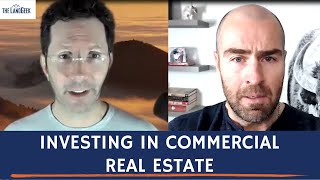
A recorded interview (YouTube/podcast) hosted by Mark J. Podolsky with co-host Scott Todd and guest Shane Melanson, a Canadian real estate developer and investor. Shane recounts his start in investing (early loss, saving, then entry via lending at Sun Life), mentorship from his developer father-in-law, and the transition from single-family to commercial real estate and syndication. Key lessons: immerse and narrow focus, understand replacement land/construction costs, prefer assets with value-add/upside, avoid excessive leverage and ‘buying on price’ without clear exits. Shane currently favors industrial (small multi-bay warehouses) and multifamily; recommends Keith Cunningham’s Keys to the Vault. Scott recommends Sam Zell’s Am I Being Too Subtle?. The episode closes with sponsor CTAs and listener calls-to-action.
Chapters
Hey, it's Mark Podolski, the land geek with your favorite niche real estate website, www.thelandgeek.com. i'm really excited for our guest today. We're going to learn a lot about a lot of different things, but I'd be remiss if I didn't properly introduce my co host. You know him, you love him. Scott Todd from Scott Todd.net landmodo.com learn anything about anything. Investor ninjas.com Scott Todd. How are you, Mark? I'm great. How are you? I'm great. It's always great to see the professor, the brain, the flight school sherpa on another podcast, I guess. Yeah. So today's guest is Shane Malonson. He's a real estate developer, real estate investor, a cash flow specialist. Not only that, I think his most important job is dad and husband Shane Malonson.
Welcome. Thanks for having me, guys.
So, Shane, let's just rewind the tape and tell us a little bit about your background.
Sure. So I grew up in a logging town, White Court, Alberta, which is just north of Edmonton. And both my parents were teachers. So kind of at a young age I noticed a lot of my friends whose parents were entrepreneurial. I didn't really understand what they did, but they generally went on nice vacations, had all the toys and I never worried about money, but there was always a little bit of stress, if you will. And so I was always looking for different ways to, you know, acquire more, you know, really live a life that I was seeing others. And I got into investing in when I was 19. It was a deal that was brought to me from a good friend. And long story short, my dad remortgaged his house $100,000. I put everything that I had saved up that year building roads and put it into a deal and lost it. And so that was kind of the first foyer into investing. And what it really taught me was the importance of understanding risk, due diligence, asking questions, getting into things that you don't understand. I think Warren Buffett talks about risk is, you know, investing in what you don't, what you don't understand, what you don't know. And so that was really kind of a lesson for me. And for the next five years, all I did was work and save my money. I didn't invest. I was fearful. I didn't even really trust the banks. I had it in a security deposit until a good friend of mine that I was living in, his basement suite was showing me that he was investing in real estate. And he worked nights at the bar and kind of three or four hours a day to kind of manage his real estate assets. And that was really what kind of triggered me to at least open my mind that maybe it was possible to do something more and have my money work for me versus me having to always work for my money. And so that was really kind of what got me into real estate investing. But that was single family. And since then I've moved on to commercial and developments and whatnot. So we can, we can jump off wherever you want.
Sure, sure. Scott Todd, your thoughts?
I mean, so, you know, I think that a lot of people, they think of real estate and the one thing that they think about is in fact like single family, right? Like that's, that's the thing that people think about.
Why?
I mean, maybe it's because we live in it. I mean maybe because our entire life revolves around single family. But you know, when you're looking at like that single family, it's, everybody knows it's really competitive. How did, like, how did you make the jump to something else or what prompted you to make the jump from something else? And like, do you wish you wouldn't have just gone single family first and you would have gone to something else first?
So a couple questions in there. Number one, I guess I didn't even really understand commercial real estate. I was working at the city of Calgary and I was noticing sales of the same property that were transacting because when I was an appraiser, I was, I would see one property would sell and then within the same year it would sell again at a much higher price. So I started to see how fixing and flipping and then potentially doing long term rentals was a way to invest and make money. During that time I had a good friend who was at Sun Life and he asked me if I was interested in becoming a commercial lender, a broker. And I didn't really understand what that was, but I went to the interview, they liked me, brought me in, and that was my introduction into the world of commercial real estate. But it was on the lending side. And so every once in a while we would have clients that weren't your pension funds or publicly traded companies. That'd be syndicators, right? Two guys would come in, they would sit down and I was wondering how they're buying a 5 or 10 or $15 million property. And I would ask them and they would say, well, we're putting in say 10 or 15% of the money. The balance of it is coming from our investors. They didn't really go deeper than that but I could see that if to really build wealth and cash flow that could replace the six or six figure income if you will, commercial real estate, apartments, industrial, retail. This is something that I really wanted to get into. And in 2008 I met my wife, maybe it was 2007, I should probably know this but anyways her father was a big developer here in Calgary. They've been around for about 95, 96 years. And he brought me into the world of commercial real estate, showed me how to raise capital, how to find the right deals. And so for the, you know, I quit my job at Sun Life and I went full time into finding deals in the US and across Canada. And so that was like I was very fortunate, right because there's not a lot of people that go from fixing and flipping $180,000 homes to buying, you know, eight figure properties if you will. Right. So I realized that that was a unique situation. I don't know. Does that answer your question in terms of.
Yeah, I got it.
Yeah, for sure, for sure. So, so Shane, making that leap had to be very difficult. Just the due diligence alone is, is. I mean you could have brain damage on some of the stuff compared to a single family home. So you know, when you or just got into it, what were some of the challenges that you faced as far as just analyzing and finding a good deal?
I think the biggest thing for me, the biggest learning lesson was what a good deal was from a bad deal. And every Friday, Andy, my father in law, the two of us would sit down and he'd say bring me the deals. And then he would just pepper me with questions and I, I mean it could be who's the neighbor, what's the zoning, who owned it, when was it bought, what did it transact at? Just this whole list of questions. And If I'm bringing 10 or 15 deals a week to show him, you can just imagine like there was no way we were going to go into that kind of depth. But what it did is it started to teach me the type of questions and the type of things that he was looking for. And if I was to kind of summarize it, it was like there was certain non negotiables right in terms of we don't want to pay more than what we could replace it for. So then I had to start understanding what land values are. I think that's near and dear to your guys audience. What are construction costs, how long does it take, what are the constraints on the land, can you upzone it? These were all things that I just started to learn over time. And because I was immersed in it, I mean, there was never a pivotal day or time or moment or whatnot. But as you start to do more and more deals, you realize how important it is to make sure that you only invest in properties that have, for me anyways, the value add or upside. Because as a syndicator, that's really how I make my money. I make a little bit on the front end, but I would say 80 to 90% of it is on the back end. And I've worked four or five years for free because deals took longer than they should have. We underestimated some of the expenses. As you know, land is sometimes difficult to finance. We did an 1153 acre land lease. Community or mobile home community. And because it was a development, the cash was never, was never sufficient to get conventional financing. So we always used mezzanine or self financing. And it worked well for the investors, but it didn't work really well for the general partners. But those are just kind of lessons that you learn as you do deals.
Sure, sure. Scott. Todd, what are your thoughts?
One of the things I think that I picked up on what Shane said, and I think it's one of the things that I think a lot of people miss is the immersion, right? I think that anytime you can immerse yourself into learning something, it becomes, in a way, it becomes all encompassing. And maybe you want to say, like, you know, everything else is. You're oblivious to everything else, but this is the thing I'm going to focus on. But when you do that, what happens is you get a greater understanding of how things are operating. And you know, one of the cool things for me to have been able to see in my lifetime, Marcus, is I've been able to see like CEOs come into a big company and literally it looks like they hit the ground running from day one, even though they didn't work in that business or even that industry. And I think that the one thing that they do successfully is they immerse themselves in the business, right? Like they go in there and they, they might spend 12, 14, 16 hours a day learning the business and they're moving components of it and they get that visualization of it. And I think that like, even for what Shane was saying, like he would, he would gather up these deals and he was immersed in it, right? Like he was living this thing and it almost, I want to bet you it became kind of consuming in his life. But that's the only way that you can kind of get the ground and hit the ground running and then you become an expert at it. But, Shane, like, am I wrong in that piece? And then, like, if, if you're immersed in it, like, you kind of have to force yourself to turn a blind eye to all these other shiny objects, objects that are out there in real estate. Is that right?
Yeah. So I, I would say that first there was. There was the definite immersion and commitment.
Right.
Like, there was.
No.
Essentially, when, when I left my, my great job at, at Sun Life, I didn't have a safety net, right. But I was confident enough that we were going to do a deal. Now we didn't. It took some time. I want to say it was at least 12 months before we found a property that actually made sense. But once that, once that happened, the next deal came six months later, and then the next deal. And so, number one, yes, absolutely, like 100% commitment into commercial real estate. But what I quickly realized was I had to start narrowing the focus because we were looking at properties in Texas, across Canada, in Arizona, and you can just imagine just in Houston, for example, with 6 million people, I mean, are you looking at retail, industrial, office, multifamily? And so then it was like, okay, let's just focus on multi. And then let's just focus on value add and let's focus on these three sub markets. And so it just. But it was an iterative process, and I didn't have anybody that said, Shane, you need to focus. Right? It was find good deals and show them to me. And so it was really just trial and error, if you will. But I think having a bit of a roadmap and an understanding of where it is that you want to get to is important. And I think sometimes mentors kind of know that, but they don't necessarily articulate that. And it wasn't like I was paying, right. I mean, in fact, I was paying too, with my, with my time, if you will, to work with him.
Yeah. Sweat equity. And, you know, a lot of people don't talk about it, but most people starve their first year in real estate.
Yeah, absolutely.
Yeah. I mean, if you don't have savings or you're not, you don't have something else going, that first year is all learning curve. It's very, very difficult.
You know, I just want to touch on that mark, because I think that that is one of the mistakes I see new real estate investors doing is they maybe get one deal or they think, okay, I've Got this. Now I can quit my great paying job. And I caution against that because markets are cyclical and just having one property, one asset, one stream of cash flow, it can be quite risky to bank on that property performing because if you've been in this game long enough, you know that there's going to be times where rents go down, vacancies go up, and you know, having multiple streams of revenue is just, I think it's just so important.
So that being said, are you more opportunistic as far as when you're looking at deals or right now are you just completely focused on value add?
So I would say from 2015 to 2019 I was pretty opportunistic. And, and the reason for that is the markets were hot and it was challenging to find really good value add opportunities. So I did a couple of ground up developments. One, we did three industrial buildings, both were off market deals. The second was a retail development and it's still performing well in spite of the fact that the day and age that we're in right now, unfortunately, our tenants are gas stations and liquor stores and mobile lube shops and whatnot. But yeah, I would say that they were very opportunistic. Today I'm far more diligent and focused on the locations and the asset classes that I'm working on. And I think just given what's happened in the past 12 months with COVID and whatnot, I think it's really opened my eyes to the new types of risk and the type of assets that I can see a future for.
What are those assets you see a future for?
So I like industrial, I like small multi bay warehouses and I like multi family. Those are the two that I'm most comfortable with. I suppose you could, you know, there's still an argument for some retail, but I'm just more and more nervous about that just with, you know, the, the, you know, Amazon effect with COVID The type of tenants that are, that are going to be around in the next 10 or 15 years, I just don't have a clear path or site for that. So I'm kind of moving away from that asset class.
Scott Todd, you said multi day industrial warehouse. What is that?
Multi bay. Multi bay, yeah. So think of like, you know, the buildings that we built were anywhere from 10 to 15,000 square feet. They're 2 to 3,000 square foot bays and they appeal to a broad range of tenants. And so that was really, you know, that's an asset class that I believe is going to be around. It's Something that I understand. When I was a broker, I did a lot of leasing and sales and that. So it's just, you know, to your point of the immersion, when you do it for long enough, you start to have a sensitivity on what tenants needs are. And then it's really just focusing on what the needs are and where there's what I call like a supply demand gap. And so if there's more demand, then I'll enter those markets, whether it's from a development or value add play.
All right, interesting, interesting. So what's some of the worst advice you see or hear given in your expertise of commercial real estate?
I think some of the worst advice that I see are, number one, the amount of leverage that you can get doesn't necessarily mean that you should get it. And I see a lot of investors, especially in an up market, stacking on a ton of debt. Whether it's when you look at their capital stack, they're coming in with a very low amount of equity. And, and if there's any hiccups in that deal, it takes too long. There's cost overruns. Those guys just get squeezed out. And I've seen it time and time again. I would say that that's probably one of the biggest mistakes. I see another is buying on price versus, like, really looking at the deal holistically. Right. I mean, there are. I mean, I want to say in the past probably three or four years, I would have clients sending me deals saying, look, look at this property. It's 50 grand a door, or it's, you know, I can pick it up for 100 bucks a foot. And I'm looking at the market and I'm looking at the location, and I'm saying, I wouldn't want to own that because, like, in my mind, that's dumb money. Right? Dumb money, meaning you don't know what you're doing. You're taking out someone else's problem, and now you're stuck with it. And as a broker, I saw that so often where you would have someone buying at the peak of the cycle and, and then they get jammed with a deal that, you know, they end up feeding 10, 15, 20,000amonth. They can't sell it. It's, it's. It's very sad, but it happens more often than you think.
Yeah. Yeah. Scott, Todd, any. Any thoughts?
You know, I think that's very. I mean, like, that is a very tempting thing to do, right? Like, oh, my gosh, look at this, look at this. Fill in the blank. You know, like, look at that, I feel guilty to it too. Oh my gosh, look at this multifamily house for $150,000. Oh my gosh, it's got two units. I mean, and then I have to look at and go, geez, that looks like a crime scene on the inside of it. Right. Like you got to reel yourself out. It's not always about price. I think what it comes back down to, obviously is yield and do the numbers were. Because, you know, you look at somebody like Grant Cardone, for example, the guy's buying class AB properties, spending buku bucks with a lower cap rate, but it's working for the structure that he has. And so I think that you gotta find your little niche and move forward with it.
Yeah, and just on that, I mean, I've made some of these mistakes myself. Like in 2013, I bought an apartment building. The market was going up. It was an older property, close to a school, but it was still in a bit of a C location. And had I been had I really thought about the exit. I think that's probably one other mistake is you get into a property but you don't have a clear exit. Who's the buyer? What. What is that buyer looking for? And, and I missed it. Right. We added the value, we increased it, we had unsolicited offers, and then I kept it. Bastards. It's, it's real peak sale date and we still own it. It's still performing, but it's, you know, it's a lot more work these days owning a property that's, you know, a C class building. So I think just having a real clear exit is just another important consideration.
Yeah, absolutely, absolutely. Well, Shane, your mentorship has been fantastic this podcast, but we're now at the point in the podcast where we're going to ask you for one more nugget of wisdom. Something actionable for the art of passive income listeners to go improve their businesses, improve their lives. A book, a resource, something that you would recommend. What do you got?
Well, I think one book that I really enjoyed is by Keith Cunningham and what's it called? Keys to the Vault Now. Keith Cunningham. Yeah. Keith Cunningham is a gentleman that has been, at least by some experts out there, that he's the real rich dad, poor dad behind Robert Kiyosaki. And I think that if you read some of his books, he's got a lot of wisdom as it relates to risk, understanding deals, deal structures, whether it's raising capital, investing. So I would say, you know, even, even over my, my own book, I Think that that's probably the, the best resource that I could point your audience to.
Keys to the Vault, Lessons from the pros and raising money and igniting your. Your business.
Yeah, he's got a couple of books that, that are out, but I think Keys to the Vault is the one that I, you know, like I said, I keep it on my, my shelf behind me and it's a reminder and a book that I read.
All right, fantastic. So, Scott, Todd, before we get to your tip of the week, I just want to give out a shout out to our sponsor, flight School. Learn how the next 16 weeks of your life can literally be transformed. Start building up your passive income machine, but do it in real time. This is not a do it yourself. This is, I don't know, why not go up the mountain of land investing with someone who's done it literally thousands of times over the next 16 weeks, execute in real time with Scott Todd, Azure Sherpa. Going up that mountain quickly, safely, efficiently. And we guarantee that the tuition investment that you make in flight school, you're going to make it back 180 days or less, guaranteed. So schedule a call with the Zen master or the Nightcap OG Scott Bossman Mike Zano, thelandgeek.com training thelandgeek.com training and find out if this niche is right for you. Scott Todd, what's your tip of the week?
All right, Mark, my tip of the week is also a book. It's a book on obviously Amazon. And it's called Am I Being Too Subtle? By a guy named Sam Zell. Little guy named Sam Zell. Little guy in real estate. And, you know, it's pretty interesting story. You know, the subtitle there is straight talk from a business rebel. I listened to it. I listened to the audio version of it. I liked it.
Right?
Like, I like the guy's personality. And check it out.
Yeah, I liked it. I listened to him. He's really, you know, he starts with his values first.
Yeah.
And then, you know, he, he licks his deals. But he's a billionaire. His voice is kind of funny. He's got his babbly voice and he's talking about his family and all this. But that's a great recommendation. And of course, if we're still talking about books, if you go to my tip of the week, which is ShaneMlanson.com, there's a book on there. So check out Shane's Book Club. How the Wealthy invested Money. Discover how to raise Capital. Invest in Commercial Real estate. Claim your copy today. There you go. So check out. I have a link to it because no one can spell melanson. Shanemlanson.com Shane, are we good?
That's good. I appreciate it, guys.
Scott, Todd, are we good?
We're good, Mark.
Well, I want to thank the listeners and remind them the only way, the only way we're going to get the quality guests like Ashayn Lanson from Shamelonson.com is if you just three little favors. You got to subscribe, got a rate. You got to review the podcast. Send us a screenshot of that review to supportlandgate.com we're going to send you the course how to double your money, 30 days or less. The wholetailing course, usually 97 bucks for free. So please do that. It really helps. And then, you know, Scott and I just like to see your reviews. Like, you know, sometimes it's good for our fragile little egos. So please do that. Subscribe rate review. All right, you ready to do this? 1, 2, 3. Let freedom ring. Okay, not bad. I think Shane kind of gave that look like these crazy Americans. So glad I'm Canada. All right, thanks, everybody.
Thanks, guys.
More from Mark





How to find funding partners: How to Scale Land Without Using Your Own Capital


