What Are The Steps On How To Wholesale And Flip Properties?
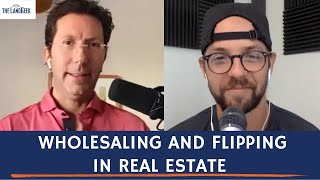
Chase Marr, a San Diego wholesaler and flipper, walks through his full operation: sourcing deals direct-to-seller, using virtual assistants in Nicaragua and the Philippines, and deciding each property as a rental, flip, or wholesale based on numbers. He reinvests profits from active deals into cash-flowing rentals in other markets.
Chapters
Hey, it's Mark Ponolski, the land geek with your favorite niche real estate website, www.thelandgeek.com. and today's guest I'm really excited about. And unfortunately, Scott Todd is not here with us today. He is off in his airplane flying around, probably saving, you know, dogs or whatever. But my guest today is Chase Marr. He's an investor, a business owner, he's a podcaster. He constantly explores the best ways to make more money and impact, yet while not sacrificing the pleasures of an incredible lifestyle. Chase, welcome.
Mark, thanks for having me on, man. I'm excited to be here.
Okay, so let's just rewind the tape. We're going to skip the pleasantries. We're just going to go right to your, your origin story. How in the world did you get to the point where, like, you know, I know you live in San Diego. I got some inside information. I, I know you surf and I know you have all this passive income, but how did you get to that point?
Great question, man. So I grew up with an entrepreneurial family. It was car dealerships and it was a very cash in, cash out, never investing, never thinking about the future, just living it month to month. I started realizing as I was getting older that it was almost like my family was rich the first three weeks of the month. And then they were broke that last week of the month. Then they had to start that cycle back over again. I saw that and I was making plenty of money as a car salesman at the property, at the car lot. And in college I had a good amount of cash in my bank and I thought to myself, why don't I put some of this cash away and buy a house? So I bought a four bedroom house. I rented out three of the bedrooms plus the garage to roommates in college. This was house hacking. Before Biggerpockets was calling it house hacking. And I thought to myself, man, I have less money in the bank, but now this money's in an asset. So it didn't go anywhere. Now I'm getting cash flow from it. I never read a real estate book, never read any business books. But I thought to myself, let's do this again and again and again and again. So I just kept doing it and it worked really well. And then I kind of had a moment where I was in my mid-20s and I was semi retired. I thought to myself, dude, I could literally be very frugal and not work another day in my life. And so I moved to San Diego and I traveled around For a couple years, I blew a lot of money. I tried a lot of different things. I surfed a ton. I surfed Mexico, Costa Rica, Bali, you name it. And man, I ran out of cash. But I was still covering my living expenses. But I couldn't take that next step. And I realized to myself I need to increase my income because living frugal and frivolous off this passive income is not going to get me to the life that I truly want. So I became a full time realtor, started selling luxury real estate, found a niche in the investor development type realm, sold a bunch of those deals and then realized those guys were making all the cash because became one myself. And now I'm a full time fix and flipper and wholesaler in San Diego and I buy rentals in a few different markets across the country.
Wow, that's a lot to unpack there. Really interesting how you had. It was kind of a scarcity mentality in a weird way in the beginning where you're like, okay, I gotta keep my overhead really, really low. I'll go do all this crazy stuff I want to do, you know, see the world surf. And I feel, you know, the sense of pride that, you know, just that first step was successful, but I'm not going to go any further than that. And then you're like, wait a second, this is unsustainable. It's like the Dave Ramsey I can get you to sustenance, but I can't get you to abundance. And then you're like, wait a second, I'm working all these guys and they've got this abundance mentality. I can do that too. They're no smarter than me. Went to that next level and that next step. So tell me about how you sort of faced that, that fear, that sweat. At some point you had to get out of your comfort zone. How did you do it?
Well, I knew that to live the life that I was starting to realize I wanted to live, that I needed to make a lot more money and I needed to not just have, you know, a few single families and a few duplexes. I needed to like, I needed to step it up. Plus, it was like a challenge. I got kind of bored, to be honest. I wanted that next challenge and so I just started trying a few different things. And I'm the type of personality that if I accomplish something, you know, I wasn't this type of personality. I was the type of personality where I accomplished something. I'd feel good, I'd sit back. But now every time I kind of take that next step. Like, I want more. I want to go bigger. I want to go bigger and bigger and kind of fix that wake behind me. Make. Make it so it kind of runs itself, then take that next step. And so it was more just like a personal challenge deep within myself to keep growing and keep building. And now I'm realizing I'm ready for maybe that next step in my life again, where the flipping and the wholesaling has been great, it's been building big cash, but I want to not be so transactional. And so I'm in this phase of my life now where it's like that next kind of a growth period like I had and, you know, four or five years ago. So I'm excited about it.
That is exciting. I. I can relate because when I first started with my land investing business, I just flipped for cash, and the cash was great, and I really sort of enjoyed it. But then there gets to a point where, like, man, this is a hustle, and I'm starting every day from zero. How do I keep the asset and then make a cash flow? And that is an exciting challenge. So I'm excited for you. So when you're doing a fix and flip and you're doing wholesaling, there's a lot of people doing it. What is your. How do you differentiate yourself from the others in your market?
Yeah, that's a great question. So I go. I built. We're very similar in this. My entire team is virtual assistants in Nicaragua, in the Philippines, I've been using leveraging virtual. I hate the word using. I've been leveraging virtual assistants since 2016. So we're going on four years now. And I've learned a lot with that. So what differentiates me is I can have more prospecting at a fraction of the price that other flippers and wholesalers. And to be honest, most flippers buy from real estate agents and wholesalers. And I realized this, and so I told myself, if I can invest that money in marketing and be my own legion system, then, you know, let's do it. So I started that. January 2019 is when I kind of December 2018, I had this moment where I was like, I don't want to be that. That agent anymore, putting the deals together. I want to be in the deal. So January 2019, I got back from Canada. I was there for Christmas, and I just put a bunch of money in marketing, and I've been building that for, you know, going on however many months that is now. And I got my team of EAs. I'm doing the direct to seller prospecting and I'm my own lead source. I'm self sustaining so I don't have to buy the thin margin deals. I can actually do less deals and make more money because my margins are two times triple of, you know, the average margins here in San Diego.
It's really interesting. So your team is built like my team. So what, so what is your actual role every single day?
So I just kind of manage my projects and then when we get a deal under contract for wholesaling, I'm the one that sells that deal. So my skill set is best suited in negotiation and sales. That's where I thrive. So I have somebody that kind of manages the data and the operations and the systems and the lead generation and setting the appointments and the phone calls. All that's outsourced. And then when it comes down to underwriting the deals, deciding whether we're going to flip it or wholesale it, and I actually just added a new income producing lever within the business without having to increase marketing at all. I can share with you about that. I'm excited about it and so I stay within my role of analyzing the deals. And if we do wholesale and we sell a deal to an investor, I'm a shark with negotiation from the car lot and so I can drive that price up in a bidding war and I really enjoy doing it.
That sounds really fun. But now if we're doing a fix and flip, I'd assume you'd have some kind of capital constraints. So where do you do you use outside money? Are you using private money? How are you financing these deals so you can close them fast?
Great question. So I have some good hard money contacts and they give me great rates. So it's more like private money rates. I use family owned shops. I don't go into the big dogs that have all those junk fees. So I have a couple great relationships that I built from when I was the full time realtor. And so I'm usually paying like 9% interest, 1 1.5 points and I'll fund about 20% of the deal myself through my own cash or through lines of credit and then through they'll fund everything else. I've actually never raised any money or brought in any outside capital as equity. It's just all been debt. I have a lot of confidence in my deals. I have a lot of confidence in the timelines and the way we get them done. So I haven't had to bring in any equity partners which also allows me to do Less deals and make more money than people that are out here bringing in equity partners, doing thin margins. I don't want to deal with that. I don't like to lose money. So either, you know what I mean? So I do it the way that I do it and it makes a lot of sense and I maximize every single lead. I squeeze every single, you know, juice of lemon out of that as possible.
It's really interesting. I do want to talk about this next income source, but I just want to, I want to just get a clear picture of the model because to me it sounds like you're using the three sources of leverage. You're using other people's labor, you're using software and systematizing, and then you're using other people's money and that's how you're scaling. So my question is, from the car dealer perspective, because you keep talking about the margins, I'm going to assume you're more like a luxury brand, like let's say like a Mercedes or a BMW or Lexus versus Honda, Toyota, Ford. Am I thinking about this correctly?
Yeah, I would say I'm actually like, like a Tesla with. Okay, with a Porsche brain and a Porsche work ethic. So how can I be as efficient as possible? So the way that I do things is I'll go in sprints. So I'll sprint for a month and then I'll take a Sunday and I'll look at my business behind me for 30 days. All that I can fix, what are all the things I can systematize? What are all the things I can make more efficient? Do I need to hire somebody? Do I need to increase hours? Do I need to use more tech, more software? And then I'll sprint again. And that's how I've kind of built it. So I'll be a Porsche for a month and then I'll be a Tesla for a couple days. Porsche for a month, Tesla for a couple days. If we're using your analogy, I love it.
I love it. If you were going to do things over again, knowing what you know now, what would you change?
I think that the two years I was traveling around, I look back and I think were those was that wasted time of, of me, I could have been a lot further ahead right now. I enjoyed a lot of experiences that other people have never experience and may never experience. And so that's something that I think about every now and then if I'm just being vulnerable and honest. Because if we're talking about non liquid assets, I was good. But I burned my liquidity and I basically started, if we're talking about liquid cash, I started from zero again. It was sort of like a reset. And so I wouldn't say I regret it, but that's something I think about every now and then. But I try not to let it get me too down. And then aside from that, my time spent as a full time realtor, I wish I would have gone into the wholesaling and the flipping sooner or right away because I feel, and I felt at the time when I made that switch that you have more control and more leverage and more upside as a wholesaler and flipper than you do as the agent. So I felt I spent a little bit too much time there. And that's something that I'm working on with myself is trying not to spend. Like when you're ready for that leap, you almost have to leap before you think you're even ready. Because by the time you think you're ready, it might have been, you know, a little too late. And so that's why I believe to myself now I'm ready for that next step. And that's what I'm working towards.
All right, so let's talk about. Yeah, it's great. It's great. You know, from my perspective, because I'm way, way older than you. You're like a baby to me, like, you know, surfing. I think once you get a little bit further down the road and you look back, it'll be really wistful sort of thinking like, oh, isn't it great that, you know, I didn't have a crappy, you know, nine to five job like all my friends did in San Diego and I was able to have all these amazing experiences and luckily for me, I burnt through all my money. So I was re motivated again to get to that next level. It's almost like you, you needed to self sabotage to, to motivate, but because it's you, you don't, you're like, oh, I should have done, you know, that you're intellectualizing it, but one day you're like, oh yeah, Uncle Mark was right.
Well, I appreciate that perspective. I got chills thinking about that. That's a really good perspective and it's probably something that I should embody a little bit more. I'm a little hard on myself.
Yeah, I wouldn't be so hard on yourself. I think for, you know, the younger people listening to this as well, there is some great lessons to learn. But I think one of the great things, when you get to a point in life is when you get out of college and you get that first job, that first job is going to be crap. I don't care if you are going into Goldman Sachs and you think it's going to be a great job. I'm telling you right now, your first job out of college is crap. So you might as well do what Chase did and build up some identity capital and travel and live and be selfish and do the things you want to do and experience the things you want to do. And then when you get that first crappy job, you're the guy that everyone wants to talk to or gather. Everyone's talking like, oh my gosh, you surfed Bali. You almost got eaten by a shark. Tell me more. Because while you were doing that, you know, I was here on spreadsheets and I was too tired to even go out on the weekends because my job was so hard. So I think identity capital is what you did. And you know, there's, it's really great way to do it. I did something similar. I spent six months in Australia after college and I had lots of regrets. I thought I could stay longer, you know, but no, I was in a rush to get that bad crappy job, which I did. Yeah. Which led me to here. So. Okay, so tell me about that income stream.
Got it. So the way that I run my business is when I generate a lead, I have sort of a, like a checklist and I go from my goals first. So my goal is to create long term generational wealth and passive income. So can I burr that property? So can I buy it? Can I rehab it? Can I rent it out? Can I refinance it? Create 30, 35% equity and cash flow? If it doesn't fit for that, can I flip it and make at least $50,000? I have to net at least $50,000 for a flip to be worth it for me. That's a rule that I've put in place. If I can't net $50,000, can I wholesale it? And if I wholesale it, my goal, my wholesale is usually about 25 to 32k, but I got to make at least 15 grand for it to even be worth it for me to be able to wholesale it if I can't do that. Now, now I had all these leads sitting there and I was thinking to myself, what can I do with these leads? So now I partnered up with top producing realtors in each market that I run this business in and I refer them those leads for a 35% split of their commission. So it's added another six figure income stream to my bottom line without increasing my marketing costs whatsoever.
Wow, that's really, really clever. Do you use software to manage the algorithm that you just basically listed?
Yes. So not quite where you're at with your software, but I'm working on it. I do have two pieces of software fully custom built and custom coded and I have a VA that has my parameters and so I'm not fully automated with that. I still check if, if for option 1, 2 and 3. If it doesn't meet any of those, I don't even touch it. If it gets referred to the realtor, it just goes. But if it's within that one, two or three, I am the one that signs off on making that decision. Yes.
Okay. Wow, great. So in your niche of wholesaling and fixing the flip, what's like the biggest mistake you see people making?
The number one mistake that I see is people not keeping enough deals as rentals. That's the number one mistake because I'll see people that are 40, 50, 50, 60 years old in my market here in San Diego. I'm also in Tucson, I'm in a market on the east coast as well and they don't have any rentals. And so if they wanted to stop flipping, stop wholesaling, they don't have anything to show for it. So that's the number one mistake. I think the second mistake is doing too thin of margins. So flipping a deal that they're only going to make 25,000 when they could have just wholesaled it and made 12,000, I would take that wholesale all day long. Because on that 25,000 you have risk, you have time, you have expenses, you have cost of capital, all that. And so I like to be fast and efficient and I've put minimum standards. So if I can't make X amount of dollars on a flip, hey, if it doesn't meet that checklist, I don't lose any brain power thinking about it. I just move on to the next choice for that lead.
Interesting. And I like the way you diversified your markets. Are you looking at doing more markets and are there any macroeconomic worries or trends that you see where you think, oh, I may have to pivot at some point.
Great question. So I'm sure your listeners are familiar. I'm sure you talk about all the time the active income versus passive income. So I look at San Diego as my active income market. This is where I make 30, 40K on a wholesale deal, 50, 60, 70 on a, on a fix and flip. And then I deploy that cash into cash flowing markets. So I run the same lead system, but in those other markets I'm way more weighted towards the rentals. And that way it's easier for me if I'm not in that location to fix up and get a property rented than it is to fix and flip a property. So San Diego is where I make the cash, all the other markets where I deploy the cash. And so yes, I am looking at opening up other markets, but the single family and small multifamily game that I've been in for a while now is I'm studying more commercial real estate. So apartment buildings, self storage, mobile home parks, that's kind of that next level that I'm looking at getting at.
Well, you should listen to the podcast because I've had all those experts on, I'm sure you've had on yours as well. Yeah, I do like the way you bifurcate the active income reinvested into the passive income. I think it's, it's a really great and really the only reasonable long term strategy. And you know, I did a podcast once right when I was, you know, railing against cash and how much I hate cash. And it was like, you know, what's wrong with like flipping and you know, velocity of money? I'm like, oh, you know, and I went through it, but. And then I got a vox one day and the guy's like, you know, somebody wants to pay off their note and I'm telling it's $5 a month and I don't want them to. I'm like, no, it's your customer. If they want to pay it off, I'll pay it off and then go and reinvest it into more passive land like you're doing. So that's a really interesting take on it for sure. So do you have another algorithm where you're like, okay, this is the perfect rental. And if it doesn't meet this criteria, I'm not gonna buy it for rental.
Yeah, I do. So it has to be at least three bedrooms, but I prefer four bedrooms for a single family. And then if it's small multifamily, it has to be two bedrooms, one bath or three bedroom, one bath. I don't like two bed, one bath. Single families. I don't like one bed, one bath, you know, a lot in multiple families. And then it's gotta be close to colleges, hospitals or military bases. So those are like my three parameters where if it doesn't meet any of that criteria, I don't even Take a look at the deal and then we start diving in a little bit more on, you know, appreciation, cash flow, all that. I don't buy anything turnkey. Everything I buy is at, you know, 50 to 70% of ARV minus the rehab, so that I can build in that equity and then I can use that equity to buy more deals in the future. So I try to keep it simple. Has to fit the brrrr model. It's got to be close to those three parameters that I talked about and it's got to be that bedroom bathroom split because I found that's optimal cash flow.
Great, that's great. And you're not interested in the Airbnb model, I assume.
You know, I am interested in might be something that I eventually start looking at, but I would never be interested in it for 100% of my portfolio because to me that's another job and that's active income. And I already make my active income in a different source. But if I had an operator in a certain market that kind of wanted to run it and I could scale it and leverage it, I'd be, I'd be interested for sure on an Arano.
Alright, great, great. Well, we are at that point in the podcast now where I'm going to ask you for your tip of the week. A website resource, a book, something actionable where the art of passive income listeners can go improve their businesses, improve their lives. But before we go to the tip of the week, I've got to discuss our sponsor today. And the podcast sponsor is Flight School. Learn how the next 16 weeks can transform your life. Go up that mountain of land investing with Scott Todd. He's done it thousands of times. It's a one time sale. You get passive income without renters, without rehabs, without renovations, without rodents. Learn more. Get on a call with the zen master, Mike zano, the nightcap OG. Dude, buddy, stop off me. Just go to landgeek.com forward slash training. Thelandgeek.com training and again, I want to thank Flight School for sponsoring this podcast. Okay, Chase, what is your tip of the week?
My tip of the week would be that for anybody that has been listening to this and you vibe with what I'm saying and you want to learn how to build a business that's worth building. Invest in a way so that you can live a life worth living. When you're done listening to Mark's podcast, Land Geek and you want another podcast to listen to, it would be mine. Life Worth Chasing podcast. It's a top 75 ranked podcast in Apple Entrepreneur. And I bring on business owners and real estate investors that are living the life of their dreams and they almost make it look easy. And so if you want to learn more about that life worth chasing podcast.
All right, I love it. And I'm going to take that even further and a little deeper and learn more about Chase and how he does what he does. Read his blog. It's really interesting. Just a couple headlines from the blog. How to position yourself in Business for the Future with Adrian Kennedy Scaling to eight Figures. Marketing and Real Estate Investing with Taylor Welch. What the presidential election means for real estate, why quitting is an underrated skill, and much, much more. Go to chasemar.com and I will have it in the show notes. Chase, are we good?
We're good, man. I appreciate it, Mark. Thank you.
I appreciate you. And I want to thank the listeners and remind you the only way, the only way we're going to get the quality of guests like a chase Mar from chasemar.com is if you do us three little favors. You gotta subscribe, you gotta rate, you gotta review the podcast. Send us a screenshot of that review. To support thelandgeek.com we're gonna send you free the $97 wholetailing course how to Double youe Money, 30 Days or Less. So please do that. All right, Chase, I usually do this with Scott Todd, so you're gonna have to do it with me. So I'm going to count the three. We're going to say this together. You have no idea what I'm going to say. It's going to be really awkward. Just go with it. 1, 2, 3. Let.
Let freedom. Freedom.
Ring.
Ring.
All right, thanks.
Fantastic, Mark.
All right, thanks, everybody.
More from Mark





How to find funding partners: How to Scale Land Without Using Your Own Capital


