What Is The Best Way To Keep A Balance In All Areas of Your Life?
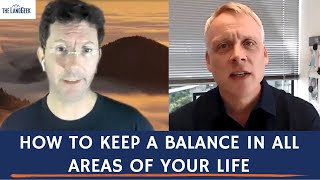
A recorded interview (YouTube/podcast) between host Mark J. Podolsky and Jay Papasan (co-author of The One Thing). Papasan recounts his shift from employee mindset to entrepreneur/investor after working with Gary Keller, describes a concrete early wealth plan (targeting 10 rental properties in 10 years and $75,000 passive income), and explains the One Thing framework: ask the question "What's the one thing I can do such that by doing it everything else will be easier or unnecessary?" He argues balance is an ongoing activity (verb) rather than a destination, endorses time-blocking and goal nesting (5-year → yearly → monthly → weekly), and cautions against the "cult of hustle." He recommends books for managing wealth and happiness (Happy Money; The Simple Path to Wealth; The Psychology of Money). The interview includes brief sponsor and host closing bits.
Questions this video answers
June 24, 2021
Over 1.5 million copies
35 languages
More than 500 national bestseller lists
The Wall Street Journal's hardcover business list (number one)
Chapters
Hey, it's Mark Podolski, the land geek with your favorite niche real estate website, www.thelandgeek.com. and Scott Todd is flying today. So it's just gonna be me and my guest who today I'm gonna put on my anchorman voice is a big deal, Jay Papazon from the1thing.com. You know, there's always sort of those two seminal real estate books everybody talks about Rich dad, poor dad, and the One Thing. So Jay is a best selling author of the One Thing, over one and a half million copies sold. It's been translated into 35 languages and appeared on more than 500 national bestseller lists, including number one on the wall Street Journal's hardcover business list. He's a co owner of Keller Inc. Keller Capital and Papazan Properties Group. Jay Papazon, welcome.
Hey, thanks for having me. You know, we were talking beforehand. You, your topics are my favorite topics to talk about. So I'm excited, I'm so excited to have you.
And congratulations for finally being on a prestigious, you know, media outlet like our podcast. Oh yeah, good for you.
I've made it now check. I want to make sure my kids listen to this one. Right?
No, no, absolutely, absolutely. So let's just rewind the tape. And how did you go from being Jay Papasan to J. Papasan, the big.
Deal you are today? I still think I'm Jay Papasan and I can hear my mother saying, Robert Jason Papasan, get in here. Right. So I think the biggest journey for me was in the kind of the second chapter of my life. I started off wanting to be a writer and editor. My dad was an executive and I really thought path forward was be a great employee, maybe sock away some savings and look for promotions. Right. Work your way up the chain. I really did think that. And I got to work with Gary Keller starting in the year 2000. I've been with him for 20 years as of last month. And he's a self made billionaire. He's only ever had a couple of jobs working for other people. He's always thought first about investing his time into building businesses and to owning assets. And so obviously that's a radical departure from how I thought before. And he's been the mentor and it really kind of rubber hit the road for me when we wrote the Millionaire Real Estate Investor and it was our second book together and I got the privilege at the time, it was just my job description. I had to find 120 millionaires and these were people that could prove that they owned 100. I mean, excuse me, a million dollars in equity, not value in the property portfolios they had. And I then interviewed them, heard their stories, and I remember like 80 interviews into it. It was becoming so apparent, right. I read Rich Dad, Poor Dad. I read all the books, too. While we're doing this, I went into Wendy, it's like we've been playing the wrong game. We were playing the wrong game. We figured out our net worth, like, I think in 2002. Oh, pardon me. I figured out our net worth in 2002, and it was like $2,000. And me and my wife had both been working for over 10 years each. And to think that that was our accumulated net worth at that point, playing the old game versus this new game. And so I actually went home and I said, wendy, would you like to become a millionaire? And we came up with a plan. Neither of us believed in it, but we thought we would acquire 10 rental properties over 10 years, become net worth millionaires. And our secondary goal was $75,000 in passive income. And that started the journey. And we've accelerated way beyond our wildest dreams in terms of both acquiring assets and passive income. And it's. We could go into detail about all of those strategies, but that's where it started. And I'd love that you like passive income. How Gary defined financial wealth in the opening chapter of that book. It's having the passive income to fund your mission in life without having to work. And that's what made us go, how much do we need? And our number back then was 75 grand. And the number has gone up as our aspirations and belief and our abilities has gone up. But honestly, if we had to, we could go back to that. But that's the big story. That journey started to me between 2002 and 2004, and it was just complete mindset change. Getting into Gary's world. A true entrepreneur and investor.
Yeah, I mean, and you're really, really big on mindset. And what's interesting about the one thing is you guys sort of debunk a few things that people just sort of take for granted. One of them is multitasking and balance. Let's just talk about the one where everybody's like, oh, you gotta have balance in life. And you guys just come right out and like, balance is a myth. Can you elaborate on that?
Sure. And it's. I think it's just our approach to it is all wrong. And when I'm teaching a class, right, I'll ask people, all right, everybody, this. Back in the days when you could have a bunch of people in the hotel room, right? I'd be like, everybody, stand up. And if you're able stand on one foot. And everybody. Sorry, it installed a new program and it's making noises and I'm quitting it now. Pardon me. I'll ask everyone stand up. And if you can stand on one foot and everybody's out there, they're kind of, you know, swaying from side to side. They got their arms out, trying not to hit their neighbors. And I'm like, great. Are you balanced or are you balancing? And everybody immediately gets it. They go, oh, we're balancing. And so this whole idea of balance should be less about this destination we get to where we've set up everything in our life. So it's just perfect. It's not a destination. It's an activity that we have to do all the time and to have great success financially and in business, you're going to be actually out of balance, right? It's not about the perfect portfolio, right? You are going to be taking activities and you're going to be doing the main core thing, the 20%, the 8020 rule, right? But on steroids, we call it the one thing. If you take the 20% of something till you get down to one, that's the one thing that means there's a lot of little fires burning. But we know, especially in business and investing those two worlds, we know when you are doing the core activity, the fundamentals, right? That's where almost all of your results come from, right? And that means you're going to be out of balance, but you have to counterbalance in the other areas. That's the verb. And so for your spiritual health, your physical health, your relationships, I might go into my cave to write a book, Mark. And I might for a few weeks be really out of balance professionally. But I also know it's not like I can work for 10 years and not see my kids and expect them to be waiting on me when I get out, right? So I have to quickly get back into balance. I might need to take an extra day off and just hang out with the family. If I haven't gotten sleep for a couple of days because we were working long hours at a convention, I'm going to take time off to restore physically. So you have to actively balance out these other areas of your life. But it's also okay to be out of balance in a couple. And I think business is absolutely one, right?
No, no, absolutely, absolutely. So let's. Let's just get into the one Thing, which is, what's the one thing you can do that will eliminate. Right.
It's a question, what's the one thing I can do such that by doing it, everything else will be easier or unnecessary. It's a mouthful, and it's a mouthful to internalize it, but it is you. You want a big answer, you got to ask a big question. And it's a very purposeful question. And the goal of it is to identify kind of the lead domino in your current world. The thing that your biggest. And your audience will know this. What is the biggest leverage you have right now on this activity that you're trying to do? So what's the one thing? Not three or four. It's what you can do, not could, should, or would. It's not in the future. It's what I can do right now so I can get feedback. And that. Such that by doing it, everything is easier or necessary. Just tells us you're looking for the biggest object of leverage. What's the biggest lever you currently have in your world to make this happen? And I was really afraid, Mark, when we wrote that question, that people wouldn't know the answer. And what I've found is most people do, but they're so busy, they don't ask it.
So let's talk about you personally.
Sure.
Because how do you go about. You've got so many things going on the books and the companies and the managing. I mean, how do you. When you wake up and you think to yourself, okay, what's that one thing? What's that one point of leverage that Jay is going to accomplish today? Can you walk me through your process?
Well, I think that our process is you ask and answer the question. And it can be for any context. Like when we teach goal setting to the now, it's like how to take a really big future goal and break it down into where do I have to be in 5 years? And based on that, where I have to be in a year? And based on my annual goal, where do I have to be this month to be on track for that? And then based on my monthly goal, what do I have to do this week to be on track for my monthly? And you just see it's like little nesting dolls. Right. We have a process for that. So the fundamental rhythm for me is, first and foremost, you have to know why you're here. We have this in almost all of our books in some form. And the one thing we talk about, purpose. In our other books, we might talk about your big why. But if I Understand fundamentally what I'm working for. Right. Financial wealth, part of the definition for me is your mission in life. If I don't know what I'm ultimately working for, I'll never. The goal post will always be out ahead of me and I'll never get to them. Right. So you have to start with that. That's the first domino. So what's the big why? Because, as you know, building wealth, a lot of times you're trading something today, not doing it today, not using your money to buy that car or whatever so that you can have many multiples of that in the future. And you've got to have some motivation for being willing to play that game. It's the same with investing your time in business or anything else. So the rhythm for me, it all breaks down. I have five year goals and one year goals. And based on those, like every, I'm going to say Friday or Sunday. For me, it's usually Sunday. I spend 30 minutes with my goals and my calendar and I ask, does my calendar reflect the big objectives I have for this month or this week? And I'm really, because I've done the big goal planning at our annual retreat or at a quarterly retreat, I'm really focused most often on just my week because I know that that is connected to the bigger goals. And I'm asking, based on my goals, am I allocating my time? We call that time blocking. Really successful people make appointments with themselves to do their most important work. And I can tell you, like, for me as a writer, like, I've got to be every week reading a book. I've got to be. If I'm going to connect the dots, I've got to have dots to connect. So to me, I've got to be researching, I've got to be writing. And the other core activity for someone who publishes books and hopes to change lives is doing what I'm doing right now. I've got to be willing, a screaming introvert, by the way, to put myself out there so that these babies, we spend over five years researching and writing the one thing, we've got to keep nurturing that by supporting it. And my goal is to do at least one activity every week that promotes that book. It doesn't sound like a lot, but sometimes the momentum builds and little things become big things. But I know that every week I'm gonna look on my calendar and there's gonna be a podcast interview. I'm gonna be an interview with the journalist or I'm doing some promotion because they'll add up over time to a lot. Right.
So yeah, all these little things you're doing, it's compounding. And eventually in time it. And even talk about this in the book, these little habits built into big success habits. It just takes time. What's the worst advice you see or hear given in your area? Expertise of wealth building.
There are a lot of gurus out there and I kind of refer to them generally as the cult of hustle.
The cult of hustle.
The cult of hustle, in my mind. And they are intent and a lot of them are appealing to youthful, sometimes testosterone filled dudes or just ambitious, youthful people who don't yet know if they work 70 hours a week for every week of the year that they're actually borrowing from their health in the future. Very few people are really made to do that. Right. You can only drink so many monster energy drinks and Red Bulls and it still be okay. And so it's not how many hours we throw at a problem, it's what we put into the hours we choose to throw at it. And I'll tell you, Gary Keller, he's a self made billionaire. He doesn't have any more hours in the day that I do. But his dollars per hour, like I do the math, $35,000 an hour. When you look at his income or whatever, I mean something insane he's gonna make on average like a Bill Gates kind of hourly wage. They're just being much more purposeful about what they choose to do. And I just really feel like that's the number one crime I see in business and investing, that it's a game of hustle. Yeah. There are times you have to work hard and I'm willing to work overtime. But if that is my strategy, I am doomed to fail.
No, no, absolutely. I love that and I see it all the time. And, you know, there's nothing, you know, I have nothing against, you know, sprinting, especially knowledge work. It's a game of sprints. You rest, you sprint, you rest.
That's counterbalancing. That's what you just described. Right. You'll be a little out of balance, but then you get back in balance. But this idea that we were made to do a 10 or 15 year sprint, I watched a 31 year old senior executive, we were preparing for a big event. He literally walked off of the soundstage and held his chest and said, wow, my chest is hurting. And we all went, whoa. Turned out he'd had way too much caffeine. But it was one of those like scare moments of wow. This is one of those things. People are always surprised when it happens to them. Whether it's at 30, 40, 50, 60, that they've been borrowing by cheating with time as making that their strategy. They're borrowing against something they don't get to repay. When it comes to. Then you're in an ambulance going to the hospital.
Yeah, Right. No, yeah. No, absolutely, absolutely.
Or you're divorced or your kids don't talk to you like there are things that you neglect long enough, they won't be waiting on you. Right. That's the price that we want people to avoid.
No, it's so true. Because when you look at all the areas of your life, if you're just focused on that one area, and I can imagine for you, you've reached a certain level of wealth and success that most people never reach. Unfortunately, they just, they just won't. And at some point you kind of get to that point where there's like this existential crisis, like, all right, I'm on the top of the mountain now. What? Did you ever have that, that sort of epiphany, like, okay, my passive income exceeds my fixed expenses. You know, I've, I'm a, you know, New York Times best selling authority. You know, I'm doing all these things now.
What? So the answer is kind of yes and no. My wife and I For the last 14 years go on what we call as a goal setting retreat. And it's become something that we use the one thing framework. And it started off, we got a Word Doc and then a Google Doc and we started sharing with other couples. And this will be the fourth, fourth year that we actually facilitated for people. And it's a two day retreat to get on track with. Why are we working so hard? What is our goal? Right. What do we have to do this year to be on track for that? What do we want to do for our family, our marriage, all that stuff. Right. It's just a great way businesses do executive retreats. It is a best practice. We don't do that for our home business. Right. And so that's all we did. And this last time, Wendy and I were looking at our net worth, and that's one of our core goals, is we track our net worth. I track it every week. And I want to know what that number is. That is kind of our measuring stick. Because if that number's growing, that means we've got the right assets. Right. And then we also track our active and passive income. Those are our top three variables financially. And we're Looking up and I read a great book called A Simple Path to Wealth by J.L. collins. It's financial fundamentally a primer on the stock market and index funds and the 4% rule. If you have assets they should throw off, there's great research. He shares, if you can live off 4% of those assets, you can live for 50 years without. I think it's a 97% chance that those assets will have maintained their value and you won't run out of money. Wow. We did the math on that and we're like, we don't need to keep moving the goalpost because our pattern has always been we get to the big goal and we set a bigger goal, right? And now we have this moment of, well, in terms of what we can currently imagine for our lives. And I mean, I'm driving in a 12 year old Highlander, dude. I paid cash for it. I don't lots of shiny objects. Like the most expensive thing I have is a, an Apple watch, third edition or whatever, right? So it's not even the new one. We indulge in food and travel, which we don't get to do a lot of right now. But we look up and we're like, wow, we're kind of taken care of. Our goals now are much more around. Are we going to start a foundation? Are we going to take the things we're really passionate about, kids and education and can we take what we've built and not just have a future for ourselves and our kids, but supply it for other people? So the cliche is success to significance. But the hardest thing in life to do, I think for people who are high achievers, is to stop moving the goalpost. Because I'm looking at Mark and I'm like, man, he's got all this land and he's got this great passive income gig going and I want some of what he's got. And the key goes back to that first domino. What is it that we fundamentally want to achieve? For us, our scorecard is ours alone. It's not for bragging rights on Facebook or anywhere else. It's not so I can get a picture of me on a private jet. If that's important to you, that's fine. But that shouldn't be important to me because it's important to somebody else. If I can design what is the passive income we truly need to be happy and fulfilled and do the things that we want to do. It doesn't mean I'm going to stop working because I don't know what I would do in retirement. It just means I get to work for different reasons and work is very much a choice. And I think we have to stop moving the goalpost on ourselves.
No, no, I love that. I don't know if you've heard the book by David Brooks, the Second Mountain.
No, I haven't. I'll write it down.
You love this book because you're on that second mountain. So the first mountain is egoic, right? We're, we're going up that, that mountain and we're sort of, you know, we want to get all these conventional things that, that our parents tell us are conventional success. We want to start, you know, we want to get the good education, the good job, the nice house, the nice cars, the nice, you know, all these egoic things. You get to that top of the mountain, you're like, is this all there is? But now the second mountain is purpose driven and it's a much harder sort of life, but it's way more fulfilling and it's about community and it's about, you know, relationships and, and these things that I think really would resonate with you that in that you write about, but it's sort of done in a different way.
And I would say, hearing what you said, I will read that book because that's in the vein of things. I think the second mountain should be the first mountain and that the two are not exclusive. We should always feel empowered. And I know that some of us mean. I grew up a white dude in middle class Memphis, Tennessee with so many privileges I didn't even know I had. So I get it right? I won the genetic lottery just being born in the United States to begin with.
Right.
But most people underestimate, they overestimate what they're going to get done this year and vastly underestimate what's possible for them in five. Just doing a few of the right things. I believe we can start and I'm going to teach my kids to can we start making sure that we're living a purpose driven life earlier and just never ever believe that that means that we have to compromise on the others. I just don't, I don't like. I think that I can be a great businessman and investor and still be a great dad and a great husband. I don't think that those are mutually as corporate exclusive and rare would be the example that we could find that I would have to give up one to do the other. Certainly not in what I just described. I don't believe it.
Right. No, I 100% agree and I Love the way that you said that. This could be another book.
Right?
And it really could be. Because I think a lot of people think that I've got to do this first and then do the second. It's like I'm, you know, like philanthropy. Well, I'm going to wait to give. I'm going to, you know, until I feel secure enough. And you almost, you know, maybe never could feel secure enough. It's just this mental thing. We're going to.
We're going to geek out. Yes, you should be. There's so many. I teach a whole class on giving. We can go down that path someday in the future if you want. But if you can't afford to give money, you can give your time. There are many things. I mean, if you can't give your time or your money, you can give your gratitude. Like there's research that says, I see you putting a dollar in the Salvation army thing. I say, dude, you're awesome. I appreciate that you did that for all of humanity. I just think a total stranger. The odds that you give more next time go up through the roof. We all can give at all times in our lives in different things. But then there's the Warren Buffett, because he understands compound interest. He knows that his greatest contribution to the world will be to wait till he's dead, let that stuff compound for all those years, and then hand it to someone like Bill Gates who's building machine to make the world better. And I'm like, yeah, so sometimes it does pay to wait. But have a plan today, right?
Yeah, no, absolutely. Absolutely. So we're at that point, Jay, and I'm so sad, but we're at that point where your mentorship has been amazing. But I'm going to ask you for one more piece of advice. A tip of the week, a website, a resource, a book, something else actionable for the auto passive income listeners to go improve their businesses, improve their lives. What have you got?
So every year I set out to read about 50 books and I end up reading about 45, plus or minus a couple, right? And because I've been an author in finance, I try to make sure I read four or five books on finance. This year has been a bonanza. I actually read, I've read three that I have now parked in my top 10 all time list. And so I'm going to share those in the order because you said one thing. If you only got to read one of those books that I really love this year, it's not even a new one. It's a book called Happy Money. And it's by Elizabeth Dunn and Michael Norton. And it's not about building wealth. It's about if you have a dollar, what is the best thing you can do with it that'll actually lead to more fulfillment and happiness. And it's all based on research and it's actually funny. Like I laughed out loud reading it. Fantastic. We're working so hard. It's the first really definitive guide I've seen to how we use this thing, passive income, to have the greatest impact on our lives and others. Totally science driven. I mentioned it earlier. The Simple Path to Wealth by J.L. collins is the single best primer I've read that matches my philosophy for how one would use the markets, the public markets, to build wealth. But it explains compounding interest in how we retire on passive income in more detail than I've ever read before. Fabulous. And I don't have a copy to show you. I read it on my Kindle. A great book that just came out is the Psychology of Money by Morgan Housel and it's 20 mental tricks around money that we fall trapped, we can fall prey to, or we can take advantage of. Deeply researched, wonderfully written, and like Wendy and I were just reading out loud to each other like all day long while we were reading these books over the weekend. So all three of those, if you only do one, let's do Happy Money because you're teaching people how to build passive wealth. Now we can have maybe a book that makes us all smarter about what to do with that passive wealth.
I love it. And before I give my tip of the week, I just want to give a shout out to our sponsor, Flight School. Learn how the next 16 weeks can literally transform your life. Go up that mountain of land, investing with someone who's done it thousands of times with Scott Todd. Go up there quickly, safely and efficiently. Schedule a call. Learn more. Go to landgeek.com training the link landgeek.com training now my tip of the week is actually going to be one of those things because Jay is so big about leverage. And this book literally is transformative. It is when I go on other people's podcasts, it is the one, the one thing that I always, always recommend because it's that transformative. It is the1thing.com. There are very few books in life that I think really you just get and I don't know why. This book just people just get it, but they get it once they read it. It will be transformative. Go to the1thing.com Jay Papasman are we good?
No. Thank you for that. I really appreciate it. And I really hope there's lots of free resources there for folks. I hope they can find something that helps them make a smarter approach to how they invest their time. That's the whole goal of that book.
No, absolutely. Absolutely. I want to thank the listeners and just remind them the only way, the only way we're going to get quality guests like a J. Pabazan from theonething.com is if you do us three little favors. You got to subscribe, got a rate. You got to review the podcast, send us a screenshot of that review. To support helandgeek.com we're going to send you for free the $97 wholetailing course, how to double your money, 30 days or less. All right, Jay, I usually do this with Scott Todd, but you can do this with me. It was going to be kind of dorky. You don't even know what we're doing. I'm going to go 1, 2, 3, let freedom ring. There it is. Thank you. Thank you so much. And have a great one. Thanks.
More from Mark





How to find funding partners: How to Scale Land Without Using Your Own Capital


